⚡ The TL;DR Verdict
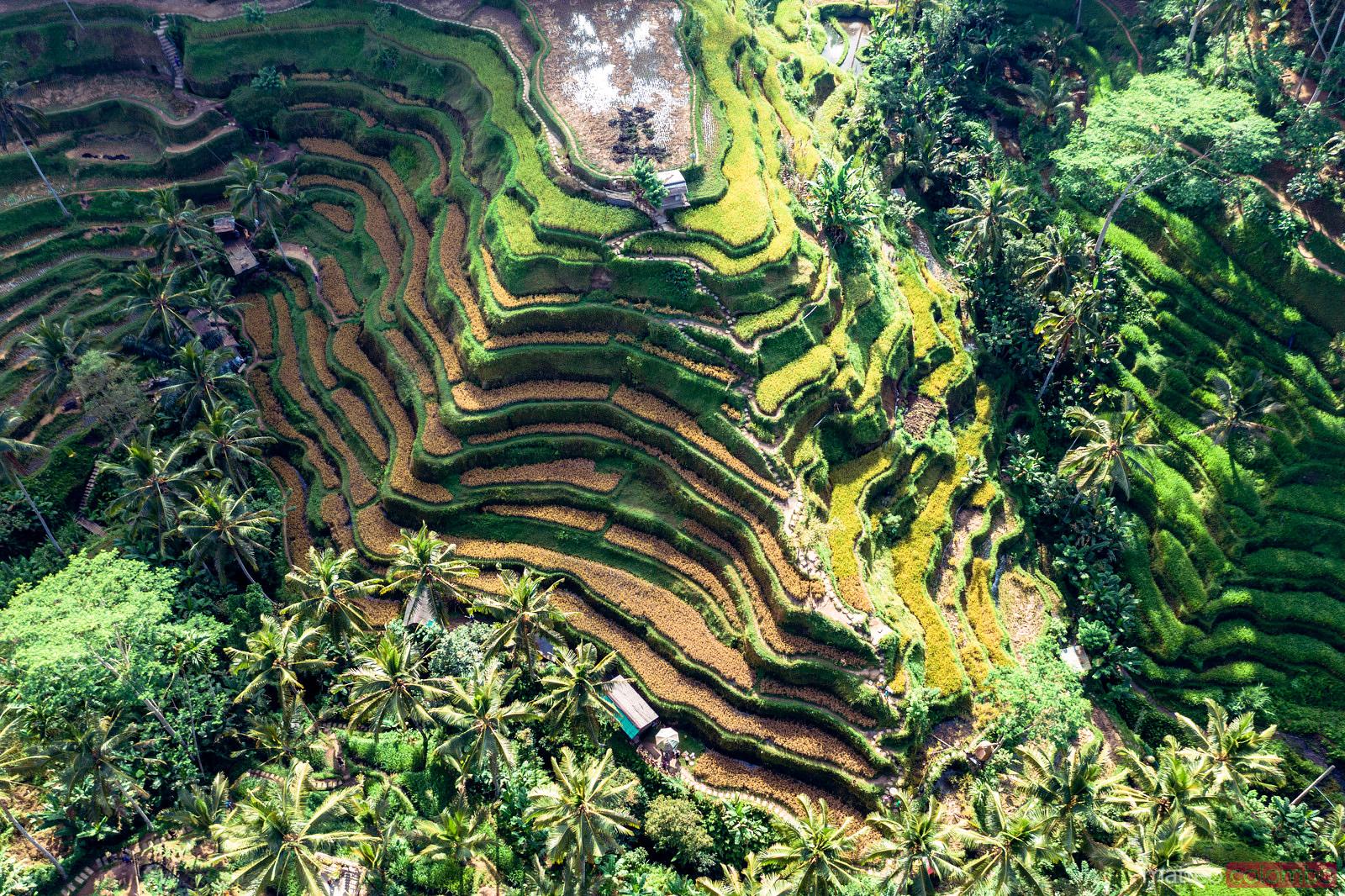
Visit Bali if you want cultural immersion, diverse activities, incredible food, flexible budgeting, and the freedom to explore — from Canggu surf breaks to Ubud rice terraces to Uluwatu cliff temples, all for a fraction of what you'd spend elsewhere.
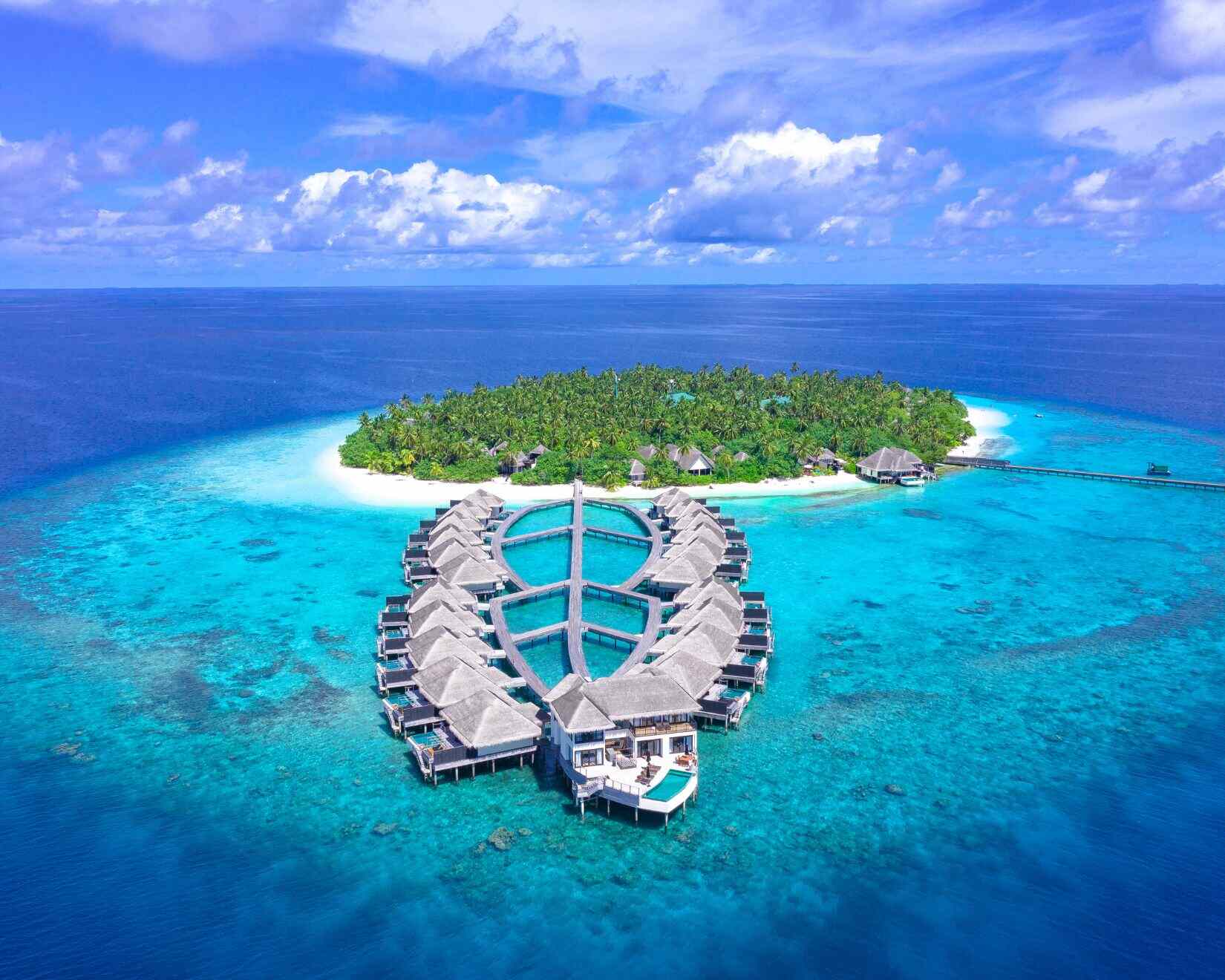
Visit the Maldives if you want pure seclusion and romance, turquoise water you can see through from the plane, overwater villas, world-class diving, and you don't mind paying luxury prices for the privilege of having the ocean to yourself.
The honest answer: Bali has more to do. The Maldives is better at doing nothing. If budget is a concern, Bali wins easily. If you're celebrating something special and want to be completely blown away by beauty with zero effort, the Maldives is worth every dollar. Best move? Do both on a 2-week trip.
Quick Comparison
| Category | 🌿 Bali | 🌊 Maldives | Edge |
|---|---|---|---|
| Daily Budget (mid-range) | $60–150/day (per couple) | $400–1,500+/day (resort) | Bali |
| Food Scene | Incredible variety — nasi goreng, warungs, beach clubs, world cuisine | Resort-only dining at markup prices; limited local food on resort islands | Bali |
| Beaches | Varied — Seminyak, Nusa Penida, Amed; some mediocre near Kuta | Postcard-perfect white sand and crystal-clear turquoise lagoons every island | Maldives |
| Underwater Life | Great — Nusa Penida manta rays, Tulamben wreck dive | World-class — whale sharks, hammerheads, manta rays, 30m+ visibility | Maldives |
| Culture & Activities | Hindu temples, rice terraces, ceremonies, cooking classes, volcano hikes | Very limited on resort islands; local island culture on guesthouse stays | Bali |
| Romance & Privacy | Private pool villas, jungle retreats, flower baths | Unmatched — one island, one resort, private beach, glass-floor villa | Maldives |
| Getting Around | Scooter, car hire, Grab (Uber); easy and cheap | Seaplane or speedboat between atolls; expensive and logistically complex | Bali |
| Nightlife | Canggu, Seminyak, Kuta — beach clubs, rooftop bars, full-moon parties | Essentially none on resort islands (alcohol is available but subdued) | Bali |
| Best For | Adventurers, foodies, culture seekers, digital nomads, solo travelers | Honeymooners, diving enthusiasts, bucket-list seekers, luxury travelers | — |
| Alcohol | Widely available, reasonably priced | Available at resorts; prohibited on local islands (Muslim country) | Bali |
🍜 Food & Dining
Bali is a food paradise that rewards every budget. At the low end, a warung (local food stall) serves nasi goreng (fried rice), mie goreng (fried noodles), or nasi campur (rice with sides) for 25,000–40,000 IDR ($1.50–2.50). Canggu's Jl. Batu Bolong strip is lined with Instagram-worthy cafes doing excellent plant-based bowls, smashed avo, and cold brew for $5–12. Seminyak's beach clubs (Ku De Ta, Potato Head) run $15–40 for cocktails and mains — pricey by Bali standards but still cheaper than most Western cities.
For Balinese food specifically, go to Warung Mak Beng in Sanur (legendary grilled fish, cash only, queue expected), Locavore in Ubud for tasting menu fine dining (book months ahead), or Naughty Nuri's in Ubud for the best pork ribs in Southeast Asia. The Ubud food market at 6am is a local experience worth setting the alarm for.
The Maldives is a different story. On resort islands, all your food comes from the resort — at resort prices. A burger runs $25–45, cocktails $15–25, and a set dinner easily hits $80–120 per person. Many resorts offer all-inclusive packages that make sense financially — but even then, you're paying for the privilege of eating with the Indian Ocean on three sides. Local island stays change the equation: on Maafushi or Thoddoo, local restaurants serve curry, fresh grilled fish, and fruit juice for $8–18 per meal. It's simple but fresh and genuinely delicious.
🤿 Beaches & Underwater Life
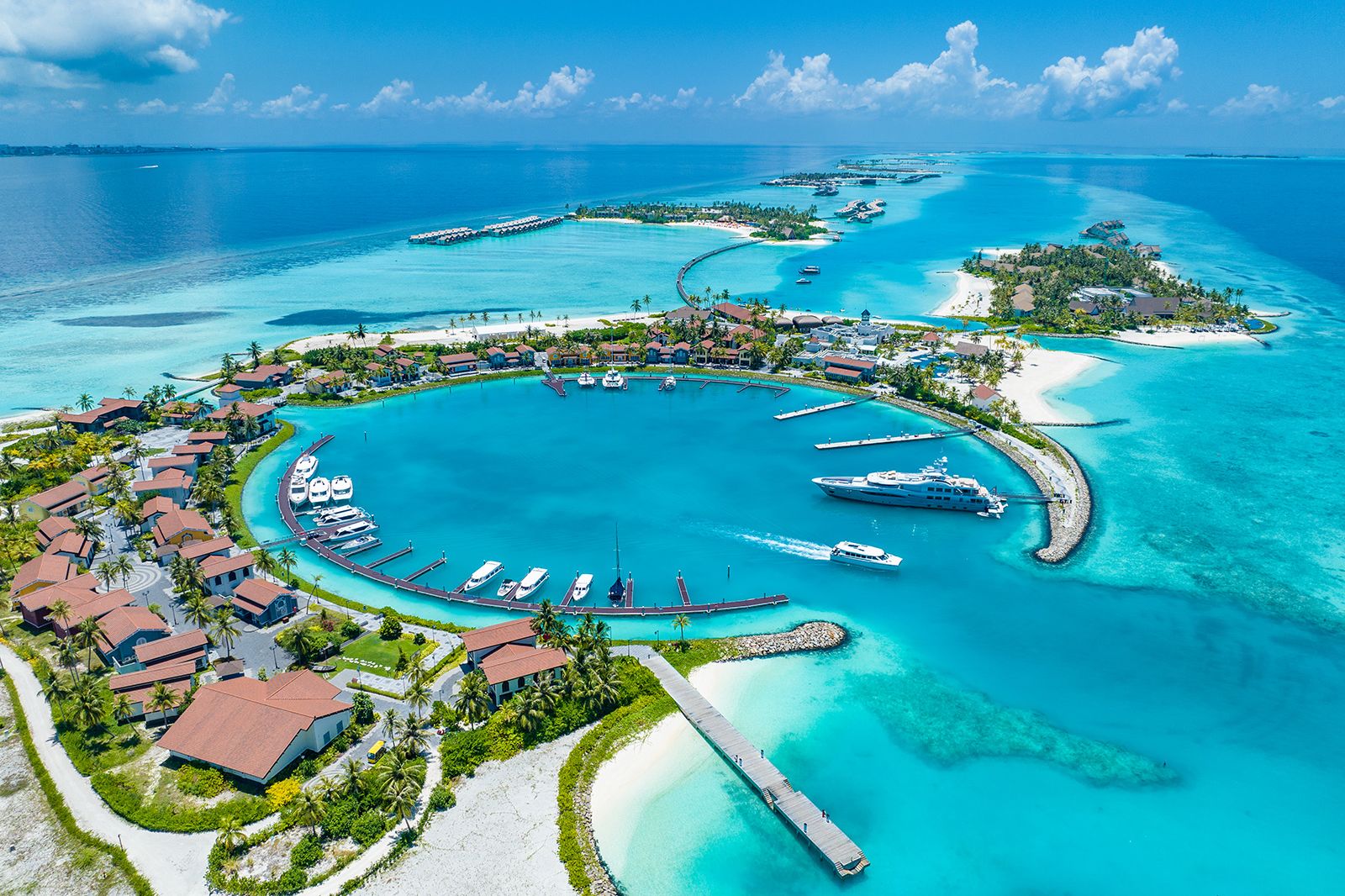
This is where the Maldives earns its mythological status. The water is genuinely that color — turquoise shading to deep blue, with 20–40m of visibility on a good day. Every resort island has direct house reef snorkeling (step off the jetty into coral gardens), and day trips regularly put you in the water with whale sharks, manta rays, and reef sharks. Ari Atoll is the gold standard for whale shark encounters (year-round, not seasonal). The bioluminescent beach phenomenon at Vaadhoo Island — plankton glowing blue at night — is one of the most surreal things you can witness in a lifetime.
Bali's beaches are more variable. Kuta and Legian are crowded surf beaches — decent waves, but not the pristine paradise you came for. The real beach magic is elsewhere: Atuh Beach on Nusa Penida with its dramatic cliff framing, Virgin Beach (Pantai Perasi) in Karangasem, and Bingin Beach in Uluwatu are genuinely stunning. Nusa Penida's Manta Point offers reliable manta ray encounters, and the USAT Liberty wreck at Tulamben is one of the world's most accessible and dramatic recreational dive sites — just walk in from shore.
🛕 Culture & Activities
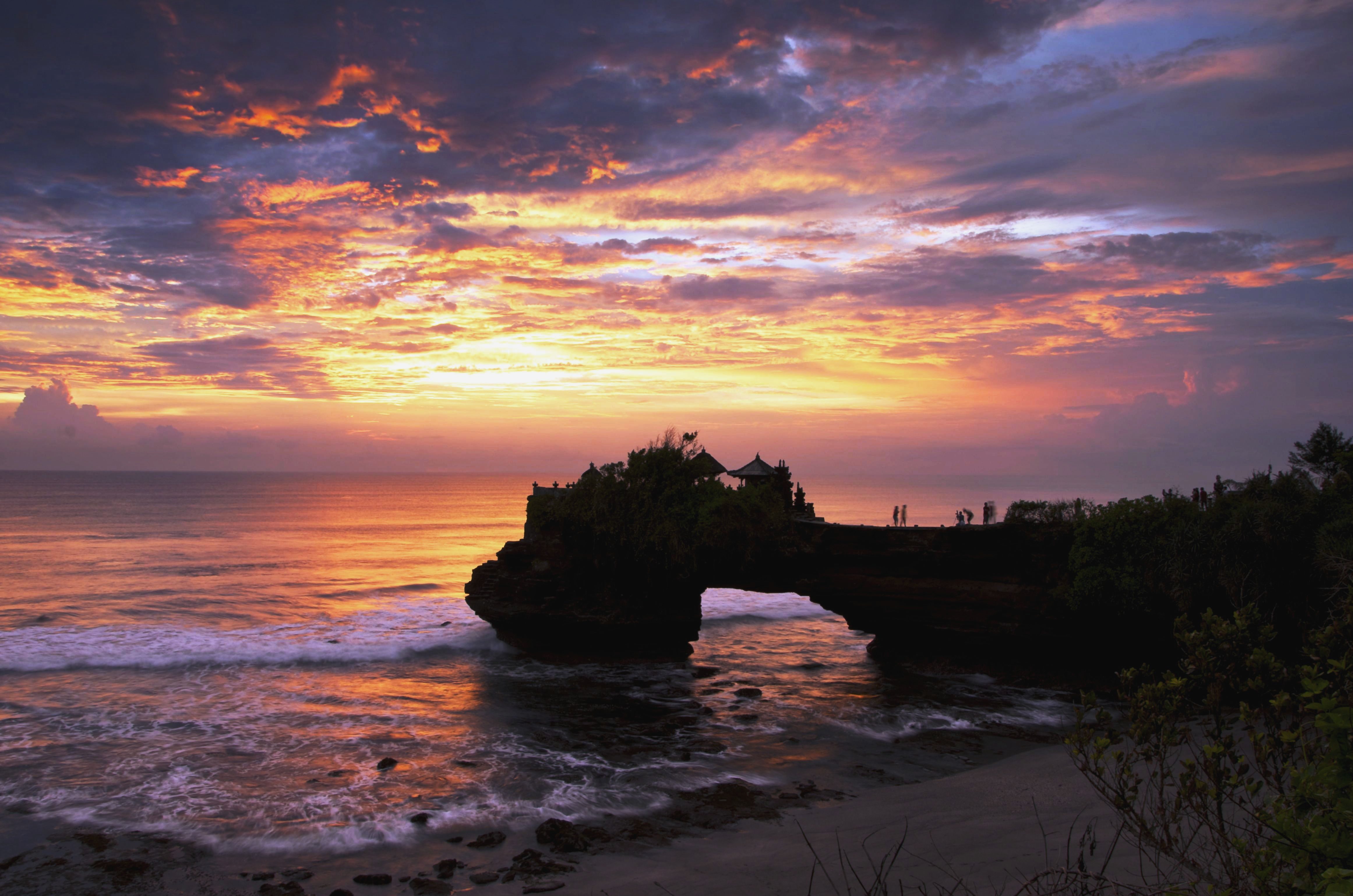
Bali is overwhelmingly the winner here. The island is the only major Hindu enclave in predominantly Muslim Indonesia, and the culture is alive, vivid, and deeply woven into daily life. You'll see flower offerings (canang sari) placed outside homes and shops every morning. Temple ceremonies happen constantly — stumble upon a procession in traditional dress and you'll feel genuinely lucky. Major spiritual sites include Pura Tanah Lot (a sea temple on a rocky outcrop at sunset), Pura Besakih (the "Mother Temple" on the slopes of Mount Agung), Uluwatu Temple (clifftop, with Kecak dance at sunset), and the monkey forest at Ubud.
Beyond temples, Bali offers a genuinely stacked activity menu: volcano sunrise hike at Mount Batur (2,026m, guided, 4am start — rewarded with coffee and egg cooked in volcanic steam), white water rafting on the Ayung River, ATV rides through rice fields, traditional Balinese massage for $12–20/hour, cooking classes in Ubud, silver jewelry workshops in Celuk, batik painting, rice field trekking in Sidemen, and world-class surfing at Uluwatu, Medewi, and Canggu.
The Maldives has activities, but they're ocean-focused and resort-curated: diving, snorkeling, surfing (Jailbreak and Sultans breaks on North Malé Atoll), kayaking, paddleboarding, fishing, sunset cruises, and spa treatments. If you stay on a local island, you can visit a school, explore the harbor, or join a Friday market — but cultural immersion is minimal. The Maldives is a destination for being, not for doing. That's either perfect or underwhelming depending on who you are.
💰 Cost Comparison
This is the biggest practical difference between the two destinations. Bali can be done on almost any budget. The Maldives has a wide range too — from budget local island stays to some of the world's most expensive resorts — but the floor is considerably higher.
| Expense | 🌿 Bali | 🌊 Maldives (Resort) | 🌊 Maldives (Local Island) |
|---|---|---|---|
| Budget guesthouse | $10–25/night | N/A | $40–70/night |
| Mid-range villa/hotel | $60–150/night | $400–900/night | $80–150/night |
| Luxury private pool villa | $200–600/night | $800–3,000+/night | N/A |
| Budget meal | $1.50–4 | $20–40 | $8–15 |
| Mid-range dinner (per person) | $8–20 | $50–100 | $15–30 |
| Cocktail/beer | $3–8 | $15–25 | N/A (alcohol prohibited) |
| Scooter rental (per day) | $5–8 | N/A | $15–25 |
| Snorkeling/dive trip | $25–60 | $80–150 (resort dives) | $50–100 |
| Massage (60 min) | $10–20 | $80–200 | N/A |
| Airport transfer to resort | $10–20 (taxi) | $350–700 (seaplane, one way) | $20–50 (speedboat/ferry) |
| Daily total (couple, mid-range) | $100–200/day | $600–1,500/day | $150–300/day |
The seaplane shock: One of the Maldives' hidden costs that catches first-timers off guard. Resorts in distant atolls require a seaplane transfer from Velana International Airport (Malé). At $350–700 per person each way, a couple can spend $1,400–2,800 just getting to and from their resort — before paying for a single meal. Only resorts within 30 minutes of Malé offer speedboat transfers at $50–150 per person. Factor this into your total trip budget.
✈️ Getting There & Around
Bali is served by Ngurah Rai International Airport (DPS) in Denpasar, with direct flights from major Asian hubs (Singapore, Kuala Lumpur, Sydney, Tokyo, Hong Kong) and connections from the US, Europe, and Middle East. From the US, expect 20–28 hours total travel time with one connection. Fares: $600–1,200 round trip from the US, $400–700 from Europe, $150–400 from Southeast Asia.
Getting around Bali is easy and cheap. Rent a scooter for $5–8/day (standard for locals and many visitors), hire a car with driver for $40–70/day for longer trips, or use Grab (the regional Uber) in Kuta/Seminyak/Canggu. Traffic in South Bali can be brutal — Ubud to Canggu at 5pm can take 90 minutes for a 30km drive. Give yourself time.
The Maldives is served by Velana International Airport (MLE) on Hulhulé Island, with major connections through Dubai, Colombo, Singapore, and Kuala Lumpur. No direct flights from the US — you'll connect at least once. Fares: $800–1,500 from the US, $600–1,000 from Europe.
Getting around the Maldives is where it gets expensive and complex. Resorts within 30km of Malé use speedboat transfers ($50–150/person each way). Resorts in remote atolls require a seaplane ($350–700/person each way) — a stunning 30-minute flight over atolls, but it adds dramatically to your total cost. Within a resort island, you walk. Between islands, you pay. There's also a public ferry network (the Sinahdhoo ferry lines) connecting populated local islands, which is extremely cheap ($1–5) but slow and infrequent.
🌤️ Best Time to Visit
Crucially, Bali and the Maldives have opposite peak seasons. Knowing this helps if you're planning to do both.
✓B = Better for Bali · ✓M = Better for Maldives · ✓✓ = Good for both. Data: Open-Meteo climate averages.
Seasonal strategy
April and October are the sweet spots to visit both destinations on one trip — April sees Bali's rains tapering off while the Maldives still has good conditions; October is the reverse (Bali dry season ending, Maldives early dry season beginning). This overlap is what makes the classic Bali + Maldives combination work so well as a 2-week itinerary.
Bali's best months: May–September. The dry season brings blue skies, low humidity, and Bali's most photogenic conditions. July–August is peak tourist season — all-time best weather but also highest prices and biggest crowds at sites like Tanah Lot and Tegalalang.
Maldives' best months: November–April. The northeast monsoon brings calm, clear water ideal for snorkeling and diving. December and January see peak crowds (and prices) due to holidays. May–October brings the southwest monsoon — rougher seas, some rain, but dramatically lower prices (30–50% off) and better surfing.
🏨 Where to Stay
Bali: Neighborhoods to know
Canggu — The coolest neighborhood in Bali right now. Surf breaks, trendy cafes, co-working spaces, beach clubs (La Brisa, Finn's). Popular with digital nomads and younger travelers. Guesthouses from $20, villa rentals from $80.
Seminyak — Upscale beach area with excellent restaurants, designer boutiques, and beach clubs. Great for couples and honeymooners who want Bali's social scene. Hotels from $80, luxury villas from $200.
Ubud — The cultural heart of Bali. Rice terraces, yoga retreats, art galleries, the best cooking classes, and Bali's best upscale dining (Locavore, Mozaic). Guesthouses from $15, jungle villas from $100. No beach — but a very different and deeply satisfying Bali.
Uluwatu / Bukit Peninsula — The cliff-top surf mecca. Bingin Beach, Padang Padang, world-class waves. Dramatic ocean views, boutique hotels, and the famous Uluwatu temple. Guesthouses from $25, clifftop villas from $150.
Nusa Penida — A separate island accessible by fast boat (45 minutes from Sanur, ~$25). Wild, underdeveloped, incredible scenery (Kelingking Beach's T-Rex cliff, Broken Beach, Angel Billabong). Budget guesthouses from $20. Go for 2–3 nights — worth it.
Maldives: Resort or local island?
Private resort islands (the classic experience) — One resort per island means guaranteed seclusion. Best value for the experience: Anantara Veli (speedboat transfer, ~$400/night, excellent house reef), Kandima Maldives (mid-range, excellent for snorkeling and watersports, from $350/night), Oblu Select Lobigili (all-inclusive adults-only, from $450/night). Ultra-luxury: Soneva Jani ($1,500+/night with pool slides into the lagoon), Six Senses Laamu ($900+/night, eco-luxury), St. Regis Vommuli ($1,200+/night, private pools, multiple restaurants).
Local islands (the underrated budget option) — Maafushi is the most developed local island, with dozens of guesthouses and restaurants. Day trips to sandbanks and diving are easy to organize. Also worth considering: Thoddoo (agricultural island, incredible snorkeling with nurse sharks right off the beach), Dhigurah (whale shark hotspot, quiet), Fulidhoo (tiny, laid-back, beautiful). Note: local islands are Islamic — alcohol is only served at nearby resort "bikini beaches," and dress modestly in the village.
🎒 Day Trips & Activities
Bali punches well above its weight for day trip options — both within the island and to nearby destinations.
From Bali
Nusa Penida (45 min fast boat from Sanur) — Kelingking Beach (the T-Rex cliff), Broken Beach, Angel Billabong, Manta Point snorkeling. Rent a scooter or hire a driver for the day. Allow 2–3 nights minimum.
Gili Islands (2–2.5 hrs via fast boat from Padang Bai) — Three car-free islands off Lombok: Gili T (parties and backpackers), Gili Air (balanced), Gili Meno (quiet and romantic). Excellent snorkeling with sea turtles everywhere.
Mount Batur sunrise hike (depart 2am from Ubud) — An active volcano at 1,717m with sunrise views of Bali and nearby islands. Guided only ($35–60 per person). Worth every early morning minute.
Sidemen Valley — The "real Bali" that Ubud used to be before Instagram. Rice fields, traditional villages, Mount Agung as backdrop, almost no tourists. Do a half-day rice field trek.
Tirta Gangga water palace (East Bali, 2.5 hrs) — 1948 royal water palace with ornamental ponds, lotus flowers, and stepping stones. Combine with Amed snorkeling or Tulamben diving on the same trip.
From the Maldives
Sandbank day trips — Most resorts offer excursions to uninhabited sandbars where you'll picnic and snorkel. Genuinely magical, usually $50–100/person.
Whale shark snorkeling (Ari Atoll, South Malé Atoll) — Year-round encounters with the world's largest fish. Day trips from $80–150/person from local islands or resorts.
Local island visits (from resort islands) — A half-day speedboat trip to a nearby inhabited island, typically visiting the market, school, and harbor. Usually arranged by the resort at $40–80/person.
Night snorkeling — Many resorts offer guided night snorkel from the jetty. Bioluminescent plankton and sleeping reef fish make this unmissable if offered.
Surfing (North Malé Atoll) — The Maldives has world-class waves — Jailbreak, Sultans, Chickens, and Honkys are legendary breaks. Stay at a surf camp or take day trips from the right local islands during May–October.
🔀 Why Not Both?
Here's the travel secret that experienced Southeast Asia visitors know: Bali and the Maldives are one of the world's great combination trips. They complement each other almost perfectly — the stimulation and cultural richness of Bali followed by the decompression and pure beauty of the Maldives (or vice versa).
Routing options
The classic 2-week combo: 7 nights Bali (culture, adventure, food) → fly via Singapore or Colombo → 5–6 nights Maldives (relaxation, diving, romance). This is one of the world's most satisfying travel itineraries and works especially well for honeymoons.
Timing it: April is ideal for both — Bali's rains are tapering off, Maldives is in late dry season with excellent visibility. October works too. Avoid December–February for Bali unless you don't mind rain; that period is actually peak for Maldives.
Flight routing: Fly into Bali (DPS), fly out of Malé (MLE) — no backtracking. Connect via Singapore Changi (SIN) or Kuala Lumpur (KUL) or Colombo (CMB). Singapore is the smoothest connection with the best airport in the world to transit through. Colombo is the fastest connection to the Maldives (1.5 hours) if coming from South or Southeast Asia.
Budget for both (couple, 14 days):
— Budget version: $3,000–5,000 (Bali mid-range + Maldives local island)
— Mid-range: $6,000–10,000 (Bali villas + Maldives speedboat resort)
— Luxury: $15,000–25,000+ (Bali 5-star + Maldives overwater villa resort)
🎯 The Decision Framework
Choose Bali If…
- You want cultural immersion and ancient temples
- Budget matters — you want to maximize value
- You're a foodie who hates resort dining monopolies
- You want diverse activities beyond beach and ocean
- You're a solo traveler or traveling with friends
- Nightlife, beach clubs, and a social scene matter
- You want to hike a volcano at sunrise
- You're a digital nomad or longer-term traveler
- You want to explore multiple very different areas
Choose Maldives If…
- You want the world's most beautiful water, period
- It's your honeymoon or a major anniversary
- You want total seclusion and privacy
- Diving or snorkeling is your primary motivation
- You need to completely unplug and decompress
- You want an overwater villa on your bucket list
- You want swimming with whale sharks and mantas
- You don't mind (or prefer) having everything arranged
- Budget is not a primary constraint
❓ Frequently Asked Questions
Is Bali or Maldives better for a honeymoon?
Both are excellent honeymoon destinations but for different reasons. The Maldives offers unmatched privacy and romance — overwater villas, private beaches, and having the ocean to yourselves. Bali offers more diverse experiences, stunning private pool villas, and far better value. Budget-conscious couples or those who'd be bored on a single resort island for a week should lean Bali. Couples who want to completely switch off and be pampered should choose Maldives. The ultimate move: do both.
Is Bali cheaper than the Maldives?
Significantly, yes. A mid-range Bali trip for two runs $100–200/day including accommodation, food, and activities. A mid-range Maldives resort runs $600–1,200/day for two. Even local island Maldives ($150–300/day for two) is 1.5–2x more expensive than Bali. The Maldives seaplane transfer alone ($350–700/person each way) can cost more than an entire week's budget in Bali.
Can you do the Maldives on a budget?
Yes — local island stays make it genuinely achievable. Islands like Maafushi, Thoddoo, Dhigurah, and Fulidhoo have guesthouses for $50–120/night and local restaurants at $8–18/meal. Day trips for whale shark snorkeling, diving, and sandbank visits run $50–100/person. The water is identically stunning. What you lose: alcohol (local islands are dry — resorts serve it at a nearby "bikini beach"), overwater villas, and private-island seclusion.
When is the best time to visit Bali vs the Maldives?
Bali's dry season (May–October) is best for beaches and outdoor activities. The Maldives' dry season (November–April) is best for calm seas and diving visibility. April and October are "sweet spots" where both have decent conditions — ideal if you're visiting both. Avoid Bali in December–February if beach weather is a priority; that's peak season for Maldives.
Which is better for snorkeling and diving — Bali or Maldives?
The Maldives wins on sheer underwater spectacle. Visibility of 20–40m, regular whale shark and manta ray encounters, and vibrant reef ecosystems accessible right from your room's jetty — it's a world-class dive destination. Bali is excellent too: Nusa Penida's Manta Point, Tulamben's USAT Liberty wreck, and Amed's coral gardens are all worth the trip. But if diving is your primary reason for the trip, the Maldives is a step above.
Do I need a visa for Bali or the Maldives?
The Maldives offers free visa-on-arrival for all nationalities (30 days). Bali (Indonesia) offers free visa-on-arrival for 169 countries including the US, UK, EU, and Australia (30 days, extendable once for another 30 days). Citizens of countries not on the free list need a B211A social/cultural visa in advance. Check Indonesia's current visa list before booking — it changes periodically.
Should you visit Bali and the Maldives together?
Yes, if you have 12–14 days. The Bali + Maldives combination is one of travel's great pairings — cultural stimulation followed by pure relaxation. Fly into Bali, spend 7 nights exploring, then fly via Singapore or Colombo to the Maldives for 5–6 nights of beach and diving. Fly home from Malé. This open-jaw routing avoids backtracking and is typically the same price as a round-trip from one airport.
Ready to plan your tropical escape?
Get a free custom itinerary for Bali, the Maldives, or the ultimate combination trip — built from real traveler insights.