How we built this comparison
This page combines traveler discussion patterns, published price ranges, transit details, and seasonal data to make the Battambang vs Kampot decision easier to resolve.
- Reviewed Reddit discussions from r/cambodia, r/backpacking, r/solotravel, r/travel, and r/southeastasia.
- Checked numeric claims including accommodation ranges, food costs, transit routes, and seasonal weather patterns.
- Each major section ends with a clear winner, reasoning included.
- Internal links to existing tabiji pages for deeper research.
⚡ The TL;DR Verdict
Kampot wins for relaxation, scenery, and slow travel. The riverside atmosphere, Bokor Mountain, world-famous pepper farms, and the nearby Kep crab market make it one of Cambodia's most complete easy-going destinations. But if you want authentic Cambodian city life with no tourist bubble — the bamboo train, colonial streets, stunning circus, and real urban texture — Battambang is one of Southeast Asia's most underrated cities.
- 🎪 Culture depth: Battambang — the Phare Circus alone is worth the trip
- 🌿 Relaxation & nature: Kampot — the river, Bokor fog, pepper farms
- 💰 Budget: Tie — both are among Cambodia's cheapest towns
- 🔗 Do both if: You have 10+ days in Cambodia — they're different enough to justify both
Quick Comparison
| Category | 🎪 Battambang | 🌿 Kampot | Winner |
|---|---|---|---|
| Daily Budget (mid-range) | $25–45/day | $25–50/day | Tie |
| Budget Accommodation | $8–15/night | $8–18/night | Tie |
| Cultural Attractions | Bamboo train, bat caves, circus, temples | Pepper farms, Bokor Mountain, Kep crab | Battambang |
| Food Scene | Excellent local Khmer, street food | Good — strong café & bar scene | Battambang |
| Nightlife | Low-key local bars | Riverside bars, backpacker scene | Kampot |
| Nature & Outdoors | Countryside cycling, cave temples | Bokor Mountain, river kayaking, Kep | Kampot |
| Getting There from Phnom Penh | 5–6h by bus (~$6–8) | 3h by bus (~$5–8) | Kampot |
| Touristy-ness | Minimal tourism — very authentic | Popular but not overwhelmed | Battambang |
| Iconic Experience | Bamboo train + bat caves at sunset | Pepper farm + Kep crab by the sea | Tie |
| Best For | Culture, art, authentic Cambodia | Relaxation, nature, slow travel | Tie |
🍜 Food & Dining
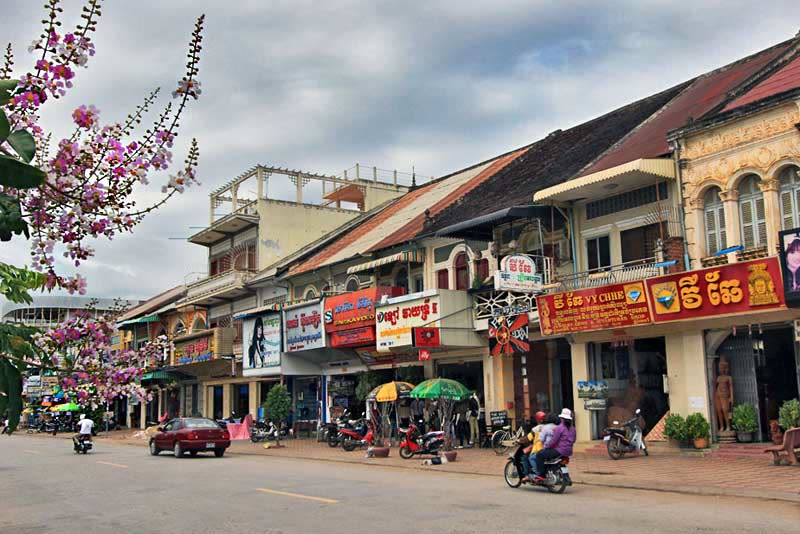
Battambang is the agricultural heartland of Cambodia — surrounded by rice paddies, fruit orchards, and freshwater fish ponds. That agricultural wealth translates directly to the food. The central market (Psar Nath) is one of the most beautiful covered markets in Southeast Asia (a gorgeous French colonial building from 1959) and offers the full Khmer breakfast spread: bai sach chrouk (pork on rice, $1–2), fresh fruit, and grilled corn. Street food stalls line the riverfront, and noodle soups run $1.50–3. Several excellent farm-to-table restaurants have opened in recent years targeting the small but growing tourist scene. Look for The Lonely Tree Café and Jaan Bai, a social enterprise restaurant training disadvantaged youth that's frequently mentioned on travel forums as a must-eat stop.
Kampot's food scene is anchored by one undeniable world-class ingredient: Kampot pepper. With Protected Geographical Indication status, Kampot pepper (both the black and rare white variety) is prized by chefs globally and you can taste the difference when it's freshly ground on a crab at Kep market. The riverside restaurant strip serves everything from proper Khmer fish amok to wood-fired pizzas for the expat crowd. Prices are slightly higher than Battambang owing to the expat/backpacker premium, but meals still run $3–8 at sit-down restaurants. The local fruit shakes ($1) are exceptional — durian, rambutan, and dragon fruit all in season depending on timing.
🏛️ Cultural Attractions
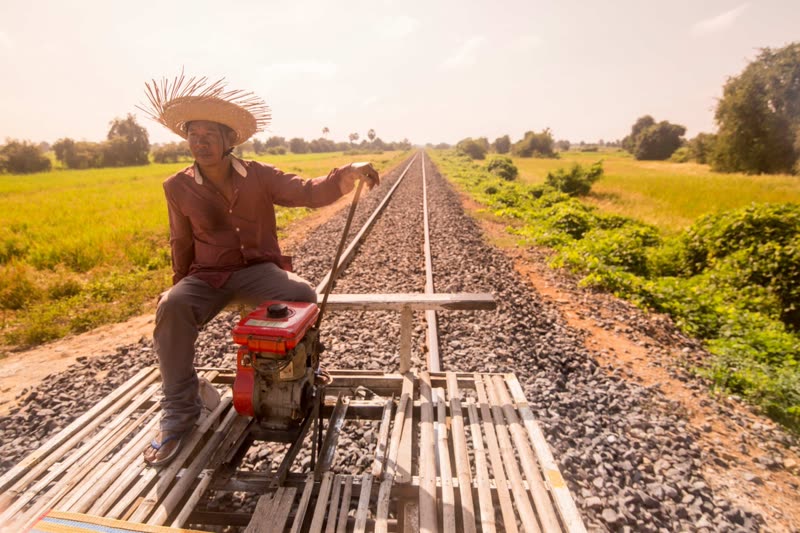
Battambang punches well above its weight for a mid-sized Cambodian city. The star attraction is the Bamboo Train (norry) — a flat platform on repurposed railway wheels powered by a small motor engine, running through the countryside for about 4km. It costs $5–7 and is as much fun as it sounds. At the other end, you dismantle your train and stack it on top of another coming the other way — pure, low-tech Cambodian problem-solving. Phnom Sampov, 15km from the city, is the site of bat caves where 3 million wrinkle-lipped bats pour out at sunset in a column visible for miles — one of Southeast Asia's great wildlife spectacles. The mountain also contains a Killing Caves memorial from the Khmer Rouge era. In town: the Battambang Museum (excellent Angkorian artifacts, rarely crowded), colonial-era French architecture, and Cambodia's most acclaimed circus — Phare Ponleu Selpak — a social enterprise arts school that puts on genuinely world-class acrobatic performances several nights a week ($7–12 entry).
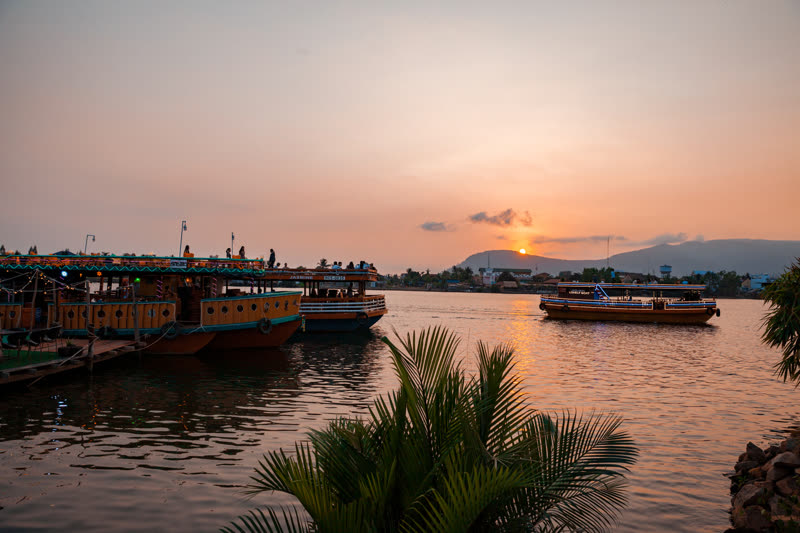
Kampot has a different flavour — the colonial architecture is well-preserved along the riverfront, with a cluster of Chinese shophouses and French government buildings. The main non-riverside attraction is Bokor Mountain in Bokor National Park. The mountain rises steeply to 1,080m above sea level; the ghost town of the old French hill station, complete with an abandoned casino, hotel, and church, is genuinely eerie and spectacular. You can rent a moto and ride up yourself (a winding, steep 35km road) or join a guided tour. Pepper farm tours are an underrated half-day: you walk the rows, learn the processing, and taste fresh vs aged Kampot pepper straight from the vine — much more interesting than it sounds.
💰 Cost Comparison
Both Battambang and Kampot are among the most affordable destinations in Cambodia, and Cambodia itself is one of the cheapest countries in Southeast Asia. The US dollar is widely accepted (Cambodia's official currency is the Riel, but USD dominates), which makes budgeting simple.
| Expense | 🎪 Battambang | 🌿 Kampot |
|---|---|---|
| Budget guesthouse | $8–15/night | $8–18/night |
| Mid-range hotel/bungalow | $20–50/night | $20–60/night |
| Street meal / local restaurant | $1.50–4 | $2–5 |
| Sit-down restaurant (tourist) | $4–9 | $5–12 |
| Local beer (Angkor/Cambodia) | $0.75–1.50 | $1–2 |
| Tuk-tuk short ride | $1–3 | $1–3 |
| Moto rental (per day) | $7–12 | $7–12 |
| Bamboo Train / Bokor tour | $5–7 (bamboo train) | $10–20 (Bokor + guide) |
| Phare Circus ticket | $7–12 | N/A |
| Budget daily total | $20–30 | $22–35 |
| Mid-range daily total | $40–65 | $45–75 |
Kampot is slightly pricier at the top end — the expat and long-stay community has pushed mid-range accommodation and restaurant prices up slightly. Battambang, with less tourism, tends to be truer local pricing. Neither city has significant ATM fees beyond standard network charges ($3–5 per withdrawal at most machines).
🚃 Getting Around
Battambang is Cambodia's second-largest city, but it still operates at a manageable human scale. The centre is compact and walkable; most guesthouses and restaurants cluster near the riverfront and central market. Tuk-tuks and motos are available everywhere at $1–3 per short hop. Renting a bicycle ($2–3/day) or a moto ($7–12/day) is the best way to explore the surrounding countryside — the bamboo train and the bat cave mountain are both within 15km. Getting to Battambang: buses from Phnom Penh take 5–6 hours ($6–8, multiple operators including Giant Ibis and Mekong Express). From Siem Reap it's 3–4 hours ($5–8 by bus). A boat route from Siem Reap along the Tonle Sap (dry season only, roughly 8h) is one of the great slow-travel experiences in Cambodia — worth doing if timing allows.
Kampot is even smaller and more navigable. The main strip is a 10-minute walk end to end. Renting a bicycle ($1–2/day) covers the immediate area easily; a moto ($7–12/day) opens up Kep and Bokor Mountain. Tuk-tuks run on apps (PassApp) or can be flagged down. Getting to Kampot: buses from Phnom Penh take 3 hours ($5–8). From Sihanoukville it's ~2 hours. Note: Kampot to Kep is just 25 minutes by tuk-tuk ($8–12 round trip or $3–4 by share taxi), making Kep a natural half-day addition. There is no direct transport between Battambang and Kampot — Phnom Penh is the routing hub.
🌸 Best Time to Visit
Both cities share Cambodia's tropical climate and ideal travel windows. The dry season from November to April is the best overall window — hot and sunny, temperatures 28–35°C, minimal rain. The sweet spot is November to February when temperatures are most comfortable (cooler evenings) and humidity is lower.
Battambang in the wet season (May–October) is particularly green and lush — the surrounding rice paddies flood spectacularly, and the Tonle Sap boat journey from Siem Reap becomes possible only during this period (when the lake expands). However, dirt tracks to countryside sites get muddy and some temple access is more difficult. The bat caves at Phnom Sampov are viewable year-round at dusk.
Kampot in the wet season has one unusual advantage: Bokor Mountain is frequently shrouded in thick cloud and mist during the rainy months, giving the abandoned French hill station an extra layer of gothic atmosphere — many photographers prefer it wet. The pepper harvest runs October–February, so if seeing the farms in active production matters, aim for this window. During dry season, the Kampot River shrinks but riverside activities are less affected.
🏨 Where to Stay
In Battambang, the riverfront strip (along the Sangker River) is the prime location — most guesthouses, restaurants, and bars are within walking distance. Budget guesthouses ($8–15) are plentiful. The mid-range scene has improved with a handful of boutique properties ($30–60) in restored colonial buildings. There are no large chain hotels; this is entirely independent accommodation. The guesthouse scene is genuine and welcoming rather than sanitized-for-tourists. Recommended neighbourhoods: near Psar Nath (the French colonial market) for easy street food access; east riverbank for quieter, more atmospheric lodging.
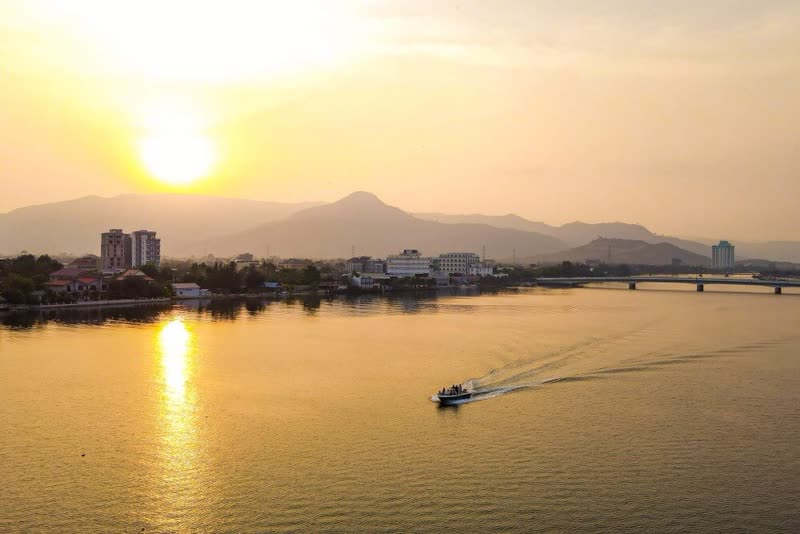
In Kampot, the riverside strip is the heart of town and the obvious place to base yourself — most guesthouses and bars face the Kampot River with sunset views. The town also has a cluster of mid-range options in renovated shophouses in the old town grid. Kampot additionally has several riverside guesthouses upstream (outside town proper) that offer true nature-retreat vibes — bamboo bungalows on the river for $15–30/night. These are popular with long-stay travelers. Budget: $8–18/night guesthouses; mid-range: $25–60/night boutiques; upmarket: $80–150/night resorts outside town.
🎒 Day Trips
Battambang day trips are concentrated nearby and all excellent. Phnom Sampov (15km west): the bat cave hill — walk up to the ridge at dusk and watch 3+ million bats exit in a swirling column for 30 minutes. The mountain also has Khmer Rouge Killing Caves with sobering history. Bamboo Train at O Dambong (7km from city): the norry ride through rural Cambodia, $5–7 entry. Ek Phnom temple (11km north): 11th-century Angkorian temple in near-solitude — no crowds, no entrance fee, and the countryside rice-paddy cycling route between the city and temple is superb. A full-day guided countryside cycling tour ($15–25 with guide) is the definitive Battambang experience for many visitors, covering temples, villages, and farms the slow way.
Kampot day trips are anchored by two must-dos. Kep (25 min, $3–4 by share taxi or $8–12 tuk-tuk): the crab market — fresh crabs grilled or steamed with Kampot pepper, served at plastic tables by the water for $5–15/portion. Kep also has a ruined seaside town of abandoned villas from the 1960s vacation era. Bokor Mountain (35km drive up a steep mountain road): the abandoned French hill station ghost town, complete with an eerie casino and church shrouded in clouds. Entry fee is $5; moto rental plus fuel is the cheapest option if you're comfortable on mountain roads. Guided tours run $10–20. Pepper farm visits ($5–10 with tour) are a quieter third option best done in the morning.
🎉 Nightlife & Social Scene
Battambang has a quiet evening scene that centres mostly on the town's small but genuine arts community. The big evening event is the Phare Ponleu Selpak Circus — performances run several evenings a week ($7–12), and watching Cambodian youth perform acrobatics, contemporary circus, and theatre to sold-out crowds is one of the most unexpectedly moving experiences in the country. After the circus, the riverfront strip has a handful of bars serving Angkor draught ($0.75–1) and playing music until midnight. It's the kind of nightlife where you end up talking to other travelers for hours — not because there's much else to do, but because the atmosphere invites it. Don't expect Bangkok or even Siem Reap's Pub Street.
Kampot has a more developed backpacker bar scene. The riverside strip concentrates a dozen-plus bars and cafés that stay open until 1–2am, with live music several nights a week. The crowd is a mix of backpackers passing through, long-stay expats (Kampot has a sizable expat community of writers and artists), and Cambodian locals. The vibe ranges from chill acoustic sets to hammock bars to livelier dance-floor spots. This is decidedly more social nightlife than Battambang. One Reddit comment perfectly captures it: "Weed, fire twirling, and Kombucha bartered tattoos" — a hippie-meets-backpacker scene that's charming or exhausting depending on your preferences.
🌿 Nature & Outdoors
Battambang's natural draw is the countryside that surrounds it. The Sangker River meanders through rice paddies, fruit orchards, and fishing villages — best explored by bicycle or moto on a half-day loop. The Tonle Sap Lake (the largest freshwater lake in Southeast Asia) is accessible from Battambang by boat during the wet season, and the floating villages are extraordinary: entire communities living on pontoons, with floating schools, restaurants, and basketball courts. The bat cave spectacle at Phnom Sampov is one of Southeast Asia's great wildlife moments. Cave temples dot the surrounding hills (Phnom Banan, Phnom Sampov) and can be combined into a full countryside loop.
Kampot's natural offering is headlined by Bokor National Park — 1,400 km² of protected forest, mountain trails, and dramatic coastline. Hiking trails wind through jungle; the waterfall at the base of the mountain is accessible year-round. The Kampot River is ideal for kayaking ($10–15 half-day rental with route guidance), particularly the upstream stretch toward the mangroves. Kep National Park (adjacent to Kep town, 25 min away) adds beach and reef snorkeling. The Kep pepper island (Rabbit Island) is a half-day boat trip ($5 return) for a deserted beach experience.
🔀 Why Not Both?
Battambang and Kampot make a natural Cambodia circuit when combined with Phnom Penh. Both cities are distinctly different from each other and from the obvious Cambodia highlights (Angkor Wat, Phnom Penh). A suggested routing for a 10–14 day Cambodia trip:
- Siem Reap (3–4 days) — Angkor Wat and temples
- Bus or boat to Battambang (~3–6h)
- Battambang (2–3 days) — Bamboo train, bat caves, Phare Circus
- Bus to Phnom Penh (~5h)
- Phnom Penh (2 days) — Killing Fields, Royal Palace, S-21
- Bus to Kampot (~3h)
- Kampot + Kep (2–3 days) — Bokor Mountain, pepper farms, crab market
- Return to Phnom Penh or onward to Vietnam/Thailand
This is considered one of the best Cambodia itineraries for travelers who want more than just Angkor. See also: Vietnam vs Cambodia and Thailand vs Cambodia if you're still planning the broader trip.
🎯 The Decision Framework
Not sure which to pick? Use this:
🎪 Choose Battambang If…
- You're routing through Siem Reap and want a second stop
- Authentic Cambodian city life (not a tourist bubble) is your priority
- You want the bamboo train + bat cave combo in a single day
- The Phare Circus appeals to you (it should)
- You're interested in colonial architecture and Khmer history
- You want cycling through rice paddies and fishing villages
- Budget is very tight — it's slightly cheaper overall
- You're combining Cambodia with a Siem Reap trip (not southern Cambodia)
🌿 Choose Kampot If…
- Relaxation and slow travel are your main goals
- Bokor Mountain and abandoned ghost towns are your thing
- You want Kep crab steamed with fresh Kampot pepper
- A social bar scene and backpacker community appeals to you
- You're routing through southern Cambodia / Sihanoukville
- River kayaking and nature hikes matter to you
- You have fewer days — 3h from Phnom Penh, easier to slot in
- You want somewhere to unwind after Phnom Penh's intensity
❓ Frequently Asked Questions
Is Battambang or Kampot better for first-time Cambodia visitors?
If you're adding one off-the-beaten-path stop to a Cambodia itinerary dominated by Siem Reap and Phnom Penh, Kampot edges ahead for first-timers — it's easier to reach from Phnom Penh (3 hours by bus), more compact, and pairs perfectly with a half-day trip to Kep's crab market. Battambang is the better choice if you want Cambodia's authentic second city and have 2+ full days to spare.
How do I get from Battambang to Kampot?
There is no direct bus between Battambang and Kampot — you have to route through Phnom Penh. It's roughly 5–6 hours Battambang → Phnom Penh (bus, $5–8), then another 3 hours Phnom Penh → Kampot ($5–8). Many travelers do one city before Phnom Penh and the other after it. Share taxis exist and are faster but less comfortable.
Which is cheaper, Battambang or Kampot?
They're roughly equal in cost — both are among the cheapest destinations in Cambodia. Budget travelers can live on $20–30/day in either city: guesthouses run $8–18/night, street meals are $1.50–4, and tuk-tuks are $1–3 for short trips. Kampot's riverside bar scene may nudge daily spend slightly higher if you're doing the social circuit.
How many days do I need in Battambang vs Kampot?
Both cities reward at least 2 full days. Battambang: day 1 for the city itself (colonial architecture, Phare Circus, street art), day 2 for the bamboo train and bat caves at Phnom Sampov. Kampot: day 1 for the riverside and exploring by moto, day 2 for Bokor Mountain or Kep crab. If you love slow travel, both cities can absorb 3–4 days easily.
Is the Battambang Bamboo Train worth it?
Yes — even if it sounds gimmicky, the bamboo train (norry) is a genuinely fun experience. You ride a flat bamboo platform on a repurposed rail car engine through the Cambodian countryside for around $5–7. It's not a long ride, but the scenery and the bizarre logistics of two bamboo trains passing each other (one platform gets dismantled and stacked on the other) make it one of Cambodia's most memorable moments.
What is Kampot famous for?
Kampot is world-famous for its pepper — Kampot pepper has a Protected Geographical Indication (PGI) and is considered by many chefs to be the finest in the world. The town itself is known for its French colonial architecture, the Kampot River (great for sunset boat trips and kayaking), Bokor Mountain National Park with its abandoned French hill station, and its relaxed expat/backpacker vibe. Kep, just 25 minutes away, adds the crab market to the package.
Is Kampot safe for solo travelers?
Yes, Kampot is one of Cambodia's safer cities for solo travel, including solo women. Petty theft exists as in any tourist town, but violent crime is rare. Rent motos only if you're an experienced rider — the mountain road to Bokor is steep and winding. Stick to reputable guesthouses in the town centre or riverside area.
What is the best time to visit Battambang and Kampot?
November to February is ideal for both cities — dry season, comfortable temperatures of 25–32°C, almost no rain. March–April gets hot (up to 38°C). May–October is monsoon season; Bokor Mountain in Kampot becomes spectacularly misty and atmospheric, and Battambang's surrounding countryside floods beautifully but some rural tracks become inaccessible. The Kampot pepper harvest runs October–February — the best time to visit farms.
Ready to Plan Your Trip?
Get a custom itinerary for Battambang, Kampot, or both — built around your travel dates, budget, and interests.
🎟️ Book Tours & Experiences
Hand-picked tours and activities for both destinations — book with free cancellation
Experiences via Viator — free cancellation on most tours