How we built this comparison
This page combines traveler discussion patterns from Reddit, published price ranges, transit details, and seasonal data to make the Da Nang vs Hoi An decision easier to navigate.
- Synthesized traveler opinions from r/VietNam, r/DaNang, r/solotravel, r/digitalnomad, r/backpacking
- Cost data cross-referenced with Numbeo and recent Reddit traveler reports (2024–2026)
- Weather data from Open-Meteo monthly averages
- Transit and logistics from official sources and community reports


⚡ The TL;DR Verdict
Da Nang wins for beaches, city life, and value. Hoi An wins for culture, food heritage, and atmosphere. They’re 30km apart — do both. Daily budget: Da Nang ₫600k–1.2M ($24–48) vs Hoi An ₫700k–1.5M ($28–60).
- Choose Da Nang: Beach lovers, city infrastructure fans, digital nomads staying a week+, nightlife seekers, budget-conscious travelers, anyone who hates vendor pressure.
- Choose Hoi An: Culture and history enthusiasts, foodies chasing Cao Lau and banh mi, couples wanting romantic lantern-lit evenings, tailoring shoppers, UNESCO tick-box travelers.
- Do both: With 5+ days in Central Vietnam, split your base — or use Da Nang as home base with a 1–2 night Hoi An stay. The drive is 30–40 minutes.
Choose Da Nang
Beach lovers, budget travelers, digital nomads, nightlife seekers. Better city infrastructure, cheaper accommodation, and one of Asia’s best urban beaches.
Choose Hoi An
Culture seekers, food pilgrims (Cao Lau, Banh Mi Phuong), romantic travelers, tailoring shoppers. UNESCO Ancient Town and magical evening lanterns are worth the premium.
Quick Comparison
| Category | 🇻🇳 Da Nang | 🏮 Hoi An | Winner |
|---|---|---|---|
| Daily Budget (mid-range) | ₫600k–1.2M ($24–48) | ₫700k–1.5M ($28–60) | Da Nang |
| Budget Hostel | ₫120k–200k/night ($5–8) | ₫150k–250k/night ($6–10) | Da Nang |
| Street Food Meal | ₫25k–50k ($1–2) | ₫25k–60k ($1–2.40) | Tie |
| Beaches | My Khe — wide, clean, world-class | An Bang — quiet, laid-back, some erosion | Da Nang |
| Cultural Sights | Marble Mountains, Ba Na Hills, Dragon Bridge | UNESCO Ancient Town, Japanese Covered Bridge, My Son | Hoi An |
| Food Heritage | Great grilled seafood, mi quang noodles | Cao Lau, White Rose dumplings, Banh Mi Phuong | Hoi An |
| Nightlife | Active club/bar scene, rooftop bars | Atmospheric lantern evenings, earlier close | Da Nang |
| Getting Around | Grab, city buses, scooter rental | Bicycle, walking, Grab to/from Da Nang | Da Nang |
| Flooding Risk | Low — modern drainage | High — Oct–Nov floods badly | Da Nang |
| Tailoring / Shopping | Some, but limited | World-class tailors, 24h turnaround possible | Hoi An |
| Atmosphere | Modern Vietnamese city | UNESCO charm, lanterns, ancient streets | Hoi An |
| Airport | Da Nang Int'l (DAD) — direct flights | None — fly into Da Nang (30–40 min) | Da Nang |
🍜 Food & Dining

Hoi An wins the food heritage argument outright. It has three dishes that exist nowhere else on earth in their authentic form: Cao Lau (thick smoky noodles with char siu pork and greens, ₫40,000–60,000/$1.60–2.40), White Rose dumplings (banh bao vac, ₫30,000–50,000/$1.20–2), and Banh Mi Phuong — the banh mi Anthony Bourdain declared the best in the world, at ₫25,000–35,000 ($1–1.40). These three alone justify a trip from Da Nang.
Da Nang isn’t without its own food identity. The city is famous for mi quang (turmeric-stained noodles with pork, shrimp, and herbs, ₫30,000–50,000/$1.20–2) and spectacular grilled seafood along the beach and at the night markets — whole grilled fish (ca nướng) runs ₫80,000–200,000 ($3.20–8) at local spots. The seafood variety and freshness at Da Nang’s Han Market beats Hoi An’s Old Town restaurants on authenticity and price. See our Da Nang grilled fish guide for the best spots.
Note: restaurants inside Hoi An’s Old Town carry a tourist premium. Eating one or two blocks off the main drag cuts prices by 30–40% and often improves quality. Don’t let Reddit’s “Hoi An is overpriced” verdicts put you off — they’re reacting to tourist-trap street pricing, not the whole food scene.
“A little bias since I spent 6 months in Hoi An, but definitely Hoi An. There’s much more to do than shopping there, and it’s so much more scenic and beautiful than Da Nang. The famous Anthony Bourdain banh mi spot is in Hoi An.”— u/traveler, r/solotravel
“I spent a month in Hanoi and then two weeks in Hoi An. After a couple days, I had wished I’d just stayed longer in Hanoi. The food was nowhere near on the same level as what I was eating in Hanoi and everything costs more in Hoi An. I did get some great photos though and it was beautiful to see at night.”— r/digitalnomad, Hoi An vs Da Nang for 1 month thread
⛩️ Cultural Attractions
Hoi An’s Ancient Town is a UNESCO World Heritage Site — one of Southeast Asia’s best-preserved trading ports from the 15th–19th centuries. The yellow-walled old town, the iconic Japanese Covered Bridge, and the colorful paper lanterns strung across every alley create an atmosphere unmatched anywhere else in Vietnam. Entry to the Ancient Town itself is free; a cultural pass (₫120,000/$4.80) covers access to 5 heritage houses, museums, and assembly halls.
Da Nang’s cultural highlights are more varied if less concentrated. The Marble Mountains (Ngũ Hành Sơn) — five limestone hills with Buddhist temples, caves, and panoramic views — are 9km south of the city center and cost ₫40,000 ($1.60) to enter. Ba Na Hills (45km from the city) is a French colonial hill station turned theme park with the famous Golden Bridge held by giant stone hands — cable car + entry is ₫750,000–900,000 ($30–36), expensive but unique. The Dragon Bridge breathes fire every Saturday and Sunday at 9 PM — free.
My Son Sanctuary, Vietnam’s Angkor-equivalent (Cham ruins, UNESCO), is 70km from Da Nang but more accessible as a day trip from Hoi An (40km, ~1 hour).
“Definitely stay in Hoi An and day trip to Da Nang. Hoi An is close to all of that — Marble Mountain and My Son.”— r/VietNam, Da Nang vs Hoi An 4 days thread
💰 Cost Comparison
Both cities are cheap by global standards, but Da Nang consistently undercuts Hoi An by 15–25% overall. The gap is widest in accommodation and Old Town restaurants.
Accommodation:
- Budget hostel dorm: Da Nang ₫120k–200k/night ($4.80–8) vs Hoi An ₫150k–250k ($6–10)
- Private room (budget): Da Nang ₫300k–600k ($12–24) vs Hoi An ₫400k–700k ($16–28)
- Mid-range hotel: Da Nang ₫500k–1.2M ($20–48) vs Hoi An ₫600k–1.5M ($24–60)
- Beach resort (luxury): Da Nang ₫2M–6M+ ($80–240+) vs Hoi An villas ₫1.5M–5M ($60–200)
Food:
- Local street food meal: ₫25k–50k ($1–2) in both
- Mid-range restaurant: Da Nang ₫80k–200k ($3.20–8) vs Hoi An Old Town ₫100k–300k ($4–12)
- Beer (local): ₫15k–25k ($0.60–1) in both
Transport: Grab between Da Nang and Hoi An ₫200k–300k ($8–12) each way. Motorbike rental ₫100k–150k/day ($4–6).
“Da Nang has all the modern parts of a city, 24/7 stores, big beach, nice roads and it doesn’t flood like crazy every October.”— r/DaNang, Da Nang vs Hoi An living thread
🏖️ Beaches
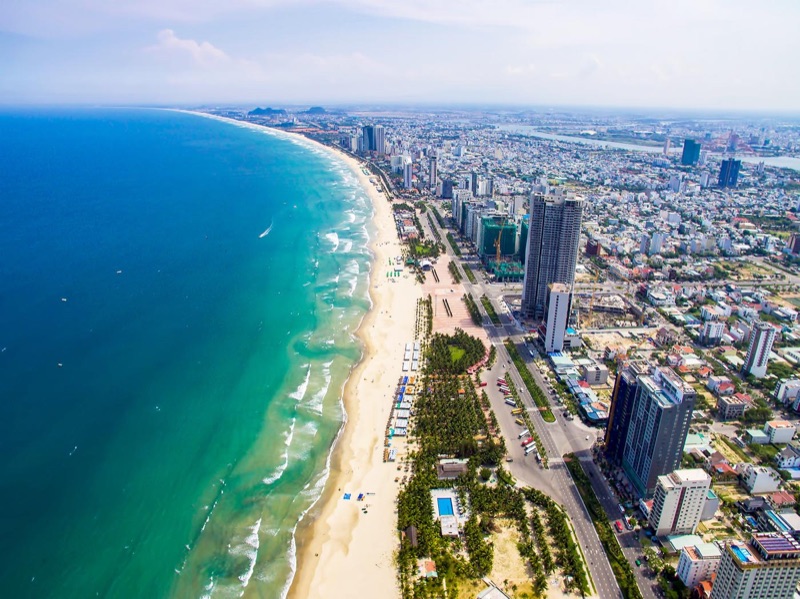
Da Nang’s My Khe Beach is one of Asia’s best urban beaches. Forbes named it one of the planet’s finest; it’s 30km long, wide, clean, swimmable year-round (except typhoon season), and lined with beachfront cafes and restaurants. Lifeguards are on duty. Water sports are widely available. The beach is 5 minutes from the city center.
Hoi An’s An Bang Beach (5km from Old Town) is quieter and more relaxed — lined with beach bars, hammocks, and sunbeds. It’s the social beach for backpackers and nomads. Cua Dai Beach, once Hoi An’s headline beach, has suffered severe erosion and is no longer recommended. An Bang is the pick.
For beach quality: Da Nang’s My Khe wins decisively on size, cleanliness, and infrastructure. An Bang wins on atmosphere — fewer tourists, better beach bars, a slower pace. If you want to park yourself on a sunlounger with a beer and a novel, An Bang delivers. If you want to surf, jog, or play volleyball, My Khe is superior.
“Hoi An just feels like a tourist trap now honestly. It’s ok but I’d much rather go to the beach.”— r/VietNam, Da Nang or Hoi An choice thread
🌤️ Best Time to Visit
Best months for both: February–May. This is dry season in Central Vietnam — clear skies, low humidity, temperatures 24–32°C (75–90°F), and calm seas. March and April hit the sweet spot before summer heat peaks.
June–August is hot (30–36°C/86–97°F) and popular with Vietnamese domestic tourists heading to the beach. Hotels fill up in Da Nang especially. It’s manageable but sweaty.
Avoid October–November for Hoi An in particular. Typhoon season brings heavy rainfall to Central Vietnam, and Hoi An’s Ancient Town sits on a flood plain. The Thu Bon River regularly inundates the Old Town streets to knee-height or higher in October–November. Da Nang handles rain better due to modern drainage infrastructure — but even Da Nang gets hit. September is border-line.
December–January is the cooler dry season — good weather but can have overcast days. The Hoi An Lantern Festival (14th day of each lunar month) is magical year-round.
“Da Nang has all the modern parts of a city… and it doesn’t flood like crazy every October.”— r/DaNang, Da Nang vs Hoi An living thread
🏨 Where to Stay
Da Nang neighborhoods:
- My Khe Beach / An Thuong — Best area. Backpacker bars, cafes, beachfront hotels, and easy beach access. Most active international scene.
- My An — Quieter, residential feel. Good for nomads wanting peace and café culture away from tourists.
- Han River / City Center — Convenient for the Dragon Bridge, Han Market, and transit. Less beachy.
Hoi An neighborhoods:
- Ancient Town / Old Town — Most atmospheric, most expensive, walking distance to everything. Noise levels vary.
- An Bang Beach area — Best of both worlds: beach access + easy ride to Old Town. Popular with long-stay travelers.
- Between Da Nang and Hoi An (Cua Dai road) — Several boutique resorts and villas here, especially along the river. Quiet and scenic.
“Hoi An is better for tourism. Da Nang preferred for living.”— r/DaNang, Da Nang vs Hoi An preference thread
“Hoi an. My kids can ride their bikes and scooters around the area… much bigger house for same price at Danang and sooo much quieter (well where I live) and 2 min walk to beach.”— r/DaNang, Da Nang vs Hoi An living thread
🚌 Getting Around
Da Nang airport (DAD) serves direct international flights from Seoul, Bangkok, Singapore, Kuala Lumpur, and major Chinese cities, plus domestic connections to Hanoi and Ho Chi Minh City. A Grab from the airport to the beach area runs ₫60k–100k ($2.40–4). Hoi An has no airport — you fly into Da Nang regardless.
Getting between Da Nang and Hoi An: The 30km drive takes 30–40 minutes.
- Grab car: ₫200k–300k ($8–12) each way
- Taxi: similar price, slightly less reliable metering
- Motorbike rental: ₫100k–150k/day ($4–6) — coastal road is beautiful
- Group shuttle bus: ₫50k–80k ($2–3) — slower, picks up from hotels
In Da Nang: Grab is the main transport. City buses exist but are limited. Motorbike rental is cheap and the roads are wide and well-maintained. In Hoi An: The Ancient Town is walkable; bicycle rental (₫50k–80k/day, $2–3) is the classic way to explore the outskirts and get to An Bang beach.
“The taxi trip from Hoi An to Da Nang airport is very quick (I think 20–30 minutes?) so I wouldn’t worry about that in making your decision.”— r/solotravel, Vietnam Late December thread
🎉 Nightlife & Entertainment
Da Nang has Central Vietnam’s best nightlife. The An Thuong beach strip has a cluster of bars and clubs that stay open late. Rooftop bars overlook the Han River and Dragon Bridge. The Dragon Bridge fire show every Saturday and Sunday at 9 PM is a free, unmissable spectacle. Da Nang rooftop bars are some of the best-value skyline views in Southeast Asia.
Hoi An’s nightlife operates at a different frequency — more atmospheric than kinetic. The lantern-lit Old Town at dusk is genuinely magical: riverside restaurants, cocktail bars, and the soft glow of thousands of paper lanterns reflected on the Thu Bon. The town tends to wind down earlier than Da Nang. The Dive Bar and Before & Now are long-running expat favorites.
If you’re after clubs, DJ nights, or late-night bars, Da Nang. If you want romance, sundowners on the river, and the world’s most Instagram-worthy evening walk, Hoi An.
“Stay in Danang more if you like the beach, stay in Hoi An more if you are interested in exploring vendors, cafes and restaurants, both have nightlife. Hoi An is buzzing in the evenings.”— r/VietNam, Da Nang vs Hoi An 4 days
🧳 Day Trips
Both cities are superb bases for Central Vietnam’s greatest hits:
From Da Nang:
- Hoi An (30km, 35 min) — The obvious day trip from Da Nang; return after dinner for the lantern experience
- Marble Mountains (9km, 20 min) — Buddhist temples inside limestone caves, panoramic views
- Ba Na Hills & Golden Bridge (45km, 1h) — French hill station turned cable car experience, worth the ₫750k ticket once
- My Son Sanctuary (70km, 1.5h) — Cham ruins UNESCO site, easier from Hoi An but doable from Da Nang
- Hue (100km, 1.5h by car or 2h by train) — Imperial Citadel, royal tombs, excellent food scene
From Hoi An:
- Da Nang (30km) — Reverse day trip; better for beach days and Dragon Bridge fire show
- My Son Sanctuary (40km, 1h) — Closer from Hoi An; guided tours widely available from ₫300k–500k ($12–20)
- Marble Mountains (30km) — Easily combined with a Da Nang day
- Hue (130km, 2h) — Longer but doable; consider the overnight train
Both cities sit on the classic Hanoi → Hue → Da Nang / Hoi An → Nha Trang → HCMC backpacker route. Check out our Vietnam vs Thailand comparison if you’re deciding on countries.
“My family is going to Da Nang next month. We are staying in Hoian for a night to explore the town then going to stay in Da Nang for 3 nights because there are more things to do/restaurants/activities closer to the city.”— r/VietNam, Da Nang vs Hoi An 4 days
🎯 The Decision Framework
If you’re still on the fence, here’s the clearest breakdown of who each destination serves best:
🇻🇳 Choose Da Nang if...
- Beaches are your main priority
- You’re staying a week or more (digital nomad / long stay)
- City amenities, 24/7 stores, and gym access matter
- You’re traveling October–November (flooding risk in Hoi An)
- Nightlife and late bars are important to you
- You want to day-trip to Hoi An rather than stay there
- Budget is a priority — Da Nang consistently cheaper
- You prefer a local Vietnamese city over a tourist village
🏮 Choose Hoi An if...
- Culture, history, and UNESCO heritage are your priority
- You want Cao Lau, White Rose dumplings, and Banh Mi Phuong
- A romantic, lantern-lit atmosphere matters to you
- You plan to get custom clothing made
- You prefer a walkable, slow-travel pace
- You’re visiting February–May (best weather, no flooding)
- You want to be closer to My Son Sanctuary
- An intimate boutique villa is your accommodation preference
❓ Frequently Asked Questions
Is Da Nang or Hoi An better for first-time Vietnam visitors?
Reddit consensus leans toward staying in Da Nang and day-tripping to Hoi An for a first visit. Da Nang offers easier navigation, better beaches, a proper city infrastructure, and lower accommodation costs. Hoi An’s Ancient Town is stunning but can be covered in a day; staying overnight lets you experience the magical lantern-lit evenings, which many travelers say is worth an extra night.
How far is Da Nang from Hoi An?
Da Nang and Hoi An are about 30km apart — roughly a 30–40 minute drive by Grab or taxi. A Grab ride costs around ₫200,000–300,000 VND ($8–12 USD). You can also rent a motorbike for ~₫100,000–150,000/day ($4–6) and make the ride yourself via the coastal road. The trip is so easy that most travelers split their time between both.
Which has better beaches — Da Nang or Hoi An?
Da Nang’s My Khe Beach is longer, wider, and better maintained — consistently voted one of Asia’s best beaches. Hoi An has An Bang Beach and Cua Dai Beach, which are quieter and more laid-back but have suffered erosion damage in recent years (Cua Dai especially). For serious beach time, Da Nang wins. For a chill escape from the tourist bustle, An Bang is great.
Which city is cheaper — Da Nang or Hoi An?
Da Nang is generally 15–25% cheaper overall. Budget hostel: Da Nang ₫120,000–200,000 ($5–8), Hoi An ₫150,000–250,000 ($6–10). Mid-range hotel: Da Nang ₫500,000–1,200,000 ($20–48), Hoi An ₫600,000–1,500,000 ($24–60). Restaurants in Hoi An’s Old Town charge tourist premiums; eating a block or two away quickly brings prices back down to local levels.
What is the best time to visit Da Nang and Hoi An?
February through May is the sweet spot for both — dry, sunny, and comfortably warm (24–32°C / 75–90°F). Avoid October and November when typhoon season brings heavy flooding, especially in Hoi An’s low-lying Ancient Town which floods severely. Da Nang drains faster. June–August is hot but popular for Vietnamese domestic tourists hitting the beaches.
Is Hoi An worth visiting or is it too touristy?
Hoi An splits travelers down the middle on Reddit. The Ancient Town is genuinely beautiful and UNESCO-listed, but vendor pressure in the Old Town can be relentless. The consensus: go, but stay away from the tourist core for meals, and definitely spend a night to see the lanterns at dusk — that’s when it earns its reputation. For living or long-stay, most nomads prefer Da Nang.
What is Hoi An known for food-wise?
Hoi An has three dishes that are uniquely its own: Cao Lau (thick noodles with pork and greens, ₫40,000–60,000/$1.60–2.40), White Rose dumplings (banh bao vac, ₫30,000–50,000/$1.20–2), and Banh Mi Phuong — the spot Anthony Bourdain called the best banh mi in the world (₫25,000–35,000/$1–1.40). These alone are worth the trip from Da Nang.
Should I stay in Da Nang or Hoi An?
The classic Reddit recommendation: stay in Da Nang (better value, great beach, good city infrastructure) and day-trip to Hoi An. But if the Ancient Town atmosphere calls to you, spending 1–2 nights in Hoi An is absolutely worthwhile — especially to experience the evening lanterns and early-morning streets before the tourist crowds arrive. With 5+ days in the region, split your time.
Ready to plan your Central Vietnam trip?
Get a free custom itinerary for Da Nang, Hoi An, or both — built from real traveler insights, not generic templates.
🎟️ Book Tours & Experiences
Hand-picked tours and activities for both destinations — book with free cancellation
Experiences via Viator — free cancellation on most tours