How we built this comparison
This page combines traveler discussion patterns from r/travel, r/Kerala, r/india_tourism, r/SoloTravel_India, and r/Kochi, published cost data from Numbeo and recent Reddit trip reports, and official Kerala Tourism resources.
- 12+ Reddit threads analyzed (2022–2026), including detailed Kerala trip reports and Munnar budget breakdowns
- Cost data from Numbeo, traveler firsthand reports, and Kerala KSRTC published fares (2025–2026)
- Attraction and accommodation data from Eravikulam National Park, KFDC, and Kerala Tourism published rates
- Transport costs from Uber/Ola, local driver quotes, and Reddit traveler reports
⚡ The TL;DR Verdict
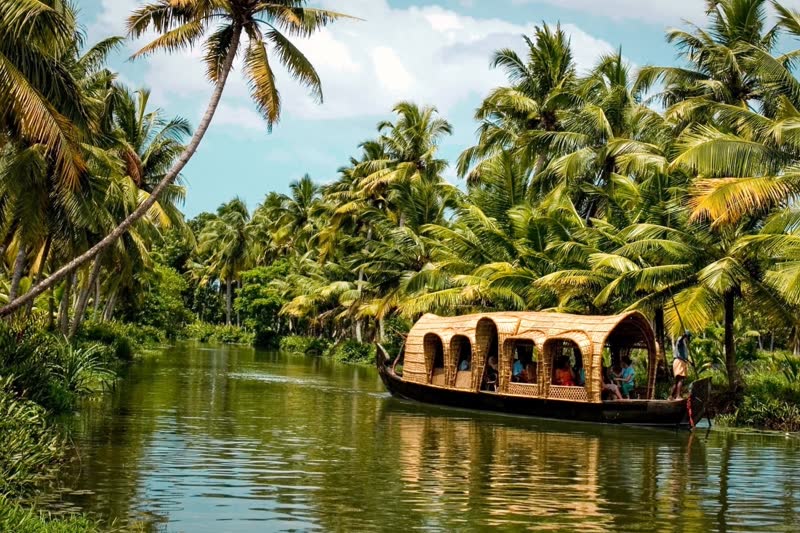
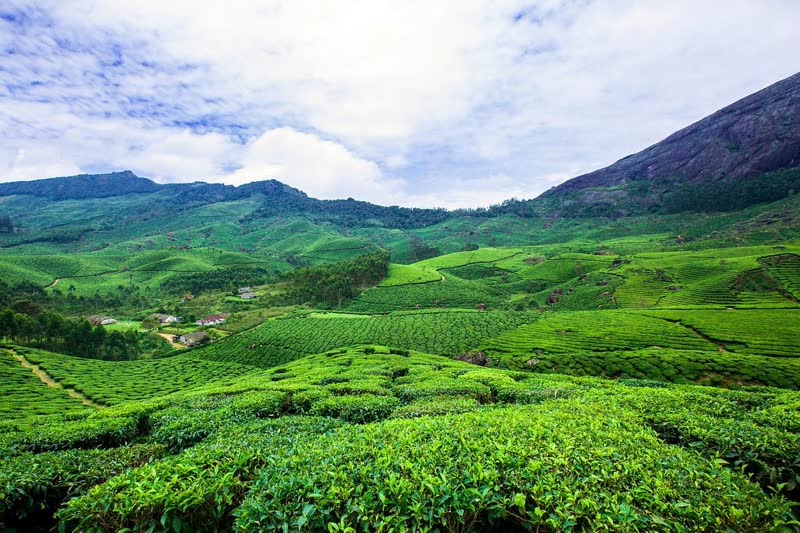
Kochi for culture, food, and city life. Munnar for nature, tea landscapes, and cool mountain air. These two destinations are only 130 km apart and serve completely different purposes in a Kerala itinerary — which is exactly why most travelers do both. Kochi is Kerala's most livable and walkable city: a two-day stroll through Fort Kochi's Dutch-Portuguese heritage, Chinese fishing nets, Kathakali theatre, and one of South India's most interesting restaurant scenes. Munnar is nature photography, sunrise jeep rides through the world's highest tea estate, and Nilgiri tahr encounters in Eravikulam National Park. If you're forced to pick one: Kochi is more accessible and works without a car. Munnar rewards you more deeply but requires planning and transport.
Choose Munnar if: Tea plantation landscapes, mountain trekking, Eravikulam's Nilgiri tahr, sunrise jeep safaris to Kolukkumalai, and cool misty mornings at 1,500m elevation are what you're after.
🏙️ Choose Kochi if…
Walk Fort Kochi in two hours: Dutch Palace, St. Francis Church (where Vasco da Gama was briefly buried), Jew Town synagogue, Chinese fishing nets at golden hour. Eat at the Kerala Café for a proper Sadya thali. Watch a Kathakali performance at one of Fort Kochi's intimate theatres (₹300–600). Kochi is the most European-feeling city in South India and one of its most charming.
🍵 Choose Munnar if…
Drive three hours up hairpin bends into the Western Ghats and arrive in a world of rolling emerald tea gardens at 1,524m. The Kolukkumalai jeep safari (world's highest tea estate) is one of Kerala's top experiences. Eravikulam National Park protects the endangered Nilgiri tahr. On clear mornings the views stretch 50 km across Tamil Nadu. Cold at night — bring a layer.
Quick Comparison
| Category | 🏙️ Kochi | 🍵 Munnar | Winner |
|---|---|---|---|
| Daily budget (mid-range) | ₹1,500–3,000 (~$18–36) | ₹2,500–5,000 (~$30–60) | Kochi |
| Food & cuisine | Kerala Sadya, seafood, Malabar biryani | Limited (resort dining, local dhabas) | Kochi |
| Colonial heritage | Dutch Palace, St. Francis, Jew Town | British-era tea estate bungalows | Kochi |
| Nature & wildlife | Cherai Beach, mangrove canoe tours | Eravikulam NP, Nilgiri tahr, Periyar nearby | Munnar |
| Tea plantation scenery | None | Tata Tea Museum, Kolukkumalai, Top Station | Munnar |
| Trekking & adventure | Day-trip options (Wayanad, Athirapilly) | Rajamala, Meesapulimala, Chokramudi | Munnar |
| Getting there from Kochi airport | 30–60 min by taxi (₹500–1,200) | 3.5–4 hours by taxi (₹3,500–4,500) | Kochi |
| Ease without a car | Very easy — fully walkable Fort Kochi | Difficult — jeeps needed for key sites | Kochi |
| Backwater access | Cherai, Vypin canoe tours nearby | None — 4+ hours to Alleppey | Kochi |
| Climate | Hot & humid (28–34°C year-round) | Cool & misty (14–25°C, 1,524m alt.) | Depends |
| Nightlife & evening scene | Kathakali, restaurants, rooftop bars | Quiet resort evenings, bonfire culture | Kochi |
| Overall vibe | Cosmopolitan heritage city | Serene mountain hill station | Depends on you |
🍛 Food & Dining
Kochi wins food comprehensively. As Kerala's largest city and a major commercial hub, Kochi has a dining scene that spans generations — from centuries-old Jewish-influenced cooking in Jew Town to contemporary Kerala fusion at Fort Kochi's heritage cafes. Munnar is a hill station with limited food infrastructure: resort restaurants, a few local dhabas in town, and roadside stalls. The food in Munnar isn't bad, but it's not what you go for.
Kochi food highlights:
- Kerala Sadya — The full banana-leaf feast: 20+ dishes including sambar, aviyal, thoran, pachadi, and payasam dessert. Best Sadya in Kochi: Pai Brothers, Hotel Grand (Ernakulam), or ask your homestay to arrange one. ₹200–400 for a full lunch Sadya.
- Fort Kochi café scene — Brunton Boatyard, Kashi Art Café, and the cafes around Ridsdale Road serve excellent Kerala food alongside filter coffee. The Malabar Junction Hotel restaurant is worth the splurge for Malabar cuisine with European presentation.
- Kerala fish curry — Red fish curry (kudampuli tamarind base) at any local restaurant in Ernakulam: ₹150–300 with rice. Ask for kingfish (neimeen) or pearl spot (karimeen) — the latter is local to Kerala backwaters and extraordinary.
- Malabar biryani — North Kerala's short-grain kaima rice biryani is lighter and more fragrant than Hyderabadi. Good versions at restaurants around Ernakulam Junction railway station.
- Puttu and kadala — The Kerala breakfast: cylindrical steamed rice-flour tubes with black chickpea curry. ₹50–80 at any local restaurant before 10am. Don't eat hotel breakfast — find a local "meals" place.
Munnar food:
- Resort dining — Most Munnar resorts serve good Kerala thali meals included with accommodation. Quality ranges widely. Ask before you book whether meals are included.
- Town restaurants — Munnar town has a row of local restaurants around the main junction serving rice meals (₹80–150), biryani, and tea. SR Restaurant and Saravana Bhavan chain are reliable. Nothing exceptional.
- Roadside tea stalls — Fresh Munnar tea with biscuits while watching the plantation view. The tea bought here (loose leaf from the Tata Tea Museum shop) is genuinely excellent and cheaper than anywhere else.
"Try the malabar place especially for the snacks. There is a 'Kerala cafe' in fort kochi for sea food options and kerala meals. The Kathakali experience in the evening was also great." — r/Kerala
"Kochi has some of the best food in Kerala. Don't make the mistake of eating at tourist restaurants around the fishing nets — walk inland five minutes to where the locals eat and get a proper rice meals lunch." — r/Kerala
🏛️ Culture & Heritage
Fort Kochi is one of the most layered heritage neighborhoods in Asia: 500 years of Portuguese, Dutch, and British colonial history overlaid on a Kerala trading port that had already hosted Chinese, Arab, and Jewish merchants for centuries before any European arrived. You can walk the entire Fort Kochi quarter in two hours, but you could spend two days exploring it properly.
Kochi heritage highlights:
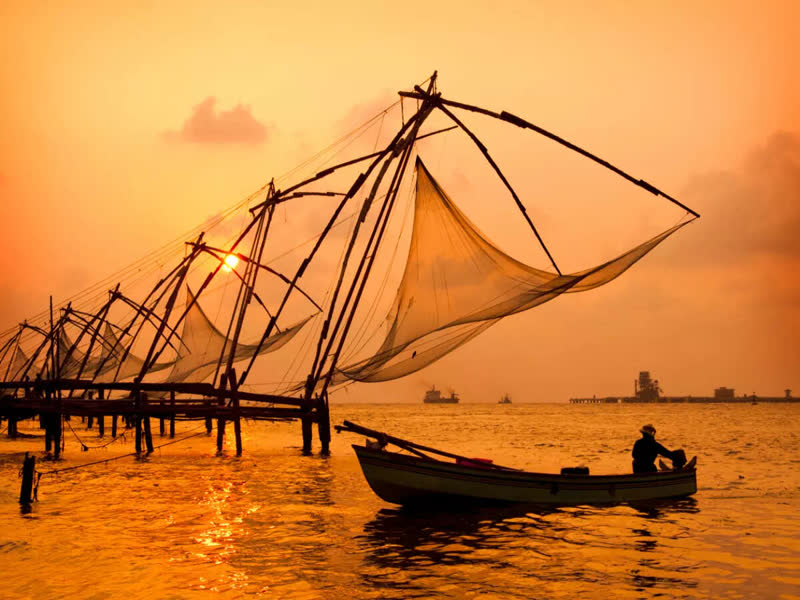
- Chinese Fishing Nets (Cheena Vala) — The iconic cantilevered fishing nets on Kochi's waterfront, introduced by Chinese traders in the 14th century. They're still operated by local fishermen at sunrise and sunset. Entry free; the experience of watching them work at golden hour is priceless. Buy fresh catch from the fish market alongside and have it fried at a stall for ₹100–200.
- Mattancherry Palace (Dutch Palace) — A misnomer — built by the Portuguese in 1555 and renovated by the Dutch in 1663. The interior contains Kerala's finest mural paintings: scenes from the Ramayana in extraordinary detail, using natural pigments that have lasted 400+ years. Entry ₹10 (Indians), ₹25 (foreigners). Closed Fridays.
- Paradesi Synagogue & Jew Town — One of the oldest active synagogues in Asia (1568), in Mattancherry's Jew Town. The floor is paved with hand-painted Chinese porcelain tiles, no two alike. The neighborhood around it has excellent antique shops. Entry ₹5, closed Saturdays and Jewish holidays.
- St. Francis Church — The oldest European church in India (1503), originally built by the Portuguese. Vasco da Gama was buried here briefly after his death in Kochi in 1524. His gravestone slab remains. Free entry.
- Kathakali performance — Classical Kerala dance-drama with elaborate makeup and costume taking 3–4 hours to apply. Fort Kochi's Kerala Kathakali Centre and See India Foundation offer nightly performances (₹300–600 entry) with a pre-show makeup demonstration — watch the transformation in person. 45-minute performances are tailored for tourists.
- Fort Kochi street art — The Biennale art festival (held biennially) has left a legacy of excellent street murals throughout Fort Kochi. A self-guided street art walk takes 90 minutes.
Munnar's cultural offering: More limited, and centers on the tea estate story rather than architectural heritage.
- Tata Tea Museum (KDHP Museum) — A surprisingly well-curated museum inside a working tea factory. The colonial history of tea cultivation in the Munnar hills — from the 1870s British plantation era through the Tata acquisition — is told with original equipment, photographs, and artifacts. ₹75 entry; factory tour included. One of India's better small museums.
- Kolukkumalai Estate — The world's highest tea estate (2,100m) has a working colonial-era factory using machinery from the early 1900s, much of it still steam-powered. The contrast between cutting-edge tea quality and antique processing equipment is fascinating. Reachable only by jeep (₹1,200–1,500/person shared).
"Fort Kochi was interesting, but not enough for a trip on its own. I've been to better places for colonial heritage. Munnar could be interesting for nature, but you really need a car to get the most out of it." — r/travel
💰 Cost Comparison
Kochi is cheaper per day for most travelers. It has a wide range of budget accommodation (especially homestays in Fort Kochi), plentiful cheap local restaurants, and you can do all the main sights for under ₹500 in entry fees. Munnar's costs spike in three areas: accommodation (resort-heavy, few real budget options), transport (the taxi fare from Kochi alone is ₹3,500–4,500), and activities (jeep tours, park entries). That said, Munnar is still excellent value by international standards.
| Item | 🏙️ Kochi | 🍵 Munnar |
|---|---|---|
| Budget homestay/guesthouse | ₹800–2,000/night | ₹1,000–2,500/night |
| Mid-range hotel | ₹2,500–6,000/night | ₹3,000–8,000/night |
| Tea estate bungalow | N/A | ₹4,000–12,000/night |
| Local restaurant meal | ₹80–250 | ₹100–300 |
| Kathakali performance | ₹300–600 | N/A |
| Eravikulam NP entry | N/A | ₹125 (Indian) / ₹300 (foreigner) |
| Kolukkumalai jeep (shared) | N/A | ₹1,200–1,500/person |
| Taxi from Kochi airport | ₹500–1,200 | ₹3,500–4,500 |
| Daily budget (backpacker) | ₹1,200–2,000/day | ₹1,800–3,500/day |
| Daily budget (mid-range) | ₹2,500–5,000/day | ₹4,000–8,000/day |
"Budget: ~₹15k per person for the Munnar leg. Using public transport would save money but buses in Kerala are unreliable and the Kolukkumalai jeep is non-negotiable. Factor in the taxi from Kochi both ways." — r/india_tourism
"When looking online, Uber to Munnar from Kochi is about ₹3,500–4,500 one way. Worth it if splitting between 2-4 people. Getting back to Kochi airport from Munnar is the expensive part if you're solo." — r/Kerala
🌿 Nature & Outdoors
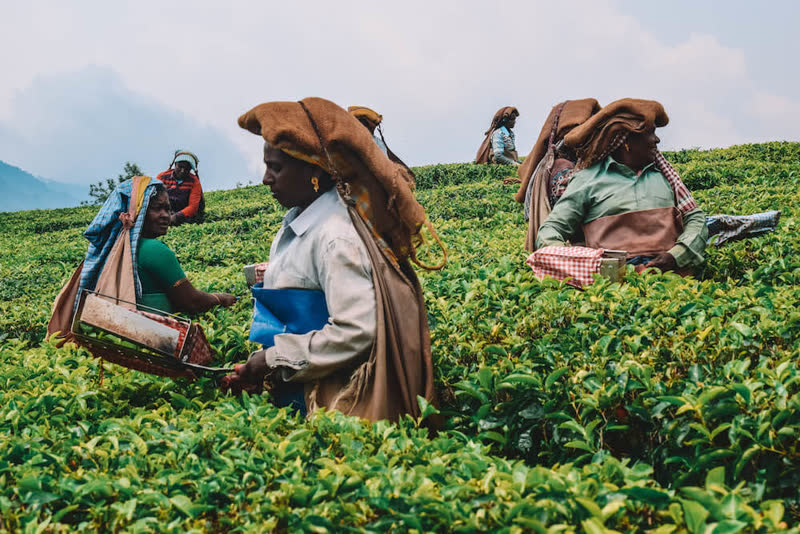
Munnar wins nature — and it's not close. This is the whole reason to go. The Western Ghats around Munnar are a UNESCO World Heritage Site, one of the world's eight biodiversity hotspots, and some of the most spectacular highland scenery in South Asia. Kochi has its own nature (mangrove canoe tours, Cherai Beach, backwater day trips) but it's a coastal city, not a nature destination.
Munnar nature highlights:
- Eravikulam National Park — 97 sq km of montane grassland at 2,000–2,695m elevation. Home to the endangered Nilgiri tahr (a stocky mountain goat), Indian leopard, gaur (Indian bison), and over 130 bird species. The 2 km forest walk through rolling high-altitude grassland is genuinely stunning. Entry ₹125 (Indian) / ₹300 (foreign). Book online at the KFDC website — daily caps are real and the park sells out on weekends. Open 7am–4pm; go early for wildlife. Closed between mid-February and mid-March (calving season).
- Kolukkumalai Tea Estate & Sunrise Point — The world's highest tea estate at 2,100m. The 90-minute jeep ride on a rough mountain track through pre-dawn darkness is an experience in itself. At the top: colonial factory, tea garden walks, and views that stretch across Tamil Nadu on clear mornings. Book your jeep tour the night before through your guesthouse. Depart Munnar town by 4:30am for sunrise. ₹1,200–1,500/person shared jeep.
- Top Station (Kolukkumalai viewpoint) — Once the highest point of the Kerala–Tamil Nadu ropeway, now a viewpoint at 1,868m with views over the Ghats. Best visited at sunrise or late afternoon. Accessible by road (41 km from Munnar town, 1.5 hours). Avoid weekends — it gets crowded.
- Attukal Waterfalls — A picturesque waterfall 9 km from Munnar town, best during and immediately after monsoon (July–October). Entry ₹20. Walking trail through cardamom and tea gardens. Good for a relaxed morning walk.
- Meesapulimala Trek — Kerala's second highest peak (2,640m). A challenging 12 km forest trek through shola forest and grassland, starting from Rhino Point. Requires forest department permit (₹500–1,000 with guide). Not suitable for casual hikers. Best October–March.
Kochi nature:
- Cherai Beach & backwaters — 30 km north of Fort Kochi, Cherai Beach is where the Arabian Sea meets the backwaters. Dolphins spotted occasionally. Calm, shallow water, local fishing village atmosphere. Rent a bicycle (₹100–200/day) to ride the narrow island roads through coconut groves and rice paddies.
- Canoe backwater tours — 2–4 hour village canoe tours through narrow backwater channels near Vypeen Island or Kumarakom (day trip). ₹400–800/person. More intimate than Alleppey houseboats — wooden dugout canoes through village-scale waterways.
- Athirapilly Waterfalls — 75 km from Kochi (2 hours), the largest waterfalls in Kerala — 80 feet wide, 80 feet tall. The "Niagara of India" has been filmed in dozens of Bollywood movies. Day trip feasible from Kochi. Entry ₹30 (Indian) / ₹225 (foreign).
"Munnar is better enjoyed with a car or jeep. But if you are staying in a good place and the idea is to just chill — sit on a tea garden terrace and watch the mist roll in — it is fine without one. The chill factor is worth it even if you don't do every viewpoint." — r/Kerala
"I stayed at Munnar and booked a local jeep (₹1,350 per head) through the hostel to Kolukkumalai. It was around 2.5 hours from my hostel to reach the top. The sunrise from up there with the tea plantations below — nothing else in India comes close." — r/SoloTravel_India
🚌 Getting Around
Getting to and navigating these two destinations is very different. Kochi is walkable and well-connected by public transport. Munnar requires planning and a jeep or hired car for the key experiences.
Getting to Kochi:
- By air: Cochin International Airport (COK) is Kerala's main international hub — direct flights from Dubai, Doha, Bahrain, Singapore, and major Indian cities. From Mumbai: 2 hours (~₹3,000–8,000). From Delhi: 3 hours (~₹4,000–10,000). Taxi to Fort Kochi: ₹700–1,200 (30–60 min).
- By train: Ernakulam Junction (ERS) and Ernakulam Town (ERN) serve Kochi from Mumbai (26–40h sleeper, ₹500–1,800 in 3AC), Bangalore (6–8h, ₹300–900), and Chennai (7–9h, ₹350–1,000). Fort Kochi is a 15-minute ferry ride across the harbor from Ernakulam (₹4–6 on the passenger ferry — cheapest and most scenic transport option in Kerala).
Getting around Kochi: Fort Kochi is entirely walkable. The heritage area — from the Chinese fishing nets through Mattancherry to Jew Town — is about 2.5 km on foot. Auto-rickshaws (₹60–150) and Uber/Ola cover the broader city. The Ernakulam–Fort Kochi ferry (₹4–6, runs every 30 min from 6am–10pm) is both cheap and atmospheric. Kochi's metro (operational) covers the mainland efficiently.
Getting to Munnar from Kochi:
- Taxi (recommended): Uber/Ola ₹3,500–4,500 one-way (3.5–4 hours). Pre-negotiate with local drivers for ₹2,800–3,200. The road climbs through rubber plantations, then tea gardens — spectacular in the final 50 km. Traffic heaviest on weekends.
- KSRTC Bus: State buses from Ernakulam KSRTC bus stand, ₹120–200, 4–5 hours. Crowded and slow but cheap. Leaves multiple times daily. Not bookable online — buy at the counter.
- Private tour: Day-trip packages from Kochi (₹4,000–8,000 per vehicle) include driver and basic sightseeing — worth it if time is tight, but a day trip to Munnar is genuinely insufficient. Stay 2 nights.
Getting around Munnar: Munnar town itself is walkable (tea museum, market, local restaurants). For sights outside town — Eravikulam (16 km), Kolukkumalai (32 km via rough track), Top Station (41 km), Attukal Falls (9 km) — you need transport. Options:
- Jeep tours (organized through guesthouses or hotels): ₹600–1,500/person shared, covering multiple sites. This is the standard approach.
- Hire a car with driver for a full day: ₹2,500–3,500. Best value for groups of 3–4.
- Auto-rickshaws: cover nearby spots (Tea Museum, town area). Not suitable for Kolukkumalai or Top Station.
"Worth it — good plan as you will cover major city with historical places and beaches (Kochi), backwaters (Alleppey) and hill station (Munnar). The drive from Kochi to Munnar is itself a highlight — don't sleep through it." — r/Kochi
🌸 Best Time to Visit
Both destinations have the same broad seasonal pattern — October to March is best — but Munnar has a more pronounced monsoon impact and closes some attractions during the worst of the rains.
Kochi by season:
- October–March: The sweet spot. Post-monsoon air clarity, pleasant temperatures (26–32°C), low humidity. Christmas and New Year in Fort Kochi are festive — the neighborhood's Portuguese-influenced culture makes it one of India's best Christmas destinations. Kochi Carnival (Dec 31) on Fort Kochi Beach is a local institution.
- April–May: Hot (33–36°C) and increasingly humid. Still manageable in the mornings. Vishu (Malayalam New Year, April) and Thrissur Pooram (Elephant Festival in April/May — 75 km from Kochi, day trip feasible) are worth timing around.
- June–September (Monsoon): Heavy, sustained rain. Fort Kochi is perfectly fine to visit in monsoon — the heritage buildings are beautiful in the rain, museums are open, and budget accommodation is 30–50% cheaper. Boats to Vypin and Cherai Beach may be restricted in rough weather. The backwater atmosphere is particularly moody and atmospheric.
Munnar by season:
- October–March: Peak season. Post-monsoon tea gardens at maximum green, clear skies for views, Eravikulam open. December–January is busy and cold (8–15°C at night) — bring layers. Book accommodation 4–8 weeks ahead for Dec–Jan.
- September–October: Immediately post-monsoon is Munnar's most beautiful time — intensely green, lower prices, fewer tourists, everything open. The waterfalls are at full power. Some fog in the mornings — Kolukkumalai views can be obscured until 9–10am.
- April–May: Warming up (20–28°C), pleasant for trekking. Neelakurinji wildflowers bloom in mass every 12 years (2030 is next — not worth waiting for). Crowds building toward summer holidays.
- June–August (Monsoon): Heavy landslide risk on Munnar roads — genuinely dangerous. Major attractions including Eravikulam may close. If visiting monsoon, choose Kochi and skip Munnar entirely. Some tea estates stay open for guests staying on property.
"Kerala trip in October just after the rains — everything is impossibly green, the waterfalls are full, and you almost have Munnar to yourself. September-October is the secret timing for Munnar that most people don't know about." — r/Kerala
🏨 Where to Stay
Both destinations have accommodation that's distinctive and worth getting right. Fort Kochi's heritage homestays are some of India's most atmospheric urban places to sleep. Munnar's tea estate bungalows are in a different category entirely.
Kochi (Fort Kochi) accommodation:
- Heritage homestays — Fort Kochi's best value and most atmospheric option. Family-run homestays in 150–200-year-old Dutch and Portuguese colonial houses, ₹1,500–4,000/night including breakfast. The converted mansions on Calvathy Road and around Princess Street area are the sweet spot. Book 2–4 weeks ahead in peak season.
- Boutique heritage hotels — Properties like Old Harbour Hotel, Brunton Boatyard, and Eighth Bastion occupy genuinely historic buildings with excellent food. ₹6,000–15,000/night. Worth it for a splurge stay.
- Budget options — Several clean guesthouses in Fort Kochi under ₹1,500/night. For ₹1,000–1,800 you can get a decent AC room. The area around Parade Ground and K. B. Jacob Road has concentrated options.
- Ernakulam (mainland) — Chain hotels, business hotels, hostels. Cheaper and less atmospheric than Fort Kochi. Only stay here if Fort Kochi is fully booked — the ferry commute is part of the experience.
Munnar accommodation:
- Tea estate bungalows — The distinctive Munnar experience. Former British planter bungalows on working tea estates, surrounded by plantation rows. ₹4,000–12,000/night typically includes meals, tea garden walks, and that complete isolation from everything. Windermere Estate, Spice Tree, and KDHP properties (run by Tata Tea) are the benchmark. Book months ahead in peak season.
- Town guesthouses — Budget guesthouses and small hotels in Munnar town, ₹1,000–2,500/night. Functional, not atmospheric. Fine if you're just sleeping before early jeep departures.
- Eco-resorts — Several eco-resorts in the hills around Munnar (Periyar region, Thekkady nearby) offer treehouse-style or canvas accommodation in forest settings, ₹3,000–8,000/night. More rustic and wildlife-adjacent than tea estate stays.
🔀 Why Not Both?
Kochi and Munnar are only 130 km apart — 3.5–4 hours by car — and serve completely different purposes in a Kerala itinerary. Almost every experienced Kerala traveler recommends doing both. The standard Kerala triangle is: Kochi (arrive, 2 days heritage & food) → Munnar (2–3 days tea hills & nature) → Alleppey (1–2 nights houseboat) → fly home. This covers Kerala's three flagship experiences in 6–8 days.
Optimal Kochi + Munnar itinerary (5–6 days):
- Day 1: Arrive Kochi — Check in to Fort Kochi heritage homestay. Afternoon: Fort Kochi walk (Chinese fishing nets, St. Francis Church, Mattancherry). Evening: Kathakali performance (book ahead). Dinner: Kerala fish curry at a local restaurant.
- Day 2: Kochi deep dive — Morning: Mattancherry Palace murals + Jew Town Synagogue. Afternoon: canoe backwater tour on Vypeen Island channels (₹500–800, 2–3 hours). Sunset at the Chinese fishing nets. Dinner: splurge at a Fort Kochi heritage restaurant.
- Day 3: Kochi → Munnar — Book taxi the night before (Uber/Ola, ₹3,500–4,500). Depart 8am to arrive Munnar by noon. Afternoon: Tata Tea Museum (2 hours, factory tour included). Evening: book your Kolukkumalai jeep for Day 4 through your guesthouse. Dinner: resort thali or local town restaurant.
- Day 4: Munnar highlights — 4:30am departure for Kolukkumalai sunrise (3 hours total drive + 1.5 hours at summit). Return by 10am for breakfast. Afternoon: Eravikulam National Park (book online, 2 km wildlife walk). Sunset: Mattupetty Dam viewpoint (12 km from town, free).
- Day 5: Munnar → Alleppey (optional) — 3–4 hour drive to Alleppey for overnight houseboat on the backwaters — the third element of the classic Kerala circuit. See our Kerala vs Goa comparison for the full houseboat breakdown.
Also see Rishikesh vs Dharamsala if you're planning a broader India mountains trip alongside Kerala, or Goa vs Kerala for the bigger picture of India's southwest coast.
🧭 The Decision Framework
Choose Kochi if…
- You want Kerala's best food scene and a walkable heritage city
- You're flying in/out of Kerala and need a good base
- Colonial architecture, a 16th-century synagogue, and Kathakali interest you
- You don't have your own car or don't want to hire one
- You want easy access to the Alleppey backwaters (2 hours away)
- Budget travel is important — Fort Kochi has cheap heritage homestays
- Short trip (2–3 days) — Kochi is self-contained and compact
- You want city energy, restaurant variety, and evening options
Choose Munnar if…
- Tea plantation landscapes and mountain scenery are your goal
- Wildlife — Nilgiri tahr in Eravikulam NP — is a priority
- The Kolukkumalai sunrise jeep safari is on your bucket list
- You want cool temperatures (14–25°C) after India's heat
- Trekking and high-altitude nature are your preferred activities
- You're comfortable with a hired car or jeep for getting around
- A tea estate bungalow stay is the kind of accommodation you want
- You want remote, quiet evenings with very little tourist infrastructure
❓ Frequently Asked Questions
Is Kochi or Munnar better for first-time Kerala visitors?
Kochi is better for first-time Kerala visitors. It's the most accessible city in Kerala, has excellent transport links (international airport, train connections), and packs enormous value into 2 days: Fort Kochi's Dutch-Portuguese heritage, Chinese fishing nets, Kathakali performances, Jew Town, and some of Kerala's best restaurants. Munnar is extraordinary but requires a car or hired taxi (3.5–4 hours from Kochi) and is harder to navigate without your own transport. Reddit consensus: start with Kochi, then add Munnar. Don't skip either.
How far is Kochi from Munnar?
Kochi to Munnar is approximately 130 km by road — about 3.5 to 4 hours by car or taxi. The drive itself is spectacular: the last 50 km climbs through the Western Ghats with hairpin bends, tea plantation vistas, and waterfalls. A one-way taxi costs ₹3,500–4,500 (Uber/Ola) or ₹3,000 if negotiated directly with a local driver. There's no direct train. Public buses exist (KSRTC, 4–5 hours, ₹120–200) but are slow and crowded. Renting a car with driver for ₹2,500–3,500/day is the most comfortable option.
Which is cheaper, Kochi or Munnar?
Kochi is generally cheaper for accommodation and food. Budget guesthouses in Fort Kochi run ₹800–2,000/night; a good sit-down meal in Mattancherry is ₹200–400. Munnar's accommodation tends to be resort-heavy — good budget options exist (₹1,000–2,000/night for a simple guesthouse in town) but most travelers splurge on tea estate stays (₹3,000–8,000/night) because the views justify it. The main Munnar cost spike is transport: the taxi fare each way (₹3,500–4,500) is unavoidable unless you take a slow bus. Total per-day spend in Munnar is typically 30–50% higher than Kochi.
Can you do Munnar without a car?
Technically yes, but it's frustrating. Munnar town itself is walkable (tea museum, local market, bazaar area), but the best attractions — Eravikulam National Park (16 km from town), Top Station (41 km), Kolukkumalai tea estate (32 km via jeep track), Attukal Waterfalls — require transport. Jeep tours from town cover multiple attractions for ₹1,000–1,500/person and are the best budget option. Auto-rickshaws cover some spots. Reddit consistently says Munnar rewards you far more with your own wheels or a hired driver. Book a half-day or full-day jeep tour through your guesthouse on arrival.
How many days do you need in Kochi vs Munnar?
Kochi: 2 full days is the sweet spot. Day 1: Fort Kochi walk (Chinese fishing nets, St. Francis Church, Mattancherry Palace, Jew Street), evening Kathakali performance (₹300–600). Day 2: Ernakulam side, Kerala food hunt, afternoon canoe backwater tour or day trip to Cherai Beach. Munnar: 2–3 days. Day 1: Eravikulam National Park (book tickets online — sells out) + tea museum. Day 2: Kolukkumalai jeep safari at sunrise (the best thing in Munnar, period), Attukal Falls afternoon. Day 3 (optional): Top Station and viewpoints.
What is Eravikulam National Park like?
Eravikulam National Park (16 km from Munnar town) is the main reason to visit Munnar. At 2,695m elevation, it's home to the endangered Nilgiri tahr — a mountain goat found only in the Western Ghats — and the rare Neelakurinji flower that blooms in mass every 12 years (next in 2030). Entry: ₹125 (Indian), ₹300 (foreigner). Buy tickets online at the KFDC website — the park reaches daily caps quickly in peak season. A 2 km forest walk through montane grassland with panoramic views of the Ghats. Go early (opens 7am) for the best wildlife sightings. Cloud cover can obscure views after 10am.
What is Kolukkumalai like, and is it worth the jeep ride?
Kolukkumalai is widely regarded as Munnar's best single experience. It's the world's highest tea estate (2,100m), accessible only by a brutal 18 km jeep track from Suryanelli village. The jeep ride itself (₹1,200–1,500/person for a shared jeep) takes 1.5 hours each way through some of the most dramatic tea garden scenery on Earth. At the top: a colonial-era tea factory still processing tea with antique machinery, panoramic views that stretch to Tamil Nadu, and sunrise clouds rolling through the Ghats below you. Go at 5am for sunrise — the 2.5 hour drive from Munnar town starts before dawn. Reddit calls it Munnar's unmissable experience.
What's the best time to visit Kochi vs Munnar?
Both destinations are best from October to March. Kochi: Year-round city, though June–September (monsoon) means heavy rain and limited beach access at nearby Cherai. Fort Kochi itself is fine to visit in monsoon — it's walkable and the colonial architecture is beautiful in the rain. Munnar: Peak season October–March, when roads are clear, Eravikulam is open, and visibility is good. September–October (post-monsoon) is stunning — tea gardens are intensely green after the rains. Avoid June–August: landslides on the mountain roads are a genuine hazard, and many tea estate stays close. December–January is Munnar's busiest and most expensive period — book accommodation 2–3 months ahead.
Ready to plan your Kerala trip?
Get a personalized Kerala itinerary combining Kochi, Munnar, and the Alleppey backwaters — tailored to your budget and time.
Plan My Kerala Trip →Or explore more compare pages · Goa vs Kerala · India vs Nepal
🎟️ Book Tours & Experiences
Hand-picked tours and activities for both destinations — book with free cancellation
Experiences via Viator — free cancellation on most tours