How we built this comparison
This page combines traveler discussion patterns, published price ranges, transit details, and seasonal data to make the Koh Samui vs Koh Phangan decision easier to resolve.
- Reviewed Reddit discussions from r/ThailandTourism, r/kohsamui, r/digitalnomad, and r/Thailand covering costs, beaches, and party scene.
- Checked numeric claims including accommodation ranges, ferry costs, food prices, and seasonal patterns.
- Updated the page structure so each major section ends with a clearer winner, reason, and traveler-use note.
Best read as a decision guide, not a universal truth: the right pick depends on your travel style, who you're with, and whether you want to party or unwind.
⚡ The TL;DR Verdict
Koh Samui is the better all-rounder — bigger, more practical, better infrastructure, and suited for a wider range of travelers including families, couples, and first-timers to Thai islands. But if the Full Moon Party is on your bucket list, you need a wellness retreat, or you're a digital nomad craving community, Koh Phangan delivers something Samui simply can't.
- 🏖️ Koh Samui wins: families, couples, first-timers, beach variety, better infrastructure, dining scene, access
- 🌙 Koh Phangan wins: Full Moon Party, yoga & wellness retreats, digital nomad community, budget backpackers
- 💰 Budget snapshot: Samui ~฿1,500–3,500/day ($42–97); Phangan ~฿900–2,500/day ($25–69)
- 🚢 Island hop: only 40 minutes apart by ferry — do both if you have 7+ days
🏖️ Choose Koh Samui if…
You want variety, comfort, and practicality — the resort island that actually has everything a traveler needs.
🌙 Choose Koh Phangan if…
You want the Full Moon Party, yoga retreats, a digital nomad community, or a cheaper hippie-vibed island escape.
Quick Comparison
| Category | 🏖️ Koh Samui | 🌙 Koh Phangan | Winner |
|---|---|---|---|
| Daily Budget (mid-range) | ฿1,500–3,500 ($42–97) | ฿900–2,500 ($25–69) | Koh Phangan |
| Budget Guesthouse | ฿600–1,200/night ($17–33) | ฿400–800/night ($11–22) | Koh Phangan |
| Beach Quality | Chaweng, Lamai, Bophut, Maenam — variety | Thong Nai Pan, Bottle Beach (pristine north); Haad Rin (crowded south) | Tie |
| Party Scene | Chaweng bars, clubs, beach parties | Full Moon Party (20,000+ people monthly) | Koh Phangan |
| Families & Couples | Multiple calm beaches, resorts, no party intrusion | Quiet in the north; party energy elsewhere | Koh Samui |
| Getting There | Direct flights (Bangkok Airways monopoly) | Ferry only (40 min from Samui or 2h from mainland) | Koh Samui |
| Getting Around | Songthaews, taxis, scooters; paved ring road | Scooters; hillier roads, fewer taxis | Koh Samui |
| Food Scene | Wide variety: Thai, international, seafood markets | Good but more limited; great budget Thai food | Koh Samui |
| Wellness & Yoga | Spas, some retreats | World-class yoga centers, meditation retreats, Muay Thai camps | Koh Phangan |
| Digital Nomads | OK infrastructure but smaller community | Strong — coworking hubs, fiber, large expat network | Koh Phangan |
| Best For | Families, couples, first-timers, comfort seekers | Party seekers, wellness travelers, budget backpackers, nomads | — |
🏖️ Beaches & Coast
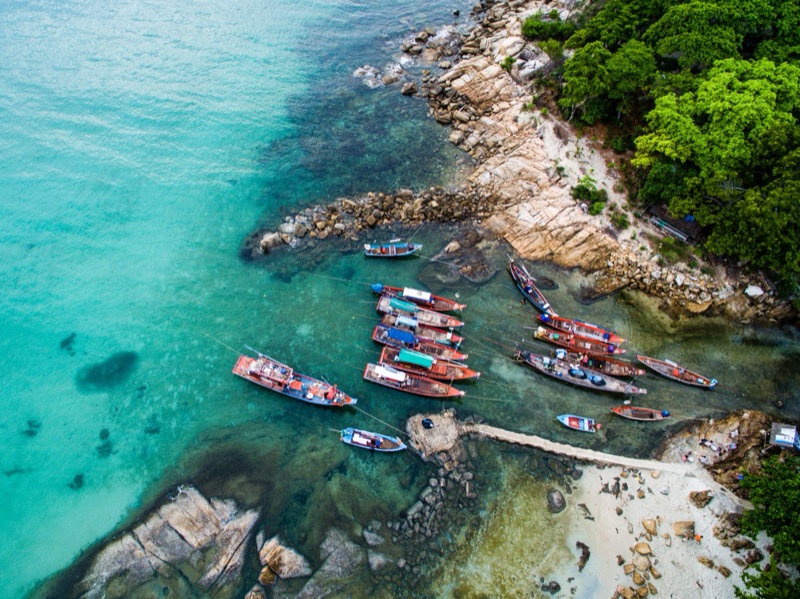
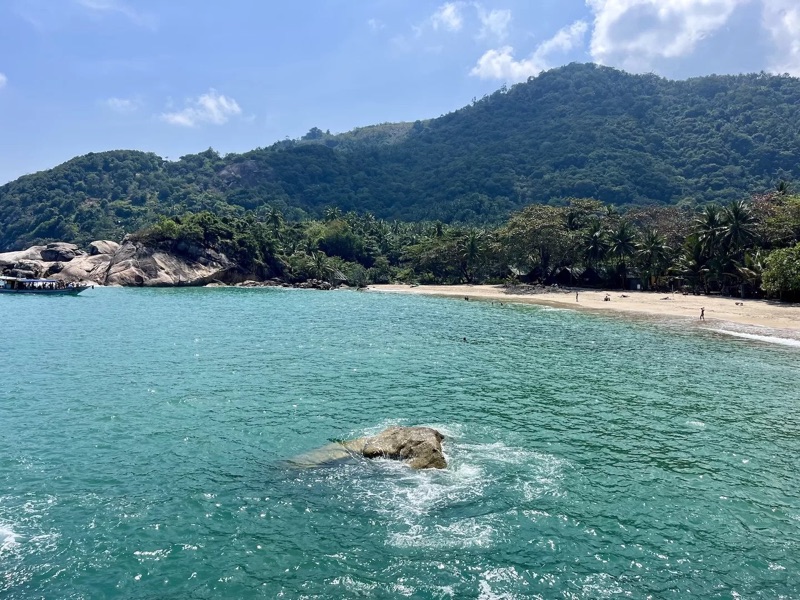
Both islands have genuinely excellent beaches, but the character and distribution differ significantly. Koh Samui has 60km of coastline with distinct beach zones spread around the island: Chaweng on the east is the most famous — a 7km stretch of white sand with dozens of beach bars, restaurants, and water sports operators. It's lively, sometimes crowded, but undeniably beautiful. Lamai is the second-largest beach, slightly quieter and better for budget travelers. Bophut (Fisherman's Village area) and Maenam on the north coast are calm, shallow, and ideal for families with small children. Choeng Mon in the northeast is a small, sheltered bay — some of the calmest water on the island.
Koh Phangan has a more split personality. The south, centered on Haad Rin, is mediocre as a beach — trampled, built-up, and famous only for the Full Moon Party. But venture north and you find some of the best beaches in the Gulf of Thailand: Thong Nai Pan Noi and Yai are stunning white-sand coves with gin-clear water and a peaceful vibe. Bottle Beach (Haad Khuad) requires a longtail boat or a steep jungle hike to reach, keeping it pristine. The east coast around Ban Tai and Than Sadet is wild and beautiful, with a royal historical connection — King Rama V's signature is carved into a riverside rock here.
One key difference: Samui's most popular beaches face east — which means no sunset views. For sunsets, you need the west coast beaches like Taling Ngam or head up to Bang Po in the northwest. On Phangan, the west-coast beaches and viewpoints deliver dramatic Gulf of Thailand sunsets.
🌙 Nightlife & Full Moon Party
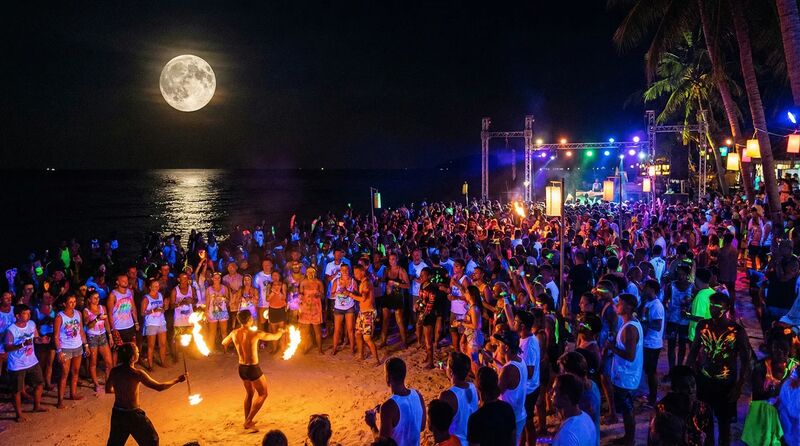
This is the category that defines the entire Koh Samui vs Koh Phangan debate for millions of travelers. Koh Phangan's Full Moon Party (FMP) is one of the most famous parties on Earth. Held monthly at Haad Rin beach on the night of the full moon, it draws 10,000–30,000 people — an all-night beach rave with multiple stages, fire shows, bucket cocktails, and an energy that's genuinely unlike anything else in Southeast Asia. There are also related events: Half Moon Party (held in the jungle twice monthly), Shiva Moon, and Waterfall Party. The party calendar on Phangan runs almost every week of the month.
Koh Samui has a solid nightlife scene of its own — the Chaweng area has beach clubs, bars, and clubs open until 3–4am — but it's conventional resort nightlife, not a bucket-list event. Samui's famous Green Mango and ARK Bar are classics, but they don't create the same buzz as FMP. Samui's advantage: you can easily avoid the party zones. There are entire stretches of the island (Bophut, Maenam, Choeng Mon) where nightlife is barely audible.
Practical notes for Full Moon Party: Check the FMP date before booking flights — the ferry from Samui fills up on party day. Budget ฿200–300 ($6–8) for the Haad Rin "entrance fee" (de facto cover charge on the beach road). Keep valuables at your hotel; pickpocketing risk is elevated. Most experienced travelers recommend booking accommodation in the north of the island to avoid Haad Rin noise, then taking a taxi to the party.
💰 Cost Comparison
Both islands are affordable by global standards, but Koh Phangan consistently undercuts Koh Samui — especially for accommodation. The biggest hidden cost on Koh Samui is the airport: Bangkok Airways holds a monopoly on Samui Airport (USM) and charges accordingly. A round-trip Bangkok–Samui can run ฿4,000–8,000+ ($110–222), versus ฿2,000–3,500 ($55–97) to Surat Thani + ferry to Phangan. Budget travelers almost universally choose the Surat Thani route to either island.
| Expense | 🏖️ Koh Samui | 🌙 Koh Phangan |
|---|---|---|
| Budget guesthouse | ฿600–1,200/night ($17–33) | ฿400–800/night ($11–22) |
| Mid-range hotel | ฿2,000–5,000/night ($55–138) | ฿1,200–3,500/night ($33–97) |
| Luxury resort | ฿5,000–30,000+/night ($138–830) | ฿3,000–12,000/night ($83–333) |
| Street food meal | ฿50–120 ($1.40–3.30) | ฿40–100 ($1.10–2.80) |
| Restaurant dinner | ฿150–400 ($4–11) | ฿100–300 ($2.80–8.30) |
| Beer (bar) | ฿80–150 ($2.20–4.20) | ฿70–120 ($1.90–3.30) |
| Scooter rental | ฿250–350/day ($7–10) | ฿200–300/day ($5.50–8.30) |
| Bangkok flights (one way) | ฿2,000–4,000 direct ($55–110) | ฿1,000–1,800 to Surat Thani + ferry ($28–50) |
| Daily total (mid-range) | ฿1,500–3,500 ($42–97) | ฿900–2,500 ($25–69) |
The flight premium: Samui Airport is a private airport operated by Bangkok Airways, meaning no budget airlines can fly there. This single factor adds ฿1,500–3,000 ($42–83) per person per trip compared to flying to Surat Thani and taking the ferry. Many budget travelers fly to Surat Thani even if they're heading to Samui.
✈️ Getting There & Getting Around
Getting to the Islands
Koh Samui: Has its own airport (USM), served exclusively by Bangkok Airways — convenient but expensive. Flight time from Bangkok is about 1h20m. For budget travelers, flying to Surat Thani Airport (URT) on the mainland is significantly cheaper (Air Asia, Nok Air, Lion Air all fly there), then taking a bus/taxi (45min, ฿200) to the ferry terminal and a 2h ferry to Samui (฿150–200). Night trains from Bangkok are another option.
Koh Phangan: No airport. The main routes are: (1) fly to Surat Thani then ferry (~2h, ฿400–600); (2) fly to Samui, then take the 40-minute inter-island ferry from Na Thon or Big Buddha pier (฿350–500, multiple daily). Most travelers use option 2 if they're already on Samui.
Getting Around the Islands
Both islands require wheels. Koh Samui has a well-maintained ring road (Route 4169), making navigation easy. Songthaews (shared pick-up trucks) run the main roads for ฿30–60 per person. Metered taxis and app-based rides (Grab) are available — sometimes overpriced for tourists. Scooter rental is ฿200–350/day and the most practical option for exploring.
Koh Phangan is hillier and has more narrow, windy roads — especially in the north toward Thong Nai Pan. The ring road doesn't fully circumnavigate the island. Scooters are essential; taxis are expensive and scarce outside Thong Sala. Songthaews connect the main beaches. On party days, the road from Thong Sala to Haad Rin is a 15km crawl — factor 1–1.5 hours and take a tuk-tuk.
🍜 Food & Dining
Koh Samui has a deep and diverse food scene reflecting its status as a major tourist hub. The island offers everything from ฿50 pad thai at night markets to ฿3,000 seafood dinners at Fisherman's Village in Bophut. The Lamai and Chaweng areas have hundreds of restaurants — Thai, Italian, Indian, Japanese, and everything in between. Don't miss the fresh seafood at Bang Rak or the Fisherman's Village Friday Walking Street market. Local Thai dishes like boat noodles, massaman curry, and fresh papaya salad are exceptional here.
Koh Phangan has a solid but smaller food scene. Thong Sala town has the best selection — local Thai restaurants, fresh juice stalls, and a decent night market. The health-conscious food scene reflects the island's wellness identity: you'll find more smoothie bowls, raw vegan cafes, and organic restaurants than on Samui. The southern beach area has plenty of tourist-oriented restaurants, but quality is inconsistent. The north around Thong Nai Pan has a handful of excellent beachfront restaurants.
🧘 Wellness, Yoga & Activities
This is Koh Phangan's surprise strength — and the reason many travelers who aren't interested in the Full Moon Party still choose it over Samui. The island has become one of Southeast Asia's top wellness destinations, with a concentration of yoga schools, meditation retreats, detox programs, and Muay Thai camps that rivals Bali or Chiang Mai.
Major wellness names on Koh Phangan include Agama Yoga (one of the largest yoga schools in the world), Samma Karuna (transformational retreat center), and dozens of smaller studios. Month-long yoga teacher training courses run ฿30,000–80,000 ($833–2,222). Week-long detox retreats are popular. There are also several Muay Thai camps where you can train daily, plus surfing at Haad Yuan on the east coast.
Koh Samui isn't without wellness offerings — there are spas at every resort, some excellent yoga studios, and Thai massage parlors on every street. But the island's identity is resort tourism, not transformation. The activities are more conventional: snorkeling day trips to nearby reefs, ATV tours, elephant sanctuaries, golf, and boat trips around the island.
🌦️ Best Time to Visit
Both Koh Samui and Koh Phangan sit in the Gulf of Thailand and share similar weather patterns, with one key difference: Samui's peak and wet season are the inverse of most other Thai islands. Here's the breakdown:
| Month | 🏖️ Koh Samui | 🌙 Koh Phangan |
|---|---|---|
| Dec–Feb | Dry, 25–32°C. Best season. Some rain in Jan. | Dry, 25–32°C. Best season. |
| Mar–May | Hot, drier. Excellent weather. Fewer crowds. | Hot, drier. Good weather. Quieter. |
| Jun–Aug | Warm, some afternoon showers. Manageable. | Warm, some showers. Still good. |
| Sep–Oct | Wetter, rougher seas. Some resorts close. | Wetter, rougher seas. |
| Nov | Heavy rain — worst month. Samui's monsoon. | Wet but improving. North coast better. |
Samui's monsoon quirk: Unlike Phuket and Koh Lanta (which rain in May–Oct), Koh Samui's worst weather is October–November. This is actually a plus for December–April visitors — when Phuket beaches are at peak season, Samui and Phangan are also excellent.
Full Moon Party timing: The FMP happens every month but some are bigger than others. December FMP (or the New Year's special version) and January FMP during high season are the wildest and most crowded. February's tends to have better weather. July–August have smaller international crowds but are still popular.
🏨 Where to Stay
Koh Samui Neighborhoods
Chaweng: The most popular base — widest beach, most restaurants and nightlife, great connectivity. Busy and commercial; some parts can feel like a Thai resort strip. Best for first-timers who want everything at their doorstep.
Lamai: Second-largest beach, less crowded than Chaweng. Good mix of mid-range guesthouses and upmarket villas. Slightly more relaxed vibe. Good value for couples.
Bophut (Fisherman's Village): Our favorite base for couples and return visitors. Charming wooden shophouses converted to restaurants and bars. Calmer, shallower beach with excellent dining. The Friday Night Walking Street is not to be missed.
Maenam: Long, quiet beach on the north coast with calm water — ideal for families with small children. More budget-friendly, fewer tourists.
Bang Rak / Big Buddha: Convenient for the ferry to Phangan, views of Big Buddha statue. Basic options, close to the ferry pier.
Koh Phangan Neighborhoods
Thong Nai Pan Noi/Yai (North): The best beaches on the island. Beautiful, calm, and peaceful. 45-minute drive from Thong Sala. Perfect for couples and nature seekers who want to explore.
Haad Rin (South): Only if you're specifically there for the Full Moon Party. Budget guesthouses, party atmosphere, mediocre beach. Avoid for any non-FMP visit.
Thong Sala (West): The main town — ferries arrive here, night market, best restaurants. Not beachfront but great central base. Practical choice for digital nomads.
Ban Tai / Sri Thanu (West Coast): Calm and laid-back, strong yoga and wellness scene, cheaper than Haad Rin, accessible beaches. Growing digital nomad enclave.
💻 Digital Nomads & Long Stays
Both islands attract long-term expats and remote workers, but they serve different needs. Koh Phangan has developed the stronger digital nomad infrastructure — somewhat counterintuitively, given its party reputation. The island has dedicated coworking spaces (Beachub in Sri Thanu is the most popular, Ko Hub in Thong Sala), fiber internet is increasingly available, and a large community of remote workers, coaches, yoga teachers, and entrepreneurs has made the island their base.
Monthly rentals on Phangan run ฿8,000–20,000 ($222–555) for a decent studio or bungalow — good value. The social calendar includes networking events, skill shares, and digital nomad meetups. Sri Thanu and Ban Tai on the west coast have become the de facto nomad neighborhoods.
Koh Samui is more practical for long stays — better hospitals (Bangkok Hospital Samui is a proper international facility), more supermarkets (Big C, Makro, Tesco), better banking, and a more settled expat community. But the coworking scene is smaller and the digital nomad community is less tight-knit. Monthly rents are higher: ฿12,000–35,000 ($333–972) for a condo or house.
🔀 Why Not Both?
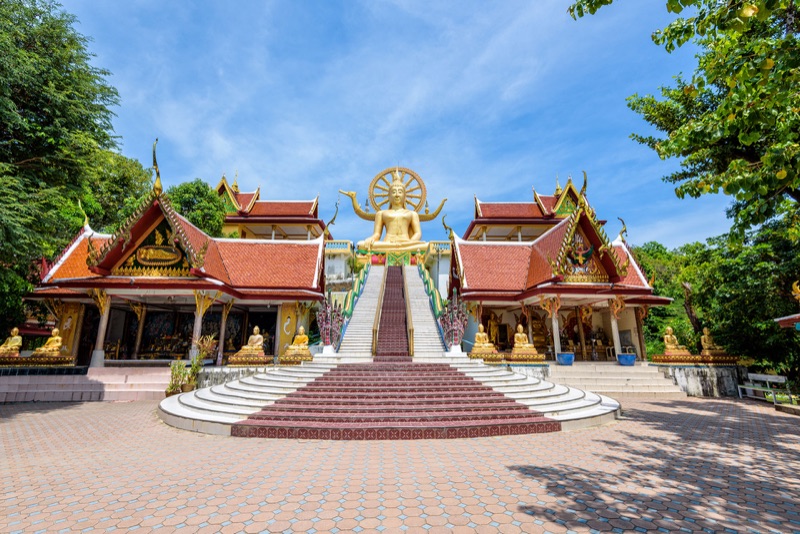
Here's what many Samui vs Phangan debates miss: the islands are only 40 minutes apart by ferry. The crossing costs ฿350–500 ($10–14) and runs multiple times daily. This makes doing both islands genuinely easy, even on a 7-day trip.
The most logical approach for most travelers is to base yourself on Koh Samui (better infrastructure, airport, more to do) and take a day trip or overnight to Koh Phangan — either to experience the Full Moon Party or to explore the quiet northern beaches. This way you get Samui's practicality and Phangan's unique highlights.
Suggested split itineraries
5 days: 3 days Koh Samui (Chaweng, day trip to Big Buddha, Fisherman's Village) → 2 nights Koh Phangan (Thong Nai Pan, FMP if timing works)
7 days: 4 days Koh Samui + 3 days Koh Phangan (explore north beaches, yoga class, FMP if timed)
10 days: 4 days Koh Samui → 3 days Koh Phangan → 3 days Koh Tao (add world-class snorkeling/diving)
The three-island route of Samui → Phangan → Tao is one of the classic backpacker routes in Southeast Asia, and for good reason — each island adds something completely different.
🎯 The Decision Framework
Choose Koh Samui If…
- You're traveling with family or young children
- You want a comfortable, resort-style experience
- You're visiting Thailand for the first time
- You want direct flights and better infrastructure
- Nightlife matters but not a party marathon
- You want a wide variety of restaurants
- You need reliable healthcare access
- You want beautiful beaches without exploring
- Couples trip: romantic dinners, spa days, boat trips
Choose Koh Phangan If…
- Full Moon Party is on your bucket list
- You want a yoga or wellness retreat
- You're a budget backpacker watching every baht
- You're a digital nomad wanting community
- You plan to train Muay Thai
- You want the "hippie/alternative" island vibe
- You're staying 2+ weeks and want community
- You want the pristine north beaches with effort
- You're visiting January–April and want value
❓ Frequently Asked Questions
Is Koh Samui or Koh Phangan better for families?
Koh Samui is clearly better for families. It has a proper airport, more hospitals and pharmacies, calm beach areas like Bophut and Maenam away from the party zones, better restaurant variety, and more family-friendly resorts. Koh Phangan's identity is built around the Full Moon Party, which makes it a tough fit for traveling with kids.
How do you get from Koh Samui to Koh Phangan?
The easiest route is the ferry from Na Thon or Big Buddha pier on Koh Samui to Thong Sala on Koh Phangan — takes about 40 minutes and costs roughly ฿350–500 ($10–14) each way. Multiple ferries run daily. There is no airport on Koh Phangan; the nearest airport is Samui Airport (USM) or Surat Thani Airport on the mainland.
Which is cheaper, Koh Samui or Koh Phangan?
Koh Phangan is generally 20–30% cheaper for accommodation and food — a budget guesthouse runs ฿400–800 vs ฿600–1,200 on Samui. However, the biggest cost variable is flights: Samui Airport is served exclusively by Bangkok Airways, which charges a premium. Flying to Surat Thani and taking the ferry to Phangan is typically ฿800–1,500 cheaper per person.
Is the Full Moon Party worth it?
Opinions are divided. At its best — a clear night, great music, 20,000 people on a beach — it's a genuinely unique experience. Most experienced travelers suggest going once, staying in the north of the island away from Haad Rin, and taking a tuk-tuk to the party then leaving by 2am before it gets chaotic. Don't bring valuables, and be cautious with your drinks.
Can you do both Koh Samui and Koh Phangan?
Absolutely — they're only 40 minutes apart by ferry (฿350–500 each way). With 7+ days, most travelers split time between both: typically 4–5 days Samui as the main base, then 2–3 nights on Phangan. You can also add Koh Tao (another 45 minutes by ferry from Phangan) for a classic three-island trip.
Which island is better for digital nomads?
Koh Phangan has a stronger digital nomad community with dedicated coworking spaces (Beachub, Ko Hub), a large expat network, and events catering to remote workers — especially in the Sri Thanu and Ban Tai areas. Koh Samui is more practical with better infrastructure, but the nomad community is smaller. Choose Phangan for social scene, Samui for practicality.
When is the best time to visit Koh Samui vs Koh Phangan?
Both islands are in the Gulf of Thailand with similar weather. December–April is peak season — dry, sunny, and calm seas. Note that Koh Samui's monsoon hits in October–November (opposite to Phuket), making those months the worst for beach weather. The Full Moon Party happens every month, but December and January parties are the biggest and most crowded during high season.
Is Koh Phangan safe?
Koh Phangan is generally safe, but Full Moon Party nights bring higher theft risk — keep valuables secured and don't bring expensive items to Haad Rin on party nights. Scooter accidents are the biggest real danger on both islands; Phangan's hillier roads make them more hazardous than Samui. Drink spiking has been reported at party events — watch your drinks.
Ready to Plan Your Thailand Island Trip?
Get a free personalized itinerary for Koh Samui, Koh Phangan, or both — built around your travel style, budget, and dates.
🎟️ Book Tours & Experiences
Hand-picked tours and activities for both destinations — book with free cancellation
Experiences via Viator — free cancellation on most tours