How we built this comparison
This page combines traveler discussion patterns from Reddit (r/malaysia, r/solotravel, r/digitalnomad, r/backpacking), published price ranges, transit details, and seasonal data to make the Kota Kinabalu vs Kuching decision easier to resolve.
- 50+ Reddit threads analyzed from travel subreddits
- Accommodation prices sourced from Booking.com and Hostelworld (March 2026)
- Park fees and activity costs verified against official operator websites
- Flight prices checked via AirAsia and Malaysia Airlines
⚡ The TL;DR Verdict
Kuching wins for food, culture, and city vibes — it is consistently described as one of Malaysia's most underrated cities on Reddit. Kota Kinabalu wins for beaches, island hopping, and access to Mount Kinabalu. If you must pick one: choose KK for active outdoor adventure (beaches + mountains + wildlife safaris), choose Kuching for eating your way through Borneo and exploring Sarawak's extraordinary national parks. Most travelers who can afford 7-10 days should do both.
🌊 Choose Kota Kinabalu
KK is Borneo's adventure capital: pristine island beaches at Tunku Abdul Rahman Marine Park, Southeast Asia's most iconic mountain climb (Mt Kinabalu, 4,095m), world-class diving at Sipadan, and the gateway to Kinabatangan wildlife safaris. It also has better international flight connections from East Asia. If you want beaches, altitude, and wildlife on an epic scale, KK is the answer.
🐱 Choose Kuching
Kuching is Borneo's culture and food capital. Sarawak Laksa, Kolo Mee, the Sarawak Museum, the Sarawak Cultural Village, walkable colonial streets, and accessible orangutan encounters at Semenggoh (RM10, 30 minutes from town). It's also the better digital nomad base. If you want to eat, explore, and feel like you've actually experienced a city — not just a launching pad — Kuching delivers.
Quick Comparison
| Category | 🌊 Kota Kinabalu | 🐱 Kuching | Winner |
|---|---|---|---|
| Daily Budget (budget) | RM60–100 (–22) | RM50–90 (–20) | Kuching |
| Daily Budget (mid-range) | RM150–300 (–67) | RM130–260 (–57) | Kuching |
| Beaches & Islands | Excellent (5 islands, 10–20 min ferry) | None worth visiting | Kota Kinabalu |
| Wildlife Access | Kinabatangan (far, 3+ hrs) | Semenggoh (30 min, RM10) | Tie |
| Food Scene | Good (seafood night market) | Outstanding (Sarawak Laksa, Kolo Mee) | Kuching |
| Cultural Attractions | Limited (Sabah State Museum) | Excellent (Sarawak Museum, SCV, Carpenter St) | Kuching |
| Walkability | Car-dependent, sprawling | Walkable city centre | Kuching |
| Hiking & Adventure | World-class (Mt Kinabalu 4,095m) | Good (Bako, Mulu nearby) | Kota Kinabalu |
| Airport Connectivity | Better international links | Good regional links | Kota Kinabalu |
| Nightlife | Moderate | Moderate | Tie |
| Digital Nomad Scene | Growing, car-dependent | More established, walkable cafes | Kuching |
| City Vibe | Coastal, sprawling, sun-bleached | Compact, charming, colonial riverside | Kuching |
🏖️ Beaches & Islands
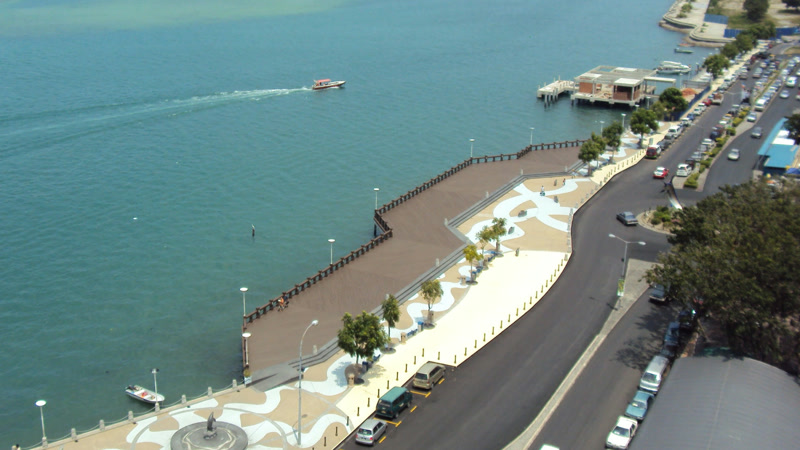
This is where Kota Kinabalu has no competition. Located on the northern tip of Borneo facing the South China Sea, KK is surrounded by a stunning archipelago — the Tunku Abdul Rahman Marine Park comprises 5 islands reachable by a 10–20 minute ferry from the central waterfront. Daily boat taxis to Sapi, Mamutik, Manukan, Gaya, and Sulug run from about 8am and cost RM23–35 (–8) return.
Sapi Island offers the best snorkeling (visibility 5–10m, abundant reef fish), Mamutik has the best beach bar, and Manukan has the best facilities. Coral quality has recovered significantly after a few rough years. You can island hop multiple stops on the same day for around RM55 () with a private operator.
Kuching, meanwhile, has no beach access worth mentioning. The nearest decent beach is Santubong Peninsula, 45 minutes away and underwhelming compared to KK. If beaches matter to you at all, KK is the only choice.
"KK's islands are genuinely beautiful — spent two days island hopping and the snorkeling at Sapi blew me away. The water was so clear we saw turtles just swimming next to the beach."— r/solotravel
"Best Beach = Sabah. Best Rainforest = Sarawak. Personally I'll go Sabah, it has beaches and plenty of forest to explore."— u/Hour-Ad461, r/malaysia
🦧 Wildlife & Nature
Both cities punch hard on wildlife, but in different ways. Kuching has a huge practical advantage: Semenggoh Wildlife Centre is just 30 minutes from the city center, costs only RM10 (.20) to enter, and is home to semi-wild Bornean orangutans who swing in for feedings at 9am and 3pm. You can show up, watch orangutans eat meters away from you, and be back for lunch. It's arguably the most accessible orangutan encounter in Borneo.
From Kuching you can also day-trip to Bako National Park (45 min ferry + boat, RM3 entry) — the oldest national park in Sarawak, home to proboscis monkeys, pitcher plants, and bearded pigs. For more serious wildlife, Mulu National Park is a short flight away (~40 min) and has Deer Cave (the world's largest cave passage), swiftlet nesting, and incredible biodiversity.
From Kota Kinabalu, the premier wildlife destination is the Kinabatangan River in Sandakan — about 1.5 hours by plane or 5+ hours by road. This is considered one of Southeast Asia's best wildlife corridors: pygmy elephants, proboscis monkeys, orangutans, and hundreds of bird species. Expect to pay RM250–400 for a 2D/1N river safari package. The KK area itself has Lok Kawi Wildlife Park (mediocre, zoo-style) and the Kinabalu Park botanical garden.
"Staying by the Kinabatangan River and going out on boats daily was a highlight. So much wildlife including orangutan, pygmy elephants and more."— u/MannerPopular1412, r/backpacking
"I really loved Kuching — there was an incredible indigenous cultural exhibition on the riverfront when I went, and the main museum was good. Very cheap too."— u/No-Considerations385, r/digitalnomad
🍜 Food & Dining
Kuching is one of the best food cities in Malaysia, full stop. The star is Sarawak Laksa — a complex, intensely flavoured noodle soup made from a sambal paste base, coconut milk, lime, and tamarind, topped with shrimp, omelette strips, and fresh coriander. Anthony Bourdain famously called it "the breakfast of the gods" after filming there. A bowl costs RM5–8 (.10–1.75). The best spots are at Chong Choon Cafe in Carpenter Street, Top Spot Food Court, and various morning-only hawker stalls.
Kolo Mee — Kuching's other signature dish — is a dry egg noodle served with char siu pork, crispy lard, and a light sauce. It's uniquely Kuching; you can't get it anywhere in West Malaysia. Add in Midin fern stir-fry, Sarawak pepper crab, and a flourishing Chinese kopitiam scene, and Kuching is legitimately a food destination.
Kota Kinabalu is also very good for food, just not at the same level. The KK Waterfront Seafood Night Market (also known as the Filipino Market) is a classic experience — dozens of stalls selling grilled fish, crab, stingray, satay, and fresh juice for RM15–30 a person. Gaya Street Sunday Market is great for local snacks. KK's food strength is seafood; Kuching's is noodles and hawker diversity.
"East Malaysia has way better food than West [Malaysia]. Laksa Sarawak, Kolo Mee — you can't get these in the west. And Kuching itself is a big city, but certainly not overwhelmingly touristy."— u/zrgardne, r/digitalnomad
"If you are that way visit Sandakan for Rainforest Discovery Center and Kinabatangan River, and if into food, Kota Kinabalu food is great — especially the big market at night."— u/MannerPopular1412, r/backpacking
🏛️ Culture & History
Kuching is the cultural capital of Malaysian Borneo — and it's not close. The city has more history, more museums, and more indigenous culture on display than anywhere else in East Malaysia.
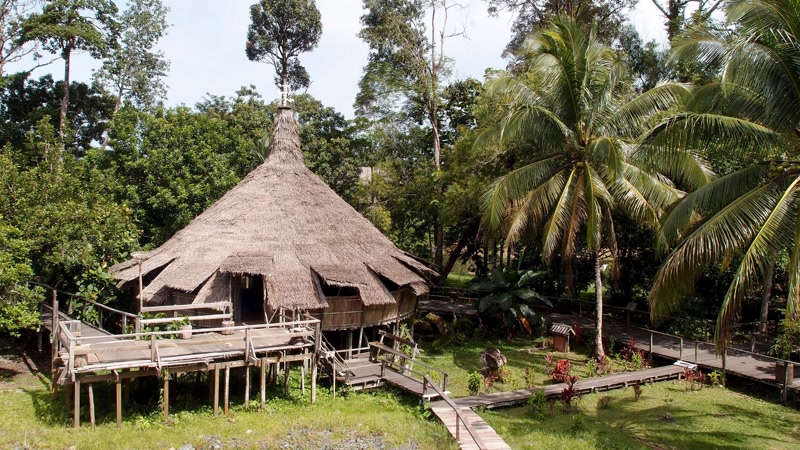
Start at the Sarawak Museum (one of the best museums in Southeast Asia, free entry) — its two buildings span Dayak tribal artifacts, natural history, and colonial-era exhibits. Then walk to Fort Margherita (a 19th-century colonial fort on the riverfront, free) and the Square Tower. The Sarawak Cultural Village (RM60 adults, 45 min from city) is a living museum of Dayak longhouses where you can watch traditional dance performances and see how Iban, Bidayuh, Orang Ulu, and Melanau communities lived.
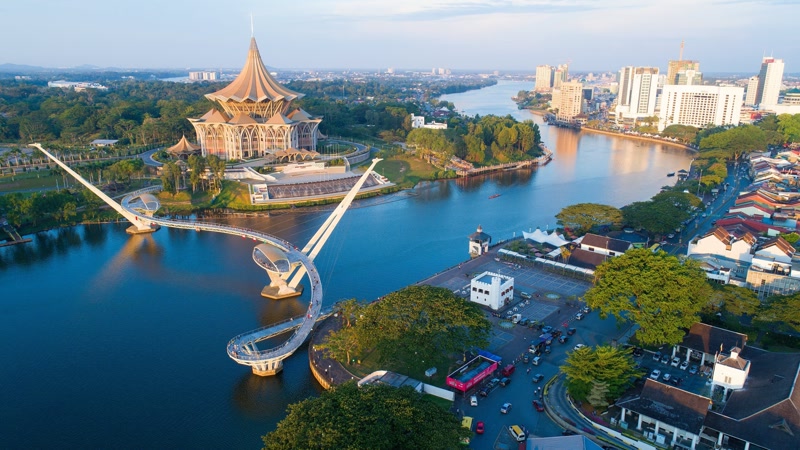
Kuching also has Carpenter Street — a beautifully preserved colonial streetscape with Chinese shophouses, temples, and cafes. The Waterfront Promenade running along the Sarawak River is beautifully lit at night and extremely walkable.
Kota Kinabalu, by comparison, has limited cultural offerings in the city itself. The Sabah State Museum is decent, and the Heritage Village within its grounds shows traditional Kadazan-Dusun stilt houses. But KK was largely rebuilt after WWII bombing and lacks Kuching's colonial streetscape and depth of history.
"I was only there for just over a week but I really loved Kuching — it was my favourite place in Malaysia (maybe tied with Penang). It's got a really nice vibe to it, people were so friendly and the food is AMAZING."— u/No-Considerations385, r/digitalnomad
💰 Cost Comparison
Both Kota Kinabalu and Kuching are very affordable compared to Singapore, Bali, or even KL. The main cost difference comes from activities, not the cities themselves.
Accommodation: In KK, budget dorm beds run RM30–60 (–13), mid-range hotels RM100–200 (–44), and boutique properties RM250–500. Kuching is slightly cheaper — dorm beds RM25–50, mid-range RM90–180, boutique RM200–400. Both cities have strong options in the RM100–150 sweet spot.
Food: Street food in both cities costs RM5–12 per dish. Sit-down restaurants RM15–40. A full day of eating well costs under RM60 in both cities.
Where the costs diverge — activities: KK activities can get expensive fast. Mount Kinabalu summit permit + accommodation + guide: RM1,000–1,500 (–330) per person, and permits frequently sell out months in advance. Tunku Abdul Rahman islands: RM35–55/day. Kinabatangan 2D/1N wildlife safari: RM250–400. Sipadan diving (limited permits): RM550–700/day.
Kuching activities are dramatically cheaper. Semenggoh orangutans: RM10. Bako National Park: RM3 entry + RM30 boat. Sarawak Cultural Village: RM60. Mulu Caves day trip by flight: RM250–350 including a budget flight.
"Borneo is not cheap, unfortunately, and doing cool things there costs money. But there are lots of cool things for reasonable prices if you know where to look — Kinabalu Park at minimum, Kinabatangan, the coastal islands."— u/episodicmadness, r/backpacking
"Flights to Kota Kinabalu or Kuching from KL can be cheap. Costs can add up to visit some of the more remote places and national parks but it's definitely worth going even if you are on a budget."— u/Living_the_dream_24, r/backpacking
✈️ Getting There & Getting Around
Getting to Kota Kinabalu: KK's airport (BKI) has better international connections — direct flights from Seoul, Guangzhou, Osaka, Hong Kong, Taipei, Singapore, and multiple KL daily services. AirAsia and MASwings are the main operators. From KL, budget ~RM120–250 and 2.5 hours.
Getting to Kuching: KCH airport is mostly domestic and regional — strong connections to KL (RM80–200, 1h45m), Singapore (RM150–300), and a few Chinese cities. You may need to connect through KL if coming from Europe or North America. That said, KL-to-Kuching is very cheap and frequent.
Between KK and Kuching: Fly. There's no practical land route — the overland journey through Brunei takes 20+ hours. AirAsia connects BKI–KCH daily in about 2 hours for RM80–180 if booked in advance.
Getting around KK: This is KK's weakest point. The city is sprawling and car-dependent — Reddit repeatedly calls it "pedestrian unfriendly." Grab (Southeast Asia's Uber) is essential. Taxis exist but negotiate first. Renting a scooter or car is the best way to explore further afield.
Getting around Kuching: The compact city centre is genuinely walkable. Carpenter Street, the Waterfront, the Sarawak Museum, and the main markets are all within walking distance of each other. Grab works well for anything outside the centre.
"KK is an absolute hellhole of a city and, as is par for the course in Malaysia, extremely pedestrian unfriendly. There is a small foreigner community but it's more composed of wanderers."— u/catbus_conductor, r/digitalnomad
🥾 Hiking & Adventure
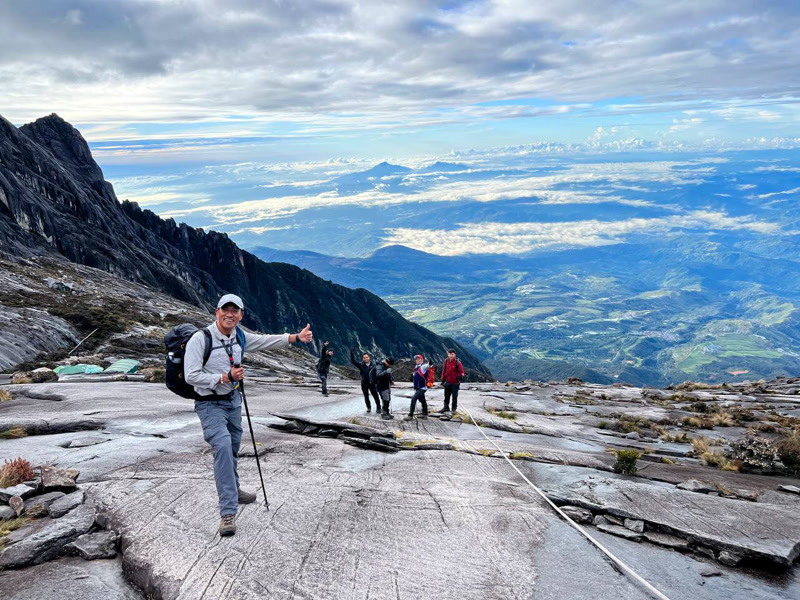
Mount Kinabalu is the undisputed crown jewel of Sabah — the highest peak in Malaysia at 4,095m and one of the most iconic climbs in Southeast Asia. The standard 2D/1N Summit Trail departs from Timpohon Gate, spends the night at Laban Rata mountain hut (~3,270m), and summits at dawn for a sunrise above the clouds. It requires a permit (RM300–400 for the summit), a mandatory guide (RM220/group), and advance booking months ahead — permits regularly sell out 6+ months in advance.
Even if you don't summit, Kinabalu Park (1.5 hours from KK, RM15 entry) is a UNESCO World Heritage Site with spectacular cloud forest, mountain gardens, and multiple shorter trails. The Canopy Walkway trail is an easier alternative.
From Kuching, adventure seekers can explore Bako National Park (sea-stack cliffs, jungle trails, proboscis monkeys) and do a flyout to Mulu National Park for the Sarawak Chamber, Deer Cave, and multi-day headhunter's trail treks. Mulu requires advance booking for permits; guides are mandatory for the underground sections.
"If you are fit, do the hike up Mt Kinabalu. Visit the park at minimum. Kinabatangan river safaris are really cool. Borneo is not cheap, unfortunately, and doing cool things there costs money but there are lots of cool things for reasonable prices."— u/episodicmadness, r/backpacking
🌦️ Best Time to Visit
Both Kota Kinabalu and Kuching have tropical climates with year-round warmth (25–33°C / 77–91°F), but rainfall patterns differ significantly and should inform your trip timing.
Kota Kinabalu (Sabah) has two distinct seasons: the dry season (April–October) is the clear winner — drier skies, calmer seas perfect for diving and island hopping, and the best conditions for climbing Mount Kinabalu. The wet season (November–March) brings heavy rain especially December–February. Visibility for diving drops and some boat services are suspended during peak monsoon. Best months overall: March–October, with April–June being ideal.
Kuching (Sarawak) is wetter overall and doesn't have as clear a dry season. Sarawak gets rain year-round, but October–January is the wettest. The best months are February–April and July–September when rainfall is lower and the Rainforest World Music Festival (usually August) takes place near Kuching at the Sarawak Cultural Village — this is one of the best music events in Southeast Asia and worth planning around.
Practical note: Malaysian public holidays (Hari Raya, Chinese New Year) cause price spikes and heavy domestic tourism in both cities. Book accommodation early if traveling during these periods.
🏨 Where to Stay
In Kota Kinabalu, stay in the city centre / waterfront area — within walking distance of the Jesselton Point ferry terminal (for island trips), the Central Market, and the Filipino night market. The Gaya Street area has the best concentration of mid-range hotels and cafes. Budget hostels like Lucy's Homestay and Step In Hostel run RM35–60/dorm. Mid-range: Le Meridien KK and Hyatt Centric are solid RM250–400 options. Avoid staying too far south toward the airport — the traffic is brutal.
In Kuching, the Waterfront / Carpenter Street / Padungan area is where you want to be. Walking distance to the Sarawak Museum, the Waterfront promenade, the best hawker stalls, and all the main sights. Budget traveller-favourites: Brompton Beds (RM40–55), Threehouse Backpackers. Mid-range: Hotel Pullman Kuching (RM200–350), Tribes (boutique, RM280–380). The Hilton Kuching on the river is the prestige option at RM400–600.
"KK has a growing DN community and decent coworking spaces, but Kuching's underrated! Both have great local food and decent WiFi. If you're looking for a more chill vibe, Kuching might be the way to go."— u/Solvo_Illum_484, r/digitalnomad
💻 Digital Nomads & Long Stays
East Malaysia is gaining traction in the DN community as a more affordable, less-touristy alternative to KL and Penang. Both cities have decent infrastructure, but the experience differs meaningfully.
Kuching is the stronger choice for remote workers. The compact city centre means you walk to coffee shops — places like Lepau Coffee and Black Bean Coffee on Carpenter Street have fast WiFi, reliable power, and aren't overcrowded. The slower pace of life, cheaper accommodation (monthly apartment rentals RM800–1,500), and extraordinary food scene make it genuinely pleasant for extended stays. Fiber internet is available in most apartments.
Kota Kinabalu has improved significantly — dedicated coworking spaces like HatchKK and Regus operate in the city, and the expat/nomad community is growing. But KK's sprawl and car-dependency are real friction. Without a scooter, you're Grab-dependent for everything. Monthly apartment rentals run RM900–1,800.
For both cities: Unifi (TM) and Maxis are the main ISPs. Average speeds are 30–100 Mbps at cafes and apartments. 4G/5G coverage is excellent in city centres and thin in rural national park areas.
"KK has a growing DN community and decent coworking spaces, but Kuching's underrated! If you're looking for a more chill vibe, Kuching might be the way to go. I'd split my time between both if I were you."— u/Solvo_Illum_484, r/digitalnomad
"I was bored after a week [in Kuching] — it's a big city, but certainly not common for foreigners. There isn't a huge expat scene."— u/zrgardne, r/digitalnomad
🔀 Why Not Both?
KK and Kuching are not in competition — they're complementary. Reddit's most upvoted advice on any Borneo post is almost always: "do both if you can." Here's why it works:
Logistically simple: AirAsia connects BKI and KCH daily in ~2 hours for RM80–180. You can easily spend 3-4 days in KK, hop the flight, and spend 3-4 days in Kuching. No wasted days, no backtracking to KL.
Perfectly complementary: KK gives you beaches, diving, island hopping, and Kinabalu. Kuching gives you culture, food, museums, and wildlife at Semenggoh. Together they cover everything that makes Borneo special.
Total trip cost for both cities: Budget RM1,500–2,500 (–550) per person for a 7-day split itinerary (3 days KK + 4 days Kuching, excluding flights in), covering accommodation, food, the Tunku Abdul Rahman islands, Semenggoh, Bako, and the Sarawak Cultural Village. Add RM1,200–1,500 if you want to climb Kinabalu.
A suggested routing: Fly into KK → 3-4 days Sabah → fly to Kuching → 3-4 days Sarawak → fly out of KCH (open-jaw tickets are usually the same price or cheaper than returning to KK).
"KK has a growing DN community and decent coworking spaces, but Kuching's underrated! Both have great local food and decent WiFi. I'd split my time between both if I were you."— u/Solvo_Illum_484, r/digitalnomad
🎯 The Decision Framework
🌊 Choose Kota Kinabalu If…
- Beaches and island hopping are on your list
- You want to climb Mount Kinabalu (SE Asia's most iconic mountain trek)
- Diving is a priority — KK is the gateway to Sipadan
- You're flying from East Asia (Seoul, Osaka, Taipei) — KK has direct connections
- You want more to do within a 2-hour drive (Kinabatangan river safaris, Kinabalu Park)
- You want to visit Sandakan for the ultimate wild orangutan + pygmy elephant experience
🐱 Choose Kuching If…
- You're a food-obsessed traveler — Sarawak Laksa and Kolo Mee are the stars
- Culture, history, and museums matter (Sarawak Museum, Cultural Village, Fort Margherita)
- You want accessible wildlife without spending a fortune (Semenggoh RM10, Bako RM3)
- A walkable, compact city centre appeals to you
- You're a digital nomad looking for a chill base in East Malaysia
- You want to visit Mulu Caves (UNESCO World Heritage Site, 40-min flight)
Also check out: Penang vs Ipoh, Malacca vs George Town, or Singapore vs Bangkok for more Southeast Asia comparisons.
❓ Frequently Asked Questions
Is Kota Kinabalu or Kuching better for first-time visitors to Borneo?
It depends entirely on what you want from Borneo. If beaches, island hopping, and climbing Mount Kinabalu are your priorities, start with Kota Kinabalu. If you want the best food in East Malaysia, cultural museums, and a walkable city with great vibes, Kuching wins. Reddit consensus leans toward Kuching for overall livability and food, but KK for outdoor adventure. Both are connected by a 2-hour AirAsia flight (around RM80-180).
Which is cheaper — Kota Kinabalu or Kuching?
Both cities are affordable by Southeast Asian standards. Budget travelers can get by on RM80-120 (-26) per day in both cities. Kuching tends to be slightly cheaper for accommodation, while KK costs more for popular nature excursions like Mt Kinabalu permits (RM300+ per person) and Kinabatangan river safaris (RM250-400). Kuching's Semenggoh wildlife centre is just RM10 entry.
Can you see orangutans near both Kota Kinabalu and Kuching?
Yes, but the experience differs. Near Kuching, Semenggoh Wildlife Centre (30 min away, RM10 entry) has semi-wild Bornean orangutans that come for feeding twice daily. Near KK, you need to travel to Sandakan (1.5 hr flight) for the Kinabatangan River wildlife corridor, where you can see orangutans, pygmy elephants, and proboscis monkeys in the wild. The Sandakan experience is considered more "wild" but requires more time and money.
How long should I spend in Kota Kinabalu?
3-4 days is the sweet spot for KK itself — one day for island hopping at Tunku Abdul Rahman Park, one day exploring the waterfront and night market, and 2 days if you want to day trip to the Kinabalu Park area. If you plan to climb Mount Kinabalu (a 2D/1N overnight hike), add 2 more days. Budget an extra 3-4 days if visiting Sandakan for wildlife.
What is Kuching famous for?
Kuching is famous for three things: Sarawak Laksa (a complex coconut-tamarind noodle soup that Anthony Bourdain called "breakfast of the gods"), its cat statues and cat culture (Kuching means "cat" in Malay), and being the gateway to Sarawak's extraordinary national parks — Bako, Semenggoh Wildlife Centre, and Mulu Caves. The Sarawak Museum is also considered one of Southeast Asia's best.
Is it worth doing both Kota Kinabalu and Kuching on one trip?
Absolutely — and this is the most common recommendation on Reddit. AirAsia connects KK and Kuching in about 2 hours for RM80-180. Most travelers spend 3-4 days in each, giving a well-rounded Borneo experience: beaches + mountains (KK) and culture + food (Kuching). There is no direct land route between the two cities, so flying is the only practical option.
How do I get from Kota Kinabalu to Kuching?
Fly. There is no practical overland route — the journey by road through Brunei takes 20+ hours on rough roads. AirAsia operates multiple daily flights between KK (BKI) and Kuching (KCH), taking about 2 hours. Fares typically range from RM80-250 depending on how early you book. Book at least 2 weeks in advance for the best prices.
Is Kuching or Kota Kinabalu better for digital nomads?
Kuching edges ahead for long-term stays. Reddit DN threads note Kuching has a more walkable city centre, excellent coffee shops with fast WiFi, lower accommodation costs, and a slower pace of life that suits deep work. KK is improving — it has coworking spaces and a growing expat community — but it's sprawling and car-dependent. Both have reliable 4G/5G coverage. Kuching wins for the overall DN lifestyle at similar (or lower) cost.
Ready to Plan Your Borneo Trip?
Get a free personalized itinerary for Kota Kinabalu, Kuching, or both — built around your travel style, budget, and dates.
Or explore our full destination comparison library
🎟️ Book Tours & Experiences
Hand-picked tours and activities for both destinations — book with free cancellation
Experiences via Viator — free cancellation on most tours