📋 Our Methodology
This comparison is built from real sources, not AI guesswork:
- 15+ Reddit threads from r/travel, r/solotravel, r/Europetravel, r/irishtourism, and r/Scotland synthesized
- Cost data from Numbeo (March 2026), cross-checked with recent Reddit trip reports
- Weather data from Open-Meteo historical averages for Edinburgh and Dublin
- Transport info from ScotRail, Transport Scotland, and Iarnród Éireann official sources
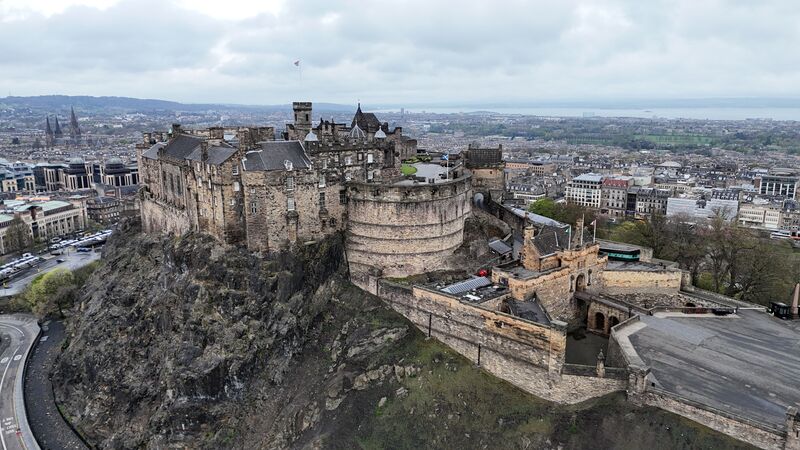
Scotland — Edinburgh Castle
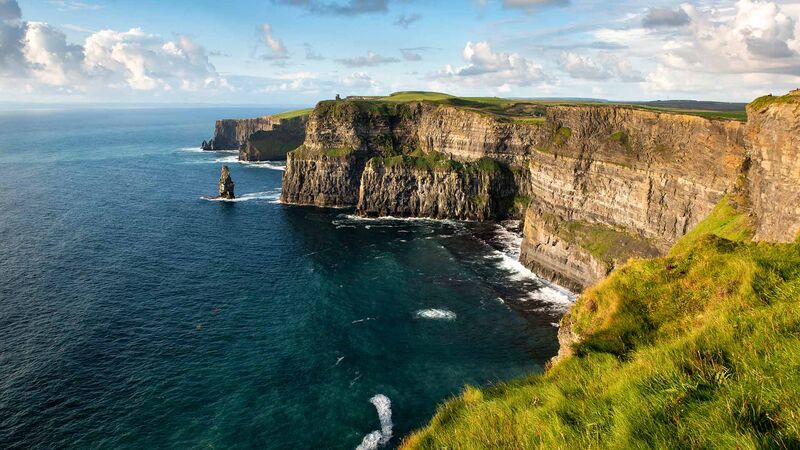
Ireland — Cliffs of Moher
⚡ The TL;DR Verdict
Scotland wins for dramatic scenery, hiking, and Edinburgh's medieval grandeur. Ireland wins for warmth, pub culture, and the warm, spontaneous welcome you'll get from locals. Both run £60–85/$75–105 per day. Do both if you have 2 weeks.
- Go to Scotland if you want jaw-dropping Highland landscapes, the Isle of Skye, Edinburgh Castle, and some of the best hiking in Europe.
- Go to Ireland if you want legendary pub culture, the Wild Atlantic Way, Galway's craic, and the friendliest people on the continent.
- Go to both — flights between Edinburgh and Dublin cost as little as £20–50 and take under an hour. This is one of Europe's best two-country combos.
- Reddit verdict: Scotland for scenery, Ireland for people — and most travelers who've done both say they can't pick a favorite.
🏔️ Choose Scotland if...
You want world-class hiking, Edinburgh's medieval Royal Mile, whisky distillery tours, and the most dramatic landscapes in the British Isles.
🍺 Choose Ireland if...
You want the warmest welcome in Europe, trad music sessions in centuries-old pubs, the Wild Atlantic Way by car, and Galway's electric energy.
Quick Comparison
| Category | 🏔️ Scotland | 🍀 Ireland | Winner |
|---|---|---|---|
| Daily Budget (mid-range) | £60–85 per person (~$75–105) | €65–90 per person (~$70–100) | Tie |
| Scenery & Landscapes | Dramatic — Highlands, Skye, Glencoe, lochs | Beautiful — Wild Atlantic Way, Connemara, Dingle | Scotland |
| Top City | Edinburgh — medieval, stunning, culturally rich | Dublin — lively, literary, excellent nightlife | Scotland |
| Pub Culture | Good — especially in Edinburgh and Glasgow | World-class — trad sessions, craic, Guinness | Ireland |
| Hiking & Outdoors | Exceptional — Right to Roam, 282 munros, bothies | Good — Wicklow Way, Connemara, Ring of Kerry | Scotland |
| Friendliness | Warm and welcoming | Consistently rated among Europe's friendliest | Ireland |
| Food Scene | Haggis, Scotch pies, excellent seafood | Seafood, soda bread, gastropub boom | Tie |
| Whisky / Whiskey | Scotch whisky — global gold standard | Irish whiskey — smoother, triple-distilled | Tie |
| Ideal Stay Length | 7–10 days (vast country) | 6–8 days (more compact) | Ireland |
| Getting Around | Car essential for Highlands; good trains Edinburgh–Glasgow | Car essential for Wild Atlantic Way; limited rural buses | Tie |
| Solo Travel Ease | Excellent — safe, English-speaking, welcoming | Excellent — especially for solo female travelers | Tie |
🏔️ Scenery & Landscapes
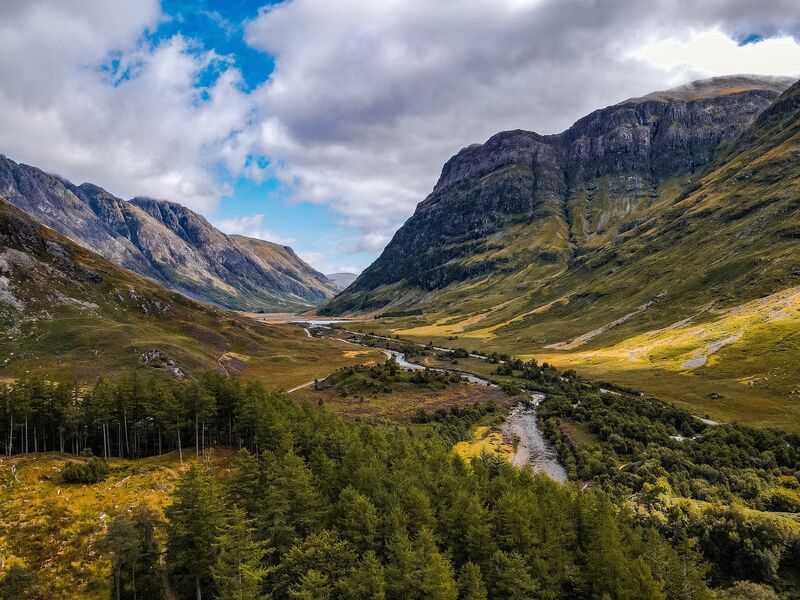
This is the category most Reddit travelers point to as Scotland's decisive advantage. The Scottish Highlands are among the most dramatic landscapes in all of Europe — vast, brooding, and deeply atmospheric. Glencoe is a glacially-carved valley of almost cinematic beauty, flanked by the Three Sisters peaks. Loch Ness stretches 37km through the Great Glen. The Isle of Skye — with the Quiraing, the Old Man of Storr, and the Fairy Pools — consistently ranks among travelers' all-time favorite places on Earth. The NC500 (North Coast 500) road route circles the Highlands in 500 miles of constantly shifting dramatic coastline, moorland, and mountain scenery.
Ireland's landscapes are not to be underestimated. The Cliffs of Moher (214m above the Atlantic) are legitimately stunning, especially in the late afternoon light. Connemara — wild bog and mountain country in the west — has a stark, melancholy beauty. The Ring of Kerry and the Dingle Peninsula offer rugged coastal drives with Atlantic views. But Ireland's highest mountain, Carrauntoohil, tops out at 1,039m — Scotland has 282 peaks higher than that. The terrain is softer, greener, and more pastoral. Beautiful, but rarely as jaw-dropping as the Scottish Highlands.
"Scotland if you want natural beauty and absolutely spectacular scenery. Ireland for sure if you care about people, politics, and culture. I would pick Ireland — it's less cold and the people are warmer — but Scotland has some of the most breathtaking landscapes I've ever seen." — r/travel
"The Scottish Highlands are exactly what you're looking for — castles, rivers, incredible hikes. That majestic feeling is everywhere you look." — r/travel
🏰 Heritage & History
Both countries have layers of history going back thousands of years, but they express it differently. Scotland's history is spectacular and concentrated. Edinburgh Castle — perched on volcanic rock at the top of the Royal Mile — houses the Scottish Crown Jewels and the Stone of Destiny. The Royal Mile descends past six centuries of architecture to the Scottish Parliament and Palace of Holyroodhouse. Stirling Castle was the seat of the Scottish monarchy. The Calanais Standing Stones on the Isle of Lewis predate Stonehenge by centuries. Scotland's whisky distilleries, many operating since the 1700s, are living heritage you can drink. And the Edinburgh Festival (August) is the world's largest arts festival.
Ireland's heritage hits differently — it's more about resilience, memory, and cultural survival. The Clonmacnoise monastery (6th century) and the Rock of Cashel are staggering. The Newgrange passage tomb in County Meath is older than Stonehenge and the Egyptian pyramids (3200 BCE). Dublin has the Book of Kells at Trinity College, the National Museum, and a literary tradition (Joyce, Beckett, Wilde, Yeats) that permeates the entire culture. The Great Famine sites and the political history of the 20th century add a layer of gravity that many visitors find unexpectedly moving.
"Edinburgh is probably my favourite UK city. The castle, the history, Mary King's Close, the Vaults underneath the bridges — layers of history everywhere you turn. The Highlands add to the mystique. Scotland is just so much more impressive historically than I expected." — r/travel
"Ireland's history is more political and the people will absolutely talk to you about it — cheerfully, intelligently, passionately. In Scotland, history feels more distant somehow. In Ireland it still feels alive." — r/Europetravel
🍺 Pub Culture & Food
Ireland's pub culture is one of the great joys of travel in Europe, and Reddit travelers are unanimous about it. The traditional Irish pub — centuries-old stone interiors, a pint of Guinness poured with religious care, a spontaneous trad music session that started because three locals happened to bring their instruments — is a cultural institution unlike anything else in the world. In Galway, Killarney, Doolin, and even small villages, pubs are the village living room. Locals don't come for a quick drink; they come to stay for hours. The craic (Irish: fun, good conversation, spontaneous joy) is not manufactured for tourists. Check out Edinburgh's pub scene for Scotland's best equivalent, which is genuinely good — but different in character.
Scotland's pub scene is excellent, especially in Edinburgh and Glasgow. The Edinburgh pub crawl along the Royal Mile and in the Old Town is atmospheric and historic. Whisky bars — places where you can work through 50+ single malts with guidance from knowledgeable staff — are a uniquely Scottish experience. Glasgow's West End has a thriving bar and live music scene. But Scotland's pubs are generally less warm and spontaneous than Ireland's; there's more of a British pub culture feel, less of the theatrical communality that defines Irish pub life. For food, both countries have improved dramatically in the last decade. Scotland does exceptional seafood (Loch Fyne oysters, Shetland salmon), haggis (genuinely delicious when made well), and Edinburgh food tours have become a highlight. Ireland's gastropub revolution has produced excellent cooking in unexpected places — the seafood chowder in Dingle, the oysters in Galway, the soda bread everywhere.
"Loved Galway. LOVED IT! Would go back in a heartbeat. Ireland for the pub culture, absolutely. The people just draw you in and before you know it you're three pints deep talking to a fisherman about his life. Scotland doesn't have that in the same way." — r/Europetravel
"Ireland, Ireland, Ireland! Wonderful country with the friendliest people. Love the pub culture and awesome seafood. So beautiful, especially on the western Atlantic coast." — r/travel
💰 Cost Comparison
| Expense | 🏔️ Scotland (GBP) | 🍀 Ireland (EUR) |
|---|---|---|
| Hostel dorm (per night) | £22–40 | €25–45 |
| Budget hotel (per night) | £70–130 | €80–140 |
| Pub lunch | £10–16 | €12–18 |
| Mid-range dinner | £16–28 | €18–30 |
| Pint of beer / Guinness | £4–6 | €5–7 |
| Whisky / Whiskey dram | £4–12 (single malt) | €5–10 |
| Car rental (per day) | £35–70 | €40–80 |
| Edinburgh/Dublin museum entry | Many free (National Museums) | Many free (National Museums) |
| Budget daily total | £60–85 (~$75–105) | €65–90 (~$70–100) |
The cost difference between Scotland and Ireland is minimal — both are mid-tier Western European destinations. Scotland uses GBP (currently ~$1.25/£1) and Ireland uses EUR (~$1.08/€1), so GBP costs translate to slightly more in USD terms. Rural areas of both countries are much cheaper than their capital cities. The biggest cost variable is transport: renting a car is essential for seeing either country's countryside, and fuel costs are similar (around £/€1.60–1.80 per litre). Scotland's National Museums of Scotland in Edinburgh are free; Ireland's National Museum in Dublin is free. Both countries charge entry at key heritage sites (Edinburgh Castle £17.50, Rock of Cashel €8, Cliffs of Moher €8).
"Cost-wise they're very similar. I'd say Ireland felt slightly cheaper day-to-day for food and drink, but Scotland's accommodation in rural areas was often great value — especially hostels and bunkhouses near hiking routes." — r/solotravel
🥾 Hiking & Outdoors
Scotland's outdoor credentials are exceptional by any global standard. The Right to Roam (Land Reform Act 2003) gives walkers and cyclists legal access to virtually all land in Scotland, including private estates and mountains — a freedom that barely exists anywhere else in Europe. There are 282 munros (mountains over 3,000ft/914m) to bag, and a culture of hillwalking that extends from day walks to multi-day wild camping expeditions. The West Highland Way (96 miles from Milngavie to Fort William) is Scotland's most iconic long-distance trail, passing Loch Lomond and the Highlands. The Speyside Way, Great Glen Way, and Fife Coastal Path offer hundreds more miles of marked routes. Free bothies (simple stone shelters in remote mountain areas, managed by the Mountain Bothies Association) make multi-day backcountry routes accessible without booking or paying for accommodation.
Ireland's hiking is genuine and rewarding, but operates at a different scale. The Wicklow Way (127km) is Ireland's oldest waymarked trail, passing through heathery hills south of Dublin. The Kerry Way and Dingle Way circumnavigate two of Ireland's most spectacular peninsulas. Diamond Hill in Connemara National Park, Torc Mountain in Killarney, and Brandon Peak on the Dingle Peninsula are excellent day hikes. But Ireland lacks the wilderness scale of Scotland — its highest summit (Carrauntoohil, 1,039m) is well below Scottish munro height, and the Right to Roam equivalent doesn't exist in the same form (Ireland has the Countryside Access Programme but enforcement is inconsistent).
"Scotland for backpacking, hands down. The Right to Roam, the bothies network, the munros — it's one of the best places in Europe for this kind of travel. You can spend a week wild camping in the Highlands and barely see another person. Ireland is beautiful but it's a different kind of trip." — r/solotravel
🚗 Getting Around
Both countries require a car to access their most spectacular scenery, but the logistics differ. Scotland is large — the Highlands alone cover 25,659 km² — and public transport is sparse outside the Central Belt (Edinburgh–Glasgow corridor). ScotRail runs good services between cities, but the famous routes (Inverness to Kyle of Lochalsh, the Jacobite steam train from Fort William to Mallaig) are scenic but slow. For Glencoe, Skye, or the NC500, a rental car is essential. Driving in Scotland is straightforward — roads are generally quiet outside summer, though single-track roads with passing places are common in the Highlands and islands. Ferries to the islands (operated by CalMac) need advance booking in summer.
Ireland is more compact — you can drive from Dublin to Galway in under 3 hours, and coast-to-coast is rarely more than 2.5 hours. But for the Wild Atlantic Way, Ring of Kerry, and Connemara, a car is equally essential. Bus Éireann and GoBus connect major towns; the rail network (Iarnród Éireann) covers Dublin to Cork, Limerick, Galway, and Belfast but misses most of the scenic west. Several Reddit users note that Ireland is a better choice if you only have 6–8 days and want to cover a lot of ground — the country's smaller size means less dead time driving between highlights. One important note for Americans: most rental cars in both countries are manual (stick shift). Automatic cars must be specifically requested and booked early, and cost 20–40% more.
"Ireland is easier in 8 days. Dublin, Belfast, Galway — and you've covered the country. In Scotland with the same time you'd either rush the Highlands or miss them entirely. Both are beautiful, but Ireland is more compact for shorter trips." — r/solotravel
"One week in each is perfect. Hire a car in Ireland — it's essential. Scotland you can do more on trains and buses if you stick to Edinburgh and the Central Belt, but for the highlands and borders you still need a car." — r/Europetravel
🌦️ Best Time to Visit
Both countries are notoriously rainy and changeable — that's part of their character — but timing still matters. For Scotland, May and June are arguably the best months: long days (Edinburgh gets nearly 17 hours of daylight on the summer solstice), generally mild temperatures (12–17°C), and before the July–August tourist peak. September is equally good — heather is in bloom across the Highlands in purple-pink carpets, the crowds have thinned, and the light turns golden. The critical warning for Highland summer visitors: midges. These tiny biting insects are worst from late June through August, especially at dawn, dusk, and in still, humid conditions near lochs and woodland. They make outdoor dining and wild camping genuinely unpleasant without proper repellent. Winter in Scotland (November–February) is cold, dark, and wet — but Edinburgh's Hogmanay (New Year) celebration is world-famous, and the dramatic winter light can be spectacular for photography.
For Ireland, May–September are the best months, with June–August warmest (16–20°C on good days, though "good days" are not guaranteed). Ireland is slightly warmer and less midge-prone than Scotland in summer. The shoulder seasons (April–May, September–October) offer better value and fewer crowds. The Galway International Arts Festival (July) and Kilkenny Arts Festival (August) are worth timing around. December's Christmas markets in Dublin and Killarney are charming but come with Atlantic storms. Unlike Scotland, Ireland doesn't have a specific season-spoiling insect problem — just relentless, friendly rain.
🏙️ Cities & Nightlife
Edinburgh is one of Europe's genuinely great cities and Scotland's clear star attraction. The Old Town — dark closes, tenement layers, and the Royal Mile climbing to the Castle — is unlike any other city in Europe. The New Town (Georgian neoclassical architecture on a grand grid) is stunning in a completely different way. Arthur's Seat (an extinct volcano right in the city, 251m high) offers a 45-minute climb to panoramic views. The Edinburgh pub scene is excellent — dozens of historic bars along the Royal Mile, the Stockbridge neighbourhood, and the Grassmarket. During the Edinburgh Festival Fringe (August), the city transforms into the world's largest performing arts festival with 3,000+ shows in 300 venues. Glasgow — 45 minutes by train — is Scotland's second city, with a rougher charm, excellent music scene, and world-class museums including the free Kelvingrove Art Gallery.
Dublin is lively, literary, and excellent for a city break. Temple Bar is the famous (and famously touristy) pub district; the real Dublin is found in the Liberties, Portobello, and Stoneybatter neighbourhoods. The National Museum of Ireland (free) and the National Gallery (free) are world-class. Trinity College's Book of Kells (€16 entry) is Ireland's most famous treasure. Dublin's nightlife is genuinely strong — live music every night of the week, late-night pubs, and a growing cocktail bar scene. Galway — 2 hours west — is Ireland's true cultural capital for many travelers: a compact, vibrant city where trad music spills into the streets and the social energy is electric. Belfast — 2 hours north — has reinvented itself post-Troubles into a surprisingly compelling city for food, craft beer, and the remarkable Titanic Museum.
"Edinburgh is so fantastic and so medieval — one of the most impressive cities in the UK. But don't make the mistake of confining yourself to the city. Scotland is so much more than Edinburgh." — r/Europetravel
🗺️ Road Trips & Regions
Both Scotland and Ireland are built for road trips, and each has a signature route. Scotland's NC500 (North Coast 500) is a 516-mile circular route through the Highlands starting and ending in Inverness. It passes Duncansby Head (mainland Britain's most northerly point), dramatic sea stacks, white-sand beaches (yes, really — the far north has Caribbean-looking beaches in summer), ruined castles, and the jaw-dropping Torridon mountains. Most travelers allow 5–7 days to do it justice. The Skye route from Inverness or Fort William adds another 2–3 days of scenery. For a comparison to other dramatic routes, see our Iceland vs Ireland guide.
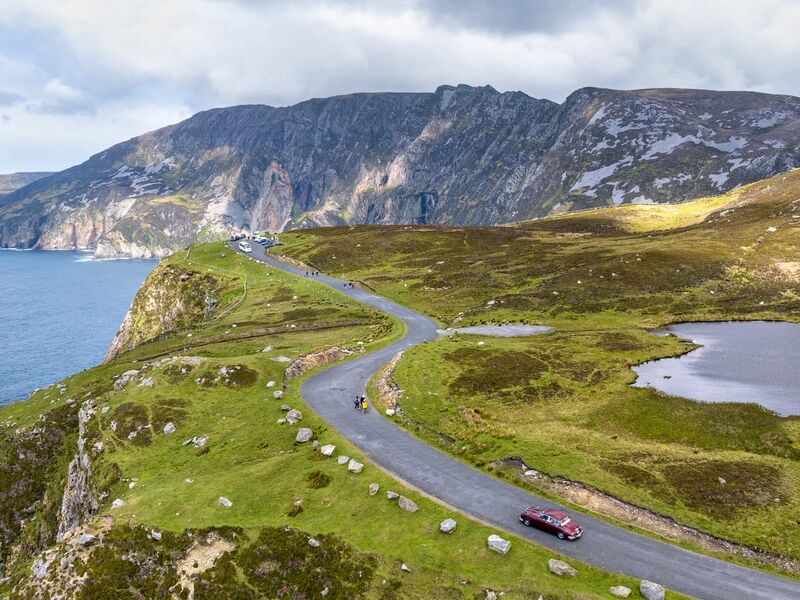
Ireland's Wild Atlantic Way (WAW) is a 2,500km coastal route from Donegal in the north to Cork in the south. It passes the Cliffs of Moher, the Aran Islands ferry point, Connemara, the Dingle Peninsula, and the Ring of Kerry. Most travelers focus on the middle and southern sections (Galway to Cork), which can be done in 5–7 days. The Ring of Kerry is the classic loop — 179km of coastal mountain scenery around the Iveragh Peninsula. The Dingle Peninsula is the same landscape but far quieter and arguably more beautiful. One Reddit recurring tip: drive the Ring of Kerry counter-clockwise (the opposite direction to most tourist coaches) to have the road to yourself and better views.
"The NC500 was the best road trip I've ever done, full stop. Better than Route 66, better than the Great Ocean Road in Australia. Scotland surprised me completely. The scenery just doesn't quit." — r/solotravel
"Start in Dublin and do the western loop. Don't make the mistake of planning to see a bunch of cities at the exclusion of seeing villages and rural areas. In either country — slow down in the small places. That's where you find what makes these countries special." — r/Europetravel
🔀 The Decision Framework
Most travelers who've done both Scotland and Ireland ultimately say the same thing: they can't choose. But if you can only visit one on this trip, here's the clearest breakdown of who should go where:
🏔️ Choose Scotland if...
- Epic Highland scenery and the Isle of Skye are on your bucket list
- You want a world-class medieval city (Edinburgh) as your base
- Serious hiking, wild camping, or munro-bagging is part of your trip
- You want to tour whisky distilleries on the Speyside or Islay
- You're planning a longer trip (10+ days) and want depth
- The NC500 road trip or West Highland Way are priorities
- You want dramatic landscapes at a scale Ireland can't match
🍺 Choose Ireland if...
- Pub culture, trad music, and the famous Irish craic are central to your trip
- You have 6–8 days and want to see a lot without driving huge distances
- The warmest welcome in Europe matters to you — solo travelers especially
- Galway's energy, Dingle's beauty, or Killarney's charm are pulling you
- You want the Wild Atlantic Way or Ring of Kerry as your road trip
- You're more interested in culture and people than extreme landscapes
- You want to visit Belfast and understand the island's complex modern history
Why not both? Budget flights between Edinburgh and Dublin run as little as £20–50 on easyJet and Ryanair. The crossing takes under an hour. A Stena Line ferry from Cairnryan (near Stranraer) to Belfast makes a seamless overland connection for road trippers. A 14-day trip — 7 days Scotland, 7 days Ireland — is one of Europe's best two-country itineraries and regularly comes up in Reddit trip reports as a top experience.
❓ Frequently Asked Questions
Is Scotland or Ireland better for first-time visitors?
Both are excellent first trips from North America or Europe. If you want dramatic scenery and a world-class medieval city, Scotland has the edge with Edinburgh and the Highlands. If you want warmth, legendary pub culture, and a more compact road trip, Ireland is ideal. Reddit is split but leans Scotland slightly for sheer visual impact. Many experienced travelers recommend doing both — flights between Edinburgh and Dublin cost as little as £25 and take under an hour.
Which is cheaper, Scotland or Ireland?
They're very similar in overall cost. Scotland uses GBP (£), Ireland uses EUR (€). A mid-range daily budget in both countries runs roughly £60–85 ($75–105) per person — covering a budget hotel, meals, transport, and a couple of attractions. Edinburgh is slightly pricier than Dublin for accommodation; rural areas in both countries are very affordable. The cost difference is rarely a deciding factor.
Can you visit Scotland and Ireland in one trip?
Absolutely — and it's a superb combination. Budget flights between Edinburgh and Dublin (easyJet, Ryanair) run under an hour and often cost £20–50. A 2-week trip works perfectly: 6–7 days Scotland, 6–7 days Ireland, flying or ferrying between them. Several Reddit users noted that Stena Line ferries run from Cairnryan (Scotland) to Belfast, making a seamless land-and-sea connection for road trippers who want to drive through both countries.
Which is better for hiking, Scotland or Ireland?
Scotland wins hiking, and it's not close. Scotland has a Right to Roam law (Land Reform Act) giving walkers legal access to virtually all land, 282 munros (mountains over 3,000ft), the West Highland Way (154km), and a network of free bothies (mountain shelters) managed by the Mountain Bothies Association. Ireland has excellent hiking — the Wicklow Way, Connemara's Diamond Hill, the Dingle Peninsula — but it's a fundamentally different scale of wilderness. If backcountry hiking is your primary goal, Scotland is one of Europe's top destinations.
What is the best time to visit Scotland vs Ireland?
May–September for both countries. Late May and September are the sweet spots — decent weather, far fewer crowds than July–August, and lower accommodation prices. Both countries are famously rainy year-round, so layers are essential regardless of when you visit. One critical Scotland caveat: midges (tiny biting insects) are worst in the Highlands from late June through August, especially at dawn and dusk. Bring midge repellent or head to the islands and exposed coasts where wind keeps them away.
Which has better pub culture, Scotland or Ireland?
Ireland wins pub culture, and most Reddit users agree it's not a contest. The traditional Irish pub — trad music sessions on a Wednesday night, strangers becoming friends over a Guinness, 500-year-old stone interiors — is a cultural institution unlike anything Scotland offers. Edinburgh has superb pubs (especially along the Royal Mile and in Leith), and the Scottish whisky bar tradition is world-class, but the Irish craic and the spontaneous, welcoming nature of Irish pub life is on a different level. If the pub experience is central to your trip, Ireland is the correct answer.
Do you need a car to visit Scotland or Ireland?
Yes, for the best experience in both countries. Scotland's Highlands and islands are very poorly served by public transport — the NC500 route, Isle of Skye, and Glencoe all require a car or a tour. Ireland's Wild Atlantic Way, Ring of Kerry, and Connemara similarly demand your own wheels. Both countries drive on the left, with the steering wheel on the right — factor in adjustment time if you're from North America. Cars in both are predominantly manual (stick shift); automatic rentals cost 20–40% more and should be booked well in advance.
Ready to Plan Your Celtic Adventure?
Whether you choose Scotland's Highlands or Ireland's Wild Atlantic Way, tabiji can build a personalised itinerary — free.
🎟️ Book Tours & Experiences
Hand-picked tours and activities for both destinations — book with free cancellation
Experiences via Viator — free cancellation on most tours