How we built this comparison
This page combines real traveler discussion patterns, published price ranges, transit details, and seasonal data to help you decide between Seoul and Taipei.
- Reviewed Reddit traveler threads and recurring decision patterns across r/travel, r/solotravel, and r/digitalnomad.
- Cross-referenced numeric claims — accommodation ranges, transit costs, Michelin counts, seasonal weather — against published sources.
- Updated each section with a clear winner and practical traveler note so you can make the call faster.
Read it as a decision guide. The right pick depends on your budget, travel style, and what you actually want to eat at 11pm.
⚡ The TL;DR Verdict
Seoul for K-culture obsessives, nightlife lovers, and museum fans. Taipei for budget travelers, street food fanatics, and anyone who wants a more relaxed East Asia experience. Daily budget: Seoul ₩80,000–150,000 ($60–110) vs Taipei NT$1,200–2,500 ($38–78).
- Choose Seoul: K-pop/K-drama fans, nightlife, shopping, palaces, bold Korean food.
- Choose Taipei: Budget travel, street food & night markets, day trips, relaxed pace.
- Budget snapshot: Seoul: ₩80,000–150,000 ($60–110)/day; Taipei: NT$1,200–2,500 ($38–78)/day.
Choose Seoul
K-culture fans, nightlife lovers, museum-goers, Korean BBQ addicts.
Choose Taipei
Budget travelers, street food devotees, nature day-trippers, chill-seekers.
Quick Comparison
| Category | 🇰🇷 Seoul | 🇹🇼 Taipei | Winner |
|---|---|---|---|
| Daily Budget (mid-range) | ₩80,000–150,000 ($60–110) | NT$1,200–2,500 ($38–78) | Taipei |
| Street Food | Tteokbokki, hotteok, Korean corn dogs | Night markets: scallion pancakes, bubble tea, oyster vermicelli | Taipei |
| Michelin Listings (per capita) | 166 for 9.8M people | 175 for 6.7M people | Taipei |
| Cultural Attractions | 5 Joseon palaces, Bukchon, K-pop museums | Longshan Temple, National Palace Museum, Jiufen | Tie |
| Nightlife | Hongdae until 6am, Itaewon, Gangnam | Night market crawls, craft beer bars, indie venues | Seoul |
| Day Trips | DMZ, Gyeongju, Suwon, Nami Island | Jiufen, Taroko Gorge, Tamsui, Alishan | Taipei |
| Public Transit | Excellent Metro + T-money card | Simple MRT + EasyCard | Tie |
| Best Weather Window | Apr–May, Oct–Nov | Oct–Jan | Taipei |
| Shopping | Myeongdong K-beauty, Dongdaemun 24h fashion | Ximending youth culture, Guang Hua electronics | Seoul |
| Solo Travel Ease | Harder (group-dining culture) | Easy (single-serving portions everywhere) | Taipei |
| Safety | Extremely safe | Extremely safe | Tie |
🍜 Food & Dining
Reddit has debated this matchup hundreds of times and the consensus is nuanced: it depends on what kind of eating you want to do. Both Seoul and Taipei regularly top "best food cities in Asia" lists — but they win on completely different terms.
Taipei: The Night Market King
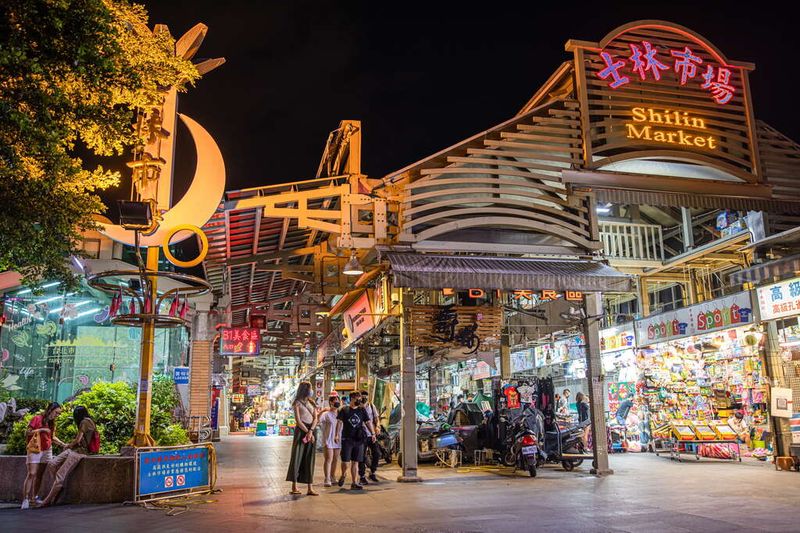
Taipei's night markets are arguably the best street food experience in all of Asia. Shilin Night Market draws thousands of visitors nightly with its labyrinth of stalls selling scallion pancakes (NT$40/$1.25), oyster vermicelli (NT$60/$1.90), stinky tofu, dan bing (egg crepes), and — most importantly — the city's iconic bubble tea. Taipei is where bubble tea was invented, and the original Chun Shui Tang store still draws lines out the door.
Per Michelin Guide data, Taipei actually punches above its weight: 175 Michelin listings for a metro population of 6.7 million, compared to Seoul's 166 listings for 9.8 million people. Per capita, Taipei is the more Michelin-dense city.
Seoul: Bold Flavors & Restaurant Culture
Seoul wins on restaurant dining, bold flavors, and sheer variety. Korean BBQ alone is worth the trip — tabletop grilling of galbi (short ribs) and samgyeopsal (pork belly) is a social ritual unlike anything in Taiwan. Chimaek (fried chicken + beer) culture means you can find perfectly seasoned, crispy chicken at 2am in Hongdae. Ramen, bibimbap, jjigae stews, and banchan-loaded Korean meals are everywhere at reasonable prices.
Seoul also has a serious upscale food scene — Garosugil in Gangnam has some of the finest Korean and international restaurants in the region. For restaurant dining, Seoul has more depth.
🏯 Cultural Attractions
Both cities are culturally rich, but in very different ways. Seoul has one of the most intact traditional Korean historical cores of any major Asian city. Taipei punches above its size with an extraordinary museum holding Chinese imperial artifacts and a mix of temple culture, Japanese colonial-era architecture, and modern art.
Seoul: Five Palaces & K-Culture
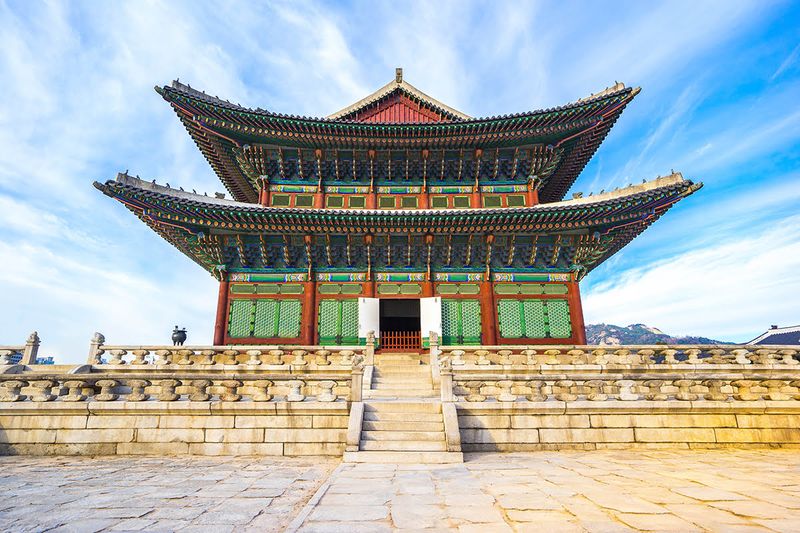
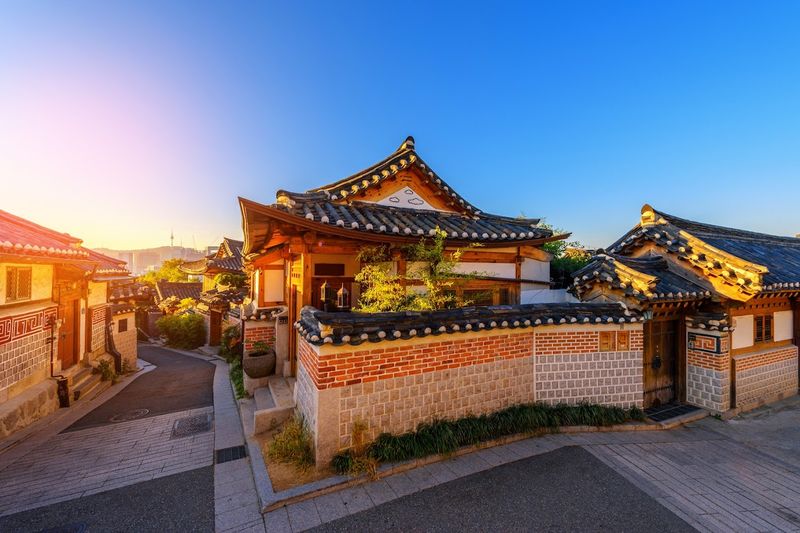
Seoul's crown jewel is Gyeongbokgung Palace — a fully restored 14th-century Joseon Dynasty palace complex with over 330 buildings, the daily Changing of the Guard ceremony, and the National Folk Museum on-site. Nearby Bukchon Hanok Village is a preserved neighbourhood of traditional Korean houses (hanok), authentically inhabited and photo-ready. The city has five major Joseon palaces in total, plus Insadong for crafts and antiques, and the Cheonggyecheon stream for a modern take on urban renewal.
Seoul is also ground zero for K-pop and K-drama culture. SM Town, Hybe Insight, and KCON events draw fans from around the world. The War Memorial of Korea is one of the most affecting military museums in Asia — massive, free, and moving.
Taipei: Temples, Imperial Treasures & Jiufen
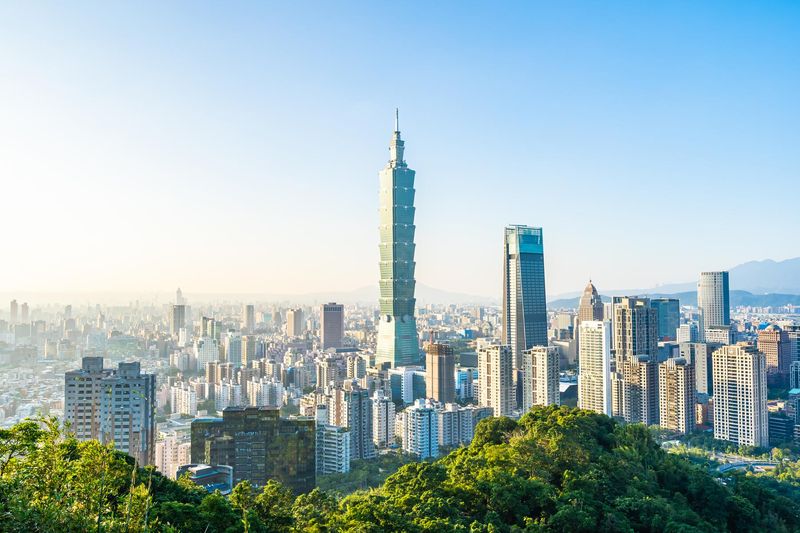
Taipei's National Palace Museum houses over 700,000 Chinese imperial artifacts — jade cabbage, ivory carving, ancient bronzes — brought to Taiwan by the Nationalist government in 1948. It's one of the top 10 museums in the world by collection size. Longshan Temple in Wanhua district is a living temple with real devotees burning incense and seeking fortunes, not a tourist-only spectacle. Taipei 101 dominated the skyline for years as the world's tallest building and still offers the best urban panorama in Taiwan.
The real gem though is Jiufen — a gold-mining hillside village an hour from Taipei that inspired Spirited Away's bathhouse. Its red lanterns, tea houses, and fog-draped alleys are unforgettable.
For K-pop fans, Seoul is unmissable. For history and museum lovers, Taipei's National Palace Museum is harder to argue against. See also: our Tokyo vs Seoul comparison and South Korea vs Taiwan comparison for broader regional context.
💰 Cost Comparison
Taipei is the clear budget winner. This isn't a marginal difference — across accommodation, food, transit, and activities, Taipei is meaningfully cheaper than Seoul. For budget travelers, this can be the deciding factor.
| Expense | 🇰🇷 Seoul | 🇹🇼 Taipei |
|---|---|---|
| Budget hostel dorm | ₩25,000–40,000/night ($18–30) | NT$600–900/night ($19–28) |
| Mid-range hotel (private) | ₩80,000–150,000/night ($60–110) | NT$2,500–4,500/night ($78–140) |
| Street food meal | ₩5,000–10,000 ($3.70–7.40) | NT$50–100 ($1.50–3.10) |
| Mid-range restaurant | ₩15,000–30,000 ($11–22) | NT$300–600 ($9.40–18.80) |
| Metro ride | ₩1,400–2,100 ($1.00–1.55) | NT$20–65 ($0.63–2.03) |
| Local beer (convenience store) | ₩2,000–3,500 ($1.50–2.60) | NT$45–75 ($1.40–2.35) |
| Daily budget (mid-range) | ₩80,000–150,000 ($60–110) | NT$1,200–2,500 ($38–78) |
The biggest savings in Taipei are at the street food and night market level — you can eat extremely well for under $10/day if you stick to night markets. Seoul's nightlife also adds up quickly: Korean beers in bars cost ₩5,000–10,000 ($3.70–7.40), and convenience store drinking is cheaper but still above Taipei levels.
🚇 Getting Around
Both cities have world-class public transit systems. This is not a differentiator — you'll be fine in either city with a smartphone and a transit card. But there are nuances worth knowing.
Seoul Metro (T-money Card)
Seoul's metro system has 23 lines serving the entire Seoul Capital Area. Base fare: ₩1,400 ($1.00) with T-money card. The system is enormous — Seoul is a physically large city — but Google Maps integration makes it painless. T-money cards work on buses, metro, and even some taxis. The metro runs from approximately 5:30am to 1am. Key stops: Gyeongbokgung (Line 3), Hongdae (Line 2), Myeongdong (Line 4).
Taipei MRT (EasyCard)
Taipei's MRT is smaller, simpler, and cheaper. The system is color-coded, bilingual (Chinese + English), and virtually impossible to get wrong. EasyCard fares range from NT$20–65 ($0.63–2.03). The MRT runs from 6am to midnight. Key stops: Taipei Main Station (interchange hub), Zhongxiao Fuxing (Da'an/shopping), Gongguan (NTU/cafés), Danshui (northern terminus/coast).
For day trips, Taipei's Taiwan Railways (TRA) connects to the rest of the island — Jiufen is a bus from Ruifang Station, Taroko Gorge is accessible from Hualien. Seoul's KTX high-speed rail opens up the whole peninsula: Busan in 2.5 hours, Gyeongju in 2 hours.
🌤️ Best Time to Visit
Weather is a genuinely important differentiator here — the two cities have very different climates, and the timing of your visit can significantly affect your experience.
Seoul: Four Seasons, Extremes Included
Seoul has a continental climate with four distinct seasons:
- Spring (April–May): Cherry blossoms, temperatures 12–22°C. Best season.
- Summer (June–August): Hot and humid, 25–35°C, rainy season (jangma) in July.
- Fall (September–November): Foliage, crisp air, 8–22°C. Excellent.
- Winter (December–February): Sub-zero possible, -6°C average lows. Cold and dry.
Taipei: Subtropical with a Long Sweet Spot
Taipei has a subtropical climate with no real winter:
- Oct–January: Best window — 18–24°C, manageable humidity, occasional drizzle.
- February–April: Still decent, temperatures 16–22°C, drizzly.
- May–September: Hot (30–35°C), very humid (90%), typhoon season June–October. Avoid if possible.
🏨 Where to Stay
Both cities have excellent neighbourhoods for different travel styles. Here's where to base yourself:
Seoul Neighbourhoods
- Hongdae: University area, 24h nightlife, indie cafés, affordable guesthouses. Best for party travelers and K-culture fans.
- Myeongdong: Shopping, street food, tourist central. Good transport hub. Pricier hotels.
- Jongno / Insadong: Close to palaces, traditional culture, hanok guesthouses. Best for culture travelers.
- Gangnam: Upscale, business-district feel. Further from main sights but near Gangnam Station shopping.
Taipei Neighbourhoods
- Da'an / Zhongxiao Dunhua: Trendy cafés, restaurants, great transport links. Best overall base.
- Ximending: Youth culture, K-pop stores (yes, even in Taipei), street fashion, budget accommodation.
- Zhongzheng (Main Station area): Transport hub, convenient but generic.
- Gongguan: NTU university area, cheap eats, night market nearby. Best for budget stays.
Mid-range hotel prices: Seoul ₩80,000–150,000 ($60–110)/night; Taipei NT$2,500–4,500 ($78–140)/night. Seoul's mid-range accommodation is surprisingly comparable to Taipei's despite lower overall living costs — Taipei's property market has tightened in recent years.
🎉 Nightlife & Entertainment
This is the sharpest divide between the two cities. Seoul vs Taipei on nightlife isn't even close — and Reddit users are unanimous about it.
Seoul: Northeast Asia's Nightlife Capital
Seoul's nightlife scene is extraordinary in both scale and stamina. Hongdae is the epicentre — student neighbourhood, wall-to-wall clubs, bars, and live music venues, most running until sunrise on weekends. Itaewon (near the former US military base) has the most internationally diverse bar scene in Northeast Asia — LGBTQ+ bars, craft cocktail spots, international DJs, and Irish pubs all within walking distance. Gangnam has the upscale club scene (Octagon, Unit). Cover charges typically run ₩10,000–20,000 ($7.40–15), and drinks inside are ₩8,000–15,000 ($5.90–11).
Taipei: Night Markets & Chill Culture
Taipei's nightlife is more about the vibe than the volume. Night markets run until midnight or later, and the city has a growing craft beer scene (Good Drink, 23 Public, Zhongxiao Brewery). Live music venues in Ximending and Da'an host indie bands nightly. LGBT nightlife in Xinyi is vibrant — Taipei has one of Asia's most progressive LGBTQ+ scenes. But if you want to dance until 5am, Taipei will disappoint compared to Seoul.
🎒 Day Trips
Both cities are excellent bases for day trips, but Taipei's geographic variety gives it a slight edge. Within 2 hours of Taipei, you can be in mountain villages, subtropical gorges, hot spring resorts, and fishing harbours — a remarkable range for a single city.
From Taipei
- Jiufen Old Street (1h bus from Ruifang): Gold-mining hillside village that inspired Studio Ghibli's Spirited Away. Red lanterns, tea houses, ocean views. Unmissable.
- Taroko Gorge (3h train to Hualien): Marble canyon with turquoise rivers — one of the most dramatic landscapes in Asia. Full day required.
- Tamsui (30min MRT): Dutch colonial fort, sunset over the estuary, seafood street.
- Yangmingshan Hot Springs (45min bus): Volcanic national park with hot spring public baths (NT$40/$1.25) and mountain hiking.
- Yehliu Geopark (1.5h bus): Bizarre mushroom-shaped rock formations on the north coast.
From Seoul
- DMZ Tour (2–3h including tour): The Demilitarized Zone separating North and South Korea. Sobering, fascinating, unlike anything else in Asia. Tours from ₩60,000–80,000 ($44–59).
- Suwon Hwaseong Fortress (1h subway): UNESCO-listed 18th-century fortress walls — walkable in half a day.
- Gyeongju (2h KTX): Ancient Silla Dynasty capital with royal burial mounds, Bulguksa Temple, and Anapji Pond.
- Nami Island + Petite France (1.5h): K-drama filming location with tree-lined walkways and French-themed village.
- Busan (2.5h KTX): South Korea's second city — beaches, seafood, temple cliffs, totally worth an overnight.
🎯 The Decision Framework
Still can't decide? Here's how to make the call in 60 seconds.
🇰🇷 Choose Seoul If...
- You're a K-pop or K-drama fan
- Nightlife and clubbing are a priority
- You love bold restaurant dining (Korean BBQ)
- You want to shop: K-beauty, fashion, skincare
- You're visiting Japan and want a high-energy contrast
- You want world-class museums and palace culture
- You're visiting in spring (cherry blossoms) or fall (foliage)
- You want to see the DMZ — unique in the world
🇹🇼 Choose Taipei If...
- Budget is your primary constraint
- Street food and night markets are your love language
- You travel solo and want easy, relaxed dining
- You want dramatic day trips (Taroko Gorge, Jiufen)
- You're visiting in winter (Oct–Feb) — Taipei's best season
- You want a calmer, less frenetic East Asia experience
- You're fascinated by Chinese imperial history (National Palace Museum)
- You want bubble tea from its birthplace
❓ Frequently Asked Questions
Is Seoul or Taipei better for first-time visitors to East Asia?
Both are excellent entry points, but for different reasons. Seoul impresses with K-culture, grand palaces, and world-class nightlife. Taipei wins for its relaxed pace, night market culture, and easier overall budget. Reddit consensus: if you're already visiting Japan, Taipei pairs better for a mellow contrast; Seoul gives a higher-energy complement to Tokyo.
Is Taipei cheaper than Seoul?
Yes, noticeably. A mid-range daily budget in Taipei runs NT$1,200–2,500 ($38–78) versus Seoul's ₩80,000–150,000 ($60–110). Street food in Taipei costs NT$50–100 ($1.50–3) per item. Overall, Taipei is roughly 20–30% cheaper, with the biggest savings at the street food level and in local transport.
Which city has better food: Seoul or Taipei?
Per Michelin data, Taipei actually has more listings per capita (175 for 6.7M people) than Seoul (166 for 9.8M). The key difference is style: Taipei wins on street food and night market culture — bubble tea, scallion pancakes, oyster vermicelli. Seoul wins on bold sit-down dining — Korean BBQ, chimaek, jjigae stews. Both are genuinely world-class food cities.
How do you get from Seoul to Taipei?
Direct flight: 2.5–3 hours from Seoul Incheon (ICN) to Taipei Taoyuan (TPE). Airlines: Korean Air, EVA Air, Jin Air, Tigerair Taiwan. Return flights typically cost $120–300 booked in advance. No practical overland route exists — fly.
Which city has better nightlife: Seoul or Taipei?
Seoul wins decisively. Hongdae clubs run until 6am on weekdays; Itaewon has the most diverse bar scene in Northeast Asia. Taipei's nightlife is more laid-back — night market crawls, craft beer bars, indie music. Reddit users call Seoul's nightlife "Ibiza in Asia" and Taipei "chill vibes with good drinks."
Is Seoul or Taipei better for day trips?
Taipei edges it out. From Taipei: Jiufen (1h bus), Taroko Gorge (3h by train — one of Asia's most dramatic landscapes), Tamsui (30min MRT), and Yangmingshan hot springs (45min). From Seoul: DMZ tours (2–3h), Gyeongju (2h KTX), Nami Island (1.5h). Taipei's geographic variety — mountains, coast, hot springs — gives it a slight advantage.
What's the best time to visit Seoul vs Taipei?
Seoul: spring (April–May, cherry blossoms) and fall (October–November, foliage) are stunning. Avoid January–February (below freezing, -6°C possible) and July–August (hot + humid + rainy season). Taipei: October–January is the sweet spot — comfortable 18–24°C, less rain. Avoid May–September (typhoon season + extreme humidity). Overall, Taipei has a longer pleasant travel window.
Can I visit both Seoul and Taipei in one trip?
Absolutely. The flight is 2.5–3 hours and cheap ($120–300 return). A popular itinerary is Seoul (5 nights) + Taipei (4 nights) for a 10-day East Asia circuit. If you're also visiting Japan, consider routing Tokyo → Seoul → Taipei or Tokyo → Taipei → Seoul depending on your flight options.
Ready to Plan Your Trip?
Get a free personalized itinerary for Seoul or Taipei — tailored to your travel style, budget, and dates.
🎟️ Book Tours & Experiences
Hand-picked tours and activities for both destinations — book with free cancellation
Experiences via Viator — free cancellation on most tours