How we built this comparison
This page combines traveler discussion patterns from r/travel, r/solotravel, r/backpacking, r/safaris, r/AfricaTravel, r/southafrica, and r/Kenya, published cost data from Numbeo and recent traveler reports, and official tourism data from both countries.
- 40+ Reddit threads analyzed (2022–2026), including multiple detailed safari comparison threads
- Cost data from Numbeo, Budget Your Trip, safari operator quotes, and firsthand Reddit reports
- Safari park pricing from South African National Parks (SANParks) and Kenya Wildlife Service (2026)
- Safety data from US State Department and UK Foreign Office travel advisories
⚡ The TL;DR Verdict
South Africa for first-timers, self-drivers, and those who want more than just wildlife. Kenya for the classic safari drama and the Great Migration. South Africa is the easier, more diverse, and often cheaper African destination — you get Kruger's Big Five AND Cape Town's world-class food, wine, and beaches in one trip. Kenya delivers a more raw, dramatic safari experience, especially July–October during the Great Migration, but costs more and requires more logistics planning. If you've never been to Africa: start with South Africa. If you're a seasoned traveler returning for the ultimate wildlife spectacle: Kenya.
- South Africa edge: Self-drive safaris (Kruger), lower overall costs, Cape Town as one of the world's great cities, better roads and infrastructure, no mandatory guided game drives
- Kenya edge: The Great Migration (world's greatest wildlife event), more dramatic savanna landscape, Masai culture immersion, easier East Africa circuit (add Tanzania/Zanzibar)
- Best combo: South Africa is the standalone winner for a 2-week trip. For dedicated wildlife enthusiasts: Kenya + Tanzania combo is unbeatable if budget allows.
Choose South Africa if…
You want flexibility, value, and variety. Self-drive Kruger, drink Stellenbosch wine, watch penguins in Boulders Beach, then end in Cape Town. No other African country packs this much into one itinerary.
Choose Kenya if…
You're visiting July–October for the Great Migration, you want the classic guided safari experience with expert trackers, or you're building an East Africa circuit with Tanzania and Zanzibar.
Do both if…
You have 3+ weeks and a strong budget. Start in Kenya (June–October) for the Migration, fly to Cape Town for wine country and Table Mountain, end with Kruger. One of Africa's great itineraries.
Quick Comparison
| Category | 🇿🇦 South Africa | 🇰🇪 Kenya | Edge |
|---|---|---|---|
| Budget/day | $45–80 (budget–mid) | $70–120 (budget–mid) | South Africa |
| Safari cost | $40–80/night (self-drive Kruger camp) | $150–400/night (guided Mara camp) | South Africa |
| Big Five | Kruger, Sabi Sands — excellent year-round | Masai Mara, Amboseli — excellent year-round | Tie |
| Great Migration | Not applicable | July–October (river crossings) | Kenya |
| Beyond safari | Cape Town, Garden Route, wine country, penguins | Nairobi, Lamu Island, Diani Beach | South Africa |
| Infrastructure | Excellent roads, self-drive possible | Variable; guided drives required in Mara | South Africa |
| Beaches | Scenic but cold (Atlantic: 14°C/57°F) | Diani Beach — warm Indian Ocean, world-class | Kenya |
| Safety | High urban crime (Jo'burg, Cape Town periphery) | Petty theft in Nairobi; safari areas very safe | Tie |
| Food scene | Cape Town top-10 globally; braai culture; wine | Nyama choma, ugali, Nairobi food scene growing | South Africa |
| Flight connections | Direct from major US/EU hubs to Johannesburg | Direct from London, Amsterdam; via hub from US | South Africa |
| Visa | Visa-free for US/EU/UK travelers | eTA ($30) for most nationalities | South Africa |
| Malaria risk | Kruger/Limpopo area; Cape Town malaria-free | Most safari regions; Nairobi low risk | South Africa |
🦁 Safari & Wildlife: Kruger vs Masai Mara
This is what most people come to Africa for — and both countries deliver world-class wildlife experiences, just in very different ways. South Africa's Kruger National Park is one of the largest game reserves on earth (roughly the size of Wales), offering flexible self-drive options where you set your own pace, spend as much time with animals as you want, and stay in well-priced park camps. The privately owned Sabi Sands reserve adjoining Kruger is famous for the best leopard sightings in Africa.
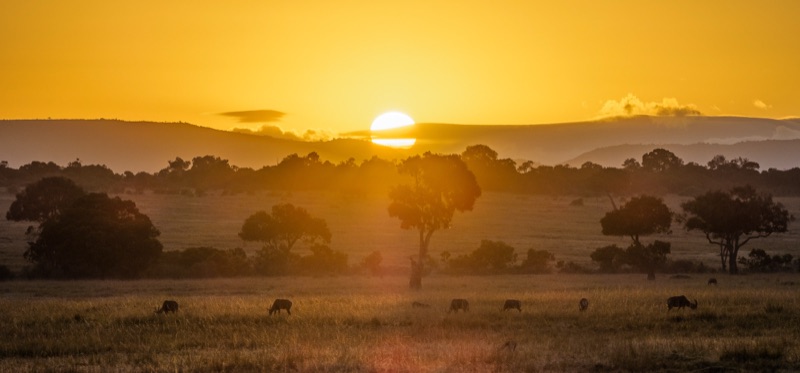
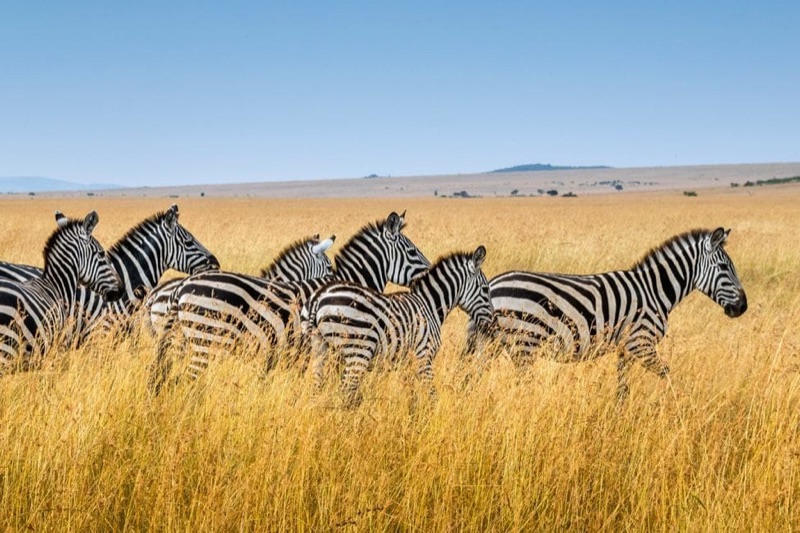
Kenya's Masai Mara is a smaller reserve but arguably the most dramatic wildlife arena on the planet — especially July through October when 1.5 million wildebeest and hundreds of thousands of zebras pour across the Mara River in the Great Migration. The open, treeless savanna means you can see for miles, and the game viewing is exceptional. But here's the catch: you cannot self-drive in the Mara. You need a guide, which means daily game drive costs on top of already expensive camp fees.
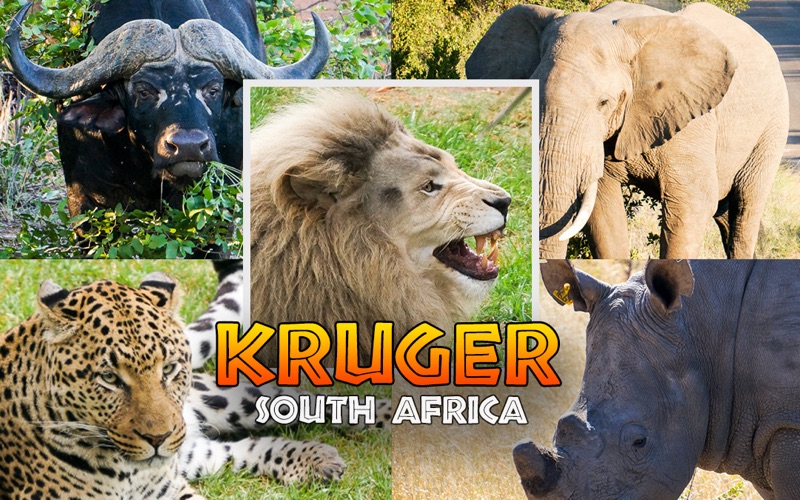
Rhino situation: South Africa has a significant advantage for rhino sightings. Kenya's white rhino populations are severely diminished from poaching — seeing one in the Mara is rare. In Kruger and especially in private reserves, rhino sightings are far more reliable. If completing the Big Five on one trip matters to you, this is a meaningful differentiator.
Cheetah and wild dog: Kenya's open grasslands are better for cheetah sightings (the wide-open Mara plains let you spot them over distance). South Africa's Kruger has African wild dogs, which are extremely rare and virtually absent from Kenya's main reserves.
💰 Cost Comparison: Self-Drive Budget vs Guided Luxury
South Africa is significantly cheaper than Kenya for most travelers — especially for safaris, where the ability to self-drive makes a huge difference. Here's a real breakdown:
| Expense | 🇿🇦 South Africa | 🇰🇪 Kenya |
|---|---|---|
| Budget accommodation | R200–500/night ($11–27) dorm / R600–1,200 private | KES 1,500–3,000/night ($12–23) dorm / KES 3,000–7,000 private |
| Mid-range hotel | R1,500–3,500/night ($80–190) | KES 8,000–20,000/night ($60–155) |
| Kruger self-drive camp | R500–1,800/night ($27–98) — no guide fee | N/A — Mara requires guided drives |
| Masai Mara mid camp | N/A | $150–350/night all-inclusive with drives |
| Kruger entry fee | R460/person/day ($25) — foreigners | N/A |
| Masai Mara conservancy fee | N/A | $80–150/person/day |
| Budget meal | R60–120 ($3–6.50) | KES 300–800 ($2.30–6) |
| Restaurant dinner (mid) | R200–500 ($11–27) | KES 2,500–6,000 ($19–46) |
| Domestic flight | R600–1,500 ($32–82) JNB–CPT | $80–180 NBO–Mara (light aircraft) |
| Car rental/day | R600–1,200 ($32–65) — drive Kruger yourself | N/A — safari vehicles only in parks |
Overall daily budget estimates (excluding flights):
- South Africa — budget: $45–70/day (Cape Town hostels + self-catering + budget meals)
- South Africa — mid-range: $100–180/day (decent hotels + restaurants + Kruger self-drive)
- Kenya — budget: $60–90/day (Nairobi guesthouses + local transport + meals)
- Kenya — safari (mid): $200–350/day all-in for Mara camps with game drives
🏙️ Beyond the Safari: Cape Town vs Nairobi & More
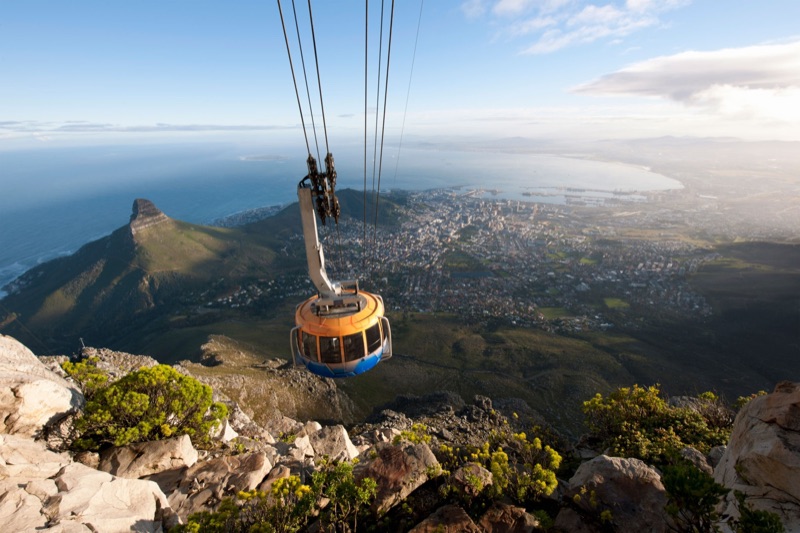
This is where South Africa pulls far ahead. Cape Town is consistently ranked one of the world's great cities — Table Mountain, Boulders Beach penguins, world-class wine in Stellenbosch and Franschhoek, the V&A Waterfront, Cape Point National Park, and a genuinely outstanding restaurant scene. The Garden Route south of Cape Town is one of Africa's most scenic coastal drives. South Africa has beaches, mountains, wine country, penguins, whale watching (June–November), and the Cape of Good Hope — all in one country.
Kenya's non-safari highlights are more limited but growing. Nairobi has improved enormously — the restaurant scene around Westlands and Karen is genuinely good, the Nairobi National Park (where you can see rhinos with the city skyline behind you) is unique in the world, and the Giraffe Centre and David Sheldrick Elephant Orphanage are excellent. Lamu Island on the Kenyan coast is one of East Africa's most charming destinations. But if you're not going on safari, Kenya has less to offer than South Africa.
For internal links: if you're considering other African comparisons, see our Jordan vs Egypt comparison or Morocco vs Egypt. For safari-adjacent Southeast Asian adventures, Sri Lanka vs Bali covers another multi-experience destination with wildlife.
🍖 Food & Dining
South Africa has one of Africa's best food scenes — and Cape Town in particular punches well above its weight globally. Cape Malay cuisine (fragrant curries with Dutch and Malay influences), braai culture (South African BBQ that's practically a religion), fresh Cape seafood, and a world-class wine region 45 minutes from the city center. The Cape Winelands rival Napa Valley for quality, with Stellenbosch, Franschhoek, and Constantia producing Chenin Blanc, Pinotage, and exceptional blends.
Kenya's food scene centers around nyama choma (grilled meat, usually goat), ugali (maize porridge — filling, cheap, and essential to understand local food culture), sukuma wiki (collard greens), and fresh Indian Ocean seafood on the coast. Nairobi's food scene has evolved rapidly — you'll find excellent Ethiopian, Indian, and international options in Westlands. The street food scene is vibrant but requires some caution about hygiene.
🚗 Getting Around
South Africa is by far the easier country to navigate independently. Driving on the left (same as UK/Australia), good quality roads (especially the N1, N2, N3 highways), and well-signed national parks make self-drive the preferred and cheapest option for most travelers. Renting a car in Johannesburg or Cape Town and driving to Kruger is straightforward. Internal flights between Johannesburg, Cape Town, and Durban are cheap and frequent (R600–1,500/$32–82 one way on budget carriers like Safair and FlySafair).
Kenya is more complex. Nairobi's traffic is notoriously bad — what looks like a 20km journey on a map can take 2 hours. Matatus (minibuses) are cheap but chaotic. For the Masai Mara, most travelers fly from Wilson Airport in Nairobi on light aircraft (30–45 min, $80–180 each way) — overland takes 5–6 hours on rough roads. Once in the Mara, you're entirely dependent on your camp's vehicles for game drives.
🌤️ Weather & Best Time to Visit
South Africa has a diverse climate. Cape Town is best October–April (Southern Hemisphere summer) — warm, dry, long days. June–August is Cape Town's winter: cold, rainy, and when the Atlantic is at its coldest. Kruger is best in the dry season May–September: little vegetation blocks animal viewing, animals congregate around water sources, and temperatures are mild. July–August can be cold at night (5°C/41°F) but days are perfect. Avoid Kruger December–February (wet season, vegetation dense, animals dispersed).
Kenya has two rainy seasons: long rains (March–May) and short rains (October–November). The Masai Mara's peak is July–October for the Great Migration. The shoulder months of January–March and November are also excellent for wildlife with fewer crowds. June is technically rainy but the Mara is often surprisingly good.
If visiting July–October: Kenya is hard to beat — the Great Migration river crossings are happening, the weather in the Mara is excellent, and it's also the best time for Kenyan highlands hiking. South Africa's Cape Town is in winter, but Kruger is excellent.
If visiting November–April: South Africa wins. Cape Town is at its finest (October–April is summer). Kenya's long rains hit March–May, making the Mara muddy and access harder.
🛡️ Safety
Both countries have safety considerations that require awareness, but the risks are manageable with sensible precautions.
South Africa has a higher crime rate than most destinations, particularly in urban areas. Johannesburg requires real care — avoid walking with valuables, use Uber rather than street taxis, and be very cautious about carjacking (it's a genuine concern on some routes at night). Cape Town is safer but has higher crime areas — the townships, certain CBD streets at night, and hiking trails require local advice. Cape Town's main tourist areas (V&A Waterfront, Camps Bay, Stellenbosch) are generally safe during the day. National park areas like Kruger are extremely safe.
Kenya has lower violent crime rates than South Africa but petty theft and "matatu" pickpocketing in Nairobi are real. Tourist areas are generally safe. The US State Department classifies parts of Kenya at Level 3 (reconsider travel) near Somali and Sudanese borders — the tourist areas (Nairobi, Mara, Lamu, Diani Beach) are Level 1–2 (exercise normal/increased caution). Safari areas are very safe — there's essentially no crime risk in the Masai Mara itself.
🏨 Where to Stay
South Africa options:
- Cape Town budget: Long Street area hostels R200–450/night ($11–24) — excellent social scene, central location
- Cape Town mid-range: Camps Bay, Green Point, De Waterkant — R1,500–4,000/night ($82–220) for sea-view apartments
- Kruger self-catering camps (SANParks): R500–1,800/night ($27–98) — book months ahead, especially Skukuza, Berg-en-Dal
- Sabi Sands luxury: $500–2,000+/night all-inclusive — Singita, Lion Sands, Ulusaba for the ultimate experience
- Stellenbosch wine farms: R1,800–5,000/night ($98–270) — sleep on wine estates in the Cape Winelands
Kenya options:
- Nairobi budget: Karen, Westlands guesthouses — $25–60/night
- Nairobi mid-range: $80–200/night in Westlands or Karen areas
- Masai Mara budget camps: $100–200/night with game drives (limited options, less reliable)
- Mara mid-range camps: $200–400/night all-inclusive — Kichwa Tembo, Mara Sopa, Ol Kiombo
- Mara luxury: $500–1,500+/night — Mahali Mzuri (Richard Branson's camp), Singita Mara River
🏖️ Beaches
If beach quality matters to your decision, Kenya wins — and it's not particularly close.
Kenya has the warm Indian Ocean coastline with Diani Beach (south of Mombasa) as the standout — powder-white sand, crystal-clear warm water (28°C/82°F year-round), excellent snorkeling and diving on the offshore reef, and a growing collection of beach bars and resorts. Lamu archipelago adds a unique Swahili cultural dimension — ancient coral-stone architecture, no cars, and some of the most photogenic beaches in East Africa. Tanzania's Zanzibar (a 1–2 hour flight from Nairobi) is one of the best beach destinations anywhere in the world.
South Africa has scenic beaches — Clifton and Camps Bay in Cape Town are genuinely stunning, backed by the Twelve Apostles mountain range. But the Atlantic side is cold: 14–16°C (57–61°F) year-round, which is "swimming if you're from Norway" cold. The Indian Ocean side (KwaZulu-Natal around Durban) is warmer at 22–26°C (72–79°F), but it's not a standout destination compared to East African or Southeast Asian beaches.
🧭 The Decision Framework
Choose South Africa if…
- It's your first trip to Africa
- You want to self-drive a safari (Kruger)
- Budget is a major consideration
- You want a world-class city (Cape Town) alongside wildlife
- You're visiting November–April (Southern summer)
- You want better road infrastructure and logistics
- Rhino sightings are important to you
- You want wine, food, and beaches as part of the trip
- You're a solo first-time Africa traveler
Choose Kenya if…
- You're visiting July–October for the Great Migration
- The classic guided safari experience is what you want
- You're building an East Africa circuit (Kenya + Tanzania + Zanzibar)
- You want the Masai Mara's dramatic open-savanna landscape
- You want the warm Indian Ocean coast (Diani Beach, Lamu)
- You're a repeat Africa visitor wanting a new experience
- You want to combine safari with island-hopping to Zanzibar
- The Masai cultural experience matters to your itinerary
❓ Frequently Asked Questions
Is South Africa or Kenya better for a first safari?
South Africa is the better first safari destination for most travelers. The infrastructure is superior — you can self-drive through Kruger National Park, roads are in good condition, English is spoken everywhere, and you can combine wildlife with Cape Town in one trip. Kenya delivers a more classic, dramatic safari (especially Masai Mara during the Great Migration), but requires guided game drives, more complex logistics, and a bigger budget. As one Reddit user in r/safaris put it: "For everything you've described, South Africa is honestly the stronger answer and it's not particularly close. The logistics argument alone is significant for a solo first-timer."
Which is cheaper: South Africa or Kenya?
South Africa is significantly cheaper, especially for safaris. In Kruger, you can self-drive and stay at park camps for $40–80/night. In Kenya's Masai Mara, guided-only camps start around $150–300/night mid-range. Budget travel in South Africa runs $40–70/day; Kenya runs $60–100/day minimum. Cape Town has excellent budget accommodation, while Nairobi's best-value areas require more planning.
When is the best time to see the Great Migration in Kenya?
The wildebeest river crossings in the Masai Mara — the most dramatic phase of the Great Migration — peak July through October. July–August is the sweet spot for massive herds crossing the Mara River. You can see wildebeest in the Serengeti (Tanzania) from January through June. If you can't visit July–October, Kenya's Masai Mara still has phenomenal Big Five sightings year-round.
Can you see the Big Five in both South Africa and Kenya?
Yes. South Africa's Kruger National Park and the private Sabi Sands Reserve are world-class for Big Five sightings — lion, leopard, elephant, buffalo, and rhino. Kenya's Masai Mara also offers excellent Big Five sightings, with particularly famous leopard and cheetah sightings. South Africa has a slight edge on rhino as Kenya's populations have been heavily targeted by poaching.
Is South Africa or Kenya safer for tourists?
Both countries have specific safety concerns. South Africa has higher urban crime, particularly in Johannesburg and Cape Town's less-touristy areas — petty theft, muggings, and carjackings are real risks. Kenya has issues with petty theft in Nairobi and occasional political unrest, but safari camps are very safe. The key in both countries is staying in tourist-friendly areas, using reputable transport, and following local advice.
How many days do you need in South Africa vs Kenya?
South Africa minimum 10 days: 3–4 nights in Kruger/Sabi Sands, 3–4 nights in Cape Town, 1–2 days on the Garden Route. You could easily spend 2–3 weeks. Kenya minimum 7 days: 4 nights in Masai Mara, 2–3 days in Nairobi (with day trips to Amboseli or Hell's Gate). If you want Zanzibar or the coast, add 4–5 days.
Do I need vaccines to visit South Africa or Kenya?
Kenya requires a Yellow Fever certificate if arriving from certain countries. Malaria prophylaxis is strongly recommended for the Masai Mara and most safari regions. South Africa: malaria risk in the Kruger/Limpopo area requires prophylaxis; Cape Town is malaria-free. Hepatitis A and Typhoid vaccinations are recommended for both. Always check current requirements at least 6–8 weeks before travel.
Which has better beaches: South Africa or Kenya?
Kenya wins on beach quality. The Kenyan coast — particularly Diani Beach south of Mombasa — offers powder-white sand, warm Indian Ocean water (28°C/82°F), and excellent snorkeling and diving. Zanzibar (Tanzania, easy add-on) is one of the best beach destinations in the world. South Africa's Cape Town beaches (Clifton, Camps Bay) are stunning but cold — the Atlantic side averages 14°C/57°F. The Garden Route has beautiful scenery but similarly cool water.
Ready to Plan Your Africa Adventure?
Get a personalized itinerary for South Africa or Kenya — built around your budget, travel style, and the wildlife you want to see.
Plan My Africa Trip →Also explore: South Africa travel guides · Kenya popular picks · Kruger safari lodges · Masai Mara camps
🎟️ Book Tours & Experiences
Hand-picked tours and activities for both destinations — book with free cancellation
Experiences via Viator — free cancellation on most tours