
⚡ The TL;DR Verdict
Visit Thailand if you want easy, well-connected travel with world-class street food, Buddhist temple culture, excellent infrastructure, and legendary nightlife — without the logistical headaches.
Visit the Philippines if you're chasing the most spectacular beaches and underwater life in Southeast Asia, don't mind island-hopping delays, and want fewer tourist crowds at the top spots.
The honest take: Thailand is the easier country to travel; the Philippines has the better beaches. Reddit is fairly unanimous: first-timers to Southeast Asia should start with Thailand. The Philippines rewards travelers who know what they're getting into — slow ferry schedules, occasional flight chaos, and infrastructure that ranges from "surprisingly modern" (Manila BGC) to "charmingly basic" (remote islands).
If you can only pick one: Thailand for first-timers, culture lovers, foodies, and anyone on a tight schedule. Philippines for beach obsessives, divers, surfers, and those with flexible time.
Quick Comparison
| Category | 🇹🇭 Thailand | 🇵🇭 Philippines | Edge |
|---|---|---|---|
| Daily Budget (mid-range) | $55–90/day (฿1,870–3,060) | $60–100/day (₱3,360–5,600) incl. island transport | Thailand |
| Food Scene | World-class street food — pad thai, green curry, mango sticky rice, tom yum | Homestyle Filipino comfort food — adobo, sinigang, lechon. Less globally celebrated | Thailand |
| Beaches | Railay, Koh Phi Phi, Koh Tao — beautiful but busy | El Nido, Coron, Boracay, Siargao — among the world's best | Philippines |
| Diving & Snorkeling | Good (Koh Tao, Koh Lanta, Similan Islands) | Exceptional (Tubbataha Reef, Coron wrecks, Moalboal sardines) | Philippines |
| Infrastructure | Excellent — buses, trains, well-signed roads, modern airports | Uneven — Manila is modern, remote islands are basic; ferries unreliable | Thailand |
| Culture & Temples | 2,000+ Buddhist temples, distinct Thai culture, Muay Thai, festivals | Spanish colonial heritage, 7,641 islands, English-speaking Christian culture | Thailand |
| English Proficiency | Tourist areas good; rural areas limited | Excellent nationwide — English is an official language | Philippines |
| Nightlife | Bangkok and Phuket are legendary — Khao San Road, RCA, full moon parties | Boracay's D'Mall strip is good; Manila's BGC is vibrant — but not on Bangkok's level | Thailand |
| Crowds at Top Spots | Heavy — Phuket, Phi Phi, and Chiang Mai temples are packed | Less crowded overall — even El Nido feels manageable outside peak season | Philippines |
| Ease of Travel | Very easy — great transport links, well-developed tourist infrastructure | Moderate–challenging — island-hopping takes planning; delayed flights are common | Thailand |
| Best For | First-timers, foodies, culture, backpackers, easy adventure | Beach seekers, divers, surfers, off-the-beaten-path explorers | — |
🍜 Food & Dining
Thai cuisine is one of the few national food cultures that genuinely rivals Japan and Italy for global reverence — and it's absurdly affordable. Bangkok's street food scene alone has more variety than most countries: pad thai, khao pad (fried rice), green and red curries, massaman curry, khao man gai, som tam (green papaya salad), boat noodles, mango sticky rice, and the endlessly adaptable pad kra pao. Chiang Mai adds khao soi, a northern coconut curry noodle soup that has its own devoted following. A filling street food meal costs ฿40–80 ($1.15–2.30) and is consistently delicious. Michelin Bib Gourmand restaurants in Bangkok charge ฿200–350 ($6–10) for food that would cost 10x in New York.
Filipino cuisine gets unfairly dismissed on the international stage. Adobo (vinegar-braised pork or chicken), sinigang (tamarind sour soup), kare-kare (oxtail peanut stew), lechon (whole roasted pig), and fresh seafood are genuinely wonderful — but the food culture is more home-style and less developed for street food tourism. You won't find the density of great $2 meals that Bangkok delivers. The main exceptions: fresh seafood near the coast is spectacular and cheap, and cities like Cebu and Bacolod have their own proud regional cuisines.
Price comparison
Street food in Thailand is genuinely the world's best value: ฿40–120 ($1.15–3.50) for a full meal. Mid-range restaurant dinner runs ฿200–500 ($6–15). In the Philippines, a local eatery (carinderia) meal costs ₱80–150 ($1.40–2.70), which is technically cheaper — but the quality gap is real outside of specific dishes. Upscale dining in Manila's BGC runs ₱800–2,000 ($14–36) and is comparable to Bangkok's better restaurants.
🏖️ Beaches & Islands
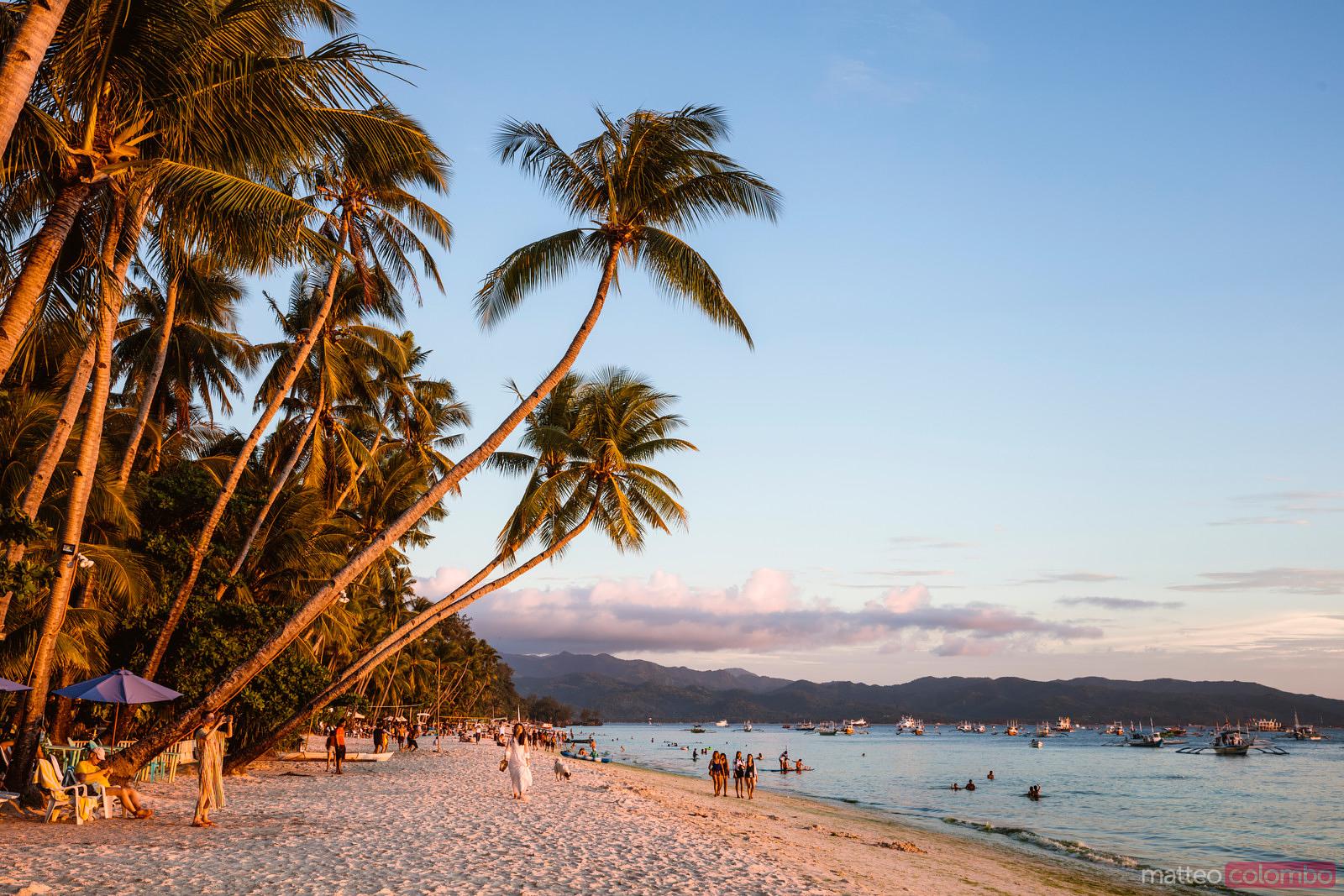
This is the Philippines' undisputed strength. El Nido's Big Lagoon and Secret Lagoon in Palawan are consistently ranked among the most breathtaking bodies of water on Earth — limestone karst towers rising from emerald water, accessible only by outrigger boat. Coron's Kayangan Lake (a landlocked saltwater lake with crystal visibility) and its WWII shipwreck diving are world-class. Boracay's White Beach is a 4km arc of talcum-powder sand that earned the island its enduring "best beach in Asia" reputation, despite the crowds. Siargao is a surfer's paradise with world-class waves at Cloud 9 and Tuason Point.
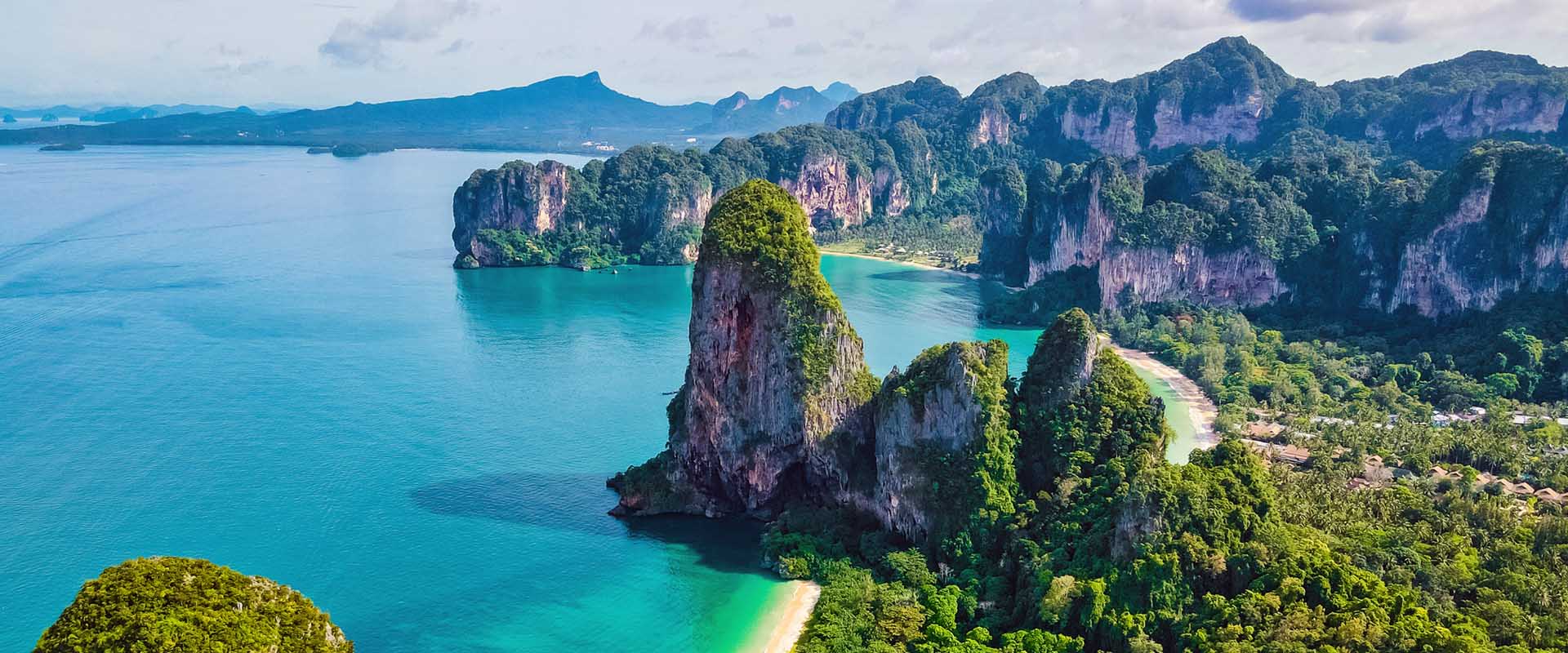
Thailand's beaches are genuinely beautiful but more developed and more crowded. Railay Beach in Krabi — accessible only by longtail boat — has the dramatic limestone cliffs that define the Andaman coast aesthetic. Koh Phi Phi's Maya Bay (of The Beach fame) has recovered from its 2018 closure and is stunning again. Koh Tao is Southeast Asia's best-value scuba dive certification destination. Koh Lanta and Koh Yao Noi offer quieter alternatives to the party islands. But honest Thai regulars will tell you: Phuket's main beaches have been overdeveloped for years, and Ko Phi Phi Don is essentially Ibiza on a Thai island.
Diving & snorkeling
The Philippines is a marine biodiversity hotspot — Tubbataha Reef (UNESCO World Heritage) in the Sulu Sea, the whale shark encounters at Oslob (controversial but popular), the sardine run at Moalboal, and the world-class wreck diving at Coron are genuinely bucket-list. Koh Tao in Thailand is excellent for beginners (cheap dive courses, clear water, good coral) but lacks the sheer scale and diversity of Philippine dive sites. The Coral Triangle runs through Philippine waters, making it one of the richest marine environments on the planet.
💰 Cost Comparison
Here's the nuanced truth most comparison articles miss: the Philippines has a lower cost of living on paper, but Thailand is often cheaper in practice for travelers — because the Philippines' island geography forces you into expensive inter-island flights and ferry trips that have no equivalent in Thailand's road network.
| Expense | 🇹🇭 Thailand | 🇵🇭 Philippines |
|---|---|---|
| Budget hostel dorm | ฿280–500/night ($8–15) | ₱500–900/night ($9–16) |
| Mid-range hotel | ฿1,000–2,500/night ($29–72) | ₱1,700–4,500/night ($30–80) |
| Beach bungalow (island) | ฿600–2,000/night ($17–57) | ₱800–3,500/night ($14–63) |
| Street food meal | ฿40–120 ($1.15–3.50) | ₱80–180 ($1.40–3.20) |
| Sit-down dinner | ฿200–600 ($6–17) | ₱300–900 ($5–16) |
| Local transit (city) | ฿10–50 Grab/songthaew ($0.30–1.50) | ₱15–50 jeepney/tricycle ($0.27–0.90) |
| Inter-island flight (domestic) | ฿500–2,000 ($14–57) — rarely needed | ₱1,700–4,500 ($30–80) — often required |
| Ferry/boat (islands) | ฿150–600 ($4–17) | ₱300–1,200 ($5–21) + time delays |
| Island hopping tour | ฿1,200–2,500 ($34–71) per day | ₱1,200–2,500 ($21–45) per day |
| Scuba dive (2 tanks) | ฿1,800–2,500 ($51–71) | ₱1,500–3,000 ($27–54) |
| Daily total (mid-range) | ฿1,900–3,100 ($55–89) | ₱3,360–5,600 ($60–100) incl. transport |
The hidden cost in the Philippines: If you're visiting multiple islands (which is kind of the point), factor in $30–80 per domestic flight. Manila–El Nido alone is about ₱3,000–4,500 ($54–80) one way. A typical 14-day Philippines trip visiting Manila + Palawan + Cebu can rack up $200–300 in domestic flights alone — costs that simply don't exist when traveling Thailand by bus and train.
🛵 Getting Around
Thailand has excellent overland transport. Bangkok's BTS Skytrain and MRT are clean, fast, and AC-chilled. Intercity: comfortable air-conditioned buses connect Bangkok to Chiang Mai (9h, ฿350–600), Krabi, Koh Samui, and Phuket at reasonable prices. Overnight trains with sleeping berths are a classic travel experience. Grab (Southeast Asia's Uber) works everywhere in Thailand's cities. On islands, songthaews (shared pickup trucks) and motorbike taxis handle local transport.
The Philippines is famously harder to get around. The 7,641 islands aren't connected by roads. Getting from Manila to El Nido means a 1.5h flight or a painful 14h+ overland bus + ferry combo. Ferries between islands are cheap but notorious for cancellations due to weather, mechanical issues, and general unpredictability — miss a ferry and your whole schedule unravels. Within cities, jeepneys (the colorful converted WWII jeeps) and tricycles are fun and cheap but confusing for first-timers. Traffic in Manila is among the worst in Asia; what looks like 10km on a map can take 2 hours.
☀️ Best Time to Visit
Both countries are in the tropics with distinct wet and dry seasons — but the Philippines has an additional wild card: typhoons. The Western Pacific typhoon season (June–November) regularly sends Category 4–5 storms through the archipelago. Thailand is largely protected by its geography and gets nowhere near the same typhoon risk.
Data: Open-Meteo archive averages. Temperatures are daily highs/lows in Celsius.
Key weather differences
Thailand dry season (Nov–Apr) is stable and predictable across most of the country. Koh Samui and the Gulf coast islands follow a slightly different pattern (best Nov–Apr; rainy Sep–Oct). Krabi, Koh Phi Phi, and Phuket are reliably beautiful December through April.
Philippines dry season (Dec–May) lines up with Thailand's. The crucial catch: different islands have different micro-climates. Palawan (El Nido, Coron) is best Nov–May. Boracay peaks Dec–Mar. Siargao's surf season actually peaks August–November — during the national typhoon season — because the east coast is sheltered from westward-moving storms.
Typhoon risk is real. An average of 20 typhoons enter Philippine waters each year, with 8–9 making landfall. Super Typhoon Rai in 2021 devastated Siargao and Cebu in December. Always check active weather and avoid booking non-refundable island accommodations during June–October unless you're highly flexible.
🏨 Where to Stay
Thailand — key bases
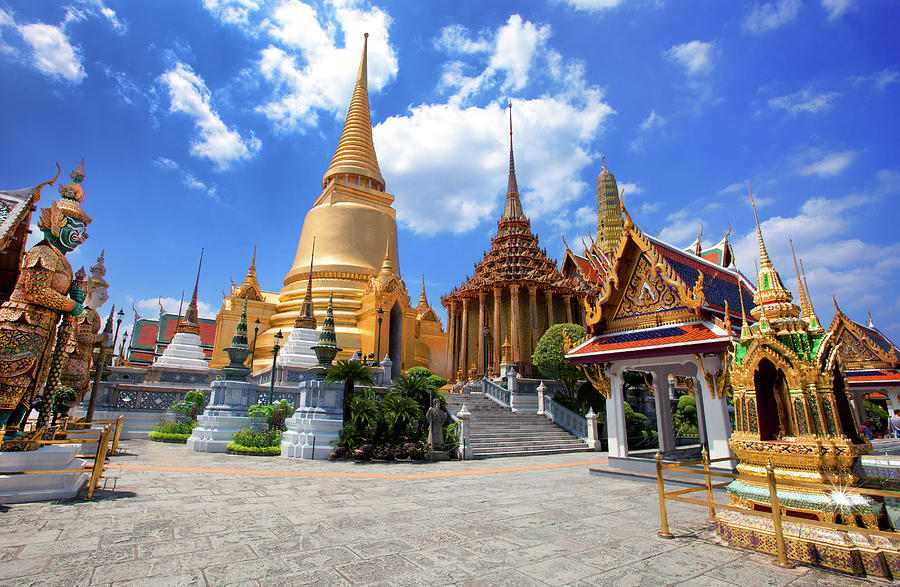
Bangkok (Sukhumvit / Silom) — The natural entry point. Sukhumvit is central, transit-connected, and has everything from ฿350 guesthouses to 5-star hotels. Silom is quieter and better connected to the river. Khao San Road is the classic backpacker zone — cheap but chaotic.
Chiang Mai (Old City / Nimman Road) — Thailand's cultural capital. Stay in the Old City walled district for temple access, or Nimman Road for the cooler café-and-boutique scene. Budget guesthouses from ฿400–600, stylish boutique hotels from ฿1,200–2,500.
Krabi / Railay Beach — Best base for the Andaman coast. Ao Nang has the most accommodation options and boat access. Railay Beach itself has bungalows (฿700–3,000) accessible only by longtail from Ao Nang or Krabi Town.
Koh Tao — Best value dive island. Budget bungalows ฿350–700, dive resorts ฿800–2,000. Smaller and less wild than Koh Phangan (party island) or Koh Samui (resort island).
Philippines — key bases
Manila (BGC / Makati) — BGC (Bonifacio Global City) is the safest, most walkable, and most modern neighborhood — think Singapore-lite. Makati is the original financial district, slightly grittier but tons of restaurants and nightlife. Avoid staying in older Malate/Ermita unless on a very tight budget.
El Nido, Palawan — The access point for the northern Palawan island-hopping tours. Corong-Corong (just south of El Nido town) has nicer beachside resorts; El Nido town itself is the budget and guesthouse hub. Budget guesthouses from ₱600–1,200, mid-range resorts from ₱2,500–6,000.
Boracay (White Beach / Bulabog Beach) — White Beach's Station 1 (north end) is quieter and has better sand; Station 2 is the action zone; Station 3 is the backpacker budget area. Bulabog Beach faces east and is the kite-surfing hub. Prices run the full range from ₱800 guesthouses to ₱15,000+ beachfront resorts.
Siargao (General Luna) — The surf hub. General Luna is a small town with a great café scene and surf culture vibe. Boards and wet suits for hire everywhere. Budget ₱600–1,200, surf-camp style accommodations ₱1,500–3,500.
🎒 Day Trips & Island Hopping
Day trips and island hopping are central to both countries' appeal — but the logistics work very differently.
Thailand day trips
Bangkok → Ayutthaya (1.5h by train) — Ancient capital of Siam, ruined temples at sunset. Easily done as a day trip, ฿20 one-way by train.
Bangkok → Kanchanaburi (2h by bus) — Bridge over the River Kwai, WWII history, waterfalls, and elephant sanctuaries.
Chiang Mai → Doi Inthanon (1.5h) — Thailand's highest peak, mountain villages, twin chedis with valley views.
Krabi → 4-Islands Tour (boat day tour, ฿1,200–1,800) — Koh Lanta, Koh Mook, Koh Kradan, and Emerald Cave. Limestone scenery and snorkeling.
Philippines island hopping
El Nido Tour A (shared boat, ₱1,200–1,500) — The classic: Big Lagoon, Small Lagoon, Secret Lagoon, Shimizu Island. Best first-timer tour in the Philippines.
El Nido Tour C (₱1,200–1,500) — Helicopter Island, Star Beach, Hidden Beach — more beaches, less lagoon.
Coron Tour (₱1,200–2,000) — Kayangan Lake, Barracuda Lake, Twin Lagoon, CYC Beach. Usually a full-day loop.
Cebu → Whale Sharks at Oslob (2h south of Cebu City) — Controversial (the whale sharks are baited) but wildly popular. Many travelers do Oslob + Kawasan Falls canyon canyoneering in one long day.
🔀 Why Not Both?
The Thailand vs Philippines debate is more of a false choice than most people realize. Budget airlines — AirAsia, Cebu Pacific, Philippines Airlines — fly Bangkok (Suvarnabhumi or Don Mueang) to Manila (NAIA) for $40–90 depending on timing. The flight is about 3.5 hours. Many Southeast Asia first-timers do a Bangkok + Chiang Mai base in Thailand, then fly to Manila and continue to one Filipino island destination.
Suggested multi-country itineraries
14 days (fast): Bangkok (3 days) → Chiang Mai (2 days) → fly to Manila → El Nido, Palawan (5 days) → fly home from Manila (2 days) or Manila → Boracay (2 days)
18 days (comfortable): Bangkok (3 days) → Krabi/Railay (3 days) → fly Manila → El Nido (4 days) → Coron (3 days) → fly back Manila (1 day) → fly home or extend Siargao (4 days)
21 days (ideal): Bangkok (3 days) → Chiang Mai (3 days) → Koh Tao (3 days, dive course) → fly Manila → El Nido (5 days) → Siargao (5 days, surf) → fly home via Manila
Important tip: Don't fly into Manila and immediately out to an island the same day. Manila's NAIA airport is infamous for delays and chaotic transfers. Budget a full day in Manila at minimum, ideally two nights.
🎯 The Decision Framework
Choose Thailand If…
- It's your first time in Southeast Asia
- World-class street food is a priority
- You want Buddhist temples and cultural depth
- Easy, stress-free logistics matter to you
- You're traveling on a strict schedule
- Legendary nightlife is on your list
- You want value-for-money accommodation
- You're doing a shorter trip (7–10 days)
- Solo travel safety is a concern
- You want good beaches without the logistics
Choose Philippines If…
- Exceptional beaches are your #1 priority
- You're a serious diver or snorkeler
- Surfing (Siargao, La Union) is on your list
- You have 14+ days and travel flexibility
- You prefer fewer tourist crowds at top spots
- English-speaking culture makes you comfortable
- You've already done Thailand
- Slow island life appeals to you
- You want off-the-beaten-path adventure
- Wildlife encounters (whale sharks, dugongs) excite you
❓ Frequently Asked Questions
Is Thailand or the Philippines better for first-time Southeast Asia visitors?
Thailand, by a clear margin. Better infrastructure, more predictable transport, world-class street food, iconic cultural sites, and a well-developed tourist network make it significantly more accessible. The Philippines is spectacular but rewards travelers who know what they're getting into — particularly the logistics challenges. Reddit consensus: start with Thailand, return for the Philippines.
Which is cheaper to visit — Thailand or the Philippines?
Thailand usually works out cheaper in practice, even though Philippines has a lower cost of living. The culprit: inter-island flights and boat transport in the Philippines add $30–80 per hop. A multi-island Philippines trip visiting Palawan + Cebu + Siargao can rack up $200–300 in domestic transport costs that simply don't exist in Thailand, where an air-conditioned bus covers 500km for $8.
Which country has better beaches?
Philippines, honestly. El Nido's lagoons, Coron's lakes and wrecks, and Boracay's White Beach are among the finest in the world. Thailand's beaches (Railay, Koh Phi Phi, Koh Tao) are beautiful but more developed and more crowded. The key tradeoff: getting to Philippine beaches is harder. If you want "best beaches, minimal hassle," Railay Beach is unbeatable. For "absolute best beaches, willing to work for it," go to Palawan.
Is the Philippines safe for tourists?
The main tourist destinations — Manila, Boracay, Palawan, Cebu, and Siargao — are generally safe. The major exception: western Mindanao and the Sulu Archipelago carry active government travel advisories from the US, UK, and Australia. Stick to the tourist circuit and exercise standard big-city precautions in Manila (petty theft, transport scams). Thailand is generally considered slightly safer, especially for solo female travelers.
What's the best time to visit Thailand vs the Philippines?
Both countries: November to April is the dry season and best time to visit. The Philippines adds a critical caveat: typhoon season runs June–November, with Category 4–5 storms averaging 8–9 landfall per year. Always check island-specific weather — Palawan, Boracay, Cebu, and Siargao have different micro-climates. Never book non-refundable Philippines island accommodation during typhoon season without travel insurance and flexibility built in.
How many days do you need for each country?
Thailand: 10–14 days covers Bangkok + Chiang Mai + one beach destination well. Philippines: budget more time than you think. Palawan alone (El Nido + Coron) deserves 7–8 days. Rushing the Philippines means you'll spend too much time in airports and not enough in the water. A satisfying multi-island Philippines trip needs 14–18 days minimum.
Can you visit both Thailand and the Philippines in one trip?
Yes — and many experienced Southeast Asia travelers do exactly this. Budget airlines fly Bangkok to Manila for $40–90. A 18–21 day trip combining Bangkok + Chiang Mai (Thailand) with El Nido or Siargao (Philippines) is entirely doable. The two countries complement each other beautifully: Thailand for food, culture, and ease; Philippines for beaches, diving, and island magic. Don't rush through either — plan at least 7–8 days per country.
Ready to plan your Southeast Asia trip?
Get a free custom itinerary for Thailand, the Philippines, or both — built from real traveler insights, not generic templates.