📋 Our Methodology
This comparison is built from real sources, not AI guesswork:
- 12+ Reddit threads from r/travel, r/solotravel, r/honeymoonplanning, r/zanzibar, r/africa synthesized
- Cost data from Numbeo (March 2026), cross-checked with recent Reddit trip reports
- Weather from Open-Meteo historical averages
- Beach quality data from traveler accounts and tide information from Tanzania Meteorological Authority
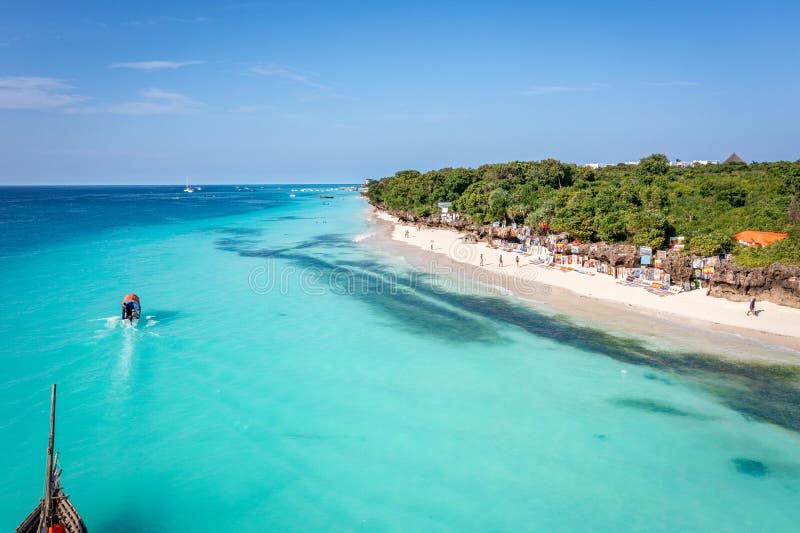
Zanzibar — Nungwi Beach, northern tip
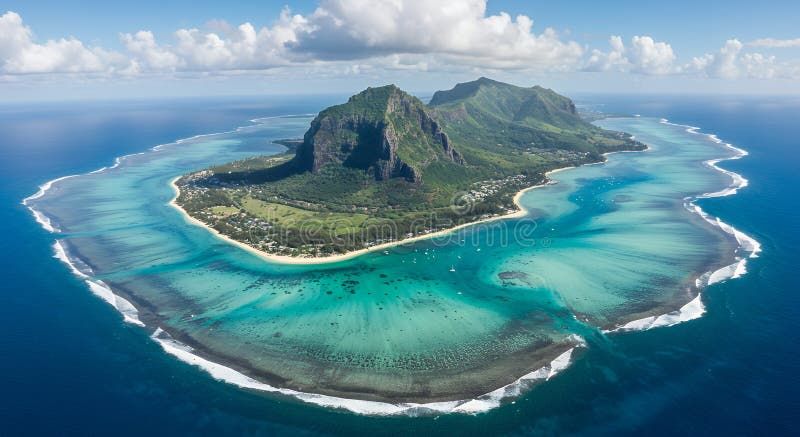
Mauritius — turquoise lagoon & mountains
⚡ The TL;DR Verdict
Zanzibar wins for culture, authenticity, value for money, and combining with an East Africa safari. Mauritius wins for polished luxury, consistent beach quality, and a stress-free resort holiday. Budget: Zanzibar $60–120/day, Mauritius $150–300/day.
- Go to Zanzibar if you want Stone Town's UNESCO-listed spice-island history, Nungwi's jaw-dropping beaches, East Africa wildlife safari as a natural pairing, and to stretch your travel budget significantly further.
- Go to Mauritius if you want polished luxury resorts with consistent calm lagoons, world-class golf, the most reliable beach experience in the Indian Ocean, and a destination that requires zero logistical friction.
- These aren't competitors — they serve fundamentally different travel styles. Zanzibar rewards the curious explorer; Mauritius rewards the resort-vacation purist.
- Reddit's consensus: Zanzibar has more to do; Mauritius has more to relax in. Budget travelers and safari-combiners lean Zanzibar; honeymooners and luxury resort-seekers split about evenly.
🏖️ Choose Zanzibar if...
You want culture, history, great beaches, incredible value, and can pair it with a Tanzania or Kenya safari.
🌊 Choose Mauritius if...
You want a polished, stress-free Indian Ocean luxury holiday with consistent beaches and world-class resorts.
Quick Comparison
| Category | 🏖️ Zanzibar | 🌊 Mauritius | Winner |
|---|---|---|---|
| Daily Budget (mid-range) | $60–120 per person | $150–300 per person | |
| Beach Quality | Nungwi/Kendwa: world-class (tide-dependent on east coast) | Consistent calm lagoon beaches island-wide | Mauritius |
| Cultural Depth | Stone Town UNESCO, Swahili culture, spice history | Multicultural (Indian, Creole, French, African blend) | |
| Snorkeling & Diving | Mnemba Atoll — exceptional; dolphins, turtles | Blue Bay Marine Park, Cathedral — both world-class | Tie |
| Food Scene | Seafood, spices, Swahili cuisine — $5–15 meals | Indian-Creole fusion, French influence — $15–30 meals | |
| Safari Pairing | Perfect — 45 min from Dar es Salaam, Serengeti circuit | None — standalone island destination | |
| Luxury Resorts | High-end options exist but fewer; more boutique | Among the best in the Indian Ocean — Six Senses, Constance | Mauritius |
| Safety | Generally safe; beach touts, petty theft in Stone Town | One of Africa's safest destinations | Mauritius |
| Getting There | Flies via Dar es Salaam or Nairobi; longer routes from Europe | Direct flights from many European cities (10–11h) | Mauritius |
| Best Season | June–October (dry); Dec–Feb also good | May–December (SE trade winds, calm seas) | Tie |
| Ideal Stay Length | 7–10 days | 7–10 days | Tie |
🌴 Island Character & Vibe
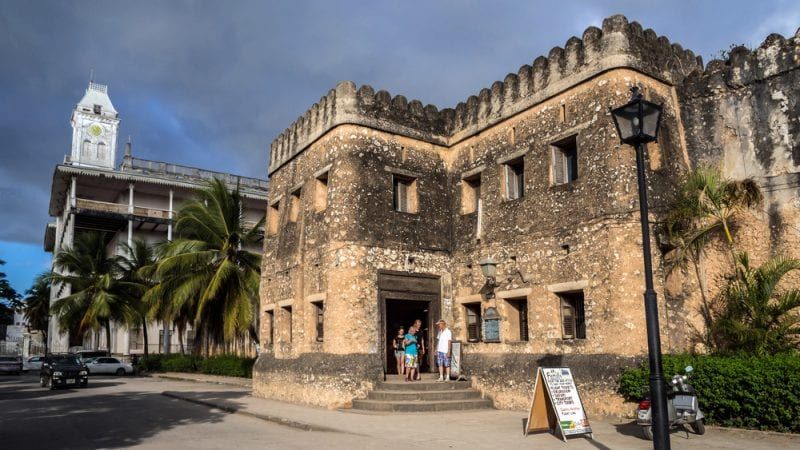
Zanzibar is a living contradiction: a Swahili-Arab spice island that smells of cloves and cardamom, where ancient coral-stone dhow builders share their shoreline with Instagram influencers in kitesurf harnesses. Stone Town — a UNESCO World Heritage Site of winding alleys, carved wooden doors, and Persian-influenced architecture — has been a crossroads of East African, Arab, Indian, and European trade for a thousand years. Outside the city, the island oscillates between pristine beach resorts and small fishing communities where the 21st century feels like a rumor. This contrast is what makes Zanzibar extraordinary — and occasionally overwhelming. You're never just on a beach holiday here; you're somewhere with a distinct identity and a genuinely complicated history (including its slave trade legacy, housed in the evocative Old Slave Market museum in Stone Town).
Mauritius is a more intentionally curated experience. The island of 1.3 million people has built one of the world's most professional tourism ecosystems — roads are excellent, resort standards are consistently high (even mid-range hotels are well-maintained), and the multicultural population (Indian, Creole, Chinese, French, African heritage) creates a remarkably harmonious and visitor-friendly atmosphere. There is no equivalent to Stone Town — Mauritius doesn't have that kind of concentrated historical city — but the island's patchwork of sugarcane fields, dramatic volcanic peaks (Le Morne Brabant, Piton de la Petite Rivière Noire), and blue-green lagoons creates its own compelling identity. Port Louis, the capital, has a lively market and Central Market worth a half-day visit, but most travelers stay firmly in resort territory.
"Zanzibar has really good kiteboarding and the culture is more interesting there. If you like wind sports and absorbing culture by means of food and experiences, Zanzibar is the obvious call." — r/travel
"Mauritius is a big island with things to do outside of the beach. Food in the resorts will be good, and being a well-developed destination there's a real tourism infrastructure and market." — r/travel
🏖️ Beaches: The Critical Difference
Beach quality is where the choice between Zanzibar and Mauritius gets most nuanced — and where Reddit advice can save you a ruined holiday. Zanzibar's east coast beaches (Paje, Jambiani, Bwejuu) look spectacular in photos but have a dramatic tidal swing: at low tide, the sea retreats hundreds of meters, leaving shallow water you can barely wade in. If you're timing your trip for Instagram photos and swimming, you'll be surprised by how long stretches of the day the swimming is difficult. These beaches are excellent for kitesurfing (Paje is among the best in the world for it) but frustrating for casual swimmers on a schedule. Zanzibar's north coast (Nungwi, Kendwa) is the exception — these beaches sit in a bay configuration that maintains deeper, swimmable water throughout the tidal cycle. If beaches matter to you in Zanzibar, book Nungwi. The beach is postcard-perfect all day, the sunsets are extraordinary, and the water is warm and clear.
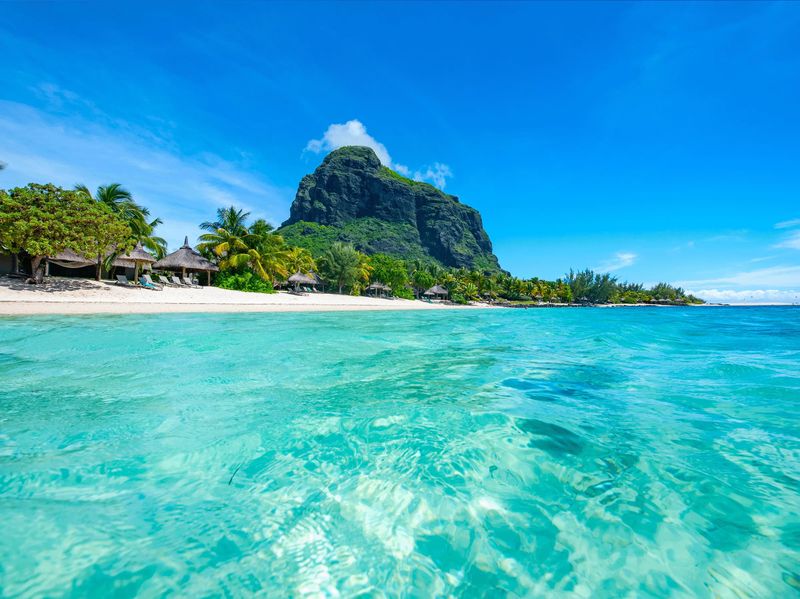
Mauritius has no such problem. The island's fringing coral reef creates a protected lagoon on most sides, and the beaches — Belle Mare (east), Flic en Flac (west), Le Morne (southwest), Trou aux Biches (north) — maintain calm, swimmable turquoise water virtually regardless of tides. Le Morne Brabant, a UNESCO-listed basalt monolith jutting into the lagoon at the island's southwestern tip, creates one of the most dramatic beach settings in the Indian Ocean. The reef means snorkeling directly from the beach at many spots. This reliability is Mauritius's beach superpower: book any coastal resort and you'll swim every day without consulting a tide chart.
"We stayed at both Kendwa and Stone Town but visited Paje. Paje is very windy and the tide goes out for miles. I think if you like wind sports it's great but we loved Kendwa. The beach stays swimmable all day." — r/travel
🍛 Food & Dining
Zanzibar's food scene is one of the island's hidden highlights, and substantially cheaper than Mauritius. The Forodhani Night Market on Stone Town's seafront is the essential experience: every evening, dozens of stalls appear selling grilled seafood (whole lobster, kingfish, octopus), Zanzibar pizza (a street-food crepe-meets-samosa filled with meat, cheese, and egg), sugarcane juice, and urojo (Zanzibar mix — a spiced coconut milk soup). Prices are remarkably low — a lobster dinner by the sea runs $10–20. Stone Town's restaurants serve excellent Swahili cuisine: biryani perfumed with the island's own cloves and cardamom, octopus curry with coconut milk, and whole fish grilled over charcoal. The island produces some of the world's best vanilla, cloves, nutmeg, cinnamon, and black pepper — and the spice tour (half-day, $20–30) is one of the most memorable things you can do anywhere in East Africa.
Mauritius has a more sophisticated but pricier food culture, shaped by its extraordinarily diverse heritage: Indian (dholl puri flatbreads filled with yellow split peas, $1–2 at roadside stalls), Creole (rougaille — tomato-based fish or meat stew), French (patisseries and refined bistros in Grand Baie), and Chinese (particularly in Port Louis's Chinatown). The cuisine quality in resorts is reliable and high; eating outside resort hotels is significantly cheaper and often more interesting. Grand Baie's restaurant strip offers everything from sushi to pizza; local markets sell Indian street food for under $3 a meal. Fine dining on Mauritius approaches European standards — and prices.
"The food in Zanzibar was incredible — especially at the night market. A whole grilled lobster on the waterfront for $12. I've never eaten better at that price anywhere in the world." — r/solotravel
💰 Cost Comparison
| Expense | 🏖️ Zanzibar | 🌊 Mauritius |
|---|---|---|
| Budget guesthouse / hostel | $20–45/night | $50–90/night |
| Mid-range beach resort | $80–180/night | $180–350/night |
| Luxury resort (per couple) | $250–500/night | $400–1,200/night |
| Street food / local restaurant meal | $3–12 | $5–15 |
| Mid-range restaurant dinner | $10–25 | $20–45 |
| Lobster / seafood dinner | $10–25 (Forodhani) | $30–60 (restaurant) |
| Spice / island tour | $20–35 | $40–70 |
| Snorkeling day trip | $50–80 (Mnemba) | $35–60 (various) |
| Mid-range daily total | $60–120 per person | $150–300 per person |
The cost gap between Zanzibar and Mauritius is significant — Mauritius is roughly 2–2.5x more expensive on a like-for-like basis. But the more important cost factor is flights. Zanzibar is most cheaply reached by connecting through Nairobi (Kenya Airways, Ethiopian Airlines) or Dar es Salaam. From Europe, expect to pay €500–900 with connections, and 12–16 hours of travel. Mauritius has a slight advantage here: Air Mauritius, Emirates, Air France, British Airways, and Corsair all fly directly from European hubs (10–11h). From Asia, Mauritius is well-served by Air Mauritius and Singapore Airlines. For South Africans and East Africans, Zanzibar is dramatically cheaper and closer.
"Zanzibar is the right call for budget travelers — the beaches are incredible, the food is cheap, and you can combine it with a Tanzania safari. Mauritius is a notch up in cost but the resorts are genuinely world-class." — r/travel
🕌 Cultural Attractions
Zanzibar is the cultural winner in this comparison by a wide margin. Stone Town alone — a UNESCO World Heritage Site since 2000 — could anchor a 2–3 day visit: the labyrinthine alleys of the old quarter with their carved Omani-style doors (some with brass spikes, a Zanzibari symbol of wealth), the House of Wonders (Beit el-Ajaib, the first building in East Africa to have an elevator), the Old Slave Market and Slave Chambers (a sobering and essential visit — 50,000 enslaved Africans passed through this site annually in the 19th century), the Old Fort, the Anglican Cathedral built on the slave market's site, and the Darajani Market for local produce. Sunset dhow cruises depart from the harbor — watching the sun drop into the Indian Ocean from the deck of a traditional wooden dhow is hard to top. The Spice Tour (half-day guided tour of plantation village, $20–30) is one of the most unique activities in the entire Indian Ocean region.
Mauritius has fewer concentrated historic sites but offers a different kind of cultural richness. Port Louis Central Market (open mornings) is chaotic and atmospheric, with fresh produce, spices, street food, and local color. The Blue Penny Museum houses two of the world's rarest stamps (the 1847 Post Office stamps — the holy grail of philately, if that's your thing) and a history of Mauritius worth an hour. The Aapravasi Ghat in Port Louis is a UNESCO-listed former immigration depot where 500,000 indentured labourers arrived from India after abolition — genuinely significant history, well-presented. The Chamarel Coloured Earths (seven volcanic soil colors in one eroded gully) is every Mauritius travel photo you've ever seen, and worth the 2-hour drive south. Outside these, Mauritius is more about landscape than history.
🤿 Snorkeling & Diving
Both destinations offer exceptional underwater experiences — this is genuinely a tie, with different strengths. Zanzibar's crown jewel is Mnemba Atoll, a protected marine reserve 5km off the northeast coast, accessible by boat tour (half-day, $50–80 including equipment). The atoll hosts some of East Africa's most impressive coral gardens, large schools of barracuda, hawksbill sea turtles (year-round), spinner dolphins (best October–February), and occasional whale sharks (November–February). Visibility is typically 20–30m in dry season. Dive sites around the island include Big Wall (for drift diving), Leven Bank (deep wall), and Pungume Island. The diving infrastructure is well-developed at Nungwi and Paje; operators generally adhere to responsible wildlife practices.
Mauritius has excellent diving year-round with some genuinely world-class sites. Blue Bay Marine Park (south coast) is the best snorkeling directly from shore in the Indian Ocean — coral gardens begin just meters from the beach in calm, clear water. The Cathedral (near Flic en Flac, west coast) is an underwater cavern at 25m depth where shafts of light create cathedral-like columns — one of the most photogenic dive sites anywhere. Coin de Mire (off the north coast) offers shark dives (blacktip reef sharks), turtles, and large pelagic fish. The island's reef-protected lagoon means snorkeling from resort beaches is often excellent without boat trips — a significant advantage for non-divers and families.
🌦️ Best Time to Visit
Zanzibar has two distinct seasons shaped by monsoon patterns:
- June–October (Kusi, long dry season) — the best time to visit. Sunny, warm (25–30°C/77–86°F), low humidity, minimal rain. Sea conditions ideal for diving at Mnemba. July–August is peak season and slightly more expensive.
- December–February (short dry season) — also excellent. Warm, mostly sunny, with some intermittent showers. Whale shark season begins. Good for diving, beach time, and Stone Town exploration.
- March–May (Masika, long rains) — avoid. Heavy rains, grey skies, flooding in Stone Town, many dive boats stop operating. The worst time to visit by a significant margin.
- November (short rains) — manageable with some rain. Prices lower. A reasonable budget time if you're flexible.
Mauritius is more forgiving year-round, but has a clear best period:
- May–December — ideal. The southeast trade winds keep temperatures comfortable (22–27°C/72–81°F), seas calm inside the lagoon, humidity reasonable. The east coast (Belle Mare) is sheltered from the trade winds and excellent year-round.
- January–March (cyclone season) — not dangerous (direct cyclone hits are rare) but can bring heavy rain and rough seas, particularly on the west coast. The east coast remains more sheltered. Prices are lower.
- July–August — busy peak season (European summer holidays), more expensive, but excellent weather.
✈️ Getting There & Around
Getting to Zanzibar
Zanzibar Island (Unguja) is served by Zanzibar International Airport (ZNZ), with direct connections from Nairobi (1h, Kenya Airways, frequent), Dar es Salaam (45 min, multiple daily flights, $80–150), Addis Ababa (Ethiopian Airlines), Entebbe, and Mombasa. From Europe, the most common routing is through Nairobi or Addis Ababa — total travel time 12–18 hours. From the US, add another 8–10 hours. There are no direct flights from Europe or North America. The upside: if you're already on an East Africa safari circuit, adding Zanzibar is trivial (45-min hop from Dar es Salaam on Precision Air, Coastal Aviation, or Auric Air). This "safari + beach" combination is Zanzibar's killer feature — no other Indian Ocean island offers comparable proximity to world-class wildlife. Getting around Zanzibar: dalle-dalles (shared minibus taxis, cheap), private taxis ($10–30 for most routes), scooter hire ($20–30/day), or car hire ($40–60/day). Roads are manageable if potholed; Google Maps works.
Getting to Mauritius
Mauritius (Sir Seewoosagur Ramgoolam International Airport, MRU) has excellent air connections from Europe — Air Mauritius, British Airways, Air France, Emirates, Qatar Airways, and Corsair all fly direct from major hubs. London to Mauritius: 11h direct. Paris: 11h. Zurich: 10.5h. Singapore: 8h. South Africa (Cape Town, Johannesburg): 4–5h. Getting around Mauritius: the island is small (65x45km) and self-driving is highly recommended — rental cars start at €30–50/day, roads are well-maintained and clearly signed, and you can circle the island in a day. Taxis are widely available but negotiation required (no meters). No Uber. The bus network is comprehensive and very cheap (Rs 15–30/$0.40–0.80 per journey) but slow and doesn't serve resorts well.
🛡️ Safety
Zanzibar is generally safe for tourists, with caveats. Violent crime against foreigners is rare. The main issues are: beach boys (persistent young men at beach resorts offering tours, quad bikes, boat trips — they can be very persistent, particularly on the east coast beaches); petty theft and pickpocketing in Stone Town, especially at night; and scams targeting tourists (inflated prices, unofficial guides, transport pricing). Solo female travelers report unwanted attention and occasional harassment in Stone Town's narrow alleys — walking with purpose and avoiding deserted alleys at night dramatically reduces these encounters. The actual crime risk in resort areas (Nungwi, Kendwa) is low — resorts typically keep the beach clear of unsolicited vendors during the day. The Reddit thread "Avoid Zanzibar at all cost" (with 2,000+ comments) is worth reading: the poster's criticisms sparked fierce debate about expectations management, but the underlying point — that Zanzibar requires some tolerance for developing-country realities — is valid.
Mauritius is one of the safest destinations in the entire Indian Ocean region. The country has low crime rates, excellent infrastructure, stable government, and a tourism industry built on hospitality. Solo female travelers consistently rank Mauritius among the most comfortable Indian Ocean destinations. The main caution: quad bike and sports car rental operators can be aggressive salespeople, and some tourist traps exist in Grand Baie. Otherwise, Mauritius is genuinely worry-free — you can rent a car, drive around the island alone, and stop at any beach without concern.
"Zanzibar is safe overall, but the beach boys can be relentless — particularly on the east coast. Choose Nungwi: the resort strip keeps vendors off the beach and you can actually relax. The poverty is visible and real, but that doesn't make it unsafe." — r/zanzibar
🔀 The Decision Framework
After synthesizing dozens of Reddit threads and real traveler accounts, here's who each island is built for:
🏖️ Choose Zanzibar if…
- You're already doing an East Africa safari (Serengeti, Masai Mara, Ngorongoro) and want to add a beach leg
- Culture, history, and authentic local character are important travel motivators
- You want world-class beaches at significantly lower cost
- Kitesurfing, windsurfing, or water sports at Paje attract you
- Stone Town's UNESCO labyrinth of alleys and Swahili architecture appeals to you
- You want unique experiences like spice tours and traditional dhow sailing
- Budget travel or backpacking — Zanzibar has excellent hostels and guesthouses
- You're willing to research beach selection (choose Nungwi, not Paje, for swimming)
- You want to explore beyond your resort rather than simply relax in it
🌊 Choose Mauritius if…
- A polished, all-inclusive luxury resort holiday is the primary goal
- Beach consistency matters — you want guaranteed calm lagoon swimming every day
- You're flying from Europe and want a direct, long-haul beach destination
- You're on a honeymoon and want 5-star service without logistical complications
- Golf is on the agenda — Mauritius has some of the Indian Ocean's best courses
- You want the Indian Ocean experience with maximum comfort and minimum friction
- Exploring a diverse cultural mix (Indian, Creole, French, African) interests you
- Driving around a beautiful island independently appeals to you
- Renting a car and exploring Black River Gorges National Park sounds ideal
❓ Frequently Asked Questions
Is Zanzibar or Mauritius better for a honeymoon?
Both are popular honeymoon destinations, but they serve different couples. Mauritius wins for stress-free luxury — the all-inclusive resort infrastructure is polished, service is world-class (especially at Beachcomber and Constance properties), and the calm lagoon beaches are reliably beautiful. Zanzibar wins if you want your honeymoon to feel like an adventure: Stone Town's historic streets, dhow sunset cruises, spice tours, and pristine beaches at Nungwi with incredible sunsets and fewer resort crowds. Reddit honeymoon planners are split almost exactly 50/50, with Mauritius edging ahead for couples who want pure relaxation and Zanzibar winning for those who want cultural depth alongside beach time. Budget is often the deciding factor: a 7-night Zanzibar honeymoon can cost half what Mauritius charges for equivalent accommodation.
Which is cheaper, Zanzibar or Mauritius?
Zanzibar is significantly cheaper across the board. Budget backpackers can get by on $30–50/day in Zanzibar (guesthouse, local food, activities). A mid-range traveler spends $60–120/day at a decent beach resort with meals. Mauritius mid-range runs $150–300/day — the island's resort economy pushes prices up, particularly for food outside hotels. Luxury all-inclusive resorts in Mauritius cost $400–1,000+/night per couple. Flights favor Zanzibar if you're combining with an East African safari (Dar es Salaam is 45 minutes away); Mauritius requires a dedicated long-haul flight. For budget and mid-range travelers, Zanzibar delivers dramatically better value.
Which has better beaches, Zanzibar or Mauritius?
Both have stunning beaches, but with different characters. Zanzibar's best beaches — Nungwi and Kendwa in the north — have calm, clear turquoise water that doesn't go out with the tide. Critical point: Paje and Jambiani on the east coast have dramatic tidal variations where the sea retreats hundreds of meters at low tide. If beaches matter to you in Zanzibar, book Nungwi specifically. Mauritius has the most consistent beach quality in the Indian Ocean: the lagoon beaches (Belle Mare, Flic en Flac, Le Morne) have calm, reef-protected water all day with fine white sand. Mauritius beaches are more uniformly beautiful and reliable; Zanzibar's best beaches are equally stunning but require beach selection knowledge.
What is the best time to visit Zanzibar vs Mauritius?
Zanzibar: June–October is the dry season — reliably sunny, warm (25–30°C), ideal for diving and snorkeling. December–February is the short dry season (also good). Avoid March–May (heavy long rains — the island's worst season by far). Mauritius: May–December is ideal — the southeast trade winds keep it cooler (22–27°C) and the sea is calm. January–March is cyclone season with occasional heavy rain, though direct cyclone hits are rare. Both destinations overlap well June–September, making that the optimal window if you're choosing between them.
Is Zanzibar safe for solo travelers?
Zanzibar is generally safe, but requires awareness. The biggest issues solo travelers report are persistent beach boys (declining firmly but politely usually works), occasional petty theft in Stone Town at night, and scams targeting tourists. Violent crime against tourists is rare. Solo women report more unwanted attention in Stone Town than at beach resorts. Mauritius is one of the safest destinations in the Indian Ocean — very low crime, stable government, and tourism infrastructure built on visitor comfort. Solo female travelers consistently report Mauritius as one of Africa and the Indian Ocean's safest destinations. Both are manageable; Mauritius is substantially more worry-free.
How many days do you need in Zanzibar vs Mauritius?
Zanzibar: 7–10 days lets you properly experience both Stone Town and the beaches. 2–3 days in Stone Town (spice tour, Prison Island, sunset dhow cruise, Forodhani Night Market), then 4–5 nights at Nungwi or Kendwa beach. Shorter stays feel rushed — the island rewards slow exploration. Many travelers arrive from a Tanzania safari, adding a 45-minute flight from Dar es Salaam. Mauritius: 7–10 days is ideal for mixing beach relaxation with island exploration — Black River Gorges National Park, Chamarel Coloured Earths, Blue Bay Marine Park, driving the coastal road. 5 days is the minimum to feel you've seen more than just your resort.
Can you combine Zanzibar and Mauritius in one trip?
You can, but it's expensive and logistically complex. There are no direct flights between Zanzibar and Mauritius — you typically route through Nairobi (Kenya Airways, ~4h total), Dar es Salaam, or Addis Ababa. Positioning flights can add $300–600+ to your trip. Most travelers choose one or the other, or combine Zanzibar with a Tanzania/Kenya safari (natural pairing) and visit Mauritius on a separate dedicated Indian Ocean trip. Mauritius pairs well with Réunion (30-minute flight) or the Maldives. Zanzibar pairs naturally with a Tanzania wildlife circuit — see our Tanzania vs Kenya comparison for East Africa safari planning.
Which is better for snorkeling and diving, Zanzibar or Mauritius?
Both are exceptional, but for different reasons. Zanzibar has Mnemba Atoll — a protected marine reserve with sea turtles, dolphins, whale sharks (November–February), and 20–30m visibility. The diving around Zanzibar is rated among the best in East Africa. Mauritius has world-class diving year-round: the Cathedral (an underwater cave system), Blue Bay Marine Park (the Indian Ocean's best shore snorkeling), and excellent shark diving off the west coast. Mauritius has the edge for snorkeling directly from the beach (Blue Bay), while Zanzibar's Mnemba Atoll rivals anywhere for boat-accessed diving. Both satisfy serious divers; Mauritius is more convenient for casual snorkelers.
Ready to Plan Your Indian Ocean Escape?
Get a personalized itinerary for Zanzibar or Mauritius — built around your budget, travel style, and what you actually want to experience.
Plan My Island Trip →Also explore: Tanzania vs Kenya · Bali vs Thailand · South Africa vs Kenya · Sri Lanka vs Bali · Okinawa vs Jeju
🎟️ Book Tours & Experiences
Hand-picked tours and activities for both destinations — book with free cancellation
Experiences via Viator — free cancellation on most tours