How we built this comparison
This page combines traveler discussion patterns, published price ranges, diving site data, and seasonal information to make the Amed vs Nusa Penida decision easier to resolve.
- Reviewed Reddit discussions from r/bali, r/scubadiving, and r/diving covering Amed and Nusa Penida dive conditions, travel logistics, and honest assessments from real travelers.
- Checked numeric claims like accommodation ranges, boat costs, dive operator prices, and seasonal patterns against current operator listings and community reports.
- Updated the page structure so each major section ends with a clearer winner, reason, and traveler-use note.
Best read as a decision guide, not a universal truth: the right pick depends on your budget, diving certification level, and what kind of Bali experience you actually want.
⚡ The TL;DR Verdict
Nusa Penida is better if you want dramatic scenery, manta ray dives, and Instagram gold. Amed is better if you want chill authentic Bali, easy shore diving, and an escape from crowds. Mid-range budget: both are similar at IDR 300,000–700,000/night ($18–42).
- Choose Amed: Serious divers, slow travelers, authentic-Bali seekers, snorkelers who want turtles.
- Choose Nusa Penida: First-timers, scenery chasers, manta ray bucket-listers, Instagram photographers.
- Budget snapshot: Amed: IDR 300,000–700,000 ($18–42) mid-range; Nusa Penida: IDR 350,000–900,000 ($21–54) mid-range.
Choose Amed
Authentic fishing village, easy shore diving, turtles, Mount Agung views, no crowds.
Choose Nusa Penida
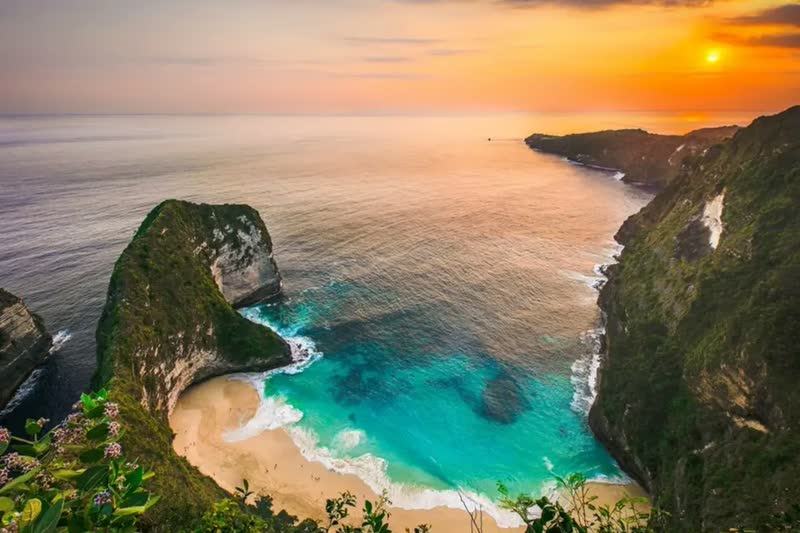
Kelingking Beach, manta rays, dramatic cliffs, Crystal Bay, bucket-list scenery.
Quick Comparison
| Category | 🤿 Amed | 🐠 Nusa Penida | Winner |
|---|---|---|---|
| Daily Budget (mid-range) | IDR 350,000–700,000 ($21–42) | IDR 400,000–900,000 ($24–54) | Amed |
| Diving (variety) | Jemeluk Bay, USAT Liberty (Tulamben, 30min) | Manta Bay, Crystal Bay, Gamat Bay, 20+ sites | Nusa Penida |
| Snorkeling | World-class — turtles, wreck, coral from beach | Excellent but currents can be strong | Amed |
| Beaches (scenery) | Black volcanic sand, quiet, Mount Agung backdrop | Kelingking, Diamond, Atuh — jaw-dropping cliffs | Nusa Penida |
| Getting Around | Easy — one coastal road, scooter or walk | Terrible roads, no Gojek/Grab, scooter essential | Amed |
| Crowds | Quiet, authentic, few tourists | Very crowded at key viewpoints | Amed |
| Manta Rays | Occasional sightings | Guaranteed at Manta Bay (year-round) | Nusa Penida |
| Instagram-worthiness | Serene, authentic, niche appeal | One of Bali’s most photogenic destinations | Nusa Penida |
| Beginner Diving | Excellent — easy shore dives, calm conditions | Challenging currents at many sites | Amed |
| Local Vibe | Authentic Balinese fishing village | Tourism-oriented, less authentic | Amed |
| Best For | Divers, slow travelers, authenticity seekers | Scenery lovers, first-timers, bucket-list divers | — |
🤿 Diving & Snorkeling
This is the defining category for most people choosing between Amed and Nusa Penida. Both are world-class — but for completely different types of diver.
Amed is a shore-diving paradise. The main draw is the easy access to the USAT Liberty Wreck in nearby Tulamben (30 minutes away) — a US Army cargo ship torpedoed by a Japanese submarine in 1942 and now resting 30 meters from the beach in 3–30 meters of water. You can literally wade in from the beach. Jemeluk Bay has excellent house reef snorkeling with turtles, bumphead parrotfish, and healthy coral gardens. Amed typically has 2–3 knots of current — nothing a beginner can’t handle. Dive operators charge IDR 350,000–500,000 ($21–30) per dive including equipment.
Nusa Penida has more dive sites (20+) and the bucket-list encounters. Manta Bay (Manta Point) delivers near-guaranteed manta ray sightings year-round — the rays come to feed and get cleaned at this spot reliably. Crystal Bay is famous for mola mola (ocean sunfish) sightings from August to October. The trade-off: Nusa Penida has strong currents at many sites, particularly on the south coast, making it unsuitable for beginners without prior drift diving experience. Dive shops charge IDR 450,000–700,000 ($27–42) per dive.
Winner takeaway
- Winner: Depends on experience level
- Why: Nusa Penida for experienced divers wanting mantas and mola mola. Amed for beginners, snorkelers, and wreck diving fans. If you want guaranteed manta rays, there’s no contest — go to Nusa Penida.
- Who this matters for: Anyone with diving or snorkeling on their itinerary. This single factor should drive the decision for underwater enthusiasts.
🏖️ Beaches & Scenery
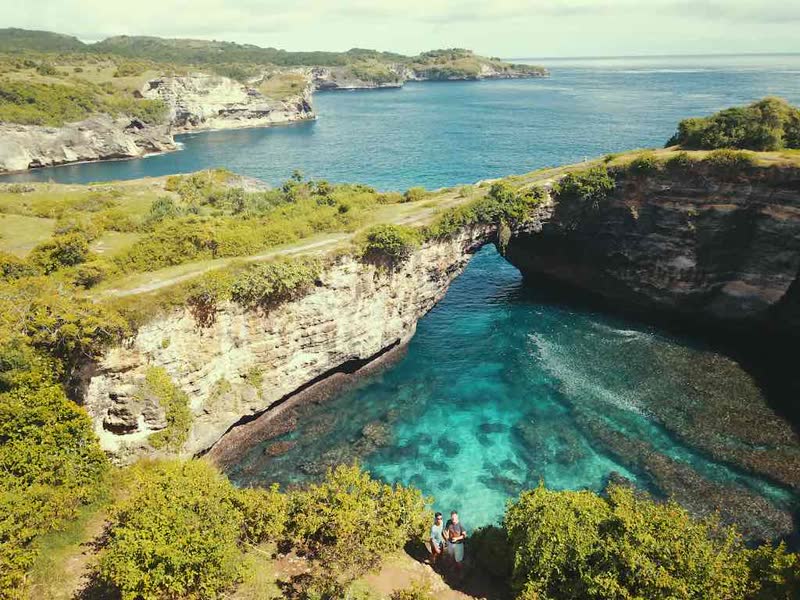
Here’s where Nusa Penida absolutely runs away with it. The island has some of the most dramatic coastal scenery in all of Southeast Asia. Kelingking Beach (the T-Rex cliff) features a 70-meter headland shaped like a dinosaur head jutting into turquoise water — it’s genuinely one of the most photogenic places on Earth. Broken Beach is a natural arch carved through clifftops with a lagoon below. Angel’s Billabong is a natural infinity pool at the cliff edge. Diamond Beach has white sand hemmed by towering limestone walls. These aren’t modest attractions — they’re among the most-photographed spots in all of Indonesia.
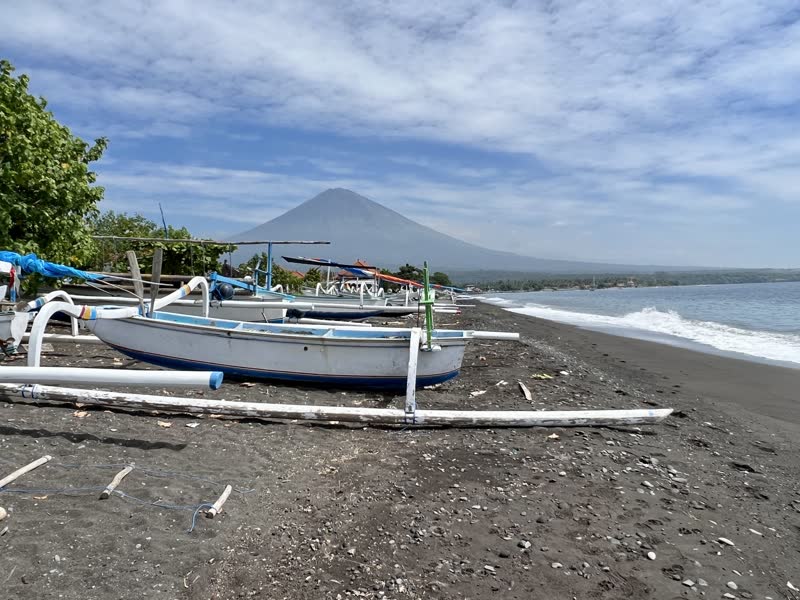
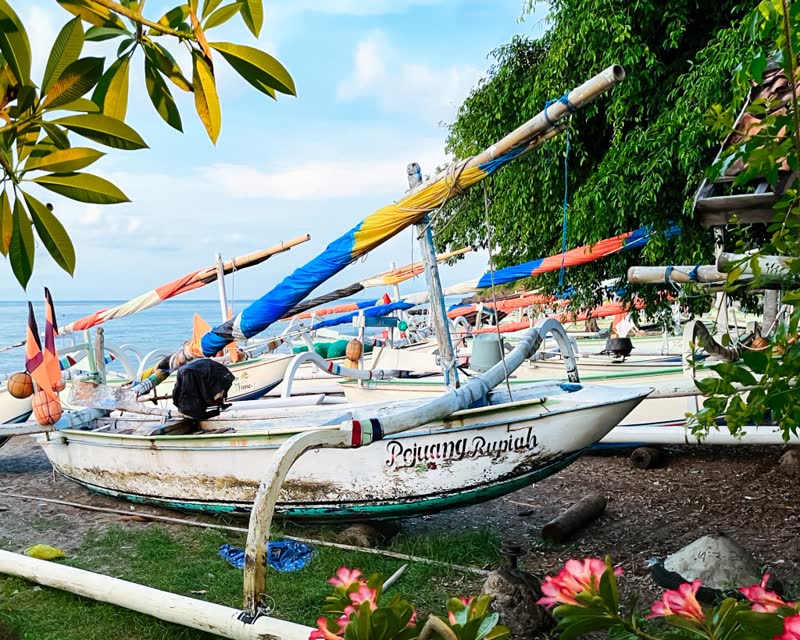
Amed’s beaches are fundamentally different — black volcanic sand stretching along a quiet bay, traditional jukung fishing boats pulled up on shore, and Mount Agung dominating the backdrop. It’s serene and beautiful in an understated way. The water is calm and clear for snorkeling, but this isn’t postcard-white-sand territory. The payoff is that you’re often sharing the beach with only a handful of other travelers instead of hundreds.
Winner takeaway
- Winner: Nusa Penida — not even close
- Why: Kelingking Beach, Broken Beach, and Diamond Beach are genuine natural wonders. Amed’s black sand beaches are atmospheric and calm but not visually dramatic. If scenery is your top priority, Nusa Penida is the clear answer.
- Who this matters for: Anyone who plans to spend significant time on or near beaches, or for whom photography matters.
💰 Cost Comparison
Both Amed and Nusa Penida are budget-friendly by global standards — but Amed edges out as the cheaper option, particularly for accommodation.
| Expense | 🤿 Amed | 🐠 Nusa Penida |
|---|---|---|
| Budget guesthouse | IDR 100,000–250,000 ($6–15) | IDR 150,000–300,000 ($9–18) |
| Mid-range hotel | IDR 300,000–700,000 ($18–42) | IDR 350,000–900,000 ($21–54) |
| Warung meal | IDR 25,000–55,000 ($1.50–3.30) | IDR 30,000–65,000 ($1.80–3.90) |
| Restaurant meal | IDR 60,000–120,000 ($3.60–7.20) | IDR 70,000–150,000 ($4.20–9) |
| Scooter rental/day | IDR 70,000–90,000 ($4–5.50) | IDR 80,000–120,000 ($5–7.20) |
| Guided dive | IDR 350,000–500,000 ($21–30) | IDR 450,000–700,000 ($27–42) |
| Fast boat (Sanur → Nusa Penida) | N/A (drive from Bali mainland) | IDR 175,000–200,000 ($11–12) one way |
| Daily total (mid-range) | IDR 350,000–600,000 ($21–36) | IDR 450,000–800,000 ($27–48) |
The hidden cost of Nusa Penida: the fast boat adds IDR 350,000–400,000 ($21–24) round trip to your trip budget — before accommodation. If you’re only going for two nights, that’s a significant overhead. Amed is a direct drive from anywhere in Bali with no ferry cost.
Winner takeaway
- Winner: Amed
- Why: Amed is 15–20% cheaper day-to-day, with no boat cost to factor in. For a diver, the per-dive cost is also lower. Nusa Penida adds the fast boat fare on top of slightly higher accommodation and food prices.
- Who this matters for: Matters most for longer stays and budget-focused travelers. For a 1–2 night trip, the cost difference is minimal.
🚤 Getting There & Around
Getting to Amed
Amed is about 1.5–2 hours from Ngurah Rai Airport by car or scooter, heading northeast through Candidasa and Amlapura along the coastal road. There’s no public bus option — hire a private driver (IDR 350,000–500,000 / $21–30 from the airport) or rent a scooter in Denpasar/Ubud and ride yourself. The drive through the mountains and past rice terraces is genuinely beautiful.
Once in Amed, getting around is simple. The entire area is one coastal road running through the villages of Amed, Jemeluk, Bunutan, Lipah, Selang, and Banyuning. Everything is walkable or a short scooter ride.
Getting to Nusa Penida
Fast boats from Sanur harbor run every 30–60 minutes from roughly 7am to 5pm. The crossing takes 45–60 minutes and costs IDR 175,000–200,000 (~$11–12) each way. From Ngurah Rai Airport, Sanur is a 20–30 minute drive. Book your boat in advance during peak season.
Getting around Nusa Penida is the part nobody warns you about enough. The roads are infamously bad — steep, cracked, often unpaved, with no guardrails on cliff edges. Gojek and Grab don’t operate here. You need a scooter (IDR 80,000–120,000/day) and ideally some experience riding on rough roads, or hire a local driver (IDR 350,000–500,000/day). The main viewpoints are spread across the west and east coasts with significant distances between them.
Winner takeaway
- Winner: Amed — decisively
- Why: Amed is a direct drive with easy navigation once you arrive. Nusa Penida requires a ferry, has terrible roads, no ride-hailing, and serious driving hazards. If you’re not comfortable on a scooter, factor in driver hire costs on Nusa Penida.
- Who this matters for: Critical for solo travelers, couples without scooter experience, and anyone with tight schedules.
☀️ Best Time to Visit
Both destinations share Bali’s tropical climate — dry season from roughly April to September, wet season from October to March. Nusa Penida is slightly more exposed to open ocean swells, which matters for both boat crossings and dive conditions.
Mola mola season at Nusa Penida (Aug–Oct) is worth planning around if seeing an ocean sunfish is on your bucket list. These prehistoric-looking fish visit Crystal Bay to get parasites cleaned, and Nusa Penida is one of the best places in the world to see them.
Amed is more protected from ocean swells than Nusa Penida, making it a better wet-season choice if you’re committed to diving. The bay faces north and is sheltered by the coast, so diving continues even during Bali’s rainy months.
Winner takeaway
- Winner: Amed (wet season); Nusa Penida (Aug–Oct for mola mola)
- Why: The dry season (April–September) is prime for both. In the wet season, Amed’s protected bay means diving continues; Nusa Penida’s rough seas can disrupt boat crossings and dive plans. For mola mola, September–October at Nusa Penida is unmissable.
- Who this matters for: Travelers visiting outside peak season, or those chasing specific marine encounters.
🏨 Where to Stay
Amed neighborhoods
Jemeluk — The heart of the dive scene. Best house reef access, most dive shops, closest to the bay’s best snorkeling spots. Slightly busier than other sections but still very quiet. Mid-range homestays and small hotels line the bay.
Lipah & Selang — Quieter still. Further from the dive-shop clusters, better for travelers who want genuine peace. Some of Amed’s nicest boutique guesthouses sit along this stretch.
Amed village — The most local section, closest to the junction coming from the main road. Basic warung food, less tourism infrastructure, cheapest prices.
Nusa Penida neighborhoods
Toyapakeh — Main arrival point from the fast boat. Most accommodation clusters here; convenient for exploring both coasts. Can feel hectic during high season.
Ped & north coast — Quieter base; good for early morning departures to the west coast highlights. Less tourist infrastructure.
Crystal Bay area — Ideal base for divers targeting mola mola. Small guesthouses, basic amenities.
Winner takeaway
- Winner: Depends on priorities
- Why: Stay in Jemeluk (Amed) for the best diving and snorkeling access. In Nusa Penida, Toyapakeh is the most practical base for day touring. Neither destination offers much nightlife — these are places to rise at dawn and hit the water.
- Who this matters for: Matters if you care about neighborhood feel, proximity to dive sites, or morning logistics to key viewpoints.
🎒 Day Trips & Nearby
From Amed
Tulamben (30 min) — The USAT Liberty Wreck. One of the world’s most accessible and impressive wreck dives, reachable directly from the beach. A must-do even as a snorkeler.
Tirta Gangga (30 min) — Royal water palace with ornate pools and landscaped gardens. A peaceful half-morning detour.
Lempuyang Temple (45 min) — The famous ‘Gates of Heaven’ temple with Mount Agung framed perfectly in the split gate (expect queues for the mirror photo).
Candidasa (45 min west) — Small coastal town with Black Sand Beach, lagoon, and access to offshore coral gardens.
From Nusa Penida
Nusa Lembongan & Nusa Ceningan (30 min by boat) — Nusa Penida’s smaller siblings. Lembongan has great surfing, mangroves, and a chilled cafe scene. Ceningan has the famous Yellow Bridge and a cliff jump spot.
Sanur (Bali mainland) — The fast boat back is always an option for a day trip; Sanur itself has a pleasant beachfront promenade.
Day trips within Nusa Penida are the main event — west coast (Kelingking, Broken Beach, Angel’s Billabong) and east coast (Diamond Beach, Atuh Beach) each deserve a full day.
Winner takeaway
- Winner: Amed (for cultural day trips); Nusa Penida (for island-hopping)
- Why: Amed’s proximity to Tulamben, Tirta Gangga, and Lempuyang gives it excellent cultural day trip options. Nusa Penida is better for island-hopping to Lembongan and Ceningan. Either way, there’s plenty to fill 3–4 days.
- Who this matters for: Travelers who want day trips that extend beyond their main base.
🌿 Vibe & Crowds
This might be the most important category for many travelers, and the gap is enormous.
Amed is genuinely one of the least-touristy coastal spots left in Bali. It’s a working fishing village that has accommodated divers for decades without losing its character. Locals dry salt on the beach in the traditional way. Roosters wake you up. Jukung boats head out before sunrise. Dive shops are everywhere, yes, but the overall feeling is of a place that’s still primarily for living in, not just for visiting. If you’re burned out on tourist circuits, Amed is restorative.
Nusa Penida is the opposite trend. Instagram discovered Kelingking Beach around 2016–2017 and the island has been on an upward trajectory ever since. The main viewpoints — Kelingking, Broken Beach, Angel’s Billabong — are genuinely crowded during peak season, with queues for the best photo spots and tour groups arriving in convoy. The island’s infrastructure hasn’t caught up: the roads are still a mess, there’s no waste management system to speak of, and some areas look like they’re being loved to death. The underwater world remains spectacular; it’s the surface crowds that frustrate.
Winner takeaway
- Winner: Amed for vibe; Nusa Penida for spectacle
- Why: Amed wins on authenticity, peace, and genuine local atmosphere. Nusa Penida has the better views but pays for them with crowds, infrastructure problems, and the feeling of a place being overwhelmed by its own popularity. Go in April–June to catch Nusa Penida before peak season madness.
- Who this matters for: Anyone who travels to feel somewhere rather than just see it.
🔀 Why Not Both?
The honest answer is: most Bali trips should include both. They complement each other perfectly — Nusa Penida gives you the dramatic Instagram scenery and manta ray dives; Amed gives you the authentic, crowd-free wind-down. They’re different enough that they don’t feel repetitive.
The logistics are straightforward with planning. One good route: fly into Ngurah Rai → spend 2–3 nights in Nusa Penida (fast boat from Sanur) → fast boat back to Sanur → drive northeast to Amed for 2–3 nights. Or reverse — start in Amed (easier from the airport if you’re driving), then return to Sanur for the Nusa Penida ferry on the way back.
Note that there is no direct fast boat between Amed and Nusa Penida; you must route through Sanur or Padangbai. Some travelers go Padangbai → Nusa Penida (a longer but more adventurous crossing).
Suggested combined itineraries
7 days: 1 day transit/Sanur → 3 nights Nusa Penida (west + east coasts, manta dive) → ferry back + drive to Amed → 2 nights Amed (Liberty Wreck, Jemeluk Bay snorkeling, Tirta Gangga)
10 days: 3 nights Nusa Penida → 2 nights Ubud → 3 nights Amed (Tulamben, temple visits, sunrise on Agung)
Pure diving: 4 nights Nusa Penida (manta + mola mola) → 3 nights Amed/Tulamben (Liberty Wreck + house reef dives)
Winner takeaway
- Winner: Both
- Why: With 7+ days in Bali’s east, do both. They serve completely different needs and the logistics of combining them are manageable. The fast boat from Sanur takes under an hour; Amed is a 2-hour drive from there. This isn’t Thailand-to-Japan level travel — it’s a day of movement between two very different worlds.
- Who this matters for: Anyone with 7+ days who wants the full spectrum of Bali’s eastern offerings.
🎯 The Decision Framework
Choose Amed If…
- You’re a certified diver wanting easy shore diving
- Snorkeling with turtles and wrecks is the goal
- You want an authentic Balinese village atmosphere
- You’re a beginner diver who can’t handle strong currents
- You’re burned out on crowds and Instagram tourism
- You want to explore Tulamben’s Liberty Wreck
- A slow, peaceful pace is what you need
- You want to combine diving with cultural day trips (Tirta Gangga, Lempuyang)
- You’re on a tighter budget
Choose Nusa Penida If…
- Seeing manta rays is on your bucket list
- Dramatic scenery and cliffs are your priority
- You want Bali’s most Instagram-worthy locations
- Mola mola (ocean sunfish) are your target — go Aug–Oct
- You’re an experienced diver comfortable with drift diving
- White sand beaches and crystal-clear water matter most
- You can handle rough roads on a scooter
- You want Kelingking, Broken Beach, and Diamond Beach
- You only have 2–3 days and want maximum visual impact
❓ Frequently Asked Questions
Is Amed or Nusa Penida better for diving?
Nusa Penida wins for experienced divers seeking bucket-list encounters — guaranteed manta rays at Manta Bay and mola mola (ocean sunfish) at Crystal Bay from August to October. Amed is better for beginners and those who prefer easy shore diving. The USAT Liberty Wreck in nearby Tulamben (30 minutes from Amed) is one of the most accessible wreck dives in the world, reachable directly from the beach.
How do you get from Bali to Nusa Penida?
Fast boats depart from Sanur harbor every 30–60 minutes from about 7am to 5pm. The crossing takes 45–60 minutes and costs IDR 175,000–200,000 (~$11–12) one way. Boats also depart from Kusamba (near Sanur) and Padangbai. From Ngurah Rai Airport, Sanur is a 20–30 minute drive. Book in advance during high season (July–August).
How do you get to Amed from Bali?
Amed is about 1.5–2 hours from Ngurah Rai Airport by car/scooter via the coastal road through Candidasa and Amlapura. There’s no public bus; hire a private driver for around IDR 350,000–500,000 ($21–30) or rent a scooter and ride yourself. Many guesthouses can arrange pick-up from the airport.
Is Nusa Penida worth the trip?
Yes, but set your expectations. Nusa Penida has some of the most dramatic coastal scenery in all of Southeast Asia — Kelingking Beach (the T-Rex cliff), Broken Beach, Angel’s Billabong, and Diamond Beach are genuinely jaw-dropping. The trade-off: terrible roads, no ride-hailing, steep hikes, and crowds at the main viewpoints. Budget a full day for the west coast highlights and another for east coast beaches.
Is Amed good for non-divers?
Amed is fine for non-divers who want peace and quiet, black sand beaches, and an authentic Balinese fishing village vibe — but honest Reddit consensus is clear: if you’re not diving or snorkeling, Amed might feel too sleepy. The snorkeling is excellent (turtles, coral, the USAT Liberty wreck in Tulamben), so even non-certified snorkelers can have an amazing time. Non-underwater travelers may prefer Ubud or Sidemen nearby.
Can you do Amed and Nusa Penida in the same trip?
Yes, though the logistics take some planning. There’s no direct fast boat between Amed and Nusa Penida; you’d return to Sanur first, then take the crossing. A practical route: fly in, spend 3–4 days in Nusa Penida, return to Sanur, drive to Amed (2h) for 2–3 nights of diving. Or reverse for the more relaxed ending. Most travelers doing both should budget 7–10 days minimum.
Which is cheaper: Amed or Nusa Penida?
Amed is slightly cheaper. Budget accommodation in Amed runs IDR 100,000–250,000 ($6–15) for a dorm or basic room, while mid-range hotels are IDR 300,000–700,000 ($18–42). In Nusa Penida, similar quality rooms start at IDR 200,000–400,000 ($12–24) but are generally pricier for the same standard. Meals are comparable in both — warungs charge IDR 25,000–60,000 ($1.50–3.50) for local food.
What are the best beaches in Amed vs Nusa Penida?
For sheer drama, Nusa Penida wins by a mile. Kelingking Beach (the T-Rex cliff lookout), Diamond Beach with its white sand hemmed by cliffs, and Atuh Beach are Instagram-legendary. Amed’s beaches are black volcanic sand — not classic postcard white — but the snorkeling right off the beach at Jemeluk Bay is world-class and far less crowded. For swimming in crystal-clear water, go to Nusa Penida. For underwater exploration, Amed.
Ready to plan your Bali trip?
Get a free custom itinerary for Amed, Nusa Penida, or both — built from real traveler insights, not generic templates.
🎟️ Book Tours & Experiences
Hand-picked tours and activities for both destinations — book with free cancellation
Experiences via Viator — free cancellation on most tours