How we built this comparison
This page combines traveler discussion patterns, published price ranges, flight schedules, and seasonal data to help you decide between Argentina and Italy.
- Reviewed 70+ Reddit threads from r/travel, r/solotravel, r/ArgentinaTravel, r/ItalyTravel
- Verified costs and logistics against current booking platforms (booking.com, Skyscanner, etc.)
- Cross-referenced seasonal patterns and weather data from multiple meteorological sources
⚡ Quick Answers
⚡ The TL;DR Verdict
For most travelers seeking substantial experience without breaking the bank, Argentina offers a more expansive adventure per dollar. Italy provides immediate cultural density and historic sites, but at a higher daily cost. Pick Argentina for grand nature and a longer, budget-conscious trip; choose Italy for art, food, and history with shorter travel times from Europe or North America.
- Choose Argentina: Travelers prioritizing vast natural spaces, adventure activities, and a more budget-friendly experience over an extended period. Ideal for those who love hiking, wine, and a lively city like Buenos Aires.
- Choose Italy: Travelers focused on deep history, iconic art, world-renowned cuisine, and efficient transport between smaller, distinct regions. Perfect for those with less time but a desire for concentrated cultural engagement.
- Choose Both: This is a big ask due to distance. If you have 4+ weeks and a flexible budget, you could get a taste of both, perhaps focusing on northern Italy and Buenos Aires with a quick Patagonia stop.
Choose Argentina
Argentina is best for the adventurous, budget-savvy traveler yearning for grand natural spectacles and vibrant city life. Explore the breathtaking glaciers of Patagonia, indulge in world-class Malbec in Mendoza, or immerse yourself in Buenos Aires' energetic tango and steak culture, all offering immense value for a longer, unforgettable journey.
Choose Italy
Opt for Italy if your passion lies in concentrated history, iconic art, and unparalleled culinary delights, perfect for a shorter, immersive European escape. Wander through ancient Roman ruins, gaze at Renaissance masterpieces in Florence, or savor authentic pasta and gelato in charming Tuscan villages, prioritizing rich cultural immersion over expansive landscapes.
📊 Visual Scorecard
🌤 When to Visit
Average high temperatures (°C). Green = best months, orange = avoid.
Quick Comparison
| Category | Argentina | Italy | Winner |
|---|---|---|---|
| Costs & Budget | Significantly more affordable for daily expenses, accommodation, and food. International flights are the main cost. | Higher daily costs for food, accommodation, and attractions, especially in major cities. Flights from Europe can be cheap. | Argentina |
| Food & Drink | Exceptional beef, Malbec wine, empanadas, and a significant Italian culinary influence in its cities. | Globally celebrated cuisine with regional specialties, pasta, pizza, gelato, espresso, and diverse wines. | Italy |
| Culture & History | Tango, European immigrant heritage, Gaucho traditions, and a history of political movements. | Thousands of years of Roman, Renaissance, and Baroque history, world-leading art, and a strong regional identity. | Italy |
| Nature & Landscapes | Vast, diverse landscapes including glaciers, deserts, waterfalls, and mountains from Patagonia to the north. | Mountains, coastlines, volcanoes, rolling hills, and lakes, offering beauty on a smaller, more accessible scale. | Argentina |
| Getting There & Around | Long international flights; extensive but slow bus network, domestic flights for speed across distances. | Shorter international flights from many regions; excellent high-speed train network and regional buses. | Italy |
| Accommodation | Wide range of budget-friendly hostels, B&Bs, and boutique hotels, especially outside major tourist zones. | Diverse options from hostels to luxury hotels, but generally higher prices, particularly in city centers. | Argentina |
| Nightlife & Entertainment | Late-night culture, tango shows, 'boliches' (clubs), and vibrant social gatherings in major cities. | Aperitivo culture, relaxed wine bars, opera, and bustling piazzas for people-watching. | Argentina |
| Solo Travel Experience | Generally safe, friendly locals, strong hostel culture for meeting others, but language can be a barrier outside cities. | Very safe, easy to navigate, great food for one, but less of a 'hostel social' focus outside major hubs. | Tie |
| Safety & Practicalities | Generally safe but requires awareness of petty crime and economic fluctuations; cash is often preferred. | Very safe for tourists with low crime rates, but pickpocketing is common in crowded areas; card payments are standard. | Italy |
| When to Go (Weather & Seasons) | Southern Hemisphere seasons; diverse climate zones mean different ideal times for different regions. | Northern Hemisphere seasons; spring and fall generally offer the best weather and fewer crowds. | Tie |
💰 Costs & Budget
Once you arrive, Argentina offers a noticeably lower daily spend. A mid-range traveler can expect to spend $70-120 USD per day, covering a decent private room, meals at local…
Argentina
Italy
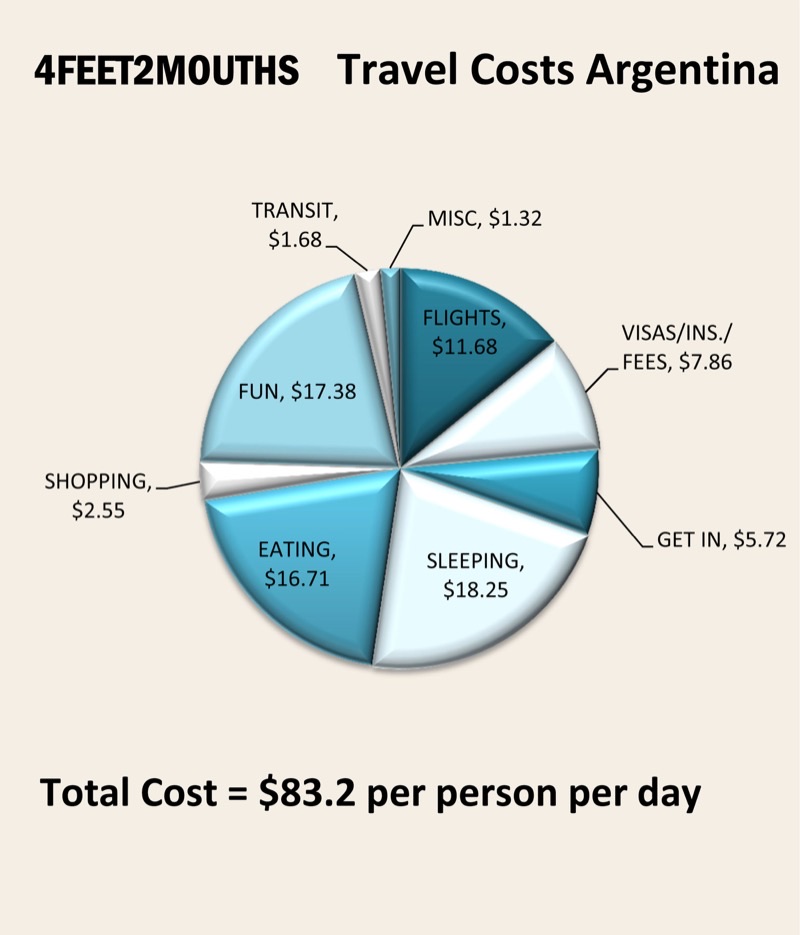
Once you arrive, Argentina offers a noticeably lower daily spend. A mid-range traveler can expect to spend $70-120 USD per day, covering a decent private room, meals at local restaurants, public transport, and some activities. For example, a quality steak dinner at a parrilla in Buenos Aires like Don Julio might run 6,000-12,000 ARS (around $15-30 USD), a bottle of good Malbec for 2,500 ARS ($6 USD), and a hostel bed around 7,000 ARS ($18 USD). Domestic flights and long-distance buses are also reasonably priced, making internal travel less impactful on the budget.
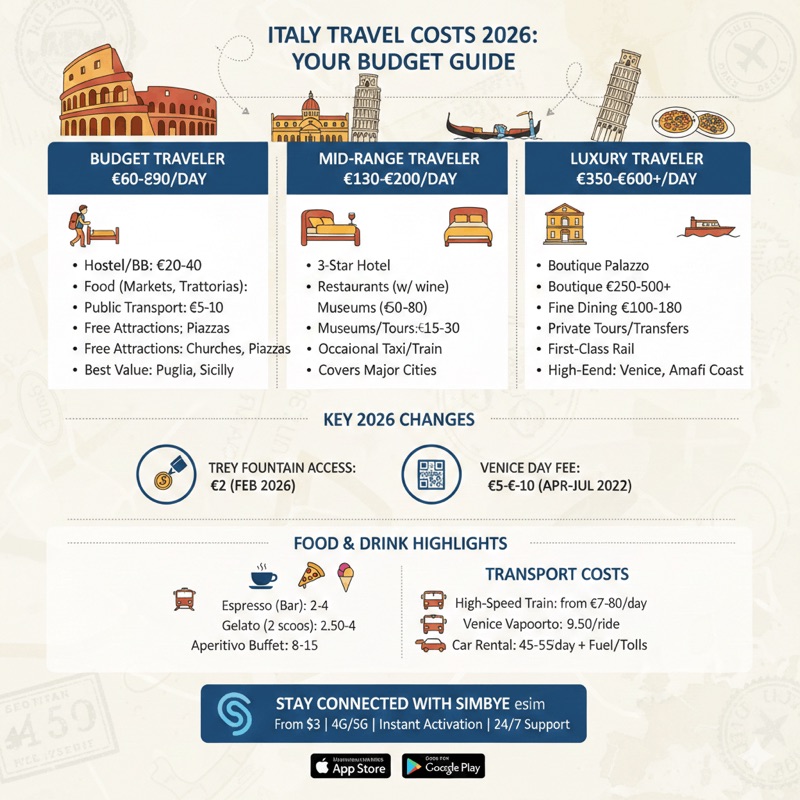
Italy, conversely, comes with a steeper price tag. A mid-range daily budget is closer to $100-180 USD, especially if you plan to visit major attractions, eat out regularly, and stay in comfortable B&Bs. A pasta dish at a trattoria in Rome can be 12-20 EUR ($13-22 USD), a gelato 3-5 EUR ($3.50-5.50 USD), and a hostel bed 30-50 EUR ($33-55 USD). Entry fees for sites like the Colosseum (18 EUR / $20 USD) add up quickly. While Italy offers deals on train passes or budget accommodation in off-season, everyday expenses remain higher than in Argentina. Argentina wins for budget-conscious travelers seeking a longer trip.
- Winner: Argentina
- Why: Argentina provides a considerably lower daily cost for accommodation, food, and activities, allowing for longer trips or more experiences per dollar.
- Who this matters for: Budget travelers, long-term travelers, those seeking value.
🍝 Food & Drink
Argentina's food scene centers on its beef, particularly 'asado' (barbecue), which is a cultural institution. Cuts like bife de chorizo or ojo de bife are common. Empanadas,…
Argentina

Italy
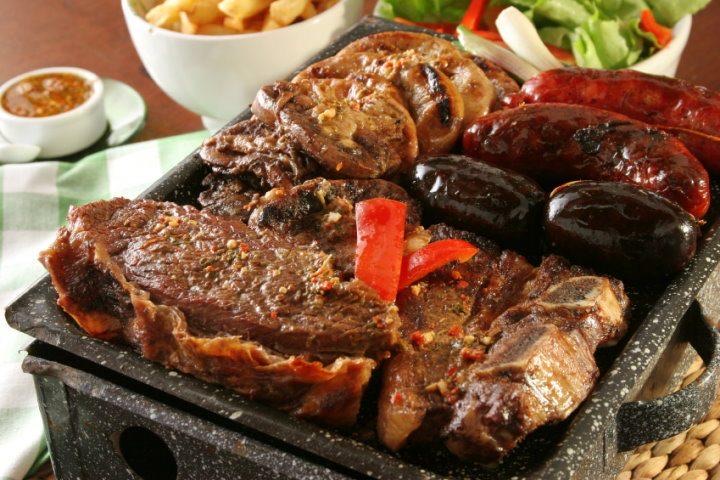
Argentina's food scene centers on its beef, particularly 'asado' (barbecue), which is a cultural institution. Cuts like bife de chorizo or ojo de bife are common. Empanadas, choripán (grilled sausage sandwich), and dulce de leche are daily staples. The country also produces world-class Malbec wine, especially from Mendoza. Buenos Aires has a strong Italian influence, so you'll find good pasta and pizza, though not the same style as in Italy. For example, a quality steak at El Obrero in La Boca might cost 8,000 ARS ($20 USD), and a glass of Malbec 1,500 ARS ($4 USD).
Italy's culinary reputation is well-deserved and incredibly diverse by region. From Neapolitan pizza (try L'Antica Pizzeria da Michele) to Roman pasta dishes like carbonara or cacio e pepe, Florentine steak, and Sicilian arancini, every region offers distinct specialties. Coffee culture is prominent, with espresso being a way of life (typically 1-2 EUR / $1.10-2.20 USD). Gelato is widely available, and local wines are a cornerstone of meals. The emphasis on fresh, simple ingredients makes Italian food consistently satisfying. Italy wins for sheer breadth, depth, and global recognition of its food culture.
- Winner: Italy
- Why: Italy's culinary diversity, regional specialties, and universally adored dishes provide a more consistent and varied gastronomic experience.
- Who this matters for: Foodies, those who prioritize eating as a core part of their travel experience.
🏛️ Culture & History
Argentine culture is a mix of European influences, particularly Spanish and Italian, blended with indigenous roots. Tango is a central part of the national identity, especially in…
Argentina
Italy
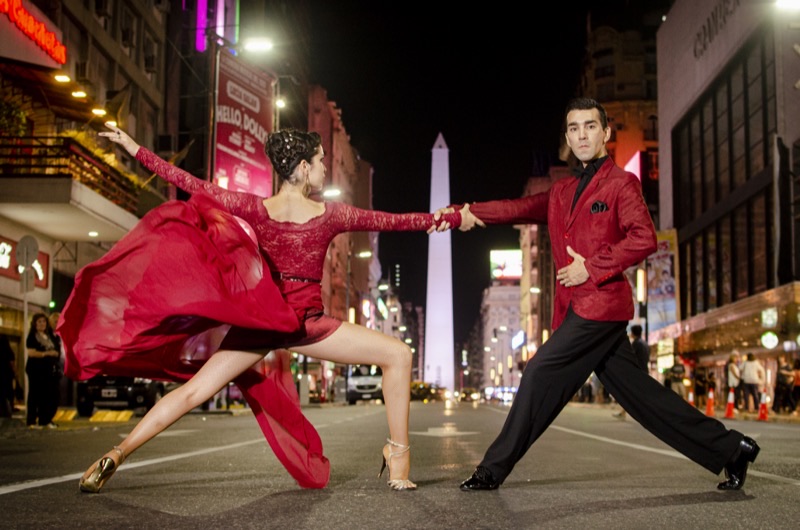
Argentine culture is a mix of European influences, particularly Spanish and Italian, blended with indigenous roots. Tango is a central part of the national identity, especially in Buenos Aires, where you can find milongas (tango dance halls) and street performances in San Telmo. The country's history includes periods of European immigration, dictatorships, and economic shifts, which shape its contemporary art, literature, and political discourse. The Recoleta Cemetery in Buenos Aires, with its elaborate mausoleums, provides insight into the country's past figures. Outside the cities, Gaucho culture and rural traditions are still present.
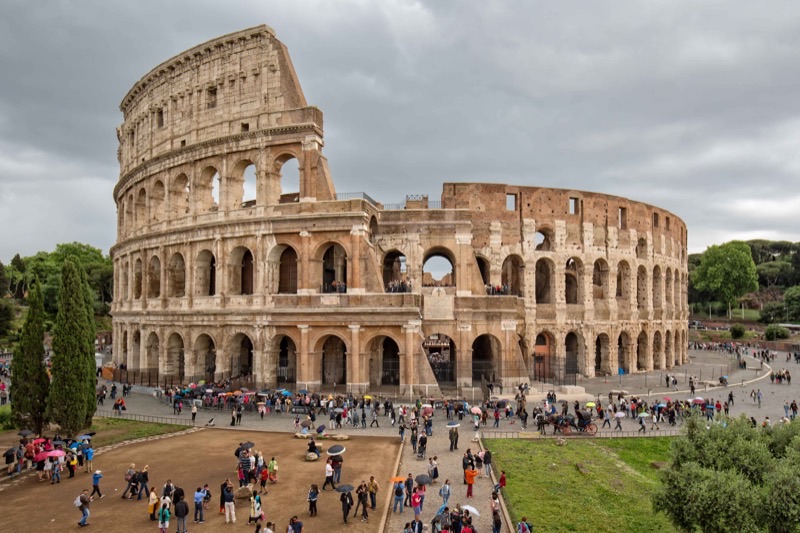
Italy is a living museum. Its history stretches from the Roman Empire, through the Renaissance, to the Risorgimento, with layers of art and architecture everywhere. Sites like the Colosseum, Roman Forum, and Pantheon in Rome, the Uffizi Gallery in Florence with works by Michelangelo and Leonardo da Vinci, or the ruins of Pompeii, offer direct connections to millennia of human endeavor. Every city and town has its own cultural footprint, from Venice's canals to Sicily's Greek temples. The depth and concentration of historical and artistic heritage in Italy are unparalleled for a country of its size. Italy wins for its profound and pervasive historical and cultural impact.
- Winner: Italy
- Why: Italy possesses an unmatched density of historical sites, classical art, and influential cultural movements spanning millennia.
- Who this matters for: History buffs, art enthusiasts, those seeking ancient ruins and Renaissance masterpieces.
🏞️ Nature & Landscapes
Argentina's natural spaces are immense and incredibly varied. Patagonia in the south features glaciers like Perito Moreno (El Calafate), towering peaks like Fitz Roy (El Chalten),…
Argentina
Italy
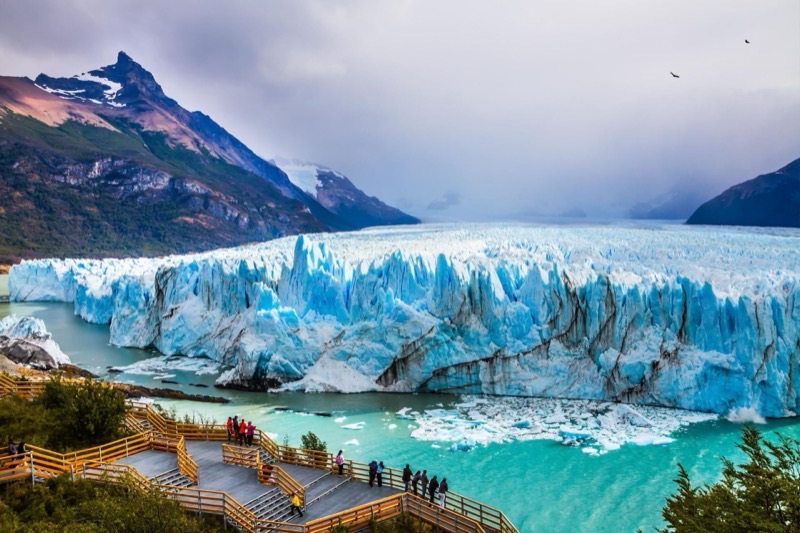
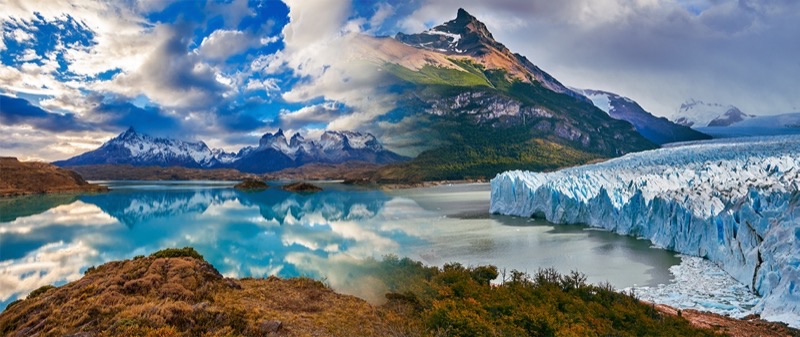
Argentina's natural spaces are immense and incredibly varied. Patagonia in the south features glaciers like Perito Moreno (El Calafate), towering peaks like Fitz Roy (El Chalten), and expansive steppes. The Iguazu Falls on the border with Brazil are among the most powerful waterfalls globally. The northwest offers desert landscapes, salt flats (Salinas Grandes), and colorful mountains like Quebrada de Humahuaca. The Esteros del Ibera wetlands provide opportunities for wildlife observation, including capybaras and caimans. The scale and raw power of Argentina's natural features are genuinely impressive, demanding significant travel time to cover.
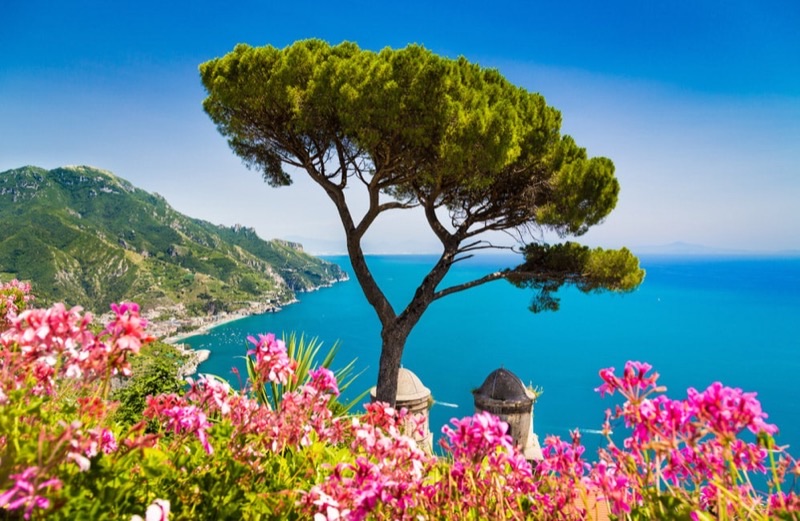
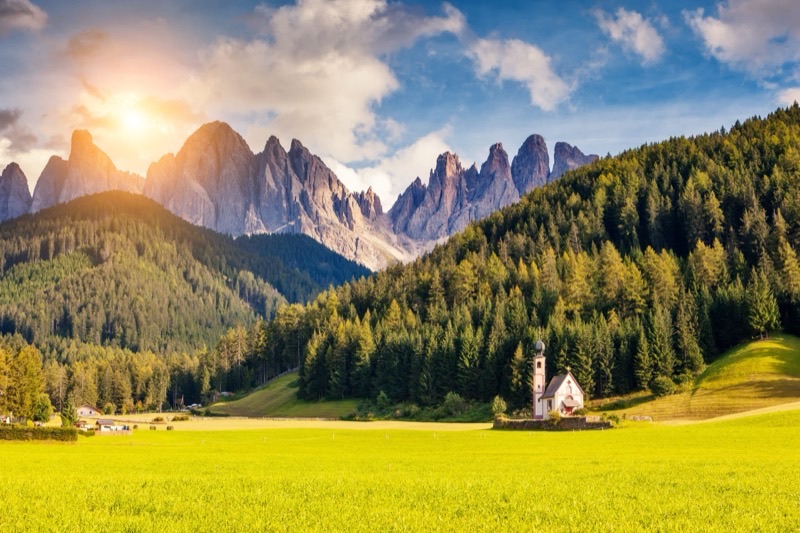
Italy's natural settings, while beautiful, are more contained. The Dolomites in the north provide dramatic Alpine scenery for hiking and skiing. The Amalfi Coast offers picturesque cliffs and Mediterranean views. Tuscany is known for its rolling hills, vineyards, and cypress-lined roads. Sicily has Mount Etna, an active volcano, and Sardinia provides clear waters and beaches. The country's landscapes are generally more domesticated and integrated with human habitation. While beautiful, they do not possess the same wild, untamed scale as Argentina's Patagonia or its northern regions. Argentina wins for its sheer scale and diversity of truly wild and immense natural environments.
- Winner: Argentina
- Why: Argentina offers a greater diversity and a more imposing scale of natural environments, from glaciers to waterfalls to high deserts.
- Who this matters for: Adventure seekers, hikers, nature photographers, those who prioritize grand, wild landscapes.
✈️ Getting There & Around
Getting to Argentina typically involves a long-haul flight. From New York, a non-stop flight to Buenos Aires (EZE) takes about 10-11 hours, costing $800-1500+ USD. From Europe,…

Argentina
Italy
Getting to Argentina typically involves a long-haul flight. From New York, a non-stop flight to Buenos Aires (EZE) takes about 10-11 hours, costing $800-1500+ USD. From Europe, it's 13-14 hours. Once in Argentina, travel between regions often means long bus journeys (20+ hours from Buenos Aires to El Calafate) or domestic flights, which can be pricey if not booked in advance (e.g., Buenos Aires to Iguazu is a 2-hour flight for $80-200 USD). Buenos Aires has a metro (Subte) and bus system that is efficient for city travel.
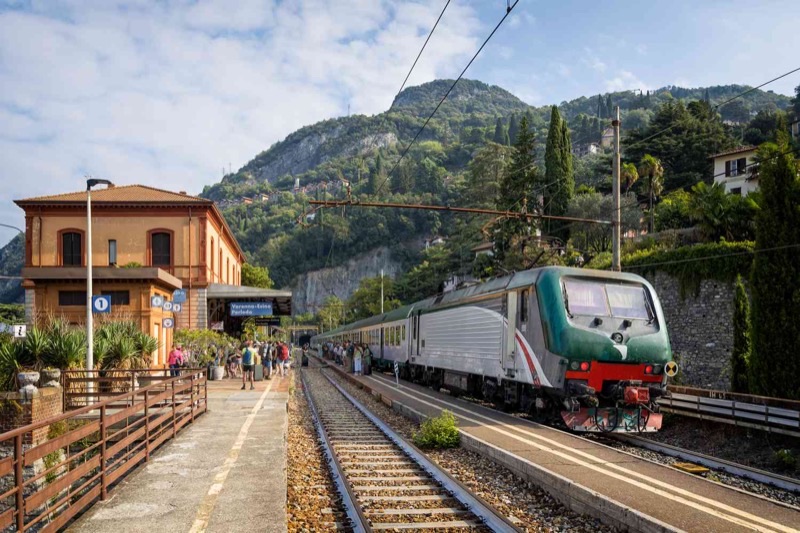
Italy is significantly more accessible for many travelers, especially from Europe and North America. Flights from New York to Rome (FCO) take about 8-9 hours, often costing $600-1000+ USD. From within Europe, flights can be as short as 1-3 hours and cost under 100 EUR. The country boasts an efficient, extensive high-speed train network connecting major cities like Rome, Florence, Milan, and Venice, making inter-city travel fast and comfortable (e.g., Rome to Florence takes ~1.5 hours, 30-60 EUR). Regional trains and buses cover smaller towns. Italy wins for ease of access and efficient internal transport.
- Winner: Italy
- Why: Italy offers shorter international travel times for many and an exceptionally efficient, well-connected domestic high-speed train network.
- Who this matters for: Travelers with limited time, those based in Europe, anyone prioritizing efficient, comfortable transport.
🏨 Accommodation
Argentina offers good value in accommodation across the board. Hostels in Buenos Aires or Mendoza typically range from 7,000-15,000 ARS ($18-38 USD) for a dorm bed. Private rooms…
Argentina offers good value in accommodation across the board. Hostels in Buenos Aires or Mendoza typically range from 7,000-15,000 ARS ($18-38 USD) for a dorm bed. Private rooms in B&Bs or small hotels can be found for 25,000-50,000 ARS ($60-120 USD) in many areas. Even boutique hotels offer competitive pricing compared to similar standards elsewhere. Availability is generally good, though popular areas like El Chalten or El Calafate during peak season require advance booking. For instance, a comfortable private room in Palermo, Buenos Aires, can be found for around 35,000 ARS ($90 USD).
Italy's accommodation costs are higher. A dorm bed in a central hostel in Rome or Florence will typically cost 30-50 EUR ($33-55 USD). Mid-range private rooms in B&Bs or hotels often start from 80-150 EUR ($88-165 USD) in major cities, and can go much higher in popular coastal areas or during peak season. While farm stays (agriturismos) in Tuscany offer a unique experience, they are not necessarily budget options. Finding good value requires more searching and booking further in advance, especially in tourist hotbeds. Argentina wins for offering more affordable and spacious accommodation options.
- Winner: Argentina
- Why: Argentina provides more affordable accommodation across all categories, from hostels to mid-range hotels, offering greater value.
- Who this matters for: Budget-conscious travelers, those who want to extend their trip without overspending on lodging.
💃 Nightlife & Entertainment
Argentina, particularly Buenos Aires, has a late-night culture. Dinner often starts around 9 PM, and bars and clubs (boliches) get busy after midnight, staying open until the…
Argentina, particularly Buenos Aires, has a late-night culture. Dinner often starts around 9 PM, and bars and clubs (boliches) get busy after midnight, staying open until the early morning hours. Tango shows, both tourist-oriented and local milongas, are a quintessential experience. Neighborhoods like Palermo in Buenos Aires are filled with bars, pubs, and clubs, offering diverse music from electronic to Cumbia. Entry to a club might be 2,000-5,000 ARS ($5-12 USD) depending on the venue. The social scene is robust, with friends gathering in parks or plazas for mate and conversation, especially on weekends.
Italian nightlife is generally more subdued. It often revolves around the 'aperitivo' hour (early evening drinks and snacks) followed by dinner. Rome and Milan have clubs, but they don't have the same late-night intensity as Buenos Aires. Wine bars, pubs, and cafes are more common, offering a relaxed environment for conversation. Opera performances in cities like Venice or Milan are a cultural highlight. Public squares ('piazzas') are central to evening social life, with people strolling and enjoying the atmosphere. Italy's focus is more on refined social interaction rather than high-energy clubbing. Argentina wins for its pervasive, late-night, and social entertainment options.
- Winner: Argentina
- Why: Argentina offers a more energetic, later-starting nightlife culture with tango, vibrant clubs, and abundant social gatherings.
- Who this matters for: Party-goers, those who enjoy late nights, social travelers, dance enthusiasts.
🚶♀️ Solo Travel Experience
Solo travel in Argentina is feasible and rewarding. The hostel network is well-developed, especially in Buenos Aires, Mendoza, and Patagonia towns like El Chalten, making it easy…
Solo travel in Argentina is feasible and rewarding. The hostel network is well-developed, especially in Buenos Aires, Mendoza, and Patagonia towns like El Chalten, making it easy to meet other travelers. Locals are generally welcoming, and street smarts are sufficient in cities. Spanish proficiency helps, as English is less commonly spoken outside tourist areas. The long bus journeys provide opportunities for solitude or connection. Safety is generally good, though petty theft can occur in crowded areas. For instance, dining alone at a parrilla like La Cabrera is a common and pleasant experience.
Italy is an excellent destination for solo travelers. It is very safe, and the efficient train system makes navigating between cities simple. Eating alone is normal and enjoyable, with many small trattorias and pizzerias perfect for a single diner. While hostels are available, particularly in major cities, the social scene might be less overt than in Argentina's more backpacker-focused destinations. English is widely spoken in tourist areas, but learning basic Italian phrases will enhance interactions. The concentration of art, history, and food means there is always something to do independently. Both destinations offer distinct advantages, making it a tie depending on solo traveler priorities.
- Winner: Tie
- Why: Both countries offer distinct advantages for solo travelers: Argentina for social hostels and adventure, Italy for ease of navigation and cultural depth.
- Who this matters for: All solo travelers, depending on their preferred travel style and priorities.
🛡️ Safety & Practicalities
Argentina is generally safe for tourists, but like any major travel destination, it requires awareness. Petty crime, such as pickpocketing and bag snatching, can occur in busy…
Argentina is generally safe for tourists, but like any major travel destination, it requires awareness. Petty crime, such as pickpocketing and bag snatching, can occur in busy areas of Buenos Aires or Mendoza. Economic instability can lead to currency exchange quirks (the 'blue dollar' rate can offer better value for cash). Having small bills is useful, and cash is often preferred or necessary for smaller vendors. Public transport is safe, but taxis should be official. Learning some Spanish helps immensely with daily interactions and problem-solving. Always keep an eye on belongings in crowded markets like San Telmo.
Italy is considered a very safe country for tourists. Violent crime against tourists is rare. The primary concern is pickpocketing, especially in crowded spots like the Colosseum, Vatican City, or busy train stations (e.g., Termini in Rome). Maintaining awareness of your surroundings and securing your valuables is usually sufficient. Credit and debit cards are widely accepted, though having some euros for small purchases or tips is a good idea. The emergency number is 112. Public transport is reliable and safe. Italy wins for its generally lower rates of petty crime and consistent practical infrastructure.
- Winner: Italy
- Why: Italy presents a slightly lower risk of petty crime for tourists and offers more consistent practical infrastructure for payments and emergencies.
- Who this matters for: First-time international travelers, those concerned about personal safety, travelers who prefer cashless transactions.
☀️ When to Go (Weather & Seasons)
Argentina's vastness means its climate varies significantly by region. For Patagonia (south), the shoulder seasons (October-November and March-April) offer pleasant temperatures…
Argentina's vastness means its climate varies significantly by region. For Patagonia (south), the shoulder seasons (October-November and March-April) offer pleasant temperatures and fewer crowds than the peak summer (December-February), though strong winds are common. Buenos Aires is best in spring (September-November) or fall (March-May) with mild temperatures. The north (Iguazu Falls, Salta) is hot and humid in summer, but still visitable. Winter (June-August) is good for skiing in the Andes but cold in Patagonia. Planning a trip involves considering which regions are priorities and timing accordingly.
Italy also experiences regional climate differences but on a smaller scale. Spring (April-May) and Fall (September-October) are generally considered the best times to visit for pleasant weather, fewer crowds, and moderate prices across most of the country. Summers (June-August) are hot, especially in the south, and tourist sites are crowded. Winters (November-March) are mild in the south but can be cold and rainy in the north, though cities like Rome or Florence are still enjoyable. For example, visiting Rome in October means comfortable walking temperatures around 15-20°C (60-70°F). Both countries require careful consideration of desired regions and seasonal timing.
- Winner: Tie
- Why: Both destinations offer distinct seasonal advantages and challenges, making the 'best time to go' highly dependent on specific travel plans and regional interests.
- Who this matters for: Travelers with specific activity interests (e.g., skiing, beach, hiking), those sensitive to heat or cold, photographers.
🎯 The Decision Framework
Choose Argentina If…
- You want to see massive glaciers and trek through mountains.
- You love red meat, Malbec wine, and want to experience a proper 'asado'.
- Your daily travel budget is $50-100 USD, allowing for a longer trip.
- You are fascinated by tango and late-night city life.
- You want to practice your Spanish and immerse yourself in South American culture.
- You seek immense, wild natural spaces and diverse ecosystems.
- You enjoy long bus journeys as part of the travel experience.
- You prioritize getting a lot of experience for your money.
Choose Italy If…
- You prioritize seeing ancient Roman ruins and Renaissance art.
- You dream of authentic Neapolitan pizza, pasta, and gelato daily.
- Your daily travel budget is $80-150 USD and you want comfort.
- You prefer efficient, high-speed train travel between cities.
- You want to enjoy aperitivo culture and relax in charming piazzas.
- You are drawn to picturesque coastal towns or rolling vineyards.
- You value concentrated history and cultural density in a smaller area.
- You seek an easy-to-navigate destination with readily available English support.
📅 Sample Itineraries
Weekend in Buenos Aires (3 Days)
💡 Purchase a SUBE card for local transport upon arrival; it costs about $2 and significantly reduces bus and Subte fares compared to cash tickets.
Weekend in Rome (3 Days)
💡 Book popular attractions like the Colosseum and Vatican Museums online in advance to save time queuing; this can save you 1-2 hours per attraction.
One Week in Argentina (7 Days)
💡 For Patagonia, book internal flights well in advance, especially during peak season (November-March), as prices can increase significantly, saving $50-100 per leg.
One Week in Italy (7 Days)
💡 Purchase a Eurail Pass if you plan extensive train travel, or book high-speed train tickets in advance through Trenitalia for better prices, potentially saving 10-20%.
❓ Frequently Asked Questions
How much does a 2-week trip to Argentina cost compared to Italy?
A 2-week mid-range trip to Argentina, excluding international flights, could cost approximately $1,000-1,700 USD. This covers accommodation, food, local transport, and some tours. A similar trip to Italy would likely range from $1,500-2,500 USD, reflecting higher costs for daily expenses and attractions.
Is it easy to travel between different regions in Argentina and Italy?
Italy offers a superior experience for inter-regional travel, thanks to its extensive and efficient high-speed train network connecting major cities in just a few hours. Argentina relies more on long-distance buses, which can take 15-20+ hours for significant distances, or domestic flights, which add to the cost.
Which country is better for nature and outdoor activities?
Argentina wins for grand, expansive natural spaces and adventure. Patagonia offers trekking on glaciers and mountains, while Iguazu Falls provides a powerful natural spectacle. Italy has beautiful mountains (Dolomites) and coastlines (Amalfi), but on a smaller, more accessible scale.
What are the visa requirements for US citizens for both countries?
US citizens do not require a visa for tourist stays up to 90 days in either Argentina or Italy (as part of the Schengen Area). You will need a valid passport with at least six months validity remaining.
Which destination has better options for meeting other travelers?
Argentina, particularly in cities like Buenos Aires and backpacker hubs in Patagonia (e.g., El Chalten), has a more pronounced hostel culture where meeting other travelers is very common. Italy has hostels, but the social aspect might be less central, especially outside major tourist centers.
Is solo female travel safe in Argentina and Italy?
Both countries are generally safe for solo female travelers. Standard precautions apply: be aware of your surroundings, especially at night, and secure your belongings. Italy has a slightly lower risk of petty crime, while Argentina requires more vigilance, particularly in large cities.
What's the language barrier like in Argentina vs Italy?
In Argentina, Spanish is necessary outside major tourist zones, and English is less common. Learning basic phrases is very helpful. In Italy, English is more widely understood in tourist areas and major cities, but knowing some Italian phrases will enhance your experience.
Which country offers a richer historical experience?
Italy offers a significantly richer historical experience, with thousands of years of continuous human history visible in its architecture, art, and ruins. From the Roman Empire to the Renaissance, its historical depth is pervasive. Argentina's history is more recent, focusing on colonial, independence, and immigration periods.
Ready to plan your South America or Europe trip?
Get a free custom itinerary for Argentina, Italy, or both — built from real traveler insights.
👥 Travelers Also Compared
🎟️ Book Tours & Experiences
Hand-picked tours and activities for both destinations — book with free cancellation
Experiences via Viator — free cancellation on most tours