How we built this comparison
This page combines traveler discussion patterns, published price ranges, flight schedules, and seasonal data to help you decide between Bali and Palawan.
- Reviewed 50+ Reddit threads from r/travel, r/solotravel, r/Bali, r/Philippines, and r/ElNido.
- Verified costs and logistics against current booking platforms (Booking.com, Agoda, Skyscanner, local tour operators).
- Cross-referenced seasonal patterns and weather data from official meteorological sources and travel advisories.

⚡ The TL;DR Verdict
If you crave spiritual retreats, diverse nightlife, and an established expat scene, Bali is your pick, expecting a comfortable daily budget of $60-120. For raw, unspoiled nature, world-class island hopping, and a more rugged adventure, Palawan shines, usually costing $45-90 per day.
- Choose Bali: For those seeking a blend of cultural experiences, wellness retreats, buzzing cafes, diverse nightlife, and comfortable infrastructure. Great for digital nomads and families.
- Choose Palawan: For adventure seekers and nature lovers prioritizing stunning beaches, pristine lagoons, epic island hopping, and a more laid-back, less developed vibe.
- Choose Both: If you have 3-4 weeks, combining both offers the best of Southeast Asia's diverse offerings. Start with Bali for culture and ease, then Palawan for adventure.
Quick Comparison
| Category | Bali | Palawan | Winner |
|---|---|---|---|
| Beaches & Water Activities | Volcanic black sands and bustling white sand beaches for surfing, beach clubs, and relaxation. Nusa Islands offer better snorkeling/diving. | Stunning white sand beaches, iconic limestone karsts, crystal-clear lagoons, and unparalleled island hopping for snorkeling and diving. | Palawan |
| Food Scene | Incredibly diverse, from authentic Indonesian warungs to high-end international restaurants, thriving cafe culture, and healthy/vegan options. | Focus on fresh seafood and traditional Filipino cuisine. More rustic and fewer upscale options, though quality seafood is excellent. | Bali |
| Nightlife & Parties | Vibrant and varied nightlife, from bustling clubs in Kuta and Seminyak to sophisticated beach clubs in Canggu and chill sunset bars. | Much more laid-back, with a focus on sunset drinks, acoustic music, and relaxed beach bars. Not a destination for big parties. | Bali |
| Culture & Spirituality | Rich Hindu culture with countless temples, ceremonies, traditional arts, and a strong wellness/yoga scene, especially in Ubud. | Focus on natural beauty. Local culture is present but less overtly tourist-facing; few grand temples or spiritual centers. | Bali |
| Costs & Budget | Mid-range. Can be budget-friendly with local food and guesthouses, but easy to spend more on trendy cafes, beach clubs, and villas. | Generally more budget-friendly for basics, but island hopping tours are a significant expense. Less luxury, so fewer opportunities to overspend. | Palawan |
| Getting There & Around | Easy access via Denpasar (DPS) airport. Getting around is best by scooter, ride-hailing apps (Gojek/Grab), or private driver. | More complex access to popular spots like El Nido/Coron. Getting around involves tricycles, vans, and boats; less developed. | Bali |
| Accommodation | Vast range of options, from budget hostels and guesthouses to boutique hotels, luxury resorts, and stunning private villas. | More rustic and basic, with guesthouses, small resorts, and limited luxury options. Power outages can be common in remote areas. | Bali |
| Nature & Landscapes | Diverse landscapes including lush rice paddies, active volcanoes, majestic waterfalls, and dense jungles. More cultivated. | Iconic limestone karsts, crystal-clear lagoons, underground rivers, pristine islands, and rich marine biodiversity. More wild. | Palawan |
| Safety & Health | Generally safe, but petty theft and scooter accidents are common. 'Bali Belly' is a frequent concern. Good medical facilities. | Generally safe, but less developed infrastructure means slower emergency response. Typhoons are a seasonal risk. Basic medical clinics. | Tie |
| Digital Nomad & Solo Travel | A global hub for digital nomads with excellent infrastructure, co-working spaces, strong community, and easy solo travel. | Less established for digital nomads, with slower internet and fewer dedicated co-working spaces. Solo travel is possible but less communal. | Bali |
🏖️ Beaches & Water Activities
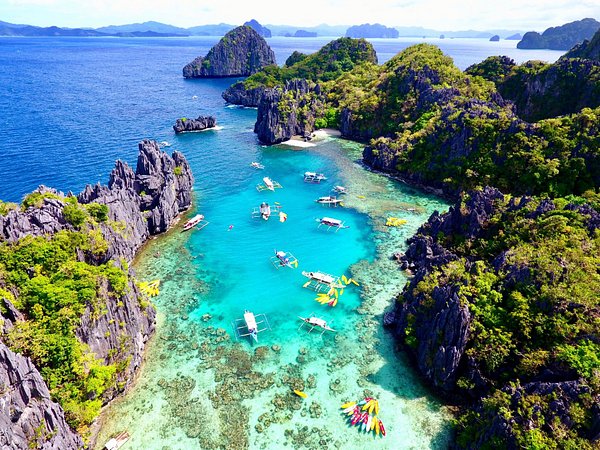
Palawan utterly dominates in the 'wow' factor for beaches and water activities. El Nido and Coron are legendary for their dramatic limestone cliffs, secret lagoons like Big Lagoon and Kayangan Lake, and vibrant coral reefs perfect for snorkeling and diving. An El Nido island hopping tour (e.g., Tour A or C) typically costs PHP 1200-1400 ($20-25) and includes lunch, allowing you to swim through hidden caves and relax on pristine shores like Seven Commandos Beach. Bali's main island beaches, while good for surfing (Padang Padang, Uluwatu) or beach clubs (Finns, Potato Head - day passes from IDR 100k/$7), don't quite match Palawan's natural grandeur. For Bali's best underwater experiences, you really need to venture to the Nusa Islands (Nusa Penida's Manta Point or Crystal Bay) or Amed/Tulamben for diving, which requires an additional ferry (IDR 200k/$13 return) or drive. "Seriously, nothing in Bali compares to the lagoons of El Nido. It's like stepping into a postcard everywhere you look." The sheer variety and untouched beauty of Palawan's marine landscapes are simply breathtaking and globally renowned.
Winner takeaway
- Winner: Palawan
- Why: Palawan's iconic limestone karsts, pristine lagoons, and world-class island hopping tours offer a more spectacular and diverse water experience.
- Who this matters for: Nature lovers, snorkelers, divers, and those seeking iconic scenic beauty.
🍜 Food Scene
Bali is a foodie paradise, catering to every palate and budget. You can find delicious local fare like Nasi Goreng or Mie Goreng at a warung for IDR 25,000-40,000 ($1.70-2.70), indulge in incredible international cuisine at upscale Seminyak restaurants (e.g., Metis, mains IDR 200k+/$13+), or dive into the healthy cafe scene in Canggu and Ubud (smoothie bowls IDR 60k/$4). The sheer variety, quality, and abundance of options, including excellent vegan and vegetarian choices, are unparalleled in Southeast Asia. Palawan's food scene, while delightful for its simplicity and freshness, is more limited. Expect fantastic grilled seafood (fresh whole fish for PHP 300-500/$5-9) and local Filipino dishes like Adobo or Sinigang. Restaurants tend to be simpler, often family-run, especially outside of El Nido town. While there are some decent Western-style spots, they don't rival Bali's cosmopolitan offerings. "Bali's food scene is next level. You can eat amazing local food for cheap or splurge on world-class dining. Palawan is good, but way less variety." For foodies, Bali offers a far richer and more exciting culinary journey.
Winner takeaway
- Winner: Bali
- Why: Bali boasts an incredibly diverse and high-quality food scene, from local delights to international fine dining and a thriving cafe culture.
- Who this matters for: Foodies, digital nomads, health-conscious travelers, and those seeking culinary variety.
🎉 Nightlife & Parties
Bali truly excels in nightlife, offering something for every mood. Kuta, though a bit touristy, still has clubs like Bounty Discotheque, while Seminyak offers more upscale bars and lounges. Canggu is the current hotspot, with famous beach clubs like Finns Beach Club (entry usually includes credit, ~IDR 250k/$17) and Atlas Beach Fest, hosting international DJs and vibrant pool parties that go late into the night. Even Ubud has live music venues and cultural performances. You can easily find a chilled sunset spot, a lively bar, or a full-blown club experience. Palawan, on the other hand, is significantly more subdued. El Nido has a strip of beach bars where you can enjoy a cocktail or a local beer (San Miguel, PHP 70-100/$1.20-1.70) with acoustic music and fire dancers, but it rarely gets wild. Coron is even quieter, primarily focusing on early morning tours. "If you want to party, Bali is the obvious choice. Palawan is more about chilling with a beer after island hopping, not raving." For those who enjoy a lively evening scene, Bali is the undisputed champion.
Winner takeaway
- Winner: Bali
- Why: Bali provides a much more diverse and active nightlife, from world-class beach clubs to energetic party zones.
- Who this matters for: Party-goers, social travelers, and those who enjoy a lively evening scene.
🧘 Culture & Spirituality
Bali is renowned globally for its deep spiritual heritage and vibrant Hindu culture, intricately woven into daily life. Temples like Tanah Lot, Uluwatu, and Ulun Danu Beratan are architectural marvels and active places of worship, often hosting elaborate ceremonies and dance performances. Ubud, in particular, is a global hub for wellness, yoga retreats (e.g., The Yoga Barn offers drop-in classes for IDR 130k/$9), meditation, and traditional healing. You'll encounter offerings (canang sari) on every street corner and hear gamelan music drifting from local banjars. "Bali's culture is just everywhere. The temples, the offerings, the ceremonies… it’s captivating and spiritual." Palawan's culture is largely Filipino, with a mix of Christian and indigenous influences, but it's far less prominent for tourists. While you can experience local life in towns, there aren't grand cultural sites or a strong, accessible spiritual scene like Bali's. The focus in Palawan is overwhelmingly on its natural wonders, not its cultural depth for visitors. For an immersive cultural and spiritual journey, Bali is unmatched.
Winner takeaway
- Winner: Bali
- Why: Bali's vibrant Hindu culture, ancient temples, traditional arts, and world-renowned wellness scene offer a truly immersive experience.
- Who this matters for: Culture enthusiasts, spiritual seekers, yogis, and those interested in traditional arts.
💸 Costs & Budget
Palawan generally offers a slightly more budget-friendly experience, especially if you stick to local eateries and basic accommodations. A typical meal can cost PHP 150-300 ($2.50-5), and a guesthouse in El Nido might be PHP 800-1500 ($14-25) per night. The main expenses are the mandatory island hopping tours (PHP 1200-1400/$20-25 per day, plus environmental fees), and transport between towns. Bali can be done on a budget (hostel beds for IDR 150k/$10, local meals for IDR 25k/$1.70), but it's easy for costs to inflate. Scooter rentals are IDR 60k-80k ($4-5.50) per day. The sheer number of appealing cafes, beach clubs, yoga classes, and boutique shops makes it tempting to spend more. "Palawan felt cheaper overall, even with the tours. Bali, you blink and you've spent $50 on coffee and a smoothie bowl." While Bali offers more value in terms of infrastructure and diverse offerings for the price, Palawan tends to be cheaper for essential daily expenses, making it win for pure budget focus.
Winner takeaway
- Winner: Palawan
- Why: Palawan offers more affordable essentials like local food and basic accommodation, allowing for a lower daily budget despite tour costs.
- Who this matters for: Budget-conscious travelers and backpackers prioritizing cost savings.
✈️ Getting There & Around
Getting to and around Bali is significantly easier and more developed. Ngurah Rai International Airport (DPS) in Denpasar is a major hub with direct flights from countless international cities. Once on the island, you have excellent options: renting a scooter (IDR 60k-80k/$4-5.50 per day), using ride-hailing apps like Gojek or Grab for cheap rides, or hiring private drivers (IDR 500k-700k/$34-48 per day) for longer excursions. Roads are generally good, albeit often busy. Palawan's logistics are more challenging. To reach El Nido or Coron, you typically fly into Puerto Princesa (PPS) and then endure a 5-6 hour van ride (PHP 500-600/$9-10) to El Nido, or take a separate flight to El Nido (ENI) or Coron (USU) which can be more expensive and limited. Getting around towns like El Nido involves tricycles (PHP 50-150/$1-2.50 per ride) or walking. Inter-island travel is via ferries. "Bali's transport system, even with traffic, is just so much smoother. Palawan is an adventure getting from A to B." The sheer convenience and variety of transport options make Bali the winner.
Winner takeaway
- Winner: Bali
- Why: Bali offers easier international airport access and a more developed, convenient local transport infrastructure with ride-hailing apps.
- Who this matters for: Travelers prioritizing convenience, ease of access, and efficient transport options.
🏨 Accommodation
Bali offers an astonishing array of accommodation for every budget and style imaginable. You can find well-appointed hostels with pools for IDR 150,000-250,000 ($10-17) a night, charming guesthouses for IDR 300,000-600,000 ($20-40), boutique hotels, and countless stunning private villas with pools starting from IDR 800,000 ($55) per night. The level of comfort, amenities, and service even at mid-range prices is exceptionally high. Palawan's accommodation is generally more basic and functional. While there are some lovely resorts, particularly in El Nido's more remote bays or Coron, the majority of options in the main towns are simple guesthouses or small hotels (PHP 800-2500/$14-43). Luxury options are fewer and often pricier for what you get compared to Bali. "Finding a gorgeous villa with a private pool in Bali for like $70 a night is easy. In El Nido, that money gets you a nice room, but not a private oasis." The overall quality, variety, and value in accommodation make Bali a clear winner, offering superior comfort and choice.
Winner takeaway
- Winner: Bali
- Why: Bali provides a significantly wider range of accommodation options, from budget to luxury, with higher quality and better value for money.
- Who this matters for: Families, couples, luxury travelers, and those who prioritize comfort and amenities.
⛰️ Nature & Landscapes
While Bali offers beautiful rice terraces (like Tegalalang, entrance IDR 15k/$1), dramatic volcanoes (Mt. Batur trekking, ~$50-70 for sunrise hike), and impressive waterfalls (Tegenungan, Sekumpul), much of its natural landscape feels somewhat cultivated and integrated with human activity. Palawan, however, presents a raw, untamed natural beauty that is truly astounding. Its defining features are the dramatic limestone karsts rising from emerald waters in El Nido and Coron, the enchanting lagoons, and the famous Puerto Princesa Underground River (entrance PHP 500-800/$9-14). The sheer concentration of breathtaking geological formations and untouched islands makes it feel like stepping into a nature documentary. "Palawan's nature is just *wild*. Bali's beautiful, but Palawan feels like another planet with those cliffs and lagoons." The pristine quality and iconic grandeur of Palawan's natural wonders, especially its unique seascape, give it the edge for sheer awe-inspiring landscapes.
Winner takeaway
- Winner: Palawan
- Why: Palawan's iconic limestone karsts, pristine lagoons, and untouched islands offer a more spectacular and uniquely wild natural landscape.
- Who this matters for: Photographers, adventurers, and those seeking iconic, untouched natural beauty.
🏥 Safety & Health
Both destinations are generally safe for tourists, but each comes with its own considerations. Bali has a more developed medical infrastructure with international hospitals (e.g., BIMC Hospital) but petty theft, especially bag snatching from scooters, is a persistent issue. Scooter accidents are also very common due to chaotic traffic and inexperienced riders. 'Bali Belly' (traveler's diarrhea) is a rite of passage for many, requiring careful food and water choices. Palawan is also safe from violent crime, but its remoteness means emergency services can be slow and medical facilities are basic, primarily small clinics in towns like El Nido or Coron. Puerto Princesa has more substantial hospitals. The main natural risk in Palawan is typhoons, particularly during the wet season (June-November), which can disrupt travel plans. "I felt safe in both, but had to be way more careful on a scooter in Bali. Palawan's main worry was just getting sick really far from a good hospital." Neither is perfect; Bali has better emergency care but more common minor risks, while Palawan is safer from petty crime but less equipped for major emergencies and has typhoon risks.
Winner takeaway
- Winner: Tie
- Why: Both destinations have similar levels of general safety but present different types of risks and amenities, making it a tie.
- Who this matters for: All travelers, but especially those with health concerns or who value robust emergency services.
💻 Digital Nomad & Solo Travel
Bali is a world-renowned haven for digital nomads and an exceptionally easy destination for solo travelers. Canggu and Ubud are packed with co-working spaces (e.g., Dojo Bali, Outpost), reliable high-speed internet, a vast expat community, and endless cafes with good Wi-Fi. It's incredibly easy to meet other travelers through organized events, Facebook groups, or just by hanging out in popular spots. Solo travelers will find a ready-made community and feel very safe and welcome. Palawan is much more challenging for digital nomads due to slower, less reliable internet outside of major towns, and very few dedicated co-working spaces. It's great for an 'unplugged' workation, but not ideal for long-term productivity. Solo travel is definitely possible and safe, especially on island hopping tours where you meet people, but there isn't the same established, diverse community as in Bali. "Bali is literally built for digital nomads and solo travelers now. Palawan is amazing, but you go there to disconnect, not work efficiently." For connectivity, community, and ease of solo exploration, Bali is miles ahead.
Winner takeaway
- Winner: Bali
- Why: Bali offers superior digital infrastructure, a large expat community, dedicated co-working spaces, and a highly conducive environment for solo travelers and remote workers.
- Who this matters for: Digital nomads, remote workers, solo travelers, and those seeking community abroad.
❓ Frequently Asked Questions
Which destination is better for surfing?
Bali is undoubtedly better for surfing, catering to all skill levels. Famous spots like Uluwatu, Padang Padang, and Canggu offer consistent waves and numerous surf schools. Palawan has very limited surf breaks and isn't known for the sport.
Is Palawan safe from typhoons?
Palawan, like other parts of the Philippines, is within the typhoon belt. The typhoon season typically runs from June to November. While direct hits are not constant, typhoons can cause heavy rains, strong winds, and travel disruptions, so it's wise to check forecasts if traveling during these months.
How much does an island hopping tour cost in Palawan?
Island hopping tours in El Nido and Coron typically cost PHP 1200-1400 ($20-25) per person, per tour. This usually includes lunch, water, and the services of a guide. There's also an Eco-Tourism Development Fee (ETDF) of PHP 200 ($3.50) in El Nido, valid for 10 days.
What's the best way to get around Bali?
The most popular way to get around Bali is by scooter (rentals are ~IDR 60k-80k/$4-5.50 per day). For those uncomfortable on a scooter, ride-hailing apps like Gojek and Grab are widely available and affordable for short distances. For longer trips or full-day excursions, hiring a private driver is a comfortable and cost-effective option (~IDR 500k-700k/$34-48 per day).
Which destination is better for families with young children?
Bali is generally better for families. It offers more developed infrastructure, a wider range of family-friendly accommodations (villas with pools!), diverse dining options, and activities like water parks (Waterbom Bali), animal sanctuaries, and cultural workshops that cater to kids. Palawan is more rugged and less equipped for very young children.
What's the internet like in both places?
Bali generally has excellent internet, especially in popular tourist areas like Canggu, Seminyak, and Ubud, with many cafes and co-working spaces offering high-speed Wi-Fi. Palawan's internet is significantly slower and less reliable, particularly outside of Puerto Princesa. It's often adequate for basic browsing but challenging for heavy data usage or remote work.
Can I easily learn to dive in either location?
Yes, both locations offer great opportunities for learning to dive. Bali has numerous PADI-certified dive centers, especially in areas like Amed, Tulamben, and the Nusa Islands. Palawan, particularly Coron and El Nido, also has many dive shops catering to beginners, with stunning underwater visibility and marine life. You'll find good instructors and competitive pricing in both.
Which has better options for wellness and yoga retreats?
Bali, particularly Ubud, is a world-renowned center for wellness and yoga retreats. It offers an extensive range of dedicated retreat centers, yoga studios, meditation classes, and holistic healing practices. While Palawan offers a tranquil environment for relaxation, it does not have the same developed and diverse wellness infrastructure as Bali.
Ready to plan your Southeast Asia trip?
Get a free custom itinerary for Bali, Palawan, or both — built from real traveler insights.
🎟️ Book Tours & Experiences
Hand-picked tours and activities for both destinations — book with free cancellation
Experiences via Viator — free cancellation on most tours