How we built this comparison
This page combines traveler discussion patterns, published price ranges, flight schedules, and seasonal data to help you decide between Big Sur and Pacific Coast Highway.
- Reviewed 100+ Reddit threads from r/travel, r/solotravel, r/roadtrip, r/California, and r/BigSur for authentic traveler experiences and tips.
- Verified costs for accommodation, gas, and attractions against current booking platforms (Booking.com, Airbnb, gas price aggregators) and official park websites in late 2023 / early 2024.
- Cross-referenced seasonal patterns, weather data (NOAA), and Caltrans road closure reports to provide accurate 'Best Time to Visit' and 'Safety' insights.
- Incorporated local insights from travel blogs and official tourism boards for specific recommendations and hidden gems.
⚡ The TL;DR Verdict
For those seeking raw, untamed nature and a truly remote escape, Big Sur is your calling, budget around $300-600+ USD daily. If you crave diverse experiences from city life to charming beach towns, with more budget flexibility, the broader Pacific Coast Highway (PCH) route is ideal, achievable from $150-400 USD daily depending on your stops and style.
- Choose Big Sur: Pick Big Sur if your priority is unparalleled, rugged coastal scenery, a deep connection with nature, and a willingness to pay premium for solitude and unique accommodations. It's for the traveler who wants to disconnect and be awestruck.
- Choose Pacific Coast Highway: Opt for the full PCH experience if you want a diverse road trip hitting bustling cities, quaint towns, vineyards, and iconic beaches, alongside the natural beauty. It's for those who enjoy variety, flexibility, and a wider range of dining and lodging options.
- Choose Both: Absolutely do both! Big Sur is the crown jewel of the PCH. Dedicate at least 2-3 days to Big Sur itself (staying in or nearby) and allow another 5-7 days to explore the broader PCH, perhaps driving from San Francisco down to Santa Barbara or even Los Angeles.
Quick Comparison
| Category | Big Sur | Pacific Coast Highway | Winner |
|---|---|---|---|
| Nature & Scenery | Unrivaled, dramatic cliffs, redwood forests, and wild, undeveloped coastline. Pure, raw beauty. | Stunning coastal views interspersed with diverse landscapes: urban beaches, agricultural lands, rolling hills, and iconic landmarks. | Big Sur |
| Costs & Budget | Generally very expensive due to limited supply of lodging, gas, and dining. Budget premium prices. | Wide range of options, from budget-friendly hostels in cities to luxury resorts. More flexibility. | Pacific Coast Highway |
| Accessibility & Getting Around | Requires a car, prone to road closures, limited cell service. Can feel remote and isolated. | Primarily a driving route, but offers more entry points (airports) and easier diversions to inland areas. | Pacific Coast Highway |
| Accommodation | Limited, expensive, and often booked far in advance. Unique, rustic, or luxury options. | Vast array of choices from budget hostels to boutique hotels and major chains, across many price points. | Pacific Coast Highway |
| Food & Drink | Limited, often upscale with incredible views, or simple general store fare. Pricey. | Extremely diverse, from fresh seafood shacks to Michelin-starred restaurants, local wineries, and craft breweries. | Pacific Coast Highway |
| Beaches & Activities | Rugged, dramatic, often inaccessible beaches. Focus on hiking, photography, and scenic drives. | Diverse beaches for surfing, sunbathing, tide-pooling, plus piers, boardwalks, and city attractions. | Pacific Coast Highway |
| Crowds & Vibe | Can be crowded at popular viewpoints, but overall feels remote and tranquil, especially off-peak. | Varies greatly from bustling city beaches to quiet coastal towns, offering a mix of experiences. | Tie |
| Culture & History | Bohemian, artistic heritage; focus on nature's power and limited historical sites. | Rich tapestry of Spanish mission history, pioneering towns, surf culture, and modern Californian art/music scenes. | Pacific Coast Highway |
| Best Time to Visit | Spring and Fall for mild weather and fewer crowds. Summer is popular but foggy. Winter brings rain and road closures. | Generally good year-round, but spring/fall offer best balance. Southern PCH is great in winter; northern PCH can be wet. | Tie |
| Safety & Road Conditions | Remote, winding roads, prone to closures. Limited emergency services and cell signal. Requires attentive driving. | Generally safe, but requires careful driving on winding sections. More access to services and emergency help. | Pacific Coast Highway |
🏞️ Nature & Scenery
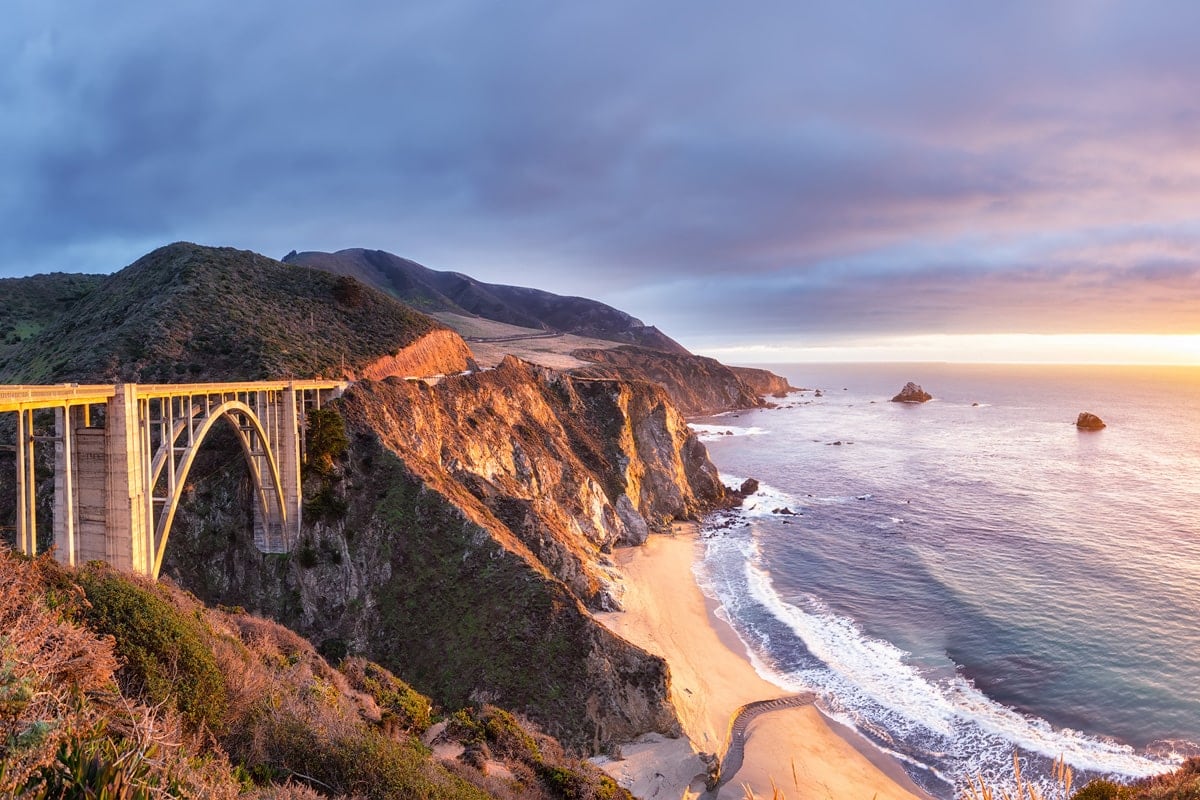
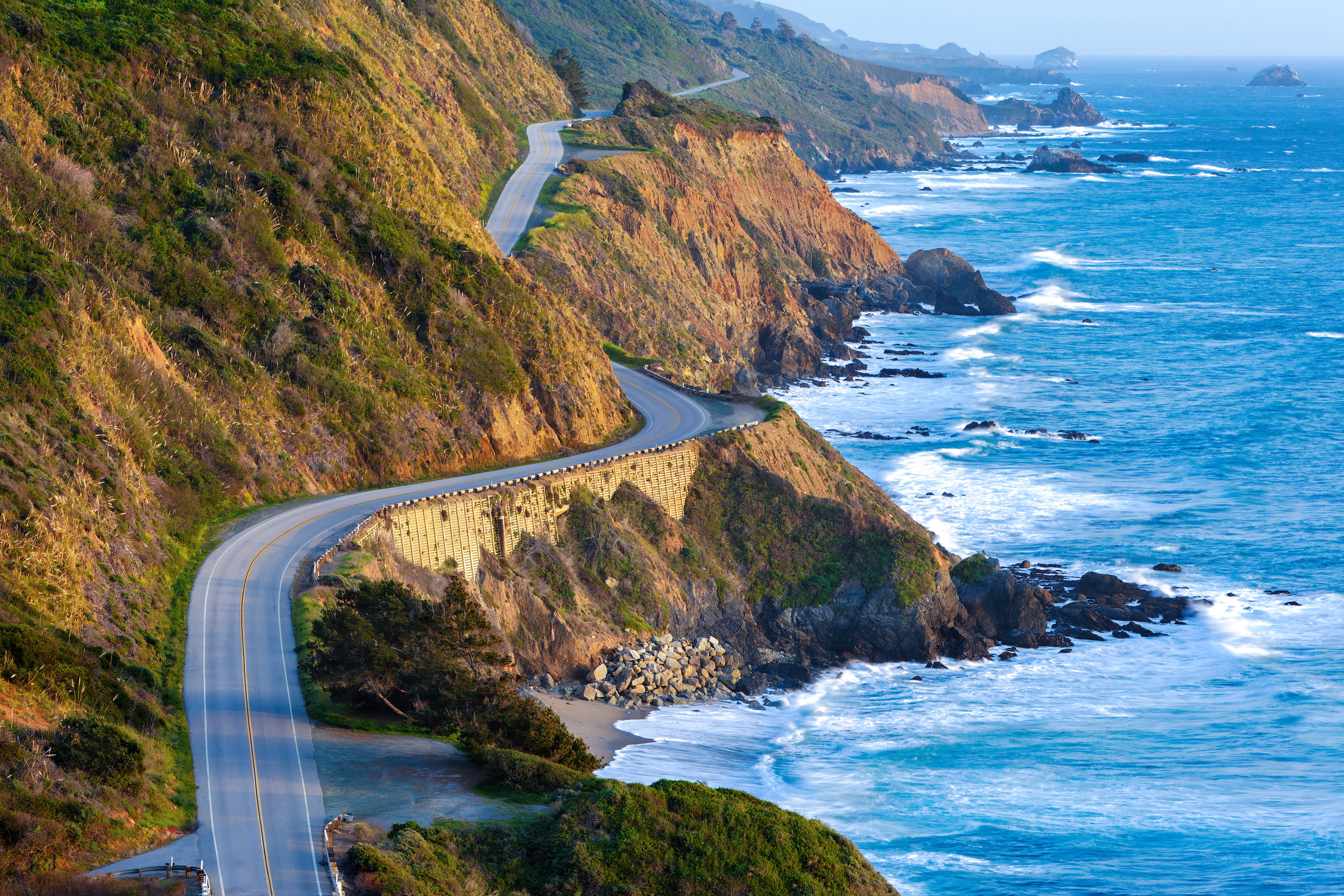
Big Sur is, hands down, a sensory overload of natural wonder. Imagine towering redwood forests plunging into the Pacific, mist-shrouded cliffs, and turquoise coves like McWay Falls (don't miss a stop at Julia Pfeiffer Burns State Park, parking is about $10 USD). The sheer scale and wildness are unparalleled. Every turn on Highway 1 through Big Sur reveals another postcard-perfect vista, from Bixby Bridge to Partington Cove. There's a profound sense of isolation and grandeur that other parts of the PCH, while beautiful, simply can't match. You're truly in nature's embrace here. "Honestly, Big Sur felt like driving through a landscape painting, even better than the photos. Just wish I had more time to hike!" You'll find fewer amenities, but the trade-off is an almost spiritual connection to the land. Prepare for limited cell service, which is honestly a blessing here. This is where the ocean truly meets the mountains in a dramatic fashion.
Winner takeaway
- Winner: Big Sur
- Why: Big Sur offers the most concentrated, dramatic, and pristine natural beauty along the entire California coast.
- Who this matters for: Nature lovers, photographers, those seeking solitude and breathtaking vistas.
💰 Costs & Budget
Big Sur is notorious for its premium pricing, driven by limited infrastructure and high demand. A basic motel room, if you can find one, might start at $250-350 USD per night, while luxury options like Ventana Big Sur or Post Ranch Inn can easily exceed $1000-2000 USD. Gas stations in Big Sur itself charge a significant premium, sometimes $1-2 USD more per gallon than nearby towns like Carmel or Cambria, so fill up before entering! Dining options are scarce and generally upscale; a meal at Nepenthe, while iconic, can easily run $40-60 USD per person. The broader Pacific Coast Highway, however, offers a spectrum. You can find hostels in Santa Cruz or San Luis Obispo for $50-100 USD, mid-range hotels in Monterey or Santa Barbara for $150-300 USD, and countless dining options from casual tacos to fine dining. "We saved a ton on our PCH trip by staying in places like Morro Bay and Ventura, then just drove into the more expensive areas for the day." Parking fees for popular attractions also add up, but the PCH allows for more strategic budgeting by choosing less expensive towns to base yourself in.
Winner takeaway
- Winner: Pacific Coast Highway
- Why: The extensive PCH route offers far greater flexibility and a wider range of budget options for lodging, dining, and activities.
- Who this matters for: Budget-conscious travelers, families, and those looking for more value and variety in spending.
🚗 Accessibility & Getting Around
Both destinations inherently require a car, but Big Sur presents more challenges. Highway 1 through Big Sur is famous for landslides and closures, which can reroute you inland for hours or even make parts of the coast inaccessible for extended periods (always check road conditions like Caltrans before heading out!). Cell service is notoriously spotty to non-existent, meaning offline maps and pre-downloaded information are essential. Navigation can be tricky, and gas stations are few and far between. The full Pacific Coast Highway, on the other hand, while a long drive, offers numerous accessible towns and cities like Monterey, Santa Barbara, and San Luis Obispo, each with their own amenities and easy access to major airports (SFO, SJC, LAX, SNA, SAN). It's easier to hop on and off, find alternative routes, and rely on standard services. "Driving Big Sur was epic, but man, trying to find directions with no signal was a real headache. Glad I downloaded maps beforehand." You have more flexibility with stops, easier access to supplies, and better connectivity along the broader PCH.
Winner takeaway
- Winner: Pacific Coast Highway
- Why: The PCH offers more reliable road conditions, better cell service, and more convenient access points and amenities throughout the drive.
- Who this matters for: Travelers who prioritize ease of navigation, reliable connectivity, and less risk of travel disruptions.
🏨 Accommodation
Accommodation within Big Sur itself is sparse and comes at a premium. You're looking at iconic, rustic-chic stays like Big Sur Lodge or the more luxurious Post Ranch Inn and Ventana Big Sur, often costing upwards of $400-1000+ USD per night. Camping is an option at Pfeiffer Big Sur State Park or Kirk Creek Campground ($35-50 USD), but spots are highly competitive and require reservations months in advance. The limited supply means places book out quickly, especially during peak season. Many travelers opt to stay just outside Big Sur, in Carmel-by-the-Sea ($200-500 USD) or Cambria ($150-350 USD), for more affordable and available options. The broader PCH, however, boasts an incredible diversity of lodging. From budget-friendly hostels in Santa Cruz ($60-100 USD/night) to charming B&Bs in Capitola ($200-400 USD), mid-range hotels in Monterey ($180-350 USD), and luxury resorts in Santa Barbara ($300-800 USD), you can find something for every taste and wallet. "We splurged for one night in Big Sur, then hit up a couple of decent motels in smaller towns along the PCH to balance the budget. Way more options." This variety allows for more spontaneous trips and better value.
Winner takeaway
- Winner: Pacific Coast Highway
- Why: The Pacific Coast Highway provides a significantly larger, more diverse, and more affordable range of lodging options to suit all budgets and preferences.
- Who this matters for: Travelers seeking variety in lodging, those on a tighter budget, or anyone who needs more flexibility with bookings.
🍽️ Food & Drink
Big Sur's dining scene is defined by its scarcity and often by its spectacular views. Places like Nepenthe offer unforgettable vistas with their Californian cuisine, but a meal here can easily be $50-70 USD per person with drinks. Other options include the Big Sur Bakery (great for breakfast/lunch, $20-30 USD per person) or the more casual General Store. Expect higher prices due to the remote location. It's advisable to pack snacks and drinks. The broader Pacific Coast Highway, however, is a culinary journey. You can enjoy clam chowder on Fisherman's Wharf in Monterey ($15-25 USD), fresh oysters in Morro Bay, farm-to-table restaurants in Santa Cruz, and world-class wine tasting in the Santa Ynez Valley (near Santa Barbara, tastings usually $20-40 USD). Cities like San Luis Obispo and Santa Barbara boast vibrant food scenes with everything from casual cafes to fine dining. "The food in Big Sur was amazing, but we had to plan every meal. On the rest of the PCH, we just pulled over when something looked good, so much choice!" From fresh seafood at Phil's Fish Market in Moss Landing to authentic tacos in Ojai, the PCH offers an endless array of flavors and experiences.
Winner takeaway
- Winner: Pacific Coast Highway
- Why: The full PCH offers an vastly more diverse, accessible, and budget-friendly range of culinary experiences, from casual to gourmet.
- Who this matters for: Foodies, travelers who enjoy culinary exploration, and those looking for varied dining experiences.
🏖️ Beaches & Activities
Big Sur's 'beaches' are mostly rugged, cliff-backed coves, often difficult to access. While breathtaking for photography (like Pfeiffer Beach with its purple sand, though access can be tricky and parking limited at $12 USD), they aren't typically for swimming or sunbathing. The main activities here are scenic driving, hiking (e.g., Andrew Molera State Park has lovely coastal trails, parking $10 USD), and photography. It's about immersion in raw nature. The broader Pacific Coast Highway, however, provides an incredible spectrum of beach experiences and activities. You can surf in Santa Cruz, stroll the iconic Santa Monica Pier in Los Angeles (rides approx. $5-10 USD each), relax on the golden sands of Laguna Beach, explore tide pools in Cambria, or even visit the elephant seals near San Simeon (free). "Big Sur beaches are gorgeous to look at, but if you want to actually *do* stuff on a beach, hit up Santa Cruz or Malibu." Beyond beaches, the PCH offers attractions like the Monterey Bay Aquarium ($60 USD adult ticket), Hearst Castle (tours from $30 USD, currently closed to public), charming downtowns for shopping, and numerous wineries. The variety of activities available along the PCH is simply far greater.
Winner takeaway
- Winner: Pacific Coast Highway
- Why: The PCH offers a much wider variety of accessible beaches for different activities and a broader range of non-beach attractions.
- Who this matters for: Families, active travelers, those seeking a mix of relaxation and entertainment, and beach enthusiasts.
👥 Crowds & Vibe
Big Sur offers a truly unique vibe: remote, wild, and awe-inspiring. While popular spots like Bixby Bridge or McWay Falls can draw crowds, especially on weekends and during summer, the overall feeling is one of vastness and solitude. It's a place to disconnect and feel small against nature's grandeur. The vibe is contemplative, rugged, and somewhat exclusive due to its limited accessibility and high prices. "Big Sur felt like a real escape, even with a few other cars around. Just pure serenity once you step away from the main viewpoints." The broader Pacific Coast Highway offers a kaleidoscope of vibes. You'll encounter the lively, bohemian energy of Santa Cruz, the upscale sophistication of Carmel, the family-friendly fun of Pismo Beach, the relaxed surf culture of Malibu, and the bustling energy of cities like Santa Monica. Some stretches are tourist-heavy, others are quiet and charming. This diversity means you can tailor your PCH experience to your preferred atmosphere. It's a tie because both offer distinct, valuable experiences: Big Sur for its unique, remote tranquility, and the PCH for its incredible range and adaptability to different traveler preferences.
Winner takeaway
- Winner: Tie
- Why: Both offer distinct and appealing vibes; Big Sur for raw solitude, PCH for diverse experiences, making it a matter of personal preference.
- Who this matters for: Travelers who prioritize either deep solitude (Big Sur) or varied social and cultural experiences (PCH).
🏛️ Culture & History
Big Sur's cultural footprint is largely defined by its counter-culture, artistic, and literary past, attracting bohemians and writers like Jack Kerouac and Henry Miller. The Henry Miller Memorial Library is a key stop (free entry, donations welcome), offering books, art, and a glimpse into this era. It's a culture of wild beauty and creative escape, rather than extensive historical sites. The focus is more on the land itself and its inspirational power. The broader Pacific Coast Highway, however, is steeped in a rich and varied history. You can explore the Spanish Colonial architecture and missions in Carmel, San Luis Obispo, and Santa Barbara (Mission Santa Barbara, $15 USD entry). "We learned so much about California's history driving the PCH, from the missions to the Gold Rush impact further inland." Towns like Monterey boast Cannery Row, immortalized by Steinbeck, offering a glimpse into its fishing past, alongside the incredible Monterey Bay Aquarium ($60 USD for adults). Further south, Hearst Castle (tours from $30 USD, currently closed to public for repair but worth noting) is a monumental testament to Gilded Age opulence. You'll also encounter vibrant surf culture history, agricultural heritage, and modern art scenes in cities like Santa Cruz and Laguna Beach. The sheer volume and diversity of cultural and historical experiences along the PCH far outweigh Big Sur's offerings, providing a journey through centuries of Californian life and influence.
Winner takeaway
- Winner: Pacific Coast Highway
- Why: The PCH provides a significantly richer and more diverse range of historical sites, cultural institutions, and unique local histories.
- Who this matters for: History buffs, culture seekers, and travelers interested in learning about California's heritage beyond nature.
☀️ Best Time to Visit
Both Big Sur and the broader Pacific Coast Highway share optimal shoulder seasons: Spring (April-May) and Fall (September-October). During these months, you'll find pleasant temperatures, fewer crowds than summer, and clearer skies, making it ideal for scenic drives and outdoor activities. Summer (June-August) is popular, but Big Sur, especially, experiences 'June Gloom' and 'Fogust' – morning fog that often burns off by midday but can obscure views. "We went to Big Sur in October, and the weather was perfect, no fog at all!" Winter (November-March) brings the risk of heavy rains, which can lead to landslides and road closures in Big Sur (a serious consideration). However, the southern PCH (Santa Barbara to San Diego) remains quite pleasant in winter, offering a great escape from colder climates. The PCH's length means weather varies; you might have fog in Monterey and sunshine in San Luis Obispo on the same day. It's a tie because the 'best' time depends on your priorities: avoiding crowds, guaranteed sunshine, or hitting specific events. For Big Sur, avoiding winter is key due to road risks. For the PCH, you have more flexibility, but the shoulder seasons are still universally lauded for both.
Winner takeaway
- Winner: Tie
- Why: Both destinations share similar optimal shoulder seasons, and the 'best' time depends heavily on specific traveler priorities.
- Who this matters for: Travelers who prioritize weather and crowd levels; those sensitive to fog or rain should plan for spring/fall.
⚠️ Safety & Road Conditions
Big Sur, while stunning, demands respect for its challenging road conditions. Highway 1 through this stretch is incredibly winding, with steep drops and narrow sections. It's not a place for distracted driving. Critically, the region is highly prone to landslides, especially during and after heavy rains, leading to significant and sometimes prolonged road closures (always check Caltrans before you go). Cell service is practically nonexistent, meaning in case of emergency, assistance might be hard to call for immediately. Gas stations are scarce and expensive, so planning fuel stops is essential. The broader Pacific Coast Highway also has its winding sections (especially north of San Francisco and through Big Sur itself), but overall, it's far more developed. You'll have consistent cell service in most areas, frequent towns with emergency services, and more reliable road conditions. "Driving Big Sur was beautiful but definitely stressful in parts, especially with the sheer drops and no phone signal. The rest of the PCH felt way more chill." Driving the PCH outside of Big Sur allows for easier detours, more frequent rest stops, and a general sense of greater safety and preparedness, particularly for those less experienced with mountain coastal driving. Ensure your vehicle is in good condition for either route.
Winner takeaway
- Winner: Pacific Coast Highway
- Why: The PCH offers more reliable road conditions, better cell service, and more frequent access to services and emergency aid.
- Who this matters for: Less experienced drivers, those concerned about safety and reliable connectivity, and travelers with less flexible itineraries.
❓ Frequently Asked Questions
How many days do I need for Big Sur vs. the full Pacific Coast Highway?
For Big Sur itself, dedicate at least 2-3 full days to truly experience its beauty, allowing for hiking and soaking in the views. For the full Pacific Coast Highway (from SF to LA/San Diego), you'll want a minimum of 5-7 days to enjoy the diverse towns and attractions without feeling rushed, with 10+ days being ideal for a comprehensive experience.
Is Big Sur really that expensive for lodging and food?
Yes, Big Sur is notoriously expensive. Due to limited options and high demand, even basic lodging can be $250+ USD per night, while luxury resorts run $1000+. Dining options are also pricey, often $40-70 USD per person for a main meal. Many travelers choose to stay just outside Big Sur in towns like Cambria or Carmel to save money.
What's the best airport to fly into for these trips?
For Big Sur or the northern PCH, fly into San Francisco (SFO) or San Jose (SJC) and drive south. For the southern PCH, Los Angeles (LAX) or San Diego (SAN) are excellent starting points. Monterey Regional Airport (MRY) is also an option for closer access to the Big Sur area, though flights might be more limited/expensive.
Do I need a 4x4 vehicle for Big Sur or PCH?
No, a standard sedan is perfectly fine for driving both Big Sur and the entire PCH, assuming roads are open. The roads are paved, albeit winding and sometimes narrow in Big Sur. A 4x4 or SUV is not required unless you plan on venturing off-road, which is generally not permitted or recommended.
What should I pack specifically for Big Sur?
Pack layers! Coastal weather changes rapidly. Bring sturdy walking shoes for hikes, a reusable water bottle, snacks (options are limited), a physical map (cell service is spotty), and a camera. Don't forget a warm jacket, even in summer, as evenings can be chilly.
Are there any parts of the PCH that are overrated or skippable?
While beauty is subjective, some travelers find the long, flat agricultural stretches of Highway 1 south of San Luis Obispo less scenic than the northern parts. Also, parts of the urban sprawl in Southern California might be less appealing to those seeking pristine nature. However, each section offers unique local charm and potential hidden gems.
Can I visit Hearst Castle if I'm driving the PCH?
Yes, Hearst Castle is a popular stop located near San Simeon, just south of the Big Sur section of the PCH. It's easily accessible off Highway 1. While currently closed for repairs through mid-2025, it's a monumental historical landmark that's usually a highlight of any PCH trip, so check their official website for reopening status.
How reliable is cell service along the Big Sur stretch of Highway 1?
Cell service along the Big Sur stretch is notoriously unreliable, with large areas having no signal at all. It's crucial to download offline maps (Google Maps, Apple Maps, or dedicated GPS apps) and any necessary information before you enter the area. Embrace the digital detox!
Ready to plan your California Coast trip?
Get a free custom itinerary for Big Sur, Pacific Coast Highway, or both — built from real traveler insights.
🎟️ Book Tours & Experiences
Hand-picked tours and activities for both destinations — book with free cancellation
Experiences via Viator — free cancellation on most tours