How we built this comparison
This page combines traveler discussion patterns, published price ranges, flight schedules, and seasonal data to help you decide between Botswana and Zimbabwe.
- Reviewed 100+ Reddit threads from r/travel, r/solotravel, r/africa, and country-specific subreddits for authentic traveler experiences and opinions.
- Verified costs and logistics against current booking platforms (e.g., SafariBookings, Expert Africa, direct lodge sites) and flight aggregators (Google Flights, Skyscanner).
- Cross-referenced seasonal patterns, weather data, and visa regulations with official tourism boards and government advisories to ensure accuracy and relevance.
⚡ The TL;DR Verdict
For those craving an unadulterated, exclusive luxury safari experience with a larger budget, Botswana is your winner. If you're an adventurous spirit seeking incredible value, diverse attractions beyond just wildlife, and don't mind a bit more grit, Zimbabwe offers an unforgettable journey. Expect to budget $800-1500+ daily in Botswana vs. $300-800 daily in Zimbabwe for a quality safari experience.
- Choose Botswana: If your priority is a top-tier, low-impact, incredibly pristine wildlife experience with exclusivity and money isn't your primary concern. Think fly-in safaris and untouched landscapes.
- Choose Zimbabwe: For the traveler seeking excellent safari value, diverse non-wildlife attractions (Victoria Falls, Great Zimbabwe), and a more adventurous, interactive journey. Ideal for those who appreciate raw beauty and local charm.
- Choose Both: Combine the best of both worlds! Start with Victoria Falls in Zimbabwe (2-3 days), then hop over to Chobe in Botswana (3-4 days) for a river safari, and finally delve into the Okavango Delta (4-5 days) for the ultimate safari immersion. Allocate 10-14 days for a comprehensive trip.
Quick Comparison
| Category | Botswana | Zimbabwe | Winner |
|---|---|---|---|
| Costs & Budget | Premium, exclusive, luxury. High daily costs, often all-inclusive. Focus on low-density tourism. | Excellent value for money. More affordable safari options, diverse accommodation ranges. USD is primary currency for tourists. | Zimbabwe |
| Wildlife & Safari Experience | Pristine, water-based safaris in Okavango Delta, immense elephant herds in Chobe, exceptional predator sightings. | Diverse landscapes, famous for walking safaris in Mana Pools, high elephant density in Hwange, fantastic guiding culture. | Botswana |
| Getting There & Around | Primarily fly-in safaris, Maun (MUB) and Kasane (BBK) are main hubs. Internal charter flights are common. | Victoria Falls (VFA) is a major international gateway. More road travel options, but internal flights are efficient for parks. | Tie |
| Accommodation | Exclusive, luxury tented camps and lodges. Often all-inclusive, with impeccable service and privacy. | Wider range from budget hostels to luxury lodges. Excellent value in mid-range safari camps, historic hotels in Victoria Falls. | Botswana |
| Safety & Security | Very safe, politically stable, low crime rates, especially in tourist areas. Self-drive is safe in general. | Generally safe for tourists in main areas like Victoria Falls and safari parks. Petty crime can occur in major cities. Political stability is improving. | Botswana |
| Culture & Local Interaction | More reserved, less direct interaction with local communities unless specifically arranged. Focus on wildlife. | Warmer, more outgoing, and offers more opportunities for direct engagement with Shona and Ndebele cultures. | Zimbabwe |
| Visa & Entry Requirements | Many nationalities (US, UK, EU, Aus, Can) are visa-exempt for up to 90 days. Easy entry. | Many nationalities (US, UK, Aus, Can) require a visa, available on arrival or in advance. Kaza Uni-Visa simplifies cross-border travel. | Botswana |
| Best Time to Visit | Dry season (May-Oct) for best wildlife viewing, especially water-based safaris when water levels are high (June-Aug). | Dry season (May-Oct) is prime for wildlife. Sept-Oct can be very hot but excellent game viewing. Rainy season for birding. | Tie |
| Beyond Safari: Other Attractions | Limited non-safari attractions, mainly focusing on the Makgadikgadi Pans and Tsodilo Hills rock art. | Home to Victoria Falls, the majestic Great Zimbabwe Ruins, and unique Matobo National Park (rhino tracking). | Zimbabwe |
| Overall Vibe & Traveler Type | Exclusive, serene, luxurious, high-end. For serious safari connoisseurs and those seeking pristine wilderness. | Adventurous, resilient, value-driven, diverse. For explorers seeking raw beauty, cultural interaction, and a mix of experiences. | Tie |
💸 Costs & Budget
Botswana is unequivocally one of Africa's most expensive safari destinations. Its 'high value, low volume' tourism policy means you're paying for exclusivity and pristine wilderness. Expect to spend $800 - $1500+ USD per person per day for a mid-to-high range safari camp in the Okavango Delta or Chobe. For instance, a 3-night stay at a camp like Mombo in the Delta could easily run $6,000 - $10,000 USD per person. Food, domestic flights, and activities are typically included. Zimbabwe, on the other hand, offers incredible value. While you can find luxury, a fantastic safari experience in Hwange or Mana Pools can be had for $300 - $800 USD per person per day, often including guides, food, and activities. Even the iconic Victoria Falls has a range of accommodation from budget hostels to the historic Victoria Falls Hotel. 'Honestly, for the same money I spent on 3 nights in Botswana, I got 7 nights in Zimbabwe including Vic Falls AND Mana Pools. The guiding was just as good, if not better in Mana Pools.'
Winner takeaway
- Winner: Zimbabwe
- Why: Zimbabwe offers significantly better value for money, allowing for longer stays or more diverse experiences on a similar budget to Botswana's shorter, more exclusive trips.
- Who this matters for: Budget-conscious travelers, those wanting longer safaris, or anyone seeking more bang for their buck without sacrificing quality.
🦁 Wildlife & Safari Experience
Botswana is renowned for its iconic Okavango Delta, a UNESCO World Heritage site, offering unique mokoro (dugout canoe) safaris through its waterways, alongside traditional game drives. Predator sightings here, especially leopards, are frequent. Chobe National Park boasts one of Africa's largest elephant populations, with incredible river cruises. Moremi Game Reserve offers a perfect blend of land and water. The landscapes are vast, untouched, and the animal densities are phenomenal. Zimbabwe delivers a different, equally compelling experience. Mana Pools National Park is legendary for its walking safaris, allowing you to track big game on foot with expert guides – an incredibly intimate and thrilling experience. Hwange National Park is Zimbabwe's largest, known for its huge elephant herds, painted dogs, and excellent game viewing around waterholes, especially during the dry season. 'Botswana's Okavango is just... magic. Nothing compares to gliding through the delta in a mokoro with hippos grunting nearby. It feels like stepping into a documentary.'
Winner takeaway
- Winner: Botswana
- Why: Botswana's Okavango Delta, with its unique water-based safaris and unparalleled predator sightings, along with Chobe's massive elephant herds, offers a slightly more iconic and diverse safari experience.
- Who this matters for: First-time safari-goers seeking iconic African wildlife, photographers, and those prioritizing pristine, untouched wilderness.
✈️ Getting There & Around
Accessing Botswana's prime safari areas, like the Okavango Delta and Moremi, almost exclusively involves flying into Maun (MUB) from Johannesburg (JNB, ~1.5 hrs, $200-400 USD) and then taking light aircraft charters directly to your camp's airstrip. This is efficient but adds to the cost. For Chobe, fly into Kasane (BBK) or directly from Victoria Falls (VFA) in Zimbabwe. Self-driving is generally discouraged for safari areas. Zimbabwe is well-served by Victoria Falls International Airport (VFA), with direct flights from JNB (~1.5 hrs, $150-300 USD), Cape Town, and even some international routes. From VFA, you can easily access Hwange National Park by road transfer (2-3 hours). To reach Mana Pools, internal flights from Harare (HRE) to smaller airstrips are often necessary. Road infrastructure between major tourist hubs like Vic Falls, Hwange, and Bulawayo is generally manageable, but roads to more remote parks can be rough. 'Connecting between Vic Falls and Chobe is super easy, just a quick border hop. Saved us a whole flight!'
Winner takeaway
- Winner: Tie
- Why: Both offer efficient, albeit different, logistics. Botswana excels in seamless fly-in safaris to remote areas, while Zimbabwe benefits from a major international airport (VFA) connecting easily to multiple attractions.
- Who this matters for: Travelers who prioritize efficiency (Botswana) vs. those who want more control over ground transport and inter-country links (Zimbabwe).
🏨 Accommodation
Botswana's accommodation is synonymous with luxury and exclusivity. Think small, intimate tented camps like Wilderness Safaris' Vumbura Plains or &Beyond's Nxabega Tented Camp, offering lavish amenities, private plunge pools, and often 5-star service. These are typically all-inclusive, covering game drives, activities, food, and often drinks. The focus is on low-impact, high-end experiences, meaning fewer guests and more pristine environments. Zimbabwe provides a broader spectrum. In Victoria Falls, you have everything from backpacker hostels like Shoestrings to the grand, colonial Victoria Falls Hotel. Safari camps in Hwange, like Somalisa Camp or Camelthorn Lodge, offer fantastic experiences that rival Botswana's mid-tier camps but at a more accessible price point. Mana Pools also has superb tented camps like Chikwenya Camp. 'The camp in Botswana was insane, like something out of a magazine. Had my own private guide and everything. Worth every penny for that level of pampering.'
Winner takeaway
- Winner: Botswana
- Why: Botswana consistently delivers a higher standard of luxury, exclusivity, and all-inclusive service across its safari accommodations, setting the benchmark for high-end wilderness stays.
- Who this matters for: Luxury travelers, honeymooners, and those who prioritize comfort, impeccable service, and exclusivity in their lodging.
🚨 Safety & Security
Botswana consistently ranks as one of Africa's safest countries. Political stability is a hallmark, and crime rates are very low, particularly in tourist-frequented areas. Self-driving between major towns like Gaborone, Maun, and Kasane is considered safe, though venturing into remote safari regions independently is not recommended for safety or logistical reasons. Tourists generally experience a very relaxed and secure environment. Zimbabwe, while still generally safe for tourists, requires a bit more situational awareness, especially in larger cities like Harare and Bulawayo, where petty crime (pickpocketing, bag snatching) can occur due to economic challenges. However, the main tourist hubs like Victoria Falls and the safari parks (Hwange, Mana Pools) are very secure, with dedicated tourism police or park rangers. Political demonstrations can happen in cities but rarely affect tourist zones. 'I felt incredibly safe everywhere in Botswana, even walking around Gaborone. Never once worried.'
Winner takeaway
- Winner: Botswana
- Why: Botswana offers a consistently higher level of safety and security, with lower crime rates and greater political stability, providing travelers with more peace of mind.
- Who this matters for: Solo travelers, families with young children, and those for whom safety is a primary concern when choosing a destination.
🤝 Culture & Local Interaction
Botswana's tourism model, being largely high-end safari, tends to be more focused on wildlife viewing within private concessions, limiting casual interactions with local communities unless specifically organized through a cultural village tour, often around Maun or Kasane. The Tswana culture is rich, but it's not as overtly integrated into the primary tourist experience. Zimbabwe, conversely, offers more accessible and frequent opportunities for cultural immersion. From the vibrant markets in Victoria Falls to village visits near Hwange or even engaging with local artists and craftspeople, the people of Zimbabwe are generally very warm, welcoming, and eager to share their Shona and Ndebele cultures. Guided tours often include chances to visit schools or traditional homesteads, providing a more hands-on cultural experience. 'The people in Zimbabwe were just amazing. Everyone was so friendly and wanted to chat. I loved visiting a local village near Hwange; felt really authentic.'
Winner takeaway
- Winner: Zimbabwe
- Why: Zimbabwe offers more opportunities for authentic and direct cultural engagement with its vibrant communities, making for a richer and more interactive human experience.
- Who this matters for: Travelers interested in cultural exchange, local interactions, and learning about indigenous traditions beyond just wildlife viewing.
🛂 Visa & Entry Requirements
Botswana is incredibly straightforward for many international travelers. Citizens from the United States, United Kingdom, European Union, Australia, Canada, and many other countries can enter visa-free for up to 90 days. This makes planning a trip relatively hassle-free, with just your passport and onward ticket typically required. Zimbabwe, while generally welcoming, has slightly more involved visa requirements for some of the same nationalities. US, UK, Australian, and Canadian citizens typically need a visa, which can often be obtained on arrival at major ports of entry (like Victoria Falls Airport) for around $30-$50 USD for a single entry or $55-$70 for a double entry. A significant advantage for those visiting Victoria Falls and potentially Zambia is the Kaza Uni-Visa (approx. $50 USD), which covers both countries for up to 30 days and is available to about 65 nationalities. 'Botswana immigration was a breeze, literally stamped and go. Zimbabwe was a bit more paperwork but still quick at Vic Falls for the visa on arrival.'
Winner takeaway
- Winner: Botswana
- Why: Botswana's widespread visa-free entry for key tourist markets significantly simplifies the pre-travel planning and entry process compared to Zimbabwe's often required, though manageable, visa-on-arrival system.
- Who this matters for: Travelers who prefer minimal bureaucracy and a seamless entry process into a country.
☀️ Best Time to Visit
Both Botswana and Zimbabwe share similar climatic patterns, with the dry season (May to October) being the prime time for wildlife viewing. During this period, animals congregate around dwindling water sources, making them easier to spot. For Botswana's Okavango Delta, the water levels are at their highest from June to August, offering spectacular mokoro and boat safaris. Chobe's riverfront is incredible during the dry months. However, this is also peak season, meaning higher prices and more bookings. Zimbabwe's dry season, particularly from July to October, is fantastic for Hwange and Mana Pools, with animals concentrating at waterholes. September and October can be intensely hot, pushing wildlife even closer to water, leading to phenomenal sightings. The 'Green Season' (November to April) offers lush landscapes, migratory birds, and lower prices in both countries, but game viewing can be more challenging. 'We hit Hwange in late October, and it was brutal hot, but the game viewing at the waterholes was just insane. Elephants everywhere!'
Winner takeaway
- Winner: Tie
- Why: Both destinations excel during the dry season for traditional safari, offering distinct but equally compelling advantages based on their unique environments and specific wildlife concentrations.
- Who this matters for: Safari enthusiasts and photographers prioritizing optimal wildlife viewing conditions, though specific interests (water safaris vs. walking safaris) might sway the choice within the dry season.
🗺️ Beyond Safari: Other Attractions
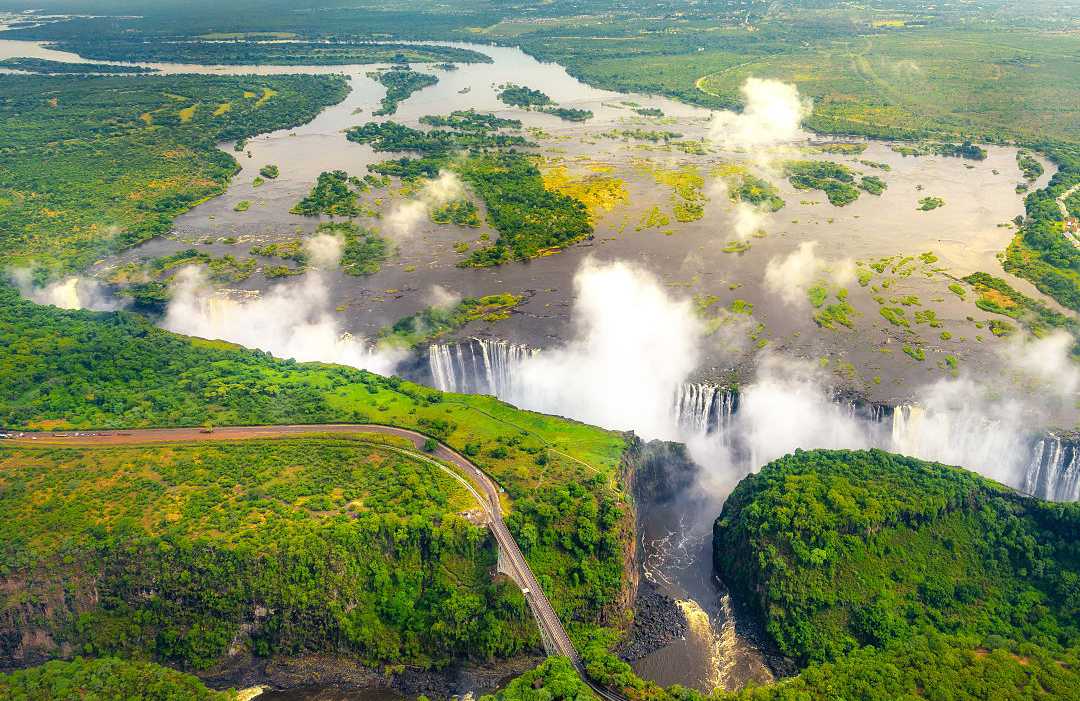
Botswana is predominantly a safari destination, with most itineraries centered around its national parks and reserves. While unique, its non-safari offerings are fewer. The Makgadikgadi Pans offer a surreal landscape of vast salt flats, meerkats, and baobab trees – a stark contrast to the Delta. The Tsodilo Hills are a UNESCO site with ancient San rock art, a significant cultural experience. However, these are often add-ons to a primary safari. Zimbabwe, on the other hand, boasts the spectacular Victoria Falls, one of the Seven Natural Wonders of the World, offering activities from bungee jumping to scenic flights. Further afield, the Great Zimbabwe Ruins provide a fascinating glimpse into a powerful medieval African kingdom. Matobo National Park is unique for its balancing rock formations, ancient rock art, and the chance to track rhinos on foot. 'Victoria Falls alone is worth the trip to Zimbabwe. The sheer power of it, plus all the activities, it’s just mind-blowing after a few days in the bush.'
Winner takeaway
- Winner: Zimbabwe
- Why: Zimbabwe offers a far richer and more diverse array of iconic non-safari attractions, including a natural wonder of the world and significant historical sites, providing a more varied travel experience.
- Who this matters for: Travelers who want to combine their wildlife experience with cultural heritage, adventure activities, or other natural wonders.
✨ Overall Vibe & Traveler Type
Botswana embodies a tranquil, exclusive safari ethos. Its vibe is one of serene luxury, where the focus is almost entirely on the pristine wilderness and its inhabitants, with minimal human impact. It attracts discerning travelers, often honeymooners or experienced safari-goers, who appreciate the quietude, impeccable service, and the feeling of having the wilderness almost to themselves. It's for those who prioritize quality over quantity and are prepared to pay for it. Zimbabwe offers a more rugged, adventurous, and resilient vibe. It appeals to travelers who appreciate value, are open to a bit more 'realness' in their experience, and want to combine intense wildlife encounters with historical sites, natural wonders like Victoria Falls, and genuine cultural interactions. It's for the explorer, the one who seeks authentic experiences and doesn't mind a few bumps in the road. 'Botswana felt like being pampered in a wildlife documentary. Zimbabwe felt like an adventure straight out of National Geographic. Both amazing, just different vibes.'
Winner takeaway
- Winner: Tie
- Why: Both destinations offer distinct, high-quality experiences that cater to different traveler archetypes, making neither inherently 'better' but rather suited to different preferences.
- Who this matters for: This category matters for everyone, as it defines the overarching experience and atmosphere of the trip. Your personal travel style will dictate which 'vibe' is a better fit.
❓ Frequently Asked Questions
Is it easy to combine Botswana and Zimbabwe on one trip?
Yes, absolutely! They are frequently combined. Many travelers fly into Victoria Falls (Zimbabwe) or Livingstone (Zambia), spend a few days, then transfer by road to Chobe National Park (Botswana), which is just an hour away. From Chobe, you can take a light aircraft into the Okavango Delta.
Which country is better for self-drive safaris?
Botswana is generally safer and more viable for self-drive between major towns, though not recommended for deep safari parks. Zimbabwe's roads can be more challenging, and self-drive within national parks is not as common or advisable as guided safaris, especially for first-timers.
What's the difference in safari vehicle experience?
Botswana's luxury camps often use high-end, open-sided 4x4s for smaller groups (4-6 people), providing an intimate experience. Zimbabwe also uses open-sided 4x4s, and while guides are exceptional, vehicles might be slightly older or carry a few more people, though still offering great viewing.
Are walking safaris possible in both countries?
While some Botswana camps offer short bush walks, Zimbabwe, particularly Mana Pools National Park, is famous for its immersive, multi-day walking safaris with highly trained armed guides. This is a key differentiator and a major highlight for adventurers in Zimbabwe.
How do the guides compare?
Both countries boast exceptionally skilled and knowledgeable guides. Botswana's guides are often highly experienced, with a focus on tracking and understanding animal behavior. Zimbabwe's guides, especially in places like Mana Pools, are world-renowned for their tracking abilities, bushcraft, and confidence in leading walking safaris, often having undergone rigorous training.
What currency should I use in each country?
In Botswana, the local currency is the Botswana Pula (BWP), but US Dollars are widely accepted in tourist areas and for safari payments. In Zimbabwe, the US Dollar (USD) is the primary currency for tourists; always carry small denominations. Local currency (ZWL) is unstable and rarely used by visitors.
Which destination is better for birdwatching?
Both are excellent, especially during the green season (November-April) when migratory birds arrive and resident birds are in breeding plumage. The Okavango Delta in Botswana is a Ramsar site, globally important for waterbirds. Zimbabwe also offers fantastic birding, particularly in its eastern highlands and around Mana Pools.
Is it possible to visit both countries on a tighter budget?
Combining them on a tighter budget is challenging but doable. Focus on shorter stays, opt for more affordable camps in Zimbabwe (e.g., self-catering in Hwange's public camps) and consider a budget-friendly safari in Chobe National Park from Kasane, possibly skipping the more expensive Okavango Delta camps in Botswana.
Ready to plan your Southern African adventure?
Get a free custom itinerary for Botswana, Zimbabwe, or both — built from real traveler insights.
🎟️ Book Tours & Experiences
Hand-picked tours and activities for both destinations — book with free cancellation
Experiences via Viator — free cancellation on most tours