How we built this comparison
This page combines traveler discussion patterns, published price ranges, flight schedules, and seasonal data to help you decide between Brazil and Colombia.
- Reviewed 50+ Reddit threads from r/travel, r/solotravel, r/Brazil, r/Colombia, etc.
- Verified costs and logistics against current booking platforms like Booking.com, Kayak, and local transport sites.
- Cross-referenced seasonal patterns and weather data from meteorological sources.
⚡ Quick Answers
⚡ The TL;DR Verdict
For most travelers seeking a well-rounded South American experience without breaking the bank, Colombia is the stronger recommendation. Its affordability, diverse offerings, and generally shorter transit times make it an accessible choice. Brazil suits those prioritizing massive events and a bigger budget, with daily costs often starting around $50-80 USD, compared to Colombia's $25-50 USD.
- Choose Brazil: You prioritize grand scale beach life, world-famous parties like Carnival, vast natural wonders, and do not mind a higher budget or longer travel times.
- Choose Colombia: You seek a more budget-friendly adventure, a mix of Caribbean beaches, Andes mountains, historic cities, and prefer a destination with shorter internal travel.
- Choose Both: For an extended trip of at least 4-6 weeks, combining both is feasible for a full South American picture, flying direct between Sao Paulo/Rio and Bogota/Medellin.
Choose Brazil
Choose Brazil if you dream of monumental experiences like the electrifying Carnival in Rio de Janeiro or exploring the vast Amazon rainforest and majestic Iguazu Falls. It's best for travelers seeking unparalleled natural beauty and a vibrant, larger-than-life cultural immersion, especially those with a more flexible budget ready for grand adventures across a truly enormous country.
Choose Colombia
Opt for Colombia if you're a budget-savvy explorer yearning for a rich tapestry of experiences, from the historic charm of Cartagena's walled city to the lush coffee plantations of the Eje Cafetero. It's ideal for travelers who appreciate diverse landscapes—Caribbean coastlines to Andean peaks—and vibrant cities like Medellín, all within a more manageable travel footprint and daily cost.
📊 Visual Scorecard
🌤 When to Visit
Average high temperatures (°C). Green = best months, orange = avoid.
Quick Comparison
| Category | Brazil | Colombia | Winner |
|---|---|---|---|
| Costs & Budget | Generally more expensive for accommodation, intercity travel, and fine dining; budget options exist but require effort. | Highly affordable for lodging, food, and local transport; good value for money across most categories. | Colombia |
| Beaches & Coastline | Iconic, extensive coastline with diverse beaches from urban party spots to secluded natural reserves. | Caribbean and Pacific coastlines offer colonial charm, national parks, and specific island getaways. | Brazil |
| Culture & History | Deep Afro-Brazilian roots, Portuguese colonial architecture, indigenous influences, and samba music. | Rich Spanish colonial heritage, diverse indigenous groups, strong coffee culture, and salsa dance traditions. | Tie |
| Nightlife & Parties | World-renowned for Carnival, samba clubs, and large-scale celebrations, particularly in major cities. | Lively salsa clubs, electronic music scenes, and diverse bar options, with a growing international presence. | Brazil |
| Nature & Adventure | Amazon Rainforest, Iguaçu Falls, Pantanal wetlands, and diverse national parks for hiking and wildlife. | Andes mountains, Amazon basin, Caribbean coast, coffee region, and diverse ecosystems for trekking and wildlife. | Brazil |
| Food & Drink | Hearty stews, diverse regional dishes, tropical fruits, and the national drink, caipirinha. | Arepas, empanadas, bandeja paisa, fresh fruit juices, and of course, coffee. | Colombia |
| Safety | Higher rates of petty crime and occasional violent crime, especially in major cities; requires constant vigilance. | Improved significantly over recent decades, but still has areas of concern; general street smarts are important. | Tie |
| Getting Around | Vast distances, domestic flights are often expensive; long-distance buses are an option but time-consuming. | Shorter distances, affordable domestic flights, and good quality bus networks for intercity travel. | Colombia |
| Solo Travel | Larger cities require higher vigilance; language barrier (Portuguese) can be a factor; strong hostel culture. | Generally welcoming and easy to navigate; widespread hostel network; Spanish is an advantage. | Colombia |
| Weather & Seasons | Tropical climate with distinct wet and dry seasons; varying regional patterns across its large landmass. | Tropical with diverse microclimates due to altitude; generally pleasant year-round in many areas. | Colombia |
💰 Costs & Budget
Brazil, due to its size and economic structure, tends to be pricier for travelers. A mid-range hotel in Rio de Janeiro, like Hotel Atlantico Rio, might cost R$300-500 ($60-100…
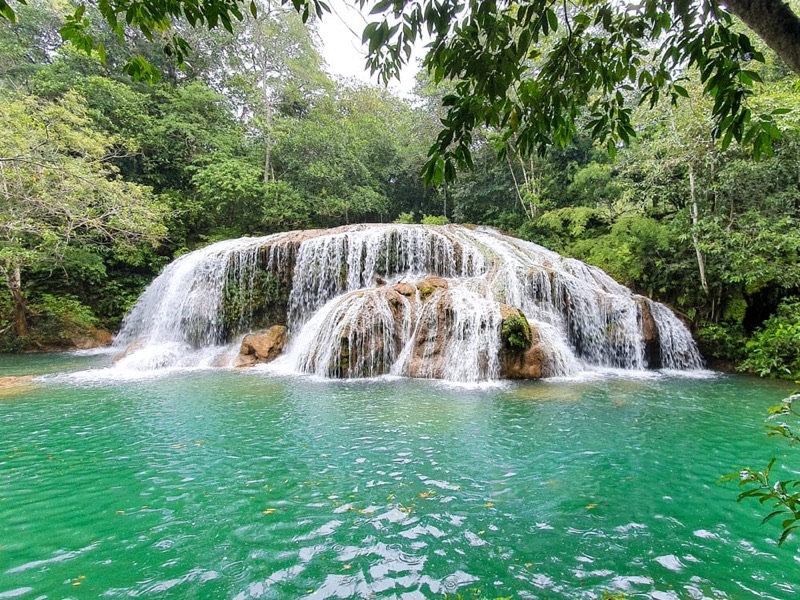
Brazil
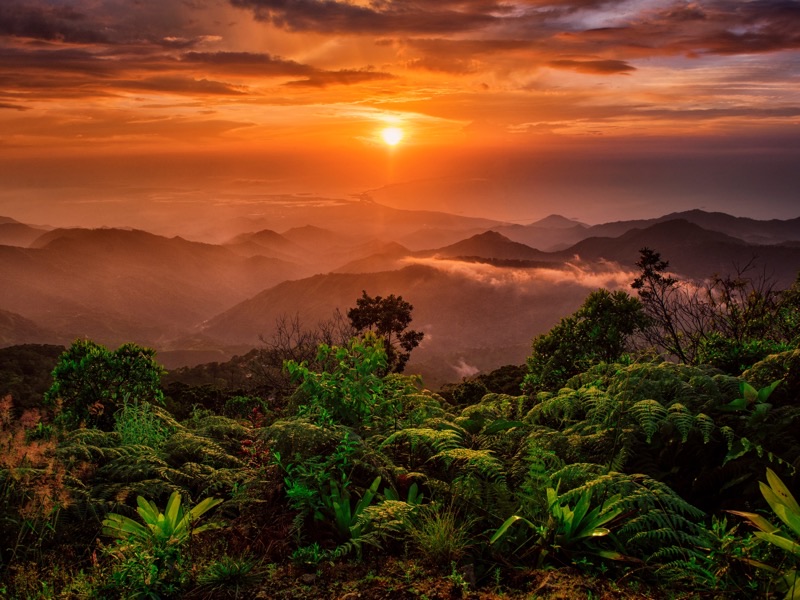
Colombia
Brazil, due to its size and economic structure, tends to be pricier for travelers. A mid-range hotel in Rio de Janeiro, like Hotel Atlantico Rio, might cost R$300-500 ($60-100 USD) per night. Meals at a decent restaurant in cities can run R$50-100 ($10-20 USD) per person, and domestic flights, such as Rio to Salvador, often cost R$400-800 ($80-160 USD) one-way. Hostels in smaller towns like Paraty might be R$70-120 ($14-24 USD), showing that budget travel is possible but requires careful planning and sticking to local eats like 'prato feito' for R$20-30 ($4-6 USD).
Colombia offers a much more budget-friendly experience. A well-located mid-range hotel in Medellín, for example, The Click Clack Hotel Medellin, might cost COP$250,000-400,000 ($60-100 USD) per night. Excellent local meals, like a 'bandeja paisa' or 'ajiaco', are easily found for COP$15,000-30,000 ($4-8 USD). Domestic flights, such as Bogotá to Cartagena, can be found for COP$150,000-300,000 ($40-80 USD) if booked in advance. Hostels in areas like El Poblado in Medellín often start around COP$40,000-60,000 ($10-15 USD) per night, making extended stays very manageable. Colombia wins this easily for anyone watching their wallet.
- Winner: Colombia
- Why: Colombia provides significantly better value across all major spending categories, making it a better choice for budget-conscious travelers.
- Who this matters for: Travelers on a tight budget or those wanting to extend their trip duration without increasing daily spend.
🏖️ Beaches & Coastline
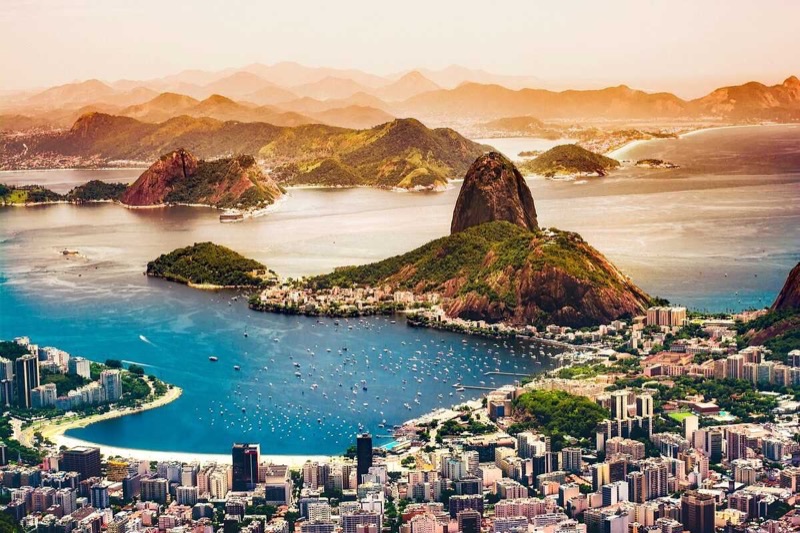
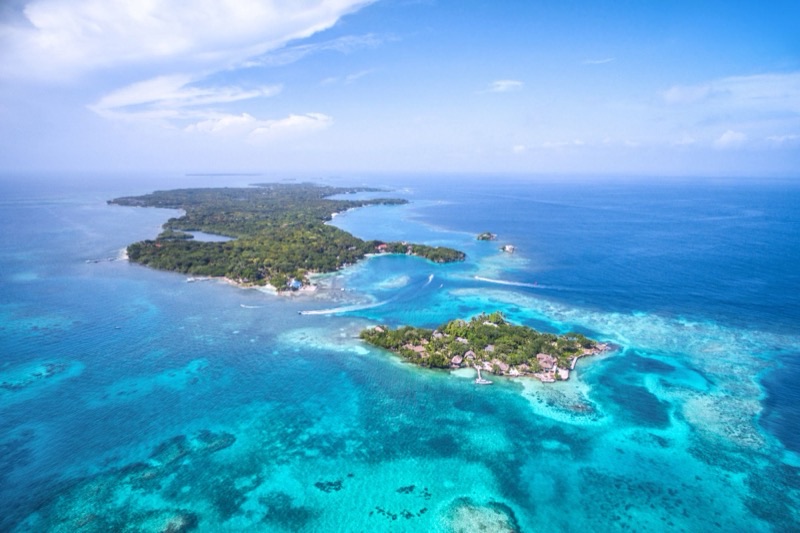
Brazil's coastline is legendary, extending over 7,000 kilometers, offering an unparalleled variety of beach experiences. Rio de Janeiro alone boasts Copacabana and Ipanema,…
Brazil
Colombia
Brazil's coastline is legendary, extending over 7,000 kilometers, offering an unparalleled variety of beach experiences. Rio de Janeiro alone boasts Copacabana and Ipanema, sprawling urban beaches known for their energy, kiosks, and people-watching. Further north in Bahia, Salvador offers Praia do Porto da Barra, a calmer bay, while Trancoso features Praia dos Nativos, a more exclusive, serene escape. The Northeast region, with places like Jericoacoara, provides immense sand dunes and natural lagoons, perfect for relaxation and water sports. These beaches are often large, open, and sometimes have strong currents, with amenities ranging from basic vendors to luxury beach clubs. A typical caipirinha on a Rio beach costs R$20-35 ($4-7 USD).
Colombia has its own appealing coastlines, primarily on the Caribbean side. Cartagena offers beaches like Bocagrande, which are more urban and developed, though sometimes crowded. The true gems are found further out, such as the Rosario Islands, accessible by boat (tours from COP$150,000-250,000, $40-60 USD), providing clear waters and coral reefs. Tayrona National Natural Park, near Santa Marta, has some of the most beautiful, undeveloped beaches like Cabo San Juan, requiring a trek to reach. The Pacific coast is less developed for tourism but offers unique Afro-Colombian culture and whale watching. While Colombia's beaches are lovely, they do not quite match the sheer scale, fame, and diversity of Brazil's coastal offerings. Brazil takes this for its sheer scale and icon status.
- Winner: Brazil
- Why: Brazil offers a greater variety of iconic, expansive, and culturally significant beaches, from urban centers to remote paradises.
- Who this matters for: Beach enthusiasts, surfers, sunbathers, and those seeking vibrant beach culture.
🗿 Culture & History
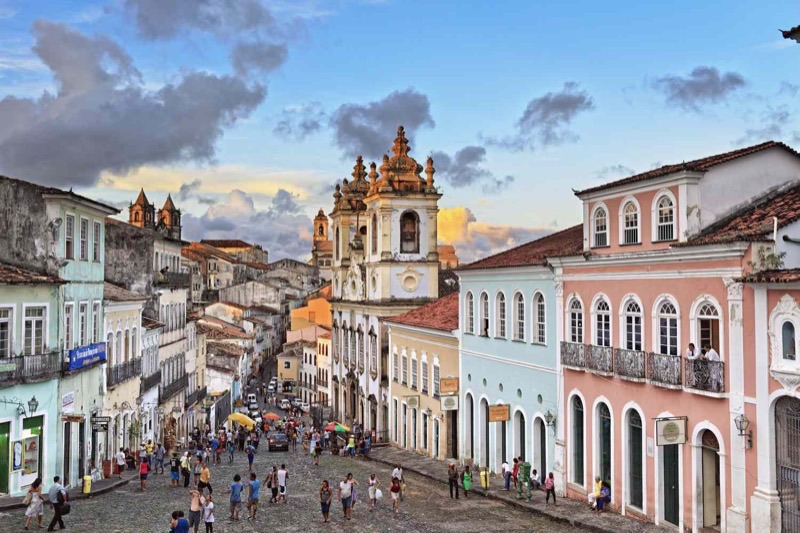
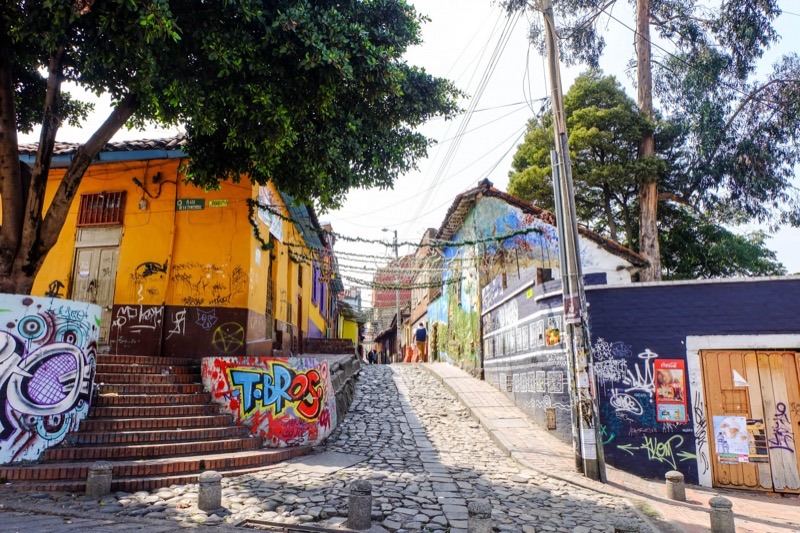
Brazil's cultural landscape is shaped by a complex blend of indigenous, African, and European influences. Salvador, Bahia, is a prime example, with its Pelourinho district (a…
Brazil
Colombia
Brazil's cultural landscape is shaped by a complex blend of indigenous, African, and European influences. Salvador, Bahia, is a prime example, with its Pelourinho district (a UNESCO site) displaying colorful colonial architecture, terreiros of Candomblé (Afro-Brazilian religion), and capoeira circles. The historic towns of Minas Gerais, like Ouro Preto and Tiradentes, showcase well-preserved 18th-century baroque churches and gold mining history. Rio de Janeiro embodies modern Brazilian identity with samba schools, bossa nova, and Carnival celebrations that attract millions. Indigenous cultures are still present, particularly in the Amazon region, offering a glimpse into ancient traditions. Museum entry usually costs R$10-30 ($2-6 USD).
Colombia boasts a rich historical narrative evident in its well-preserved colonial cities. Cartagena's walled city (another UNESCO site) is a labyrinth of cobblestone streets, vibrant plazas, and impressive fortresses like Castillo San Felipe de Barajas (entry COP$27,000, $7 USD). Bogotá's La Candelaria district features colonial buildings, street art, and museums such as the Museo del Oro (Gold Museum, entry COP$4,000, $1 USD). The Coffee Triangle region offers insights into traditional Colombian coffee production and the Paisa culture. Indigenous groups like the Arhuaco and Wayuu maintain their traditions, particularly in the Sierra Nevada and La Guajira regions. Both nations offer deep, distinct cultural experiences, making this category a tie for travelers seeking historical immersion.
- Winner: Tie
- Why: Both nations offer distinct and profound cultural and historical experiences, equally rich and deserving of exploration.
- Who this matters for: History buffs, anthropologists, art lovers, and those interested in diverse ethnic traditions.
🎉 Nightlife & Parties
Brazil's reputation for nightlife is primarily driven by its massive, globally recognized events like Carnival, particularly in Rio de Janeiro and Salvador. During Carnival, the…
Brazil

Colombia
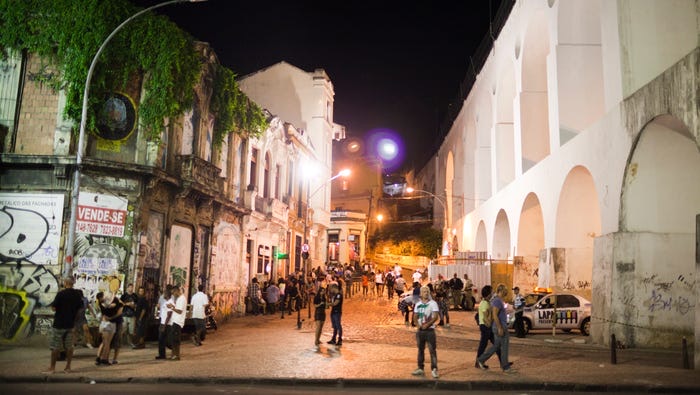
Brazil's reputation for nightlife is primarily driven by its massive, globally recognized events like Carnival, particularly in Rio de Janeiro and Salvador. During Carnival, the streets become a single, nonstop party with 'blocos' (street parties) and elaborate samba parades. Beyond Carnival, cities like Rio offer Lapa, a district filled with samba clubs (like Rio Scenarium, entry R$50-80, $10-16 USD), bars, and street vendors, where music plays until dawn. São Paulo has a more sophisticated, diverse nightlife with electronic music clubs, upscale lounges, and live music venues catering to various tastes. Smaller towns like Florianópolis also have active party scenes, especially during summer. The energy and scale of Brazilian parties are difficult to match elsewhere.
Colombia's nightlife is equally energetic but often on a smaller, more localized scale. Medellín is known for its electronic music scene and lively bars in El Poblado and Provenza. Bogotá offers a range of options from Zona T's upscale clubs to the more bohemian La Candelaria. Cartagena provides a tropical party atmosphere with rooftop bars and salsa clubs. Cali is known as the world's salsa capital, with dedicated 'salsotecas' (like Topa Tolondra, entry COP$10,000-20,000, $3-5 USD) where locals dance until the early hours. While Colombia has excellent nightlife, it does not possess the same global 'Carnival' draw or the sheer volume of options found in Brazil's larger cities. Brazil wins for its iconic parties and sheer scale.
- Winner: Brazil
- Why: Brazil hosts some of the biggest and most famous parties in the world, like Carnival, offering an unmatched scale of celebration.
- Who this matters for: Party-goers, festival enthusiasts, and anyone looking for grand, memorable nightlife experiences.
🏞️ Nature & Adventure
Brazil is home to some of the planet's most significant natural wonders. The Amazon Rainforest, a massive ecosystem, offers unparalleled biodiversity, with riverboat tours from…

Brazil

Colombia
Brazil is home to some of the planet's most significant natural wonders. The Amazon Rainforest, a massive ecosystem, offers unparalleled biodiversity, with riverboat tours from Manaus (starting around R$1,500-3,000, $300-600 USD for multi-day trips) providing chances to spot pink river dolphins, jaguars, and a multitude of bird species. Iguaçu Falls, on the border with Argentina, is an immense waterfall system that is truly awe-inspiring (entry R$88, $17 USD). The Pantanal, the worlds largest tropical wetland, is a prime spot for wildlife viewing, often considered superior to the Amazon for animal sightings due to its open landscape. Chapada Diamantina offers stunning table-top mountains, caves, and waterfalls for trekkers. The scale and variety of Brazil's natural landscapes are enormous.
Colombia also boasts incredible natural diversity, from the Andean peaks to its own section of the Amazon. Tayrona National Natural Park combines Caribbean beaches with jungle trails. The Cocora Valley, near Salento, is famous for its towering wax palm trees, suitable for day hikes. The Caño Cristales 'river of five colors' is a seasonal phenomenon, a truly unique natural attraction. The Amazon in Colombia, accessible from Leticia, provides a more intimate rainforest experience. While Colombia offers impressive nature, Brazil's iconic landmarks like Iguaçu Falls and the sheer scale of the Amazon and Pantanal give it an edge. Brazil takes this for its globally recognized natural landmarks.
- Winner: Brazil
- Why: Brazil contains globally recognized natural wonders like the Amazon and Iguaçu Falls, offering unparalleled scale and iconic status.
- Who this matters for: Nature photographers, wildlife enthusiasts, hikers, and those seeking awe-inspiring landscapes.
🍽️ Food & Drink
Brazilian cuisine is hearty and diverse, heavily influenced by indigenous, African, and Portuguese traditions. Feijoada, a rich black bean stew with various cuts of pork and beef,…
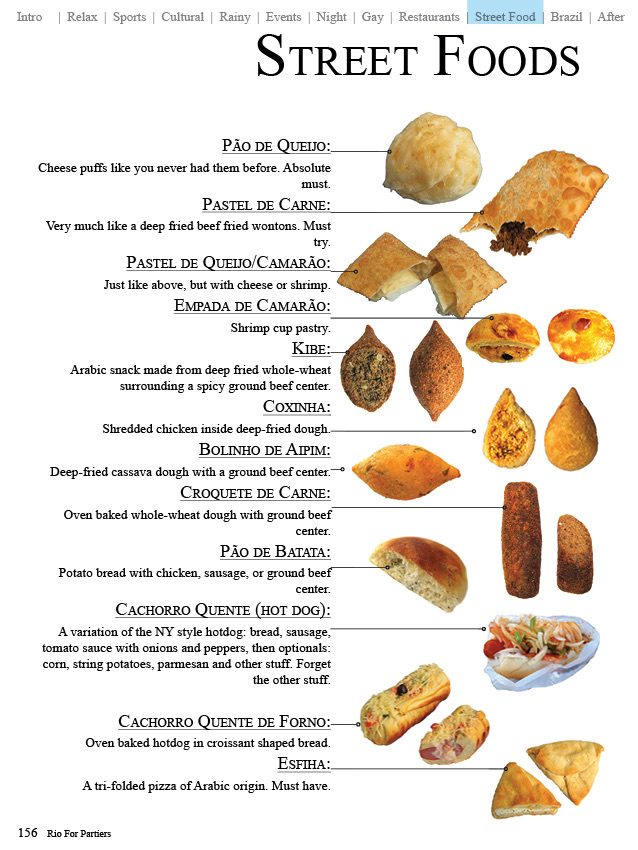
Brazilian cuisine is hearty and diverse, heavily influenced by indigenous, African, and Portuguese traditions. Feijoada, a rich black bean stew with various cuts of pork and beef, is considered the national dish, typically eaten on Saturdays. Churrasco (barbecue) is a staple, with rodízio-style restaurants (all-you-can-eat) common, costing R$80-150 ($16-30 USD). Street food like 'acarajé' (bean fritters) in Bahia or 'pão de queijo' (cheese bread) are popular. The variety of tropical fruits and fresh juices is incredible. The national drink is the caipirinha, a potent mix of cachaça, lime, and sugar. While the food is good, it can be heavy, and vegetarian options sometimes require more searching.
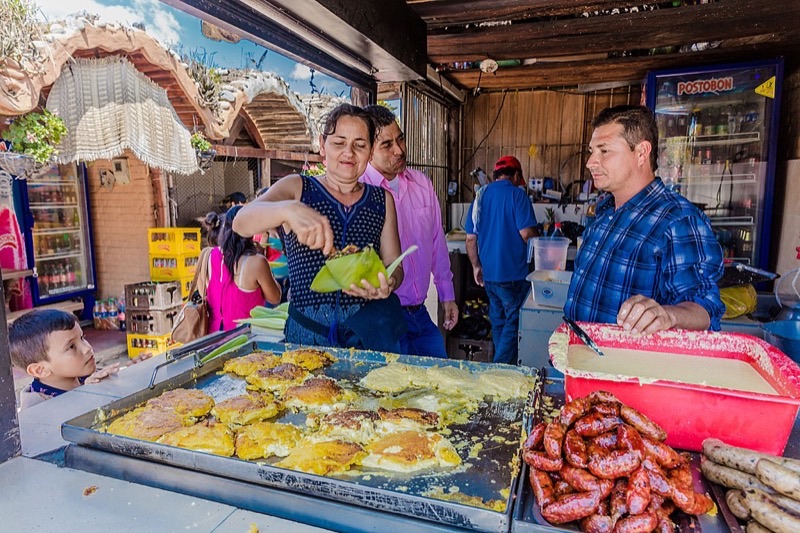
Colombian food is comforting and generally lighter, focusing on simple, fresh ingredients. 'Arepas' (corn cakes) are a breakfast staple, served plain, with cheese, or as a base for other foods. 'Bandeja paisa' is a massive platter of rice, beans, ground meat, fried pork belly, chorizo, plantains, and a fried egg, a true feast for around COP$25,000-40,000 ($6-10 USD). 'Empanadas' (fried pastries with fillings) are common street snacks. Colombian coffee is world-famous, and visiting a coffee farm in the Zona Cafetera (tours often COP$40,000-80,000, $10-20 USD) is a key experience. Fresh fruit juices are also abundant and inexpensive. The food is less complex than Brazilian but consistently satisfying and generally more suitable for daily eating. Colombia wins for its consistent quality, variety, and accessible everyday dishes.
- Winner: Colombia
- Why: Colombia offers a broader range of consistently delicious and accessible everyday dishes, with world-renowned coffee, suitable for most palates.
- Who this matters for: Foodies, coffee lovers, and travelers who appreciate diverse and flavorful comfort food.
🛡️ Safety
Brazil has a reputation for high crime rates, particularly in its larger cities like Rio de Janeiro and São Paulo. Petty theft, like pickpocketing and phone snatching, is a common…
Brazil has a reputation for high crime rates, particularly in its larger cities like Rio de Janeiro and São Paulo. Petty theft, like pickpocketing and phone snatching, is a common issue, especially in crowded tourist areas or on public transport. More serious crimes, including armed robberies, can occur, especially in less tourist-frequented zones or at night. Travelers must exercise constant vigilance, avoid displaying valuables, and be aware of their surroundings. Favela tours, while offering unique insights, should only be done with reputable, local guides. The perception of safety can vary greatly by neighborhood and time of day, requiring careful planning and local advice. Do not resist if robbed; items are replaceable.
Colombia has made significant strides in improving safety over the past two decades. Major cities like Medellín and Bogotá are much safer than they once were, though petty crime like pickpocketing is still a concern in crowded areas. 'Paseo millonario' (express kidnapping) is a risk, especially if using unauthorized taxis or accepting drinks from strangers. Certain rural areas, particularly those near borders or with a history of conflict, are still advised against travel. However, tourist zones in Cartagena, Medellín, and the Coffee Triangle are generally safe during the day. Following basic travel safety precautions, like not walking alone at night and using ride-sharing apps, significantly mitigates risks. Both countries require a similar level of awareness and caution, making safety a tie.
- Winner: Tie
- Why: Both countries require a similar level of vigilance and adherence to safety precautions, with risks concentrated in specific areas.
- Who this matters for: All travelers, especially solo travelers and those with limited travel experience in Latin America.
🚌 Getting Around
Brazil's sheer size makes intercity travel a significant consideration. Flying is often the most practical option for covering large distances, but domestic flights can be…
Brazil's sheer size makes intercity travel a significant consideration. Flying is often the most practical option for covering large distances, but domestic flights can be expensive, especially if not booked far in advance. For example, a flight from Rio de Janeiro to Manaus can easily cost R$700-1500 ($140-300 USD) or more. Long-distance buses are a more budget-friendly alternative but can involve journeys of 20+ hours between major cities, like Rio to Foz do Iguaçu. Within cities, public transport like metros in Rio and São Paulo are efficient, but buses are also widely used. Ride-sharing apps are available and generally safe. Travel logistics demand planning due to the country's scale.
Colombia is geographically smaller, making internal travel much more manageable. Domestic flights are reasonably priced and common, allowing quick connections between Bogotá, Medellín, Cartagena, and Cali for COP$150,000-300,000 ($40-80 USD). The bus network is extensive and offers good quality services for shorter to medium distances, often with comfortable 'premium' options. For example, a bus from Medellín to Salento takes around 7-8 hours and costs COP$50,000-70,000 ($13-18 USD). Within cities, public transport like Medellín's metro (COP$2,880, $0.75 USD per ride) is excellent, and ride-sharing apps are prevalent. The convenience and cost-effectiveness of getting around in Colombia significantly reduce travel stress. Colombia wins for easier, more affordable internal movement.
- Winner: Colombia
- Why: Colombia offers more affordable and efficient internal travel options, with shorter distances between key destinations.
- Who this matters for: Travelers with limited time, those on a budget, and individuals who prefer less time spent in transit.
🚶♀️ Solo Travel
Solo travel in Brazil is definitely possible but often comes with a higher need for awareness, especially in major urban centers. The language barrier (Portuguese) can be more…
Solo travel in Brazil is definitely possible but often comes with a higher need for awareness, especially in major urban centers. The language barrier (Portuguese) can be more pronounced for Spanish speakers or those with no Romance language background, though many in tourist-facing roles speak some English. The country has a robust hostel culture, making it easy to meet other travelers, particularly in places like Rio, Florianópolis, and Salvador. Safety is a primary concern; avoiding walking alone at night, not displaying valuables, and being cautious with public transport are crucial. Despite the challenges, many solo travelers find Brazil an immensely rewarding experience, particularly during large events where group dynamics form naturally.
Colombia is often cited as a more accessible and welcoming destination for solo travelers. The Spanish language is widely spoken, which is a major advantage for many. The country boasts an excellent hostel network in all major tourist hubs, making it simple to connect with fellow backpackers and join tours. Cities like Medellín and Cartagena have well-established tourist routes and neighborhoods that feel relatively secure. Locals are generally friendly and helpful, often willing to engage in conversation or offer directions. While safety precautions are still necessary, the overall sentiment among solo travelers is that Colombia is easier to navigate and feels more comfortable than Brazil. Colombia wins for its ease of navigation and welcoming environment for individuals.
- Winner: Colombia
- Why: Colombia offers a more approachable and comfortable experience for solo travelers, with fewer language barriers and a generally more relaxed atmosphere.
- Who this matters for: First-time solo travelers, those looking for easy social connections, and individuals less comfortable with strong language barriers.
☀️ Weather & Seasons
Brazil's weather varies significantly due to its immense size, spanning several climate zones. The majority of the country has a tropical climate. The South (Rio, São Paulo)…
Brazil's weather varies significantly due to its immense size, spanning several climate zones. The majority of the country has a tropical climate. The South (Rio, São Paulo) experiences summer from December to March, which is hot and humid with frequent rains, and a cooler, drier winter from June to September. The Northeast (Salvador, Fortaleza) is hot year-round with a rainy season usually from April to July. The Amazon has a perpetual wet season, with heaviest rains from December to May. Visiting Iguaçu Falls is often best during the drier, cooler months of May to September. Planning a trip requires understanding regional climate patterns to avoid heavy rain or extreme heat, especially when moving between different areas. For example, Rio's Carnival in February is often very hot and humid.
Colombia's climate is primarily tropical, but its diverse topography creates a range of microclimates. Cities like Medellín benefit from an 'eternal spring' climate due to their elevation, with consistent mild temperatures (around 22-28°C / 72-82°F) year-round. Bogotá, at a higher altitude, is cooler (10-19°C / 50-66°F) and can be rainy. The Caribbean coast (Cartagena, Santa Marta) is hot and humid year-round, with a dry season from December to April and a wetter season from May to November, though rain often comes in short bursts. The Coffee Region has pleasant, mild temperatures with occasional rainfall. This climatic diversity means that travelers can usually find good weather somewhere in Colombia at any time of year by adjusting their itinerary. Colombia wins for its more consistent and generally pleasant year-round weather in key tourist areas.
- Winner: Colombia
- Why: Colombia offers a wider range of pleasant microclimates, making it easier to find good weather in different regions year-round, without extreme seasonal variations.
- Who this matters for: Travelers sensitive to extreme heat or humidity, and those seeking consistent mild weather for outdoor activities.
🎯 The Decision Framework
Choose Brazil If…
- You dream of celebrating Carnival in Rio or Salvador.
- You want to see the immense power of Iguaçu Falls from the Brazilian side.
- You want to explore vast stretches of the Amazon Rainforest and its wildlife.
- You are looking for world-famous beaches with a buzzing atmosphere like Copacabana.
- You are interested in the deep Afro-Brazilian culture of Bahia.
- You are comfortable with a higher daily budget (e.g., $50-100+ USD).
- You appreciate samba music and late-night dance clubs.
- You have ample time for longer internal travel or can afford domestic flights.
Choose Colombia If…
- You are operating on a tighter budget (e.g., $25-50 USD per day).
- You want to explore well-preserved Spanish colonial cities like Cartagena.
- You are a coffee lover and want to visit a coffee farm in the Zona Cafetera.
- You prefer easier and more affordable internal travel between destinations.
- You are looking for a lively salsa dancing scene, especially in Cali.
- You appreciate a destination that offers pleasant, consistent weather year-round.
- You want to practice your Spanish and connect with friendly locals.
- You are interested in colorful street art and bohemian neighborhoods like La Candelaria.
📅 Sample Itineraries
Weekend in Rio de Janeiro (3 Days)
💡 Purchase the 'Rio Card' for public transport to save time and money on buses and the metro, which costs about $1-2 per ride.
Weekend in Bogotá (3 Days)
💡 For local transport in Bogotá, buy a Tullave card for around $1.50 and load it with credit; rides on the TransMilenio bus system cost about $0.75.
One Week in Brazil (7 Days)
💡 Book internal flights in advance for better prices, often saving $50-100 per segment, especially for popular routes like Rio to Foz do Iguaçu.
One Week in Colombia (7 Days)
💡 For domestic flights within Colombia, use low-cost carriers like Viva Air or Wingo. Booking a few weeks ahead can secure flights for as low as $30-50 for short routes.
❓ Frequently Asked Questions
What is the typical daily budget difference between Brazil and Colombia?
Brazil generally requires a higher budget, with a comfortable backpacker or mid-range traveler often spending $50-80 USD per day. Colombia is significantly more affordable, with similar comfort levels achievable for $25-50 USD per day, including accommodation, food, and local transport.
Which country is better for short trips, considering travel time from North America?
Colombia is better for shorter trips. Direct flights from major US cities to Bogotá or Medellín typically range from 4-6 hours. Flights to São Paulo or Rio de Janeiro in Brazil are usually 8-10 hours or longer, making weekend trips impractical and even 7-day trips feel rushed due to travel time.
Is the food very different, and which has better options for vegetarians?
Yes, the food is quite different. Brazil offers hearty, meat-heavy dishes like feijoada and churrasco, with great tropical fruits. Colombia features more comfort food like arepas, empanadas, and the famous bandeja paisa. Both have vegetarian options, but Colombia might offer slightly more readily available vegetable-based sides and soups in everyday eateries.
How do the famous beaches compare between Brazil and Colombia?
Brazil's beaches, like Copacabana and Ipanema, are massive, urban, and globally famous for their scale and energy. Colombia's Caribbean beaches, such as those in Tayrona National Park or the Rosario Islands, are typically smaller, often more secluded, and known for clearer waters and coral reefs. Brazil wins for sheer iconic status and variety.
What are the language differences and impact on travel?
Brazil speaks Portuguese, which can be a significant barrier for those only knowing Spanish or English. While some tourist areas have English speakers, it is not widespread. Colombia speaks Spanish, which is widely understood by travelers and generally easier for English speakers to pick up basics, enhancing local interactions.
Which country has more impressive natural attractions?
Brazil holds the edge for globally recognized natural attractions due to its sheer scale. It hosts major parts of the Amazon Rainforest, the Pantanal wetlands for wildlife, and the immense Iguaçu Falls. Colombia has the unique Cocora Valley and impressive Caribbean coastlines, but Brazil's natural wonders are on a grander scale.
Is public transport reliable in both countries?
Within major cities, both countries have reliable public transport networks, with metros in Rio, São Paulo, and Medellín. For intercity travel, Colombia generally has better and more affordable bus networks over shorter distances. Brazil's vast distances make long-distance bus travel very time-consuming, pushing many towards more expensive domestic flights.
When is the best time to visit each country to avoid rain?
For Brazil, May to September offers cooler, drier weather in the south (Rio, São Paulo) and is good for Iguaçu Falls. For Colombia, the Caribbean coast is driest from December to April, while Medellín enjoys an 'eternal spring' year-round. Bogotá is cooler but can be rainy any time. Due to diverse climates, good weather can be found somewhere in Colombia at any time.
Ready to plan your South America trip?
Get a free custom itinerary for Brazil, Colombia, or both — built from real traveler insights.
👥 Travelers Also Compared
🎟️ Book Tours & Experiences
Hand-picked tours and activities for both destinations — book with free cancellation
Experiences via Viator — free cancellation on most tours