How we built this comparison
This page synthesizes traveler discussion patterns from Reddit, published price data, real transit costs, and seasonal information to make the Busan vs Jeju decision clearer.
- Reviewed Reddit threads from r/koreatravel, r/travel, r/KoreaTravelAdvice, and r/solotravel comparing these two destinations.
- Checked numeric claims for accommodation, food, and transit against 2025–2026 real prices.
- Fact-checked transport times and costs against official KTX and airline schedules.
⚡ The TL;DR Verdict
Choose Busan for city energy, world-class seafood, great nightlife, and zero logistics headaches — no car needed, beach plus skyline in one place. Choose Jeju for jaw-dropping nature, volcano hikes, and an island escape — but budget for a rental car and 3–4 days minimum.
Choose Busan
Travelers who want top-tier Korean food, urban beaches, lively nightlife, and effortless navigation by subway. Perfect 2–3 day add-on to any Seoul trip.
Choose Jeju
Nature lovers, hikers, and beach purists willing to rent a car and spend 3–4+ days exploring Korea’s most dramatic island at their own pace.
Quick Comparison
| Category | 🏭 Busan | 🏛 Jeju Island | Edge |
|---|---|---|---|
| Daily Budget (mid-range) | 120,000–180,000 KRW ($88–133) | 180,000–260,000 KRW ($133–192 incl. car) | Busan |
| Getting There from Seoul | KTX train 2h15m, ~60,000 KRW ($44) | Flight 1h, 50,000–150,000 KRW ($37–110) | Busan |
| Getting Around | Excellent subway + bus network | Car rental essential (50,000–80,000 KRW/day) | Busan |
| Food Scene | Jagalchi seafood market, dwaeji gukbap (pork soup), raw fish | Black pork (heukdwaeji), abalone, hallabong tangerines | Tie |
| Beaches | Haeundae and Gwangalli — busy urban beaches with great vibe | Hyeopjae and Hamdeok — pristine turquoise and white sand | Jeju |
| Nature & Outdoors | Taejongdae cliffs, Geumjeong Fortress hike | Hallasan (1,950m), Seongsan Ilchulbong, Manjanggul lava cave | Jeju |
| Nightlife | Gwangalli Beach bars, Seomyeon nightlife district | Quiet — island shuts down early outside resorts | Busan |
| Cultural Sights | Gamcheon Culture Village, Haedong Yonggungsa Temple | Haenyeo (diving women) culture, Seongeup Folk Village | Tie |
| Best Season | Summer (beach), Spring/Fall (sightseeing) | Spring, Fall, or Winter (snow on Hallasan) | Tie |
| Days Needed | 2–3 days | 3–5 days | Busan |
| Solo Travel Ease | Very easy — great transit, English signage | Moderate — car required, language barrier outside resorts | Busan |
🍕 Food & Dining
Both Busan and Jeju punch above their weight in Korean food culture, but in completely different ways. Busan is Korea’s seafood capital — Jagalchi Fish Market is the largest in the country, sprawling across a full harbor-front building where you pick live fish downstairs and have it prepared upstairs for around 30,000–50,000 KRW ($22–37). The city’s signature dwaeji gukbap (pork rice soup) runs just 10,000 KRW ($7) at casual spots, and Gwangan Bridge views from a street food tent elevate everything.
Jeju has its own culinary identity built around three things: Jeju black pork (heukdwaeji), abalone (jeonbok), and hallabong tangerines. A black pork BBQ dinner for two will run 60,000–80,000 KRW ($44–59), noticeably pricier than mainland pork. Haenyeo (female divers) still harvest abalone and sea urchin fresh from the ocean daily — it’s one of the most authentic culinary experiences in Korea.
For more on Busan's incredible food scene, see our Busan milmyeon guide and Gamcheon Village cafes. Jeju's coffee culture is equally distinctive — read our Jeju cafe guide and Jeju black pork BBQ picks.
🏖 Beaches
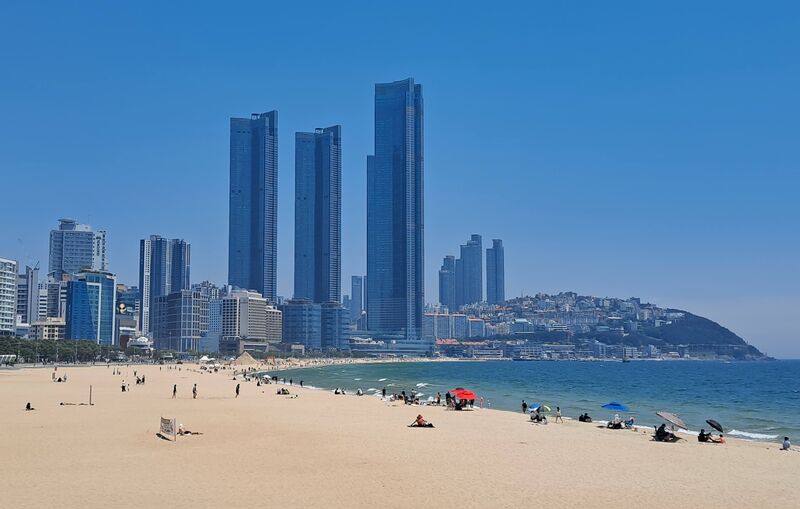
This is where the comparison gets interesting. Busan has two world-class urban beaches: Haeundae (1.5km of wide golden sand, backed by skyscrapers and lined with restaurants) and Gwangalli (smaller, hipper, with the lit Gwangan Bridge as a backdrop). Both are easily accessible by subway. In July-August, Haeundae draws 1.5 million visitors on a single weekend — it’s a scene unto itself, packed with beach tents, food vendors, and nightlife.
Jeju’s beaches require a car to reach, but the payoff is real. Hyeopjae Beach on the west coast has crystalline turquoise water and white sand backed by lava rock — looks more Caribbean than Korean. Hamdeok Beach in the northeast is one of Korea’s most Instagram-worthy, with shallow clear water and volcanic sea stacks. Jungmun is the big resort beach on the south coast. None of these face Seoul-scale crowds.
🌿 Nature & Outdoors
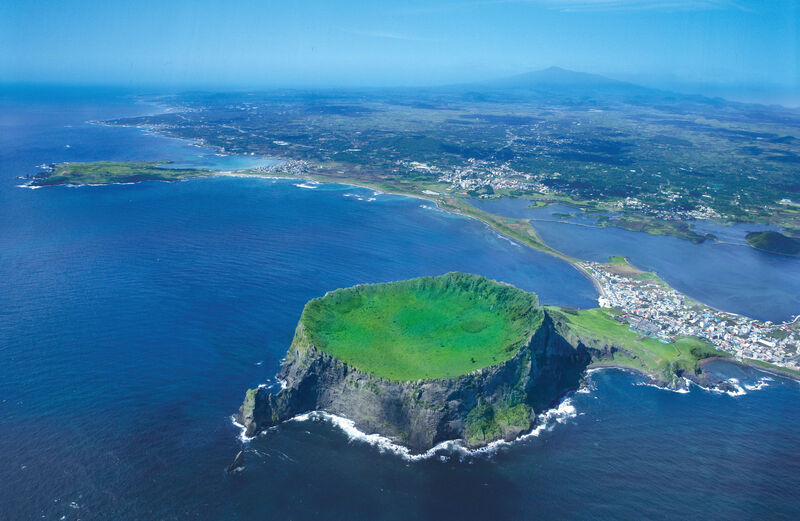
This one isn’t close. Jeju is built on a dormant shield volcano (Hallasan, 1,950m) and the entire island is a UNESCO World Heritage Site. The Hallasan summit hike via the Gwaneumsa trail is 9km one-way and takes a full day. The Seongsan Ilchulbong (Sunrise Peak) is a UNESCO-listed tuff cone you can climb in 30 minutes for one of Korea’s most iconic views. Manjanggul is one of the world’s largest lava tube caves, 7.4km long. Jeju also has dozens of oreum (parasitic volcanic cones) scattered across the island for easy hikes with panoramic views.
Busan has its own outdoors highlight reel. Taejongdae cliffs on Yeongdo Island offer dramatic sea views with a walking trail. Geumjeong Mountain Fortress (the longest in Korea at 18km of walls) is a half-day hike with city views. And the coastal walk from Igidae to Oryukdo is genuinely beautiful. But it’s all city-scale nature, not island-scale.
🚃 Getting Around
This is the single biggest practical difference between the two destinations. Busan has one of South Korea’s best subway systems: 4 lines covering virtually every tourist area, fares at 1,500 KRW (~$1.10) per ride, clean and punctual. Buses fill in the gaps. You never need a taxi unless going to a very specific spot at night. No car, no stress, no logistics.
Jeju is the opposite. The island has buses, but r/koreatravel threads are unanimous: they’re infrequent, don’t reach key spots, and make day-tripping by public transit genuinely frustrating. Rental cars cost 50,000–80,000 KRW/day ($37–59) for a compact. You need a valid International Driving Permit (IDP) issued in your home country before departure — can’t get one in Korea. Scooters and bikes cover short distances but won’t get you across the island.
💰 Cost Comparison
Busan is genuinely cheaper, and the gap is wider than it looks on paper. Here’s a realistic daily budget breakdown for a mid-range solo traveler:
| Expense | 🏭 Busan | 🏛 Jeju |
|---|---|---|
| Hostel dorm | 25,000–40,000 KRW/night | 30,000–50,000 KRW/night |
| Mid-range hotel | 80,000–150,000 KRW/night | 100,000–200,000 KRW/night |
| Casual meal | 8,000–15,000 KRW | 10,000–18,000 KRW |
| Sit-down dinner | 20,000–40,000 KRW | 30,000–60,000 KRW (black pork BBQ) |
| Transit per day | 5,000–10,000 KRW (subway) | 50,000–80,000 KRW (car rental) |
| Daily total (mid-range) | 120,000–180,000 KRW ($88–133) | 180,000–260,000 KRW ($133–192) |
The car rental is the big number in Jeju. Even if you split it with a travel companion, it adds 25,000–40,000 KRW/person per day. Jeju attraction fees (Hallasan is free, but Manjanggul cave is 4,000 KRW, Seongsan 5,000 KRW) add up too. Accommodation on the island is pricier, especially at popular resort areas in the south.
🎉 Nightlife & Entertainment
Busan wins this one without a fight. The Gwangalli Beach strip is one of Korea’s best bar scenes — dozens of open-air bars and rooftop venues with the illuminated Gwangan Bridge as a backdrop, busy until 2–3am in summer. Seomyeon is Busan’s nightlife district — dense with bars, clubs, and pojangmacha (street food tents) in every direction. The city has a younger, more local crowd than Hongdae in Seoul, with lower prices and less of a tourist bubble.
Jeju’s nightlife is minimal. Jeju City (the north) has a small bar and club scene near Shinchon neighborhood, and the Jungmun resort area has hotel bars in the south. But the island is fundamentally a nature destination — most visitors are families and couples, most restaurants and bars close by 10pm outside of resort zones. The evening activity is dinner and early sleep for next morning’s hike.
⛤️ Cultural Sights
Busan’s cultural highlight is Gamcheon Culture Village — a hillside maze of pastel-painted houses built by Korean War refugees, now transformed into an art installation with murals, tiny museums, and cafes. It’s genuinely beautiful and photogenic, not a Disneyfied tourist trap. Haedong Yonggungsa Temple is Korea’s only coastal temple, set on dramatic sea cliffs — one of the most dramatic temple locations in the country. The UN Memorial Cemetery is the only one of its kind in the world and oddly moving even for non-history buffs.
Jeju’s cultural standout is the haenyeo tradition — female free-divers who harvest seafood without equipment, a UNESCO-listed intangible cultural heritage practice still alive on the island. You can watch haenyeo demonstrations and eat their catch. Seongeup Folk Village is a preserved traditional village with centuries-old stone buildings. Jeju Stone Park covers the island’s volcanic myth and stonework. Jeju also has Harubang stone statues (the island’s symbol) scattered everywhere.
🌸 Best Time to Visit
For Busan: peak beach season is July–August (hot, humid, Haeundae packs out completely). Spring (April–May) and fall (September–October) offer the best balance of good weather and manageable crowds. Cherry blossoms hit Busan’s Nakdong River and Gyeongju (a short day trip away) in late March to mid-April. Winter (December–February) is cold but not brutal, and the city is far less crowded — a good time for food and temple visits.
For Jeju: spring (March–May) is the most popular, with cherry blossoms blooming a week or two earlier than the mainland due to the island’s milder climate. Fall (September–October) offers clear skies and foliage on Hallasan. Winter has its own appeal — Hallasan gets snow, creating an almost surreal snowy volcanic landscape. Summer (July–August) is busy and humid, with typhoon risk July–September. Avoid hitting Jeju during Korean national holidays (Chuseok, Seollal) when domestic travel surges.
🌈 Day Trips & Exploration
Busan is an exceptional base for day trips. Gyeongju is 50 minutes away by KTX (10,000 KRW, ~$7) — the ancient capital of the Silla Kingdom with royal burial mounds, Bulguksa Temple (UNESCO), and Cheomseongdae observatory. It’s one of Korea’s most rewarding day trips and pairs perfectly with Busan. Geoje Island is 1.5 hours by bus, with dramatic coastal scenery and a POW museum. Tongyeong is 1.5 hours away, often called the “Naples of Korea” for its harbor. The Korea Train Express (KTX) connects Busan to Daegu in 40 minutes, useful for onward travel.
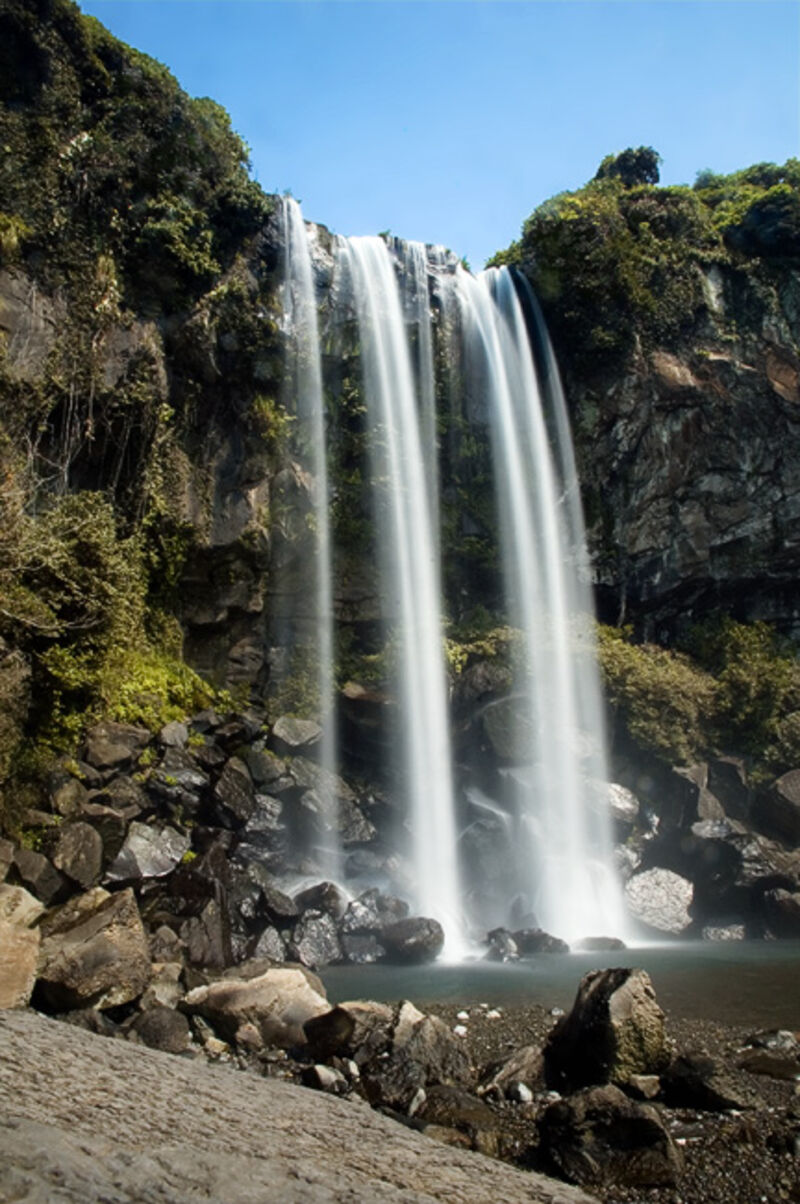
Jeju is itself the day trip — there’s no meaningful place to easily escape to on a day trip. The island rewards exploration of its own quadrants: north coast (Hallasan, Seongsan), south (Jungmun, Jeongbang Waterfall), west (Hyeopjae Beach, Yongmeori Coast), east (Manjanggul Cave, Udo Island). Udo Island is a 15-minute ferry from Seongsan and worth a half-day by rental bike.
🎯 The Decision Framework
Choose Busan If…
- You don’t want to drive or can’t get an International Driving Permit.
- You want great Korean food — especially seafood — at the best prices.
- You want beaches with city energy, nightlife, and restaurants nearby.
- You’re adding a 2–3 day trip after Seoul on a tight schedule.
- You want a base to day-trip to Gyeongju, Tongyeong, or Daegu.
- You prioritize nightlife, bar scenes, and late-night food tents.
Choose Jeju If…
- Hiking a dormant volcano and crawling through lava tubes is on your list.
- You want Korea’s most pristine beaches — and can handle the logistics.
- You’re comfortable renting a car and have an IDP ready.
- You have 3–4+ days to spend on the island.
- You want to see haenyeo culture and taste truly unique Korean ingredients.
- You’re visiting in spring for canola flowers and cherry blossoms, or winter for snow on Hallasan.
Also compare: Okinawa vs Jeju | Seoul vs Taipei | South Korea vs Japan
❓ Frequently Asked Questions
Is Busan or Jeju better for first-time visitors to Korea?
For first-timers, Busan is generally easier and more rewarding. It has excellent subway transit, world-class seafood at Jagalchi Market, iconic beaches at Haeundae, and Gamcheon Culture Village — all without needing a car. Jeju requires a rental car (around 50,000–80,000 KRW/day) to see its best spots, which adds complexity. Most r/koreatravel users recommend Busan as the more hassle-free option.
Do I need a car in Jeju?
Almost certainly yes. The consensus on r/koreatravel is clear: Jeju’s public buses are infrequent and don’t reach many of the best spots. Without a car, you’re limited to tourist buses or expensive taxis. Rental cars cost 50,000–80,000 KRW/day (~$37–59). If you don’t have an International Driving Permit or aren’t comfortable driving abroad, Busan is the far better choice.
Which is cheaper, Busan or Jeju?
Busan is cheaper overall. Mid-range hotels run 80,000–150,000 KRW/night ($59–110) vs Jeju’s 100,000–200,000 KRW/night ($74–147). Jeju also adds mandatory car rental costs. A mid-range traveler spends roughly 120,000–180,000 KRW/day in Busan vs 180,000–260,000 KRW/day in Jeju including a car.
How do you get from Seoul to Busan vs Jeju?
Busan: KTX bullet train from Seoul Station in 2h15m–2h40m, costing 59,800–63,600 KRW ($44–47). Trains run every 30–60 minutes. Jeju: 1-hour flight from Gimpo or Incheon, costing 50,000–150,000 KRW ($37–110) depending on advance booking. Budget airlines like Jeju Air and T-way offer cheap fares booked early.
How many days do you need in Busan vs Jeju?
Busan: 2–3 full days covers the main highlights — Haeundae, Gamcheon, Jagalchi Market, Gwangalli, and Beomeosa Temple. Jeju: 3–4 days minimum, ideally 4–5. The Hallasan hike alone takes a full day, and driving the full coastline takes time. Rushing Jeju in 2 days means barely scratching the surface.
Is it worth visiting both Busan and Jeju on one trip?
Yes, if you have 7+ days in Korea. A common itinerary is Seoul (3–4 days) + Busan (2–3 days) + Jeju (3–4 days), feasible in 10–12 days total. You can fly direct Busan to Jeju in 1 hour for 40,000–80,000 KRW. Many r/koreatravel users say doing both transforms the trip from “good” to “epic.”
Which is better for beaches, Busan or Jeju?
Jeju wins for natural beach beauty — Hyeopjae and Hamdeok have pristine turquoise water and dramatic volcanic scenery. Busan’s Haeundae and Gwangalli are fantastic urban beaches with incredible nightlife nearby, but water clarity can’t match Jeju. For pure aesthetics, Jeju. For beach-plus-city energy, Busan.
What is the best time to visit Busan vs Jeju?
Both cities shine in spring (April–May) and fall (September–October). Busan beach season peaks July–August. Jeju is good year-round, including winter for snow on Hallasan. Summer in Jeju brings humidity and typhoon risk. October is the safest peak season for both destinations.
Ready to plan your Korea trip?
Get a free custom itinerary for Busan, Jeju Island, or both — built from real traveler insights, not generic templates.
🎟️ Book Tours & Experiences
Hand-picked tours and activities for both destinations — book with free cancellation
Experiences via Viator — free cancellation on most tours