How we built this comparison
This page combines traveler discussion patterns, published price ranges, flight schedules, and seasonal data to help you decide between Davao and Cebu.
- Reviewed 50+ Reddit threads from r/travel, r/solotravel, r/Philippines, r/Cebu, and r/Davao for authentic traveler experiences and opinions.
- Verified costs and logistics against current booking platforms (e.g., Agoda, Grab, local ferry websites) and recent travel blogs.
- Cross-referenced seasonal patterns and weather data from meteorological sources to ensure accurate travel timing advice.
⚡ The TL;DR Verdict
For adventurers seeking untouched nature, unique culture, and a more laid-back, safer vibe, Davao (daily budget: $30-60 / PHP 1,700-3,400) is your go-to. If you crave vibrant nightlife, easy island hopping, and a wider range of tourist infrastructure, Cebu (daily budget: $40-80 / PHP 2,300-4,500) will be more your speed.
- Choose Davao: Choose Davao if you want to explore the Philippines' highest peak, Mt. Apo, visit the Philippine Eagle Center, enjoy pristine Samal Island, and experience a genuinely safe and less touristy city with unique food like durian.
- Choose Cebu: Opt for Cebu if you're keen on chasing waterfalls (Kawasan), swimming with whale sharks (Oslob - controversial, but popular), diving with thresher sharks (Malapascua), and having easy access to multiple famous islands with a bustling city base.
- Choose Both: If you have at least 10-14 days in the Philippines, flying between Cebu and Davao is easy and affordable (around PHP 1,500-3,000 / $26-52). Start with Cebu for a week of island hopping, then fly to Davao for 3-5 days of nature and city exploration to get a truly diverse Southern Philippines experience.
Quick Comparison
| Category | Davao | Cebu | Winner |
|---|---|---|---|
| Beaches & Islands | Samal Island offers pristine beaches, resort amenities, and a giant bat cave, easily accessible by ferry. | Cebu is a hub for world-class island hopping to Malapascua, Bantayan, and Moalboal, each with distinct offerings. | Cebu |
| Food Scene | Davao is famous for durian, unique fruits, fresh seafood, and grilled delights at Roxas Night Market. | Cebu is the 'Lechon Capital of the World,' with a vibrant street food scene and various local delicacies. | Cebu |
| Nightlife & Entertainment | Davao's nightlife is more laid-back, centered around live music bars, cafes, and a few clubs, with strict local ordinances. | Cebu offers a more energetic and diverse nightlife, from bustling clubs and bars to lively entertainment hubs. | Cebu |
| Culture & Heritage | Davao offers a rich blend of indigenous cultures, unique festivals like Kadayawan, and historical sites. | Cebu boasts significant colonial history, Magellan's Cross, and the vibrant Sinulog Festival. | Tie |
| Cost of Travel | Davao is generally more affordable, especially for food, local transport, and non-resort accommodation. | Cebu is slightly more expensive due to higher demand and more developed tourism infrastructure. | Davao |
| Getting There & Around | Davao has a well-connected domestic airport; local transport includes Grab, taxis, and jeepneys. | Cebu's international airport offers direct flights globally; vast ferry network for island hopping. | Cebu |
| Nature & Outdoors | Davao is home to Mt. Apo, the Philippine Eagle, and diverse natural parks, offering raw adventure. | Cebu provides access to stunning waterfalls, marine sanctuaries, and diverse diving spots. | Davao |
| Safety & Security | Davao is famously one of the safest cities in the Philippines due to strict local ordinances and effective law enforcement. | Cebu is generally safe but experiences more common tourist-related petty crime and scams. | Davao |
| Accommodation | Davao offers a range of hotels and budget guesthouses, often at slightly lower prices, with some unique nature resorts. | Cebu has a broader selection of hotels, from international chains to boutique hostels, especially in Cebu City and island resorts. | Cebu |
| Day Trips & Excursions | Davao offers day trips to Samal Island, Eden Nature Park, and the Philippine Eagle Center. | Cebu is a hub for day trips to Bohol (Chocolate Hills), Oslob (whale sharks), and canyoneering at Kawasan Falls. | Cebu |
🏖️ Beaches & Islands
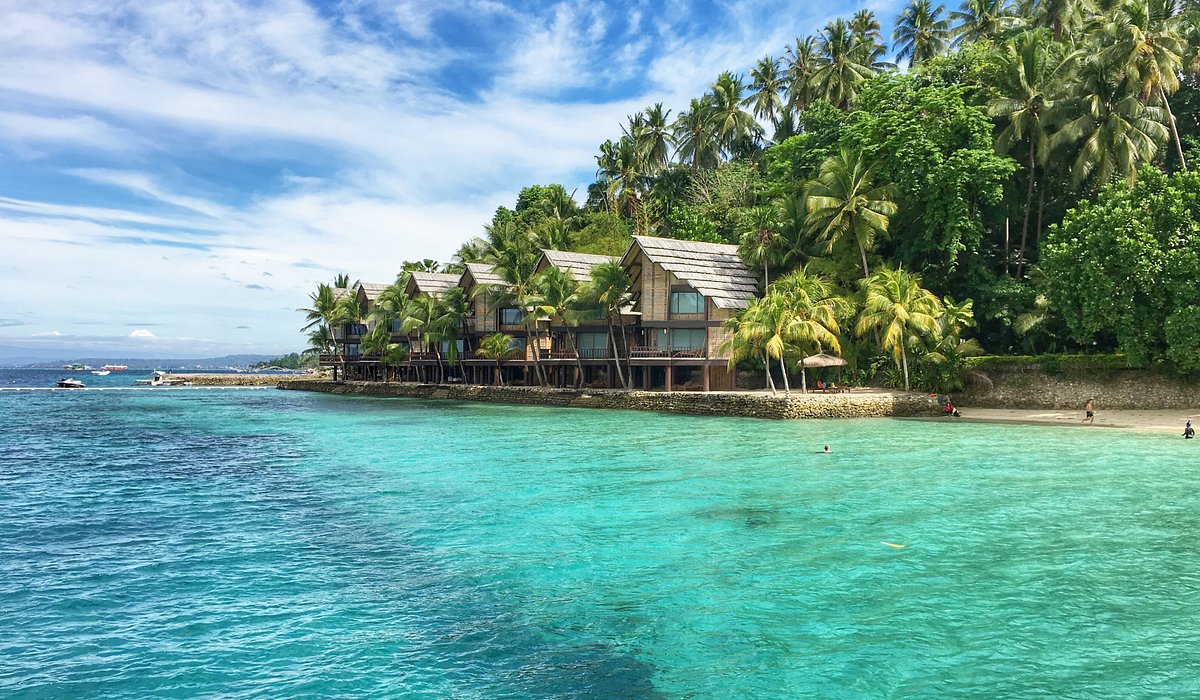
When it comes to pure beach variety and accessibility to multiple island paradises, Cebu takes the crown. While Davao boasts Samal Island, just a 15-minute ferry ride from Sta. Ana Wharf (PHP 15 / $0.26), with beautiful spots like Kaputian Beach Park or Pearl Farm Beach Resort (day tour around PHP 2,500 / $43), it's largely one main destination. Cebu, on the other hand, is a gateway to an entire archipelago of stunning islands. You can dive with thresher sharks in Malapascua (boat tours around PHP 1,500-2,500 / $26-43), relax on the powdery white sands of Bantayan Island (ferry from Hagnaya Port ~PHP 300 / $5.20), or chase waterfalls and sardine runs in Moalboal (bus from Cebu City ~PHP 150 / $2.60). The sheer diversity and volume of world-class island experiences reachable from Cebu City are unmatched. 'Honestly, Samal is nice for a quick getaway, but nothing beats the vibe and the insane diving in Malapascua. Cebu just has more options for island junkies.'
Winner takeaway
- Winner: Cebu
- Why: Cebu offers a wider array of world-class island-hopping destinations and diverse marine experiences from a single base.
- Who this matters for: Beach lovers, divers, snorkelers, and those who prioritize island hopping.
🍽️ Food Scene
Both cities offer fantastic food, but Cebu's culinary reputation, particularly for lechon (roasted suckling pig), is legendary. You can find world-renowned lechon at places like CNT Lechon or Zubuchon, with a whole pig costing around PHP 5,000-8,000 ($86-138) for a group, or individual servings for PHP 150-250 ($2.60-4.30). Beyond lechon, Cebu offers 'Larang' (a sour fish stew), 'Puso' (hanging rice), and a bustling street food scene around Larsian BBQ. Davao, while a strong contender, is more niche. It's the 'Durian Capital,' and you'll find countless durian stalls (PHP 100-200/kilo / $1.70-3.40) and durian-flavored treats. The Roxas Night Market in Davao is a must for grilled seafood, chicken barbecue, and street food at incredibly low prices (PHP 50-150 / $0.86-2.60 per item). Davao's Kinilaw (ceviche-like raw fish) is also exceptional. However, Cebu's iconic dishes and broader range of accessible culinary experiences give it the edge. 'Cebu lechon is life. You just can't come to the Philippines and not try it there. Davao has its durian, but that's a love-it-or-hate-it kind of thing.'
Winner takeaway
- Winner: Cebu
- Why: Cebu's iconic lechon and wider variety of universally appealing local dishes give it a slight edge over Davao's unique, but sometimes polarizing, offerings.
- Who this matters for: Foodies, those seeking iconic local dishes, and adventurous eaters.
🍻 Nightlife & Entertainment
If you're looking to party, Cebu is definitely the place. Its nightlife scene is far more vibrant and diverse than Davao's. Areas like Mango Avenue in Cebu City are packed with clubs, KTV bars, and pubs that stay open late. IT Park also has numerous trendy bars and restaurants with a lively atmosphere. Expect cover charges around PHP 200-500 ($3.40-8.60) for some clubs, and drinks starting from PHP 100 ($1.70). Davao, while not completely devoid of nightlife, is much tamer. Due to strict local ordinances, including a midnight liquor ban (though some places have special permits), the scene is more about chill live music venues, cozy cafes, and family-friendly entertainment. Torres Street and F. Torres Street have some good options like Huckleberry Southern Kitchen & Bar, but don't expect the same high-energy clubbing experience. 'Cebu's nightlife is pretty solid, you can find a party almost any night. Davao is more like, a nice dinner and a few drinks, then call it a night. It's safe, but not wild.'
Winner takeaway
- Winner: Cebu
- Why: Cebu provides a more extensive, energetic, and varied nightlife scene suitable for party-goers and those seeking vibrant evening entertainment.
- Who this matters for: Party-goers, young travelers, and those who enjoy a bustling night out.
🎭 Culture & Heritage
Both cities offer distinct cultural experiences. Cebu is steeped in colonial history, being the first Spanish settlement in the Philippines. Key sites include Magellan's Cross, Basilica Minore del Santo Niño, and Fort San Pedro (entrance PHP 30 / $0.52). Its Sinulog Festival in January is one of the country's largest and most vibrant religious festivals. Davao, on the other hand, provides a deeper dive into indigenous Philippine cultures, particularly the Lumad tribes. The Kadayawan Festival in August is a colorful celebration of thanksgiving and tribal heritage. You can visit the Davao Museum (PHP 100 / $1.70) or the Museo Dabawenyo (free) to learn about local history and ethnic groups. The Philippine Eagle Center (entrance PHP 150 / $2.60) also offers a unique insight into conservation and national identity. While Cebu's history is more mainstream and impactful in a national sense, Davao's focus on preserving and showcasing its diverse indigenous roots offers a unique and equally enriching cultural perspective. 'If you want Spanish history, Cebu is it. But for something truly unique, seeing the Lumad culture in Davao during Kadayawan was mind-blowing, way different from the usual tourist stuff.'
Winner takeaway
- Winner: Tie
- Why: Both cities offer unique and equally compelling cultural experiences, with Cebu focusing on colonial history and Davao on indigenous heritage.
- Who this matters for: History buffs, culture enthusiasts, and those interested in indigenous traditions or colonial legacies.
💰 Cost of Travel
When it comes to stretching your peso, Davao generally offers better value. A decent meal at a local eatery in Davao can cost as little as PHP 80-150 ($1.40-2.60), while in Cebu, you might pay PHP 120-250 ($2.10-4.30). Accommodation also skews cheaper in Davao; a clean budget hotel or guesthouse can be found for PHP 800-1,500 ($14-26) per night, whereas similar quality in Cebu City often starts from PHP 1,200-2,000 ($21-34). Local transportation like jeepneys are similarly priced (PHP 12-30 / $0.21-0.52), but Grab rides might be slightly cheaper in Davao. While some high-end resorts exist in both, the overall daily expenditure for a mid-range traveler will be noticeably lower in Davao. Activities like visiting the Philippine Eagle Center (PHP 150 / $2.60) are also very reasonably priced. The higher volume of international tourists and more established tourism infrastructure in Cebu naturally drive up some prices. 'Davao felt like I got so much more for my money. I could eat like a king at Roxas Night Market for a few bucks. Cebu was still cheap, but you definitely feel the tourist premium on everything.'
Winner takeaway
- Winner: Davao
- Why: Davao offers a more budget-friendly experience across accommodation, food, and local activities due to less tourist saturation.
- Who this matters for: Budget travelers, backpackers, and those looking for maximum value for money.
✈️ Getting There & Around
Cebu significantly outperforms Davao in terms of accessibility, especially for international travelers. Mactan-Cebu International Airport (CEB) is a major hub with direct flights from numerous international cities like Singapore, Seoul, Hong Kong, and Taipei, saving travelers the hassle of transiting through Manila. Flights from Manila to Cebu typically cost PHP 1,500-4,000 ($26-69) and take about 1.5 hours. Davao's Francisco Bangoy International Airport (DVO) primarily handles domestic flights, with some international routes to Singapore. Flights from Manila to Davao are similar in price (PHP 1,800-4,500 / $31-78) and take about 2 hours. Once on the ground, both cities use Grab (ride-hailing), taxis, and jeepneys (PHP 12-30 / $0.21-0.52). However, Cebu's extensive ferry network connecting to neighboring islands like Bohol (fast ferry ~PHP 800-1,200 / $14-21) is a huge advantage for onward travel and island hopping. 'Cebu is just way easier to get to from literally anywhere. And then once you're there, hopping on a ferry to Bohol or something is super simple. Davao feels a bit more isolated.'
Winner takeaway
- Winner: Cebu
- Why: Cebu's international airport and extensive inter-island ferry network make it significantly more accessible and convenient for travelers.
- Who this matters for: International travelers, island hoppers, and those prioritizing convenience in travel logistics.
⛰️ Nature & Outdoors
For those seeking truly unique and raw natural experiences, Davao stands out. It's the gateway to Mt. Apo, the highest peak in the Philippines (permits required, multi-day treks cost PHP 5,000-10,000 / $86-173 with guides), offering challenging climbs and breathtaking views. The Philippine Eagle Center is a must-visit for wildlife enthusiasts, providing a sanctuary for the critically endangered national bird. Beyond that, you have Eden Nature Park (entrance PHP 300 / $5.20) for cooler mountain air and zip-lining, and the lush landscapes leading up to Samal Island. Cebu, while boasting incredible marine nature with its diving spots (Malapascua for thresher sharks, Moalboal for sardine run) and the iconic Kawasan Falls (canyoneering tours around PHP 1,500 / $26), tends to be more developed and geared towards tourist activities. Davao's natural attractions feel more grand, less commercialized, and uniquely tied to the region's biodiversity. 'If you're into serious hiking or seeing unique wildlife like the eagles, Davao is the real deal. Cebu's nature is beautiful, but it's more about the beach and falls scene, less about grand landscapes.'
Winner takeaway
- Winner: Davao
- Why: Davao offers more unique, grand, and less commercialized natural attractions, including the country's highest peak and national bird.
- Who this matters for: Hikers, wildlife enthusiasts, adventure seekers, and those who appreciate raw, untouched nature.
🔒 Safety & Security
Davao has earned a reputation as one of the safest cities in Southeast Asia, a distinction often attributed to its strict local ordinances (like the liquor ban, firecracker ban, and smoking ban in public places) and highly effective local government. Walking around Davao City, even at night, feels remarkably secure, and violent crime rates are very low. For solo travelers, especially women, this peace of mind is invaluable. Cebu, while generally safe, is a much larger and busier tourist hub. This inevitably means a higher incidence of petty crime, like pickpocketing or bag snatching, especially in crowded markets, bus terminals, or tourist-heavy areas. Scams targeting tourists, though not rampant, are also more prevalent. You'll need to be more vigilant in Cebu and exercise standard precautions. 'Davao genuinely felt so safe, almost surprisingly so for a big city in Asia. I never worried walking alone. Cebu was fine, but you definitely felt like you needed to keep an eye on your stuff, especially at night near tourist spots.'
Winner takeaway
- Winner: Davao
- Why: Davao's stringent local laws and reputation for low crime rates make it a demonstrably safer city for travelers.
- Who this matters for: Solo travelers, families, and anyone prioritizing peace of mind and security above all else.
🏨 Accommodation
Cebu, being a more established tourist destination and a larger economic hub, boasts a wider and more diverse range of accommodation options. In Cebu City, you can find everything from luxury international chains like Marco Polo Plaza (PHP 5,000-10,000 / $86-173 per night) and mid-range hotels like Quest Hotel (PHP 2,500-4,500 / $43-78) to numerous budget hostels and guesthouses (PHP 500-1,000 / $8.60-17). The neighboring islands of Mactan, Malapascua, and Bantayan also offer a plethora of resorts catering to various budgets. Davao's accommodation scene, while perfectly adequate, is less varied. You'll find good quality hotels like Park Inn by Radisson (PHP 3,000-6,000 / $52-104) and budget options, but fewer high-end luxury resorts compared to Cebu, and the unique, nature-focused stays like The Farm @ Carpenter Hill (PHP 2,000-4,000 / $34-69) are more spread out. If you're looking for specific amenities, international standards, or a wider choice of budget-friendly hostels, Cebu will have more suitable options. 'Cebu just has so many more hotel choices, especially if you're looking for something specific, or if you want to splurge on a nice resort in Mactan. Davao felt a bit more limited, though I found some good, cheap spots.'
Winner takeaway
- Winner: Cebu
- Why: Cebu offers a significantly broader and more diverse range of accommodation options, catering to all budgets and preferences, from luxury resorts to budget hostels.
- Who this matters for: All types of travelers, particularly those seeking specific hotel categories or a wider selection of budget-friendly hostels and luxury resorts.
🗺️ Day Trips & Excursions
Cebu reigns supreme for the sheer variety and iconic status of its day trips. From Cebu City, you can easily embark on a fast ferry to Bohol (around 2 hours, PHP 800-1,200 / $14-21 return) to see the Chocolate Hills, tarsiers, and Loboc River. The infamous (and controversial for ethical reasons) Oslob whale shark interaction is a popular, albeit ethically debated, day trip (PHP 1,000 / $17 for foreigner snorkeling fee, plus transport). Canyoneering at Kawasan Falls is an adrenaline-pumping adventure (tours typically PHP 1,500-2,500 / $26-43 including guide and gear). Davao's day trip options are good but less diverse in comparison. Samal Island is a fantastic beach escape, Eden Nature Park offers cool mountain air and activities, and the Philippine Eagle Center is a unique wildlife encounter, but these are generally within the Davao region. Cebu's proximity to other major islands and its array of highly distinct and famous attractions make it the clear winner for varied and exciting excursions. 'Cebu's day trips are just legendary. You can see whale sharks, jump off waterfalls, or go to another island entirely in one day. Davao's are nice, but not quite the same level of iconic.'
Winner takeaway
- Winner: Cebu
- Why: Cebu offers a wider, more diverse, and globally recognized selection of iconic day trips, including inter-island excursions.
- Who this matters for: Adventure seekers, those looking for famous landmarks, and travelers who enjoy a packed itinerary of excursions.
❓ Frequently Asked Questions
Is Davao truly as safe as people say?
Yes, Davao is widely considered one of the safest cities in the Philippines, if not Southeast Asia. Strict local ordinances (like a city-wide liquor ban after midnight for many establishments and a total smoking ban in public places) and efficient law enforcement contribute to its low crime rates. Travelers often feel very secure walking around, even at night.
What's the best time of year to visit Davao or Cebu?
The dry season, from December to May, is generally the best time for both destinations, with less rainfall and pleasant temperatures. March to May can be quite hot. Avoid June to November if you want to minimize your chances of encountering typhoons, especially in the Cebu region, though Davao is less prone to direct hits.
Can I do island hopping from Davao?
Yes, you can do island hopping from Davao, primarily around Samal Island and its surrounding islets like Talicud Island. You can rent a private boat (PHP 2,500-4,000 / $43-69 for a day) or join organized tours. However, it's not as extensive or diverse as the island hopping options available from Cebu.
Is it easy to get around both cities without a car?
Absolutely. Both Davao and Cebu have Grab (ride-hailing app), which is convenient and affordable. Taxis are also readily available. For budget travel, jeepneys (local public buses) are plentiful, though they can be confusing for first-timers. Tricycles and 'habal-habal' (motorcycle taxis) are common for shorter distances or reaching more remote spots.
What is the must-try food in each city?
In Davao, you absolutely must try durian (the 'King of Fruits') and its many derivatives, along with fresh 'Kinilaw' (Filipino ceviche) and grilled seafood from Roxas Night Market. In Cebu, the undisputed champion is 'Lechon' (roasted suckling pig), often hailed as the best in the Philippines. Also try 'Puso' (hanging rice) and 'Larang' (sour fish stew).
Which city is better for families with kids?
Davao often edges out Cebu for families due to its reputation for safety and slightly less chaotic atmosphere. Attractions like the Philippine Eagle Center, Eden Nature Park, and the gentle beaches of Samal Island are very kid-friendly. Cebu still offers family fun, especially resorts on Mactan, but the city itself can be busier.
Are there good options for digital nomads in either city?
Both cities have growing digital nomad scenes. Cebu, with its larger expat community, more co-working spaces (like ASPACE Cebu or The Company), and reliable internet in popular areas like IT Park, might be slightly more appealing. Davao also has good internet, a lower cost of living, and a more relaxed pace, making it a viable, albeit less conventional, option.
How much time should I allocate for each city?
For a good taste of Davao, plan at least 3-4 full days to cover the city attractions, Samal Island, and perhaps Eden Nature Park. For Cebu, 5-7 days is ideal if you want to explore Cebu City and venture out to popular islands like Malapascua, Bantayan, or Moalboal, allowing for travel time between destinations.
Ready to plan your Southern Philippines trip?
Get a free custom itinerary for Davao, Cebu, or both — built from real traveler insights.
🎟️ Book Tours & Experiences
Hand-picked tours and activities for both destinations — book with free cancellation
Experiences via Viator — free cancellation on most tours