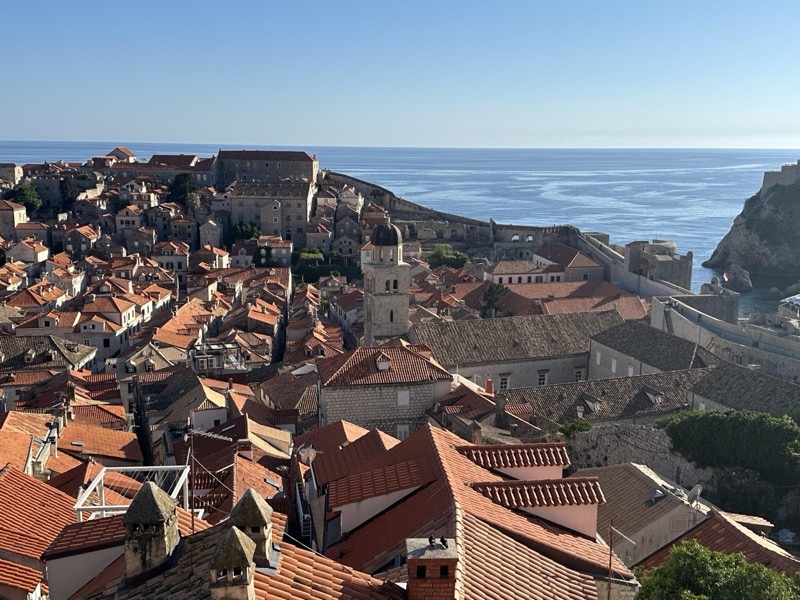
 🇨🇷 Dubrovnik
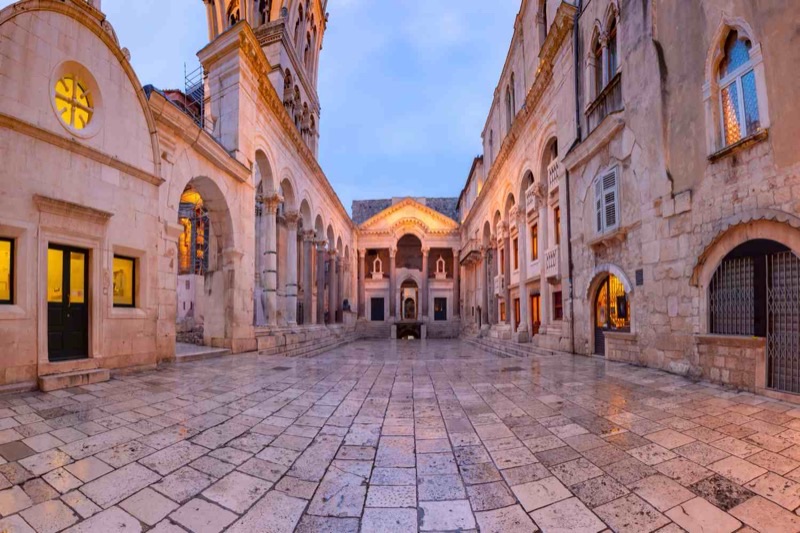 🇨🇷 Split
⚡ The TL;DR Verdict
Split wins for value, authenticity, and island-hopping access. Dubrovnik wins for pure visual spectacle and the bucket-list moment. Budget: Dubrovnik €100–140/day, Split €60–90/day.
- Go to Dubrovnik if you want to walk the medieval city walls, see the most photogenic town in the Mediterranean, and don’t mind paying a premium for a 2–3 night experience that earns its “bucket list” status.
- Go to Split if you want a real working city with an extraordinary Roman palace you can walk through for free, much better value accommodation, and the best island-hopping base in the Adriatic.
- Do both — they’re 3–4 hours apart by bus or ferry, and the standard Croatia itinerary combines them for good reason. With 7 days, spend 2–3 nights in Dubrovnik and 3–4 in Split.
Quick Comparison
| Category | 🏠 Dubrovnik | 🏛️ Split | Winner |
|---|---|---|---|
| Daily Budget (mid-range) | €100–140 per person | €60–90 per person | Split |
| Hotel (mid-range/night) | €150–280 | €80–150 | Split |
| Visual Spectacle | World-class — medieval walls, Adriatic views | Impressive — Roman palace, harbor promenade | Dubrovnik |
| Old Town Authenticity | Heavily touristic in peak season | People actually live inside the palace | Split |
| Island Hopping Base | Limited (Lokrum, Elafiti) | Excellent (Hvar, Brač, Vis, Korcula) | Split |
| Beaches | Banje Beach (entry fee), rocky coves | Bacvice, Kasjuni, plus island beaches | Split |
| Food & Dining Value | Expensive inside Old Town, better outside | Good value, authentic local spots | Split |
| Day Trips | Mostar, Kotor, Cavtat | Trogir, Hvar, Brač, Krka, Makarska | Split |
| Nightlife | Moderate — bar scene in Old Town | Better — Bacvice beach, local bars | Split |
| Crowd Levels (Jul–Aug) | Extreme — cruise ships + day trippers | Busy but manageable | Split |
| Getting There | DBV Airport, limited transport options | SPU Airport, better connections | Split |
| Recommended Stay | 2–3 nights | 3–5 nights | Tie |
🏹 City Character & Vibe
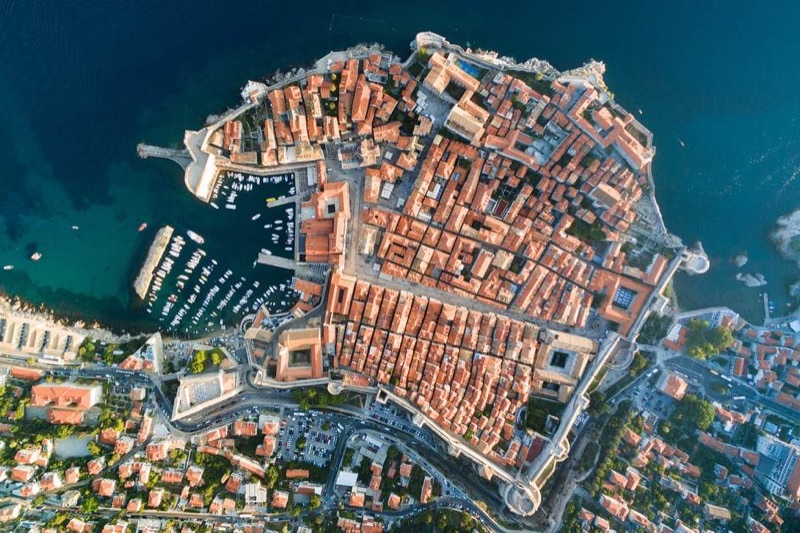
Dubrovnik is one of those rare places that actually lives up to its reputation — the Old Town’s orange-roofed limestone buildings, perfectly intact medieval walls, and position on a dramatic Adriatic peninsula make it arguably the most photogenic city in Europe. It was the capital of the Republic of Ragusa, an independent maritime republic that lasted 450 years, and you feel that history walking the Stradun (the limestone-paved main street). For 2–3 days, it delivers completely.
The catch, and Reddit is unequivocal about this: Dubrovnik is theme-park tourism at peak season. Cruise ships disgorge 10,000+ day trippers before 10am. The Old Town fills to the point of discomfort. Restaurant prices inside the walls rival Paris. After 2–3 days, most travelers report feeling they’ve seen everything and are ready to move on — there isn’t the depth or the beach/island scene to sustain a longer stay.
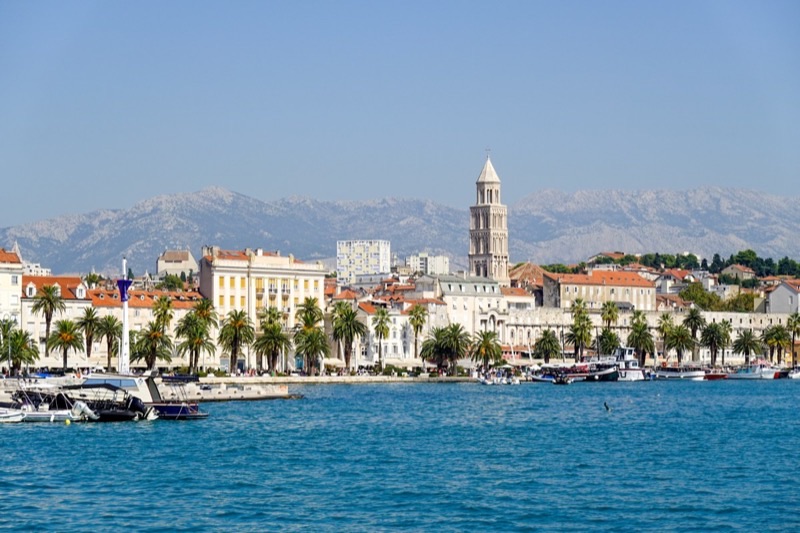
Split is a different beast. It’s a working city of 200,000 where the residents’ apartments, bars, and washing lines coexist within Diocletian’s Palace walls — the most extraordinary piece of living Roman history in the world. The Riva promenade is genuinely lovely, the locals are not yet as tourist-fatigued as Dubrovnik’s, and the city functions as the actual hub of Dalmatian travel.
“Dubrovnik is more beautiful and iconic — but Split has more character. You can feel that Split is a real city with real people living their lives. In Dubrovnik I constantly felt like I was in a tourist museum.” — r/Europetravel
“Dubrovnik was ‘wow’ for about 2 hours then felt crowded and expensive. Split surprised me — I loved it more and wish I’d stayed longer.” — r/travel
🏰 Old Towns & Architecture
Dubrovnik’s Old Town is a UNESCO World Heritage Site and the reason most people come to Croatia in the first place. The 2km city wall circuit (€35/person) gives you the most spectacular views you’ll find anywhere in the Mediterranean — terracotta rooftops, the deep blue Adriatic, and Fort St. Lawrence jutting into the sea. The Stradun is polished white limestone worn smooth by five centuries of feet. The Franciscan Monastery library has manuscripts dating to the 14th century. For Game of Thrones fans, virtually every set-piece from King’s Landing is walkable within an afternoon.
Split’s Diocletian’s Palace is arguably more fascinating architecturally — a vast 3rd-century Roman emperor’s retirement complex where, uniquely in the world, a modern city has grown up inside the ancient walls. The Peristyle (central square), the Vestibule dome, and the Cathedral of Saint Domnius (built inside Diocletian’s mausoleum) are extraordinary. The Golden Gate, Silver Gate, Iron Gate, and Bronze Gate still stand. And unlike Dubrovnik’s Old Town (primarily medieval), Diocletian’s Palace is Roman — 1,700 years old and still functioning as a neighborhood.
“Diocletian’s Palace blew my mind. You walk through a gate into what’s essentially a Roman courtyard and there’s a café and someone’s laundry hanging from the window. It’s the most lived-in piece of ancient history I’ve seen anywhere.” — r/travel
“Dubrovnik is obviously stunning but 2 days is enough to see everything. The city walls are incredible — do them early morning before 8am to beat the crowds and the heat.” — r/CroatiaTravelTips
🏖️ Beaches & Coast
Croatia’s beaches are famous for a reason: clear turquoise water, pebble and limestone shores, and dramatically beautiful scenery. Neither Dubrovnik nor Split has a great urban beach — but their access to the wider Dalmatian coast is very different.
Dubrovnik’s best city beach is Banje Beach (15-minute walk from the Old Town) — a pebble beach with stunning views of the city walls. There’s a beach club section (€10 sunbed hire) and a free public section. Sveti Jakov beach (40-minute walk, very steep descent) is less crowded and considered more beautiful. The real problem: there’s no sandy beach near Dubrovnik, and the island day trips are limited compared to Split. Lokrum Island (15 minutes by ferry, €14 round trip) has swimming spots and a botanical garden but no great beaches.
Split’s city beach game is stronger. Bačvice Beach (10-minute walk from the palace) is famous as the birthplace of picigin — a uniquely Croatian shallow-water ball game — and while it’s sandy and shallower than most, it’s more of a social experience than a sunbathing beach. Kasjuni Beach (20 minutes by bus) is a beautiful sheltered pebble cove considered Split’s best urban beach. But Split’s real beach access is via ferries: Hvar and Brač (with some of Croatia’s most beautiful beaches) are both 1 hour by catamaran.
“For beaches, Split isn’t amazing in the city itself but it’s the gateway to incredible beaches. Take the ferry to Hvar or Brač and you’ll find beaches that rival anywhere in the Mediterranean.” — r/Europetravel
🍽️ Food & Dining
Croatian cuisine along the Dalmatian coast is excellent: fresh seafood, grilled meats, peka (slow-cooked lamb or octopus under a bell), good local wines (try Plavač Mali from the Peljesac peninsula), and some of the best olive oil in Europe. The cooking in both cities is fundamentally similar — the difference is price and tourist-to-local ratio.
In Dubrovnik, restaurants inside the Old Town walls charge 50–70% more than equivalent places in Split. A seafood risotto inside the walls: €25–35. A beer: €7–8. Oysters from the Ston bay (30 minutes away, one of Croatia’s best oyster farming areas): €2–3 each. The food quality can be excellent — places like Restaurant Nautika or 360° are genuinely world-class with views to match — but they’re special-occasion restaurants. Good value eating requires leaving the Old Town walls and heading to neighborhoods like Lapad or Gruz.
In Split, the food scene is more authentic and accessible. Trgite na Pazaru (the open market) is excellent for local produce and cheap breakfasts. Restaurants in Varoš neighborhood (just west of the palace) offer the best value. Grilled fish at a local konoba: €18–25 for a whole fish. Peka (minimum 24h order): €20–30 per person. Cevapi (grilled minced meat): €6–8. The Split beach bar scene at Bačvice is a great spot for cheap drinks in the sun.
“Eating in Dubrovnik Old Town is a tourist trap. Everything is overpriced and mediocre. Walk 10 minutes out of the walls and you find completely different, much better restaurants at half the price.” — r/Europetravel
“For food in Croatia, Split wins. The konobas in Varoš are brilliant — proper home cooking, generous portions, and a fraction of Dubrovnik prices. Try the octopus salad everywhere you go.” — r/CroatiaTravelTips
💰 Cost Comparison
| Expense | 🏠 Dubrovnik | 🏛️ Split |
|---|---|---|
| Hostel dorm (per night) | €35–60 | €20–40 |
| Budget hotel (per night) | €100–180 | €70–120 |
| Mid-range hotel (per night) | €180–320 | €100–180 |
| Street food / konoba lunch | €12–20 | €8–14 |
| Mid-range dinner | €30–55 (inside walls) | €20–35 |
| Beer at a bar | €6–9 | €4–6 |
| City walls walk | €35 | Free (palace entry) |
| Cable car | €20 return | N/A |
| Ferry to nearest island | €14 return (Lokrum) | €10–12 return (Brač/Hvar) |
| Mid-range daily total | €100–140 | €60–90 |
Dubrovnik is 30–45% more expensive than Split across nearly every category. The biggest driver is accommodation: Split’s significantly larger hotel inventory (and greater distance from the luxury hotel cluster) keeps prices lower. The city walls entry fee (€35) is a significant single cost in Dubrovnik with no equivalent in Split. Croatia’s adoption of the euro in 2023 has made prices easier to compare but has also contributed to inflation, with Dubrovnik now rivaling Western European capital costs in peak season.
“I budgeted €80/day for Croatia and it was fine in Split but I blew way over budget in Dubrovnik — everything inside the Old Town is about double what you’d expect. The city walls are worth the €35 but nothing else inside justified the markup.” — r/travel
🚌 Getting Around
Both cities are compact enough to walk. Dubrovnik’s Old Town is tiny — you can walk end-to-end in 10 minutes. The problem is getting to beaches, cable car, and restaurants outside the walls: a tourist taxi from the Old Town to Lapad (3km) runs €15–20; the local bus (3A/4A) costs €2 but doesn’t run as frequently. Dubrovnik has no real public transit network — it’s essentially walk, taxi, or (in summer) tourist shuttle bus between the Old Town and beaches. Traffic is severe in summer; the road into Dubrovnik can back up for 1–2 hours at peak times.
Split’s transport situation is more functional. The center is walkable and the Riva promenade connects most attractions along the waterfront. Local bus tickets cost €1.50–2. The ferry terminal is the key piece of infrastructure — Jadrolinija ferries to Hvar, Brač, Vis, and Korcula all depart from the Split port, making the city a genuine regional hub. Getting between Dubrovnik and Split takes 3–4 hours by bus (FlixBus, €15–25) or 2.5–3 hours by catamaran in summer (€35–50).
“Dubrovnik transport is a nightmare in summer. Uber/taxis are expensive, buses are infrequent, and parking is nearly impossible. If you don’t have a car, you’re basically stuck to walking distance of the Old Town or paying for cabs.” — r/travel
⛵ Islands & Day Trips
This is the category where Split wins most decisively. The Dalmatian islands accessible from Split are among the best in Europe:
- Hvar — 1 hour by catamaran (~€12). Croatia’s most glamorous island: lavender fields, a spectacular fortified hilltop town, excellent nightlife in Hvar Town, and beautiful beaches on the south coast (Pakleni Islands reachable by water taxi for €5). One of the most popular day trips in Croatia, but worth a night’s stay.
- Brač — 1 hour by ferry (~€10). Famous for Zlatni Rat (Golden Horn) — a distinctive sand-pebble promontory that’s Croatia’s most photographed beach. The village of Bol on Brač is excellent for 1–2 nights.
- Vis — 2 hours by catamaran (~€13). Croatia’s most remote accessible island — was a Yugoslav naval base closed to foreigners until 1989, so it retains genuine authenticity. Blue Cave and Green Cave day trips depart from here.
- Trogir — 30 minutes by bus (€3). A perfectly preserved medieval town on a tiny island connected by bridges, UNESCO World Heritage Site. Best half-day trip from Split.
- Krka National Park — 90 minutes by bus (€12). Spectacular waterfalls and swimming in the Krka River (swimming was banned inside the park in 2021, check current rules).
Dubrovnik’s day trips are more limited but still worthwhile:
- Mostar, Bosnia — 2.5 hours by bus (€15–20). The Ottoman old town and Stari Most bridge are extraordinary — a genuinely different culture within easy reach.
- Kotor, Montenegro — 1.5 hours by bus (€15–20). A stunning medieval fortified city in a dramatic fjord setting. Rival to Dubrovnik in beauty at a fraction of the crowds.
- Cavtat — 30 minutes by ferry (€10). A quieter, cheaper version of Dubrovnik that many travelers prefer for its lower prices and more local atmosphere.
“Split is easily the better base. In 5 days from Split I did Hvar (overnight), Trogir (half day), Krka (full day), and Bačvice beach. From Dubrovnik I did Kotor (brilliant) and one cove beach. No comparison.” — r/Europetravel
🌤️ Best Time to Visit
May and September–October are optimal for both cities: warm enough for swimming (sea temperature 22–26°C), crowds manageable, and prices 20–40% below peak. June is excellent. July and August are peak summer — stunning weather but severe crowds in Dubrovnik (cruise ships are the main culprit), and prices are at maximum. Reddit users are consistent that Dubrovnik in July–August is the most overtouristed city in Europe; Split handles peak season better due to its larger size and less concentrated tourist flow. October is arguably the best month — warm sea, harvest season, local food festivals, and dramatically fewer tourists than August.
“Visiting Dubrovnik in early October was perfect. Empty streets in the morning, warm enough for swimming in the afternoon, no queues for the city walls. Would never go in July — the photos I see of the Stradun packed with tourists look genuinely unpleasant.” — r/travel
🔀 The Decision Framework
After analyzing dozens of Reddit threads and real traveler accounts, here’s who each city is right for:
🏠 Choose Dubrovnik if...
- The city walls walk and aerial views are a bucket-list item you want to experience in person
- Game of Thrones filming locations are a priority (Dubrovnik = King’s Landing)
- You want the most photogenic city in the Mediterranean for 2–3 nights
- You’re on a honeymoon or special occasion trip and budget is not the primary concern
- A day trip to Montenegro (Kotor) or Bosnia (Mostar) appeals to you
- You want to say you’ve seen the Old Town at sunrise, before the cruise ships arrive
- You’re visiting in shoulder season (May, September–October) when crowds are manageable
🏛️ Choose Split if...
- Island hopping — Hvar, Brač, Vis, Korcula — is a significant part of your Croatia plan
- You want to spend 4–5+ nights and have genuine depth to explore
- Budget matters — Split is 30–45% cheaper across all categories
- You want a living, breathing city with authentic local neighborhoods, not just a tourist loop
- You’re visiting in July–August and want to avoid the worst overtourism
- You want access to Trogir, Krka, and Makarska as day trips
- You’re a solo traveler who wants to meet people in a social hostel scene
- Roman history is more your thing than medieval architecture
❓ Frequently Asked Questions
Is Dubrovnik or Split better for first-time visitors to Croatia?
For first-timers, Split edges Dubrovnik. You get Diocletian’s Palace (one of the best-preserved Roman palaces in the world), a functioning city where people actually live within ancient walls, and the best island-hopping base in the Adriatic. Dubrovnik is “must-see bucket list” material but is so tourist-concentrated that Reddit users consistently report feeling underwhelmed after paying peak prices. The Reddit consensus: 2–3 nights in Dubrovnik, then move to Split for a proper Croatian experience.
How far is Dubrovnik from Split?
Dubrovnik is approximately 230km south of Split. By bus it takes about 3–4 hours (FlixBus and Croatia Bus run this route frequently, ~€15–25 one-way). By fast catamaran ferry in summer it’s about 2.5–3 hours (~€35–50). Budget airlines also connect the two airports. Most travelers do both cities in one Croatia trip — Split is typically the stronger base for exploring multiple destinations.
Is Dubrovnik worth visiting despite the overtourism?
Yes — but manage your expectations and visit strategically. The Old Town is genuinely one of the most beautiful places in Europe. The city walls walk (€35, 2km circuit) and cable car views are spectacular. But in July–August, crowds are severe — cruise ships dock and 10,000+ day-trippers flood the Old Town. Reddit advice: arrive before 8am, leave by noon, visit October–November for dramatically fewer crowds with good weather. 2 nights is enough to see everything; 3 is comfortable.
Which is better for island hopping — Dubrovnik or Split?
Split is massively better for island hopping. From Split’s ferry terminal you have direct connections to Hvar (1 hour, ~€12), Brač (1 hour, ~€10), Vis (2 hours, ~€13), and Korcula (3 hours). Hvar is Croatia’s most famous island. From Dubrovnik, your island options are limited to Lokrum (15-minute day trip) and Elafiti Islands (day trip). If island hopping is a priority, base yourself in Split without question.
Is Split or Dubrovnik more expensive?
Dubrovnik is significantly more expensive — typically 30–40% pricier than Split. Budget travelers report spending €60–80/day in Split vs €100–140/day in Dubrovnik. The biggest gap is accommodation: a decent hotel near Split’s Old Town runs €80–150/night, while equivalent Dubrovnik lodging runs €150–300/night in peak season. Restaurant meals inside Dubrovnik’s Old Town walls cost 50–70% more than comparable food in Split.
What is Dubrovnik famous for besides Game of Thrones?
Dubrovnik was a powerful independent maritime republic for over 400 years — the Republic of Ragusa — and its perfectly preserved medieval Old Town is a UNESCO World Heritage Site. Highlights beyond the GoT filming locations: the 2km city wall circuit with sea views, the Franciscan Monastery (home to one of Europe’s oldest pharmacies, operating since 1317), the Rector’s Palace, Fort Lovrijenac (a 37m sea fortress), and the sea kayaking around the walls.
When is the best time to visit Dubrovnik and Split?
May and September–October are the sweet spots for both cities — warm (24–28°C), seas swimmable, crowds manageable. June is excellent. July–August means peak heat (30–36°C), maximum crowds (especially in Dubrovnik), and peak prices — still enjoyable but overwhelming. November–April is off-season: Dubrovnik goes very quiet (some restaurants close), Split remains livelier as a working city. Split’s resident population means it functions year-round in a way Dubrovnik doesn’t.
Can I do Dubrovnik and Split in one trip?
Absolutely, and this is the standard approach. The classic Croatia itinerary: fly into Dubrovnik, spend 2–3 nights, then travel north to Split (3–4 nights) with optional island stops at Korcula or Hvar en route. With 7 days you can do both comfortably. With 5 days, do 2 nights Dubrovnik and 3 nights Split. Reddit overwhelmingly recommends visiting both rather than choosing just one.
Ready to Plan Your Croatian Adventure?
Whether you choose Dubrovnik’s medieval walls or Split’s Roman palace (or both), tabiji has detailed itineraries to help you make the most of your time.
🎟️ Book Tours & Experiences
Hand-picked tours and activities for both destinations — book with free cancellation
Experiences via Viator — free cancellation on most tours