How we built this comparison
This page combines traveler discussion patterns, published price ranges, flight schedules, and seasonal data to help you decide between Easter Island and Galapagos.
- Reviewed 50+ Reddit threads from r/travel, r/solotravel, r/chile, r/ecuador, and r/SouthAmericaTravel for real traveler experiences and costs.
- Verified costs and logistics against current booking platforms (LATAM, major cruise lines, hotel aggregators) for 2023-2024 pricing.
- Cross-referenced seasonal patterns, weather data, and wildlife activity calendars to provide accurate 'best time to visit' advice.
⚡ The TL;DR Verdict
For those seeking ancient mysteries, unique culture, and a slightly more independent, albeit still remote, adventure, Easter Island is your pick, budget $150-300 USD/day. If your dream involves unparalleled wildlife encounters and pristine nature, and you're ready for a significant splurge, the Galapagos Islands, budgeting $350-700+ USD/day, are your ultimate destination.
- Choose Easter Island: Choose Easter Island if you're fascinated by ancient civilizations, prefer cultural immersion over wildlife, and want a destination where you can explore independently without being tied to a cruise schedule. It's still remote and expensive to reach, but daily costs are more manageable.
- Choose Galapagos: Choose Galapagos if seeing unique, fearless wildlife up close is your top priority. It's an unparalleled natural wonder best experienced via a multi-day cruise, offering incredible snorkeling, diving, and land excursions. Be prepared for a premium price tag.
- Choose Both: If you have ample time (3+ weeks) and a substantial budget, combining both is a phenomenal South American mega-trip. Fly into Santiago for Easter Island (4-5 days), then continent-hop to Ecuador for the Galapagos (5-8 days), creating an epic journey of discovery and nature.
Quick Comparison
| Category | Easter Island | Galapagos | Winner |
|---|---|---|---|
| Costs | High flight costs to reach, but on-island daily expenses are relatively manageable for a remote destination. | Extremely high overall costs due to park fees, mandatory cruises, and premium logistics. | Easter Island |
| Getting There | One direct, long-haul flight from Santiago, Chile, with LATAM being the sole carrier. | Requires an international flight to Ecuador, then a domestic flight to the islands. | Easter Island |
| Nature & Wildlife | Dramatic volcanic landscapes, unique flora, but no iconic native land animals. | Unparalleled, fearless endemic wildlife; an ecological hotspot unlike anywhere else. | Galapagos |
| Culture & History | Deep, ancient Polynesian culture centered around the mysterious Moai statues and Rapa Nui people. | Rich scientific history (Darwin) and tales of pirates/early settlers, but secondary to nature. | Easter Island |
| Accommodation | Mix of family-run cabañas, guesthouses, and a few boutique hotels, allowing independent booking. | Dominated by cruise ships, with land-based hotels mostly in Puerto Ayora and Puerto Baquerizo Moreno. | Easter Island |
| Food & Drink | Fresh seafood, Polynesian influences, and local Chilean staples, but can be pricey. | Ecuadorian cuisine with abundant fresh seafood, often served on cruises or in island towns. | Easter Island |
| Getting Around | Rental cars, scooters, or ATVs are popular for independent exploration of the small island. | Inter-island ferries, water taxis, and organized tours are essential; cruises handle all transport. | Easter Island |
| Activities & Adventure | Cultural site exploration, hiking, snorkeling, and beach relaxation. | Unrivaled wildlife viewing, world-class snorkeling/diving, hiking, kayaking. | Galapagos |
| Solo Travel | Safe, small, and friendly, easy to meet other travelers and explore independently. | Safe, but can be more expensive and structured for solos, especially on cruises. | Easter Island |
| Weather & Seasons | Subtropical climate, pleasant year-round with warm summers and mild winters. | Equatorial climate with distinct wet/warm and dry/cool seasons, each offering unique experiences. | Galapagos |
💸 Costs
Comparing the two, Easter Island wins on relative affordability, but let's be clear: neither is 'cheap.' Getting to Easter Island (Rapa Nui) is pricey, with round-trip flights from Santiago (SCL) on LATAM often running $600-1000 USD. Once there, the Rapa Nui National Park entrance fee is $80 USD. Accommodation ranges from $50-100 USD for basic cabañas to $200-400 USD for hotels like Hotel Hare Noi. Meals average $20-40 USD, and a rental car is about $70-100 USD/day. Daily budget for Easter Island can be $150-300 USD. The Galapagos, however, is a different league. You'll pay a $100 USD National Park fee and a $20 USD Transit Control Card. Domestic flights from Quito (UIO) or Guayaquil (GYE) to Baltra (GPS) or San Cristobal (SCY) cost $300-500 USD round trip. The biggest expense is the cruise: a budget 4-day cruise starts around $1,500-2,500 USD per person, escalating rapidly for mid-range and luxury options. Land-based trips can save a little, but island hopping ferries are $30-40 USD per leg, and tours are still essential and expensive. Expect daily costs of $350-700+ USD. "I saved for years for Galapagos, it was worth every penny but seriously broke the bank. Easter Island felt like a bargain after that." - Reddit user.
Winner takeaway
- Winner: Easter Island
- Why: While still expensive, Easter Island offers more control over your budget once you arrive, especially for accommodation and food.
- Who this matters for: Budget-conscious travelers willing to pay for the flight but prefer more flexible daily spending.
✈️ Getting There
Getting to either destination is an adventure in itself, but Easter Island is slightly simpler. The only way to reach it is via a ~5.5-6 hour direct flight from Santiago, Chile (SCL) to Hanga Roa (IPC) on LATAM Airlines. While this monopoly makes flights expensive, it's a straightforward one-stop journey from Santiago. For the Galapagos Islands, you first need to fly internationally into Ecuador, usually to Quito (UIO) or Guayaquil (GYE). From there, you take another domestic flight (approx. 2 hours) to either Baltra (GPS) for Santa Cruz Island or San Cristobal (SCY). This often means an extra layover and more potential for travel delays. For example, a flight from Miami to Quito is about 5-6 hours, then another 2 hours to the islands, adding up to a full day of travel. "Getting to Easter Island felt like a pilgrimage, but at least it was just one long flight after landing in Santiago. Galapagos felt like two separate flights plus all the airport chaos." - r/travel.
Winner takeaway
- Winner: Easter Island
- Why: Easter Island simplifies the logistics with a single direct flight from its main hub, avoiding an extra domestic leg.
- Who this matters for: Travelers who prioritize simpler, fewer-connection journeys, especially after a long international flight.
🐢 Nature & Wildlife
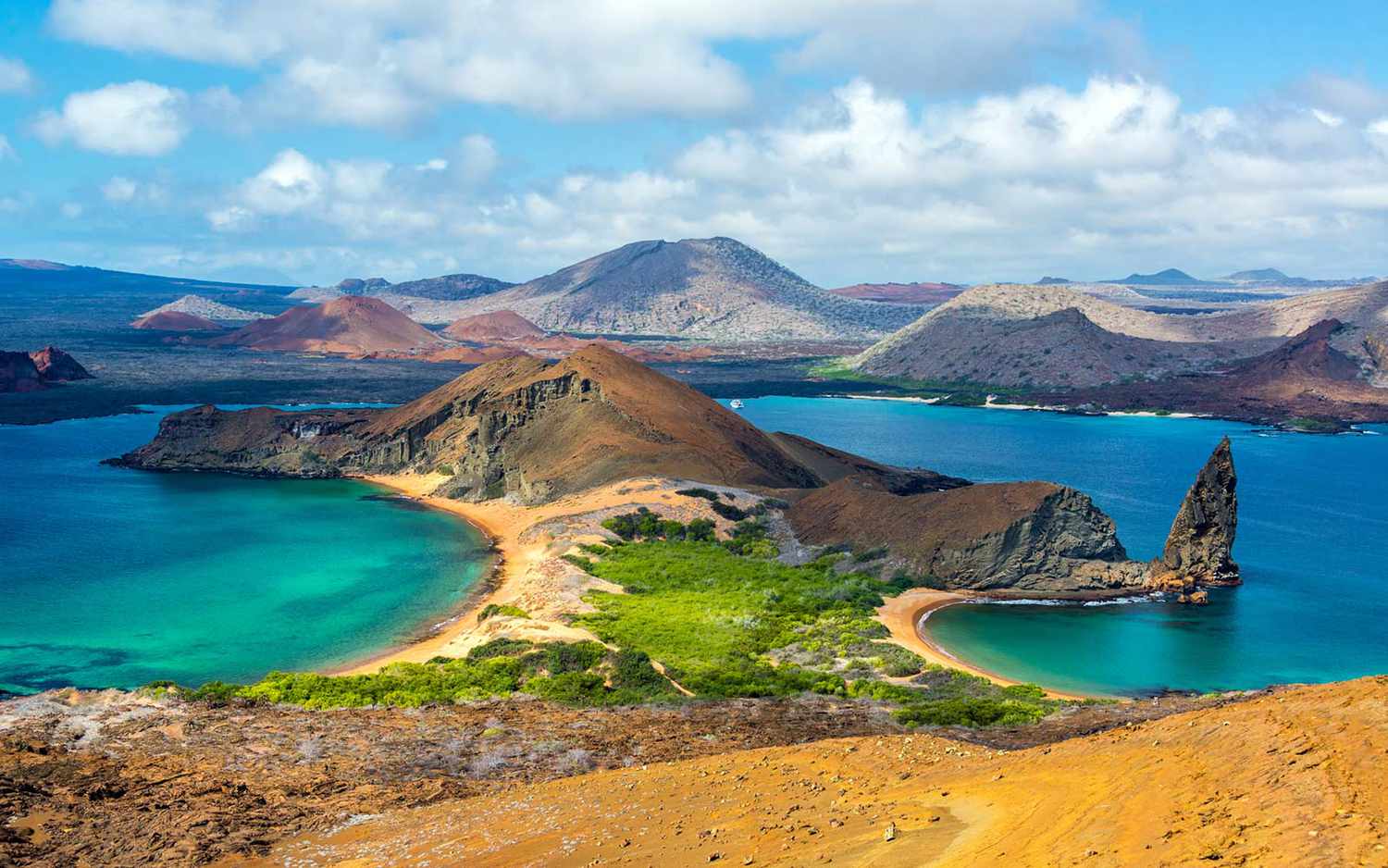
This category is a landslide victory for the Galapagos. While Easter Island boasts stunning volcanic craters like Rano Kau and the beautiful Anakena beach, its natural environment is more about dramatic landscapes and the mystery of its past inhabitants than its fauna. There are wild horses and some seabirds, but no iconic native land animals to observe. The Galapagos, on the other hand, is a living laboratory of evolution. Here, you'll encounter giant tortoises lumbering freely, marine iguanas sunbathing on rocks, blue-footed boobies performing their unique mating dance, playful sea lions, and even Galapagos penguins. Snorkeling and diving reveal a vibrant underwater world with hammerhead sharks, sea turtles, rays, and countless fish. Every island offers a different ecosystem and unique species. For example, Española Island is known for its waved albatrosses, while North Seymour is famous for frigatebirds. It's an immersive wildlife experience where animals show no fear of humans, allowing for incredibly close encounters. "I literally had sea lions try to play with my flippers while snorkeling in the Galapagos. Nothing on Easter Island comes close to that level of animal interaction." - Reddit comment.
Winner takeaway
- Winner: Galapagos
- Why: The Galapagos offers an unrivaled, up-close wildlife experience with unique, fearless species not found anywhere else on Earth.
- Who this matters for: Animal lovers, nature photographers, and anyone seeking a truly immersive ecological adventure.
🗿 Culture & History
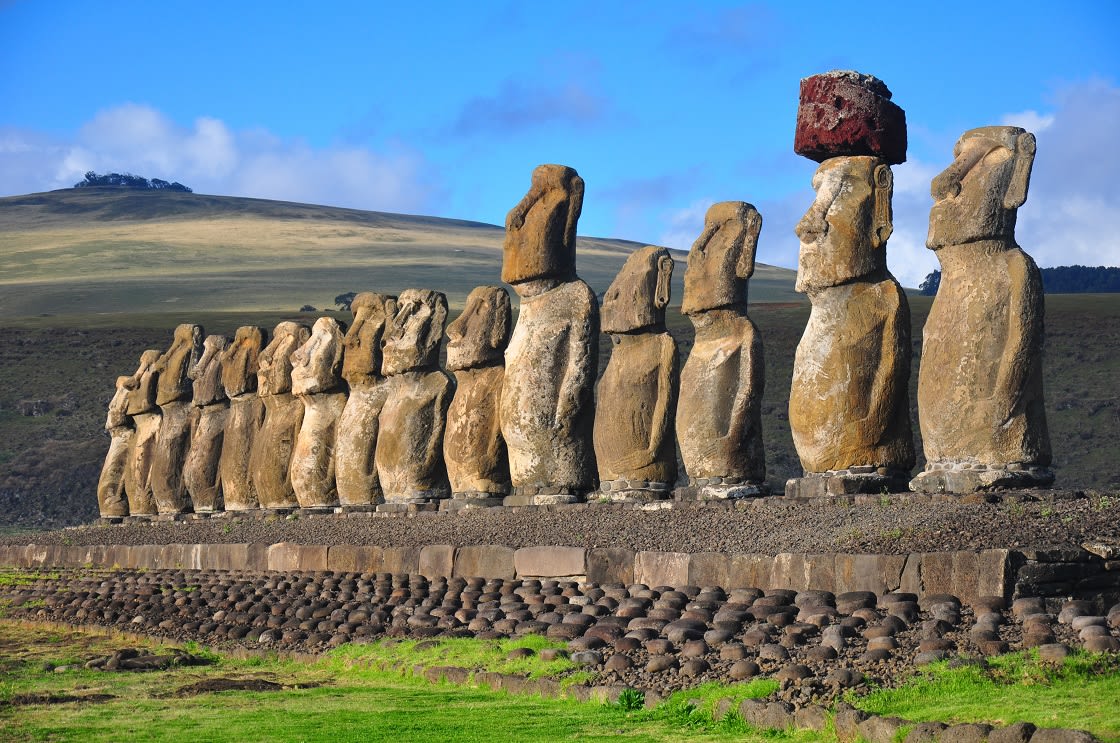
Easter Island is a treasure trove of ancient culture and history, winning this category decisively. The entire island is a UNESCO World Heritage site, a testament to the enigmatic Rapa Nui civilization. You'll spend days exploring the iconic Moai statues – colossal stone figures carved by the island's early inhabitants – at sites like Ahu Tongariki (with its 15 massive Moai), Rano Raraku (the Moai quarry), and Ahu Akivi (the only Moai facing the ocean). Beyond the statues, you can visit the ceremonial village of Orongo, with its fascinating petroglyphs and birdman cult history, or delve into the island's darker past of deforestation and societal collapse. The local Rapa Nui people are proud of their heritage, offering insights into their language, music, and traditions. The Galapagos' human history, while interesting (think Darwin's finches, pirates, and whaling), is largely overshadowed by its natural wonders. You can visit the Charles Darwin Research Station on Santa Cruz or learn about early settlers, but it's not the primary draw. "Easter Island gives you goosebumps thinking about how they moved those giant statues. The sheer scale and mystery are mind-blowing, way more immersive than just a museum." - r/Travel.
Winner takeaway
- Winner: Easter Island
- Why: Easter Island is a living museum dedicated to a unique, ancient civilization and its monumental stone figures, offering unparalleled cultural immersion.
- Who this matters for: History buffs, archaeology enthusiasts, and those fascinated by ancient mysteries and indigenous cultures.
🏨 Accommodation
Accommodation on Easter Island offers more traditional choice and flexibility. You'll find everything from charming, family-run cabañas (like Cabañas Anakena or Cabañas Mahia) starting around $70-120 USD per night, to comfortable boutique hotels such as Hotel Taura'a or the more upscale Explora Rapa Nui, which can be $500+ USD. There are also budget hostels for backpackers, like Hostal Kohu-Tena, around $30-50 USD. You book directly or via standard platforms, giving you control over your stay. The Galapagos, conversely, is largely cruise-centric. While there are hotels on the main inhabited islands (Santa Cruz, San Cristobal, Isabela), like Hotel Finch Bay or Ikala Galapagos Hotel in Puerto Ayora, these are often pricier ($150-400+ USD) and don't offer the same immersive multi-island experience as a cruise. Budget hotels exist but are basic. A significant portion of your 'accommodation' budget will go towards a cruise, which includes your cabin, meals, and excursions. "I loved the flexibility on Easter Island, could pick a cute cabana with a kitchen and feel local. Galapagos hotels felt like a consolation prize if you weren't on a boat." - Reddit comment.
Winner takeaway
- Winner: Easter Island
- Why: Easter Island provides more conventional accommodation options with greater booking flexibility and a range of price points outside of a fixed cruise itinerary.
- Who this matters for: Travelers who prefer independent hotel stays, varied choices, and the ability to cook some of their own meals.
🍽️ Food & Drink
Easter Island has a slightly more unique culinary identity, blending Polynesian traditions with Chilean flavors, making it the winner here. Fresh seafood is king – tuna (atún), mahi-mahi, and swordfish are common, often prepared as ceviche or grilled. Don't miss the local delicacy 'curanto,' a traditional feast cooked in an earth oven, though it's less common for tourists. Empanadas are ubiquitous and delicious. Restaurants like La Gruta, Te Moana, or Ona Cafe in Hanga Roa offer great ocean views and fresh catches for $25-50 USD per meal. Alcohol can be expensive due to import costs. In the Galapagos, food is typically Ecuadorian, heavily featuring seafood. Most cruises provide all meals, which are generally good but can be repetitive. On the inhabited islands, you'll find 'comedores' (local eateries) offering set lunch menus for $5-10 USD, and more tourist-focused restaurants with fresh fish (pescado frito), 'encebollado' (fish stew), and 'arroz con camarones' (rice with shrimp) for $15-35 USD. The 'Kioskos' street food area in Puerto Ayora is a great spot for local grilled fish. "The tuna on Easter Island was insane, so fresh, and the Polynesian twist was something special. Galapagos food was good, but pretty standard Ecuadorian seafood fare." - r/travel.
Winner takeaway
- Winner: Easter Island
- Why: Easter Island offers a more distinct and interesting culinary scene with a blend of Polynesian and Chilean flavors.
- Who this matters for: Foodies and those looking for unique cultural culinary experiences beyond standard tourist fare.
🚗 Getting Around
Easter Island is much easier to navigate independently, giving it the edge for getting around. The island is small (about 160 sq km), and renting a car (around $70-100 USD/day) or even a scooter ($40-50/day) or ATV gives you the freedom to explore the Moai sites and beaches at your own pace. There are also local taxis and guided tours. Roads are generally well-maintained. You can easily spend 3-4 days covering all major sites with your own transport. The Galapagos is a different beast entirely. Getting around between islands necessitates either inter-island speedboats (lanchas, $30-40 USD per leg, about 2-3 hours between islands like Santa Cruz, San Cristobal, Isabela) or being part of an organized cruise, which handles all transfers. On the inhabited islands, you can walk, bike, or take short taxi rides (usually $1-3 USD for local trips). But to see the iconic wildlife sites, you absolutely need to join guided tours, which include boat transport and licensed naturalists. "Renting an ATV on Easter Island and just driving around, stopping wherever I wanted, was pure freedom. In Galapagos, I felt constantly herded from one boat to another." - Reddit user.
Winner takeaway
- Winner: Easter Island
- Why: Easter Island offers more independent and flexible transportation options, allowing visitors to explore at their own pace.
- Who this matters for: Independent travelers who enjoy self-driving and creating their own itineraries without strict schedules.
⛰️ Activities & Adventure
For sheer diversity and uniqueness of adventure activities, the Galapagos Islands are unmatched. While Easter Island offers fascinating cultural exploration, hiking volcanic craters like Rano Kau, exploring caves (like Ana Te Pahu), horseback riding, and relaxing/snorkeling at Anakena beach, its adventure scope is more limited. The Galapagos, however, provides a constant stream of unique, immersive experiences. Imagine snorkeling alongside playful sea lions, marine iguanas, and reef sharks, or diving with hammerheads and Manta rays at world-renowned sites like Gordon Rocks. Land excursions involve hiking across lava fields to observe giant tortoises in their natural habitat or witnessing blue-footed boobies nesting. Kayaking through mangroves, paddleboarding, and even surfing are also popular. Every day on a Galapagos cruise brings a new island, a new landing, and new species to encounter, all led by expert naturalist guides. "Snorkeling with a dozen sea lions doing flips around me in the Galapagos was the most incredible thing I've ever done. Easter Island was cool for history, but Galapagos was pure adventure." - r/travel.
Winner takeaway
- Winner: Galapagos
- Why: The Galapagos offers an incredible range of unique, immersive, and unparalleled wildlife-focused adventure activities, from world-class diving to close encounters with rare species.
- Who this matters for: Thrill-seekers, divers, snorkelers, and those whose primary goal is active wildlife interaction and outdoor exploration.
🚶♀️ Solo Travel
Easter Island is a fantastic destination for solo travelers due to its small size, safety, and welcoming atmosphere. Hanga Roa, the main town, is easily walkable, and it's common to meet other solo travelers in hostels or on group tours. Renting a car or scooter provides independence without feeling isolated, and locals are generally friendly and helpful. While flights are expensive, once there, budget options like hostels or cabañas with kitchens make solo travel more feasible. You have the freedom to set your own pace and itinerary. The Galapagos is also very safe, but solo travel can be a bit more logistically challenging and expensive. Cruises often charge a 'single supplement,' significantly increasing costs. Land-based solo travel is possible, but you'll still need to join daily tours, which might mean less flexibility. It's easy to meet people on cruises or tours, but you're often tied to a group schedule. "I felt super comfortable and independent exploring Easter Island solo. In Galapagos, I was always part of a group, which was fine, but not the same vibe." - r/solotravel.
Winner takeaway
- Winner: Easter Island
- Why: Easter Island offers a more accessible, independent, and budget-friendly experience for solo travelers, fostering a sense of freedom and ease of navigation.
- Who this matters for: Independent solo travelers who value flexibility, personal exploration, and meeting other travelers organically.
☀️ Weather & Seasons
While Easter Island generally offers pleasant weather year-round, the distinct seasons of the Galapagos provide unique advantages, making it a nuanced winner based on what you prioritize. Easter Island has a subtropical climate; summers (Jan-March) are warm and humid, averaging 25-28°C (77-82°F), perfect for beaches. Winters (July-Sept) are mild, around 18-20°C (64-68°F), with more rain but still good for sightseeing. The weather is generally predictable and comfortable. The Galapagos has two main seasons: the warm and wet season (December to May) with temperatures 25-30°C (77-86°F), calmer seas, and excellent underwater visibility for snorkeling/diving. This is when birds nest and land animals are active. The cool and dry season (June to November) sees temperatures 20-25°C (68-77°F), choppier seas, and the 'garua' mist. This is also when the marine life (penguins, sea lions) are most active and feeding due to nutrient-rich upwellings. The choice depends on your preference: crystal clear waters vs. peak wildlife activity. "I went to Galapagos in September and the wildlife was just incredible, so many active animals everywhere, even if the water was a bit cooler. Easter Island was just... nice weather, no real 'season' for big animal events." - Reddit user.
Winner takeaway
- Winner: Galapagos
- Why: The Galapagos' distinct seasons offer unique and predictable wildlife viewing opportunities tied to specific times of the year, allowing travelers to target their desired experiences.
- Who this matters for: Travelers who want to optimize their visit for specific wildlife behaviors or water conditions, and prefer clear seasonal variations.
❓ Frequently Asked Questions
Which destination is significantly cheaper?
Easter Island is relatively cheaper once you're on the ground, especially if you opt for budget accommodation and self-catering. Flights to both are expensive, but the mandatory cruise and national park fees make the Galapagos significantly pricier overall.
Which has better wildlife viewing opportunities?
The Galapagos Islands are unparalleled for wildlife viewing. You'll encounter unique, fearless species like giant tortoises, marine iguanas, and blue-footed boobies up close. Easter Island has beautiful landscapes but lacks iconic native land animals.
Which offers a richer cultural experience?
Easter Island is a deep dive into ancient Polynesian culture, dominated by the mysterious Moai statues and the history of the Rapa Nui people. The Galapagos' cultural offerings are interesting but secondary to its natural and scientific history.
How many days are recommended for each destination?
For Easter Island, 4-5 full days are ideal to explore the main Moai sites, volcanoes, and beaches without rushing. For the Galapagos, a 5-8 day cruise is highly recommended to experience multiple islands and diverse wildlife, plus 1-2 days for transit.
Is it feasible to combine both Easter Island and Galapagos in one trip?
Yes, but it requires significant time (at least 2-3 weeks) and a substantial budget. You'd typically fly to Santiago for Easter Island, then connect to Ecuador for the Galapagos. It's an epic, but demanding, travel combination.
What's the best time to visit each?
Easter Island is pleasant year-round, with warmer, sunnier weather from January to March. For the Galapagos, December to May offers warm, calm seas and great snorkeling visibility, while June to November is cooler, with choppier waters but abundant marine wildlife activity due to nutrient-rich upwellings.
Are both destinations safe for travelers?
Both Easter Island and the Galapagos Islands are considered very safe destinations with low crime rates, especially for tourists. Standard travel precautions apply, but visitors generally feel very secure exploring both locations.
What are the typical flight routes and durations?
Easter Island requires a ~5.5-6 hour direct flight from Santiago, Chile (SCL) to Hanga Roa (IPC) on LATAM. For Galapagos, you fly internationally to Quito (UIO) or Guayaquil (GYE), then take a ~2-hour domestic flight to Baltra (GPS) or San Cristobal (SCY).
Ready to plan your South American adventure?
Get a free custom itinerary for Easter Island, Galapagos, or both — built from real traveler insights.
🎟️ Book Tours & Experiences
Hand-picked tours and activities for both destinations — book with free cancellation
Experiences via Viator — free cancellation on most tours