How we built this comparison
This page combines traveler discussion patterns, published price ranges, flight schedules, and seasonal data to help you decide between Finland and Germany.
- Reviewed 100+ Reddit threads from r/travel, r/solotravel, r/Finland, and r/Germany.
- Verified costs and logistics against current booking platforms (e.g., Booking.com, Deutsche Bahn, Finnair).
- Cross-referenced seasonal patterns and weather data from meteorological services.
⚡ Quick Answers
⚡ The TL;DR Verdict
For most travelers seeking a balance of history, city exploration, and value, Germany is the stronger pick. Its diverse regions and more approachable daily costs make it a versatile choice. Finland is for those prioritizing quiet nature, unique seasonal experiences like aurora, and are prepared for a higher budget.
- Choose Finland: Travelers seeking tranquil nature, Arctic experiences, a strong design culture, and a slower pace. Ideal for those who value quiet personal space and are comfortable with higher prices.
- Choose Germany: Travelers wanting a mix of history, castles, energetic cities, efficient transport, and a broader range of food and drink options. Good for budget-conscious explorers and history enthusiasts.
- Choose Both: If you have 3+ weeks and a generous budget, start in Germany for cities and culture, then fly to Finland for nature and relaxation. This combination provides a full European contrast.
Choose Finland
Choose Finland for an unparalleled escape into nature, whether witnessing the Aurora Borealis in Lapland or enjoying silent lake country. It's ideal for those prioritizing unique seasonal activities, a strong design culture in Helsinki, and serene outdoor adventures, provided you're comfortable with a higher travel budget.
Choose Germany
Germany is your go-to for a dynamic blend of rich history and vibrant city life, perfect for explorers eager to delve into Berlin's complex past or savor a traditional beer garden in Munich. With its efficient rail system connecting stunning castles like Neuschwanstein and diverse regions, it offers excellent value and variety for culture and history enthusiasts.
📊 Visual Scorecard
🌤 When to Visit
Average high temperatures (°C). Green = best months, orange = avoid.
Quick Comparison
| Category | Finland | Germany | Winner |
|---|---|---|---|
| Costs & Budget | Significantly higher daily expenses, especially for food and accommodation. Public transport is efficient but not cheap. | Generally more budget-friendly, particularly outside major tourist hubs. Berlin offers good value; Munich can be pricier. | Germany |
| Nature & Outdoors | Vast wilderness, thousands of lakes, Northern Lights in winter, Midnight Sun in summer. Focus on quiet immersion. | Diverse landscapes from alpine peaks to dense forests and river valleys. Good for hiking, cycling, and scenic drives. | Finland |
| Culture & History | Emphasis on design, sauna culture, modern art, and a relatively recent national identity. History is subtle. | Deep, complex history spanning millennia, from Roman ruins to medieval castles, and 20th-century events. Strong art and music scenes. | Germany |
| Food & Drink | Focus on fresh, seasonal ingredients, berries, fish, and rye bread. Cuisine can be simple and hearty, often expensive. | Diverse regional cuisines, hearty meat dishes, sausages, pretzels, and world-renowned beer. Excellent street food options. | Germany |
| Getting There | Helsinki is the main international hub. Direct flights from North America are available but fewer than to Central Europe. | Excellent connectivity with multiple major international airports. Direct flights from many global cities are common. | Germany |
| Getting Around | Good train network for long distances, excellent city public transport. Car rental is useful for remote areas. | Extensive and efficient train (Deutsche Bahn) and bus network. Autobahns allow fast driving, but speed limits exist in sections. | Germany |
| Accommodation | Modern hotels, design-focused stays, and cabins. Limited budget options, especially outside Helsinki. | Wide range from luxury hotels to budget hostels, guesthouses (Gasthöfe), and unique boutique stays. Good value options. | Germany |
| Nightlife | Helsinki has a concentrated bar and club scene. More relaxed and less sprawling than larger European cities. | Globally recognized club scene in Berlin, traditional beer halls in Munich, and diverse options in other major cities. | Germany |
| Safety | One of the safest countries globally. Low crime rates, friendly locals. Very safe for solo travelers. | Generally very safe. Major cities have typical petty crime, but serious crime is rare. Good emergency services. | Finland |
| Weather & Seasons | Long, cold, dark winters (ideal for Northern Lights) and short, mild summers (Midnight Sun). Distinct seasonal shifts. | Temperate climate with four distinct seasons. Warm summers, cold winters, and moderate spring/autumn. | Tie |
💰 Costs & Budget
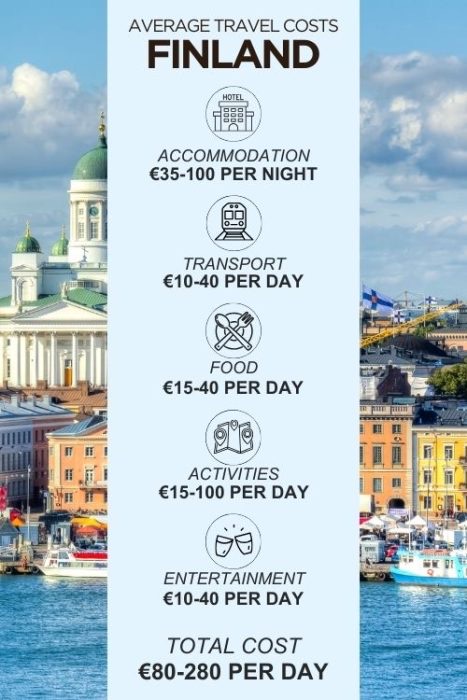
Finland consistently ranks among Europes more expensive destinations. A budget traveler should expect to spend at least €80-150 ($90-170) per day, even with careful planning. A…
Finland
Germany
Finland consistently ranks among Europes more expensive destinations. A budget traveler should expect to spend at least €80-150 ($90-170) per day, even with careful planning. A basic hostel bed in Helsinki might be €30-50 ($33-55), while a simple lunch costs €12-18 ($13-20). A beer can easily cost €6-9 ($7-10). Transportation, like a single metro ticket in Helsinki, is around €2.80-3.50 ($3-4). Activities like museum entries are typically €15-20 ($17-22).
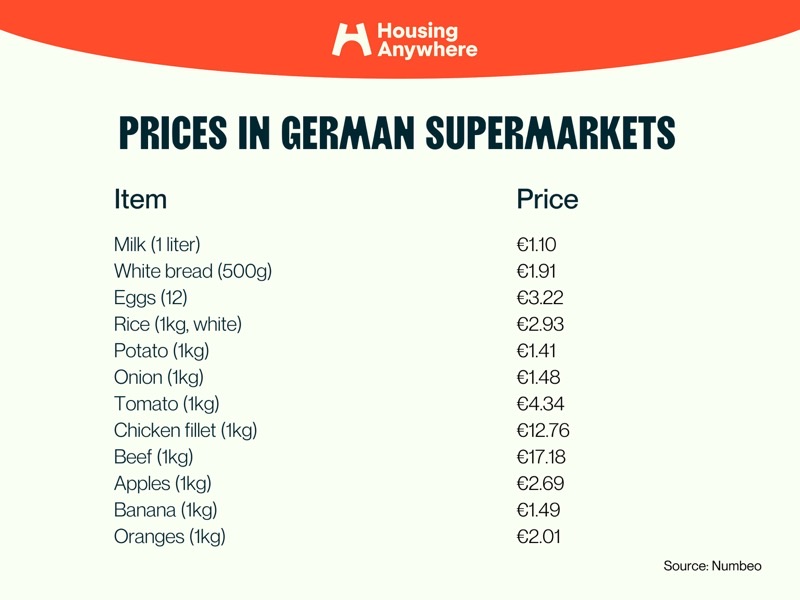
Germany provides better value for money. A budget traveler can manage on €50-100 ($55-110) per day. Hostel beds in Berlin are often €20-40 ($22-45), and a hearty lunch can be found for €8-14 ($9-15). A half-liter of local beer is often €3.50-5 ($4-6) at a traditional pub. Public transport, like a single ticket in Berlin, is about €2.90-3.80 ($3-4). Museum entry is usually €10-15 ($11-17), with many free attractions available. Germany wins for making your euros stretch further.
- Winner: Germany
- Why: Germany offers consistently lower daily costs for accommodation, food, and activities, making it more accessible for budget-conscious travelers.
- Who this matters for: Travelers on a tighter budget or those wanting to extend their trip duration.
🌲 Nature & Outdoors
Finland is a land of extensive forests and over 188,000 lakes. Its appeal lies in its quiet, clean wilderness. Lapland in the north offers unique Arctic experiences like chasing…
Finland
Germany
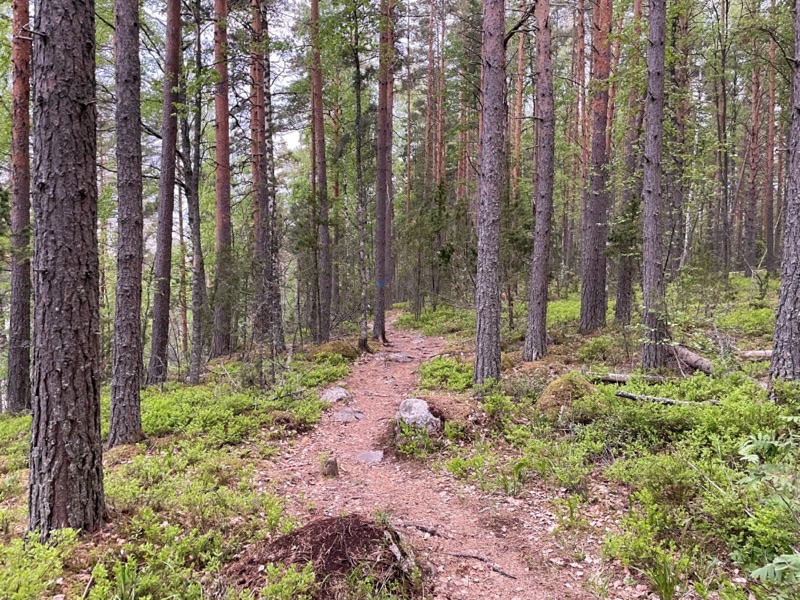
Finland is a land of extensive forests and over 188,000 lakes. Its appeal lies in its quiet, clean wilderness. Lapland in the north offers unique Arctic experiences like chasing the Northern Lights (visible roughly September to March) and dog sledding. Southern Finland has Nuuksio National Park, an easy day trip from Helsinki, providing trails and serene lake views. The Archipelago Sea offers island hopping. Summers bring the Midnight Sun, allowing for activities late into the night. It is a destination for solitude and specific seasonal events.
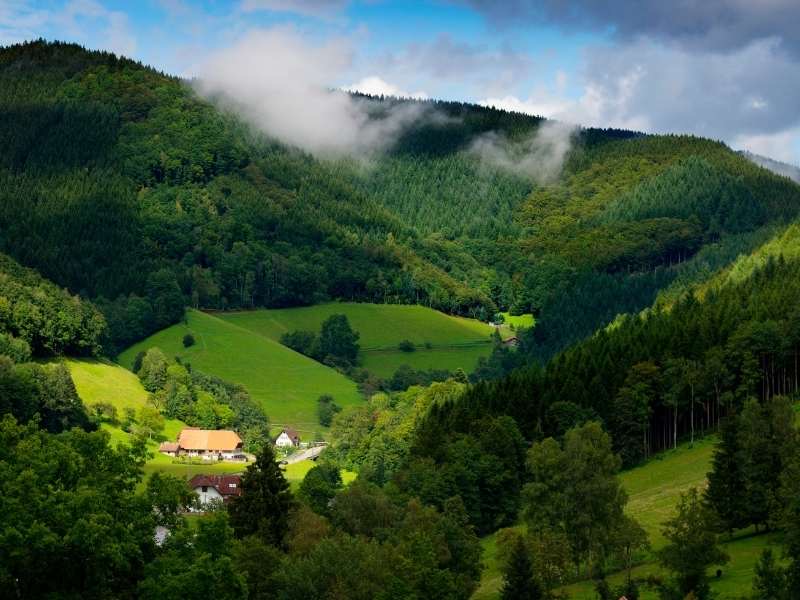
Germany provides a variety of natural settings. The Bavarian Alps in the south offer hiking and skiing, with Zugspitze as the countrys highest peak. The Black Forest provides dense woodlands and spa towns like Baden-Baden. The Rhine Valley is known for its castles and vineyards, suitable for river cruises and cycling. Saxon Switzerland National Park offers sandstone formations and climbing. While Germany has impressive nature, it often feels more managed and is frequently interspersed with towns and infrastructure. Finland wins if you seek true wilderness and unique seasonal phenomena.
- Winner: Finland
- Why: Finland offers more expansive, untouched wilderness and unique natural phenomena like the Northern Lights and Midnight Sun.
- Who this matters for: Travelers prioritizing untouched nature, quiet outdoor activities, and specific seasonal light phenomena.
🏛️ Culture & History
Finland presents a culture focused on design, functionality, and a close connection to nature. Helsinki features the Design Museum and Alvar Aalto House, showcasing Finnish…
Finland
Germany
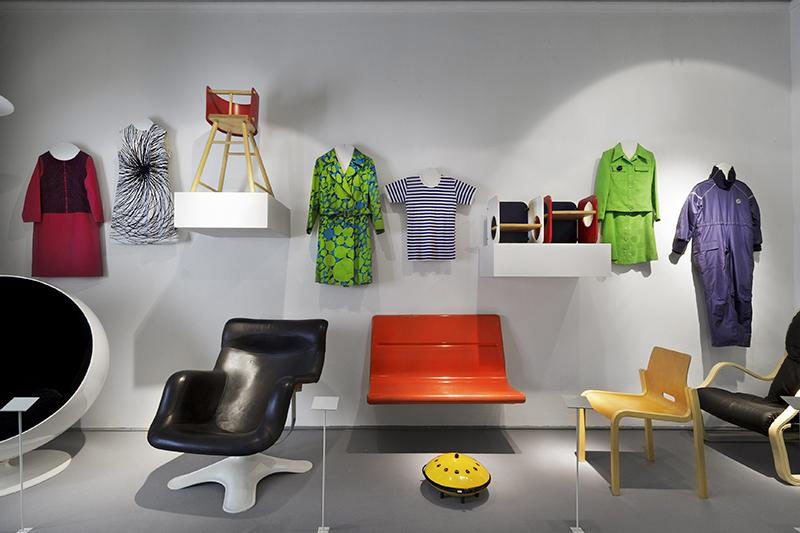
Finland presents a culture focused on design, functionality, and a close connection to nature. Helsinki features the Design Museum and Alvar Aalto House, showcasing Finnish modernism. Saunas are central to Finnish life, with public options like Löyly offering a contemporary experience. Its history is tied to Sweden and Russia, leading to a distinct independence narrative. Key historical sites are often less grand than in other European nations, with places like Suomenlinna sea fortress near Helsinki providing insight into its past. The culture is reserved and values personal space.
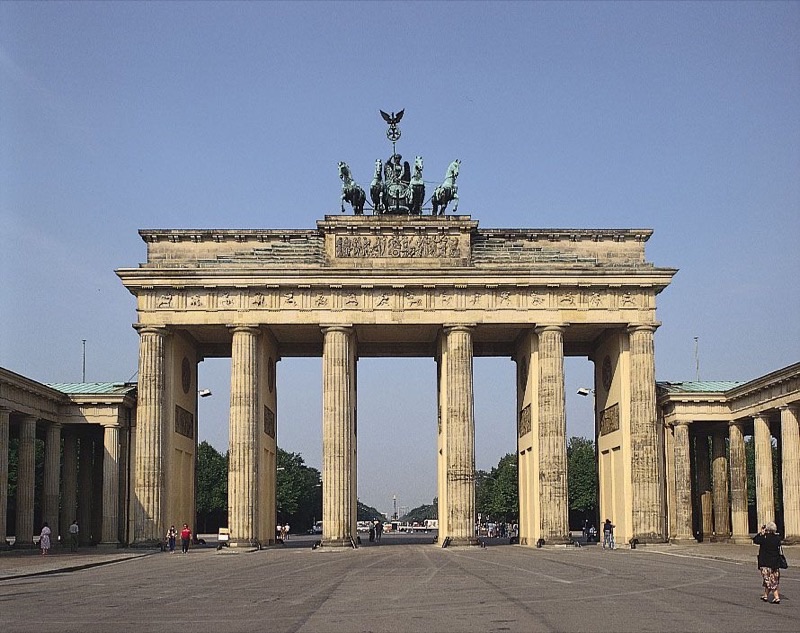
Germany has a layered and impactful history visible everywhere. Berlin alone offers the Brandenburg Gate, Reichstag Building, Berlin Wall Memorial, and numerous museums detailing Prussian history, the World Wars, and the Cold War. Cologne Cathedral demonstrates Gothic architectural prowess. Bavarias Neuschwanstein Castle is iconic. Germany also has a rich tradition in philosophy, classical music, and literature, with specific museums and venues dedicated to Goethe, Bach, and Beethoven. Its numerous medieval towns and Roman remnants add to a diverse historical narrative. Germany offers a far broader and more accessible historical and cultural landscape.
- Winner: Germany
- Why: Germany offers a significantly richer and more diverse historical narrative, with countless castles, museums, and historical sites from various eras.
- Who this matters for: History buffs, architecture enthusiasts, and those interested in European intellectual and political heritage.
🍽️ Food & Drink
Finnish cuisine often emphasizes fresh, natural ingredients, including salmon, reindeer, wild berries, and mushrooms. Staples include Karelian pies (karjalanpiirakka), salmon soup…

Finland
Germany
Finnish cuisine often emphasizes fresh, natural ingredients, including salmon, reindeer, wild berries, and mushrooms. Staples include Karelian pies (karjalanpiirakka), salmon soup (lohikeitto), and rye bread. Finnish food is typically wholesome but can be understated and less varied than in other European nations. Eating out is consistently expensive. For example, a main course at a decent restaurant in Helsinki often starts at €20-30 ($22-33). Traditional Finnish alcohol includes Koskenkorva vodka and local beers.
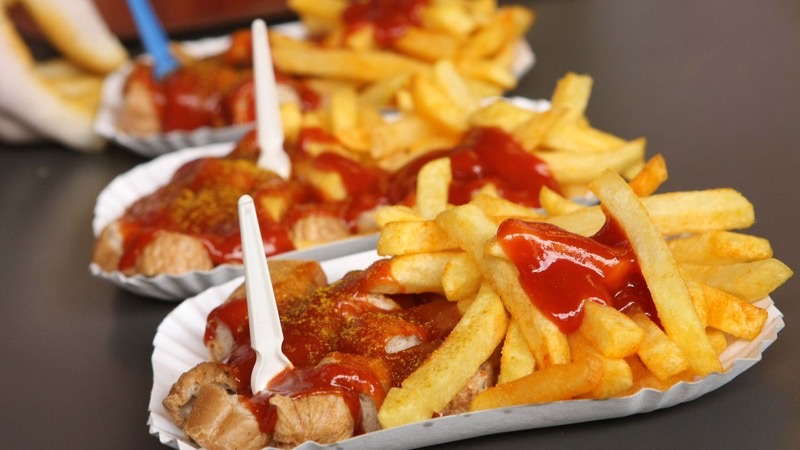
German food is known for its hearty portions and regional variations. Sausages (Bratwurst, Currywurst) are ubiquitous and affordable street food, often costing €3-5 ($3.50-5.50). Schnitzel, Sauerbraten, and pretzels are common. Bavarian cuisine includes Weißwurst and Leberkäse. Germany is famous for its beer, with thousands of local breweries and traditions like Oktoberfest. A meal at a traditional German restaurant might cost €12-20 ($13-22). Berlin offers a diverse international food scene at more affordable prices. Germany provides more options, better value, and a broader appeal for food and drink.
- Winner: Germany
- Why: Germany offers greater variety, more approachable price points, and a more globally recognized culinary and beverage scene.
- Who this matters for: Foodies, beer enthusiasts, and travelers looking for diverse and affordable meal options.
✈️ Getting There
Finland's main international gateway is Helsinki-Vantaa Airport (HEL). Finnair offers direct flights from several North American cities like New York (JFK) and Chicago (ORD), with…

Finland
Germany
Finland's main international gateway is Helsinki-Vantaa Airport (HEL). Finnair offers direct flights from several North American cities like New York (JFK) and Chicago (ORD), with flight times around 8-9 hours. From London, direct flights take approximately 2.5-3 hours. Flight prices can be higher, especially outside of peak summer or winter aurora seasons, often starting around $600-900 USD from the US. Regional flights within Europe to Helsinki are common but might require connections depending on the starting point.
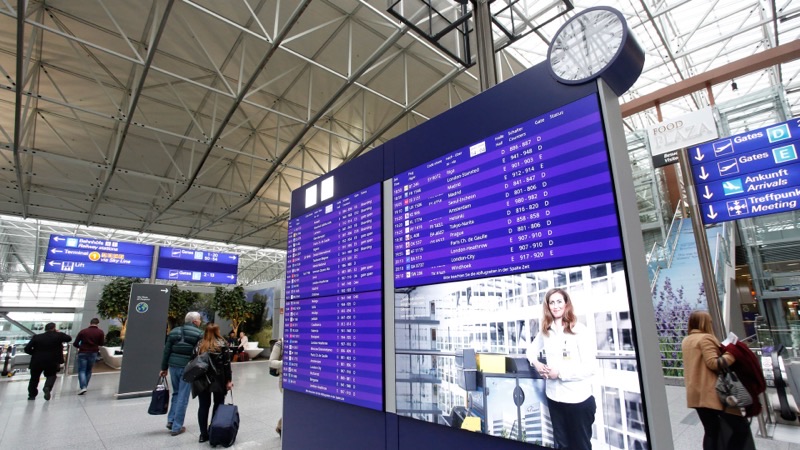
Germany benefits from a network of major international airports, including Frankfurt (FRA), Munich (MUC), Berlin (BER), and Düsseldorf (DUS). Frankfurt, in particular, is a major global hub. Direct flights from numerous North American cities are plentiful, often taking 7-8 hours to Frankfurt or Berlin. Flight prices can be competitive, with round trips from the US sometimes available for $500-800 USD. Connectivity across Europe is also superior, with frequent and often cheaper regional flights. Germany offers more choice, better availability, and generally lower airfares for international travelers.
- Winner: Germany
- Why: Germany has more international airport hubs, greater flight frequency, and often more competitive airfare from global origins.
- Who this matters for: Travelers prioritizing easy and affordable access from a wide range of international departure points.
🚆 Getting Around
Finland has an effective but relatively sparse public transport system outside of major cities. VR trains connect major hubs like Helsinki, Tampere, and Turku, and extend up to…
Finland has an effective but relatively sparse public transport system outside of major cities. VR trains connect major hubs like Helsinki, Tampere, and Turku, and extend up to Lapland. City public transport, particularly in Helsinki, is excellent with trams, buses, and a metro. However, exploring the vast natural areas, especially in the east or far north, often requires renting a car. Rental costs can be high, starting at €50-80 ($55-90) per day. Distances between natural attractions can be significant.
Germany boasts one of Europes best public transport networks. Deutsche Bahn (DB) trains are extensive, connecting nearly every town and city efficiently. Regional trains are often affordable with Länder-Tickets. Major cities have comprehensive U-Bahn (metro), S-Bahn (suburban train), tram, and bus systems. The Autobahn network is renowned for its sections without speed limits, making car travel fast, though fuel costs add up. A 7-day German Rail Pass can cost around €200-300 ($220-330). Germany wins for the sheer efficiency, coverage, and variety of its transport options.
- Winner: Germany
- Why: Germany offers a more comprehensive, efficient, and diverse public and private transport network across the entire country.
- Who this matters for: Travelers who rely on public transport to cover significant distances and explore multiple regions.
🛌 Accommodation
Finland offers modern and well-maintained accommodation. In Helsinki, expect hotels like Scandic or Sokos, with standard rooms often €120-200 ($130-220) per night. Hostels like…
Finland offers modern and well-maintained accommodation. In Helsinki, expect hotels like Scandic or Sokos, with standard rooms often €120-200 ($130-220) per night. Hostels like Eurohostel can be €30-50 ($33-55) for a dorm bed. Further afield, cabins (mökki) are a popular choice, especially in summer, but require planning. Airbnb options are available but can be pricey. Budget options are fewer and fill up quickly, particularly in peak seasons like winter in Lapland or summer in the archipelago.
Germany provides a much broader spectrum of accommodation at varying price points. In cities like Berlin, you can find quality hostel dorms for €20-40 ($22-45), while budget hotel chains like Motel One offer rooms for €80-120 ($90-130). Munich tends to be more expensive. Throughout the country, family-run guesthouses (Gasthöfe or Pensionen) offer a charming and often affordable alternative, typically €60-100 ($65-110). Booking.com and Airbnb have extensive listings. Germany wins for its wider selection and better value in accommodation.
- Winner: Germany
- Why: Germany offers more diverse accommodation types at a wider range of price points, providing better value for most budgets.
- Who this matters for: Travelers seeking flexibility in accommodation choices and those on a budget who want comfortable stays.
🍻 Nightlife
Helsinki offers a decent but somewhat contained nightlife. The Kallio district is known for its bars and pubs, appealing to a younger crowd. Clubs like Kaiku or Ääniwalli provide…
Helsinki offers a decent but somewhat contained nightlife. The Kallio district is known for its bars and pubs, appealing to a younger crowd. Clubs like Kaiku or Ääniwalli provide electronic music experiences. The scene is generally more relaxed and less sprawling than in larger European capitals. Drink prices are high; a cocktail can easily be €12-18 ($13-20). Outside of Helsinki, nightlife is very limited, usually confined to local pubs.
Germany has a diverse and often legendary nightlife. Berlin is internationally recognized for its electronic music clubs like Berghain/Panorama Bar and Sisyphos, offering unique and extensive experiences. Munich is famous for its beer halls, like Hofbräuhaus, providing a traditional, social atmosphere. Cologne and Hamburg also have vibrant bar and club scenes. Drink prices are generally more affordable, with a beer often €3.50-6 ($4-7) and cocktails €8-14 ($9-15). Germany wins for the scale, reputation, and variety of its nightlife options.
- Winner: Germany
- Why: Germany offers a more diverse, extensive, and internationally renowned nightlife, from Berlins clubs to Munichs beer halls.
- Who this matters for: Party-goers, music enthusiasts, and those looking for varied evening entertainment options.
✅ Safety
Finland consistently ranks among the safest countries in the world. Crime rates are exceptionally low, and violent crime is rare. You can generally feel safe walking alone at…
Finland consistently ranks among the safest countries in the world. Crime rates are exceptionally low, and violent crime is rare. You can generally feel safe walking alone at night in most areas, even in Helsinki. Locals are generally reserved but helpful if approached. Pickpocketing is not a significant concern, even in tourist areas. Emergency services are efficient and reliable. Finland provides an exceptionally secure environment for all types of travelers, including solo adventurers.
Germany is also a very safe country for travelers. Major cities like Berlin, Munich, and Frankfurt have some petty crime, such as pickpocketing, especially in crowded tourist spots, train stations, or during large festivals. However, serious crime against tourists is uncommon. Public transport is safe, even late at night. Emergency services are well-organized and effective. While Germany is safe, it requires a standard level of urban awareness that Finland generally does not. Finland takes the edge for its exceptionally low crime rates and pervasive sense of security.
- Winner: Finland
- Why: Finland has lower crime rates across the board and an exceptionally pervasive sense of security, even in its urban centers.
- Who this matters for: Solo travelers, families, and anyone prioritizing a worry-free travel experience with minimal safety concerns.
☀️ Weather & Seasons
Finland experiences extreme seasonal differences. Winters (November-March) are long, cold, and dark, with temperatures often well below 0°C (32°F), especially in Lapland where…
Finland experiences extreme seasonal differences. Winters (November-March) are long, cold, and dark, with temperatures often well below 0°C (32°F), especially in Lapland where -20°C (-4°F) is common. This is the prime time for Northern Lights. Summers (June-August) are short and mild, with temperatures around 15-25°C (59-77°F), featuring the Midnight Sun in the north. Spring and autumn are brief transition periods. Each season offers unique activities, but travelers must prepare for the specific conditions.
Germany has a generally temperate climate with four distinct seasons. Summers (June-August) are warm, with temperatures often between 20-30°C (68-86°F), suitable for outdoor activities and city exploration. Winters (December-February) are cold, with temperatures often around 0°C (32°F) and occasional snow, creating festive Christmas markets. Spring and autumn are mild and pleasant, ideal for hiking and sightseeing with fewer crowds. Germany offers a more consistently comfortable climate for a broader range of outdoor activities throughout the year, but Finlands unique seasonal extremes offer compelling, distinct experiences. This category is a tie, as their differences cater to different travel goals.
- Winner: Tie
- Why: Both countries offer compelling and distinct seasonal experiences; Finland for extremes like aurora and midnight sun, Germany for balanced four-season comfort.
- Who this matters for: Travelers with specific weather preferences or those chasing unique seasonal phenomena versus consistent comfort.
🎯 The Decision Framework
Choose Finland If…
- You want to see the Northern Lights or the Midnight Sun.
- You dream of staying in a glass igloo or a remote wilderness cabin.
- You appreciate modern design and clean, functional aesthetics.
- You seek quiet natural beauty over crowded historical sites.
- You enjoy saunas as a core cultural and relaxing experience.
- You value personal space and a reserved, polite local interaction.
- You are prepared for a higher travel budget.
- You want to experience a unique Nordic climate.
Choose Germany If…
- You want to explore centuries of European history and iconic castles.
- You are looking for diverse urban experiences, from Berlin's clubs to Munich's beer halls.
- You prefer a more budget-friendly European adventure.
- You enjoy efficient and extensive public transportation across a country.
- You want a wide array of food and drink options at accessible prices.
- You appreciate varied landscapes, from mountains to forests and river valleys.
- You prefer a temperate climate with four distinct, less extreme seasons.
- You are interested in major cultural festivals like Oktoberfest.
📅 Sample Itineraries
Weekend in Finland (3 Days)
💡 Purchase a Helsinki Card for 24, 48, or 72 hours (from €54) to save on public transport, museum entries, and the Suomenlinna ferry.
Weekend in Germany (3 Days)
💡 Invest in a Berlin WelcomeCard (from €24 for 48h) for unlimited public transport and discounts on attractions, particularly useful for museum visits.
One Week in Finland (7 Days)
💡 Book train tickets well in advance with VR (Finnish Railways) for cheaper fares, especially for longer journeys to Tampere or Rovaniemi.
One Week in Germany (7 Days)
💡 Consider a 'Bayern Ticket' for regional train travel within Bavaria (from €29 for one person) for economical day trips to Neuschwanstein or the Alps.
❓ Frequently Asked Questions
What is a realistic daily budget difference between Finland and Germany?
For budget travelers, Finland typically requires €80-150 ($90-170) per day, even with careful spending. Germany is more affordable, often manageable on €50-100 ($55-110) per day, especially outside of Munich. Accommodation and restaurant meals are notably pricier in Finland.
Which country is better for winter activities?
Finland, specifically Lapland, is better for unique winter activities like chasing the Northern Lights, dog sledding, reindeer sleigh rides, and snowmobiling. Germany offers traditional skiing in the Alps and charming Christmas markets, but lacks the Arctic appeal of Finland.
Is public transport easy to use in both countries?
Yes, public transport is efficient in both. Germany's Deutsche Bahn train network is more extensive and covers more regions, making inter-city travel very straightforward. Finland's train network is good between major cities, and Helsinki's city transport is excellent, but exploring remote nature often requires a car.
Which country offers more to do for families with children?
Germany generally offers more varied family attractions, including numerous castles, theme parks like Europa-Park, interactive museums, and child-friendly city parks. Finland has Moominworld and Santa Claus Village, but overall recreational options are fewer and often more nature-focused.
Can I see castles in both Finland and Germany?
You can find castles in both, but Germany is the clear winner for variety and grandeur. Germany has hundreds of medieval and fairy-tale castles like Neuschwanstein and Burg Eltz. Finland has a few historic fortresses like Suomenlinna, but they are fewer and different in style.
Which country is better for a solo female traveler?
Both countries are very safe for solo female travelers. Finland has an exceptionally low crime rate, making it perhaps marginally safer overall with fewer petty crime concerns. Germany is also very safe, though standard big-city awareness is advisable in its larger urban centers.
What is the primary language barrier like in each country?
In Finland, most young people and those in the service industry speak excellent English, especially in Helsinki and tourist areas. In Germany, English is widely spoken in major cities and tourist spots, but less so in smaller towns. Learning a few basic German phrases can be helpful.
Which country has better hiking opportunities?
Both have good hiking. Finland offers extensive, quiet wilderness trails, particularly in its numerous national parks, ideal for solitude and long treks. Germany provides varied terrain from the Bavarian Alps to the Black Forest, often with more established, well-marked trails and hut systems, catering to different skill levels.
Ready to plan your European trip?
Get a free custom itinerary for Finland, Germany, or both — built from real traveler insights.
👥 Travelers Also Compared
🎟️ Book Tours & Experiences
Hand-picked tours and activities for both destinations — book with free cancellation
Experiences via Viator — free cancellation on most tours