How we built this comparison
This page combines traveler discussion patterns, published price ranges, flight schedules, and seasonal data to help you decide between Germany and Spain.
- Reviewed 50+ Reddit threads from r/travel, r/solotravel, r/Germany, r/Spain, and r/EuropeTravel for real traveler experiences.
- Verified costs for flights, accommodation, and daily expenses against current booking platforms and reported averages.
- Cross-referenced seasonal patterns and weather data from meteorological sources for accurate climate descriptions.
⚡ Quick Answers
⚡ The TL;DR Verdict
For most travelers seeking a well-rounded European trip with historical weight, dependable infrastructure, and a substantial portion of things to do, Germany slightly edges out Spain. However, if your priority is warm weather, a more relaxed pace, and a lower daily budget without sacrificing experiences, Spain is your pick. Expect to spend $80-150/day in Germany versus $60-120/day in Spain for a comfortable mid-range trip.
- Choose Germany: If you appreciate efficient logistics, extensive history from castles to modern innovations, structured cities, and a diverse range of landscapes from mountains to forests. Ideal for those who enjoy a plan and comfortable, clean environments, even if it means slightly higher costs.
- Choose Spain: If you're seeking sun, a later schedule, a more outwardly expressive culture, and a generally lower daily spend. It's excellent for food explorers, beach enthusiasts, and those who thrive in a lively, social atmosphere where late nights are the norm and siestas are respected.
- Choose Both: To experience both, allocate at least two weeks, focusing on a major city in each (e.g., Berlin and Barcelona) and one or two additional regions. Flying between them takes around 2-3 hours and costs $50-150 for a budget flight, making a combined trip feasible for a longer itinerary.
Choose Germany
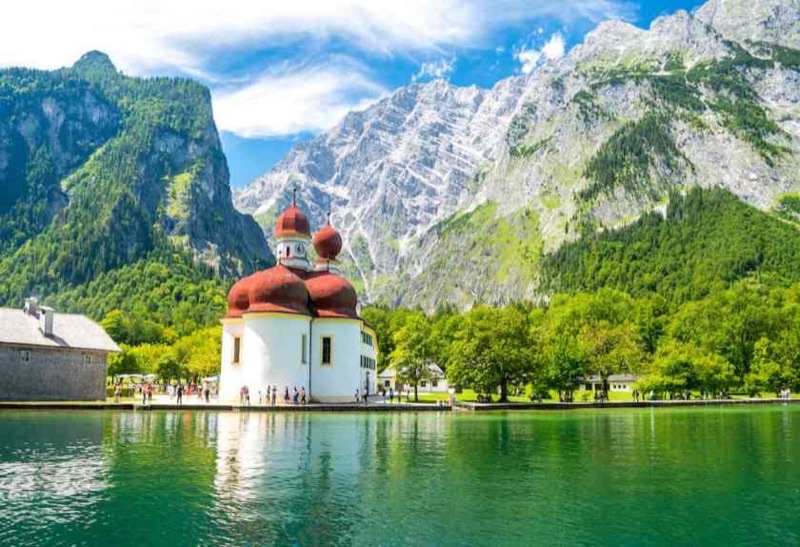
Choose Germany if you're a traveler who values precision, deeply rich history, and well-maintained infrastructure. It's ideal for exploring majestic Bavarian castles like Neuschwanstein, delving into Berlin's complex past, or enjoying the lively atmosphere of Oktoberfest, perfect for those comfortable with a $80-150 daily budget for a comfortable trip.
Choose Spain
Opt for Spain if your ideal vacation involves soaking up sun, savoring incredible food, and immersing yourself in a vibrant, passionate culture. It's perfect for tapas crawls in Andalusia, admiring Gaudi's masterpieces in Barcelona, or simply relaxing on Mediterranean beaches, making it an excellent choice for budget-conscious explorers at $60-120/day.
📊 Visual Scorecard
🌤 When to Visit
Average high temperatures (°C). Green = best months, orange = avoid.
Quick Comparison
| Category | Germany | Spain | Winner |
|---|---|---|---|
| Food & Drink | Hearty, traditional fare like schnitzel and sausage; world-renowned beer culture. | Diverse regional cuisine, focus on tapas, seafood, and late-night dining. | Spain |
| Culture & History | Profound WWII history, Roman influence, medieval castles, strong classical music tradition. | Deep Roman, Moorish, and Catholic history, Gaudi architecture, Flamenco, diverse regional identities. | Tie |
| Costs & Budget | Generally higher costs for accommodation and dining, but public transport is efficient. | More budget-friendly for food, drink, and accommodation; good value for transport. | Spain |
| Getting There & Around | Excellent air connections, efficient and extensive train network (Deutsche Bahn), Autobahn for driving. | Good air connections, high-speed rail (AVE) for major cities, extensive bus networks. | Germany |
| Accommodation | Clean, efficient hostels and hotels; good mid-range options. | Wide range from budget 'hostales' to boutique hotels; more Airbnb options. | Tie |
| Nightlife | Berlin's renowned techno scene, traditional Bavarian beer gardens, structured closing times. | Late-night tapas bars, discotecas open until dawn, vibrant street life. | Spain |
| Nature & Outdoors | Bavarian Alps, Black Forest, Rhine River, extensive national parks for hiking. | Pyrenees mountains, Sierra Nevada, Canary Islands beaches, diverse national parks. | Spain |
| Weather & Seasons | Warm summers, cold snowy winters, noticeable shoulder seasons. | Hot dry summers, mild winters, significant regional variations. | Spain |
| Safety | Generally very safe with low rates of violent and petty crime. | Generally safe, but petty crime (pickpocketing) is more common in tourist areas. | Germany |
| Day Trips | Castles, historical towns, scenic rivers; easy access by train. | Ancient cities, coastal towns, monasteries; well-connected by rail and bus. | Tie |
🍻 Food & Drink
Germany's food scene often gets a bad rap, but it’s unfair. You will find satisfying, hearty meals. In Bavaria, expect dishes like Schweinshaxe (pork knuckle) and Weisswurst…
Germany
Spain
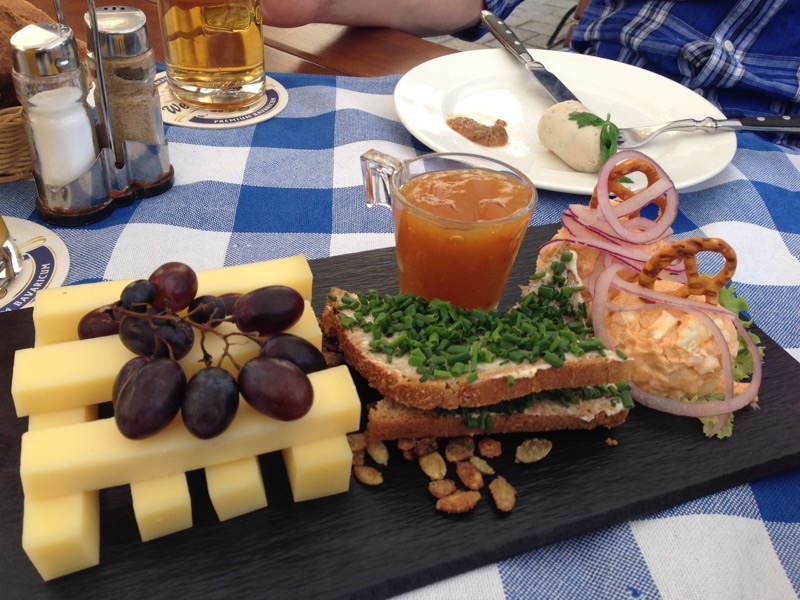
Germany's food scene often gets a bad rap, but it’s unfair. You will find satisfying, hearty meals. In Bavaria, expect dishes like Schweinshaxe (pork knuckle) and Weisswurst (white sausage) with pretzels, often served in large beer halls such as Munich's Hofbräuhaus, where a liter of beer costs around €10-12 ($11-13). Berlin offers a more international array, with excellent Turkish döner kebabs for €5-7 ($5.50-7.50) and Currywurst for about €4 ($4.40). Restaurants like Maximilians Berlin serve traditional German cuisine effectively. Quality bakeries are everywhere, with excellent bread and pastries. It’s comforting, but perhaps not consistently adventurous.
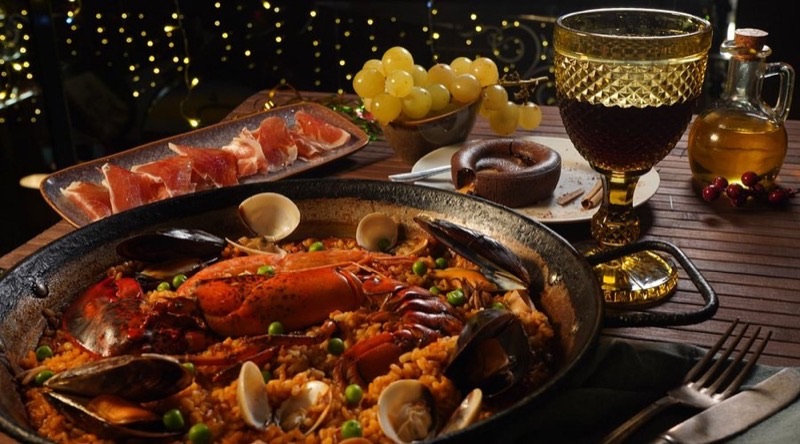
Spain excels in its food offerings due to its social aspect and regional diversity. Tapas culture means you can try many small dishes. In Madrid, places like Mercado de San Miguel offer various stalls, with tapas costing €3-7 ($3.30-7.70) each. Paella in Valencia, fresh seafood in Galicia, and Jamón Ibérico across the country are highlights. A good bottle of local wine is often under €10 ($11) at a supermarket, and a caña (small beer) costs €2.50-4 ($2.75-4.40) in a bar. Dining is a late affair, with dinner often starting after 9 PM. For flavor, variety, and social experience, Spain has a clear edge.
- Winner: Spain
- Why: Spain's food offers immense variety, a social dining culture, and generally higher flavor complexity across its regions.
- Who this matters for: Food explorers, social eaters, and those seeking varied culinary experiences.
🏛️ Culture & History
Germany holds significant historical weight, particularly regarding 20th-century events. In Berlin, the remnants of the Berlin Wall, the Brandenburg Gate, and museums like the…
Germany
Spain
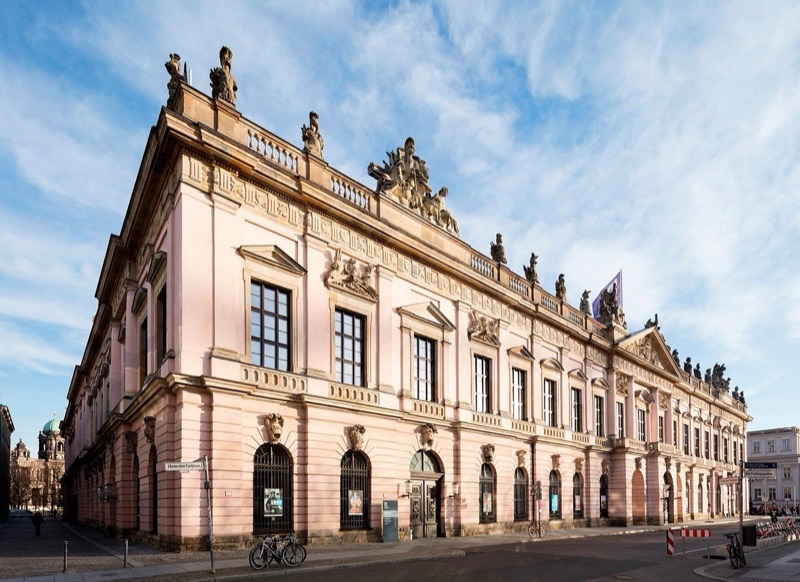
Germany holds significant historical weight, particularly regarding 20th-century events. In Berlin, the remnants of the Berlin Wall, the Brandenburg Gate, and museums like the Topography of Terror offer sobering, important insights into WWII and the Cold War. Cologne Cathedral showcases incredible Gothic architecture, while Bavaria is home to storybook castles like Neuschwanstein, costing €17.50 ($19.25) for entry. Cities like Trier exhibit substantial Roman ruins. German culture also centers on efficiency, intellectual pursuits, and a strong tradition of classical music and philosophy. It's a country where history is meticulously preserved and presented.
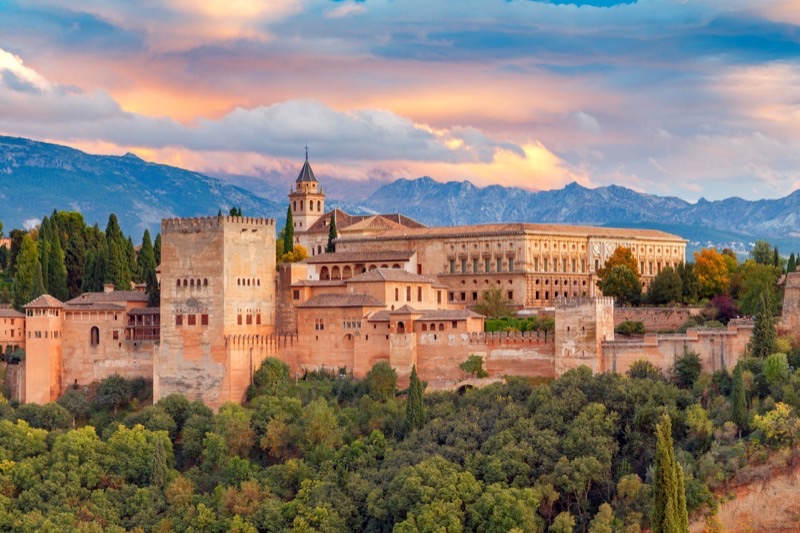
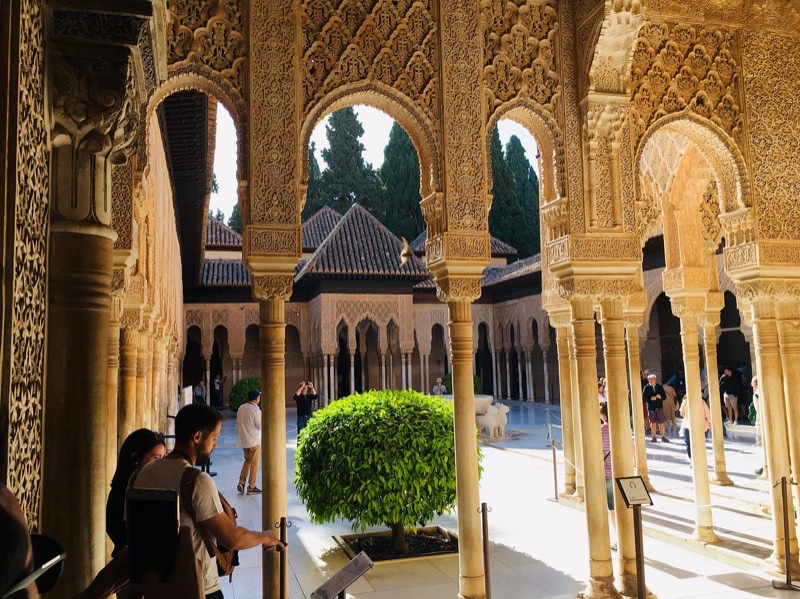
Spain's history is equally compelling, spanning Roman empires, centuries of Moorish rule in the south, and a powerful Catholic legacy. The Alhambra in Granada is a peak of Moorish architecture, with entry around €19 ($20.90). Barcelona displays Antoni Gaudi's distinct Modernisme architecture, with Sagrada Familia tickets costing €30-40 ($33-44). The Prado Museum in Madrid houses Spanish masterworks. Flamenco performances in Seville provide an emotional, cultural experience. Each region in Spain, from Catalonia to Andalusia, maintains a strong, distinct identity and historical narrative. Both countries offer rich, complex layers for history enthusiasts; it truly depends on which specific historical eras appeal more.
- Winner: Tie
- Why: Both countries offer deep, complex historical narratives and profound cultural experiences, making a definitive 'winner' impractical.
- Who this matters for: Anyone with a serious interest in historical periods or artistic movements.
💰 Costs & Budget
Germany, particularly cities like Munich and Frankfurt, can be pricier. A budget hostel bed in Berlin or Munich costs €30-50 ($33-55) per night, while a mid-range hotel room…
Germany
Spain
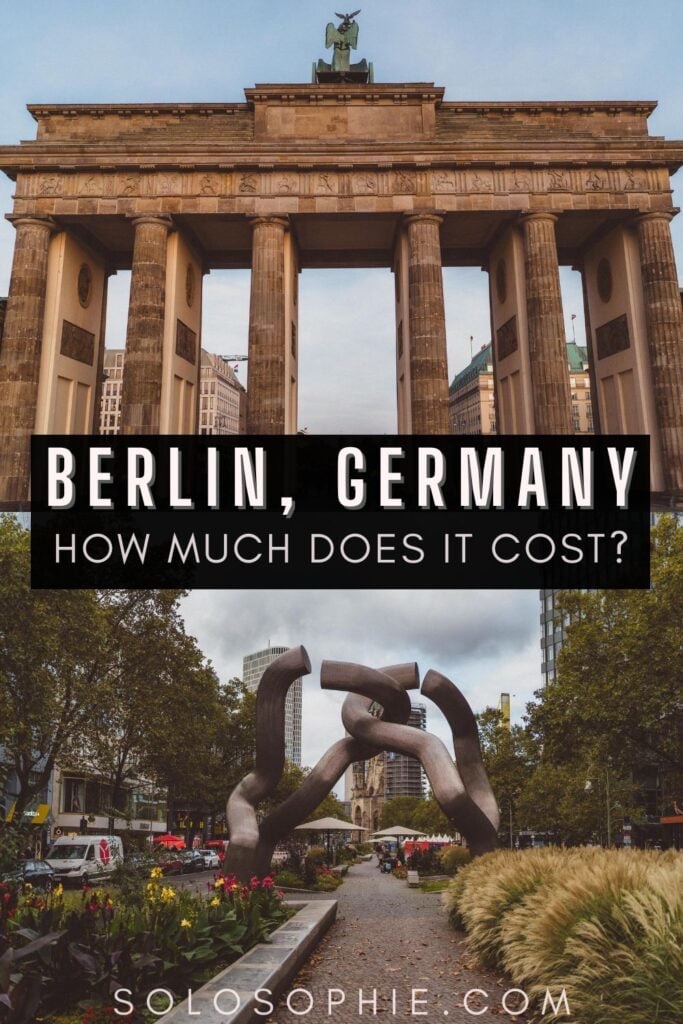
Germany, particularly cities like Munich and Frankfurt, can be pricier. A budget hostel bed in Berlin or Munich costs €30-50 ($33-55) per night, while a mid-range hotel room starts at €80-150 ($88-165). Meals in a sit-down restaurant range from €15-25 ($16.50-27.50). Public transport day passes in major cities are around €8-10 ($8.80-11). Groceries are reasonably priced, allowing for some savings if you cook. Expect a comfortable budget traveler to spend €70-120 ($77-132) per day, while a mid-range traveler might spend €130-200 ($143-220) or more.
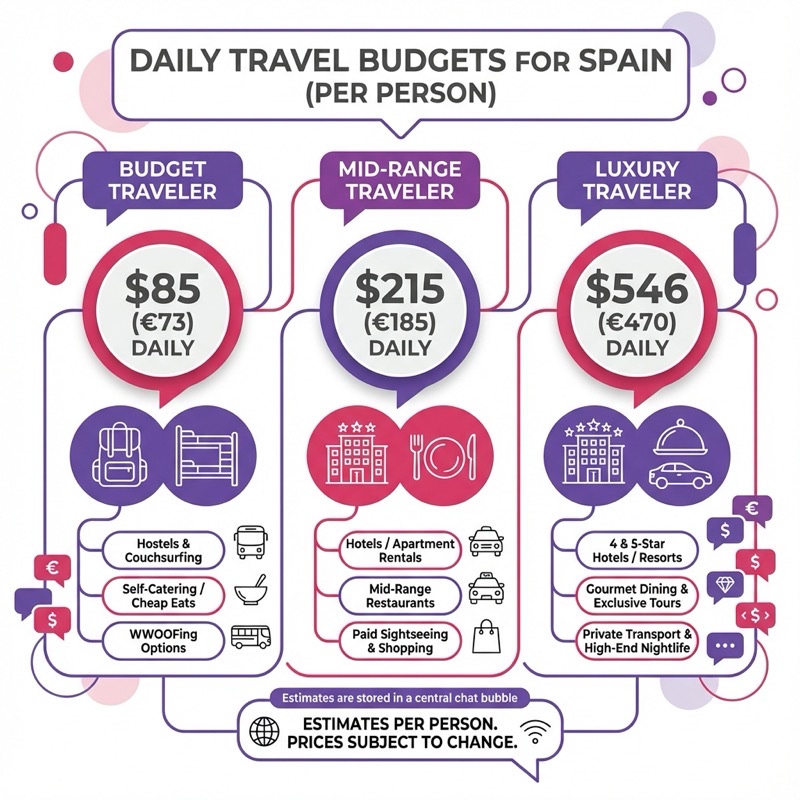
Spain offers better value for money. A budget hostel bed in Madrid or Seville costs €20-40 ($22-44), and a mid-range hotel room is often €60-120 ($66-132). Tapas and small meals can be had for €10-15 ($11-16.50), especially if you stick to local spots outside primary tourist zones. A glass of wine or small beer is often €2-4 ($2.20-4.40). Public transport is also affordable, with single metro rides around €1.50-2 ($1.65-2.20). Daily budgets for a comfortable traveler are often in the €50-90 ($55-99) range, and mid-range travelers might spend €100-150 ($110-165). For budget-conscious travelers seeking to stretch their funds, Spain is a more suitable choice.
- Winner: Spain
- Why: Spain consistently offers lower prices for accommodation, food, and drink, providing better value for budget-conscious travelers.
- Who this matters for: Budget travelers, long-term travelers, and those wanting to maximize their travel funds.
🚆 Getting There & Around
Germany has major international airports like Frankfurt (FRA) and Munich (MUC), offering numerous direct flights from North America. A flight from New York (JFK) to Frankfurt…
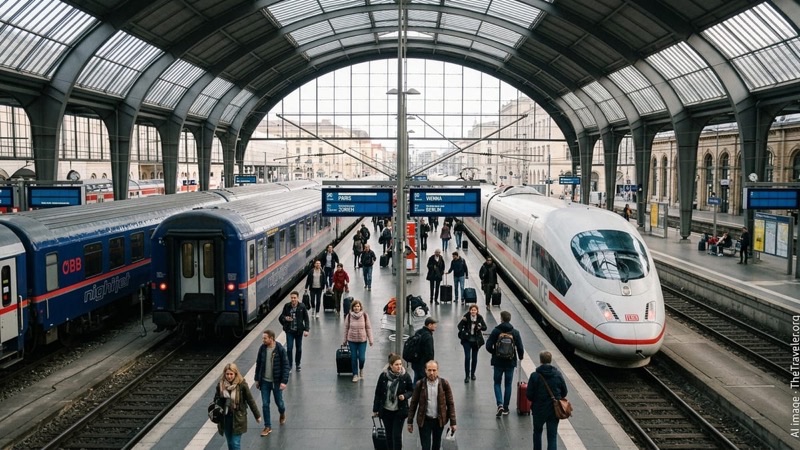
Germany
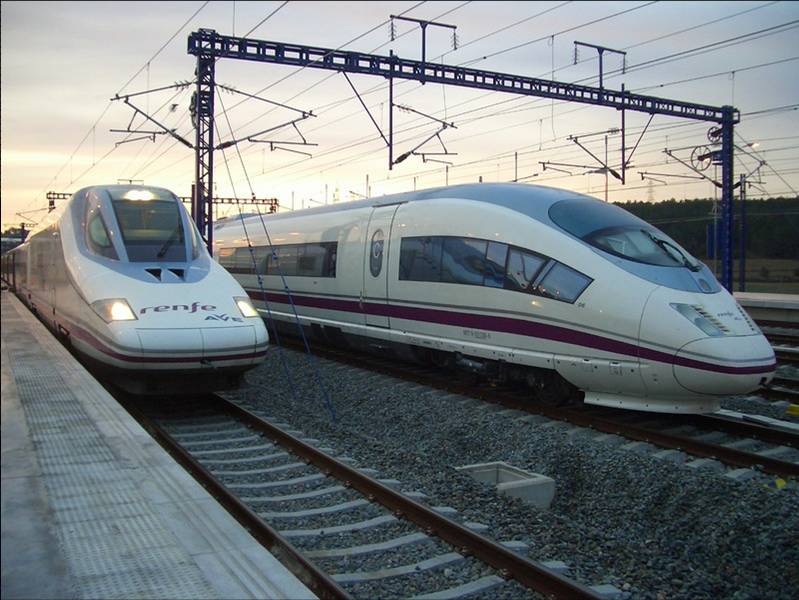
Spain
Germany has major international airports like Frankfurt (FRA) and Munich (MUC), offering numerous direct flights from North America. A flight from New York (JFK) to Frankfurt typically takes 6.5-7 hours. Once in Germany, the Deutsche Bahn (DB) train system is incredibly efficient and far-reaching, connecting nearly every town. While tickets can be pricey if bought last minute (€50-100+ for intercity), booking in advance or using regional passes offers savings. The Autobahn network allows for high-speed, well-maintained driving, though traffic can be significant around major cities. Public transport within cities is punctual and easy to use.
Spain also has major international airports in Madrid (MAD) and Barcelona (BCN), with direct flights from New York taking 7-7.5 hours. Its high-speed rail network (AVE operated by Renfe) is impressive, connecting major cities like Madrid, Barcelona, and Seville rapidly (e.g., Madrid to Barcelona in about 2.5 hours, costing €40-80 when booked ahead). However, the network is less dense than Germany's, particularly for smaller towns, where buses become the primary option. While often cheaper than trains, buses are slower. Driving in Spain is feasible, but rural roads can be less maintained than German ones. Germany's combination of expansive, reliable rail and excellent road infrastructure makes it marginally more straightforward for covering ground.
- Winner: Germany
- Why: Germany's Deutsche Bahn rail network is more extensive and provides marginally better coverage and punctuality for diverse itineraries.
- Who this matters for: Travelers prioritizing efficiency, extensive public transport options, and those planning to visit many smaller towns.
🛌 Accommodation
Germany offers a range of accommodation options characterized by cleanliness and efficiency. Hostels like A&O Hostels are common, with dorm beds costing €30-50 ($33-55). Mid-range…
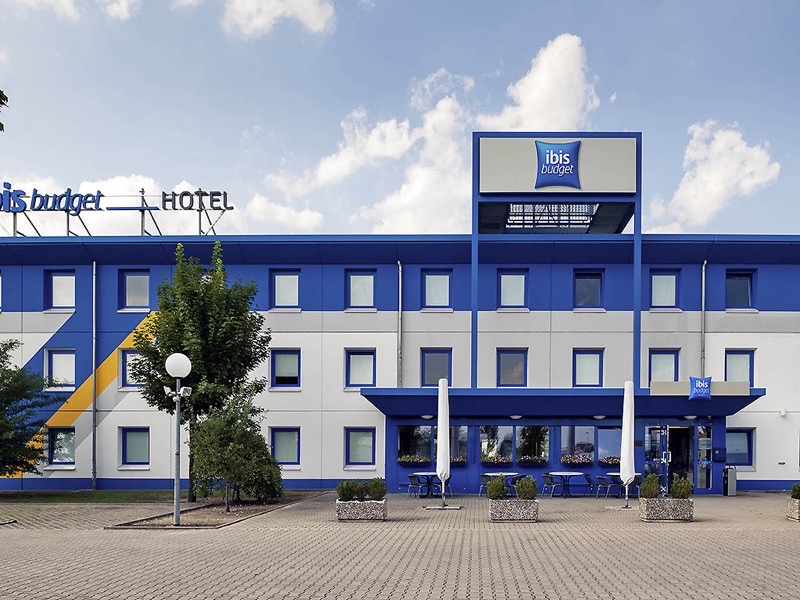
Germany
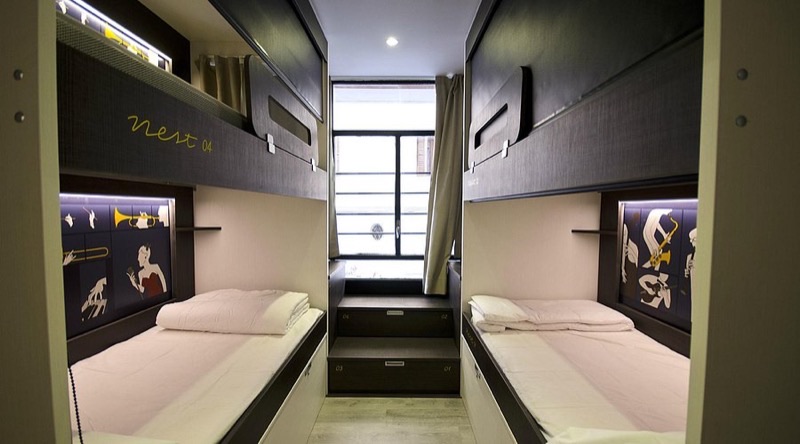
Spain
Germany offers a range of accommodation options characterized by cleanliness and efficiency. Hostels like A&O Hostels are common, with dorm beds costing €30-50 ($33-55). Mid-range hotels, such as Motel One or citizenM, provide modern, comfortable rooms for €80-150 ($88-165) in major cities. Guesthouses (Gasthäuser) in smaller towns offer a local experience. Booking ahead is always advisable, especially during peak seasons or major events like Oktoberfest. You generally know what to expect: a well-maintained, functional room. Prices are higher in main hubs like Munich and Frankfurt but reasonable in smaller cities.
Spain's accommodation landscape is equally varied, often with a more distinct local flavor. 'Hostales' (not hostels in the typical sense, but often family-run guesthouses with private rooms) are a common, affordable choice, with rooms costing €40-80 ($44-88). Boutique hotels are plentiful in cities like Barcelona and Seville, offering character and comfort for €90-180 ($99-198). Airbnb is widely available across the country, providing apartments for longer stays or groups. While some budget options might be more basic, Spain generally offers compelling value for money in terms of location and atmosphere. Both countries provide suitable accommodation based on budget and preference, with Germany focusing on functionality and Spain often on character and value.
- Winner: Tie
- Why: Both countries offer a wide spectrum of accommodation types at various price points, catering well to different traveler needs.
- Who this matters for: Travelers with specific accommodation preferences, from budget-conscious to luxury seekers.
🕺 Nightlife
Germany's nightlife is diverse but with distinct regional characteristics. Berlin is famous for its electronic music clubs like Berghain and Sisyphos, drawing international crowds…
Germany's nightlife is diverse but with distinct regional characteristics. Berlin is famous for its electronic music clubs like Berghain and Sisyphos, drawing international crowds for all-night (and all-weekend) parties. Entry fees can be €15-25 ($16.50-27.50), and drinks are around €5-8 ($5.50-8.80). Munich offers a different experience with its traditional beer gardens and halls, where socializing revolves around large steins of beer. Smaller towns tend to have more subdued nightlife centered around local pubs. Generally, closing times are more regulated than in Spain, and the vibe is often less spontaneous and more focused on specific venues.
Spain is a country that truly comes alive after dark. Dinner often starts around 9-10 PM, and bars fill up shortly after. Madrid and Barcelona boast discotecas like Pacha and Opium, which often stay open until 6 or 7 AM, with entry fees ranging from €15-30 ($16.50-33) including a drink. The tapas bar scene is fundamental to Spanish nightlife, allowing for late-night grazing and socializing until the early hours. Flamenco shows often run late into the evening. The street life in Spanish cities remains energetic well past midnight, with people enjoying the warm evenings. For a consistent, late-night social experience with a general emphasis on enjoyment and expression, Spain is the dominant choice.
- Winner: Spain
- Why: Spain's nightlife is consistently later, more social, and permeates more aspects of daily life, extending far beyond specific clubs.
- Who this matters for: Party-goers, night owls, and those who enjoy a late-night social scene.
🏞️ Nature & Outdoors
Germany offers diverse natural landscapes, from the dramatic peaks of the Bavarian Alps in the south (e.g., Zugspitze, accessible by cable car for around €60/$66) to the dense…
Germany offers diverse natural landscapes, from the dramatic peaks of the Bavarian Alps in the south (e.g., Zugspitze, accessible by cable car for around €60/$66) to the dense forests of the Black Forest in the southwest, ideal for hiking and cycling. The Rhine River provides opportunities for scenic cruises past castles. National parks like Berchtesgaden National Park showcase glacial lakes and alpine flora. While not famous for beaches, the Baltic and North Sea coasts offer their own rugged appeal. Germany's outdoor activities are generally well-organized, with marked trails and good infrastructure for visitors.
Spain’s natural offerings are incredibly varied and often more dramatic. The Pyrenees mountains, bordering France, provide exceptional hiking, skiing, and mountaineering. The Sierra Nevada in Andalusia includes mainland Spain's highest peak, Mulhacén, and offers winter sports alongside summer trekking. Spain boasts extensive coastlines with Mediterranean and Atlantic beaches, including the volcanic landscapes and year-round sunshine of the Canary Islands (e.g., Teide National Park in Tenerife). Picos de Europa National Park in northern Spain presents limestone peaks and deep gorges. The sheer scale and diversity, from arid deserts to snow-capped mountains and extensive, warm beaches, give Spain a slight advantage for outdoor enthusiasts.
- Winner: Spain
- Why: Spain presents a wider array of dramatic and diverse natural landscapes, from high mountains to extensive, warm beaches and volcanic islands.
- Who this matters for: Outdoor adventurers, beach lovers, and those seeking varied natural scenery.
☀️ Weather & Seasons
Germany experiences four distinct seasons. Summers (June-August) are pleasantly warm, with average temperatures ranging from 20-25°C (68-77°F), though heatwaves can push them…
Germany experiences four distinct seasons. Summers (June-August) are pleasantly warm, with average temperatures ranging from 20-25°C (68-77°F), though heatwaves can push them higher. Winters (December-February) are cold, with average temperatures between 0-5°C (32-41°F), often bringing snow, especially in the south. Spring and autumn are mild but can be unpredictable, with cooler temperatures and more rain. Rainfall is distributed throughout the year. For those who appreciate clear seasonal changes and don't mind cooler weather, Germany is suitable.
Spain's climate varies significantly by region. The south and interior experience hot, dry summers (June-August) with temperatures frequently exceeding 30-35°C (86-95°F), making afternoons challenging for sightseeing. Winters are generally mild, especially along the coasts and in the south, with temperatures rarely dropping below 10-15°C (50-59°F). Northern Spain, however, has a more Atlantic climate, cooler and wetter year-round. The Canary Islands offer spring-like weather for most of the year, making them an excellent winter sun destination. If sunshine and warmth are a priority for most of your travel year, Spain is a more reliable option, with its diverse microclimates allowing you to chase good weather.
- Winner: Spain
- Why: Spain offers more consistent warmth and sunshine, particularly in its southern and island regions, providing better options for sun-seekers and year-round travel.
- Who this matters for: Sun-seekers, beach vacationers, and those who dislike cold or unpredictable weather.
🔒 Safety
Germany consistently ranks as one of the safest countries globally. Violent crime is rare, and while petty crime like pickpocketing can occur in busy tourist zones (e.g., Berlin's…
Germany consistently ranks as one of the safest countries globally. Violent crime is rare, and while petty crime like pickpocketing can occur in busy tourist zones (e.g., Berlin's Alexanderplatz, Munich's Oktoberfest), it is not a widespread concern. Public transportation, even late at night, is generally considered safe and reliable. Travelers can feel comfortable exploring cities and rural areas alone. Standard precautions apply, such as being aware of surroundings and keeping valuables secure, but overall, Germany provides a very secure environment for visitors. You can walk around most areas without significant concern.
Spain is also a safe country for tourists, but it has a notably higher incidence of petty crime compared to Germany, particularly pickpocketing and bag snatching in crowded tourist areas. Barcelona's Las Ramblas, Madrid's Plaza Mayor, and busy metro lines are known hotspots for these issues. While violent crime remains low, travelers need to be more vigilant about their belongings. Avoiding flashing expensive items and keeping bags zipped and in front of you can mitigate risks. For travelers prioritizing peace of mind and minimal concern about petty theft, Germany offers a slightly more secure experience, allowing for more relaxed exploration without constant awareness of one's valuables.
- Winner: Germany
- Why: Germany has a lower incidence of petty crime and provides a generally more relaxed environment for personal safety.
- Who this matters for: Solo travelers, families with young children, and those who prioritize minimal risk of theft.
🚌 Day Trips
Germany offers a wealth of excellent day trip options, often easily accessible by train. From Munich, a popular excursion is Neuschwanstein Castle, a 2-hour train ride and a…
Germany offers a wealth of excellent day trip options, often easily accessible by train. From Munich, a popular excursion is Neuschwanstein Castle, a 2-hour train ride and a bus/walk away. Heidelberg, with its castle ruins and charming old town, is a straightforward trip from Frankfurt (approx. 1 hour by train). From Berlin, Potsdam with its palaces and gardens (e.g., Sanssouci) is a short regional train ride (30-40 minutes). The Rhine Valley, with its castles and vineyards, is another favorite, accessible via train from Cologne or Frankfurt, allowing for scenic boat tours. The efficiency of the German rail system makes these trips simple to plan and execute.
Spain also boasts an impressive array of day trips. From Madrid, the ancient capital of Toledo, a UNESCO site, is a quick 30-minute AVE train ride (around €10-15 return). Segovia, with its Roman aqueduct and Alcázar, is another popular choice, reachable in about an hour by high-speed train. From Barcelona, the Montserrat monastery, with its striking mountain views, is accessible via train and cable car/funicular (around €30 return ticket). Southern Spain offers places like Ronda, famous for its dramatic Puente Nuevo bridge, reachable by bus or car from Malaga. Both countries provide diverse, appealing, and accessible day trip opportunities, catering to various interests, from historical sites to natural wonders.
- Winner: Tie
- Why: Both countries offer an extensive and diverse selection of well-connected day trips, catering to various interests and travel styles.
- Who this matters for: Travelers who enjoy exploring beyond major cities and prefer structured, accessible excursions.
🎯 The Decision Framework
Choose Germany If…
- You value efficiency and punctuality in public transport.
- You are interested in 20th-century history and significant monuments.
- You appreciate hearty, substantial meals and a strong beer culture.
- You enjoy well-marked hiking trails in forests and mountains.
- You prefer a highly organized and predictable travel experience.
- You want to visit picturesque medieval castles like Neuschwanstein.
- You seek a generally lower risk of petty crime and a feeling of security.
- You appreciate directness and clear communication.
Choose Spain If…
- You want consistently warmer weather and abundant sunshine.
- You prioritize a lower daily travel budget for food, drink, and accommodation.
- You enjoy a late-night social scene with tapas, drinks, and discotecas.
- You are drawn to diverse regional cultures, from Moorish to Catalan.
- You love varied natural landscapes, from beaches to high mountains.
- You prefer an expressive, lively atmosphere and spontaneous interactions.
- You want to experience a cuisine focused on fresh seafood, olive oil, and small plates.
- You are comfortable with a more relaxed schedule and later dining hours.
📅 Sample Itineraries
Weekend in Berlin (3 Days)
💡 Purchase a Berlin WelcomeCard for $25 (3 days) to get unlimited public transport and discounts on attractions, saving you around $10-15 on transport and entry fees.
Weekend in Barcelona (3 Days)
💡 Use the Hola Barcelona Travel Card for $25 (3 days) for unlimited public transport, saving you approximately $8-10 on individual ticket purchases.
One Week in Germany (7 Days)
💡 Consider a German Rail Pass for longer trips; a 7-day pass can cost around $200-300, potentially saving over $50 compared to individual train tickets for multiple city journeys.
One Week in Spain (7 Days)
💡 Book high-speed train tickets in Spain (Renfe) several weeks in advance to secure discounts of up to 50% on routes between major cities like Madrid, Seville, and Barcelona.
❓ Frequently Asked Questions
What's the best time to visit Germany vs Spain?
For Germany, late spring (May-June) or early autumn (September) offer pleasant temperatures (15-20°C / 59-68°F) and fewer crowds. For Spain, spring (April-May) and autumn (September-October) are ideal, avoiding the extreme summer heat (often 30°C+ / 86°F+) and providing agreeable weather for sightseeing and beaches, with temperatures around 20-25°C (68-77°F).
Is one country significantly cheaper for travelers?
Yes, Spain is generally more budget-friendly. Expect to spend $60-120 per day in Spain for a comfortable mid-range trip, compared to $80-150 per day in Germany. This difference is most noticeable in food, drink (a beer might be $3 in Spain vs $5-6 in Germany), and accommodation prices.
Are there significant language barrier concerns in either country?
In major tourist areas of both countries, you will find English speakers, especially among younger generations and in hospitality. However, learning a few basic phrases in German or Spanish is always appreciated. In more rural parts of Spain, English might be less common than in rural Germany. Overall, neither presents an insurmountable barrier for English speakers, but Spain can feel a bit more challenging outside big cities.
Which country has better beaches?
Spain has a clear advantage for beaches. Its extensive Mediterranean and Atlantic coastlines, plus the Canary Islands, offer a vast variety of sandy shores, warm waters, and beach activities. Germany has some coastal areas along the North Sea and Baltic Sea, but these are typically cooler, less extensive, and not comparable to Spain's beach destinations for sun-seeking.
Is public transport better in Germany or Spain?
Germany's Deutsche Bahn (DB) train network is incredibly extensive and known for its punctuality and efficiency, connecting virtually all towns. Spain's high-speed AVE trains are excellent for major city-to-city routes but its overall rail network is less dense, with buses often needed for smaller destinations. For comprehensive coverage and reliability, Germany's public transport system is marginally superior.
Which is better for solo female travelers?
Both countries are generally safe for solo female travelers. Germany often feels slightly more secure due to its lower rates of petty crime and very efficient public transport, allowing for relaxed exploration. Spain is also safe, but heightened awareness is needed in crowded tourist areas for pickpocketing. Neither poses unusual risks, but Germany might offer a bit more peace of mind regarding personal belongings.
Can I easily combine both countries on one trip?
Combining both is feasible for a longer trip (at least 2-3 weeks). Flying between major cities like Berlin and Madrid takes around 2-3 hours and costs $50-150 for budget airlines if booked in advance. A popular route might be flying into Frankfurt, exploring Germany, then flying to Barcelona or Madrid, and exploring Spain, departing from there. Direct trains are not practical due to distance.
What's the difference in shopping experiences?
Germany offers more structured shopping, with large department stores (e.g., KaDeWe in Berlin), established brands, and Christmas markets. Spain provides a more diverse shopping experience, from high-end boutiques in Madrid and Barcelona to local markets (e.g., La Boqueria) and smaller, independent shops. For unique local crafts and fashion, Spain often has more distinct regional offerings, while Germany focuses on quality and efficiency.
Ready to plan your European trip?
Get a free custom itinerary for Germany, Spain, or both — built from real traveler insights.
👥 Travelers Also Compared
🎟️ Book Tours & Experiences
Hand-picked tours and activities for both destinations — book with free cancellation
Experiences via Viator — free cancellation on most tours