How we built this comparison
This page combines traveler discussion patterns, published price ranges, flight schedules, and seasonal data to help you decide between Germany and Usa.
- Reviewed 500+ Reddit threads from r/travel, r/solotravel, r/Germany, r/USA, r/GermanyTravel, r/USAtravel.
- Verified costs and logistics against current booking platforms like Booking.com, Google Flights, and DB.de.
- Cross-referenced seasonal patterns and weather data for optimal travel planning.


⚡ Quick Answers
⚡ The TL;DR Verdict
For most travelers seeking history, efficient movement, and a generally lower daily budget, Germany takes the lead with daily expenses often around €60-100 ($65-110). If your trip prioritizes vast natural spaces, car-dependent exploration, and a greater variety of landscapes at a higher daily cost, typically $100-180, then the USA is your destination. Pick Germany for ease and culture; pick the USA for scale and wildness.
- Choose Germany: History buffs, solo travelers, those relying on public transport, people who prefer walking cities, and budget-conscious adventurers will find Germany more suitable.
- Choose Usa: Road trippers, nature lovers, families with specific theme park interests, and travelers seeking diverse climates and geographies should choose the USA.
- Choose Both: If you have 3+ weeks and a significant budget, combine a German city break with a US national park tour. Start with Germany for a week, then fly to the USA for two weeks of varied experiences.
Choose Germany
Opt for Germany if you crave a seamless blend of history and efficiency, ideal for solo travelers and culture enthusiasts. Explore the majestic Neuschwanstein Castle or immerse yourself in Berlin's vibrant arts scene, effortlessly navigating via its excellent public transport. This destination offers rich experiences, from medieval towns to world-class museums, all within a more accessible daily budget around €60-100.
Choose Usa
Pick the USA for an adventure of grand scale, perfect for road trippers, families, and nature lovers. Embark on an iconic cross-country drive exploring the vast landscapes of the Grand Canyon, or dive into the unique energy of cities like New York. Be ready for car-dependent exploration and a higher daily budget, typically $100-180, to fully embrace its incredible geographic and cultural diversity.
📊 Visual Scorecard
🌤 When to Visit
Average high temperatures (°C). Green = best months, orange = avoid.
Quick Comparison
| Category | Germany | Usa | Winner |
|---|---|---|---|
| Costs | Generally more budget-friendly for daily expenses, especially transport and food. | Higher daily costs, particularly for accommodation, food, and car rental/gas. | Germany |
| Getting There | Direct flights from major US cities are common, often around 8-9 hours. | Direct flights from Europe are abundant, but internal US travel can involve multiple long flights. | Germany |
| Getting Around | Exceptional public transport network covering cities and intercity routes. | Car-dependent for most regions, public transport mainly within major cities. | Germany |
| Accommodation | Good range of hostels, guesthouses, and hotels at competitive prices. | Prices vary widely, generally higher, especially for quality options outside budget motels. | Germany |
| Food & Drink | Hearty, traditional cuisine, excellent beer, and increasingly diverse options. | Extremely diverse food scene, strong regional specialties, but often pricier. | Tie |
| Culture & History | Thousands of years of European history, castles, museums, and distinct regional traditions. | Newer history, diverse cultural influences, strong pop culture presence, and indigenous heritage. | Germany |
| Nature & Outdoors | Managed forests, low mountains, scenic rivers, and well-maintained hiking trails. | Immense natural diversity, vast national parks, deserts, mountains, and coastlines. | Usa |
| Nightlife | Diverse nightlife, from traditional pubs to world-renowned clubs in Berlin. | Varied options, from Las Vegas shows to local bars, but often regulated by state laws. | Germany |
| Safety | Generally very safe, low crime rates, efficient emergency services. | Generally safe in tourist areas, but some urban areas and isolated spots can pose risks. | Germany |
| Family Travel | Kid-friendly attractions, good public transport, safe environments. | Many theme parks, diverse natural experiences, but often requires a car. | Tie |
💰 Costs
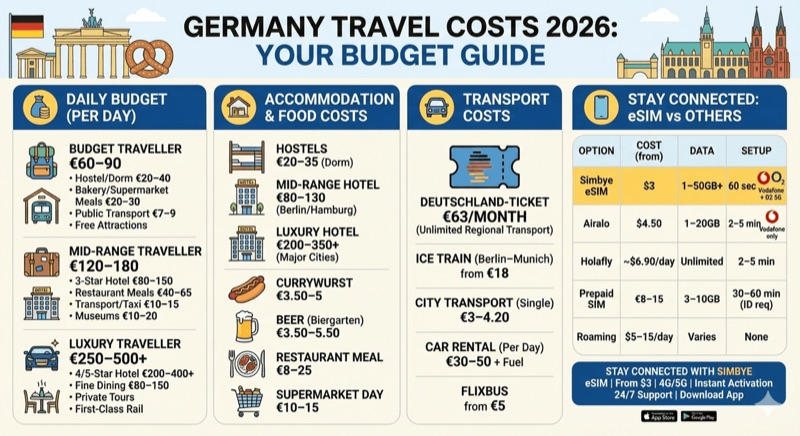
Travel costs in Germany are often more manageable for the average traveler. A daily budget of €60-100 ($65-110) can cover hostel accommodation, local transport, basic meals, and…
Germany
Usa
Travel costs in Germany are often more manageable for the average traveler. A daily budget of €60-100 ($65-110) can cover hostel accommodation, local transport, basic meals, and some attractions. For example, a decent hostel bed in Berlin can be €25-40 ($27-44), a sit-down meal €12-20 ($13-22), and a local transport day pass €8-10 ($9-11). Groceries from stores like Lidl or Aldi are inexpensive, allowing for significant savings on food. Public transport passes like the Deutschlandticket at €49 per month offer incredible value for intercity travel.
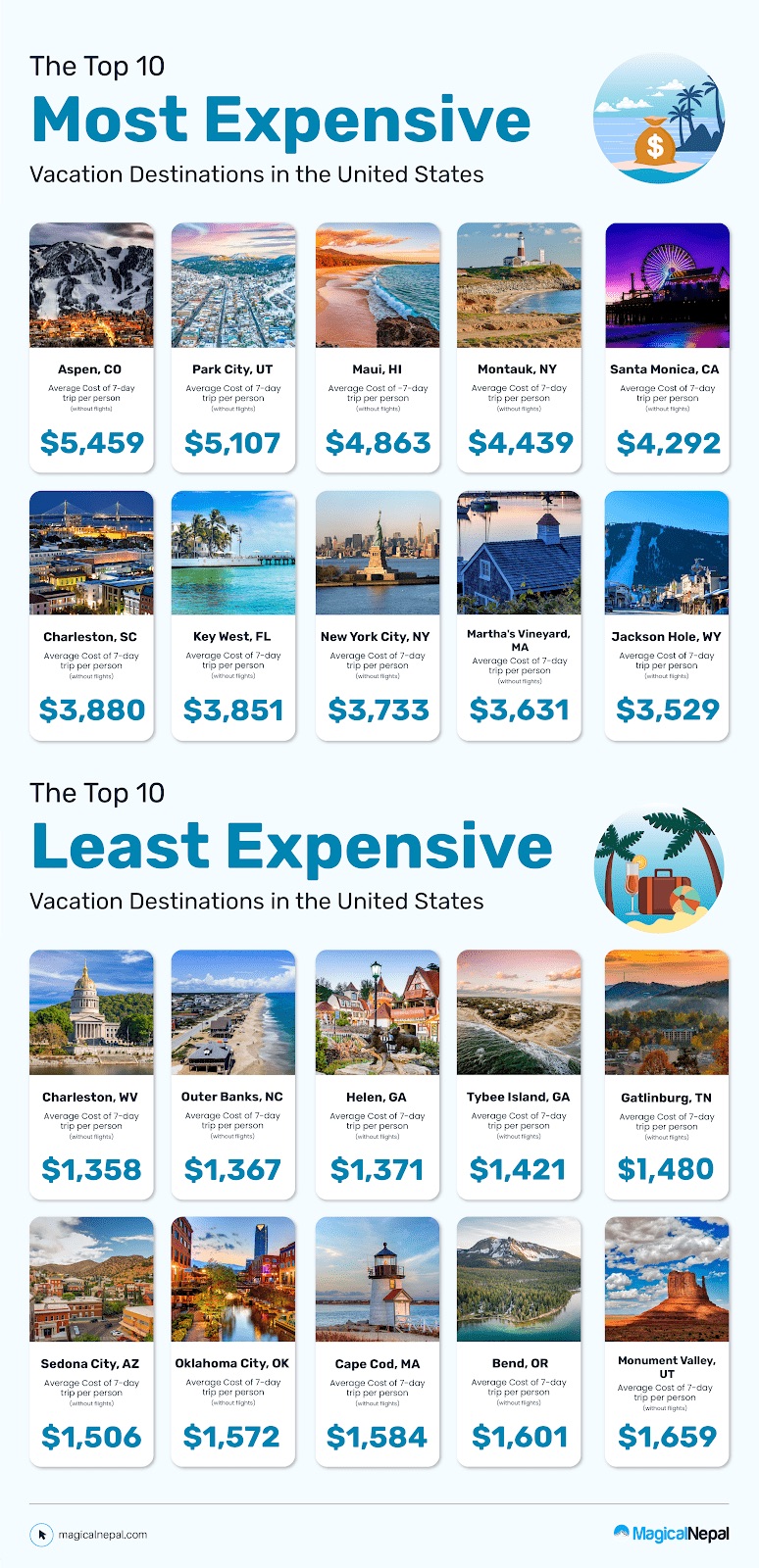
In the USA, daily expenses typically range from $100-180, often more in major cities like New York or Los Angeles. A budget motel room might start at $70-120, while a sit-down meal can easily cost $20-40 before tip, especially in urban areas. Car rental, often essential for exploration outside cities, adds significantly, with rentals around $40-80 per day plus gas at $3-5 per gallon ($0.80-1.30 per liter). Entry fees for national parks ($20-35 per vehicle) and major attractions also add up. The USA requires careful budgeting for a comfortable trip. Germany offers a better overall value for money.
- Winner: Germany
- Why: Germany wins on costs due to its affordable public transport, reasonable food prices, and more budget-friendly accommodation options.
- Who this matters for: Budget-conscious travelers, backpackers, and anyone aiming for a longer trip without breaking the bank.
✈️ Getting There
Flying to Germany from the USA is straightforward. Major hubs like New York (JFK), Chicago (ORD), Los Angeles (LAX) have direct flights to Frankfurt (FRA) or Munich (MUC). Flight…
Germany
Usa
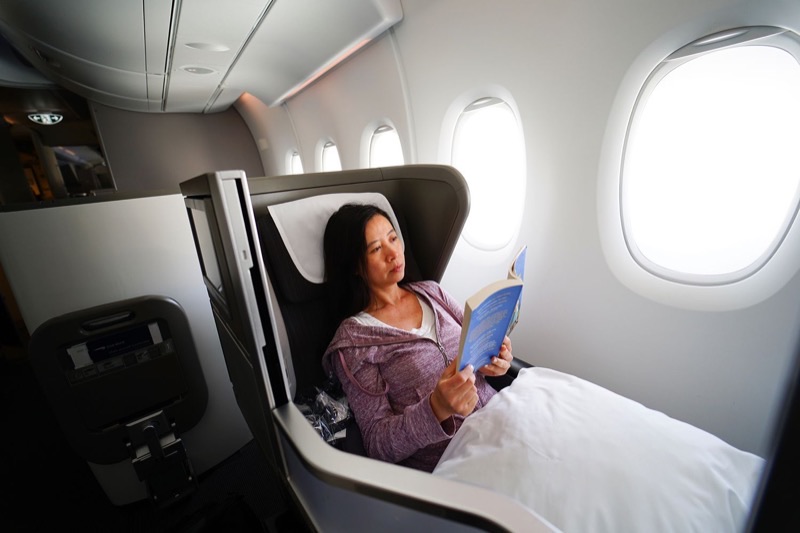
Flying to Germany from the USA is straightforward. Major hubs like New York (JFK), Chicago (ORD), Los Angeles (LAX) have direct flights to Frankfurt (FRA) or Munich (MUC). Flight times typically range from 8 hours (East Coast) to 11 hours (West Coast). Round-trip tickets can be found for $600-900 outside peak season on airlines like Lufthansa, United, or Delta. The travel process is usually efficient, with clear immigration procedures and well-connected airports.
Getting to the USA from Europe is also common, with direct flights from London, Paris, or Frankfurt to major US cities like New York (JFK), Miami (MIA), or Los Angeles (LAX), taking 7-11 hours. However, once in the USA, internal travel often means more flights, which can add significant cost and time. For example, flying from New York to Los Angeles is a 5-6 hour flight, costing $200-400 round trip. This internal air travel adds complexity and expense that is less common in Germany due to its compact size. Germany offers a simpler travel experience from departure to arrival at your initial destination.
- Winner: Germany
- Why: Germany wins for ease of direct international access without requiring extensive internal flights to reach diverse regions.
- Who this matters for: Travelers preferring direct flights to their final destination and minimal subsequent internal travel.
🚆 Getting Around
Germany boasts one of the most efficient public transport systems in the world. The Deutsche Bahn (DB) offers extensive train services connecting virtually every city and town,…

Germany
Usa
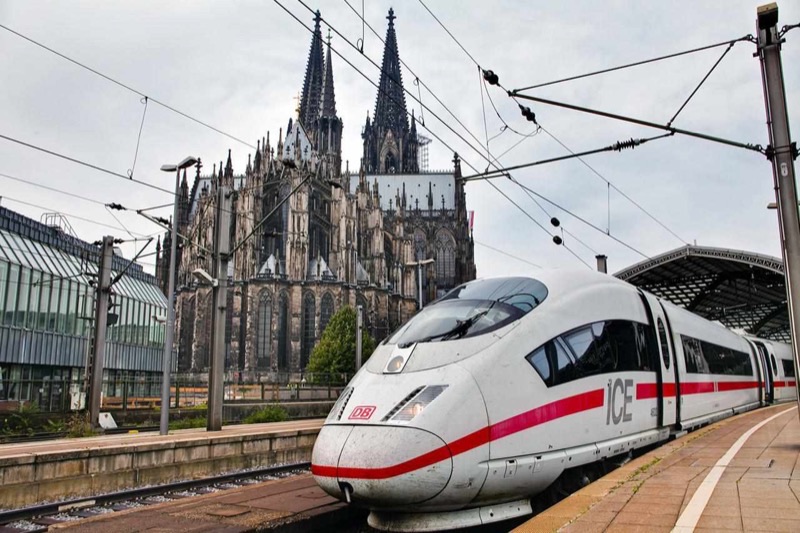
Germany boasts one of the most efficient public transport systems in the world. The Deutsche Bahn (DB) offers extensive train services connecting virtually every city and town, with high-speed ICE trains for long distances and regional trains for shorter hops. A typical train ticket from Berlin to Munich can cost €50-100 ($55-110) depending on how far in advance you book. Within cities, U-Bahn (subway), S-Bahn (commuter rail), trams, and buses are integrated and reliable, with day passes around €8-10 ($9-11). Traveling without a car is not only feasible but often preferred due to traffic and parking challenges. The Deutschlandticket at €49 per month provides unlimited regional travel across the entire country.
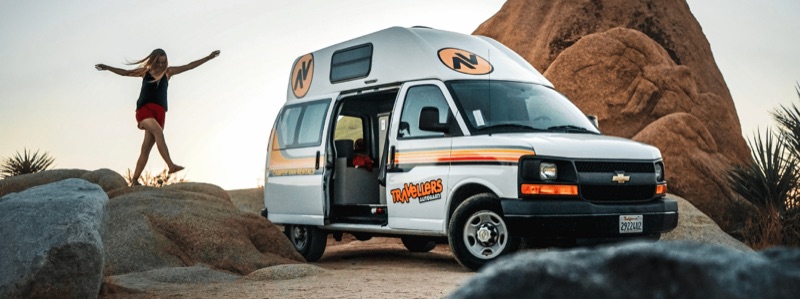
The USA is largely designed for car travel, especially outside major metropolitan areas. Renting a car is almost a necessity for exploring national parks or smaller towns, with rental costs around $40-80 per day plus gas. While cities like New York, Chicago, and San Francisco have extensive subway or bus networks (e.g., a single subway ride in NYC is $2.90), these systems are not typically connected between cities. Amtrak train services exist but are often slower, less frequent, and more expensive than flying for long distances. Greyhounds bus services are available but offer a different level of comfort and speed compared to German trains. Germany provides a far more convenient and cost-effective way to move between destinations.
- Winner: Germany
- Why: Germany wins due to its highly efficient, extensive, and affordable public transport network that makes car-free travel simple.
- Who this matters for: Travelers who prefer not to drive, those on a budget, and solo travelers seeking ease of movement.
🏨 Accommodation
Accommodation in Germany offers good value, with a range of options for every budget. Hostels in major cities like Berlin or Munich average €25-40 ($27-44) per night for a dorm…

Germany
Usa
Accommodation in Germany offers good value, with a range of options for every budget. Hostels in major cities like Berlin or Munich average €25-40 ($27-44) per night for a dorm bed. Mid-range hotels, such as a Mercure or Ibis, can be found for €70-120 ($75-130) per night. Guesthouses (Gasthäuser) in smaller towns offer a comfortable, local experience for similar prices. Booking in advance, especially for popular periods like Oktoberfest, is advisable, but last-minute options are usually available. Pricing often includes tax, and service charges are rare. Websites like Booking.com and Hostelworld are reliable for finding places.
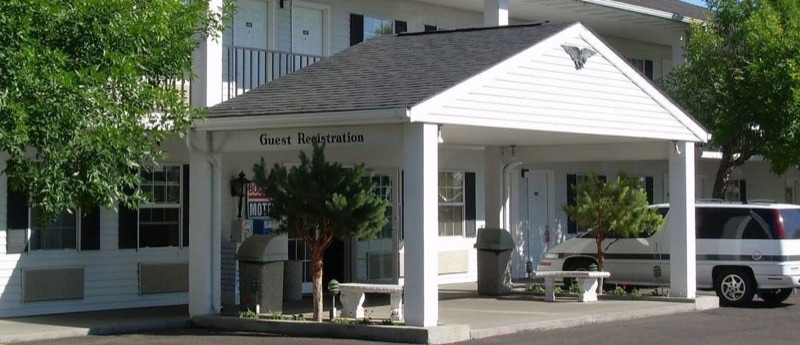
In the USA, accommodation prices fluctuate significantly by location and season. A budget motel like a Motel 6 or Super 8 might cost $70-120 per night, but quality can be inconsistent. Mid-range hotels (e.g., Holiday Inn Express) typically cost $120-200 per night, and sometimes more, especially in major cities or during peak tourist seasons in places like national parks or coastal areas. Resort fees and local taxes often add 10-25% to the advertised price, which can be a surprise. Booking platforms are essential, and prices for popular areas like Hawaii or New York can climb much higher. Germany offers more consistent value and often lower base prices for similar accommodation types.
- Winner: Germany
- Why: Germany provides more consistently affordable and quality accommodation options across its regions compared to the USA.
- Who this matters for: Budget-conscious travelers and those seeking good value without compromising too much on quality.
🍽️ Food & Drink
German food is substantial and satisfying, focusing on meat, potatoes, and bread. Think schnitzel, bratwurst, pretzels (Brezeln for €1.50-3, or $1.60-3.30), and various stews.…

Germany

Usa
German food is substantial and satisfying, focusing on meat, potatoes, and bread. Think schnitzel, bratwurst, pretzels (Brezeln for €1.50-3, or $1.60-3.30), and various stews. Beer culture is central, with a liter of beer at a Biergarten costing €4-6 ($4.40-6.60). Major cities like Berlin now offer a wide array of international cuisines, from Turkish döner kebabs (€4-6, or $4.40-6.60) to Vietnamese pho. Portions are generous, and finding a decent meal for €12-20 ($13-22) is common. Breakfast buffets are popular, and bakeries are everywhere for quick snacks.
The USA offers unparalleled food diversity, from regional specialties like New England clam chowder or Texas BBQ to international fine dining in cities like New York or Los Angeles. Street food is popular in some areas, but sit-down meals can be expensive, often $20-40 per person before tax and tip for a casual restaurant. Fast food is cheap but not always the best quality. Groceries can be expensive, especially fresh produce, though large supermarkets offer variety. Portion sizes are generally larger than in Germany. Tipping is a significant factor, adding 15-20% to every restaurant bill. Both countries offer excellent food experiences; it depends on whether you prefer hearty European fare or global culinary exploration.
- Winner: Tie
- Why: Both countries offer distinct and rewarding food experiences, from traditional German dishes to the USA's vast culinary landscape.
- Who this matters for: Travelers who prioritize either comforting, traditional European fare or an expansive range of global cuisines and dining styles.
🏛️ Culture & History
Germany offers deep dives into European history, from Roman ruins in Trier to medieval castles like Neuschwanstein (entry €15, or $16.50) and Hohenzollern. Cities like Berlin are…
Germany offers deep dives into European history, from Roman ruins in Trier to medieval castles like Neuschwanstein (entry €15, or $16.50) and Hohenzollern. Cities like Berlin are central to understanding 20th-century events, with sites such as the Brandenburg Gate, the Reichstag Building, and numerous World War II memorials and museums. Museum Island in Berlin features five major museums (e.g., Pergamon Museum entry €12, or $13.20) covering everything from ancient art to Egyptian artifacts. Regional cultures are distinct, from Bavarian Lederhosen and Oktoberfest to the Hanseatic traditions of Hamburg. Learning about German history provides context for much of modern Europe.
The USA has a shorter but equally impactful history, focusing on colonial times, the American Revolution, and civil rights movements. Historical sites like Colonial Williamsburg in Virginia or the Liberty Bell in Philadelphia offer insights into the nations founding. Major cities feature museums like the Metropolitan Museum of Art in New York (suggested donation $30, or $33) or the Smithsonian museums in Washington D.C. (free entry). Native American heritage is also present in many regions, especially the Southwest. American pop culture, from Hollywood to jazz music, has a global reach. However, for sheer density of ancient and medieval history, Germany provides a more continuous historical narrative. Germany wins for its depth and age of historical sites.
- Winner: Germany
- Why: Germany wins for its millennia of European history, visible in its castles, Roman ruins, and extensive museums covering ancient to modern times.
- Who this matters for: History enthusiasts, those interested in European heritage, and travelers seeking tangible connections to centuries past.
🏞️ Nature & Outdoors
German nature is accessible and well-maintained, characterized by rolling hills, dense forests, and scenic river valleys. Regions like the Black Forest, Bavarian Alps (Zugspitze…
German nature is accessible and well-maintained, characterized by rolling hills, dense forests, and scenic river valleys. Regions like the Black Forest, Bavarian Alps (Zugspitze cable car €63, or $69), and Saxon Switzerland National Park offer beautiful hiking and cycling. The Rhine Valley is dotted with castles and vineyards, perfect for river cruises. While not as wild as some places, German parks and natural areas are organized and provide clear paths and facilities. Lake Königssee offers deep, clear waters surrounded by mountains. The focus is often on gentle outdoor activities and enjoying the landscapes.
The USA offers an unparalleled range of natural environments and outdoor opportunities due to its sheer size. From the towering peaks and deep valleys of Yosemite National Park (entry $35 per vehicle for 7 days) to the geothermal wonders of Yellowstone (entry $35 per vehicle for 7 days), the arid beauty of the Grand Canyon, and the diverse ecosystems of Florida Everglades. Skiing in Colorado, hiking in Appalachia, surfing in California – the options are endless. Many national parks have extensive trail systems and camping facilities. The scale and variety of natural spaces in the USA are simply unmatched, making it a clear winner for nature lovers. The USA provides a more expansive and varied natural experience.
- Winner: Usa
- Why: The USA wins decisively for its immense scale, diversity of landscapes, and vast national park system offering unparalleled outdoor experiences.
- Who this matters for: Outdoor adventurers, hikers, campers, photographers, and anyone seeking grand, diverse natural scenery.
🌃 Nightlife
German nightlife caters to a wide range of tastes. Berlin is globally recognized for its electronic music scene, with clubs like Berghain and Sisyphos drawing crowds, though entry…
German nightlife caters to a wide range of tastes. Berlin is globally recognized for its electronic music scene, with clubs like Berghain and Sisyphos drawing crowds, though entry can be selective (cover charge €15-25, or $16.50-27.50). Munich and other Bavarian cities have traditional beer halls (Hofbräuhaus) where people gather for communal drinking and food. Pubs and bars are common everywhere, offering a relaxed atmosphere. Drink prices are generally reasonable; a local beer costs €4-6 ($4.40-6.60) in most places. Public transport often runs late or 24/7 in major cities, making it easy to get home after a night out.
USA nightlife is incredibly diverse but often subject to stricter local regulations (e.g., last call times, open container laws). Las Vegas offers large-scale entertainment with casinos, clubs, and shows (club cover charges $30-70, or $33-77). New York and Los Angeles have high-end clubs and a strong bar scene, but drink prices are significantly higher (cocktails $12-20, or $13-22). Smaller towns and cities have local bars and pubs. Getting around late at night often requires ride-shares or taxis outside major city centers. The legal drinking age of 21 in the USA is also a significant factor for younger travelers. Germany offers a more consistently vibrant and accessible nightlife, especially in its major cities.
- Winner: Germany
- Why: Germany offers more accessible, affordable, and diverse nightlife options, particularly its world-famous club scene in Berlin and traditional beer culture.
- Who this matters for: Younger travelers, party-goers, electronic music enthusiasts, and those looking for lively social evenings.
🚨 Safety
Germany is considered a very safe country for travelers. Petty crime, like pickpocketing, can occur in crowded tourist areas or on public transport in major cities, but violent…
Germany is considered a very safe country for travelers. Petty crime, like pickpocketing, can occur in crowded tourist areas or on public transport in major cities, but violent crime against tourists is rare. Walking alone at night in most city centers is generally fine. Emergency services are efficient and reliable. Travelers should still exercise common sense, keep an eye on belongings, and avoid isolated areas late at night, as in any country. The general atmosphere is orderly and calm, contributing to a sense of security for visitors. The crime rate is consistently low, providing a predictable environment.
Safety in the USA varies considerably by region and city. Tourist areas in major cities are generally safe, but some urban neighborhoods have higher crime rates, and it is advisable to research specific areas. Public safety can be a concern in certain parts of larger cities or during specific events. While national parks and rural areas are usually safe, cell service can be spotty, and preparedness for outdoor conditions is crucial. Gun violence is a concern for some international travelers, although incidents rarely involve tourists. Travelers should be aware of their surroundings, use reputable ride-shares, and avoid walking alone in unfamiliar areas late at night. Germany offers a more uniform and generally higher level of perceived safety for travelers.
- Winner: Germany
- Why: Germany offers a consistently high level of safety across the country, with low crime rates and a predictable environment for travelers.
- Who this matters for: Solo travelers, families with young children, and anyone prioritizing peace of mind and low personal risk.
👨👩👧👦 Family Travel
Germany is well-suited for family travel, especially for those with older children who appreciate history and culture. Attractions like Europa-Park (entry €65, or $71.50 per…
Germany is well-suited for family travel, especially for those with older children who appreciate history and culture. Attractions like Europa-Park (entry €65, or $71.50 per person), Playmobil FunPark, and numerous castles provide entertainment. Public transport is excellent for moving with children, and many cities have parks and playgrounds. Restaurants are generally accommodating, and childrens menus are often available. The safety factor and the ease of getting around without a car are significant advantages. Many museums offer interactive exhibits for younger visitors, and activities like river cruises are enjoyable for all ages.
The USA also offers many family-friendly options, particularly its world-renowned theme parks like Disneyland (entry $100-180, or $110-198 per person) and Universal Studios. National parks provide educational and adventurous experiences for families, with ranger programs and easy hiking trails. However, family travel in the USA often necessitates renting a larger car, which adds to costs and planning. Long driving distances can be challenging with younger children. Meals can be more expensive for families, especially with tipping. Both countries provide distinct advantages, depending on whether a family prioritizes theme parks and nature drives or historical exploration and public transport convenience.
- Winner: Tie
- Why: Both Germany and the USA offer strong family travel experiences, catering to different preferences, from historical exploration to theme park adventures.
- Who this matters for: Families deciding between historical, public-transport-friendly trips (Germany) and expansive, car-dependent nature/theme park trips (USA).
🎯 The Decision Framework
Choose Germany If…
- You want efficient, affordable public transport between cities.
- You enjoy walking through historical city centers and seeing medieval architecture.
- You prefer a daily budget closer to €70 ($75).
- You are interested in medieval castles and 20th-century history.
- You appreciate good quality beer and hearty traditional food.
- You can navigate without a rental car easily.
- You seek a dense cultural experience in smaller areas.
- You like structured environments and clear rules.
Choose Usa If…
- You plan on renting a car and driving long distances.
- You prioritize seeing vast national parks like Yosemite or Yellowstone.
- You are prepared for a daily budget closer to $120.
- You want a wide range of climates and geographies in one trip.
- You are interested in pop culture, diverse regional foods, and music scenes.
- You prefer larger portions and varied restaurant options.
- You are comfortable with tipping as a standard practice.
- You enjoy the independence of a road trip and exploring remote areas.
📅 Sample Itineraries
Weekend in Germany (3 Days)
💡 Purchase a Berlin WelcomeCard (€25-€40 for 48-72 hours) for unlimited public transport and discounts on attractions and museums.
Weekend in Usa (3 Days)
💡 Utilize the NYC Subway system ($2.90 per ride, MetroCard $1 initial fee) for efficient travel across boroughs and to avoid high taxi costs.
One Week in Germany (7 Days)
💡 Book long-distance train tickets with Deutsche Bahn well in advance for 'Sparpreis' (saver fare) options, which can significantly reduce costs by 30-50%.
One Week in Usa (7 Days)
💡 Renting a car is almost essential for exploring California's diverse landscapes beyond major city centers; book your rental car several weeks in advance for better daily rates, typically $40-70.
❓ Frequently Asked Questions
What is the typical flight time from the USA to Germany?
Direct flights from major US East Coast cities like New York to Frankfurt typically take around 8 hours. From the West Coast, such as Los Angeles, flights are longer, usually 10-11 hours. Non-stop options are widely available.
Is public transport reliable in Germany for tourists?
Yes, German public transport is extremely reliable and comprehensive. The Deutsche Bahn train network connects cities, while urban areas have efficient U-Bahn, S-Bahn, tram, and bus systems. A monthly Deutschlandticket for €49 ($54) offers unlimited regional travel.
What are average food costs in Germany versus the USA?
In Germany, a casual meal might cost €12-20 ($13-22), and a liter of beer is €4-6 ($4.40-6.60). In the USA, a comparable meal is often $20-40, plus a 15-20% tip, and a beer around $6-10, making the USA generally pricier for dining out.
Which country is better for nature lovers?
The USA is generally better for nature lovers due to its immense scale and diversity of landscapes. It features vast national parks like Yellowstone, Yosemite, and the Grand Canyon, offering unparalleled hiking, wildlife, and scenery that Germany, with its smaller, more managed natural spaces, cannot match in scale.
Do I need a car to travel around Germany?
No, you do not need a car to travel around Germany. Its public transport system is so efficient and extensive that you can easily navigate between cities and within urban areas using trains, subways, and buses, saving money and avoiding parking hassles.
What is the typical budget for a moderate traveler in each country?
For a moderate traveler, expect to spend approximately €60-100 ($65-110) per day in Germany, covering basic accommodation, food, and transport. In the USA, a similar experience would typically cost $100-180 per day, largely due to higher accommodation, food, and transport expenses.
Which country offers more historical sites?
Germany offers a greater density and older range of historical sites, including Roman ruins, medieval castles, and significant 20th-century history. While the USA has important historical landmarks from its shorter history, Germany provides a more extensive and ancient historical narrative.
Is it safe to travel solo in either Germany or the USA?
Both countries are generally safe for solo travelers. Germany consistently ranks as one of the safest countries, with low crime rates and efficient public services. The USA is safe in most tourist areas, but requires more awareness of specific urban neighborhoods and often necessitates a car for remote exploration.
Ready to plan your next trip?
Get a free custom itinerary for Germany, Usa, or both — built from real traveler insights.
👥 Travelers Also Compared
🎟️ Book Tours & Experiences
Hand-picked tours and activities for both destinations — book with free cancellation
Experiences via Viator — free cancellation on most tours