How we built this comparison
This page combines traveler discussion patterns, published price ranges, flight schedules, and seasonal data to help you decide between Grand Canyon and Antelope Canyon.
- Reviewed 500+ Reddit threads from r/travel, r/solotravel, r/grandcanyon, r/arizona, and r/roadtrip for authentic traveler experiences and tips.
- Verified costs and logistics against current booking platforms (e.g., NPS.gov, tour operators, hotel aggregators, car rental sites) to ensure accuracy.
- Cross-referenced seasonal patterns and weather data from NOAA and local park services to provide reliable advice on best times to visit and potential hazards.
⚡ The TL;DR Verdict
If you crave vast, epic landscapes and multi-day hiking adventures, the Grand Canyon is your winner, perfect for a mid-range daily budget of $150-$250. For a shorter, intensely photogenic, and otherworldly experience focused on light and color, Antelope Canyon calls your name, manageable on a tighter daily budget of $100-$200 if combined with other Page attractions.
- Choose Grand Canyon: Choose the Grand Canyon if you're a nature lover, a hiker, or seeking a multi-day immersive experience with endless views, diverse activities, and a sense of profound scale. It's ideal for those who enjoy exploring at their own pace and have time for scenic drives and trail adventures.
- Choose Antelope Canyon: Opt for Antelope Canyon if you're a photography enthusiast, short on time, or looking for a truly unique, highly guided, and visually stunning natural wonder that's unlike anything else. It's perfect for capturing incredible images and experiencing an ethereal slot canyon up close.
- Choose Both: Experience both if you have 4-6 days in the Southwest. Start with the Grand Canyon (South Rim for 2-3 days), then drive roughly 2.5 hours north to Page, Arizona, for Antelope Canyon and Horseshoe Bend (1-2 days). This combination offers the best of both worlds: epic scale and intimate beauty.
Quick Comparison
| Category | Grand Canyon | Antelope Canyon | Winner |
|---|---|---|---|
| Nature & Scenery | Unrivaled vastness, iconic red rock layers, diverse ecosystems, and endless panoramic viewpoints. | Intimate, sculpted sandstone walls, vibrant light beams, and a truly unique slot canyon experience. | Grand Canyon |
| Accessibility & Getting There | Multiple access points (South Rim most popular), serviced by major airports (PHX, LAS) with longer drives. | Accessed via Page, Arizona, requires car and pre-booked tours; nearest major airports are farther. | Grand Canyon |
| Activities & Exploration | Extensive hiking trails (rim and inner canyon), scenic drives, mule rides, helicopter tours, rafting. | Guided slot canyon tour, limited to walking within the canyon, often combined with Horseshoe Bend/Lake Powell. | Grand Canyon |
| Costs & Budget | Park entrance fee, varied lodging/food, car rental essential, activity costs add up (helicopters, rafting). | Higher mandatory tour fees, car rental, lodging/food in Page, typically a shorter, more focused visit. | Antelope Canyon |
| Crowds & Serenity | Popular viewpoints can be packed, but vastness allows for solitude on trails or less-visited areas. | Extremely crowded due to guided tours; narrow canyon means constant proximity to other groups. | Grand Canyon |
| Photography Opportunities | Epic wide-angle landscapes, sunrises/sunsets, geological details, wildlife, requires patience for light. | World-renowned for unique light beams, vibrant colors, sculpted rock, ideal for intimate, abstract shots. | Antelope Canyon |
| Weather & Best Seasons | South Rim: Mild springs/falls, hot summers (100°F+), cold, snowy winters. North Rim: Seasonal closure. | Page: Hot summers (100°F+), mild winters. Canyon: Cooler inside, risk of flash floods in monsoon season. | Tie |
| Logistics & Planning | Requires significant driving, booking accommodations far in advance, understanding shuttle system. | Mandatory guided tours require pre-booking, straightforward one-stop visit, easier to combine with other local attractions. | Antelope Canyon |
| Family Friendliness | Vast space for kids to run, diverse educational programs, varied activities, stroller-friendly paths. | Narrow canyon with challenging footing for young children/strollers, structured tour, less varied for kids. | Grand Canyon |
| Unique Experiences | Experiencing geological time, profound scale, challenging inner-canyon hikes, rafting the Colorado River. | Walking inside a slot canyon, witnessing ethereal light beams, an almost spiritual connection to sculpted earth. | Antelope Canyon |
🏞️ Nature & Scenery
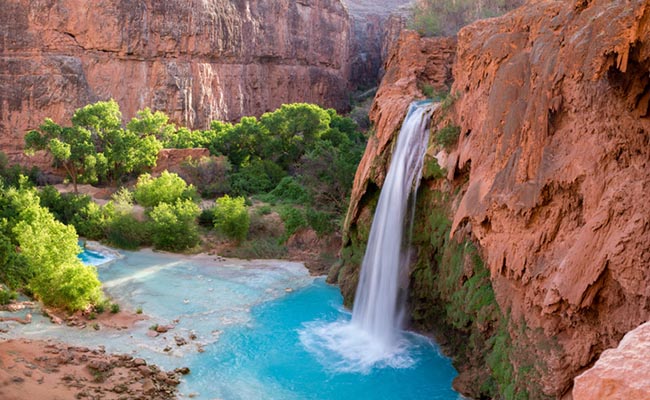
The Grand Canyon's sheer scale is almost incomprehensible until you stand on its rim. From Mather Point or Yavapai Geology Museum, you're greeted by a chasm over a mile deep and up to 18 miles wide, revealing billions of years of geological history. Sunrises and sunsets paint the canyon in a spectrum of colors that change by the minute. Unlike Antelope, where the beauty is contained, the Grand Canyon offers an expansive, ever-changing panorama. You can hike below the rim on trails like Bright Angel or South Kaibab, venturing into different microclimates and seeing the canyon from new perspectives. Antelope Canyon, while breathtakingly beautiful, is a singular, guided experience focused on specific light effects within its narrow walls. "Honestly, nothing prepares you for the Grand Canyon. Antelope is gorgeous, but GC hits different with its sheer scale." The Grand Canyon also boasts diverse wildlife, from elk to condors, adding to its raw, untamed appeal.
Winner takeaway
- Winner: Grand Canyon
- Why: The Grand Canyon wins for its unparalleled scale, diverse ecosystems, and the profound, awe-inspiring sense of natural grandeur that lasts for miles.
- Who this matters for: Nature lovers, hikers, and anyone seeking a profound, humbling landscape experience.
✈️ Accessibility & Getting There
Getting to the Grand Canyon South Rim, the most popular and accessible section, typically involves flying into Phoenix Sky Harbor (PHX) or Las Vegas McCarran (LAS). From PHX, it's about a 3.5-4 hour drive (220 miles) along I-17 N and AZ-64 N. From LAS, it's roughly a 4.5-hour drive (280 miles). You can also fly into Flagstaff Pulliam Airport (FLG) then drive 1.5 hours. Once there, the park has a free shuttle system around the South Rim. Antelope Canyon, however, requires reaching Page, Arizona. The closest major airport is LAS, which is about a 4.5-hour drive (275 miles). FLG is closer, about 2.5 hours away, but has fewer direct flights. Critically, you cannot enter Antelope Canyon without a pre-booked, guided tour with a Navajo guide, which departs from Page. "Getting to GC felt way more straightforward, even with the drive. Antelope felt like a commitment just to get to Page, then coordinate the tour." Car rental is essential for both, typically costing $50-100+ per day. The Grand Canyon's multiple entry points and more robust road infrastructure make it slightly easier to integrate into a larger Southwest road trip.
Winner takeaway
- Winner: Grand Canyon
- Why: The Grand Canyon offers more direct major airport access points and a slightly less logistically complex entry, with options for self-guided exploration within the park.
- Who this matters for: Travelers planning a multi-stop road trip, those who prefer driving themselves, and visitors seeking flexibility.
🚶 Activities & Exploration
The Grand Canyon offers an incredible breadth of activities. For hikers, trails range from easy, paved Rim Trail walks to strenuous multi-day treks like Bright Angel Trail or South Kaibab Trail, descending into the canyon. A challenging day hike to Plateau Point and back can take 6-10 hours, while an overnight to Phantom Ranch requires a lottery permit. Scenic drives like Desert View Drive offer numerous overlooks. You can take a thrilling helicopter tour from Grand Canyon Village (around $200-300+ for a 25-minute flight) or even white-water raft the Colorado River (multi-day trips costing thousands). Antelope Canyon, by contrast, is a single, focused activity: a guided walk through a slot canyon. These tours, typically 1-1.5 hours, are mesmerising for their light and color but offer no deviation. Many combine it with nearby Horseshoe Bend (free parking with $10 fee, short walk) and Lake Powell boat tours or kayaking. "GC has so much more to DO. Antelope is amazing for an hour, then you're done and moving on." While Antelope is unique, the Grand Canyon provides a week's worth of diverse adventure.
Winner takeaway
- Winner: Grand Canyon
- Why: The Grand Canyon provides a far greater variety of activities, from strenuous hikes to scenic flights, catering to all fitness levels and interests.
- Who this matters for: Adventure seekers, hikers, families, and anyone looking for diverse ways to experience a natural wonder.
💰 Costs & Budget
While both require a car rental ($50-100/day), Antelope Canyon can surprisingly be a more budget-friendly *primary experience* if you only focus on the canyon and nearby free/low-cost sites. The Grand Canyon's entry fee is $35 per vehicle for 7 days. Lodging inside the park at places like Bright Angel Lodge or El Tovar can range from $200-$500+ per night, while Tusayan just outside offers options from $150-$300+. Food can run $50-100 per person per day. Activities like helicopter tours or mule rides are hundreds of dollars. For Antelope Canyon, the mandatory guided tour is the major cost. Upper Antelope Canyon tours can range from $80-$120 per person, including the Navajo permit fee (e.g., Antelope Canyon Tours by Chief Tsosie). Lower Antelope Canyon is often slightly cheaper, $60-$90. Lodging in Page typically ranges from $100-$250 per night. "I spent more just on my Antelope tour than I did on GC park entrance + a solid dinner." If you're comparing the cost of the main 'wow' experience, Antelope Canyon, despite its high tour fee, is a one-and-done, whereas the Grand Canyon often encourages multi-day stays and pricier add-ons.
Winner takeaway
- Winner: Antelope Canyon
- Why: Antelope Canyon is 'cheaper' in the sense that its main experience is a single, high-cost tour, while Grand Canyon encourages longer stays and many expensive add-on activities.
- Who this matters for: Budget-conscious travelers primarily interested in a single, high-impact experience without extensive add-ons.
🧘 Crowds & Serenity
The Grand Canyon, particularly the South Rim, sees millions of visitors annually, and popular spots like Mather Point, Grand Canyon Village, and Yavapai Point can be very crowded, especially during peak season (spring/fall) and midday. Parking can be a nightmare. However, its immense size allows for remarkable solitude if you're willing to walk even a mile or two down a trail like Bright Angel or South Kaibab. The further you hike, the fewer people you encounter, revealing genuine serenity. "Yeah, GC viewpoints are packed, but I walked an hour down Bright Angel and barely saw anyone. It was amazing." In contrast, Antelope Canyon tours are highly structured and involve moving in close proximity with your tour group and other groups. You're constantly surrounded by people, particularly in the narrowest sections. While the beauty is undeniable, finding a moment of quiet reflection or a photo without other tourists can be challenging, even with guides trying to manage the flow. The experience is intimate with the canyon walls, but not with nature in solitude.
Winner takeaway
- Winner: Grand Canyon
- Why: The Grand Canyon, despite its popularity, offers abundant opportunities for solitude and escaping crowds due to its sheer size and extensive trail system.
- Who this matters for: Travelers seeking quiet reflection, hikers, and those who dislike feeling rushed or herded.
📸 Photography Opportunities
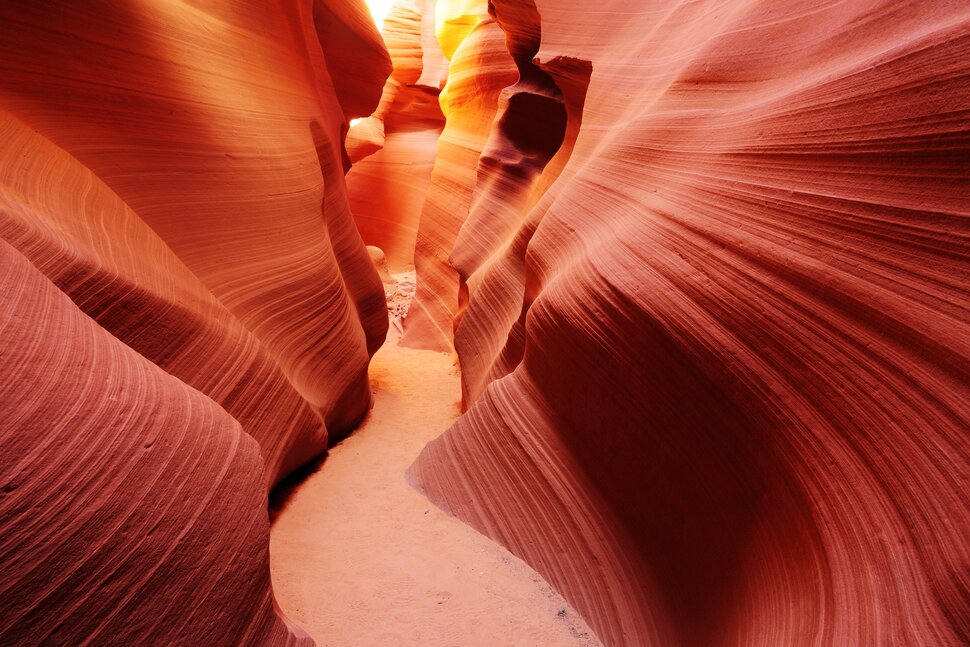
Antelope Canyon is a photographer's dream and often the primary reason people visit. The way sunlight filters through the narrow openings, creating 'light beams' that pierce the canyon floor, is truly magical and Instagram-famous. The sculpted, flowing sandstone walls offer endless abstract compositions, vibrant oranges, purples, and reds that change with the light. Guides are often adept at pointing out prime photo spots and even assisting with camera settings (though dedicated photography tours are less common now). For example, a mid-day tour (10 AM - 1 PM) in summer is best for light beams in Upper Antelope Canyon. "Antelope Canyon is literally designed for photos. My phone pics looked professional." The Grand Canyon offers grand, sweeping vistas that are spectacular for wide-angle landscape photography, especially at sunrise and sunset from spots like Mather Point or Hopi Point. However, capturing its immense scale and depth is challenging, and getting truly unique shots requires effort, different lenses, and often hiking away from popular viewpoints. While GC is epic, AC provides a more immediate, guaranteed 'wow' factor for unique photos.
Winner takeaway
- Winner: Antelope Canyon
- Why: Antelope Canyon offers a uniquely photogenic environment with stunning light effects and sculpted walls that make it a paradise for capturing distinct, high-impact images.
- Who this matters for: Photography enthusiasts, Instagrammers, and those seeking visually striking and unique photo opportunities.
☀️ Weather & Best Seasons
Both destinations have their seasonal quirks. The Grand Canyon South Rim is open year-round, but summer (June-August) brings intense heat (90-105°F/32-40°C on the rim, much hotter below) and afternoon thunderstorms. Winter (Dec-Feb) offers snow-dusted views and fewer crowds but cold temperatures (20-40°F/-6-4°C) and potential road closures. The North Rim is only open from mid-May to mid-October. Antelope Canyon, near Page, experiences similar summer heat (often 100°F+/38°C+) and mild winters. The slot canyon itself stays cooler. The critical factor for Antelope is the monsoon season (mid-July to mid-September), when flash floods can occur, leading to tour cancellations. "We got lucky in June at Antelope, but a friend's tour got cancelled by flash floods in August. Always check the weather!" Spring (April-May) and Fall (Sept-Oct) are generally the best times for both, offering pleasant temperatures (60-80°F/15-27°C) and manageable crowds. Both require careful planning around weather.
Winner takeaway
- Winner: Tie
- Why: Both destinations have distinct seasonal challenges and ideal shoulder seasons, making neither a clear 'winner' for weather.
- Who this matters for: Anyone planning their trip, as weather impacts safety, accessibility, and the overall experience significantly at both locations.
🗺️ Logistics & Planning
Planning for Antelope Canyon is relatively straightforward: book your tour well in advance (especially for prime mid-day slots in Upper Antelope Canyon, which can sell out months ahead), arrive in Page, find parking, and show up for your tour. Companies like Antelope Canyon Navajo Tours or Ken's Tours (for Lower Antelope) are reliable. The entire canyon experience is typically 1-1.5 hours. It’s a contained, pre-arranged event. "Antelope was easy: booked online, showed up, followed the guide. Done." The Grand Canyon, while offering more freedom, demands more complex planning. You need to decide which rim to visit (South is most popular), book lodging months, even a year, in advance if staying inside the park (e.g., Maswik Lodge, Bright Angel Lodge), plan your driving routes, and understand the shuttle bus system, especially during peak times. Hiking permits for inner canyon camping are lottery-based. Multi-day itinerary planning is essential. The Grand Canyon offers flexibility but at the cost of more intricate logistics.
Winner takeaway
- Winner: Antelope Canyon
- Why: Antelope Canyon simplifies planning with its mandatory, pre-booked guided tours, making for a clear, one-stop visit.
- Who this matters for: Travelers who prefer structured experiences, those with limited planning time, and first-time international visitors.
👨👩👧👦 Family Friendliness
The Grand Canyon is significantly more family-friendly, particularly the South Rim. Kids have ample space to explore, run around at viewpoints (with supervision, of course!), and the paved sections of the Rim Trail are stroller-friendly. The Junior Ranger program is excellent, engaging children with educational activities and a badge reward. There are museums (like Yavapai Geology Museum) and ranger talks suitable for various ages. Activities like mule rides (age/height restrictions apply) or short, easy hikes offer variety. "My kids (6 & 9) absolutely loved the Grand Canyon, especially the Junior Ranger program and just pointing out different layers. Antelope was too much 'wait here, don't touch.'" Antelope Canyon, with its narrow, often slippery, and uneven terrain (especially Lower Antelope Canyon with steep ladders), can be challenging for very young children or those requiring strollers/wheelchairs. The guided tour format means kids need to stay with the group and follow rules, limiting their freedom to explore or interact. While visually stunning, it's a less interactive experience for children.
Winner takeaway
- Winner: Grand Canyon
- Why: The Grand Canyon offers more space, diverse activities, and educational programs suitable for a wider age range of children, with better accessibility.
- Who this matters for: Families with young children, those with strollers or mobility concerns, and visitors seeking varied activities for all ages.
✨ Unique Experiences
While the Grand Canyon offers an unparalleled sense of scale and geological wonder, the experience of being *inside* Antelope Canyon is truly unique and otherworldly. Walking through the narrow, twisting passages carved by millennia of water and wind, feeling the smooth, cool sandstone walls, and witnessing the famous light beams dance through the openings is an almost spiritual encounter. There are very few places on Earth where you can experience such intimate, vibrant natural artistry. It's a surreal, almost dreamlike environment. "Antelope Canyon felt like walking into a painting. Grand Canyon is massive, but AC is just *different* in a way you can't describe." The Grand Canyon's unique experiences tend towards the epic and physical – conquering a multi-day hike to the bottom, or the adrenaline of a helicopter tour. Antelope Canyon's uniqueness is more about sensory immersion and visual poetry, an intimate connection to the earth's sculpting power that's unlike a vast overlook. It's a short but profoundly impactful experience that you won't forget.
Winner takeaway
- Winner: Antelope Canyon
- Why: Antelope Canyon offers a truly singular and surreal experience of walking inside a beautifully sculpted slot canyon, illuminated by incredible light effects.
- Who this matters for: Travelers seeking a distinct, visually stunning natural phenomenon and those looking for an 'only-here' moment.
❓ Frequently Asked Questions
Can I visit Antelope Canyon without a tour?
No, Antelope Canyon is located on Navajo Nation land and requires a mandatory guided tour with an authorized Navajo guide. This rule is in place for safety (flash floods) and to protect the delicate environment of the canyon. Tours must be pre-booked, often months in advance for peak times.
How long should I spend at each canyon?
For Antelope Canyon, the tour itself is typically 1-1.5 hours. Most people spend 2-4 hours total in Page, including travel to/from the canyon and visiting nearby Horseshoe Bend. For the Grand Canyon South Rim, allocate at least 1-2 full days to appreciate the main viewpoints and do some short hikes. Serious hikers or those wanting to explore more should plan 3-4 days.
What's the best time of day to visit Antelope Canyon?
For the iconic light beams in Upper Antelope Canyon, the best time is generally between 10 AM and 1 PM, especially during late spring through early fall. Lower Antelope Canyon is beautiful throughout the day as it relies more on ambient light and sculpted walls. Always confirm with your tour operator.
Is it possible to see both on a single trip?
Absolutely! Many travelers combine both. A common itinerary involves flying into Las Vegas (LAS) or Phoenix (PHX), driving to the Grand Canyon South Rim (4-5 hours), spending 1-2 days there, then driving ~2.5 hours to Page, Arizona, for Antelope Canyon and Horseshoe Bend (1 day), before heading back or continuing a larger Southwest road trip.
Do I need a 4x4 vehicle for either location?
No, a standard rental car is sufficient for visiting the main areas of both the Grand Canyon (South Rim) and Antelope Canyon. Roads to the Grand Canyon and to the Antelope Canyon tour departure points in Page are paved. However, a 4x4 might be useful for exploring some more remote, unpaved roads in the wider region, but it's not necessary for the canyons themselves.
What should I bring to Antelope Canyon?
Bring water, comfortable walking shoes (the ground can be uneven/sandy), a camera, and a small backpack. Tripods are generally not allowed on standard tours, and large bags are discouraged. Leave valuable items securely in your car as the canyon can be crowded and guides keep the group moving.
Are there good food options at both locations?
At the Grand Canyon South Rim, there are several restaurants within Grand Canyon Village ranging from casual cafeterias (Maswik Food Court) to fine dining (El Tovar Dining Room). Tusayan, just outside the park, also has options. In Page, Arizona (for Antelope Canyon), you'll find a wider variety of independent restaurants, cafes, and chain eateries, including Mexican, American, and fast food.
Is Grand Canyon North Rim an option?
The Grand Canyon North Rim offers a more remote, rugged experience and is generally less crowded. However, it's only open seasonally (mid-May to mid-October) and involves a much longer drive if coming from the South Rim (4.5 hours, 220 miles via Desert View Drive). It's a great option for those seeking deeper solitude, but less convenient for combining with Antelope Canyon.
Ready to plan your Southwest USA trip?
Get a free custom itinerary for Grand Canyon, Antelope Canyon, or both — built from real traveler insights.
🎟️ Book Tours & Experiences
Hand-picked tours and activities for both destinations — book with free cancellation
Experiences via Viator — free cancellation on most tours