📋 Our Methodology
This comparison is built from real sources, not AI guesswork:
- 20+ Reddit threads from r/koreatravel, r/korea, r/travel, r/solotravel synthesized
- Cost data from recent Reddit trip reports (March 2026), cross-checked with booking platforms
- Transit info from Korail, local bus operators, and traveler accounts
- Attraction details verified against official tourism board information
⚡ The TL;DR Verdict
Gyeongju wins on volume and variety of historical sites — it's one of the densest concentrations of ancient heritage anywhere in Asia. Andong wins on authenticity and depth — Hahoe Folk Village is a genuinely living piece of Korean history, and the food and soju culture are uniquely compelling. For most first-time Korea visitors: Gyeongju first. For seasoned Korea travelers: Andong is the revelation.
- Go to Gyeongju if this is your first or second time in Korea, if you want maximum heritage per day, or if you're routing through Busan (Gyeongju is just 40-60 minutes away by train). The "museum without walls" label is earned — you can't walk a kilometer without tripping over 1,500-year-old history. Reddit consensus: "Gyeongju has more to see" is the near-universal refrain.
- Go to Andong if you've already done Gyeongju, if you want to get off the main tourist track, or if you care deeply about Korean folk culture, traditional food, and the living experience of Confucian village life. Hahoe Folk Village is not a museum — people still live there. The mask dance performance on weekends is a legitimate highlight of any Korea trip.
- If you have time, do both. The heritage circuit of Gyeongju (2 nights) + Andong (1 night) is one of the most rewarding routes in Korea outside of Seoul and Busan. They're 1.5-2 hours apart by bus. The contrast between Silla Buddhist grandeur and Joseon Confucian village life makes each destination richer by comparison.
⛩️ Choose Gyeongju
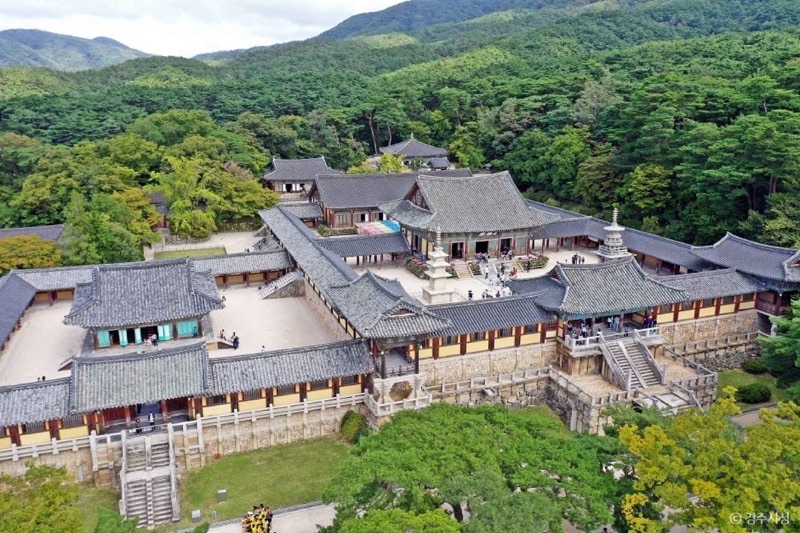
Maximum heritage density, UNESCO sites around every corner, easier to reach, perfect with Busan. Bulguksa Temple, Tumuli Park royal tombs, Seokguram Grotto. Great for cycling between sites.
🎭 Choose Andong
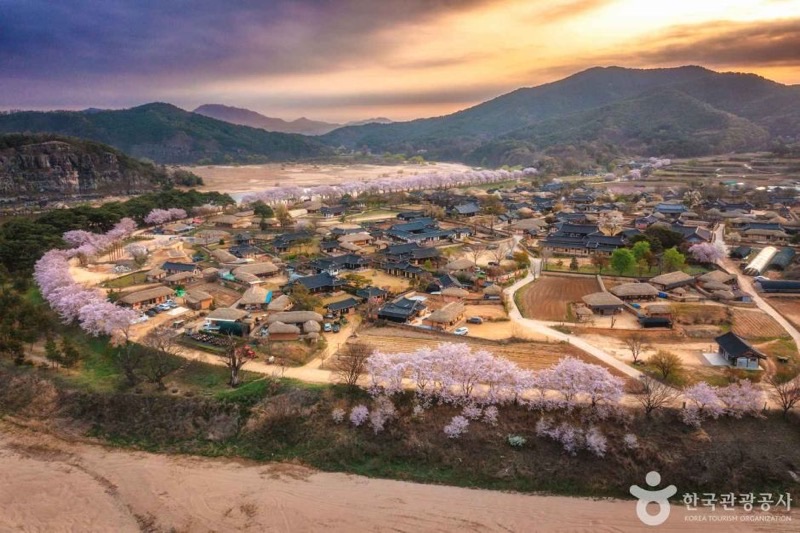
Hahoe Folk Village (living UNESCO heritage), traditional mask dance performance, authentic Korean soju distillery, jjimdak (braised chicken). Off the beaten path without feeling remote.
Quick Comparison
| Category | ⛩️ Gyeongju | 🎭 Andong | Winner |
|---|---|---|---|
| Historical Sites | Bulguksa (UNESCO), Seokguram (UNESCO), Tumuli Park, Cheomseongdae, Gyochon Hanok Village | Hahoe Folk Village (UNESCO), Dosan Seowon Confucian Academy, Byeongsan Seowon | Gyeongju |
| First-Timer Recommendation | ✅ Essential — one of Korea's top heritage destinations | ⚠️ Best as a Gyeongju complement, not standalone | Gyeongju |
| Authenticity of Experience | Well-preserved but heavily visited | Hahoe is genuinely living — residents still live there | Andong |
| Food Culture | Ssal-gangjeong (rice crunch snacks), local specialties, good restaurant variety | Jjimdak, traditional soju (45% ABV), heotjesabap — genuinely unique Korean dishes | Andong |
| Getting There from Seoul | ~2h by KTX to Singyeongju (40,000-58,000 KRW) | ~2h by KTX from Cheongnyangni (25,000-38,000 KRW) | Tie |
| Getting Around | Bicycle-friendly, bus network, some walking areas | Bus to Hahoe takes 40-45 min; limited local transit | Gyeongju |
| Recommended Duration | 2-3 nights to see everything properly | 1-2 nights is sufficient | Andong |
| Crowd Level | Moderate-high, especially on weekends and holidays | Lower crowds except festival season | Andong |
| Budget (per day) | ~40,000-80,000 KRW ($30-60) including food and entry fees | ~35,000-70,000 KRW ($26-52) — slightly cheaper | Andong |
| Proximity to Busan | 40-60 min by train — perfect pairing | 2.5-3h from Busan — less convenient | Gyeongju |
| Nightlife & Evening Scene | Moderate — Hwangnam-dong area, cafes near Tumuli Park | Quiet — Jjimdak Alley and Bar Itaewon, then early nights | Gyeongju |
| UNESCO Sites | 2 (Bulguksa + Seokguram as one site) | 1 (Hahoe Folk Village) | Gyeongju |
⛩️ Historical Sites & Cultural Attractions
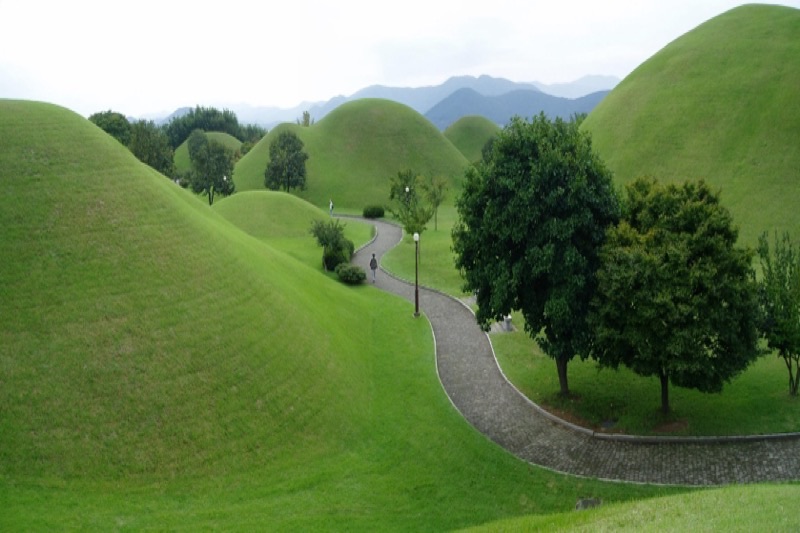
This is the defining difference between the two cities. Gyeongju is simply one of the most historically rich places in all of Asia — the capital of the Silla Dynasty for nearly a thousand years (57 BCE to 935 CE), it contains more UNESCO heritage, royal tombs, temples, and ancient stonework per square kilometer than almost anywhere in the world. Andong's historical depth is different: less Buddhist grandeur, more Confucian aristocratic culture preserved in living villages and academies.
Gyeongju's top sites:
- Bulguksa Temple — the most important Buddhist temple in Korea, built in 774 CE by the Silla court. The stone stairways, pagodas, and main hall are among the finest examples of Silla-era Buddhist architecture. Entry: 6,000 KRW ($4.50). Combine with Seokguram Grotto (8km up the mountain): a stone Buddha rotunda carved into a granite cave that is genuinely breathtaking. Entry: 5,000 KRW ($3.75). Both are UNESCO World Heritage sites.
- Tumuli Park (Daereungwon Tomb Complex) — 23 enormous royal burial mounds rising from manicured parkland in the middle of the city. You can enter one (Cheonmachong) to see the interior burial chamber. Free to wander the park; 3,000 KRW ($2.25) for Cheonmachong interior. The mounds at dusk, lit softly, are one of the most atmospheric sights in Korea.
- Cheomseongdae Observatory — the oldest extant astronomical observatory in East Asia, built around 634 CE. A small but genuinely ancient stone cylinder. Entry: free. Surrounded by seasonal flower fields that are spectacular in spring.
- Gyochon Hanok Village — a preserved neighborhood of traditional Korean wooden houses (hanok), some dating to the 18th-19th century. Home to the famous Gyeongju Gyodong Beopju (traditional Korean rice wine brewery). Free to walk through.
- National Museum of Gyeongju — essential context for everything you're seeing outside. Free entry. The gold crowns, artifacts from Cheonmachong, and celestial map ceiling in the Bell Garden are outstanding.
- Yangdong Folk Village (UNESCO) — a 500-year-old aristocratic village 20km north of Gyeongju, less visited than Hahoe but equally authentic. Free to enter. Best reached by bus from Gyeongju terminal.
Andong's top sites:
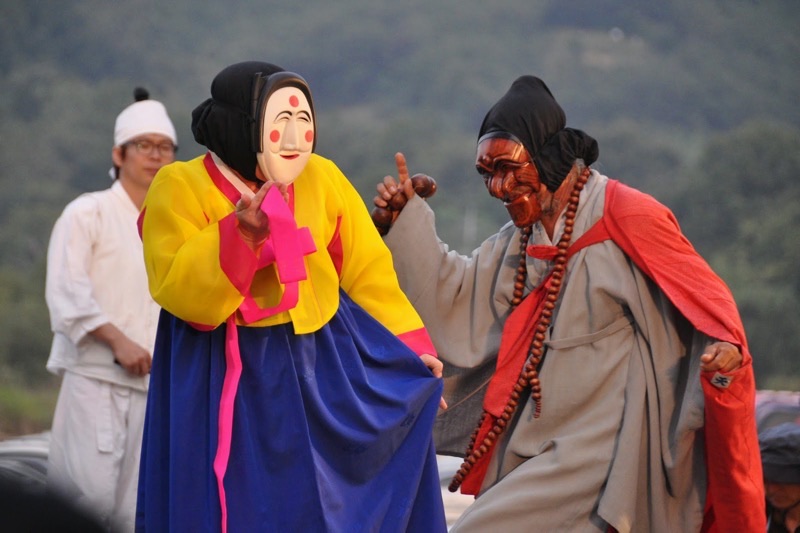
- Hahoe Folk Village (UNESCO World Heritage) — a 600-year-old Joseon-era village on a meander of the Nakdong River, with the Ryu clan still living in the same houses where their ancestors lived centuries ago. Entry: 5,000 KRW ($3.75). Bus from Andong terminal: 40-45 minutes, 1,500 KRW ($1.10). The Hahoe Mask Dance performance (held at 2pm Saturdays and Sundays, April-October, and sometimes weekday afternoons in peak season) is the unmissable event — an hour-long satirical performance mocking Joseon-era social classes. Free to watch if you've paid the village entry.
- Dosan Seowon Confucian Academy — founded in 1574 in honor of Yi Hwang (Toegye), Korea's greatest Confucian scholar, whose face appears on the 1,000 KRW bill. The setting, on a hillside above the Nakdong River valley, is beautiful. Entry: 2,000 KRW ($1.50). 25 minutes from Andong by bus.
- Byeongsan Seowon — a smaller, more tranquil Confucian academy near Hahoe, accessible by a 3.5km walk from the village. Free entry. The seven-bay veranda facing the river valley is considered an architectural masterpiece of Joseon-era design.
- Andong Folk Museum — excellent introduction to the region's food culture, traditional crafts, and mask dance history. Entry: 4,000 KRW ($3). Good rainy-day option.
"The whole city's like a big history museum and it had lots to see like Seokguram, Cheomseongdae, etc. I visited there once and it was really nice." — r/koreatravel, on Gyeongju
"Personally I loved Gyeongju! Lots to see, you'll probably want to spend at least 2 days there. It's also in a strategic location if you want to go to Busan afterwards. Hahoe [Andong] was amazing, especially the mask dance performance, but it takes a while to get there." — r/koreatravel
🍜 Food & Dining
Both cities have distinctive regional food cultures that set them apart from Seoul's restaurant scene. Andong's food culture is arguably more famous and more uniquely tied to its identity.
Gyeongju food highlights:
- Hwangnam-ppang — the city's most famous food export: small red bean-filled pastries that have been made here since 1939. Multiple bakeries dot the old town area, especially near Tumuli Park. A bag of 10 costs around 5,000-6,000 KRW ($3.75-4.50). Essential purchase.
- Ssal-gangjeong — traditional Korean rice crunch candies, a Gyeongju specialty. Sweet, crunchy, dangerously addictive. Available at markets throughout the city.
- Gyeongju bap-sang — traditional multi-dish rice table meals served in restaurants near the historic sites. Price range: 12,000-20,000 KRW ($9-15) per person for a full set.
- Restaurant variety in Gyeongju is good — the tourism infrastructure means you'll find everything from Korean barbecue to convenience store kimbap near the major sites.
Andong food highlights:
- Jjimdak — Andong's signature dish and the main reason food lovers make the trip. A massive clay pot of braised chicken, glass noodles, vegetables, and a savory-spicy-sweet soy-based sauce. Originated in Andong's traditional market in the 1980s. Jjimdak Alley (안동찜닭골목) near the central market has 20+ restaurants, each claiming the original recipe. A serving feeds 2-3 people for 25,000-35,000 KRW ($18-26). Non-negotiable if you visit Andong.
- Andong soju (안동소주) — the genuine article. While commercial Korean soju is diluted to 16-25% ABV, traditional Andong soju (made from rice, wheat bran, and nuruk starter) is distilled to 45% ABV. It's been made here for over 1,300 years. Visit the Andong Soju Traditional Food Museum and attached distillery for a small tasting experience (entry: 3,000 KRW). The soju sold at the museum shop is the real thing — a 375ml bottle runs 15,000-20,000 KRW ($11-15).
- Heotjesabap — literally "ancestral memorial food," a humble rice and side dish meal eaten after Confucian ancestral ceremonies. Simple, wholesome, historically significant. Available at specialty restaurants near Hahoe Village.
- Bar Itaewon — Andong's most famous bar, with an extraordinary selection of traditional Korean alcohols (makkoli varieties, various soju styles, fruit wines). Multiple Reddit travelers specifically mention this as a hidden highlight of Andong nightlife.
"Andong is the traditional home of soju, and you can visit the soju and traditional foods museum and also do a half day distillery experience including a (very small) taste of the really traditional soju. And Jjimdak Alley — pick a place and you won't go wrong." — r/koreatravel
"Andong has 'Bar Itaewon', awesome for a wide selection of traditional Korean alcohol." — r/koreatravel
💰 Cost Comparison
Both Gyeongju and Andong are affordable by Korean standards — this isn't a Seoul price zone. Here's what to expect in each city for typical travel expenses.
Gyeongju costs (per person):
- Bulguksa Temple entry: 6,000 KRW ($4.50)
- Seokguram Grotto entry: 5,000 KRW ($3.75)
- Tumuli Park / Cheonmachong interior: 3,000 KRW ($2.25)
- National Museum: Free
- Cheomseongdae: Free
- Bicycle rental: 5,000-15,000 KRW/day ($3.75-11) depending on type
- Budget guesthouse or hostel dorm: 25,000-40,000 KRW/night ($18-30)
- Mid-range hotel or hanok stay: 60,000-120,000 KRW/night ($45-90)
- Meal at local restaurant: 8,000-15,000 KRW ($6-11)
- Hwangnam-ppang pastries (bag of 10): 5,000-6,000 KRW ($3.75-4.50)
- Typical day budget: 40,000-80,000 KRW ($30-60) including food, entry fees, and transport
Andong costs (per person):
- Hahoe Folk Village entry: 5,000 KRW ($3.75)
- Bus to Hahoe Village (one way): 1,500 KRW ($1.10)
- Dosan Seowon entry: 2,000 KRW ($1.50)
- Andong Soju Museum entry: 3,000 KRW ($2.25)
- Andong Folk Museum: 4,000 KRW ($3)
- Jjimdak dinner for 2-3 people: 25,000-35,000 KRW ($18-26) total
- Traditional soju bottle (museum shop): 15,000-20,000 KRW ($11-15)
- Budget guesthouse: 30,000-50,000 KRW/night ($22-37)
- Mid-range hotel: 60,000-100,000 KRW/night ($45-75)
- Typical day budget: 35,000-70,000 KRW ($26-52)
"Gyeongju and Andong are more historically significant than Jeonju — most hanoks in Jeonju are new. Both are great value for what you get." — r/koreatravel
🚄 Getting There & Transit Connections
Getting to each city from Seoul, Busan, or between the two involves different logistical considerations. Gyeongju has the edge in overall connectivity.
Getting to Gyeongju:
- From Seoul: KTX from Seoul Station to Singyeongju Station: ~2 hours, 40,000-58,000 KRW ($30-43). Note: Singyeongju Station is 8km from the city center — take the local 700 bus (1,500 KRW) or a taxi (~10,000-12,000 KRW) into town. Alternatively, KTX to Dongdaegu then change to Mugunghwa train for Gyeongju station (central): 2h30m total but more convenient arrival point.
- From Busan: KTX or regular train from Busan (Bujeon) to Gyeongju: 40-60 minutes, 3,800-7,700 KRW ($2.80-5.75). Arguably the best day trip from Busan — close enough to feel spontaneous.
- From Daegu: Train 50-60 minutes, bus 1 hour. Either works.
Getting to Andong:
- From Seoul: KTX from Cheongnyangni Station (not Seoul Station) to Andong: ~2 hours, 25,000-38,000 KRW ($18-28). Note the departure point — Cheongnyangni is on Line 1 and the Gyeongui-Jungang Line, so allow time to get there from central Seoul. This KTX line opened in 2020 and dramatically cut the travel time.
- From Gyeongju: No direct train — take an intercity bus from Gyeongju Bus Terminal to Andong: 1h30m-2h, approximately 9,800-13,800 KRW ($7.30-10.30). Departures roughly hourly. This is the natural route for the heritage circuit.
- From Daegu: Bus from Daegu Dongbu Bus Terminal to Andong: ~1h30m, 10,000-14,000 KRW ($7.50-10.50).
"Just came back from a trip where we did Seoul → Daegu → Andong → Gyeongju → Busan. Daegu to Andong and Andong to Gyeongju trip was made by bus. Very manageable." — r/koreatravel
🌸 Best Time to Visit
Both cities are in inland southeastern Korea, meaning they share similar weather patterns — hot humid summers, cold winters, and excellent spring and fall seasons. The major difference is seasonal events.
Spring (March–May): The best general time for both cities. Cherry blossoms in late March to mid-April are spectacular along the Bomun Lake circuit in Gyeongju and near Bulguksa Temple. Temperatures are mild (10-20°C/50-68°F), crowds manageable. Both cities are beautiful in spring light.
Summer (June–August): Hot and humid, with occasional heavy rain in the July-August monsoon season. Not the best time — both cities are less enjoyable in the heat. If you must visit in summer, go early in the morning to major outdoor sites. Gyeongju's indoor museum and Andong's Folk Museum are good heat refuges.
Autumn (September–November): The finest season overall. Fall foliage at Bulguksa and along Andong's Nakdong River valley is genuinely beautiful. More importantly, autumn is when Andong's Mask Dance Festival runs — late September to early October, for about 10 days. If you have any flexibility, timing your Andong visit for festival season is an easy win.
Winter (December–February): Cold (below 0°C/32°F at night, sometimes snowing). Gyeongju's royal tomb mounds dusted with snow are atmospheric and crowds are minimal. Andong is quieter. Both are doable but require warm layers and adjusted expectations for outdoor activities.
"It's ok prob go out in Andong the night before at masked festival so could use a chill night in Gyeongju. The cafes sound cool." — r/koreatravel
🚲 Getting Around Each City
How you move around each city significantly shapes the experience. Gyeongju rewards self-directed exploration; Andong requires more planning for the Hahoe Village trip.
Getting around Gyeongju:
- Bicycle — the iconic Gyeongju experience. Rental shops are everywhere near the Tumuli Park area (5,000-15,000 KRW/day). The Wolseong area between Tumuli Park and Cheomseongdae observatory is flat and perfect for cycling, with protected bike paths past royal tombs. Several Reddit travelers rate cycling Gyeongju as one of the most enjoyable activities in Korea. Electric bicycle rental (15,000-20,000 KRW) makes the Bulguksa hill more manageable.
- Local bus — comprehensive network. Buses connect all major sites including Bulguksa (bus 10, 11), Seokguram, Yangdong Village, and Bomun Lake. Single fare: 1,500 KRW ($1.10). Tourist-oriented routes are well signed in English.
- Taxi / KakaoTaxi — affordable for longer distances. Gyeongju to Bulguksa by taxi: approximately 10,000-15,000 KRW ($7.50-11).
Getting around Andong:
- Bus to Hahoe Village — the essential transit step. Bus 46 from Andong Bus Terminal or the central market area to Hahoe Folk Village: 40-45 minutes, 1,500 KRW ($1.10). Departures roughly every 30-60 minutes. Check the schedule carefully — the last bus back to Andong typically leaves Hahoe at 7-8pm. Missing it means an expensive taxi (~25,000-30,000 KRW).
- Taxi — Andong city itself is small enough to walk or take short taxis. KakaoTaxi works well.
- Bicycle at Hahoe — once at the village, you can rent a bicycle (5,000 KRW) to reach Byeongsan Seowon (3.5km). Very pleasant on a good weather day.
"Can rent bicycles in Gyeongju to get around, or if you're a big baller then you rent hanbok and get the golf carts and drive around town lol. It's definitely a top-tier heritage experience." — r/koreatravel
🏨 Where to Stay
Both cities have a range of accommodation options, with one genuinely unique offering each: Gyeongju's hanok guesthouses and Andong's traditional guesthouses near Hahoe.
Gyeongju accommodation:
- Hanok guesthouses — the best Gyeongju experience. Staying in a traditional wooden Korean house, sleeping on floor mats (ondol), waking to a courtyard. Concentrated in Gyochon Hanok Village near Tumuli Park. Prices: 60,000-150,000 KRW/night ($45-112). Worth the premium for the atmosphere.
- Budget guesthouses and hostels — cluster around Gyeongju Station. Dormitory beds: 25,000-35,000 KRW ($18-26). Private rooms: 45,000-70,000 KRW ($33-52). Quality varies significantly — read recent reviews.
- Bomun Lake Resort area — 5-10km east of the city center, this resort district has major hotel brands (Hilton, Commodore, Hyundai). Higher prices (150,000-300,000 KRW/night / $112-224) but excellent facilities and quieter surroundings. Requires transport to reach historical sites.
Andong accommodation:
- City center guesthouses — most accommodation clusters around Andong Station and the central market. Budget options: 30,000-55,000 KRW ($22-41). Clean and functional, usually run by family owners.
- Stay at Hahoe Village — several traditional houses within the folk village offer overnight stays (minbak). Prices: 50,000-90,000 KRW ($37-67). An extraordinary experience — waking up inside a UNESCO heritage site with no other tourists around. Book in advance for weekends and festival season.
- Mid-range hotels — Andong has a few business hotels near the station. 60,000-100,000 KRW ($45-75). Fine for an overnight, nothing remarkable.
🗺️ Day Trips from Each City
Both cities work well as bases for nearby day trips and as stops on a larger Korea circuit.
Day trips from Gyeongju:
- Busan (40-60 min by train) — the most natural pairing in Korean travel. Gyeongju and Busan are the ideal two-city combination for a week in Korea outside Seoul. Gyeongju adds historic depth to Busan's beach-and-food energy.
- Yangdong Folk Village (20km, ~40 min by bus) — UNESCO-listed aristocratic village, less visited than Hahoe but equally authentic. Good half-day trip.
- Namsan Mountain — the mountain south of Gyeongju is essentially an outdoor museum, dotted with dozens of Buddhist rock carvings, stone lanterns, and temple remnants from the Silla era. Multiple hiking trails; plan 3-5 hours for a thorough exploration.
- Daegu (1 hour) — Korea's third city, not a major tourist destination but has a good food street (Dongseongno) and the Seomun Market if you need urban stimulus.
Day trips from Andong:
- Hahoe Folk Village + Byeongsan Seowon — these two sites effectively constitute the main Andong day trip. Plan a full day: bus to Hahoe, morning exploration of the village, afternoon mask dance performance (weekends), cycle to Byeongsan Seowon, evening bus back.
- Dosan Seowon (25 min by bus) — the Confucian academy of Yi Hwang, surrounded by mountains and a river valley. Beautiful setting, especially in autumn foliage season.
- Gyeongju (1.5-2h by bus) — the natural next stop on the heritage circuit. Don't leave Andong without a plan to reach Gyeongju.
"I would just work my way up like this: Busan to Gyeongju (2 nights), then to Andong (1 night in Hahoe Folk Village, one night in Andong city proper) then KTX or bus back to Seoul. Best Korean heritage route I can think of." — r/koreatravel
🔀 Why Not Both? The Korean Heritage Circuit
The best news: Gyeongju and Andong are not either/or. They're 1.5-2 hours apart by bus, complementary in what they offer, and together they constitute Korea's finest heritage circuit outside of Seoul. The combined trip is what most experienced Korea travelers recommend.
The Korean Heritage Circuit (Busan → Gyeongju → Andong → Seoul):
- Busan (2-3 nights) — beaches, seafood, Jagalchi Market, Gamcheon Culture Village, Haedong Yonggungsa Temple
- Gyeongju (2 nights) — Bulguksa, Seokguram, Tumuli Park, Cheomseongdae, Gyochon Hanok Village, cycling, National Museum
- Bus to Andong (1-2 nights) — Hahoe Folk Village + mask dance, jjimdak dinner, traditional soju museum
- KTX back to Seoul from Andong (~2 hours from Cheongnyangni)
This circuit covers roughly 9-10 days and gives you the full arc of Korea: modern coastal city → ancient Buddhist capital → living Confucian village → returning to the megacity. Reddit travelers who've done this consistently rate it as one of the best Korea itineraries for heritage-focused travelers.
"I'd like to recommend you as follows: 1 or 2 nights in Jeonju / 1 night in Andong / 2 or 3 nights in Gyeongju / 3 nights in Busan. If you love history and culture in Korea, this is the route." — r/koreatravel
"Andong is a lot smaller and a bit harder to get to. The traditional village is pretty small, but still worth a visit. There's so much to see in Gyeongju. From the tomb parks to Bulguksa to Namsan — it takes multiple days. Do both if you can." — r/koreatravel
🎯 The Decision Framework
⛩️ Choose Gyeongju If...
- This is your first time in Korea — Gyeongju is essential
- You're traveling from Busan and want a day trip or short addition
- You want maximum historical sites per day (Bulguksa, Tumuli Park, Cheomseongdae, Seokguram)
- You love cycling and want to ride between ancient heritage sites
- You want to sleep in a traditional hanok guesthouse
- You have limited time and need to maximize heritage experiences
- You're interested in Silla Dynasty Buddhist art and architecture
- You prefer a more developed tourist infrastructure
🎭 Choose Andong If...
- You've already visited Gyeongju — Andong is the natural next discovery
- You want to experience a living UNESCO heritage site (Hahoe Folk Village)
- You're a food traveler — jjimdak and traditional soju are reason enough
- You're visiting in September-October for the Mask Dance Festival
- You're interested in Korean folk culture and Confucian heritage
- You want somewhere genuinely off the main tourist track
- You're routing from Gyeongju to Seoul and want a meaningful stopover
- You have 1-2 days to spend and want depth over breadth
Frequently Asked Questions
Is Gyeongju or Andong better for first-time visitors to Korea?
Gyeongju is better for first-time visitors by a wide margin. The city is sometimes called the 'museum without walls' — you can't walk 500 meters without stumbling into a 1,500-year-old royal tomb, ancient observatory, or UNESCO-listed temple. Bulguksa Temple and Seokguram Grotto alone justify the trip. Andong is excellent but works best as a complement to Gyeongju rather than a standalone destination — r/koreatravel Reddit consensus is firm: 'Andong alone? No.' If you have limited time in Korea, Gyeongju goes first.
Can I visit both Gyeongju and Andong on the same Korea trip?
Absolutely — and most experienced Korea travelers recommend it. Gyeongju and Andong are about 1.5-2 hours apart by bus, and they complement each other beautifully: Gyeongju shows you the Silla Dynasty's grand Buddhist and royal heritage; Andong shows you Korea's Confucian aristocratic culture and living folk traditions. A common routing is Busan (2-3 nights) → Gyeongju (2 nights) → Andong (1 night) → Seoul via KTX from Andong. This covers southern Korea's heritage circuit efficiently.
What is Andong most famous for?
Andong is famous for three things above all: Hahoe Folk Village (UNESCO World Heritage Site, a living 600-year-old village where residents still live), the Andong Mask Dance Festival (one of Korea's most celebrated folk arts events, held annually in September-October), and traditional Korean soju — Andong soju is the original, undiluted (45% ABV) ancestor of the diluted commercial soju most people know. The city's food scene also draws dedicated visitors for jjimdak (braised spicy chicken), heotjesabap (ancestor memorial food), and the soju museum with tasting experiences.
How do I get from Seoul to Gyeongju?
The fastest option is KTX high-speed rail from Seoul Station to Singyeongju Station: about 2 hours, 40,000-58,000 KRW ($30-43) depending on class. Note that Singyeongju Station is about 8km from the city center — take a local bus or taxi (10-15 minutes) into town. Alternatively, take KTX to Dongdaegu (1h30m) then change to a local Mugunghwa train to Gyeongju station (central location, 50 min). From Busan, Gyeongju is just 40-60 minutes by train — it's an easy day trip or overnight from Busan.
How do I get from Seoul to Andong?
Andong is accessible by KTX from Seoul's Cheongnyangni Station to Andong Station: about 2 hours, 25,000-38,000 KRW ($18-28). This is faster than the old bus route and made Andong much more accessible since the line opened. Alternatively, intercity buses from Seoul's Dong Seoul Bus Terminal run frequently, taking about 2.5-3 hours for 18,000-22,000 KRW ($13-16). From Gyeongju, the easiest connection is by bus (1.5-2 hours, roughly 10,000-14,000 KRW).
Is Gyeongju worth visiting outside of cherry blossom season?
Yes — Gyeongju is one of the few Korean destinations that's genuinely worth visiting year-round. The temples, royal tombs, and ancient sites don't depend on seasonal foliage. That said, spring (late March-April, cherry blossoms along the Bomun Lake circuit and near Bulguksa) and autumn (October-November, fall foliage at Bulguksa and in the mountains) are the most beautiful periods. Summer is hot and occasionally rainy; winter is cold but crowds are minimal and the royal tombs look atmospheric under snow. Avoid Golden Week in May and Chuseok holidays when Korean domestic tourism peaks.
What is the Andong Mask Dance Festival?
The Andong International Mask Dance Festival (안동국제탈춤페스티벌) is held every year in late September to early October, lasting about 10 days. It's one of Korea's most important folk arts festivals, showcasing traditional Korean mask dance (talchum) along with mask dances from countries worldwide. The festival takes place mainly at the Andong Mask Dance Theme Park near the Nakdong River, and includes performances at Hahoe Folk Village. If you time your visit to Korea for September-October, this festival is an excellent reason to include Andong. Admission is free for most outdoor performances.
How long do I need in each city?
Gyeongju needs at minimum 2 nights (3 days) to see the main sites without rushing: Day 1 for Bulguksa Temple and Seokguram Grotto (half day each), plus Tumuli Park; Day 2 for the National Museum, Cheomseongdae, Gyochon Hanok village, and a bike ride around Wolseong; Day 3 for Yangdong Folk Village or Namsan Mountain hiking. Ambitious travelers sometimes try to cram it into 1 night, but they consistently report feeling rushed on Reddit. Andong works well in 1 night: arrive, visit Hahoe Folk Village in the afternoon (catch the mask dance performance at 2pm and 5pm on weekends), explore Jjimdak Alley for dinner, and catch the KTX back to Seoul or bus to Gyeongju the next morning.
Ready to Plan Your Korea Heritage Trip?
Get a free personalized itinerary that combines Gyeongju and Andong with the rest of your Korea adventure.
🎟️ Book Tours & Experiences
Hand-picked tours and activities for both destinations — book with free cancellation
Experiences via Viator — free cancellation on most tours