How we built this comparison
This page combines traveler discussion patterns from r/solotravel, r/SoloTravel_India, r/travel, r/india_tourism, r/varanasi, and r/IncredibleIndia, plus published cost data from Numbeo and firsthand traveler reports from 2024–2026.
- 15+ Reddit threads analyzed (2022–2026), including detailed India trip reports comparing both destinations
- Cost data from Numbeo, r/SoloTravel_India budget reports, and firsthand traveler posts (2025–2026)
- Entry fee and transport data sourced from Archaeological Survey of India and IRCTC published fares
- Historical data sourced from UNESCO Monuments at Hampi listing and Government of India tourism resources
⚡ The TL;DR Verdict
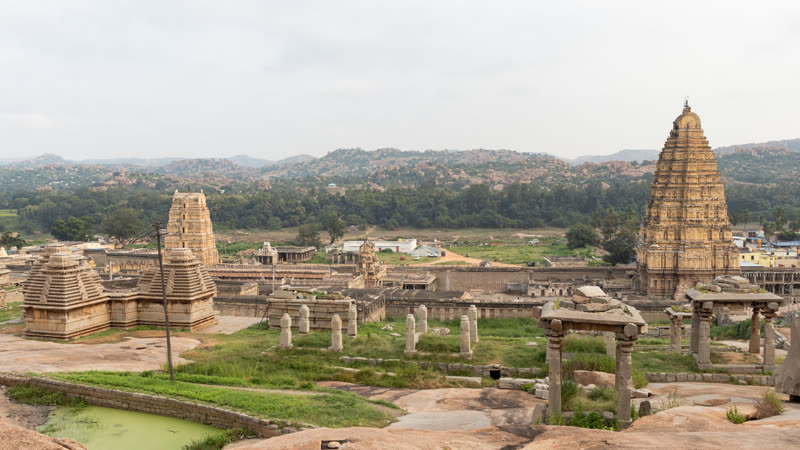
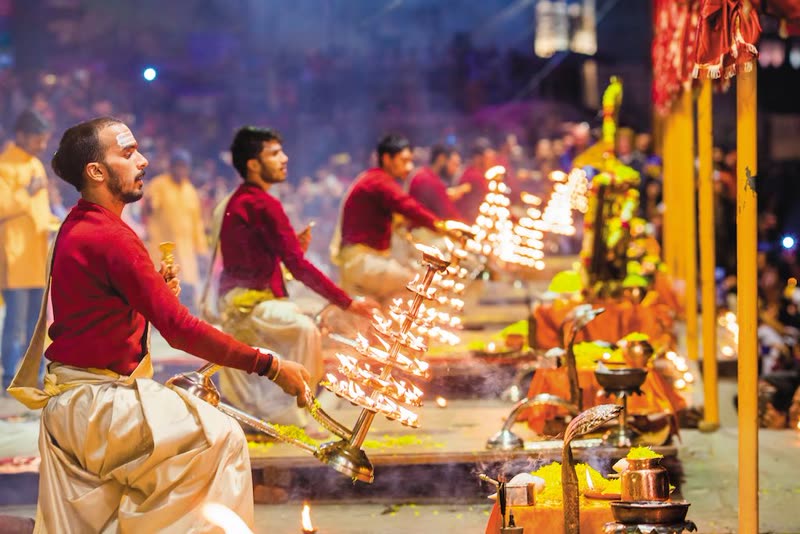
Hampi for archaeological wonder and chill. Varanasi for spiritual depth and life-altering intensity. These two destinations are so different that comparing them is almost unfair — they're different experiences entirely, not just different cities. Hampi is one of India's most beautiful and peaceful places: a UNESCO-listed ruined empire spread across a surreal boulder landscape, with a hippie-backpacker vibe, excellent sunsets, and zero pressure. Varanasi is the exact opposite: India's most intense city, where the entirety of Hindu philosophy — life, death, rebirth — plays out on the Ganges ghats every single day. Reddit travelers consistently call Varanasi a top-five India experience. Hampi regularly gets called "my favorite place in India." Both are right.
Choose Varanasi if: You want to experience something that genuinely shifts your perspective — dawn on the Ganges, the Ganga Aarti, the cremation ghats, the oldest living city on Earth doing what it has done for 3,000 years.
🪨 Choose Hampi if…
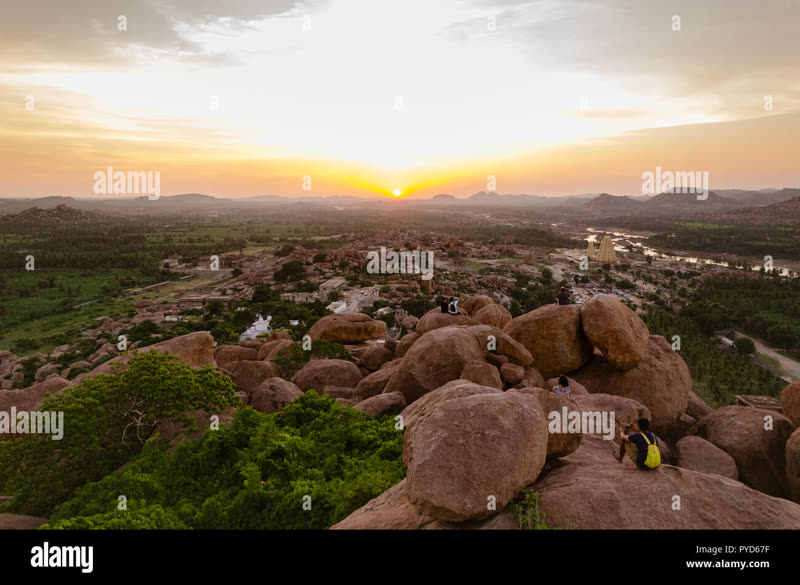
You love ruins, archaeology, and landscapes that look like they're from another planet. Hampi's granite boulders, banana plantations, and Vijayanagara temples are extraordinary and completely unique. The pace is slow, guesthouses are cheap, and sunrise from Matanga Hill may be the best in South India. It's manageable for India newbies.
🕯️ Choose Varanasi if…
You want the India that most India trips miss. Varanasi is confrontational, beautiful, overwhelming, and sacred in a way that feels genuinely ancient. The ghats at dawn, the Ganga Aarti at dusk, the labyrinthine alleys of the old city — most travelers say it was either their favorite or most memorable stop in India. You can't understand India without it.
Quick Comparison
| Category | 🪨 Hampi | 🕯️ Varanasi | Winner |
|---|---|---|---|
| Daily budget (tight) | ₹800–1,500/day | ₹1,000–2,000/day | Hampi |
| UNESCO designation | Yes — Group of Monuments at Hampi | Not UNESCO-listed | Hampi |
| Spiritual significance | Important Hindu pilgrimage site (Virupaksha) | Holiest city in Hinduism, 3,000+ years | Varanasi |
| Landscape uniqueness | Granite boulders + river + ruins — unlike anywhere | Ancient ghats + Ganges — deeply sacred, iconic | Tie |
| Ease for first-timers | Very manageable, calm pace | Intense, chaotic, requires experience | Hampi |
| Best single experience | Sunrise from Matanga Hill over the ruins | Ganga Aarti at Dashashwamedh Ghat at dusk | Tie |
| Crowd level | Low–moderate (mostly backpackers) | Very high (pilgrims + tourists year-round) | Hampi |
| Food scene | Good budget cafés, South Indian, backpacker food | Excellent street food, lassi, regional UP specialties | Tie |
| Getting there (from Bengaluru) | Overnight train to Hosapete (8h) — easy | Flight via Delhi or Hyderabad (2.5h+) — far from South | Hampi |
| Getting there (from Delhi) | Flight to Bengaluru + train (complex) | 5h train direct (Shivganga/Kashi Express) | Varanasi |
| Nightlife / evening scene | Rooftop sunset restaurants, hammock vibes | Ganga Aarti, ghat walks, music on the river | Tie |
⛩️ Temples, Ruins & Cultural Monuments
This is Hampi's signature advantage. The Group of Monuments at Hampi is a UNESCO World Heritage Site covering more than 1,600 surviving remains of the Vijayanagara Empire — once the second-largest city in the medieval world after Beijing, with a population of 500,000 at its peak in the 1500s. The empire was sacked by the Deccan Sultanates in 1565 and never rebuilt, leaving its ruins exactly where they fell across 41 square kilometers of granite boulders and banana groves. It is one of India's most extraordinary archaeological landscapes.
Hampi must-see monuments:
- Vittala Temple Complex — The crown jewel. The famous Stone Chariot (featured on the ₹50 note) sits here alongside the musical pillars of the main hall — each pillar produces a different note when tapped. Entry: ₹600 foreign (~$7). Budget 2 hours. The Vittala complex is 3 km from the main Hampi Bazaar area — walk or take an auto (₹50).
- Virupaksha Temple — Hampi's living temple and the oldest active temple in continuous use in India (since the 7th century CE). The main gopuram (tower) rises 50 meters. Free entry for the temple courtyard. Hampi's sacred elephant, Lakshmi, gives blessings here every morning.
- Royal Enclosure — The ceremonial center of the Vijayanagara court: throne platform, audience halls, 22-stepped well, lotus-shaped fountain. Entry: ₹600 foreign (combined ticket with Vittala). Budget 1–2 hours.
- Lotus Mahal — A two-story Indo-Islamic pavilion inside the Zenana Enclosure (women's quarters). The combination of Hindu lotus motifs with Islamic arched architecture is unusual and beautiful. Entry included with Royal Enclosure ticket.
- Hemakuta Hill — A cluster of pre-Vijayanagara temples (9th–13th century) on a hill southwest of Virupaksha. Excellent sunrise spot, no entry fee.
- Matanga Hill — The highest point in Hampi. Sunrise from here is a pilgrimage for backpackers — the view of the entire boulder landscape, river, and ruins at dawn is extraordinary. Entry free, 20-minute climb.
Varanasi's cultural heritage: Varanasi is India's holiest city and one of the oldest continuously inhabited cities in the world — estimates date habitation to 3,000 BCE. The city has 88 ghats (stepped riverfront embankments) lining the western bank of the Ganges, and 23,000 temples within the city proper. It is not an archaeological site — it is a living, breathing city that has functioned continuously for millennia, with the majority of its spiritual infrastructure still active.
"Hampi is one of the few places in India where a modern city has not been built over an earlier one. It was super interesting and I did my first solo trip there." — r/solotravel
"Hampi is easily as much an essential Indian place as Varanasi. Both will challenge you, but Hampi is the more peaceful challenge." — r/TravelNoPics
🕯️ Spiritual Experience & Vibe
Varanasi is in a category of its own here — and it's not close. Kashi (the old name for Varanasi) is considered the holiest city in Hinduism, the abode of Lord Shiva, and the place where dying grants moksha (liberation from the cycle of rebirth). This is not mythology for the people who live and die here — it is the operating principle of a city that has been a center of Hindu learning, philosophy, and pilgrimage for three millennia. The result is unlike anywhere else on Earth.
What makes Varanasi spiritually unique:
- The ghats at dawn — A boat ride along the ghats at 5–6am is one of travel's great experiences. Pilgrims bathe in the Ganges (a ritual act of purification), priests perform dawn prayers, bodies are brought to the burning ghats at Manikarnika. The life-death-rebirth cycle of Hindu philosophy is visible simultaneously, without metaphor.
- Manikarnika and Harishchandra Burning Ghats — Open-air cremation has been conducted at Manikarnika continuously for over 2,000 years. An estimated 200–300 bodies are cremated here daily. Photography is strictly prohibited. The sight and smell are confrontational and clarifying in equal measure — most travelers say it reframed how they think about death.
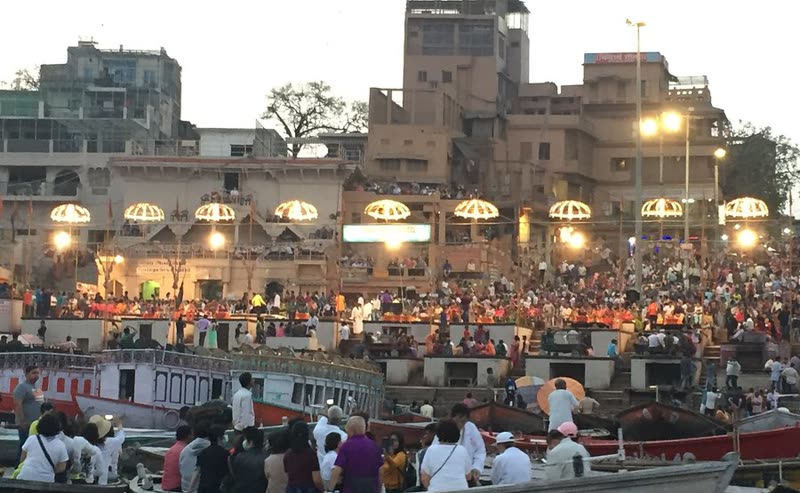
- Ganga Aarti at Dashashwamedh Ghat — Every evening at dusk (~6:30–7:30pm), seven priests perform a 45-minute fire ritual to the Ganges: synchronized brass lamp waving, incense, conch shells, mantras. Thousands gather. It has happened every evening for over two centuries. One of India's most cinematic and genuinely moving spectacles.
- Kashi Vishwanath Temple — One of the twelve Jyotirlingas (sacred Shiva temples), newly renovated with the Kashi Vishwanath Corridor (2021). Entry free for Hindus; non-Hindus may view from outer areas. The surrounding gali (alley) is dense with flower sellers, priests, sadhus, and pilgrims.
Hampi's spiritual dimension: Hampi is also a pilgrimage site — the Virupaksha Temple is one of South India's most important Shiva temples, and the entire landscape holds religious significance in the Ramayana (Kishkindha, the monkey kingdom, is believed to be located here). But Hampi's spiritual energy is different: quieter, layered, discoverable. You can sense it in the temples without being overwhelmed by it.
"Varanasi is more emotionally heavy than graphic. If you set your own boundaries and take time to process, it's deeply spiritual and manageable — not overwhelming. I cried twice. Best trip of my life." — r/travel
"The rising incense smoke, rhythmic chants, and synchronized rituals at the Ganga Aarti create an atmosphere that feels both powerful and peaceful at the same time." — r/varanasi
💰 Cost Comparison
Both Hampi and Varanasi are exceptionally budget-friendly — consistently ranked among the cheapest destinations in India. Hampi has a slight edge because the accommodation market is entirely small guesthouses and budget stays, while Varanasi has more upscale options that push the average up slightly.
| Item | 🪨 Hampi | 🕯️ Varanasi |
|---|---|---|
| Budget hostel dorm | ₹300–600/night | ₹300–700/night |
| Private guesthouse room | ₹600–1,500/night | ₹800–2,500/night (ghat-view premium) |
| Mid-range hotel | ₹2,000–4,000/night | ₹2,500–5,000/night |
| Thali / local meal | ₹80–150 | ₹100–200 |
| Café meal (backpacker) | ₹150–300 | ₹150–350 |
| Main site entry (foreign) | ₹600 (Vittala/Royal Enclosure combined) | Free–₹200 (most ghats free; temples vary) |
| Auto for full-day sightseeing | ₹1,500–1,800 | ₹800–1,500 (shorter distances) |
| Boat ride (Ganges) | N/A | ₹200–500/person (negotiated) |
| Daily budget (backpacker) | ₹800–1,500/day | ₹1,000–2,000/day |
| Daily budget (mid-range) | ₹2,000–4,000/day | ₹2,500–5,000/day |
"Total trip cost for 2 days in Hampi: 4,000 INR. Daily budget roughly 1,000 INR. Covered train + bus, stay, food, auto for both sides." — r/SoloTravel_India
"Staying near the ghats in Varanasi — ₹300 per night for 7 days. Budget 3-day trip is totally doable on ₹3,000–5,000 total." — r/varanasi
🍜 Food & Dining
The food cultures are as different as the cities themselves. Hampi's food scene is shaped by its backpacker population — a mix of South Indian classics and traveler-friendly café food. Varanasi's is one of India's great street food cities: a North Indian-UP culinary tradition with specific iconic dishes you won't find anywhere else.
Hampi food highlights:
- South Indian breakfast — Masala dosa, idli-sambar, vada, filter coffee. Available everywhere for ₹60–120. Hampi's South Indian breakfasts are reliably excellent and extremely cheap.
- Mango Tree Restaurant — A Hampi institution on the Tungabhadra riverbank. Cushions on the floor, rope swings, river views, good thalis. Open lunch and dinner, ₹150–300/meal.
- Rooftop cafés (Hampi Bazaar side) — Several rooftop restaurants near Virupaksha Temple for banana lassi, Israeli-style salads, and pancakes at sunset. The food is solidly backpacker-international rather than deeply authentic but the views are unbeatable.
- Hippie Island (Virupapur Gadde) — The quieter north bank, accessible by coracle (round woven boat, ₹30) or bridge. Several relaxed guesthouses and cafés with hammocks, good for slower mornings and whole-day mango lassi sessions.
Varanasi food highlights:
- Kashi chaat — The Varanasi street food signature: aloo tikki, papdi chaat, tamatar chaat. The tamatar (tomato) chaat of Varanasi is uniquely spiced — not available anywhere else.
- Blue Lassi Shop — A 70-year-old family-run hole-in-the-wall in Vishwanatha Gali. The rose, saffron, and fruit lassis are served in clay pots, thick enough to eat with a spoon. Often a 15-minute wait. Worth every minute.
- Baati Chokha — Varanasi's version of the UP rural staple: round baked wheat balls (baati) with roasted eggplant chokha and dal. Try it at the restaurants near Assi Ghat.
- Malaiyo — A winter-only Varanasi specialty (November–February): a frothy, saffron-infused milk dessert served in clay cups from street vendors in the early morning. Extraordinary and completely unique to Varanasi.
"Varanasi street food is legitimately some of the best in India. The chaat alone is worth the trip. And the Blue Lassi shop — go twice." — r/SoloTravel_India
🚂 Getting Around
Getting to Hampi is the main logistical challenge — it's off the main tourist circuit and requires connecting through Hospet/Hosapete. Getting to Varanasi is significantly easier, especially from North India. Once you're there, both cities are navigable but in different ways.
Getting to Hampi:
- From Bengaluru (Bangalore): The classic route. Hampi Express (Train 16592) departs Bengaluru City at 10pm, arrives Hosapete ~7am (8h). 3AC sleeper: ₹400–700. From Hosapete to Hampi: 15km by auto (₹100–200) or bus (₹25).
- From Goa: Overnight bus from Panaji or Margao to Hospet (~8–9h, ₹500–800). Direct services run most evenings. A popular route for Goa-Hampi backpackers.
- From Hyderabad: Train to Guntakal, then change to Hospet (~8–9h total, ₹300–600 3AC). Or overnight bus services.
- Nearest airport: Hubli Airport (HBX), 67 km. Or Bengaluru Kempegowda (BLR), 350 km — most international travelers land here.
Getting to Varanasi:
- From Delhi: Very well connected. Shivganga Express (~10h overnight) or Kashi Vishwanath Express, both arriving Varanasi Cantt station. 3AC: ₹600–1,200. Varanasi is 800 km from Delhi — trains are frequent.
- From Agra / Golden Triangle: Train via Prayagraj (~5–8h). Varanasi fits naturally as an extension of the Golden Triangle (Delhi–Agra–Jaipur + Varanasi).
- By air: Lal Bahadur Shastri Airport (VNS) has direct flights from Delhi, Mumbai, Bengaluru, Kolkata. Delhi–Varanasi flights from $30–70 on IndiGo/SpiceJet (~1.5h).
Getting around within each city: Hampi is best explored by auto hire for the day (₹1,500–1,800 for a full-day circuit of both sides of the river). The main Hampi Bazaar–Vittala stretch is pleasant to cycle (₹100–150/day bicycle rental). Varanasi's old city is best navigated on foot — the gali (alleys) are too narrow for vehicles, which is part of the charm.
🌸 Best Time to Visit
Hampi and Varanasi have different climates (South India vs North India) but share the same optimal travel window: October to March. Summers are brutal in both. Monsoon affects them differently.
Best time for Hampi:
- October–February: Ideal. Temperatures 18–32°C, minimal rainfall, clear skies. The Tungabhadra river is full from monsoon, adding to the landscape's beauty. Peak season — book guesthouses in advance.
- March: Getting warm (30–38°C) but still manageable. Hampi festival (Vijayanagara Utsav) usually in early February — local cultural performances at the Vittala Temple.
- April–May: Very hot (38–44°C). Sightseeing in the open boulder landscape becomes difficult by 10am. Not recommended.
- June–September (Monsoon): Hampi receives heavy rainfall. The Tungabhadra river floods and the ferry between banks stops. Many guesthouses close on Hippie Island. Not ideal for visiting.
Best time for Varanasi:
- October–November: Dev Deepawali (November full moon) is Varanasi's most spectacular festival — thousands of oil lamps light every ghat simultaneously. One of India's most photogenic events. Extremely crowded; book accommodation months in advance.
- November–February: Optimal. 10–28°C, clear skies, the Ganges is at a manageable level. Morning boat rides are comfortable. January mornings can be cold (8–12°C) — bring a jacket.
- March: Warming up (20–35°C). Holi celebrations in Varanasi are chaotic and exhilarating — one of India's most intense Holi experiences.
- April–June: Very hot (35–45°C). Not recommended.
- July–September (Monsoon): The Ganges rises significantly, submerging some ghats. The city remains functional but some areas are affected. Avoid if you want the full ghat experience.
"Most India tours omit Varanasi, which is a real shame — it was the highlight of the tour for us. We went in December, the weather was perfect, and the Dev Deepawali was unforgettable." — r/travel
🏨 Where to Stay
Accommodation in both cities is overwhelmingly budget-oriented, with a handful of mid-range options but no real luxury market. The key accommodation choice in each city defines your experience more than the price point.
Hampi: where to stay matters a lot
- Hampi Bazaar (Main Side) — The area around Virupaksha Temple. Most convenient for site access, morning elephant blessings, and shops. Good guesthouses: Shanthi Guest House, Archana Guest House (₹400–1,200/night private rooms).
- Hippie Island / Virupapur Gadde (North Side) — Accessible by coracle or new footbridge. More relaxed, no vehicles (this changes), hammock culture, rice paddy views, quieter. Popular with long-stay backpackers. Guesthouses: Shree Ram Guest House, Gopi Guest House (₹300–800/night).
- Kamalapura Village (South, near Royal Enclosure) — Quietest option, close to the archaeological zone. A few guesthouses. Less walkable to Virupaksha but peaceful. ₹500–1,500/night.
Varanasi: ghat proximity is everything
- Assi Ghat area — The most backpacker and traveler-friendly area. Lively, full of cafés and music venues, safe for solo travelers, slightly removed from the most intense ghat activity. Recommended for first-timers. Guesthouses: ₹500–2,000/night depending on view.
- Dashashwamedh Ghat area — In the thick of the old city. Closest to the main Ganga Aarti, Kashi Vishwanath Temple, and street food. Noisier, more chaotic, more intense. Best for experienced India travelers who want maximum immersion.
- Standout properties: Budget: Hotel Ganpati (Meer Ghat, ghat views, ₹800–2,000); Mid: Brijrama Palace Heritage Hotel (maharaja's palace on the ghats, ₹8,000–18,000/night — if you can swing it, worth every rupee); Guest houses: Scindia Ghat area for quiet, ₹500–1,200.
🎒 Day Trips & Nearby Excursions
Both cities have excellent day-trip options that significantly expand the visit.
From Hampi:
- Badami, Aihole, and Pattadakal — The Chalukya temple circuit, predating Hampi by several centuries. About 130 km south. Rock-cut cave temples (Badami), the world's earliest known experiments in South Indian temple architecture (Aihole), and a UNESCO WHS (Pattadakal, 8th-century Chalukya temples). A full day, hire a car (₹2,500–3,500). One of India's most underrated temple circuits.
- Tungabhadra Dam — 12 km from Hampi. Pleasant green surroundings and a viewpoint over the reservoir. Worth a 2-hour trip if you have a day with less monument energy. Entry free, auto ₹200 return.
- Daroji Sloth Bear Sanctuary — 14 km from Hampi. One of the world's best places to see Indian sloth bears (particularly at the natural feeding site at dusk). Entry: ₹100. Bears typically visible at the viewing platform at 4–6pm.
From Varanasi:
- Sarnath — 10 km from Varanasi. Where the Buddha gave his first sermon after achieving enlightenment under the Bodhi Tree, 2,500 years ago. The Dhamekh Stupa (5th century CE) and the Sarnath Archaeological Museum (home to the Ashoka Lion Capital, the national symbol of India) are extraordinary. Entry: ₹15 Indian, ₹300 foreign. Takes 3–4 hours. Hire an auto (₹300–400 return).
- Prayagraj (Allahabad) — 120 km, 2h by train. Site of the Triveni Sangam — the confluence of the Ganges, Yamuna, and mythical Saraswati rivers, one of Hinduism's most sacred spots. Host of the Kumbh Mela (massive pilgrim festival). A pilgrimage day trip for those interested in the deeper India circuit.
- Vindhyachal — 75 km. The Vindhyavasini Temple, an important Shakti Pitha (divine feminine temple), draws huge pilgrim crowds. A half-day religious excursion.
🛡️ Safety & Accessibility
Both cities are generally safe for tourists, but they present different challenges. Understanding what you're getting into helps calibrate expectations — and avoids the most common pitfalls.
Hampi safety and practicalities:
- Hampi is one of India's safest tourist destinations. The backpacker community is the main visitor type, the local economy depends on tourism, and there are minimal reports of serious safety issues. The main concerns are: boulder climbing (multiple serious falls reported — don't boulder solo without proper footwear and caution), monkey theft (particularly at Virupaksha Temple — monkeys will grab bags, glasses, and food), and dehydration (the open rocky landscape gets intensely hot by 11am October–March).
- The Hippie Island can get very late-night party energy during peak season — not for everyone. The coracle crossing at night is not recommended.
- Carry cash: ATMs exist in Hampi Bazaar and Hosapete but can run dry. Withdraw from Hosapete if you'll need significant cash.
Varanasi safety and practicalities:
- Varanasi is safe but requires more vigilance than most Indian cities. Common issues: persistent touts at the ghats offering boat rides, silk shops, and temple tours (they're usually legitimate but aggressive). The "my cousin has a silk shop" redirect is the city's most famous scam. The "your planned ghat is closed today" is another — it's almost never true.
- Solo female travelers report more persistent attention in Varanasi's narrower alleys and the main ghat areas than in most Indian cities. Most is harmless; trust your instincts. The Assi Ghat area is genuinely more comfortable for solo women.
- The burning ghats (Manikarnika, Harishchandra): photography is strictly prohibited and will cause serious offence and confrontation. Respect the space — you are witnessing people's cremation ceremonies.
- The Ganges water: do not swim in it or drink it. The pollution levels near the city are extreme. Many pilgrims bathe ritually; that is a spiritual act you should not interpret as a hygiene endorsement.
"Compared to Varanasi, Hampi is mild. Both are worth it — but Hampi is where I'd send someone doing India for the first time. Varanasi requires you to have some India experience first." — r/solotravel
🧭 The Decision Framework
Choose Hampi if…
- You're on your first India trip and want an accessible, rewarding experience
- UNESCO archaeological ruins and South India's Vijayanagara history fascinate you
- You want the best sunrise view in South India (Matanga Hill)
- You're coming from Bengaluru or Goa and want to add a cultural stop
- A relaxed, hippie-backpacker pace suits your travel style
- The Badami–Aihole–Pattadakal Chalukya temple circuit interests you
- You want a place that looks like no other place on Earth (the boulder landscape)
- You're looking for an off-the-beaten-path India experience most tours skip
Choose Varanasi if…
- You're ready to be genuinely challenged and moved by India
- The Ganga Aarti, dawn on the Ganges, and the burning ghats are on your bucket list
- You're traveling the North India circuit (Delhi–Agra–Jaipur) and want the ultimate extension
- Hindu philosophy, Shaivism, and India's oldest living city fascinate you
- Sarnath — where the Buddha gave his first sermon — is a pilgrimage for you
- You want street food culture at its deepest (Blue Lassi, kashi chaat)
- You've done India before and want the experience most first-timers miss
- You want something that will genuinely change how you think
Also see: Jaipur vs Udaipur and Rishikesh vs Dharamsala for more India comparison guides. If you're building a broader trip, check our India vs Nepal comparison and our Goa vs Kerala guide.
❓ Frequently Asked Questions
Is Hampi or Varanasi better for first-time India visitors?
For first-timers to India, Hampi is significantly more manageable. It's smaller, calmer, cleaner, and delivers extraordinary rewards (UNESCO ruins, surreal boulder landscapes) without the sensory overload that Varanasi can bring. Varanasi is one of the world's most intense travel experiences — cremation ceremonies on the ghats, labyrinthine alleys, relentless crowds — and many seasoned travelers say it changed how they think about life and death. Both are bucket-list worthy, but if India is new to you, visit Hampi first and save Varanasi for when you have some India experience under your belt.
How many days do you need in Hampi vs Varanasi?
Hampi: 2–3 full days to properly explore both sides of the Tungabhadra river — the Royal Enclosure and Vittala Temple complex on the north side, and the Virupaksha Temple area and Hemakuta Hill on the south side. A third day for sunrise on Matanga Hill, the Hippie Island (Virupapur Gadde), and a leisurely sunset is ideal. Varanasi: minimum 2–3 days, ideally 3–4. You need one full day on the ghats (morning boat ride + evening Ganga Aarti), one day for the old city temples (Kashi Vishwanath corridor, Kal Bhairav Temple), and a half day for Sarnath — where the Buddha gave his first sermon, 10 km from the city.
Is Varanasi safe for solo travelers?
Yes — Varanasi is safe for solo travelers, including solo women, though it requires more alertness than most Indian cities. The ghats have heavy foot traffic and are generally safe at night but the old city alleys (Vishwanatha Gali) can feel intense after dark. Solo female travelers report more persistent attention from touts and boatmen than in other cities. Practical tips: stay near Assi Ghat (lively, well-lit, traveler-friendly), use Ola/Uber for late-night transport rather than cycle rickshaws, and ignore anyone who claims your planned ghat is 'closed' — it's almost always a scam to redirect you to their cousin's shop.
What is the best way to get to Hampi?
The classic route is an overnight train from Bengaluru (Bangalore) to Hosapete Junction — the Hampi Express (Train 16592) departs around 10pm and arrives at Hosapete ~7am (~8h, ₹300–600 for sleeper/3AC). From Hosapete, take an auto-rickshaw to Hampi (15 km, ₹100–200). From Goa, several direct buses run to Hampi overnight (₹500–800, 8–9h). From Mumbai, the most common route is overnight to Hosapete via Hubli (~11h train). Flying into Bengaluru and taking the overnight train is the most popular international entry point.
Is the Ganga Aarti in Varanasi worth it?
Yes — unequivocally. The Ganga Aarti at Dashashwamedh Ghat every evening (~6:30–7:30pm) is one of India's most spectacular ceremonies. Seven priests perform synchronized fire rituals with giant brass lamps, incense, conch shells, and chanting to thousands of people packed onto the ghats, boats, and rooftops. It's both a genuine Hindu ritual that has happened here every day for centuries and an extraordinary visual spectacle. Arrive 45 minutes early to secure a spot on the main ghat steps, or book a boat for the river view (~₹200–400 per person negotiated). The boat view is arguably better than the ghat. The Assi Ghat morning aarti (5–6am) is smaller and more intimate if you prefer fewer crowds.
Which is cheaper — Hampi or Varanasi?
Both are among India's most budget-friendly destinations. Hampi is marginally cheaper: ₹800–1,500/day on a tight budget including accommodation (₹300–700 dorm or basic guesthouse), meals (₹100–200 per meal at local restaurants), and auto hire for sightseeing. Varanasi is slightly more because boat rides and the tourist ghat zone carry a light premium. Budget ₹1,000–2,000/day in Varanasi for hostel dorm, meals, and one boat ride. Both cities are dramatically cheaper than Delhi, Mumbai, or most Southeast Asian alternatives.
Can you visit both Hampi and Varanasi on the same India trip?
Yes, but they're far apart — Hampi is in Karnataka (South India) and Varanasi is in Uttar Pradesh (North India), roughly 2,000 km by road or a 2.5h flight via Hyderabad or Bengaluru. On a 3–4 week India trip, many travelers combine them by flying between South and North India: e.g., Bengaluru → Hampi (overnight train) → back to Bengaluru or Goa → fly to Delhi or Varanasi. The Golden Triangle (Delhi–Agra–Jaipur) + Varanasi covers the classic North, while Kerala/Goa + Hampi covers the South. Trying to do both overland is a significant journey but doable on 25+ day trips.
What is unique about Hampi that you can't find anywhere else in India?
Hampi's combination of elements is genuinely one-of-a-kind: a 14th–16th century Vijayanagara Empire royal capital — once the second largest city in the world after Beijing — scattered across a surreal landscape of giant granite boulders, banana plantations, and the Tungabhadra river. Unlike Rajasthan's forts or Agra's palaces, Hampi hasn't been reconstructed or touristified — you walk through actual ruins, climb actual temple towers, and sit on actual royal elephant stables. The UNESCO-listed group of monuments includes the Vittala Temple (its famous Stone Chariot appears on India's ₹50 note) and the musical pillars that produce different notes when tapped. No other destination in India looks remotely like it.
Ready to plan your India trip?
Whether you choose Hampi's ancient ruins or Varanasi's sacred ghats, tabiji has destination guides, itinerary tools, and curated picks to help you plan every day.
🎟️ Book Tours & Experiences
Hand-picked tours and activities for both destinations — book with free cancellation
Experiences via Viator — free cancellation on most tours