How we built this comparison
This page combines traveler discussion patterns, published price ranges, flight schedules, and seasonal data to help you decide between Hawaii and Caribbean.
- Reviewed 100+ Reddit threads from r/travel, r/solotravel, r/hawaii, r/caribbeantravel, and r/digitalnomad for authentic traveler experiences and advice.
- Verified costs and logistics against current booking platforms (e.g., Google Flights, Booking.com, Kayak) for mid-range pricing and availability.
- Cross-referenced seasonal patterns, weather data, and safety advisories from government travel resources and meteorological organizations.
⚡ The TL;DR Verdict
Hawaii offers a more structured, activity-rich adventure with stunning natural beauty and American familiarity, best for those with a higher budget ($350-500+ daily). The Caribbean provides a diverse, often more budget-friendly escape, perfect for relaxation, distinct cultural immersion, and shorter trips, with daily budgets ranging from $150 (all-inclusive) to $400+ (boutique luxury).
- Choose Hawaii: Pick Hawaii if you prioritize dramatic volcanic landscapes, world-class surfing, pristine national parks, excellent infrastructure, and a blend of Polynesian culture with American comforts. Ideal for active travelers, honeymooners, and families who don't mind a higher price tag.
- Choose Caribbean: Opt for the Caribbean if your dream vacation involves ultimate relaxation on white-sand beaches, vibrant nightlife, diverse European/African-influenced cultures, shorter flight times from the East Coast, and a range of budget-friendly to luxurious all-inclusive options. Great for couples, party-goers, and those seeking quick, easy beach getaways.
- Choose Both: Consider both if you have ample time (3+ weeks) and a generous budget, perhaps combining a more active Hawaiian adventure with a relaxing Caribbean beach escape. This allows you to experience two distinct tropical paradises, but plan separately to truly savor each.
Quick Comparison
| Category | Hawaii | Caribbean | Winner |
|---|---|---|---|
| Costs & Budget | Generally more expensive due to remoteness and US pricing. Expect higher costs for accommodation, food, and activities. | Can range from very budget-friendly (all-inclusive) to ultra-luxury. More options for cost-conscious travelers. | Caribbean |
| Getting There (Flights) | Longer flights, especially from the East Coast US. Limited direct routes; often layovers from non-West Coast cities. | Shorter flights from the East Coast US. Many direct routes to major hubs, making it a quicker journey. | Caribbean |
| Beaches & Water Activities | Volcanic black sands, dramatic cliffs, world-renowned surfing, snorkeling, and diving. Unique marine life. | Iconic white and pink sands, calm turquoise waters perfect for swimming, snorkeling, and relaxing. Abundant reefs. | Tie |
| Culture & History | Rich Polynesian heritage, unique Hawaiian language, hula, luaus, and deep reverence for nature. | Diverse tapestry of Indigenous, African, European (British, French, Spanish, Dutch) influences. Vibrant music, food, and festivals. | Caribbean |
| Food Scene | Unique 'Pacific Rim' cuisine, poke, fresh seafood, farm-to-table, shave ice, Asian fusion, plate lunches. | Varies by island: jerk chicken, curries, fresh seafood, plantains, rum-infused dishes. Authentic street food. | Hawaii |
| Accommodation | Predominantly hotels, resorts, condos/vacation rentals. Fewer all-inclusive options; high prices. | Wide range: budget guesthouses, boutique hotels, mega-resorts, and numerous all-inclusive packages. | Caribbean |
| Safety & Healthcare | Generally very safe with US infrastructure. Healthcare is high quality but expensive without insurance. | Varies significantly by island. Some are very safe, others have higher crime rates. Healthcare quality varies; travel insurance essential. | Hawaii |
| Getting Around | Rental cars are highly recommended and often necessary for exploring. Public transport is limited outside main cities. | Varies by island: taxis, shared vans (collectivos), local buses, and rental cars. Some islands are walkable, others require transport. | Hawaii |
| Nature & Scenery | Dramatic volcanic landscapes, lush rainforests, towering cliffs, active volcanoes, diverse ecosystems. | Stunning white-sand beaches, calm turquoise waters, vibrant coral reefs, lush tropical vegetation, rolling hills. | Hawaii |
| Nightlife & Entertainment | More relaxed, focusing on live music (hula, ukulele), fine dining, and sunset cocktails. Less 'party' focused. | Varies wildly by island: vibrant clubs, beach parties, casinos, live music (reggae, calypso), and rum bars. | Caribbean |
💸 Costs & Budget
Hawaii, as a US state, comes with a higher price tag for nearly everything. A mid-range hotel in Waikiki can easily run $300-500/night, and even a simple lunch can be $20-30. Rental cars are essential and can be $70-120/day, not including gas. A decent daily budget for an independent traveler in Hawaii is often $350-500+, excluding major tours or flights. The Caribbean, however, offers a spectrum. You can find all-inclusive resorts in destinations like Punta Cana, Dominican Republic, or Cancún, Mexico, for $150-300 per person per night, including food, drinks, and some activities. Independent travel in places like Barbados or St. Lucia might see daily costs of $200-400 for mid-range. 'Honestly, we spent like $4000 for a week in Maui without even trying to splurge, just normal meals and a few excursions. Our week in Barbados was half that and felt way more luxurious at an all-inclusive,' said one traveler on r/travel. The sheer variety and availability of competitive all-inclusive packages often make the Caribbean a more accessible option for many budgets, especially if you're looking to minimize incidental spending.
Winner takeaway
- Winner: Caribbean
- Why: The Caribbean offers a wider range of budget options, particularly with prevalent all-inclusive resorts, making it more accessible for various financial plans.
- Who this matters for: Budget-conscious travelers, families, and those seeking predictable, all-inclusive pricing.
✈️ Getting There (Flights)
For most North American travelers, especially those on the East Coast, the Caribbean is a much quicker hop. Flights from New York (JFK) to destinations like San Juan, Puerto Rico (SJU), are often just 3.5-4 hours. Even flying from Chicago (ORD) to Montego Bay, Jamaica (MBJ), can be around 4-5 hours direct. Round-trip flights can range from $300-600 depending on the island and season. Hawaii, on the other hand, is a significant journey. From the West Coast (LAX, SFO), flights to Honolulu (HNL) are typically 5-6 hours. From the East Coast (JFK, MIA), you're looking at 10-12+ hours, often with a layover. Expect flight prices to Honolulu to be $600-1000+ from the West Coast and $800-1500+ from the East Coast. 'We did Hawaii for our honeymoon from Boston, and the flight time was brutal. Next time, it's a quick 4-hour jump to Turks & Caicos for pure beach time,' a user shared on r/honeymooners. This makes the Caribbean far more appealing for shorter trips or when minimizing travel time is a priority.
Winner takeaway
- Winner: Caribbean
- Why: The Caribbean generally offers significantly shorter flight times and more direct options from major US cities, especially the East Coast, making it more convenient for shorter trips.
- Who this matters for: Travelers with limited vacation time, East Coast residents, and those who dislike long-haul flights.
🏖️ Beaches & Water Activities
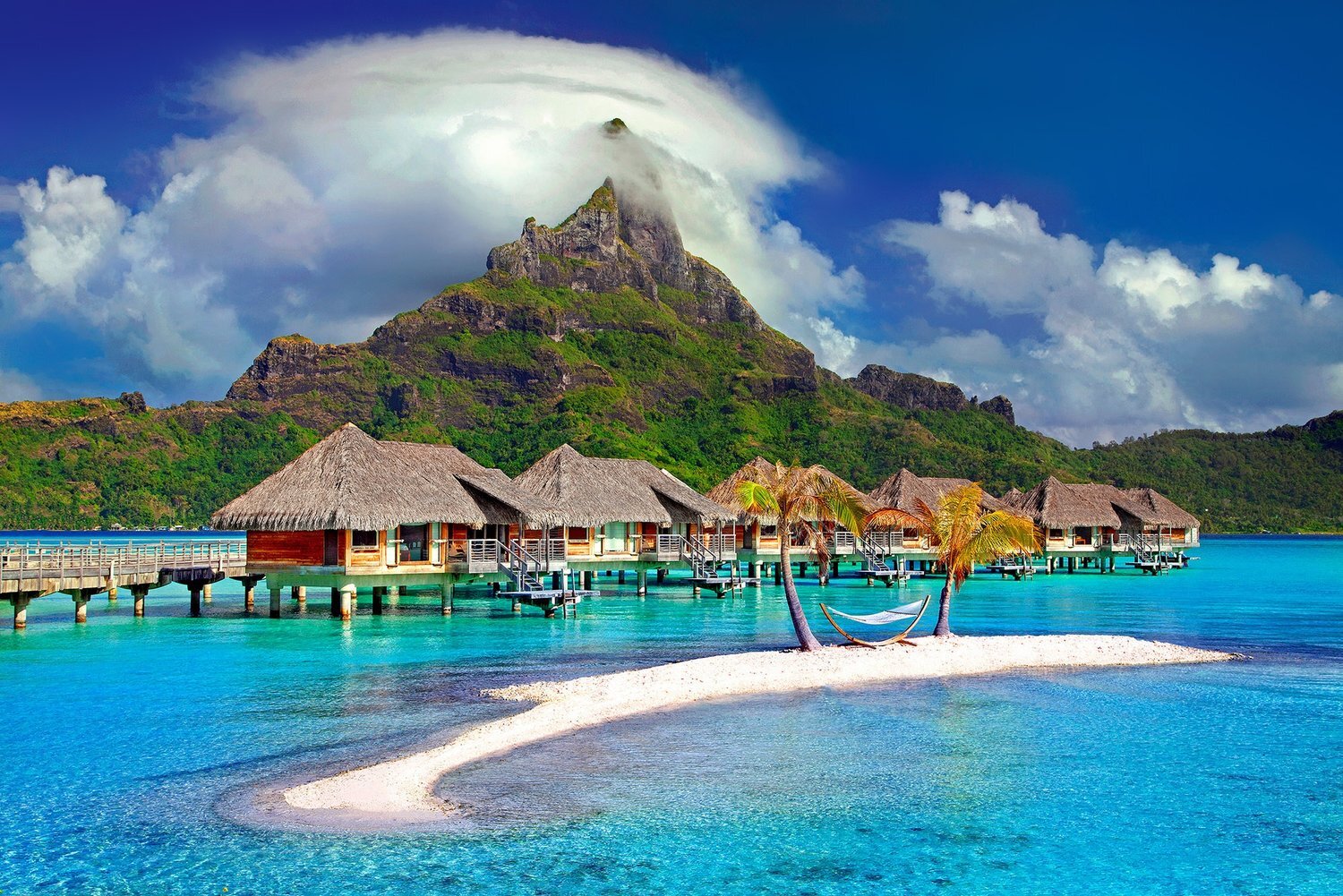
Both destinations boast some of the world's most beautiful beaches, but their character differs significantly. Hawaii's beaches, like Ka'anapali on Maui or Lanikai on Oahu, offer stunning contrasts: golden sands against lush mountains, or dramatic black sands at Punalu'u on Big Island. It's a prime destination for serious surfers (North Shore, Oahu), divers exploring lava tubes, and snorkelers encountering unique Hawaiian reef fish. The waves can be powerful and dramatic. The Caribbean, meanwhile, is the quintessential postcard paradise. Think powdery white sands of Grace Bay in Turks & Caicos, the calm, clear waters of Seven Mile Beach in Grand Cayman, or the pink sands of Harbour Island in the Bahamas. It's perfect for casual swimming, snorkeling vibrant coral reefs teeming with colorful fish, and leisurely paddleboarding. 'Hawaii's beaches are gorgeous, but man, those waves can be intense. For just chilling in calm water, nothing beats the Caribbean,' a user noted on r/travel. While Hawaii offers more dramatic scenery and powerful surf, the Caribbean provides a wider variety of exceptionally calm, warm, and clear waters ideal for relaxed swimming and snorkeling, making it a tie due to different strengths catering to different preferences.
Winner takeaway
- Winner: Tie
- Why: Both offer world-class beaches and water activities, but cater to different preferences: Hawaii for dramatic landscapes and powerful surf, Caribbean for calm, clear waters and classic relaxation.
- Who this matters for: Depends on preference: Hawaii for adventure seekers and unique geology; Caribbean for relaxed swimmers and classic 'paradise' aesthetics.
🗿 Culture & History
Hawaii’s culture is deeply rooted in its Polynesian origins, offering a distinct blend of ancient traditions and modern American influences. You can experience authentic luaus (e.g., Old Lahaina Luau on Maui), visit historical sites like ʻIolani Palace, or learn about ancient Hawaiian agriculture at the Taro fields. The reverence for 'aina (land) and aloha (love, compassion) is palpable. However, the Caribbean presents a dizzying array of cultures across its many islands, each with its own flavor. From the French Creole charm of Martinique, the British colonial architecture in Barbados, the Spanish influences in Puerto Rico and Cuba, to the vibrant African rhythms of Jamaica's reggae and Trinidad's calypso. 'Every island in the Caribbean feels like a new country, a new language, a new dish. Hawaii is beautiful, but the cultural variety across the Caribbean is just insane,' commented a seasoned traveler on r/solotravel. This incredible diversity, stemming from centuries of different colonial powers and diverse indigenous and imported populations, offers a more varied and rich cultural immersion experience than Hawaii's relatively unified (though beautiful) Polynesian-American blend.
Winner takeaway
- Winner: Caribbean
- Why: The Caribbean offers an unparalleled cultural diversity with distinct influences from multiple European powers, Africa, and indigenous groups across its many islands.
- Who this matters for: Culture vultures, history buffs, and travelers who enjoy experiencing a wide array of languages, cuisines, and traditions.
🍜 Food Scene
Hawaii's food scene is a delightful fusion, truly unique with its 'Pacific Rim' cuisine that blends Asian, American, and traditional Hawaiian flavors. You'll find incredible fresh poke bowls everywhere, from supermarket delis to high-end restaurants like Merriman's Kapalua on Maui. Farm-to-table movements are strong, leveraging local produce, and the plate lunch is an iconic, affordable staple. Don't forget famous Hawaiian shave ice (Matsumoto Shave Ice on Oahu's North Shore is legendary). The quality and innovation, especially in cities like Honolulu or areas like Wailea, are often Michelin-star worthy. The Caribbean's food is delicious but often more rustic and less varied across islands compared to Hawaii’s fusion. You'll savor incredible jerk chicken in Jamaica, conch fritters in the Bahamas, callaloo and rotis in Trinidad, and fresh grilled fish everywhere. While vibrant and authentic, 'I feel like Hawaii has a more refined and diverse culinary scene overall, especially with the Asian influences and farm-to-table movement. The Caribbean is great for comfort food, but Hawaii felt more 'foodie',' a user shared on r/foodtravel. Hawaii offers a more sophisticated and diverse culinary adventure for those seeking innovation alongside tradition.
Winner takeaway
- Winner: Hawaii
- Why: Hawaii's unique 'Pacific Rim' fusion cuisine, strong farm-to-table movement, and diverse Asian influences offer a more innovative and refined culinary experience.
- Who this matters for: Foodies, gourmands, and those looking for unique culinary experiences beyond traditional beach fare.
🏨 Accommodation
Hawaii's accommodation landscape is dominated by large resorts and hotels, particularly in popular areas like Waikiki (Oahu), Wailea (Maui), and Poipu (Kauai). Think Marriott, Hilton, Hyatt – reliable but often pricey, averaging $300-600+ per night for a mid-range room. Vacation rentals (VRBO, Airbnb) are also popular but face increasing local restrictions. All-inclusive resorts are rare, with only a handful existing. The Caribbean, however, excels in variety. From charming, locally-run guesthouses in Grenada for $80/night to luxurious boutique hotels like The Caves in Jamaica ($600+/night) and sprawling all-inclusive mega-resorts like Sandals or Beaches ($400-1000+ per night per couple) in numerous islands. 'For ease and value, you just can't beat the all-inclusive options in the Caribbean. We stayed at a Sandals for our anniversary, and not having to think about a single bill was amazing,' a user posted on r/travel. This diversity, especially the robust all-inclusive market, allows travelers to find options that perfectly match their budget and desired vacation style, whether it's a pampered resort stay or an independent, local experience, far surpassing Hawaii's offerings in terms of sheer range and value.
Winner takeaway
- Winner: Caribbean
- Why: The Caribbean offers a significantly wider range of accommodation types and price points, including a robust all-inclusive market, catering to diverse traveler preferences and budgets.
- Who this matters for: Any traveler seeking specific types of lodging, especially those on a budget or looking for an all-inclusive, worry-free vacation.
🏥 Safety & Healthcare
Hawaii, as a US state, benefits from robust US law enforcement and healthcare infrastructure. While petty crime (car break-ins, property theft) can occur, violent crime against tourists is rare. The medical facilities are world-class, though costs can be exorbitant if you're uninsured or your plan has high deductibles. 'Honestly, knowing I'm still in the US in Hawaii just gives me an extra layer of peace of mind, especially with healthcare. You never know what's going to happen,' a traveler shared on r/hawaii. The Caribbean presents a more complex picture. Islands like Aruba, Grand Cayman, and St. Barts are renowned for their low crime rates and tourist-friendly environments. However, others like Jamaica, Trinidad and Tobago, and parts of the Dominican Republic have higher crime rates, and travelers need to exercise more caution, avoid certain areas, and be aware of their surroundings. Healthcare varies from basic clinics to decent hospitals, but quality can be inconsistent, and evacuation insurance is often recommended. For overall consistency in safety and quality of medical infrastructure, Hawaii takes the lead, offering a more predictable and reassuring environment for many visitors.
Winner takeaway
- Winner: Hawaii
- Why: Hawaii benefits from consistent US law enforcement and high-quality, reliable healthcare infrastructure, providing a more predictable and generally safer environment for travelers.
- Who this matters for: Travelers prioritizing personal safety, access to top-tier medical care, and familiarity with US regulations.
🚗 Getting Around
In Hawaii, a rental car is almost universally recommended for true exploration, especially on islands like Maui (for the Road to Hana), Kauai (for Waimea Canyon), or the Big Island (for Volcanoes National Park). While Honolulu has a decent bus system ('TheBus'), it won't get you to many scenic spots on Oahu. Parking can be a challenge and expensive. Rental car prices vary but expect $60-120/day. The US road system is familiar and well-maintained. 'Seriously, don't even think about Hawaii without booking a rental car months in advance. We saw so much more than just Waikiki because we had wheels,' a user advised on r/hawaii. In the Caribbean, getting around is a mixed bag. On smaller, walkable islands like St. John, you might manage with taxis and walking. On larger islands like Jamaica or Puerto Rico, you'll rely on taxis, shared 'collectivo' vans, or rent a car (driving on the left in many former British colonies). Roads can be less maintained, and local driving styles can be aggressive. The ease and familiarity of driving a rental car in Hawaii on well-maintained roads, with clear signage and familiar traffic laws, make it a more straightforward and often more comfortable experience for self-guided exploration compared to the varied and sometimes challenging transport options in the Caribbean.
Winner takeaway
- Winner: Hawaii
- Why: Hawaii offers a more consistent and familiar experience for self-driving with well-maintained roads and clear signage, making independent exploration easier.
- Who this matters for: Independent travelers, those who prefer self-driving, and families needing flexibility.
⛰️ Nature & Scenery
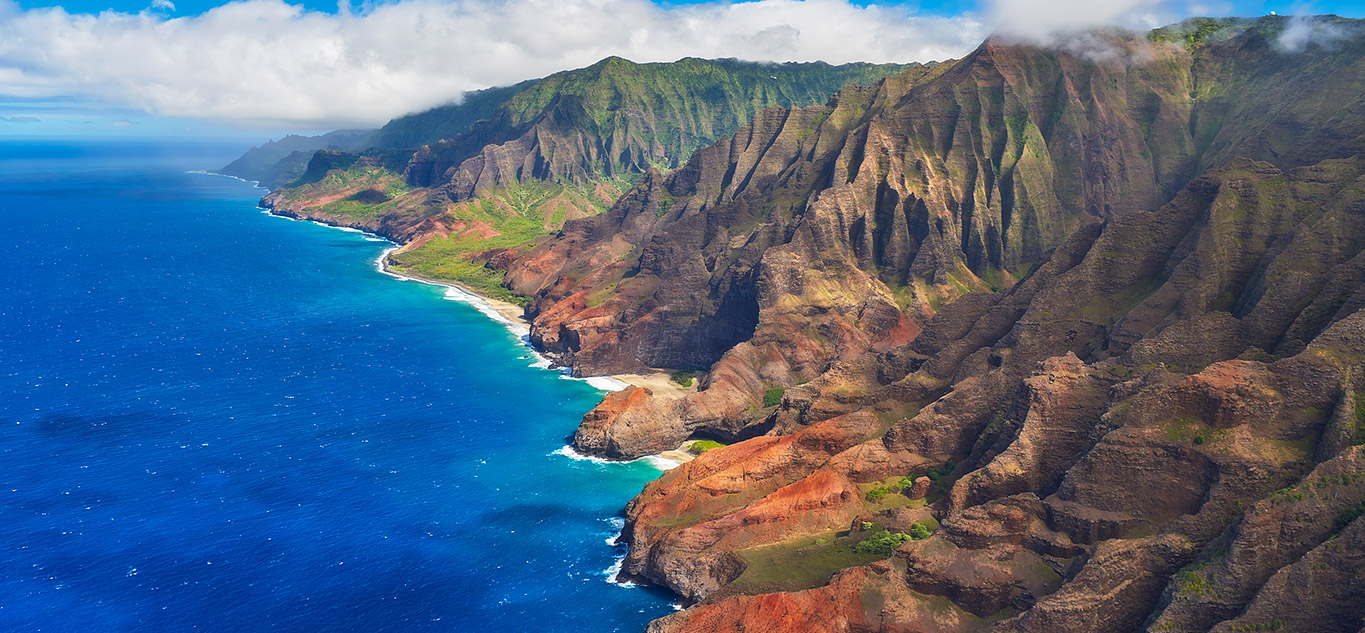
Hawaii's natural beauty is truly one-of-a-kind. It's defined by its volcanic origins, creating a dramatic landscape found almost nowhere else. From the active lava flows and stark volcanic rock of Hawaii Volcanoes National Park on the Big Island to the towering, emerald cliffs of the Na Pali Coast on Kauai and the massive Haleakala volcano crater on Maui, the scenery is breathtaking and diverse. You'll find lush rainforests with hidden waterfalls, black sand beaches, and unique ecosystems that evolved in isolation. The sheer scale and geological power visible are awe-inspiring. The Caribbean offers incredible beauty too, but it’s a different kind of 'paradise.' Think pristine white-sand beaches, calm turquoise waters, and abundant coral reefs (like those in Bonaire or Belize). Lush tropical vegetation covers rolling hills (the Pitons in St. Lucia are iconic), but generally lacks the dramatic geological features of Hawaii. 'Nothing beats hiking through a lava field or seeing the Na Pali coast from a helicopter. The Caribbean is gorgeous, but Hawaii's landscapes feel like another planet,' a Reddit user from r/travel said. While both are stunning, Hawaii's unique volcanic drama and diverse ecosystems offer a more varied and impactful natural spectacle, constantly reminding you of Earth's powerful forces.
Winner takeaway
- Winner: Hawaii
- Why: Hawaii's unique volcanic landscapes, active volcanoes, and dramatic, diverse ecosystems offer a more visually impactful and geologically distinct natural spectacle.
- Who this matters for: Adventure seekers, nature photographers, hikers, and those fascinated by geology and dramatic scenery.
🎉 Nightlife & Entertainment
Hawaii's nightlife, outside of specific areas in Honolulu (Waikiki), is generally more subdued. It often revolves around sunset cocktails at resort bars, upscale dining, and traditional luaus with cultural performances (e.g., Polynesian Cultural Center). Live music often features Hawaiian slack-key guitar or ukulele, creating a relaxed, romantic atmosphere. There are some clubs in Waikiki like The District or Sky Waikiki, but it's not the primary draw. The Caribbean, however, is a mosaic of nightlife options, from casual beach bars to pulsating nightclubs and glittering casinos. Islands like Curaçao (Pietermaai District), Aruba (Palm Beach strip), and Puerto Rico (San Juan's La Placita) offer vibrant club scenes. Jamaica is synonymous with reggae beach parties, while Barbados has Gap Strip, bustling with bars and live music. 'We went to Cancun for spring break, and the nightlife was insane—Coco Bongo was a wild experience. Hawaii was more 'dinner and a show,' which was fine, but not for dancing all night,' a student posted on r/travel. For those seeking lively parties, casinos, and diverse musical experiences that stretch into the early hours, the Caribbean's variety and intensity of nightlife far outstrip Hawaii's generally more tranquil offerings, making it the clear winner for entertainment.
Winner takeaway
- Winner: Caribbean
- Why: The Caribbean offers a more diverse and vibrant nightlife scene, with options ranging from lively clubs and casinos to reggae beach parties across its many islands.
- Who this matters for: Party-goers, young adults, couples seeking lively evenings, and those who enjoy varied entertainment options after dark.
❓ Frequently Asked Questions
Which destination is better for families with young children?
Both offer family-friendly resorts and activities. Hawaii provides a familiar US environment with excellent infrastructure, making logistics easier. The Caribbean offers many all-inclusive resorts that cater specifically to families with kids' clubs and activities, potentially offering better value and less planning stress. Consider the flight duration as a major factor for little ones.
Is one destination better for solo travelers?
Hawaii, with its well-developed infrastructure and general safety (being a US state), is often considered easier for solo travelers, especially if it's your first solo trip. The Caribbean can be great for solo travelers too, particularly on more tourist-heavy islands or within all-inclusive resorts, but independent exploration on some islands might require more caution and planning.
Which destination has better weather year-round?
Both are tropical destinations with warm weather year-round, but with different seasons. Hawaii has a dry season (May-Oct) and a wet season (Nov-Apr), with consistent temperatures. The Caribbean experiences hurricane season from June to November, making December to May the most ideal time, though islands further south are less impacted. Both can have localized rain showers at any time.
Are there good options for adventure sports in both locations?
Absolutely! Hawaii is a mecca for surfing, hiking (volcanoes, rainforests), snorkeling, diving, and zip-lining. The Caribbean also offers excellent diving (e.g., Bonaire, Grand Cayman), snorkeling, sailing, hiking (rainforests, waterfalls), and water sports. Hawaii's unique volcanic terrain adds a distinct edge to its adventure offerings, but the Caribbean's vast waters make it a sailing paradise.
How much does travel insurance cost for each destination?
Travel insurance costs vary based on age, trip duration, and coverage level, not necessarily the destination itself. For a 7-day trip for a 30-year-old, basic travel insurance might cost $50-100. Given the high medical costs in Hawaii (if not covered by your US plan) and varied healthcare in the Caribbean, it's highly recommended for both, and might be slightly more comprehensive for Caribbean trips.
Which destination is more eco-friendly or sustainable?
Both destinations face significant environmental challenges from tourism. Hawaii has strong initiatives for conservation, protecting native species, and reducing plastic, with a growing emphasis on sustainable tourism. Many Caribbean islands are also working on coral reef protection and sustainable practices, but the scale and diversity mean efforts vary greatly. Look for eco-certified resorts and local operators committed to sustainability in either location.
Can I use US dollars in both Hawaii and the Caribbean?
Yes, Hawaii uses the US dollar exclusively. In the Caribbean, the US dollar is widely accepted in most tourist areas, and often preferred in places like the Bahamas, Turks & Caicos, and Puerto Rico. Other islands use their own currency (e.g., EC$, Jamaican Dollar), but US dollars are usually exchangeable or accepted, though you might get change in local currency. It's always good to have some local currency for small purchases or tips.
What's the best time to book flights and accommodation for each?
For Hawaii, booking flights 3-6 months in advance is ideal, especially for peak seasons (winter holidays, summer). Accommodation should also be booked well in advance, especially popular resorts. For the Caribbean, aim for 2-4 months out, particularly for trips during the popular dry season (Dec-May). Last-minute deals can sometimes be found for all-inclusive Caribbean resorts outside of peak times, but generally, earlier is better for the best prices.
Ready to plan your perfect tropical escape?
Get a free custom itinerary for Hawaii, the Caribbean, or both — built from real traveler insights and tailored to your dreams.
🎟️ Book Tours & Experiences
Hand-picked tours and activities for both destinations — book with free cancellation
Experiences via Viator — free cancellation on most tours