How we built this comparison
This page combines real traveler discussions from Reddit, published price data, transit schedules, and seasonal weather patterns to give you an honest comparison of Hokkaido and Kyushu.
- Analyzed 50+ Reddit threads from r/JapanTravel and r/JapanTravelTips comparing these two regions
- Cost data sourced from Numbeo, recent traveler reports, and JR pricing as of early 2026
- Weather data from Open-Meteo historical records for Sapporo and Fukuoka
- Transit info from JR Hokkaido, JR Kyushu, and Hokkaido Railway schedules
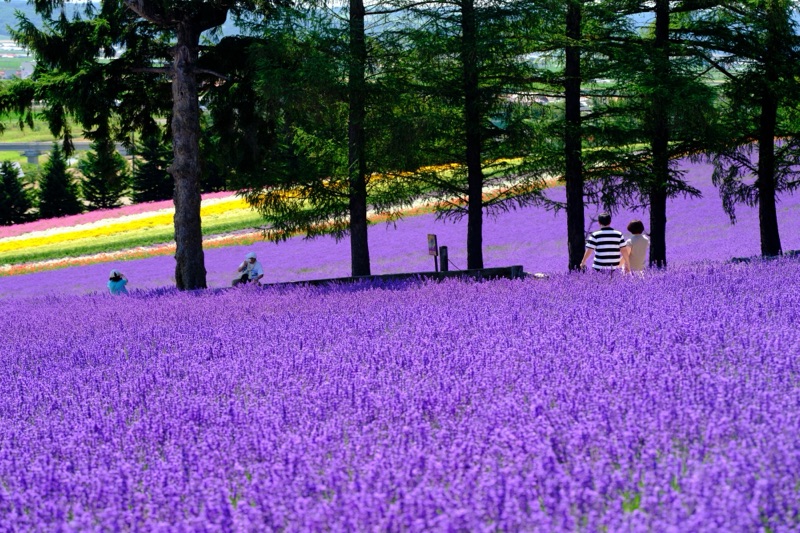
Furano's lavender fields — Hokkaido's most iconic summer sight
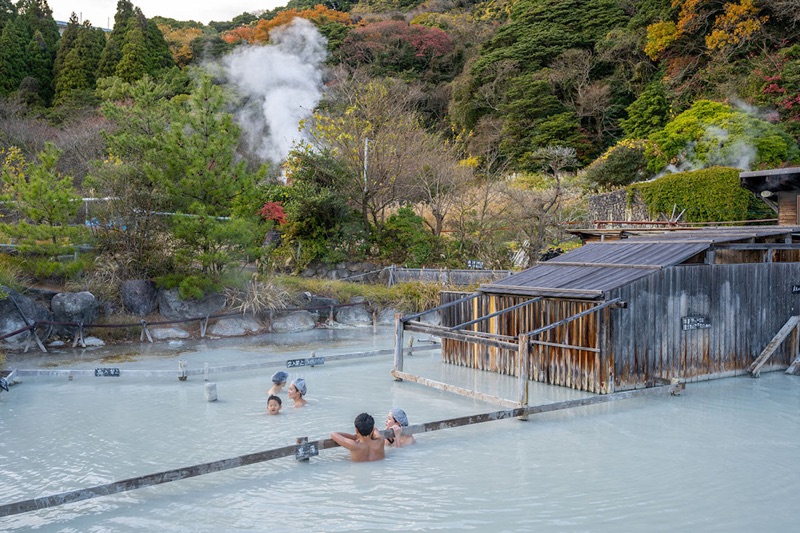
Beppu's steaming hot spring hells — Kyushu's onsen capital
⚡ The TL;DR Verdict
Kyushu edges it for most travelers — better public transit, richer mix of cities and nature, and world-class onsen towns you can actually reach without a car. Hokkaido wins for serious outdoor lovers and anyone who wants Japan's most dramatic wild landscapes. Budget: both regions run ¥10,000–18,000/day ($67–120) for mid-range.
- Choose Hokkaido: Summer nature trips, skiing holidays, serious seafood obsession, road trip itineraries
- Choose Kyushu: First Japan off-the-beaten-path trip, history buffs, onsen lovers without a car, food-centric travel
- Do both: If you have 14+ days, flying between them is cheap (¥5,000–12,000 on LCCs) and they couldn't feel more different
Quick Comparison
| Category | ❄️ Hokkaido | 🌋 Kyushu | Edge |
|---|---|---|---|
| Daily Budget (mid-range) | ¥11,000–18,000 ($73–120) | ¥10,000–17,000 ($67–113) | Slight Kyushu |
| Food Scene | Seafood (crab, uni, salmon), dairy, soup curry, ramen | Tonkotsu ramen birthplace, mentaiko, yatai street stalls, champon | Tie |
| Onsen | Noboribetsu, Jozankei — excellent but fewer towns | Beppu (world's highest output), Yufuin, Kurokawa, Ibusuki | Kyushu |
| Nature & Landscapes | Daisetsuzan NP, Shiretoko UNESCO, lavender fields, drift ice | Mt. Aso caldera, Sakurajima, Yakushima rainforest | Hokkaido |
| Public Transit | Limited outside Sapporo — car strongly recommended | JR Kyushu network is excellent; most spots car-free accessible | Kyushu |
| Best Season | Summer (Jun–Sep) for nature; Dec–Mar for skiing | Spring (Mar–May) and Autumn (Sep–Nov) are ideal | Depends on timing |
| History & Culture | Ainu indigenous culture, frontier settlement history | Nagasaki, Kumamoto Castle, ancient shrines, WWII sites | Kyushu |
| Crowds | Less crowded except Sapporo Snow Fest & peak summer | Fukuoka is popular; Kyushu overall less crowded than Honshu | Hokkaido |
| City Life | Sapporo (modern, compact) — limited beyond that | Fukuoka, Nagasaki, Kumamoto, Kagoshima — variety of cities | Kyushu |
| Day Trips | Otaru, Niseko, Furano, Noboribetsu from Sapporo | Yakushima, Beppu, Yufuin from Fukuoka; everything connected | Kyushu |
| Ease for Solo Travel / No Car | Challenging — many highlights need a car | Very accessible — JR Kyushu connects key spots | Kyushu |
🍜 Food & Dining
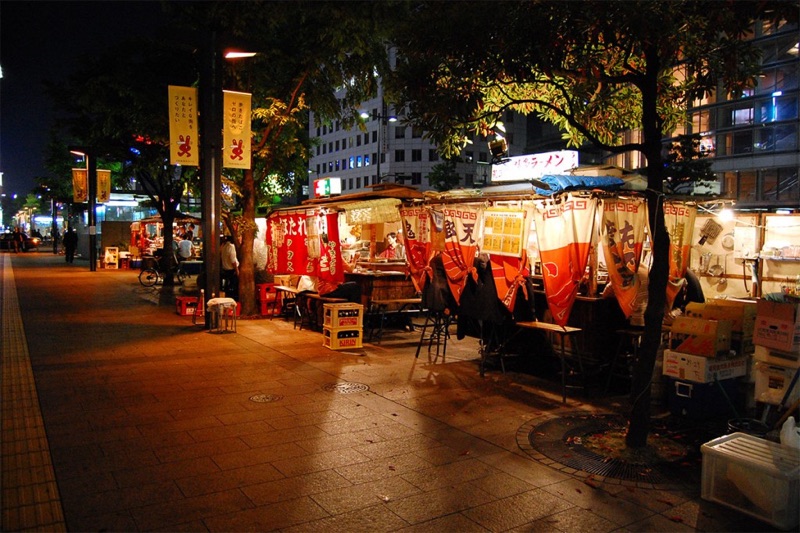
This is one of Japan's great food debates. Hokkaido is the country's pantry — it produces the best dairy, the freshest crab and uni, and the finest ramen outside Tokyo. Hakodate is known for its kaisen-don (seafood bowls), Sapporo for its miso ramen and soup curry, and the entire island for its extraordinary butter, cheese, and soft-serve ice cream that people make pilgrimages for.
Kyushu, on the other hand, is the birthplace of tonkotsu ramen — the rich, creamy pork bone broth that took the world by storm. Fukuoka's yatai culture (open-air street stalls) is completely unique in Japan: dozens of canvas-covered stalls lining the Nakasu riverbank, each serving ramen, yakitori, and oden with an intimacy you can't replicate at a restaurant. Nagasaki's champon, Kumamoto's karashi renkon (mustard lotus root), and Kagoshima's kurobuta pork add further depth.
For deeper dives: see our Sapporo ramen guide, Sapporo soup curry picks, Fukuoka ramen guide, and Fukuoka yatai picks.
♨️ Onsen & Hot Springs
Japan's two great onsen islands go head to head here. Hokkaido has excellent hot springs — Noboribetsu's Jigokudani (Hell Valley) is one of Japan's most dramatic volcanic landscapes, and Jozankei offers a quiet mountain escape just 60 minutes from Sapporo. But the onsen towns themselves are relatively limited compared to Kyushu.
Kyushu is in a different league. Beppu produces more hot spring water than almost anywhere on earth — over 100,000 tonnes daily from 2,800+ springs. You can do the famous "jigoku meguri" (hell tour) visiting seven distinct springs ranging from blood red to cobalt blue. Yufuin is a perfectly preserved spa town in a mountain basin, Kurokawa Onsen feels like Japan 200 years ago, and Ibusuki has sand onsen where you're buried up to your neck in naturally heated beach sand.
See our Hokkaido onsen picks for the best ryokan options near Sapporo and Noboribetsu.
🏔️ Nature & Outdoors
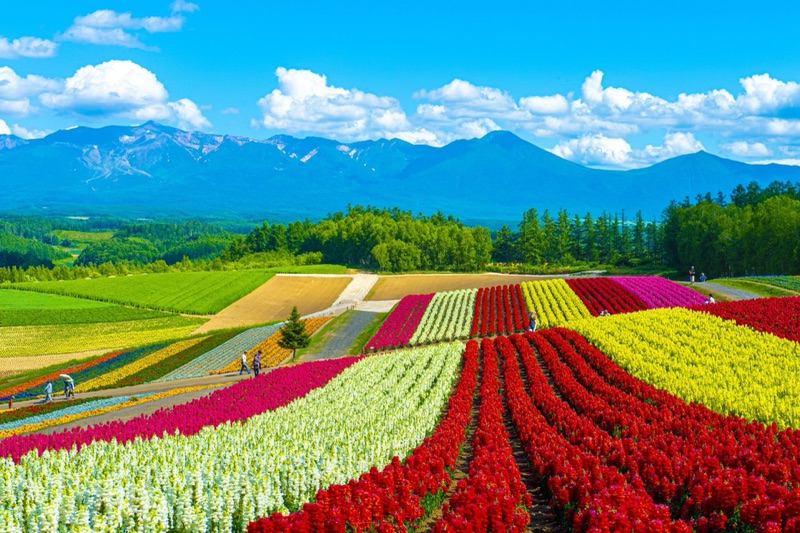
This is Hokkaido's strongest suit. The island is roughly the size of Austria, with vast spaces that feel genuinely wild in a way no other part of Japan does. Daisetsuzan National Park — the "Roof of Hokkaido" — has dramatic alpine ridges, crater lakes, and ramen-fueled post-hike onsen all in one place. Shiretoko Peninsula is a UNESCO World Heritage Site where brown bears outnumber tourists. In July, the Furano and Biei lavender fields create some of the most photographed landscapes in all of Asia. In winter, Hokkaido gets 15–20 meters of light powder snow annually — the ski resorts at Niseko, Rusutsu, and Furano attract powder-hunters from around the world.
Kyushu is no slouch. Mt. Aso has the world's largest active volcanic caldera — you can walk to the crater rim (when open) and look down into a sulfurous cauldron. Sakurajima near Kagoshima erupts almost daily, ash raining on the city across the bay. Yakushima island — accessible by ferry from Kagoshima — has cedar trees over 7,000 years old and inspired Studio Ghibli's Princess Mononoke. The Kirishima-Kinkowan National Park offers volcanic crater hiking that rivals anything in Japan.
💰 Cost Comparison
Both regions are cheaper than Tokyo and Kyoto — but the cost gaps are subtle. The bigger cost factor is often transit: Hokkaido's sparse train network means renting a car (¥6,000–10,000/day plus fuel) adds significantly to your budget. Kyushu's JR network means you can use a Kyushu JR Pass (5-day: ¥15,000 / ~$100) and get around comfortably without a car.
| Item | ❄️ Hokkaido | 🌋 Kyushu |
|---|---|---|
| Budget hostel/night | ¥3,000–5,000 ($20–33) | ¥2,800–5,000 ($19–33) |
| Mid-range hotel/night | ¥8,000–15,000 ($53–100) | ¥7,000–14,000 ($47–93) |
| Budget ryokan (with meals) | ¥12,000–20,000 ($80–133) | ¥10,000–18,000 ($67–120) |
| Ramen bowl | ¥900–1,300 ($6–9) | ¥700–1,200 ($5–8) |
| Mid-range restaurant meal | ¥1,500–3,000 ($10–20) | ¥1,200–2,500 ($8–17) |
| Sapporo/Fukuoka city transit | ¥200–300/trip ($1.3–2) | ¥150–300/trip ($1–2) |
| Inter-city train (e.g. 2h journey) | ¥1,500–4,000 ($10–27) | ¥1,500–3,500 ($10–23) |
| Car rental/day (recommended for Hokkaido) | ¥6,000–10,000 ($40–67) | Optional — ¥5,000–9,000 ($33–60) |
| Estimated mid-range daily budget | ¥11,000–18,000 ($73–120) | ¥10,000–17,000 ($67–113) |
🚃 Getting Around
This is the most important practical consideration when choosing between these two regions. Kyushu has one of Japan's best regional rail networks — JR Kyushu runs fast Shinkansen (bullet trains) between Fukuoka, Kumamoto, and Kagoshima, plus regular express services to Nagasaki, Beppu, and Miyazaki. Almost every major destination is reachable by public transit. The Kyushu JR Pass (3-day ¥10,000 / 5-day ¥15,000) is exceptional value.
Hokkaido is the opposite. Outside Sapporo — which has a good subway and bus network — public transit becomes sparse and slow. Reaching Furano's lavender fields, the Shiretoko Peninsula, Cape Erimo, or Daisetsuzan properly almost always requires a car. Train lines exist but run infrequently and skip many highlights. Hokkaido has been reducing rail services in recent years, making the car situation worse. That said, Hokkaido roads are magnificent — wide, well-maintained, with beautiful scenery. A Hokkaido road trip is one of Japan's great travel experiences.
🌸 Best Time to Visit
Season is arguably the single biggest factor in this decision. The two regions have strikingly different climates and peak periods.
Hokkaido: Summer (June–September) is the sweet spot for most travelers. Temperatures are pleasant (17–25°C), lavender blooms in July, and the national parks are at their most accessible. Autumn (September–October) brings spectacular foliage that peaks earlier than the rest of Japan. Winter (December–March) turns Hokkaido into a powder skiing paradise and is peak season for the Sapporo Snow Festival (early February). Spring is late — snow can linger into May in the mountains.
Kyushu: Spring (March–May) and Autumn (October–November) are ideal — comfortable temperatures, cherry blossoms in spring, and vivid foliage in fall. Summer (July–August) is hot and humid (30–35°C) with typhoon risk. Winter is mild in most of Kyushu (Fukuoka averages 10°C in January), making it one of the best Japanese regions for a comfortable winter trip.
🏨 Where to Stay
Hokkaido: Sapporo is the natural base — Japan's fifth-largest city with excellent accommodation options at all price points. Capsule hotels from ¥3,000/night, business hotels ¥7,000–12,000, and luxury hotels ¥20,000+. Otaru (30 min from Sapporo) is charming for a night or two. For ski trips, Niseko has world-class ski resort accommodation but at significant cost (¥20,000–50,000+/night in peak winter). Ryokan onsen stays in Noboribetsu run ¥15,000–25,000 with two meals.
Kyushu: Fukuoka (Hakata station area) is the main hub — easy to fly into, with budget to luxury options. The Tenjin and Nakasu areas are great for nightlife proximity. Beppu and Yufuin are natural onsen base camps — ryokan starts around ¥10,000/night with meals. Nagasaki's hillside guesthouses offer unique atmosphere. Kagoshima is the gateway to Yakushima and Sakurajima.
⛩️ History & Culture
Hokkaido's history is relatively recent by Japanese standards — large-scale Japanese settlement only began in the Meiji era (1868+). The island's deep cultural roots belong to the Ainu people, Japan's indigenous population, whose heritage is preserved at places like Upopoy (National Ainu Museum) in Shiraoi. The museum opened in 2020 and is a genuinely moving and beautifully designed experience. Beyond Ainu culture, Hokkaido has frontier settlement architecture in Sapporo's clock tower and old government building.
Kyushu has layers of history stretching back millennia. Nagasaki is essential — the Atomic Bomb Museum and Hypocenter Park are among the most important historical sites in all of Japan, alongside fascinating Dutch and Chinese trading post architecture from when Nagasaki was Japan's only open port. Kumamoto Castle is one of Japan's great feudal castles (still being restored after the 2016 earthquake). Dazaifu Tenmangu is one of the most important Shinto shrines in Japan. The island's geographic position made it the entry point for Buddhism, Chinese culture, and Western influence into Japan.
🎒 Day Trips & Beyond
From Sapporo (Hokkaido): Otaru (30 min, canal district and sushi alley), Noboribetsu Onsen (90 min, volcanic hell valley), Jozankei Onsen (60 min), Furano (2h by train or car, lavender fields in July), Niseko (2h by train, ski/snowboard in winter), Toya-ko (2.5h, caldera lake). Most require either a car or planned day-tour packages.
From Fukuoka (Kyushu): Dazaifu Tenmangu (40 min by train), Yanagawa (1h, canal boat rides), Nagasaki (2h by train), Kumamoto (50 min by Shinkansen + castle), Beppu (2h by limited express — the most dramatic onsen town in Japan), Yufuin (2.5h by train, serene spa town). All easily done by public transit.
🎯 The Decision Framework
Choose Hokkaido If…
- You're going in summer (June–September) for nature and outdoor activities
- You love skiing or snowboarding and want world-class powder
- You're renting a car and want a classic road trip experience
- Seafood and dairy are your food priorities (crab, uni, butter, soft-serve)
- You want Japan's most dramatic wilderness: Daisetsuzan, Shiretoko, drift ice
- You're attending the Sapporo Snow Festival in February
- You want to experience Ainu indigenous culture
Choose Kyushu If…
- You're traveling without a car and need solid public transit
- Onsen is a major priority — Beppu and Yufuin are among Japan's best
- You want a mix of cities, history, and nature in a compact area
- You're going in winter, spring, or autumn (Kyushu's climate is more forgiving)
- History matters: Nagasaki, Kumamoto Castle, ancient Shinto shrines
- You want authentic yatai street food culture in Fukuoka
- This is your first time off the Golden Route (Kyushu is more beginner-friendly)
❓ Frequently Asked Questions
Is Hokkaido or Kyushu better for first-time visitors to Japan?
If it's your first trip to Japan, start with the Golden Route (Tokyo, Kyoto, Osaka). But if you're specifically choosing one off-the-beaten-path region for a second trip, Kyushu is generally more accessible — better transit, more variety, and easier to navigate without a car. Reddit consensus consistently points to Kyushu as the more beginner-friendly choice, with Hokkaido better suited to those who are comfortable driving or planning a summer/ski-focused trip.
Do I need a car in Hokkaido?
For most of Hokkaido's highlights, yes. A car is strongly recommended if you want to see Furano's lavender fields, Biei's blue pond, the Shiretoko Peninsula, or do a proper road trip through the national parks. Sapporo itself is navigable by subway and bus. Day trips to Otaru and Noboribetsu are doable by train. But the classic Hokkaido experience of wide open roads, flower fields, and hidden onsen inns is essentially a driving experience.
Which is better for onsen — Hokkaido or Kyushu?
Kyushu wins easily. Beppu alone produces more hot spring water than anywhere else on earth, with seven distinct 'hell' springs you can tour. Yufuin is one of Japan's most atmospheric onsen towns. Kurokawa Onsen looks frozen in time. Ibusuki's sand onsen is unique anywhere. Hokkaido has excellent hot springs (Noboribetsu and Jozankei are world-class) but the variety and density of onsen culture in Kyushu is unmatched.
When is the best time to visit Hokkaido vs Kyushu?
Best time for Hokkaido: June–September for nature and hiking; December–March for skiing and the Sapporo Snow Festival. Best time for Kyushu: March–May (spring/cherry blossom) and September–November (autumn). Kyushu's mild winters (Fukuoka averages 10°C in January) make it a year-round destination. Avoid Kyushu in July–August for heat and typhoon risk.
Can you do Hokkaido and Kyushu in one trip?
Absolutely, if you have 14+ days. The fastest option is flying between them — budget airlines like Peach, Jetstar, and Skymark fly Sapporo (New Chitose) to Fukuoka for ¥5,000–15,000 depending on timing. Japan's domestic routes are efficient and relatively affordable. Many repeat Japan visitors combine Kyushu first (accessible by Shinkansen from Osaka) and Hokkaido second by flying from Fukuoka to Sapporo.
Which has better food — Hokkaido or Kyushu?
It's genuinely a tie, just different strengths. Hokkaido dominates on seafood (crab, uni, salmon, scallop), dairy products, and miso ramen. Kyushu dominates on tonkotsu ramen (Fukuoka invented it), yatai street food culture, mentaiko (spicy fish roe), and champon noodles. Both regions are in the top tier of Japanese food destinations — you won't be disappointed either way.
How do I get from Tokyo to Hokkaido vs Kyushu?
To Hokkaido: fly Tokyo (Haneda/Narita) to Sapporo (New Chitose) — 1.5 hours, ¥8,000–25,000. Alternatively, the Shinkansen now connects Tokyo to Shin-Hakodate-Hokuto (5 hours). To Kyushu: Shinkansen from Tokyo to Fukuoka (Hakata) takes about 5 hours and costs ¥22,220 unreserved. Flying is also an option: 1.5 hours, ¥8,000–20,000. The Japan Rail Pass covers the Shinkansen to Kyushu.
Is Hokkaido worth it in winter besides skiing?
Yes, if you go to the right things. The Sapporo Snow Festival (early February) is one of Japan's most famous events — enormous ice sculptures in Odori Park. Noboribetsu Onsen in winter is spectacular, with snow-covered hell valley steam rising dramatically. Drift ice tours off the Shiretoko coast (February–March) are a bucket-list experience. Winter in rural Hokkaido outside of ski resorts is quiet to the point of emptiness — which can be magical or isolating depending on your expectations.
Ready to plan your Japan trip?
Get a free custom itinerary for Hokkaido, Kyushu, or both — built from real traveler insights, not generic templates.
🎟️ Book Tours & Experiences
Hand-picked tours and activities for both destinations — book with free cancellation
Experiences via Viator — free cancellation on most tours