How we built this comparison
This page combines traveler discussion patterns from Reddit (r/myanmar, r/travel, r/solotravel, r/backpacking), published price ranges from budget travel resources, and firsthand trip reports. We synthesized 40+ Reddit threads covering Myanmar travel from 2019–2026, with particular attention to recent reports on both destinations' current accessibility and conditions.
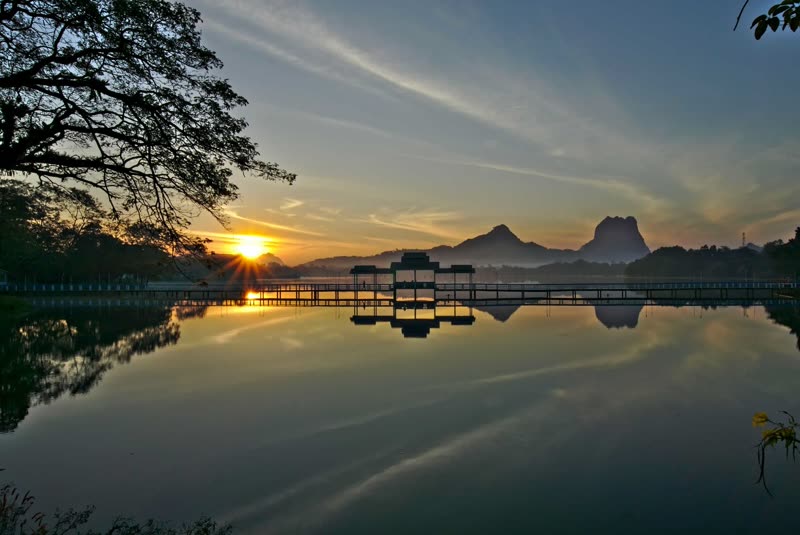
Hpa-An — karst wilderness, Myanmar
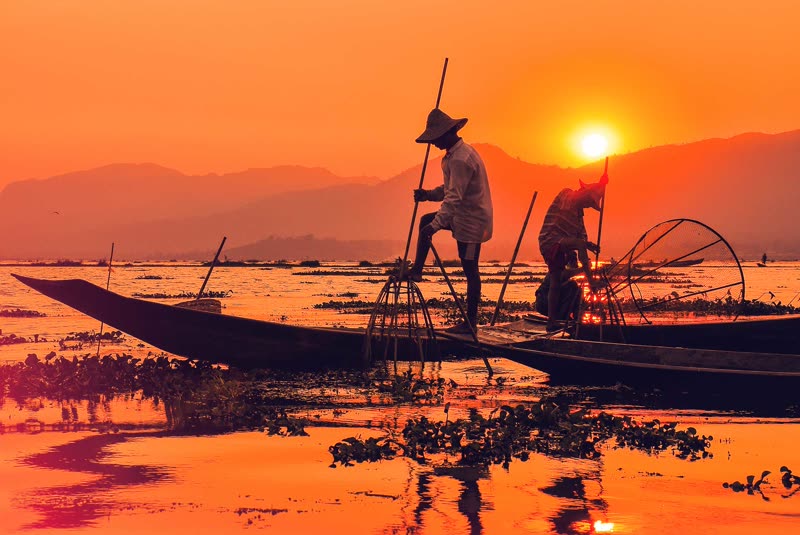
Inle Lake — floating culture, Myanmar
⚡ The TL;DR Verdict
Hpa-An is Myanmar's best-kept secret — a karst wilderness of limestone towers, cave temples, and scooter freedom that Reddit travelers consistently call their Myanmar highlight. Inle Lake is Myanmar's most iconic inland destination — the floating villages, leg-rowing Intha fishermen at sunrise, and UNESCO-worthy landscape deliver exactly what the photos promise. Both belong on any serious Myanmar itinerary.
- Choose Hpa-An if you want dramatic karst scenery, zero tourist crowds, budget travel, and scooter freedom through caves and limestone pillars
- Choose Inle Lake if you want Myanmar's classic cultural experience, iconic sunrise photography, and a range of accommodation from budget to luxury stilted lake lodges
- Do both if you have 10+ days — they're completely different experiences that showcase different sides of Myanmar and neither will disappoint
🏔️ Hpa-An Wins For
Karst scenery, cave exploration, budget prices, scooter freedom, Kyauk Ka Lat Pagoda, no tourist crowds
🚣 Inle Lake Wins For
Floating villages, iconic fishermen photography, cultural depth, trekking, luxury lake lodges, first-time Myanmar visitors
Quick Comparison
| Category | 🏔️ Hpa-An | 🚣 Inle Lake | Winner |
|---|---|---|---|
| Daily Budget (mid-range) | $20–40/day | $40–80/day | Hpa-An |
| Budget Accommodation | $8–20/night | $20–50/night | Hpa-An |
| Main Draw | Karst landscape, caves, Mount Zwegabin | Floating villages, Intha fishermen, trekking | Tie |
| Photography Potential | Exceptional (Kyauk Ka Lat, bat cave, sunsets) | World-class (iconic fishermen at sunrise) | Inle Lake |
| Crowd Level | Low — genuinely uncrowded | High — Myanmar's most-visited inland | Hpa-An |
| Getting There | Bus from Yangon (7–8h, $8–15) | Flight to Heho ($50–100) or long bus | Hpa-An |
| Getting Around | Scooter rental ($5–8/day) — free & flexible | Boat hire ($15–25/day) — required | Hpa-An |
| Cultural Depth | Good (Karen culture, Mon State) | Excellent (Intha floating villages, pagodas) | Inle Lake |
| Trekking | Mount Zwegabin, cave circuits (1–3 days) | Kalaw–Inle trek (2–3 days, classic) | Tie |
| Food Scene | Basic but authentic ($1–4/meal) | Good variety, pricier ($2–8/meal) | Tie |
| Infrastructure | Limited — fewer options | Well-developed for Myanmar | Inle Lake |
| “Wow” Factor | Very high for those who find it | High — lives up to the photos | Tie |
⛰️ Natural Scenery
This is where the two destinations diverge most dramatically — and where Hpa-An arguably surpasses every other destination in Myanmar.
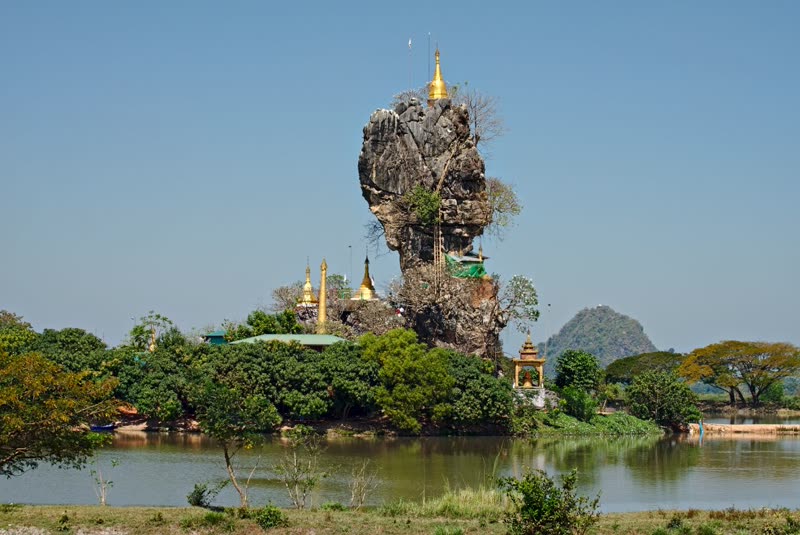
Hpa-An's setting is genuinely extraordinary. The town sits at the base of the Thanlwin (Salween) River surrounded by vertical limestone karst towers rising from flat paddy fields — a landscape that looks like a painting come to life. The iconic sight is Kyauk Ka Lat Pagoda: a white-and-gold pagoda perched atop a narrow limestone pillar rising from a calm lake, reflected perfectly in the water at dawn. Mount Zwegabin (722m) looms over the city and is covered in thousands of Buddha statues placed along the hiking trail — a 5–6 hour round trip that rewards with panoramic views of the entire karst plain. The cave systems are extraordinary: Saddan Cave allows you to paddle through cathedral-like chambers by boat and emerge in a hidden valley; Kaw Gon Cave has thousands of 18th-century Buddha images covering its walls; the Bat Cave (Kawgun/Lwe Cave) sends millions of bats spiraling out at sunset in a column visible from kilometers away. Rent a scooter for $5–8/day and you can hit four to five of these sites in a single day.
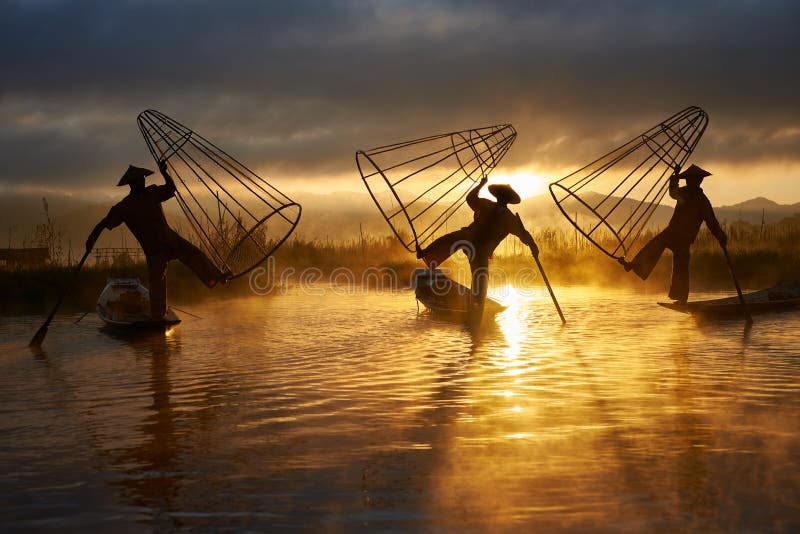
Inle Lake's natural setting is its water world. The lake sits at 880m elevation in the Shan Hills, covering roughly 116 km², and is ringed by low mountains. Its visual signature is the floating gardens — plots of vegetation anchored by bamboo poles that bobbing slightly with boat wakes, where tomatoes, lotus flowers, and vegetables grow directly on the water. The lake's 17+ villages are built on stilts over the water; the famous Intha fishermen row their dugout canoes while standing on one leg, using the other leg to steer — a technique developed specifically for the shallow lake and now iconic worldwide. Sunrises over the water mist are among Myanmar's most photographed moments.
💰 Cost Comparison
Hpa-An is significantly cheaper than Inle Lake — and a big part of that comes down to transportation.
Hpa-An costs: Guesthouses run $8–20/night for a decent room with fan or A/C; the popular Soe Brothers Guesthouse charges $10–15. Meals at local restaurants cost $1–3; a full plate of mohinga or fried rice is $0.50–1.50 from market stalls. Transport is essentially free once you rent a scooter ($5–8/day for a basic automatic). Cave entrance fees are $1–3 per site, occasionally more for boat passages. A comfortable day including scooter, food, and entrance fees runs $20–30.
Inle Lake costs: The Nyaungshwe accommodation scene has a wide range — budget guesthouses from $15–25/night, mid-range hotels $40–80/night, and boutique lake lodges reaching $100–300/night. The unavoidable cost is boat hire: $15–25/day for a full-day private boat (shared tours slightly less), which is essentially mandatory since the lake's main attractions require boat access. Meals in Nyaungshwe are $2–5 for local dishes, $6–12 at tourist-oriented restaurants. A typical day including boat, food, and sites runs $45–70.
✈️ Getting There
Both destinations require some effort from Yangon — Myanmar's main international gateway — but via very different routes.
Getting to Hpa-An: The standard route is an overnight or evening bus from Yangon's Aung Mingalar Highway Bus Terminal. Buses depart in the evening and arrive in 7–8 hours; tickets cost $8–15 for standard to A/C coaches. Budget travelers also use the Mawlamyine route: bus to Mawlamyine (~5h, $5–8), then a boat up the Thanlwin River to Hpa-An (the boat journey takes 3–4 hours and is scenic; $8–10). From the Thai border at Myawaddy, Hpa-An is accessible if that crossing is open — but check current border status. Note: some Reddit users report that the direct Myawaddy–Hpa-An road has had restrictions for foreign travelers at various points since 2021.
Getting to Inle Lake: Most travelers fly from Yangon to Heho Airport (45 minutes, $50–100), then take a taxi to Nyaungshwe (45 minutes, $5–10 shared or $15–20 private). Budget travelers take an overnight bus to Shwenyaung (~10–12 hours, $10–20), then a local bus or taxi to Nyaungshwe. The most memorable approach is the Kalaw to Inle Lake trek: 2–3 days of trekking through Shan hill villages with a guide ($50–80/person all-in), finishing with a boat ride across the lake to Nyaungshwe. Many Reddit travelers call this the best version of Inle Lake.
🏔️ Activities & Trekking
Both destinations offer structured outdoor experiences, but with very different characters — Hpa-An rewards independent scooter exploration while Inle Lake is guided boat territory.
Hpa-An's activity highlights: The classic Mount Zwegabin hike (5–6 hours round-trip, free) passes through a monastery with some 700 resident cats and reaches a summit with 360° views of the karst plain and Thanlwin River. Saddan Cave is arguably the most unique experience: you enter by climbing through stalactite chambers, exit into a hidden outdoor valley, then return through the cave by wooden rowboat — the whole experience costs around $4. Kyauk Ka Lat Pagoda is free and most magical at dawn; the 15-minute walk from town is enough for extraordinary sunrise photography. The Bat Cave (technically Kawgun) releases millions of wrinkled-lipped bats at dusk in a visible stream for 20–30 minutes. Kaw Gon Cave has thousands of terracotta Buddha figurines covering every surface. You can realistically hit all these in 2 days on a rented scooter ($5–8/day).
Inle Lake's activity highlights: The full-day boat tour ($15–25) covers the floating Khaung Daing village, the jumping cat monastery (Nga Phe Kyaung), the silversmith and weaving workshops of Inpawkhon, the Phaung Daw Oo Pagoda complex, and the Indein ruins (a hillside covered in crumbling stupas accessible via a covered wooden walkway). The lotus silk weaving workshops in In Paw Khone are globally unique — lotus stem fibers are extracted and spun into silk, producing some of the world's rarest fabric. The Indein ruins at dawn (boat to Ywama, then rowboat to Indein, ~2 hours total) are one of Myanmar's most atmospheric experiences.
🍜 Food & Dining
Neither destination is a culinary destination on its own — both are primarily scenery/culture experiences — but you eat well in both places for very different prices.
Hpa-An's food scene is the authentic Myanmar budget experience. Local restaurants serve basic Burmese staples: mohinga (fish soup with rice noodles, $0.50–1), fried rice and noodles ($1–2), and curry with rice ($2–4 for a full set with side dishes and salad). The morning market near the town center fills with vendors from 5–8 AM and is the best place for cheap, fresh breakfasts. The guesthouses (especially Soe Brothers) can arrange day trip lunches and cook simple Western dishes for when local food fatigue sets in. Don't expect much beyond Myanmar staples, but the authentic simplicity is part of the appeal.
Inle Lake/Nyaungshwe has a more developed food scene driven by tourist demand. Local specialties include Shan noodles (flat rice noodles in a mild tomato-based broth with pork or chicken, $1.50–3), tofu noodle salad made from fermented Shan tofu (unique to the region), and Inle Lake fish prepared in multiple styles. The restaurant row in Nyaungshwe has everything from $2 noodle shops to $8–12 tourist restaurants with lake views and Western menus. The five-day rotating market (held at different lakeside villages) is a cultural food experience worth timing your trip around if possible.
🏨 Where to Stay
Hpa-An has limited but perfectly adequate guesthouses; Inle Lake has a full accommodation spectrum from budget to luxury.
Hpa-An accommodation: The most famous option is Soe Brothers Guesthouse ($10–15/night) — a traveler institution known for its helpful owners who provide hand-drawn maps of the local area and arrange boat trips to remote sites. Several newer guesthouses have opened with en-suite rooms for $15–25. There are no luxury hotels, no boutique lake lodges, and no options that would impress anyone expecting Western standards. The vibe is classic backpacker Southeast Asia — basic, friendly, functional.
Inle Lake accommodation: Nyaungshwe has budget guesthouses from $15–25/night, mid-range hotels with pools from $40–80/night, and genuinely luxurious lake lodges built on stilts over the water from $100–300+/night. The stilted lake hotels (like Inle Lake View or Paramount Inle) are bucket-list experiences — waking up above the water, watching mist clear from the lake at dawn. This is one of Myanmar's truly special hotel experiences and worth budgeting for if you can swing it.
⛩️ Culture & Temples
Both destinations offer deeply Buddhist cultural experiences, but Inle Lake's living floating culture gives it a depth that Hpa-An's cave temples can't quite match.
Hpa-An's cultural highlights: The region is predominantly Karen (Kayin) ethnic culture, which differs subtly from the Bamar majority that dominates Yangon and Mandalay. The cave temples — especially Kaw Gon Cave and Kawgon Cave — are active religious sites covered in ancient Buddha figures rather than tourist attractions; local monks and pilgrims visit throughout the day. The Mon cultural influence is also present in the region's architecture and festivals. Mount Zwegabin Monastery at the summit is an active monastery where monks train and the cats are allegedly descended from a famous monk's pet. The sites feel lived-in and genuinely sacred rather than curated for tourism.
Inle Lake's cultural highlights: The Intha people are one of Myanmar's most distinctive ethnic groups — their leg-rowing technique, floating garden agriculture, and stilted-village lifestyle have developed over centuries of lake living. The Phaung Daw Oo Pagoda (containing five sacred Buddha images) hosts Myanmar's most famous water festival every October. The Nga Phe Kyaung monastery (Jumping Cat Monastery, though the cats no longer jump on command) is an atmospheric 18th-century wooden monastery on stilts. The Indein ruins cover a hilltop with hundreds of crumbling stupas stretching back to the 13th century — one of Myanmar's most hauntingly beautiful archaeological sites.
🧑🤝🧑 Crowds & Tourism
One of the most consistent themes in Reddit discussions: Hpa-An is genuinely uncrowded; Inle Lake draws Myanmar's heaviest inland tourist traffic.
Hpa-An's crowd situation: Even before the 2021 coup reduced Myanmar tourism dramatically, Hpa-An was off most itineraries — too far south, not on the Yangon-Bagan-Mandalay triangle that most package tours follow. Post-2021, it sees a fraction of the visitors it once did. Reddit travelers report seeing very few other Westerners at the cave sites, practically no tourist infrastructure pressure, and a genuine sense of discovery. The sites haven't been built up for mass tourism: entrance procedures are simple, facilities are basic, and the experience feels unmediated.
Inle Lake's crowd situation: It was Myanmar's second-most-visited destination before 2021, and even with reduced post-coup tourism, it retains the infrastructure — and the tour operator presence — of a major tourist stop. The main boat circuit (Inpawkhon workshops, Phaung Daw Oo, Indein) runs dozens of boats simultaneously during peak hours. The lakeside workshops catering to tourists can feel assembly-line. That said, the lake itself is large enough that getting away from the main circuit reveals a different, quieter world.
🌤️ Best Time to Visit
Both destinations are best in Myanmar's cool dry season, but have different seasonal nuances that affect what you can experience.
Hpa-An seasonal guide: November–February is ideal — cool (20–28°C), dry, and perfect for hiking Mount Zwegabin and swimming through Saddan Cave. October can be good with lower water levels but residual mud on trails. March–May brings increasing heat (up to 35°C); the cave swims become more appealing but the hikes more punishing. June–September (monsoon season) is the worst time: caves flood, trails turn into mud slides, and the scenic scooter riding becomes dangerous. The famous Bat Cave emergence is a year-round evening spectacle.
Inle Lake seasonal guide: November–February is peak season — the lake is clearest, the air cool, and visibility best for photography. October is excellent for the annual Phaung Daw Oo Pagoda Festival, when the sacred Buddha images are taken around the lake on a golden ceremonial barge — one of Myanmar's most spectacular festivals. The floating gardens are most photogenic September–November just after rains, when vegetation is lush. June–August brings heavy rain, reduced visibility, and rough lake conditions. The Shan Hills retain some coolness year-round due to elevation (880m).
🎯 The Decision Framework
Still deciding between Hpa-An and Inle Lake? These are the clearest signals pointing you in each direction.
🏔️ Choose Hpa-An If...
- You want dramatic karst scenery unlike anywhere else in Southeast Asia
- Budget is tight — it's 40–50% cheaper than Inle Lake daily
- You crave independence: rent a scooter and go where you want
- You've already done Inle Lake and want Myanmar's hidden gem
- Crowds and tourist infrastructure put you off
- Cave exploration, dramatic hiking, and natural wonders are your priority
- You're coming from or going to the Thai border (Myawaddy)
🚣 Choose Inle Lake If...
- This is your first Myanmar trip and you want the quintessential experience
- The iconic leg-rowing fishermen at sunrise is on your bucket list
- You want accommodation range including luxury stilted lake lodges
- Cultural depth — floating villages, living Intha culture — matters more than scenery
- The Kalaw-to-Inle Lake trek is on your itinerary
- You can time it for the October Phaung Daw Oo Festival
- You're already flying through Heho and it makes logistical sense
❓ Frequently Asked Questions
Is Hpa-An or Inle Lake better for first-time Myanmar visitors?
Inle Lake is the classic first-timer choice — it's on every Myanmar itinerary, easier to reach, and has more established infrastructure. Hpa-An is the reward for people who've done Myanmar before or who specifically want dramatic karst scenery and fewer crowds. If you only have 2–3 weeks in Myanmar, Inle Lake is safer to prioritize. If you're spending a month and want the undiscovered highlight, add Hpa-An.
How much does it cost per day in Hpa-An vs Inle Lake?
Hpa-An runs $20–40/day mid-range — guesthouses cost $8–20, meals $1–4, and scooter rental $5–8/day. Inle Lake is pricier: $40–80/day mid-range, with decent hotels starting at $25–50/night and mandatory boat tours costing $15–25/day. Budget travelers find Hpa-An roughly 40–50% cheaper overall.
How do you get to Hpa-An and Inle Lake?
Hpa-An is typically reached by overnight bus from Yangon (7–8 hours, $8–15) or by bus + boat via Mawlamyine. Inle Lake's gateway is Nyaungshwe, reached by flying into Heho Airport (45-minute flight from Yangon, $50–100) or taking a bus to Shwenyaung then a taxi/shared vehicle. The Kalaw to Inle Lake trek (2–3 days, $50–80/person) is a popular approach.
What is the best time to visit Hpa-An and Inle Lake?
Both destinations are best visited November–February during the cool dry season. Hpa-An's limestone caves and outdoor activities are ideal in this period; summer monsoons (June–September) flood caves and make hiking muddy. Inle Lake is most atmospheric October–February when the water is clear; the floating gardens are most impressive just after the rainy season ends in October–November.
Can you visit both Hpa-An and Inle Lake on one Myanmar trip?
Yes, but they require separate routing — there's no direct transport between them. A typical route: Yangon → Hpa-An (bus, 2–3 nights) → Yangon (return bus) → Heho/Inle Lake (fly or bus, 2–3 nights). Adding both means 7–10 days minimum and adds significant ground transport. Many travelers do one or the other per trip unless they have 3+ weeks.
Is Inle Lake too touristy?
The main boat circuit feels commercialized — craft workshops set up specifically for tourist boats, the iconic fishermen posing for cameras. But venture beyond the main circuit and the lake's authentic floating villages reveal themselves. The Kalaw trek approach gives a much more genuine experience. Most Reddit travelers say it's worth it despite the tourist trap reputation, especially for the leg-rowing fishermen at sunrise.
What are the top things to do in Hpa-An?
Hpa-An's highlights: renting a scooter ($5–8/day) and exploring the karst landscape independently; hiking Mount Zwegabin (5–6 hours, free, stunning views + thousands of Buddha statues); swimming through Saddan Cave by boat (~$4); sunrise at Kyauk Ka Lat Pagoda (pagoda perched on a limestone pillar in a lake); and the Bat Cave at sunset when millions of bats spiral out in a visible column.
Is Myanmar currently safe to visit?
Myanmar has been under military junta rule since the 2021 coup, with ongoing conflict in many regions. As of 2025–2026, Hpa-An (Kayin State) and Inle Lake (Shan State) are among the more accessible regions, but the situation changes. Check UK FCO and US State Department travel advisories before booking — multiple governments advise against non-essential travel to Myanmar. The current tourist infrastructure in both destinations has been significantly reduced compared to pre-2021.
Ready to Plan Your Myanmar Trip?
Whether you choose Hpa-An's karst wilderness, Inle Lake's floating culture, or both — tabiji.ai has the guides to plan it perfectly.
🎟️ Book Tours & Experiences
Hand-picked tours and activities for both destinations — book with free cancellation
Experiences via Viator — free cancellation on most tours