How we built this comparison
This page combines real traveler discussions, published price ranges, transit data, and seasonal weather patterns to help you choose between Japan and Taiwan.
- Reviewed Reddit threads across r/travel, r/digitalnomad, r/JapanTravelTips, and r/taiwan covering Japan vs Taiwan debates.
- Verified cost ranges with recent traveler reports and Numbeo data for Tokyo and Taipei.
- Checked key facts: flight times, HSR costs, accommodation ranges, and entry fees where claimed.
Best read as a decision guide, not a universal truth: the right pick depends on your budget, travel style, and what kind of trip you actually want.
⚡ The TL;DR Verdict
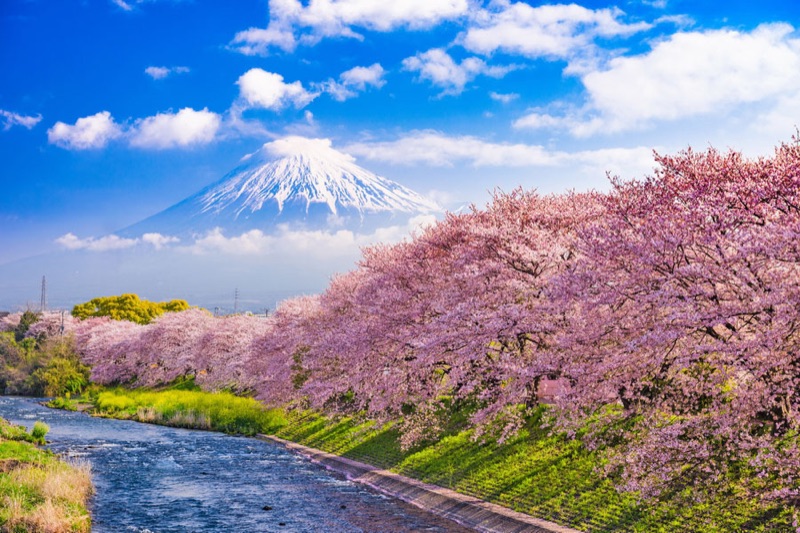
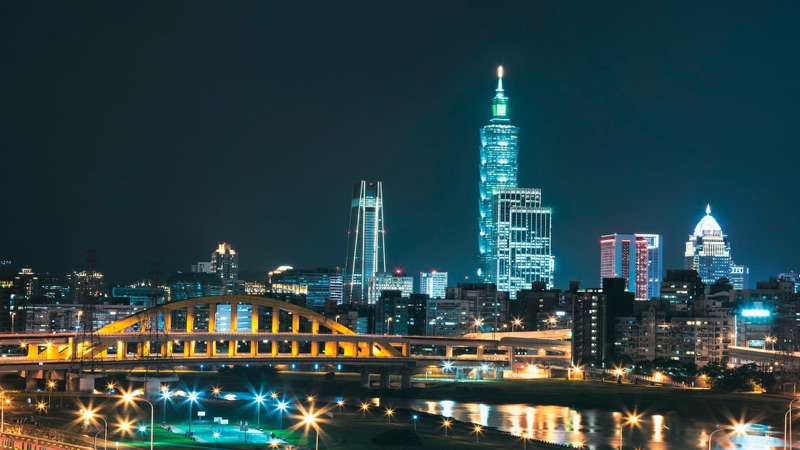
Japan is the bucket-list destination — more variety, more iconic landmarks, more to do. Taiwan is the underdog that earns your loyalty — cheaper, friendlier, easier, with a night market culture that's genuinely world-class.
- Choose Japan: First-timers who want iconic Asia, foodies chasing Michelin stars, travellers who want big-city energy AND nature AND ancient culture.
- Choose Taiwan: Budget-conscious travellers ($40–70/day vs Japan's $80–150), those who want English accessibility, and anyone who considers night markets and friendly locals a top priority.
- Budget snapshot: Taiwan: $40–70/day mid-range; Japan: $80–150/day mid-range. Taiwan wins on value by a wide margin.
Choose Japan
Bucket-list seekers, foodies, pop culture fans, and anyone wanting the most iconic Asia trip possible.
Choose Taiwan
Budget travellers, first-timers who want easy exploration, and those who love night markets and genuine local warmth.
Quick Comparison
| Category | 🗾 Japan | 🏮 Taiwan | Winner |
|---|---|---|---|
| Daily Budget (mid-range) | $80–150/day (¥12,000–22,000) | $40–70/day (NT$1,300–2,200) | Taiwan |
| Food Scene | World's most Michelin stars; ramen, sushi, soba, izakaya | Night markets, beef noodle soup, bubble tea origin, stinky tofu | Japan |
| Nature & Outdoors | Alps, Hokkaido, Mt. Fuji, Kyushu volcanoes, Okinawa beaches | Taroko Gorge, Sun Moon Lake, Alishan, east coast | Japan |
| Cultural Attractions | Temples, shrines, castles — Kyoto, Nara, Hiroshima | Jiufen, Tainan temples, National Palace Museum | Japan |
| English Accessibility | Moderate — major tourist areas covered, limited elsewhere | Very good — English widely spoken in cities and tourist sites | Taiwan |
| Public Transit | World-class Shinkansen + urban metros nationwide | Excellent Taipei MRT; HSR covers west coast | Japan |
| Night Markets & Street Food | Limited — convenience stores + izakayas fill the gap | World-class — Shilin, Raohe, Ningxia, Liuhe all legendary | Taiwan |
| Safety | Extremely safe — one of the safest countries on earth | Extremely safe — comparable to Japan | Tie |
| Crowds & Overtourism | Significant — Kyoto, Tokyo, Osaka heavily visited in peak season | Mild — most tourist sites feel manageable, Taroko occasionally busy | Taiwan |
| Best Season | Spring (Mar–May, cherry blossoms) and Autumn (Oct–Nov) | Autumn (Oct–Dec) and Spring (Mar–Apr) | Tie |
| Country Size / Travel Time | Large — needs 10–14 days minimum to see highlights | Compact — highlights doable in 7–10 days | Taiwan |
🍜 Food & Dining
Japan versus Taiwan is one of the great food destination debates in Asia, and honestly, it's close. Both countries take food seriously at a cultural level — but they go about it very differently.
Japan: the world's culinary capital
Japan has more Michelin-starred restaurants than any other country on earth — over 200 in Tokyo alone. The food culture extends from a $3 convenience store onigiri that's genuinely delicious to multi-course kaiseki meals running $200+ per person. You'll find ramen of every regional style (Sapporo's miso, Hakata's tonkotsu, Tokyo's shoyu), fresh sushi at tsukiji outer market for ¥150/piece, and izakayas where you can eat and drink for ¥3,000–5,000 all night. Japan also does the regional cuisine thing exceptionally well — Osaka's street food, Kyoto's tofu and matcha culture, Hokkaido's dairy and seafood are all meaningfully different.
Taiwan: the night market capital of the world
Taiwan's strength is street food at volume, quality, and price. Shilin Night Market in Taipei draws thousands nightly for oyster vermicelli (NT$70 / ~$2.20), scallion pancakes, stinky tofu, and the iconic giant fried chicken cutlet. Beef noodle soup is Taiwan's unofficial national dish — a rich braised broth with hand-pulled noodles for NT$120–180 (~$4–6) that'll haunt your dreams. Taiwan is also where bubble tea was invented, and the best versions are nothing like the chains you know. Tainan in the south is regarded as Taiwan's food capital — a city where snacking is a full-time hobby.
Related: Best Taipei Night Markets | Top Picks: Taiwan
Winner takeaway
- Winner: Japan
- Why: Japan wins on culinary breadth, technique, and variety. No other country in the world matches its combination of street food, fine dining, regional specialties, and consistent quality at every price point. Taiwan wins on value eating and night market culture specifically.
- Who this matters for: Matters most if your trip is primarily food-driven. Serious food travelers who want the world's best ramen, sushi, or omakase should prioritize Japan. If night markets and cheap-but-excellent eating defines your ideal trip, Taiwan is your answer.
🌿 Nature & Outdoors
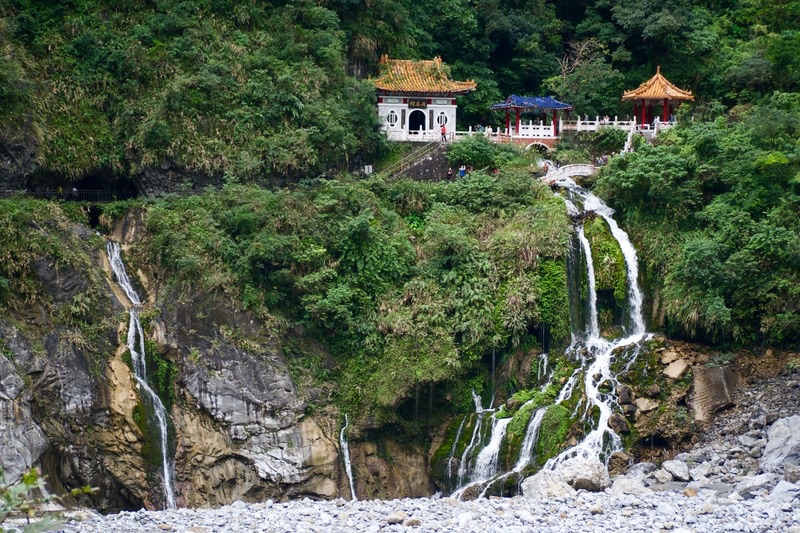
Both countries pack remarkable natural diversity into relatively small footprints — but Japan's size gives it a wider variety of landscapes, while Taiwan has at least one natural wonder that rivals anything in the region.
Japan: a country of landscapes
Japan stretches from subtropical Okinawa in the south to Hokkaido's snow country in the north — over 3,000 km. This means tropical beaches, alpine trekking in the Japan Alps (elevation 3,190m), volcanic landscapes around Aso and Sakurajima, ancient cedar forests on Yakushima, and the iconic cherry blossom season that turns the entire country pink in late March. Hiking is exceptional: the Nakasendo trail, Kumano Kodo pilgrimage routes, and Fuji climbing season (July–September) draw serious trekkers from around the world.
Taiwan: compact but jaw-dropping
Taiwan is 1/10th the size of Japan, but it punches well above its weight. Taroko Gorge — white marble cliffs dropping 1,000m straight down to the Liwu River — is legitimately one of Asia's most spectacular natural sights. A half-day drive along Highway 8 will leave you speechless. The east coast between Hualien and Taitung offers dramatic Pacific coastlines largely undiscovered by international tourists. Alishan Forest railway and Sun Moon Lake provide calmer, atmospheric scenery. Taiwan also has serious mountains: Yushan (Jade Mountain) peaks at 3,952m — higher than anything in Japan.
Winner takeaway
- Winner: Japan
- Why: Japan wins on variety of natural landscapes. But if Taroko Gorge is on your bucket list specifically, Taiwan's compact east coast is one of Asia's most underrated travel experiences. The fact that you can hike from central Taipei within 30 minutes is a genuine quality-of-life win.
- Who this matters for: Nature lovers should note Taiwan's east coast is severely underrated by the international travel community. Japan's alpine hiking routes are world-class but require more planning and travel time to reach.
💰 Cost Comparison
Cost is where Taiwan most clearly beats Japan, and by a significant margin — though the weak yen since 2022 has made Japan more accessible than it's been in decades.
| Expense | 🗾 Japan | 🏮 Taiwan |
|---|---|---|
| Budget hostel/night | ¥3,000–6,000 (~$20–40) | NT$500–800 (~$16–25) |
| Mid-range hotel/night | ¥10,000–20,000 (~$67–134) | NT$2,500–5,000 (~$78–156) |
| Budget meal | ¥500–900 (~$3–6) | NT$50–150 (~$1.50–5) |
| Sit-down restaurant (mid) | ¥1,200–2,500 (~$8–17) | NT$200–400 (~$6–13) |
| Beer at a bar | ¥600–900 (~$4–6) | NT$120–200 (~$4–6) |
| City transit (single ride) | ¥180–350 (~$1.20–2.30) | NT$20–30 (~$0.62–0.94) |
| Intercity train (2h journey) | ¥5,000–13,000 Shinkansen (~$33–87) | NT$600–845 HSR (~$19–26) |
| Major attraction entry | ¥500–1,000 (~$3–7) | NT$100–300 (~$3–9) |
| Typical mid-range day | ~$80–150/day | ~$40–70/day |
Note: accommodation in Taiwan at the mid-range actually overlaps with Japan on a per-night basis — the savings come from food, transit, and activities, not necessarily hotels. Taiwan's street food is dramatically cheaper; Japan's convenience store meals are competitive at the budget end.
Winner takeaway
- Winner: Taiwan
- Why: Taiwan wins on budget by a wide margin for most spending categories. The biggest savings are on food (night market eating is absurdly cheap) and intercity transit (HSR is far cheaper than Shinkansen). The weak yen has made Japan more affordable, but Taiwan still wins for budget-conscious travelers.
- Who this matters for: Budget travelers can do Taiwan comfortably on $40–50/day. The same itinerary in Japan would cost $80–100/day minimum. Over a 2-week trip, that's a difference of $560–700.
🚅 Getting Around
Both countries have excellent public transit, but they work differently — Japan's is more comprehensive nationwide, while Taiwan's is more accessible and cheaper.
Japan: world-class but complex
Japan's Shinkansen bullet train network is the envy of the world — connecting Tokyo to Osaka in 2h30m, Tokyo to Hiroshima in 3h50m, and Tokyo to Sapporo (opening 2031). Urban metros in Tokyo, Osaka, and Kyoto are dense, reliable, and frequent. The downside: navigating Japan's transit can be overwhelming for first-timers. The IC card system (Suica/Pasmo) simplifies city transit, but Shinkansen bookings require separate tickets. The Japan Rail Pass costs ¥50,000–100,000+ ($330–670) and is only worth it if you're doing heavy intercity travel.
Taiwan: simpler and cheaper
Taipei's MRT (metro) is clean, cheap (NT$20–50/ride, ~$0.60–1.50), and covers the city extremely well. The Taiwan High Speed Rail (HSR) runs the length of the western corridor from Taipei to Zuoying (near Kaohsiung) in 90 minutes for NT$845 (~$26). The EasyCard works seamlessly on Taipei MRT, buses, and YouBike. The east coast is the main transit gap — trains exist but are slower, and some areas require buses or rental scooters. Scooter rental (NT$200–400/day, ~$6–13) is common and legal with an international driving permit.
Winner takeaway
- Winner: Japan
- Why: Japan's transit network is more comprehensive and connects more destinations at speed. But Taiwan's transit is simpler to navigate and dramatically cheaper. For a first-time traveler who just wants to get around without stress, Taiwan's simplicity is a genuine advantage.
- Who this matters for: First-timers in Asia often find Taiwan's transit less intimidating than Japan's. Japan rewards transit investment — if you're doing 5+ cities, the JR Pass math starts working. Taiwan's small size means you don't need a pass at all.
🌸 Best Time to Visit
Both countries have clear peak seasons and periods to avoid. The good news: their peak seasons partially overlap, making a combined Japan-Taiwan trip feasible without compromising on weather.
Japan: spring and autumn are king
Spring (late March–early May): Cherry blossom season is Japan at its most magical — and its most crowded. Accommodation prices spike 30–50% in popular areas. Book 3–6 months out. The sakura peak moves north from Kyushu to Hokkaido across roughly 6 weeks.
Autumn (mid-October–late November): Fall foliage (koyo) rivals spring in beauty, with slightly fewer crowds. Temples in Kyoto and Nikko are extraordinary in red and gold.
Avoid: Golden Week (late April–early May) — Japanese domestic travel volume peaks and everything books out. Rainy season (June–July) and typhoon season (August–September) are manageable but not ideal.
Winter: Excellent for skiing in Hokkaido and Nagano; Christmas illuminations in cities are beautiful. Cold but not prohibitive.
Taiwan: autumn is the sweet spot
Autumn (October–December): Taiwan's best weather window — cooler temperatures (20–28°C), low typhoon risk, and comfortable for hiking Taroko Gorge or the east coast. Cherry blossoms in Alishan Forest usually appear in late February–March at elevation.
Spring (March–May): Also excellent. The national flower (plum blossom) peaks in January–February.
Avoid: Typhoon season (July–October, peak August–September) can disrupt east coast travel significantly. Summer (June–August) is hot and humid in Taipei (35°C+, 90% humidity).
Winter: Mild in the south (Kaohsiung, Kenting) — good beach weather. Taipei can be grey and drizzly December–February.
Winner takeaway
- Winner: Tie
- Why: Both countries have outstanding spring and autumn seasons. If you're combining both, October–November is the sweet spot: Japan's koyo is spectacular and Taiwan's weather is at its best. Spring works well too if you can handle Japan's sakura crowds.
- Who this matters for: Planning a combined Japan-Taiwan trip? Fly into Japan in late October, spend 10 days, then hop to Taiwan for the final week. Both will be in prime condition.
🏨 Where to Stay
Both countries have strong accommodation options across all budgets, but the experience of neighborhoods varies significantly.
Japan: stay in the right neighborhood
Tokyo — Shinjuku: Transit hub of Japan. Access to everywhere, surrounded by Golden Gai, Kabukicho, and Omoide Yokocho. Budget to luxury.
Tokyo — Asakusa: Traditional Tokyo feel — Senso-ji temple, Nakamise shopping street, more affordable than Shinjuku. Well-connected via Ginza line.
Kyoto — Gion/Higashiyama: The most atmospheric neighborhood in Japan. Walking distance to Fushimi Inari, Gion Shijo, Ninenzaka. Book 3+ months ahead.
Osaka — Dotonbori/Namba: Street food central. Eat from dawn to midnight without leaving the neighborhood.
Taiwan: Taipei is your base
Taipei — Zhongzheng/Ximending: Central Taipei — Chiang Kai-shek Memorial, Ximending shopping district, close to Taipei Main Station. Mid-range hotels dominate.
Taipei — Da'an: Quieter, upscale, good restaurant scene, close to National Taiwan University. Good for longer stays.
Hualien: Gateway to Taroko Gorge. Stay at least one night to beat day-tripper crowds at dawn. Small-town charm.
Tainan: Taiwan's food capital and most historic city. Slower pace, street food at every corner, excellent for 2–3 days.
That's a harder-than-average take — most travelers find Taipei perfectly comfortable. But it reflects a real dynamic: Japan's cities have more polished infrastructure and urban design. Taiwan's cities are livable and charming, but less glamorous.
Winner takeaway
- Winner: Japan
- Why: Japan's neighborhood variety and depth of accommodation options — from traditional ryokan to capsule hotels to world-class boutique hotels — is unmatched. Taiwan has solid mid-range options and good budget stays, but lacks the breadth. For a first-time trip, book accommodation in Japan early — Kyoto in particular fills up months ahead during peak season.
- Who this matters for: Accommodation cost differences are less dramatic than food and transit. Mid-range hotels in Tokyo and Taipei overlap in price. The difference is in the variety of accommodation types: Japan's ryokan experience alone is worth the trip.
⛩️ Cultural Attractions
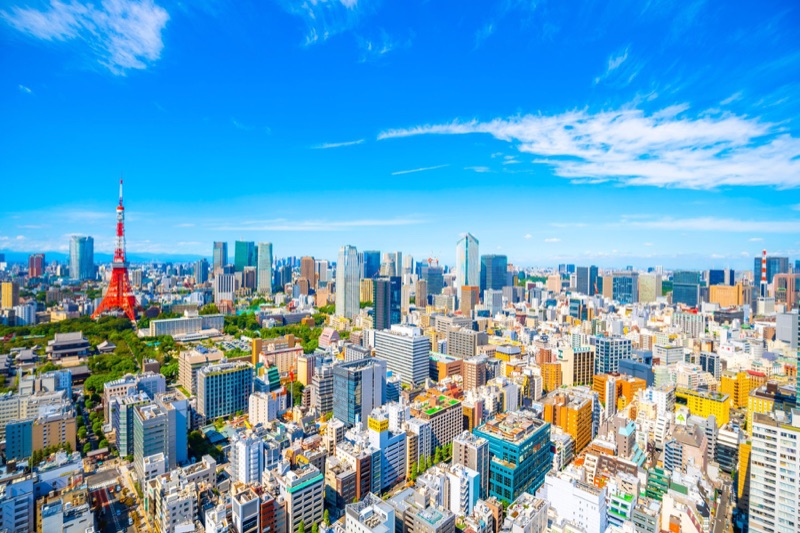
This is Japan's clearest win — and it's not close. Japan has one of the richest historical and cultural landscapes of any country on earth. Taiwan has real cultural depth, but the scale is different.
Japan: ancient and modern in parallel
Kyoto alone has 17 UNESCO World Heritage Sites — more cultural heritage in one city than most countries have nationwide. Fushimi Inari's 10,000 torii gates, Kinkaku-ji (Golden Pavilion), Arashiyama bamboo grove, Nishiki Market — this is one of the most culturally dense cities in the world. Add Nara's deer park and Todai-ji (world's largest wooden structure), Hiroshima's Peace Memorial, and Tokyo's Senso-ji and Meiji Shrine — all of this within 5 hours of each other on the Shinkansen corridor.
Taiwan: Chinese heritage with a Japanese layer
Taiwan's cultural story is fascinating — Chinese settlement going back 400 years, Japanese colonial architecture layered on top (Taiwan was Japanese territory from 1895–1945), and indigenous Taiwanese culture that's increasingly celebrated. The National Palace Museum in Taipei holds one of the world's most important Chinese art collections — over 700,000 artifacts evacuated from Beijing in 1948. Jiufen old town north of Taipei inspired the setting for Studio Ghibli's "Spirited Away" (debated, but the vibe is real). Tainan is Taiwan's oldest city with Fort Zeelandia and dozens of historic temples. The Japanese colonial architecture in Taichung and Tainan is genuinely excellent.
Also see: South Korea vs Japan | Tokyo vs Taipei
Winner takeaway
- Winner: Japan
- Why: Japan's cultural depth is genuinely world-class and unmatched by most countries, let alone Taiwan. Kyoto alone is worth the trip. Taiwan's National Palace Museum is one of the world's great museums and should not be missed, but the overall cultural scale is simply different.
- Who this matters for: History and culture travelers should prioritize Japan. Taiwan's cultural attractions are excellent but best appreciated as a complement to Japan, not a substitute for it.
🛡️ Safety
Good news: both Japan and Taiwan are among the safest travel destinations in the world. This section is genuinely close.
Japan: famously safe
Japan consistently ranks in the top 5 safest countries globally. Petty crime is extremely rare — lost wallets are routinely handed in. The main safety consideration is natural disasters: Japan sits on the Pacific Ring of Fire and experiences frequent earthquakes, typhoons, and occasional volcanic activity. The 2011 Tōhoku earthquake and tsunami remain the defining disaster in living memory. The emergency alert system is excellent, and major tourist areas are well-prepared. Women traveling solo consistently rate Japan as one of the safest countries they've visited.
Taiwan: equally safe, more relaxed
Taiwan is similarly safe by any objective measure — low crime, trustworthy police, and a culture that genuinely values helping strangers. The key difference: Taiwan's people are more outwardly friendly and approachable than Japan's, which can make solo travel feel warmer and less isolating. Language is less of a barrier — English proficiency is higher in Taiwan, especially among younger Taiwanese. Taiwan faces its own natural hazard profile (typhoons, earthquakes — the 2024 Hualien earthquake killed 13 people and damaged Taroko Gorge trails), but preparedness is excellent.
Winner takeaway
- Winner: Tie
- Why: Both are genuinely among the world's safest travel destinations. Taiwan's higher English proficiency and outwardly friendly culture may make solo travelers (especially women) feel more at ease day-to-day. Japan's infrastructure and emergency systems are perhaps marginally more robust for natural disaster response.
- Who this matters for: Safety is a non-issue in both countries for standard tourist activity. If you're a solo first-timer who wants to feel supported and understood, Taiwan's cultural warmth and English accessibility give it a slight practical edge.
🔀 Why Not Both?
The Japan vs Taiwan debate assumes you have to choose — but geographically, these two destinations pair beautifully. They're only 3.5 hours apart by direct flight, and budget carriers like Peach, Jetstar Asia, and Scoot connect Tokyo (Narita) and Taipei (Taoyuan) for as little as $80–150 round-trip.
The case for combining both
Japan and Taiwan complement each other in a way that few travel pairings do. Japan provides the big-budget, high-stimulus, bucket-list experiences: bullet trains, Kyoto temples, ramen deep-dives, capsule hotels, anime culture. Taiwan provides the antidote: slower pace, warmer people, incredible value eating, and Taroko Gorge as a jaw-dropping natural finale. Many travelers who do both report that Taiwan's warmth and budget-friendliness feel like a relief after Japan's efficiency but occasional emotional distance.
Suggested combined itineraries
10 days: 6 days Japan (Tokyo 3 + Kyoto/Osaka 3) → fly to Taipei → 4 days Taiwan (Taipei 2 + Taroko Gorge 2)
14 days: 9 days Japan (Tokyo 4 + Hakone 1 + Kyoto 3 + Osaka 1) → fly to Taipei → 5 days Taiwan (Taipei 2 + Hualien/Taroko 2 + Tainan 1)
3 weeks: The full experience. 12 days Japan with Hiroshima and Nara day trips + 9 days Taiwan covering Taipei, east coast, and Kaohsiung.
Pro tip: Fly into Tokyo (Narita/Haneda) and out of Taipei (Taoyuan) or vice versa to avoid backtracking. The open-jaw ticket saves one flight leg and eliminates the need to return to your starting point.
Winner takeaway
- Winner: Depends
- Why: If you have 10+ days and are anywhere near Asia, doing both Japan and Taiwan is one of the best value travel combinations in the world. The contrast between them is striking and each makes the other more interesting by comparison.
- Who this matters for: Travelers with a flexible schedule who are already making the long-haul flight to Asia. The marginal cost of adding Taiwan (or Japan) is low — a $100–150 budget flight and a more rewarding overall trip.
🎯 The Decision Framework
Choose Japan If…
- It's your first major Asia trip and you want iconic experiences
- Food variety and Michelin-star dining matter to you
- You want to see cherry blossoms or fall foliage at world-class scale
- Ancient temples, shrines, and UNESCO World Heritage Sites are a priority
- You love efficient, world-class public transit
- Pop culture (anime, gaming, fashion) is a draw
- You want to hike Mt. Fuji or ski in Hokkaido
- You're interested in both modern megacity and ancient traditional culture in one trip
- Budget is not the primary constraint
Choose Taiwan If…
- Budget is a major factor ($40–70/day vs Japan's $80–150)
- Night markets and street food culture are your travel love language
- You want English accessibility without a language barrier
- Taroko Gorge is on your bucket list
- You prefer a less crowded, more authentic experience
- You're doing a short trip (7–10 days) and want to cover the highlights comfortably
- Friendly, outward, welcoming locals matter to your travel experience
- You've already done Japan and want to explore the region further
- You want to avoid Japan's peak-season crowds and accommodation markups
❓ Frequently Asked Questions
Is Japan or Taiwan better for first-time visitors to Asia?
Taiwan is often recommended for first-timers: lower cost ($40–70/day vs Japan's $80–150/day), English widely spoken, compact and easy to navigate. Japan is the classic bucket-list destination but requires more budget and planning. If this is your only Asia trip, Japan's iconic variety edges it out. If you're budget-conscious or want a relaxed intro to East Asia, Taiwan wins.
How much cheaper is Taiwan than Japan?
Taiwan is roughly 40–50% cheaper for most travelers. A mid-range day in Taiwan runs $40–70 USD; Japan runs $80–150. The biggest savings are in food (night market eating costs NT$50–150/dish vs ¥800–1,500 at a sit-down restaurant in Japan) and intercity transit (Taiwan HSR is 50–70% cheaper than Shinkansen for equivalent distances). Accommodation mid-range costs are more similar between the two.
Can you visit Japan and Taiwan in the same trip?
Yes — and many experienced Asia travelers do exactly this. Flights between Tokyo (Narita/Haneda) and Taipei (Taoyuan) take about 3–4 hours and cost $80–200 USD round-trip on budget carriers like Peach or Jetstar Asia. A common itinerary: 7–10 days Japan + 4–5 days Taiwan. The two countries complement each other remarkably well, and the contrast between them makes both more interesting.
Which has better food — Japan or Taiwan?
Japan wins on culinary breadth and technique — the world's most Michelin stars, incredible regional variety, and consistent quality at every price point. Taiwan wins on street food culture and value: night market eating (NT$50–150/dish) is world-class, beef noodle soup is transcendent, and Tainan is one of Asia's great food cities. Most travelers who visit both say Japan is the better food destination overall, but Taiwan's night markets are a genuine bucket-list food experience.
Is Japan or Taiwan better for nature lovers?
Japan wins on scale and diversity of landscapes — from Hokkaido's snow country to subtropical Okinawa, plus Mt. Fuji, the Japan Alps, and volcanic Kyushu. Taiwan's Taroko Gorge is genuinely one of Asia's most spectacular natural sights — white marble cliffs dropping 1,000m straight to the Liwu River. Taiwan's east coast is dramatically underrated. For one iconic nature experience, Taroko is hard to beat. For a variety of landscapes, Japan wins easily.
How much time do you need in Japan vs Taiwan?
Taiwan's highlights are doable in 7–10 days: 3–4 days Taipei, 2 days Hualien/Taroko Gorge, 1 day Jiufen, and optionally 1–2 days in Tainan or Kaohsiung. Japan is harder to satisfy in under 10 days — Tokyo alone could consume a week. A first visit needs minimum 10–14 days: 4 days Tokyo + 3 days Kyoto/Nara + 2 days Osaka + 1 day Hiroshima minimum.
Which country is safer — Japan or Taiwan?
Both are among the safest travel destinations in the world and effectively tied for practical purposes. Japan consistently ranks in the global top 5 safest countries; Taiwan is similarly ranked. Petty crime is extremely rare in both. The main risk in both countries is natural disasters (earthquakes, typhoons). Taiwan's English accessibility may make solo travelers feel more supported day-to-day, but neither country poses meaningful safety concerns for tourists.
Is Taiwan worth visiting if you've already been to Japan?
Absolutely — and many Japan veterans say Taiwan surprised them the most. It's different enough to feel like a new destination (distinct culture, language, food, and history) while being familiar enough (Chinese script, efficient transit, excellent food scene) to feel accessible. The night market culture, Taroko Gorge, and Tainan's historic city are experiences you can't replicate in Japan. Reddit consensus: "Once you've done Japan, Taiwan becomes the obvious next destination in East Asia."
Ready to plan your Asia trip?
Get a free custom itinerary for Japan, Taiwan, or a combination of both — built from real traveler insights, not generic templates.
🎟️ Book Tours & Experiences
Hand-picked tours and activities for both destinations — book with free cancellation
Experiences via Viator — free cancellation on most tours