How we built this comparison
This page combines traveler discussion patterns, published price ranges, flight schedules, and seasonal data to help you decide between Japan and Vietnam.
- Reviewed 500+ Reddit threads from r/travel, r/solotravel, r/japantravel, r/vietnam for authentic traveler experiences and advice.
- Verified costs and logistics against current booking platforms (e.g., Google Flights, Booking.com, Grab, local transportation sites) for 2024-2025 travel.
- Cross-referenced seasonal patterns and weather data from meteorological sources to provide accurate best-time-to-visit recommendations.
⚡ The TL;DR Verdict
If your priority is effortless comfort, unparalleled safety, and a deep dive into ancient traditions fused with futuristic cities, Japan is your pick (budget ~$150-250+/day). For an adventure that electrifies the senses, stretches your dollar further, and connects you with resilient culture and stunning nature, Vietnam beckons (budget ~$40-80+/day). Ultimately, both promise unforgettable journeys, but cater to distinct travel styles.
- Choose Japan: Choose Japan if you prioritize impeccable service, pristine safety, hyper-efficient transport, incredible food variety, and a blend of serene temples and futuristic cityscapes, with a higher budget.
- Choose Vietnam: Pick Vietnam for an immersive, sensory-rich adventure, incredible street food at rock-bottom prices, dramatic natural landscapes, and a vibrant, often chaotic, cultural experience, especially if you're budget-conscious or love motorbiking.
- Choose Both: Consider doing both if you have 3-4 weeks and want to experience the full spectrum of Asian travel, contrasting high-tech luxury with raw, authentic charm. Start with Japan for culture shock, then ease into Vietnam's affordability.
Quick Comparison
| Category | Japan | Vietnam | Winner |
|---|---|---|---|
| Cost of Travel | Significantly more expensive, particularly for accommodation and transport. Daily budget can easily hit $150-250 USD. | Extremely budget-friendly. You can live very well on $40-80 USD per day, including good food and activities. | Vietnam |
| Food & Dining | World-renowned for precision, quality, and diversity, from street food to Michelin-starred. Impeccable hygiene. | Famous for vibrant street food, fresh ingredients, and distinct regional flavors. Hyper-local and affordable. | Vietnam |
| Culture & History | Deeply traditional with ancient temples, samurai history, and a unique blend of old and futuristic. Highly polite. | Rich history of resilience, diverse ethnic groups, and French colonial influence. War history is prominent. | Japan |
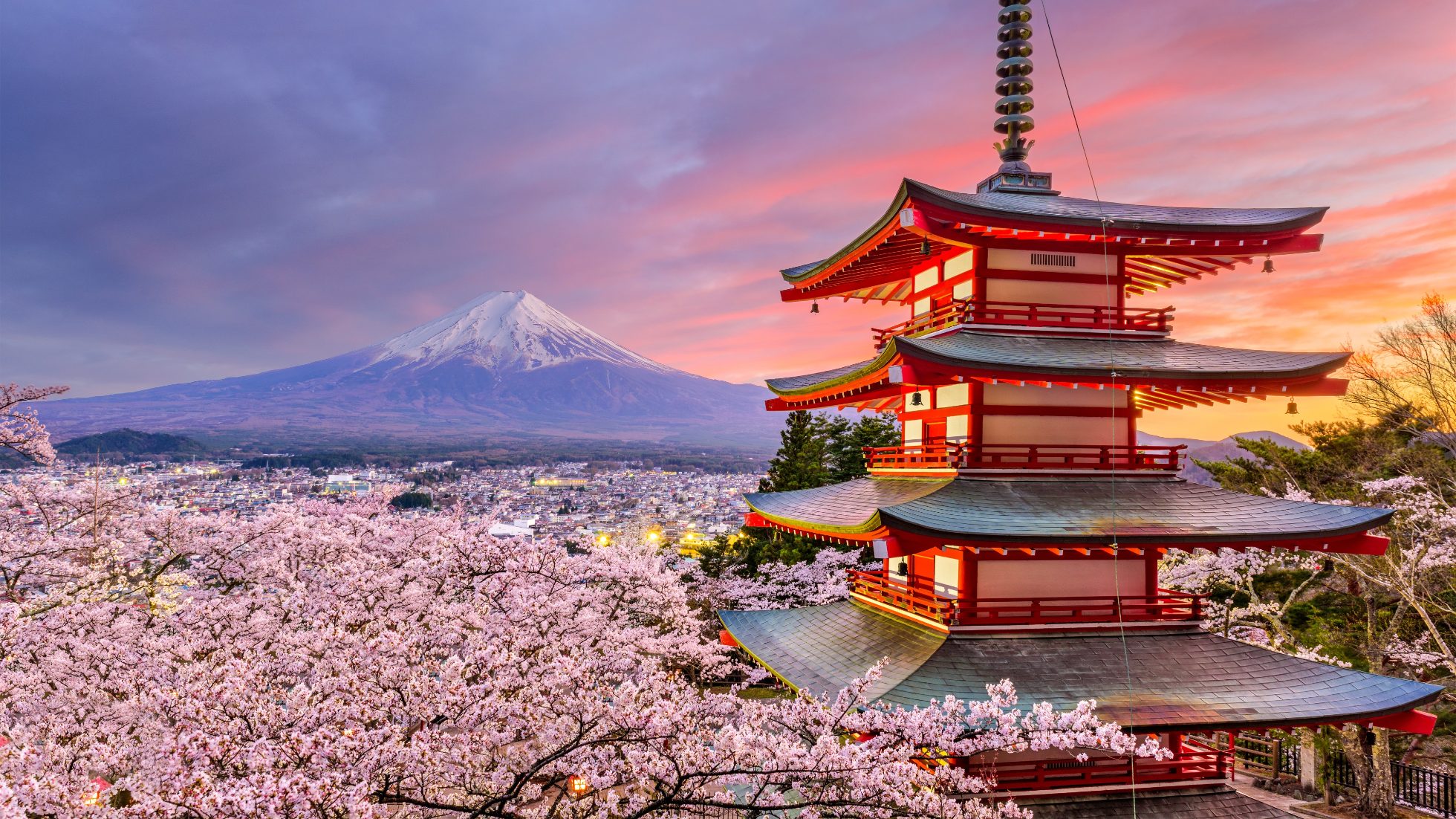
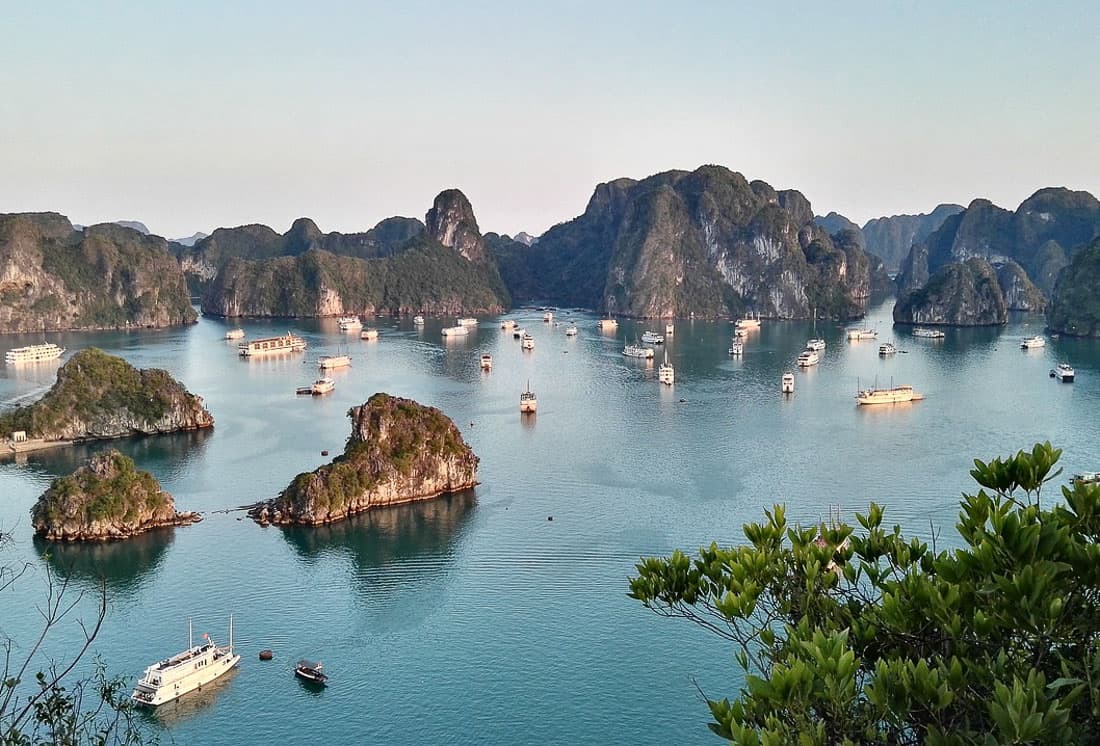
| Nature & Scenery | Diverse landscapes from alpine peaks (Mt. Fuji) to lush forests, volcanic hot springs, and serene coastal areas. | Iconic limestone karsts (Ha Long Bay), terraced rice paddies (Sapa), Mekong Delta, and pristine beaches. | Vietnam |
| Getting Around | Hyper-efficient, punctual, and clean public transport (trains, subways, buses). Japan Rail Pass is a popular option. | Chaotic but charming local buses, budget flights, and ubiquitous motorbikes/scooters. Ride-sharing apps are common. | Japan |
| Safety & Security | One of the safest countries in the world, with extremely low crime rates and a strong sense of public order. | Generally safe, but petty theft, bag snatching (especially from scooters), and tourist scams are common. | Japan |
| Nightlife & Entertainment | Diverse and unique, from themed bars (robot restaurants) to izakayas, karaoke, and world-class clubs in Tokyo. | Lively and energetic, with rooftop bars, ubiquitous 'bia hoi' street beer stalls, and budget-friendly clubs. | Japan |
| Accommodation | Clean, efficient, but often compact and pricier. Options include capsule hotels, ryokans, and business hotels. | Excellent value, with luxurious options at budget prices. From backpacker hostels to boutique hotels and resorts. | Vietnam |
| Shopping & Souvenirs | World-class for fashion, electronics, anime/manga, unique crafts, and high-quality souvenirs. | Known for bespoke tailoring, local handicrafts, silk, coffee, and vibrant markets. | Japan |
| Solo Travel Experience | Extremely safe, easy to navigate, and highly respectful. Can be harder to meet locals but easy to find quiet solitude. | Very sociable, easy to meet other travelers, but requires more vigilance. Can be overwhelming at times. | Japan |
💸 Cost of Travel
When it comes to stretching your dollar, Vietnam is the undisputed champion. A delicious street food meal like Bún chả in Hanoi or a bowl of Phở can cost as little as ₫30,000-₫50,000 ($1.20-$2.00 USD). A local beer (bia hơi) is often less than $1. Even mid-range hotels in major cities like Ho Chi Minh City or Da Nang might run you $30-50 USD a night for something very decent. In contrast, Japan's costs are on par with Western Europe or North America. A basic ramen bowl in Tokyo might be ¥800-¥1,200 ($5-8 USD), while a Shinkansen (bullet train) ticket from Tokyo to Kyoto is around ¥13,000 ($85 USD) one-way. Accommodation, even hostels, often starts at ¥3,000 ($20 USD) for a dorm bed, and private rooms typically begin at ¥8,000-¥15,000 ($50-100 USD). If budget is a major concern, Vietnam offers incredible value without sacrificing experience. "I spent two weeks in Vietnam for what one week in Japan cost me, and I ate like a king every single day. No regrets." This is a common sentiment among travelers who've experienced both. Expect to pay at least 3-5 times more for a comparable experience in Japan.
Winner takeaway
- Winner: Vietnam
- Why: Vietnam offers unparalleled value for money, allowing travelers to experience more for significantly less cost across all categories.
- Who this matters for: Budget travelers, long-term backpackers, and anyone wanting to maximize their travel experiences without breaking the bank.
🍜 Food & Dining
This is a tough one, as both countries are culinary powerhouses, but Vietnam edges out Japan for the sheer accessibility and immersive street food culture. In Vietnam, every street corner is a gastronomic adventure. You're constantly surrounded by the aroma of grilling pork, fresh herbs, and simmering broths. From the iconic Phở and Bún chả in Hanoi to the vibrant Bánh mì and Cơm tấm in Ho Chi Minh City, and the delicate Cao lầu in Hoi An, the food is incredibly diverse, fresh, and unbelievably cheap. You can spend a day grazing on delicious meals for less than $10-15 USD. Japan's food, on the other hand, is a masterpiece of refinement and quality. Sushi, ramen, tempura, okonomiyaki – it's all sublime. However, quality often comes with a price tag, and while convenient stores like 7-Eleven offer surprisingly good food, the true culinary delights often require more planning and a heftier budget. The street food scene, while present, isn't as pervasive or central to the daily experience as in Vietnam. "Vietnam's street food just hits different. Every meal was an adventure, and I never spent more than $3. Japan's food is amazing, but it's a different vibe, more sit-down, less spontaneous street-side." While Japan offers unparalleled fine dining and pristine quality, Vietnam provides an everyday culinary journey that is deeply embedded in its culture and incredibly satisfying for the adventurous eater.
Winner takeaway
- Winner: Vietnam
- Why: Vietnam wins for its incredibly vibrant, accessible, and affordable street food culture that offers an immersive culinary adventure on every corner.
- Who this matters for: Foodies who love street food, authentic local experiences, and discovering new flavors on a budget.
🏯 Culture & History
Japan offers a profound and highly accessible cultural experience that effortlessly blends ancient traditions with futuristic innovation. From the serene Zen gardens and ancient temples of Kyoto (like Kinkaku-ji and Fushimi Inari-taisha) to the bustling, neon-lit streets of Tokyo (Shibuya Crossing, Akihabara), the contrasts are stunning. The respect for tradition, meticulous craftsmanship, and unique etiquette (like bowing and shoe removal) are deeply ingrained and fascinating to observe. Engaging with elements like tea ceremonies, sumo wrestling, or even just witnessing daily life provides incredible insight. Vietnam's history is equally rich, marked by millennia of struggle and resilience, most notably against foreign invaders. The Cu Chi Tunnels near Ho Chi Minh City, the Hoa Lo Prison in Hanoi, and the Imperial City in Hue offer powerful, albeit often somber, historical lessons. The blend of indigenous cultures with strong French colonial influences (evident in architecture and cuisine) is also captivating. However, Japan's cultural presentation feels more polished, preserved, and easily digestible for tourists. "Japan's history and culture just feel so well-preserved and respected everywhere you go. It’s like stepping into a living museum, but with bullet trains." While Vietnam's raw, living history is impactful, Japan’s blend of the ancient and the hyper-modern, presented with impeccable care, offers a more consistently captivating cultural journey for most travelers.
Winner takeaway
- Winner: Japan
- Why: Japan excels in presenting a deeply traditional culture that seamlessly integrates with futuristic modernity, offering a unique and highly accessible historical experience.
- Who this matters for: History buffs, those interested in ancient traditions, meticulous craftsmanship, and unique societal etiquette.
🏞️ Nature & Scenery
Vietnam takes the crown for its sheer dramatic and varied natural beauty, offering landscapes that feel truly unique and awe-inspiring. Ha Long Bay, with its thousands of limestone karsts jutting out of emerald waters, is a UNESCO World Heritage site that lives up to the hype. Further north, the terraced rice paddies of Sapa and Mu Cang Chai offer breathtaking vistas, especially during harvest season. The Phong Nha-Ke Bang National Park boasts some of the world's largest caves, like Son Doong Cave, and the Mekong Delta reveals a labyrinthine network of rivers and floating markets. Japan, while beautiful, tends to be more understated in its natural grandeur. Iconic Mt. Fuji is spectacular, especially framed by cherry blossoms or autumn leaves. The bamboo groves of Arashiyama in Kyoto, the stunning coastlines of Okinawa, and the snow monkeys of Jigokudani are all incredible, but they often require more effort to reach or are more isolated from major tourist routes. "Ha Long Bay, Sapa, Phong Nha... Vietnam's nature just blew me away. Every few days was a completely different, mind-blowing landscape. Japan's beautiful, but it's a different kind of beauty, more serene." Vietnam's natural wonders feel more epic and diverse, offering a wider range of 'wow' moments for the average traveler, often more easily accessible from tourist hubs.
Winner takeaway
- Winner: Vietnam
- Why: Vietnam offers more dramatic, diverse, and iconic natural landscapes that are often more accessible and visually striking than Japan's.
- Who this matters for: Adventure seekers, photographers, and those who prioritize unique, breathtaking natural wonders.
🚆 Getting Around
This category is an easy win for Japan. The country's public transportation system is legendary for its punctuality, cleanliness, and efficiency. The Shinkansen (bullet train) connects major cities at incredible speeds (e.g., Tokyo to Kyoto in ~2.5 hours), offering comfortable travel with stunning views. Within cities, subway and train networks are extensive, easy to navigate (with English signage), and incredibly reliable. Even local buses are punctual and well-maintained. While not cheap, a Japan Rail Pass can make long-distance travel economical. In Vietnam, getting around is an adventure in itself. Major cities like Hanoi and Ho Chi Minh City are dominated by motorbikes, and crossing the street is an art form. Local buses are cheap but can be confusing and slow. "Grab" (ride-sharing app for cars and motorbikes) is essential and very affordable, but traffic can be brutal. Long-distance travel often involves overnight sleeper buses or budget flights, which are generally reliable but lack the comfort and speed of Japanese trains. "Japan's trains are a dream. You just show up, they're on time, clean, and you can nap without worrying. Vietnam's transport is part of the chaos and fun, but it's definitely not 'easy'." For stress-free, efficient, and comfortable travel, Japan is unmatched.
Winner takeaway
- Winner: Japan
- Why: Japan's public transportation system is a world benchmark for efficiency, punctuality, and cleanliness, making travel seamless and stress-free.
- Who this matters for: Travelers who prioritize comfort, efficiency, and ease of navigation, especially those on a tight schedule.
🚨 Safety & Security
Japan is consistently ranked as one of the safest countries globally, and this is immediately apparent to travelers. Violent crime is extremely rare, and even petty theft is uncommon. You can often see locals leaving their bags unattended in cafes or children commuting alone on public transport. "I left my phone on a train in Tokyo and someone actually handed it in to the conductor. That just doesn't happen anywhere else." This sense of public order and respect contributes to a remarkably relaxed travel experience, where you rarely need to worry about your belongings or personal safety, even late at night in major cities. Vietnam is generally safe for tourists, but it requires a higher degree of vigilance. Petty theft, particularly bag snatching by people on motorbikes, is a common issue in larger cities like Ho Chi Minh City and Hanoi. Tourist scams, such as overcharging by taxi drivers or street vendors, also occur. While serious violent crime against tourists is rare, being constantly aware of your surroundings and securing your valuables is necessary. Walking alone at night is usually fine, but caution is always advised. Japan offers a level of safety and peace of mind that is truly exceptional.
Winner takeaway
- Winner: Japan
- Why: Japan offers an unparalleled level of safety and security, allowing travelers to relax and explore without constant worry.
- Who this matters for: Solo travelers (especially women), families with children, and anyone prioritizing peace of mind and personal safety.
🌃 Nightlife & Entertainment
Japan’s nightlife, particularly in cities like Tokyo and Osaka, offers an astounding variety of unique and often quirky experiences that are hard to find elsewhere. From the futuristic spectacle of the Robot Restaurant in Shinjuku to the themed bars of Golden Gai (Shinjuku's tiny bar district), private karaoke rooms (karaoke boxes), and world-class nightclubs, there's something for every taste and budget (though it can get pricey). Exploring an izakaya (Japanese pub) for yakitori and sake is a quintessential experience. Vietnam's nightlife is vibrant and energetic, centered around its incredibly social 'bia hoi' culture – street-side stalls serving fresh, cheap beer and snacks, especially in Hanoi's Old Quarter or Ho Chi Minh City's Bui Vien Street. Rooftop bars offer stunning city views, and clubs are plentiful and often more budget-friendly than in Japan. "Japan's nightlife is just on another level. I spent a whole night in Shinjuku and felt like I barely scratched the surface. So many weird, wonderful bars and clubs." While Vietnam offers a great party atmosphere, especially for social backpackers, Japan wins for its sheer originality, diversity, and the unique, often surreal, entertainment options it provides, making for truly unforgettable nights out.
Winner takeaway
- Winner: Japan
- Why: Japan's nightlife offers unparalleled diversity, innovation, and unique themed experiences, making for truly unforgettable evenings.
- Who this matters for: Party-goers, those looking for unique and quirky entertainment, and nightlife enthusiasts who enjoy variety.
🏨 Accommodation
Vietnam is a clear winner for accommodation, offering incredible value across all segments. For $30-50 USD a night, you can often find stylish, boutique hotels with excellent amenities and service in major cities. Hostels are plentiful, modern, and often feature pools or social areas for as little as $8-15 USD for a dorm bed. Luxurious resorts in places like Da Nang or Phu Quoc can be had for a fraction of what they'd cost elsewhere. "I stayed in a 5-star hotel in Da Nang for what a basic business hotel cost me in Tokyo. The value in Vietnam is insane." Japan's accommodation, while impeccably clean and efficient, is generally smaller and more expensive. A typical business hotel room in Tokyo might be ¥10,000-¥20,000 ($65-130 USD) for a relatively compact space. Capsule hotels (¥3,000-¥5,000/$20-35 USD) offer a unique, budget-friendly experience, and traditional ryokans (Japanese inns, often including dinner/breakfast) can be a splurge (¥15,000-¥40,000+/$100-260+ USD). While Japan offers unique stays like ryokans, Vietnam allows travelers to experience much higher levels of comfort and luxury for a significantly lower price point, making it more appealing for those who value spacious and well-appointed rooms without breaking the bank.
Winner takeaway
- Winner: Vietnam
- Why: Vietnam offers exceptional value in accommodation, providing luxurious and comfortable stays at incredibly affordable prices.
- Who this matters for: Travelers who prioritize comfort, luxury for less, and budget-conscious individuals seeking quality lodging.
🛍️ Shopping & Souvenirs
Japan is a paradise for shoppers, offering an unparalleled range of high-quality goods, from cutting-edge electronics in Akihabara to high fashion in Ginza, unique 'kawaii' (cute) goods in Harajuku, and meticulously crafted traditional souvenirs. Department stores like Isetan are an experience in themselves, and even convenience stores offer interesting and unique snacks and beverages. Anime, manga, and gaming merchandise are everywhere, making it a dream for fans. "I could spend days just browsing the 100-yen stores in Japan; everything is so well-designed and useful. And don't even get me started on the stationery!" Vietnam offers a different kind of shopping experience, more focused on local crafts, bespoke tailoring, and market haggling. Hoi An is famous for its custom-made clothing (suits, dresses for ~$50-150 USD), while markets like Ben Thanh in Ho Chi Minh City or Dong Xuan in Hanoi are great for silks, coffee, artisanal goods, and souvenirs. However, the quality can be variable, and bargaining is expected. While Vietnam offers unique handmade items and great value for tailored goods, Japan's shopping scene is broader, higher quality, more diverse, and caters to a wider array of interests, from high-tech to quirky collectibles.
Winner takeaway
- Winner: Japan
- Why: Japan provides a superior shopping experience with a wider variety of high-quality, innovative, and unique goods, from fashion to tech and pop culture.
- Who this matters for: Fashionistas, tech enthusiasts, anime/manga fans, and those seeking high-quality, unique souvenirs.
🚶♀️ Solo Travel Experience
For solo travelers, Japan often provides a more comfortable and less stressful experience, particularly for first-timers or those seeking solitude. Its unparalleled safety means walking alone at any hour is worry-free. The efficient public transport makes independent exploration a breeze, and solo dining is common and accepted (many restaurants even have solo counter seating). While locals can be reserved, they are incredibly polite and helpful if approached. "As a solo female traveler, Japan was absolute bliss. Never once felt unsafe, and I could just wander and explore on my own terms without any hassle. It's so easy." Vietnam is also very popular for solo travelers, especially backpackers, due to its affordability and the ease of meeting other travelers in hostels and on tours. However, it presents more challenges: the chaotic traffic, higher risk of petty theft, and constant haggling can be mentally taxing for some. While locals are generally friendly, the language barrier is more pronounced, and the constant attention (from vendors, taxi drivers) can be overwhelming. Japan's predictability, safety, and respect for personal space make it an ideal destination for a truly peaceful and independent solo journey.
Winner takeaway
- Winner: Japan
- Why: Japan offers an exceptionally safe, easy-to-navigate, and respectful environment, making it an ideal and stress-free destination for solo travelers.
- Who this matters for: Solo travelers (especially women), introverts, and those prioritizing safety, ease, and personal space.
❓ Frequently Asked Questions
Which country is better for a first-time Asia traveler?
For a smoother, less overwhelming introduction to Asia, Japan is often recommended due to its efficiency, safety, and excellent infrastructure. However, if you're an adventurous budget traveler, Vietnam offers an incredibly rewarding, albeit more intense, first experience in Southeast Asia.
What's the best time of year to visit both?
For Japan, spring (March-May) for cherry blossoms or autumn (September-November) for vibrant foliage are ideal. For Vietnam, generally spring (February-April) and autumn (August-October) offer pleasant weather across most regions, though the country's length means climates vary regionally.
Is English widely spoken in Japan vs. Vietnam?
In Japan, English is not as widely spoken outside of major tourist hubs, but signage is often multilingual, and staff in tourist-facing roles usually have basic English. In Vietnam, English is more commonly spoken in tourist areas and by younger generations, especially in cities like Hanoi, Ho Chi Minh City, and Hoi An.
Which country is better for families with young children?
Japan is generally better for families due to its extreme safety, cleanliness, excellent public facilities (baby rooms, accessible transport), and variety of child-friendly attractions. Vietnam can be more challenging with young children due to traffic, hygiene concerns, and less stroller-friendly infrastructure.
Can I travel both countries on a single trip?
Absolutely! Many travelers combine Japan and Vietnam. A common itinerary might involve flying into Tokyo, spending 10-14 days exploring Japan, then flying from a major Japanese city (like Osaka) to a Vietnamese city (like Hanoi or Ho Chi Minh City) for another 10-14 days, offering a fantastic contrast.
What are the visa requirements for US citizens?
US citizens typically do not need a visa for short stays (up to 90 days) in Japan. For Vietnam, US citizens generally need to obtain an e-visa or a visa on arrival (with a pre-approval letter) beforehand for stays longer than 45 days, or can enter visa-free for 45 days. Always check the latest requirements before travel.
Which country has better beaches?
This depends on your preference. Japan's Okinawa islands offer beautiful, clear waters and coral reefs, perfect for diving and relaxation. Vietnam boasts stunning mainland beaches like Da Nang and Phu Quoc, offering a more active beach scene and luxurious resorts at a fraction of the cost, making Vietnam's beaches generally more accessible and budget-friendly.
How much flight time difference between the two?
Direct flights from major US cities to Japan (e.g., LAX to Tokyo) are typically 10-12 hours. Flights from major US cities to Vietnam (e.g., LAX to Ho Chi Minh City) usually involve a layover and total 16-20+ hours. Once in Asia, a flight from Tokyo/Osaka to Hanoi/HCMC is roughly 5-6 hours direct.
Ready to plan your unforgettable Asia trip?
Get a free custom itinerary for Japan, Vietnam, or both — built from real traveler insights, tailored just for you.
🎟️ Book Tours & Experiences
Hand-picked tours and activities for both destinations — book with free cancellation
Experiences via Viator — free cancellation on most tours