📋 Our Methodology
This comparison is built from real sources, not AI guesswork:
- 15+ Reddit threads from r/koreatravel, r/korea, r/travel synthesized
- Cost data from recent Reddit trip reports (March 2026), cross-checked with booking platforms
- Transit info from Korail and intercity bus operators
- Accommodation ranges from Booking.com and Hostelworld (March 2026)
⚡ The TL;DR Verdict
Jeonju wins on food culture and traditional atmosphere — it's the best place in Korea to eat bibimbap, drink makgeolli, and stay in a hanok. Busan wins on everything else: beaches, seafood markets, coastal temples, nightlife, and sheer variety. For most Korea itineraries, do both — they're only 2.5 hours apart by bus and complement each other perfectly.
- Go to Jeonju if food is your primary motivation for traveling, if you want to sleep in a traditional hanok guesthouse, or if you want a slower-paced cultural interlude between Seoul and Busan. The bibimbap, kongnamul gukbap, and makgeolli bar scene are genuinely world-class and you can't replicate them elsewhere. Reddit consensus: "If you're a foodie, Jeonju is non-negotiable."
- Go to Busan if you want Korea's most dynamic non-Seoul experience — a proper city with beaches, fresh seafood, Gamcheon Culture Village, a coastal Buddhist temple on cliffs, and lively neighborhoods to explore. Busan needs 2-3 nights minimum to do justice. It's also the gateway to Gyeongju, one of the best heritage destinations in Asia.
- Do both if you have 10+ days in Korea. Seoul (4-5 nights) → Jeonju (1-2 nights) → Busan (2-3 nights) is one of the most popular and most satisfying Korea itineraries for a reason. The bus between Jeonju and Busan takes 2.5-3 hours.
🍜 Best for Food Travelers
Jeonju — bibimbap, kongnamul gukbap, makgeolli, and street snacks in the Hanok Village are why food-focused travelers make the trip.
🏖️ Best for City + Beach
Busan — Haeundae Beach, Jagalchi seafood market, Gamcheon Village, and coastal Haedong Yonggungsa Temple in one package.
🏛️ Best for Traditional Korea
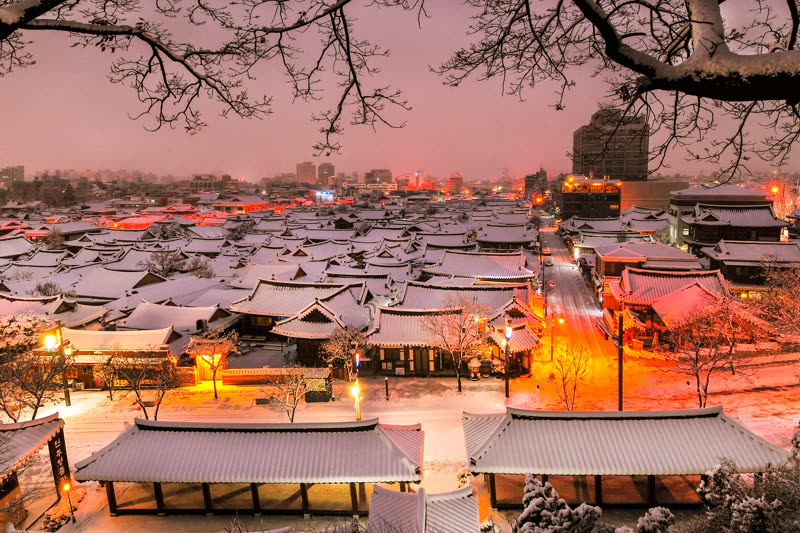
Jeonju — 735 hanok buildings in one neighborhood, traditional crafts, hanji paper-making, and a slower tempo than anywhere else in Korea.
🌊 Best for Variety
Busan — you can go from beach to seafood market to mountain temple to art village to night bar in a single day. Nothing in Korea matches this range.
Quick Comparison
| Category | 🏛️ Jeonju | 🌊 Busan | Winner |
|---|---|---|---|
| Food Culture | Bibimbap birthplace, kongnamul gukbap, makgeolli bars, Hanok Village street food | Jagalchi seafood, dwaeji gukbap, Milmyeon cold noodles, raw fish (hoe) | Jeonju |
| Beaches | Landlocked — no beaches | Haeundae, Gwangalli, Songjeong — multiple excellent beaches | Busan |
| Traditional Atmosphere | 735 hanok buildings, traditional craft workshops, hanji paper culture | Gamcheon Culture Village (art), some traditional neighborhoods | Jeonju |
| Cultural Sites | Hanok Village, Jeonju Hyanggyo, Jeondong Catholic Church, Omokdae Pavilion | Gamcheon Village, Haedong Yonggungsa Temple, Beomeosa Temple, Jagalchi Market | Tie |
| Budget (per day) | 40,000–70,000 KRW ($30–52) | 60,000–100,000 KRW ($45–75) | Jeonju |
| Nightlife | Makgeolli bars, university district (Jeonju Univ. area), low-key | Seomyeon district, Haeundae clubs, Gwangalli bars — proper nightlife city | Busan |
| Getting There from Seoul | KTX ~1h50m (54,000 KRW / $40) or bus ~3h (13,000 KRW / $10) | KTX ~2h30m (59,800 KRW / $44) or budget bus ~4.5h | Jeonju |
| Size & Walkability | Small city, Hanok Village walkable in 30 min; very manageable | Large city requiring subway/bus; some areas hilly | Jeonju |
| Ideal Trip Length | 1–2 nights (half-day possible but rushed) | 2–3 nights minimum to see the highlights | Busan |
| Accommodation Style | Hanok guesthouses (unique), budget guesthouses | Range from hostels to beach resort hotels | Tie |
| Crowds & Tourism | Busy on weekends and holidays; Hanok Village has become quite touristy | Crowded at peak beach season (July–Aug), manageable rest of year | Busan |
🍜 Food & Dining
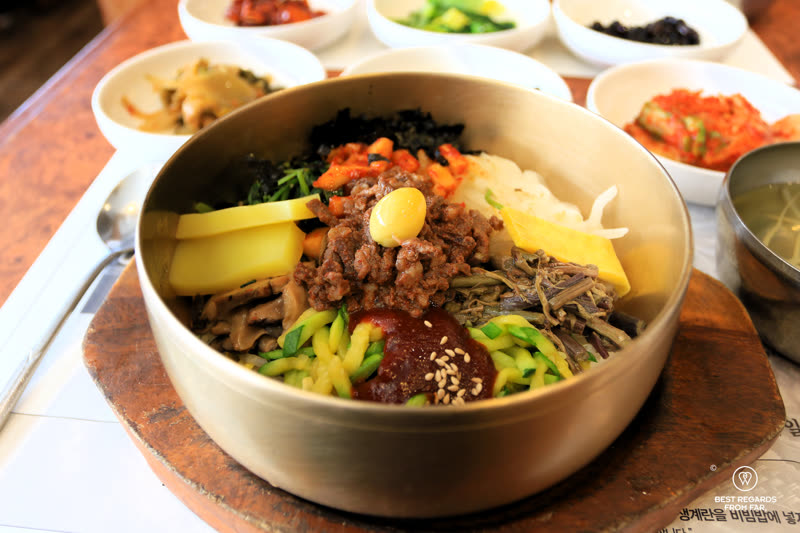
Food is where Jeonju has no rival in Korea. The city is the acknowledged birthplace of bibimbap and takes its food identity seriously — the Jeonju Food Special District is UNESCO-recognized, the culinary traditions run deep, and visiting without eating properly here would be a genuine waste. Busan is no slouch food-wise either, with some of Korea's finest seafood and its own regional specialties, but Jeonju wins on the food-as-identity dimension.
Jeonju food highlights:
- Jeonju Bibimbap — the national dish done right. A traditional Jeonju-style bibimbap features a stone pot (dolsot) packed with rice, up to 30+ seasonal vegetables, gochujang, sesame oil, and a raw egg that cooks on contact. The difference from Seoul versions is the quality of the gochujang (made with Jeonju's famous soy paste) and the volume of banchan (side dishes) that accompany it. Price at a proper restaurant: 12,000–20,000 KRW ($9–15). Jeonju Hanjeongsik (full Korean table d'hôte) sets run 30,000–50,000 KRW ($22–37) per person and are extraordinary spreads.
- Kongnamul Gukbap — bean sprout rice soup. This is the local breakfast of champions and it costs 7,000–9,000 KRW ($5–6.75). Served in a large stone pot with bean sprouts, rice, pork, and a raw egg. You add kimchi and green onions to taste. It's Jeonju's answer to hangover food and one of the best cheap meals in Korea. Multiple restaurants near the central market open at 6am.
- Hanok Village Street Food — the main thoroughfare of the Hanok Village is lined with vendors selling: choco-pie ice cream, hotteok (sweet pancakes, 1,500 KRW), jeon (Korean savory pancakes), macarons, crunchy rice snacks, and dozens of other treats. Budget 15,000–25,000 KRW ($11–18) for a serious Hanok Village snack crawl.
- Makgeolli (막걸리) — unfiltered rice wine. Jeonju's makgeolli bars serve it by the large ceramic bowl alongside multiple free bar snacks (pajeon savory pancake, kimchi, fish cakes). The university district (Jeonju National University area) has dozens of these bars. Price: 3,000–5,000 KRW ($2.25–3.75) per bowl with unlimited free accompaniments. This is one of the great budget eating experiences in Korea.
- Veteran (베테랑) — a famous noodle restaurant in the Hanok Village that Reddit travelers consistently mention. Simple noodle soup done exceptionally well. Expect a queue on weekends.
Busan food highlights:
- Jagalchi Fish Market — the largest seafood market in Korea. The ground floor is wholesale vendors; the upper floor restaurants let you choose live seafood from tanks and have it prepared. A raw fish (hoe) set for two: 40,000–80,000 KRW ($30–60) depending on species. The sannakji (live octopus) experience is exactly as wild as it sounds. Go early morning for the most atmospheric market scene.
- Dwaeji Gukbap (돼지국밥) — pork bone rice soup. Busan's signature comfort food, eaten morning to night. A hearty bowl: 9,000–12,000 KRW ($6.75–9). The best versions use milky, long-simmered pork bone broth. Seomyeon has multiple renowned spots.
- Busan Milmyeon — cold wheat noodles in a pork broth unique to Busan. Refreshing in summer, satisfying year-round. A bowl: 8,000–10,000 KRW ($6–7.50). A genuinely regional dish you won't find as good in Seoul.
- Gukje Market Street Food — Busan's largest traditional market has an entire alley (Biff Square / Gukje) dedicated to street food: ssiat hotteok (nut-filled hotteok, 1,500 KRW), assorted jeon pancakes, sundae (Korean blood sausage), and tteokbokki.
"Jeonju is the best place for food trip. I lived in Korea for 3 years and I think it's the food capital of the country. The bibimbap, kongnamul gukbap, makgeolli bars — you won't eat this well anywhere else at these prices." — r/koreatravel
"Busan's seafood market (Jagalchi) is absolutely incredible — get there early and just walk around the stalls before deciding where to eat upstairs. The raw fish platters are incredibly fresh." — r/koreatravel
🏛️ Cultural Attractions
These two cities draw very different cultural travelers. Jeonju attracts those seeking traditional Korean aesthetics and slow tourism. Busan attracts those who want a photogenic city with diverse visual experiences from coastal temples to hillside art villages.
Jeonju cultural highlights:
- Jeonju Hanok Village (전주 한옥마을) — 735 traditional wooden Korean houses (hanok) concentrated in one neighborhood, the largest such cluster in the country. The core area around Gyochon is free to walk through. Rent a hanbok (traditional Korean dress) for 10,000–15,000 KRW ($7.50–11) and wander the alleys — the backdrop for photos is excellent. Note: weekends get very crowded, early morning or late afternoon is the best time to visit for atmosphere. The Village is charming but the main commercial strips have become very tourist-snack-heavy.
- Jeonju Hyanggyo (전주향교) — a 14th-century Confucian school and shrine hidden just behind the Hanok Village. Free entry. Far less visited than the main village thoroughfare but more atmospheric.
- Jeondong Catholic Church — a striking red-brick Gothic cathedral built in 1914 on the site where Korean Catholics were martyred in the 1800s. Free entry. The church facing the Hanok Village is one of Jeonju's most photographed juxtapositions — Western Gothic architecture backing onto a sea of Korean tile roofs.
- Omokdae and Imokdae Pavilions — hilltop pavilions above the Hanok Village with excellent views across the roofscape. A short climb (10-15 minutes) from the main village area. Free.
- Jeonju National Museum — strong collection of Korean art and artifacts from the Jeolla province. Free entry. Good for context if you're spending multiple days in the region.
- Hanji Paper-Making Experience — Jeonju is Korea's historic center of hanji (traditional Korean paper) production. The Hanji Center offers workshops (10,000–20,000 KRW for a session) where you can make paper the traditional way. Niche but memorable.
Busan cultural highlights:
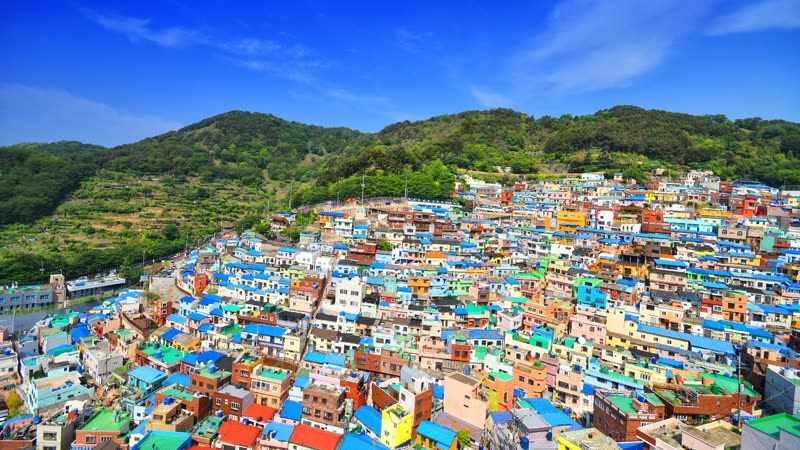
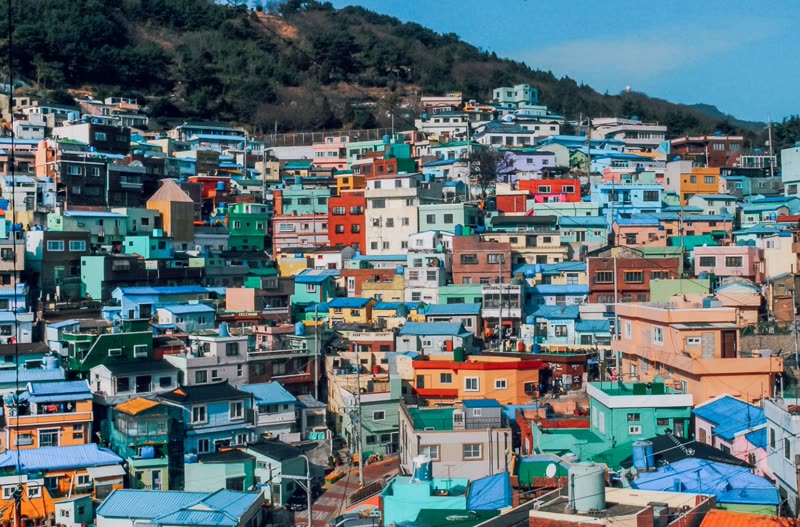
- Gamcheon Culture Village (감천문화마을) — a hillside neighborhood of colorfully painted houses originally built for Korean War refugees in the 1950s, transformed into a community art project from 2009 onward. Entry: free (though some art installation tickets: 2,000 KRW). The winding alleys, murals, and panoramic views make it one of Korea's most photogenic neighborhoods. Get there before 10am to avoid the worst of the tour bus crowds.
- Haedong Yonggungsa Temple (해동 용궁사) — a Buddhist temple built directly on coastal cliffs above the East Sea. Unlike most Korean temples set in mountain forests, this one faces the ocean — dramatic in any weather. Entry: free. Located 20km from central Busan (bus or taxi). The sunrise here is exceptional.
- Beomeosa Temple (범어사) — a major Buddhist temple founded in 678 CE, set in forested mountains north of Busan. More traditional and less touristy than Haedong Yonggungsa. Entry: 1,500 KRW ($1.10). Good for a quiet mountain hiking half-day.
- Jagalchi Market — equal parts cultural experience and food stop. The market has operated since the 1945 liberation and the culture of the haenyeo (female divers) who supply much of the live seafood is part of Busan's identity.
- BIFF Square (부산국제영화제 광장) — the handprint-studded square named for the Busan International Film Festival, surrounded by cinemas and street food stalls. Lively at night.
"Jeonju Hanok Village is definitely worth seeing, but go early — by 10am on weekends it's packed. The real magic is wandering the back alleys away from the tourist shops, or just sitting in a hanok guesthouse courtyard with a cup of traditional tea." — r/koreatravel
"Gamcheon is touristy but it's still really beautiful and worth a visit. Get there before 10am. Haedong Yonggungsa is honestly one of the most visually striking temples in Korea — don't skip it just because it's outside the city." — r/koreatravel
💰 Cost Comparison
Jeonju is notably cheaper than Busan — fewer upscale restaurants, lower accommodation costs, and most cultural sites are free. Both cities are significantly more affordable than Seoul.
Jeonju costs (per person):
- Hanok Village entry: Free to walk
- Hanbok rental: 10,000–15,000 KRW ($7.50–11) for 2 hours
- Jeonju National Museum: Free
- Hanji paper-making workshop: 10,000–20,000 KRW ($7.50–15)
- Traditional bibimbap restaurant: 12,000–20,000 KRW ($9–15)
- Kongnamul gukbap breakfast: 7,000–9,000 KRW ($5–6.75)
- Hanok Village street food crawl: 10,000–20,000 KRW ($7.50–15)
- Makgeolli bar (bowl + free snacks): 3,000–5,000 KRW ($2.25–3.75)
- Budget guesthouse / hostel: 25,000–45,000 KRW ($18–33)
- Hanok guesthouse: 50,000–100,000 KRW ($37–75)
- Typical day budget: 40,000–70,000 KRW ($30–52)
Busan costs (per person):
- Gamcheon Culture Village: Free (art installation ~2,000 KRW)
- Haedong Yonggungsa Temple: Free
- Beomeosa Temple: 1,500 KRW ($1.10)
- Jagalchi fish market meal for two: 40,000–80,000 KRW ($30–60) total
- Dwaeji gukbap bowl: 9,000–12,000 KRW ($6.75–9)
- Milmyeon cold noodles: 8,000–10,000 KRW ($6–7.50)
- Subway single fare: 1,400–1,600 KRW ($1–1.20)
- Budget guesthouse near Seomyeon: 35,000–55,000 KRW ($26–41)
- Haeundae Beach area accommodation: 60,000–150,000 KRW ($45–112)
- Typical day budget: 60,000–100,000 KRW ($45–75)
"Jeonju is definitely cheaper than Busan for accommodation and food. The makgeolli bars give you unlimited food with your drinks which makes evenings incredibly cheap. I spent about $35 USD total for a full day including accommodation." — r/koreatravel
🚄 Getting There & Transit Connections
Both cities are well-connected from Seoul, but the routes are different. Jeonju is actually faster from Seoul; Busan is South Korea's second largest city and has the best overall connectivity.
Getting to Jeonju:
- From Seoul (KTX): Seoul Yongsan Station to Jeonju Station: approximately 1h50m, 40,000–54,000 KRW ($30–40). This is the fastest and most comfortable option. Jeonju Station is a short taxi or bus ride (10–15 min, 1,500–8,000 KRW) from the Hanok Village.
- From Seoul (bus): Seoul Nambu Bus Terminal to Jeonju Intercity Bus Terminal: ~3 hours, 13,000–18,000 KRW ($9.75–13.50). Budget option, departs frequently. Jeonju Bus Terminal is about 15 min by bus or taxi from the Hanok Village.
- From Busan: Intercity bus from Busan Seobu or Nopo Bus Terminal to Jeonju: ~2.5–3 hours, 21,000–26,000 KRW ($15–19). No direct train — bus is the standard route.
Getting to Busan:
- From Seoul (KTX): Seoul Station to Busan Station: ~2h30m, 59,800 KRW ($44) in standard. The benchmark for fast Korean rail travel. Busan Station is centrally located near Seomyeon and Nampo-dong.
- From Seoul (SRT): Suseo Station to Busan: ~2h10m, 52,600 KRW ($39). Even faster but from a less central Seoul station.
- From Jeonju: Intercity bus 2.5–3 hours as above. No direct train.
- From Gyeongju: Local train or bus: 40–70 minutes. Busan and Gyeongju form the most popular two-city combo in southeastern Korea.
"Seoul to Jeonju and then bus from Jeonju to Busan is very doable. Bus from Busan to Jeonju is likely best for that leg. KTX from Seoul to either is excellent but the bus saves a lot of money if time isn't tight." — r/korea
🌸 Best Time to Visit
Jeonju and Busan have different optimal seasons because of their geographies — Jeonju is inland and experiences more extreme temperature swings; Busan is coastal and has milder winters and hotter, more humid summers.
Spring (March–May): Excellent for both cities. Cherry blossom season (late March to mid-April) is spectacular in both — Busan's Haeundae Beach area and the mountain approaches to Beomeosa Temple are beautiful in bloom. Jeonju's Hanok Village with spring flowers is the best time to photograph the roofscape. Temperatures: 10–20°C (50–68°F). Crowds build toward Golden Week in late April/May.
Summer (June–August): Busan is the clear winner here — it's a beach city in summer, and Haeundae Beach in July-August is exactly the experience it promises (though very crowded). Jeonju is hot and humid in summer with no beach relief, making it a less appealing summer destination. Busan's monsoon rains hit in July; plan indoor backups.
Autumn (September–November): The best overall season for Jeonju — mild temperatures, autumn foliage beginning to show, and the crowds thin after summer. Busan is also excellent in fall: the Busan International Film Festival (BIFF) runs in October, bringing a festive energy to the city. Gwangalli Bridge illuminated on a clear October evening is one of Korea's best nighttime views.
Winter (December–February): Busan's coastal location gives it the mildest winters in mainland Korea — it rarely snows and temperatures stay around 5–10°C (41–50°F). Jeonju gets colder and is less comfortable for outdoor hanok village wandering. Busan has the clear seasonal edge in winter.
"We visited in October. Jeonju was perfect — cool enough to walk all day, not crowded compared to summer. Busan's BIFF was on which made the city feel exciting. Autumn is genuinely the best time for the whole southern Korea circuit." — r/koreatravel
🚇 Getting Around Each City
Jeonju is a small, walkable city where the Hanok Village can be covered on foot. Busan is a large city where the subway is essential for moving between neighborhoods.
Getting around Jeonju:
- Walking — the core Hanok Village is fully walkable. The entire main area can be traversed in 30–40 minutes at a leisurely pace. Most of Jeonju's key sites (Hyanggyo, Jeondong Cathedral, Omokdae Pavilion) are within a 15-minute walk of the village center.
- Bicycle rental — available in the Hanok Village area, 5,000–10,000 KRW/day. Good for reaching Jeonju National Museum (2km away) or exploring the university district for makgeolli bars.
- Taxi / KakaoTaxi — Jeonju is small enough that most trips are under 5,000 KRW ($3.75). Useful for reaching Jeonju Station quickly.
- City bus — comprehensive network, 1,500 KRW per ride. Useful primarily for reaching the Bus Terminal or train station.
Getting around Busan:
- Subway — 4 lines covering most major tourist areas. Single fare: 1,400–1,600 KRW ($1–1.20). Get a T-money card (rechargeable) for seamless travel and minor discounts. Journey times: Seomyeon to Haeundae ~25 minutes; Nampo-dong (Jagalchi) to Gamcheon ~20 minutes + 15-minute walk uphill.
- Bus — essential for reaching Haedong Yonggungsa Temple (bus 181 from Haeundae, ~30 minutes), Gamcheon Culture Village from subway (bus from Toseong-dong station), and Beomeosa Temple.
- Taxi — widely available, relatively affordable for a major Korean city. Airport to city center: 30,000–45,000 KRW ($22–33).
"Busan is super easy to navigate with the subway. Get a T-money card and you can basically go anywhere. Jeonju you can literally walk everywhere — I never took a single bus the whole time." — r/koreatravel
🏨 Where to Stay
Jeonju's standout accommodation is the hanok guesthouse experience — sleeping in a traditional wooden house on floor mats (ondol heating) in an authentic heritage setting. Busan offers much more variety from hostels to luxury beach hotels.
Jeonju accommodation:
- Hanok guesthouses — the definitive Jeonju experience. Stay inside the Hanok Village in a traditional wooden house with paper-screen doors, a courtyard, and ondol underfloor heating. Prices: 50,000–100,000 KRW/night ($37–75) for a double room. Worth the premium for the atmosphere, especially if you arrive before the day-trippers at 9am. Book ahead for weekends — they fill fast.
- Budget guesthouses near Jeonju Station — standard Korean motel/guesthouse options, 30,000–50,000 KRW ($22–37). Practical but lack character. Better to stretch the budget for the Hanok Village experience.
- Jeonju tourist hotels — mid-range hotels in the wider city, 70,000–120,000 KRW ($52–90). Fine for an overnight, miss the whole point of Jeonju.
Busan accommodation:
- Seomyeon area — central Busan, good subway connections, lots of restaurants and nightlife nearby. Budget guesthouses: 35,000–55,000 KRW ($26–41). Mid-range hotels: 70,000–120,000 KRW ($52–90). Best base for first-time Busan visitors who want to explore everything.
- Haeundae Beach area — premium location, you pay for the beach view. Budget guesthouses: 50,000–80,000 KRW ($37–60). Mid-range hotels: 100,000–200,000 KRW ($75–150). Resort hotels (Westin, Novotel): 200,000–400,000 KRW ($150–300). Worth it if beach access is the priority; overpaying if you're mostly exploring the city.
- Nampo-dong / Gwangbok area — near Jagalchi Market and BIFF Square, good for seafood-focused travelers. Mix of budget guesthouses and mid-range hotels, similar prices to Seomyeon.
🎉 Nightlife & Evening Atmosphere
These two cities have radically different evening personalities. Jeonju's nightlife centers on the makgeolli bar culture — communal, food-forward, and relatively early by Korean standards. Busan has a full metropolitan nightlife scene anchored in Seomyeon and Haeundae.
Jeonju evenings:
- Makgeolli bars (막걸리 집) — the soul of Jeonju's nightlife. Order a large ceramic kettle of unfiltered rice wine (3,000–5,000 KRW / $2.25–3.75 per bowl or kettle) and receive unlimited free accompaniments: pajeon (green onion pancakes), kimchi, bean sprout soup, sundae, fish cakes. Multiple rounds are the norm. The university district (Jeonju National University / Jeonbuk National University areas) has dozens of these bars. Best from 6pm onward.
- Hanok Village at night — the village is lit in the evening with traditional lanterns and is genuinely beautiful, far less crowded than daytime. Many visitors find the nighttime atmosphere more magical than daytime. Small traditional tea houses and bars along the back alleys stay open until 10–11pm.
- Bar & café scene — Jeonju has a developing specialty coffee and craft cocktail scene, particularly in the area north of the Hanok Village. Nothing remarkable by Seoul or Busan standards, but pleasant for a nightcap.
Busan evenings:
- Seomyeon — the nightlife hub of central Busan. Multiple underground shopping malls, bars, clubs, and restaurants that stay open until 3–4am. Korean street-style drinking culture (convenience store beer with fried chicken, pojangmacha tent bars) is at its best here.
- Gwangalli Beach — the best nighttime view in Busan: the Gwangan Bridge illuminated at night reflected in the water, with beach bars and restaurants lining the shore. Excellent for a sunset drink and lingering into the evening.
- Haeundae — hotel bars, beach clubs in summer, and a developed restaurant scene for evening dining. More upscale than Seomyeon but less gritty fun.
- Nampo-dong / BIFF Square area — street-level evening energy with pojangmacha (outdoor tent bars), street food, and cinema culture.
"Jeonju's makgeolli bars are one of the greatest discoveries of my Korea trip. You pay almost nothing for drinks and they keep bringing you free food — pajeon pancakes, kimchi, fish cakes. We ended up staying 4 hours at one place. Best night of the whole trip." — r/koreatravel
🗺️ Day Trips
Jeonju's compact size means day trips require more effort to reach worthwhile destinations. Busan's strategic position in southeastern Korea makes it one of Korea's best day-trip bases.
Day trips from Jeonju:
- Naejangsan National Park — 40km east of Jeonju, accessible by bus (~1 hour). Famous for autumn foliage, considered one of the best fall color destinations in Korea. Hiking trails from easy walks to 4-5 hour ridge hikes. Best in late October.
- Maisan Provincial Park — 50km southeast, accessible by bus to Jinan (~1 hour, then local transit). Known for the bizarre twin rocky peaks resembling horse ears (Maisan = Horse Ear Mountain) and the unusual stone pagodas built inside the peaks by a Buddhist monk. Unique sight worth making the effort for.
- Wanju (완주) — the rural county surrounding Jeonju has become a food destination in its own right, with craft breweries, artisan producers, and natural wine makers concentrated in an area that's only 20–30 minutes from central Jeonju.
Day trips from Busan:
- Gyeongju (40–60 min by train) — one of the best heritage day trips in Asia. The ancient Silla Dynasty capital has UNESCO temple complexes (Bulguksa, Seokguram), royal burial mounds you can cycle between, and a national museum. If you're in Busan and haven't been to Gyeongju, go. See our Busan vs Jeju comparison for more Busan context.
- Tongyeong — 1.5 hours by bus, a beautiful coastal city sometimes called the "Naples of Korea" for its hillside setting above the sea. Cable car rides, fresh oysters ($5 for a plate), and the Hallyeohaesang National Marine Park ferry routes. Excellent day trip.
- Geoje Island — 1.5 hours by bus, Korea's second-largest island with beautiful coastal scenery, sea caves, and a quieter pace than the mainland. The Windy Hill cable car views are spectacular.
- Jinhae — 1 hour by bus/train. Famous for the Jinhae Gunhangje Cherry Blossom Festival (late March/early April) — one of Korea's most celebrated spring events. Outside of festival season it's a quiet naval base town.
"If you're already going to Busan you should absolutely go to Gyeongju! I would spend 3–4 days between those two and the other days in Seoul. Gyeongju is an incredible historical city, super easy day trip from Busan." — r/koreatravel
🔀 Why Not Both? The Seoul–Jeonju–Busan Circuit
The honest recommendation for most Korea visitors: do both. Jeonju and Busan are only 2.5–3 hours apart by bus, serve completely different purposes, and together with Seoul constitute Korea's most popular itinerary for good reason.
The Classic Seoul–Jeonju–Busan Circuit:
- Seoul (4–5 nights) — Gyeongbokgung Palace, Bukchon Hanok Village, Hongdae nightlife, Namdaemun and Gwangjang Markets, Han River, Insadong, DMZ day trip
- Jeonju (1–2 nights) — Hanok Village morning (before crowds), traditional bibimbap lunch, Jeondong Cathedral, makgeolli bars in the evening, kongnamul gukbap for breakfast before departing
- Busan (2–3 nights) — Gamcheon Culture Village, Jagalchi Fish Market, Haeundae or Gwangalli Beach, Haedong Yonggungsa Temple, Seomyeon nightlife, Dwaeji Gukbap breakfast
- Optional add: Gyeongju (1–2 nights) between Jeonju and Busan, or as a day trip from Busan
This circuit takes 10–14 days total and gives you the full Korean experience arc: East Asian megacity → traditional food/culture capital → dynamic coastal second city. Reddit travelers who've done this circuit consistently rate it as one of the best first Korea trips possible.
"My itinerary: Seoul 5 nights → Jeonju 1 night → Busan 3 nights. This worked perfectly. Jeonju was a great palate cleanser between the two cities — slower, food-focused, charming. I'd never skip it." — r/koreatravel
"Jeonju is great for relaxing, it's a pretty nice place. Busan is a huge and beautiful city. They're so different that it's really up to you — but if you have the time, do both. They complement each other perfectly." — r/koreatravel
🎯 The Decision Framework
🏛️ Choose Jeonju If...
- Food is your primary motivation — bibimbap, kongnamul gukbap, and makgeolli bars are non-negotiables
- You want to stay in an authentic hanok guesthouse
- You're on a tight budget ($30–50/day is realistic)
- You want a slower, more intimate Korean experience between Seoul and Busan
- You're specifically interested in traditional Korean architecture and crafts
- You prefer walkable, compact cities over navigating a large transit system
- You're planning 1–2 nights and want to maximize cultural value per hour
- You want the definitive traditional Korea experience that feels genuinely Korean, not tourist-facing
🌊 Choose Busan If...
- Beaches matter — Haeundae and Gwangalli are legitimately excellent urban beaches
- You want the widest range of experiences in one city: seafood, temples, art, nightlife, nature
- You plan to day-trip to Gyeongju, which is easily one of Korea's best heritage cities
- You're traveling in summer and want beach access
- You want a proper metropolitan nightlife scene (Seomyeon, Gwangalli bar scene)
- You're visiting in October for the Busan International Film Festival
- You want to end your Korea trip with a flight home from a major international airport (Gimhae)
- This is your only stop outside Seoul and you want maximum variety
❓ Frequently Asked Questions
Is Jeonju or Busan better for first-time visitors to Korea?
Busan is the better choice for first-time Korea visitors who want a complete urban experience — beaches, markets, temples, nightlife, and world-class seafood all in one city. Jeonju is excellent but appeals more to travelers who specifically seek food culture and traditional Korean aesthetics. That said, r/koreatravel repeatedly shows travelers doing both on the same trip: Seoul (5 nights) → Jeonju (1–2 nights) → Busan (2–3 nights) is one of Korea's most popular itineraries for a reason.
How far is Jeonju from Busan and how do I get between them?
Jeonju and Busan are about 170km apart. The most practical connection is by intercity bus: Jeonju Intercity Bus Terminal to Busan Seobu or Nopo Bus Terminal takes approximately 2.5–3 hours, costing 21,000–26,000 KRW ($15–19). There is no direct train — bus is the standard route. Most Reddit travelers doing the Seoul → Jeonju → Busan circuit use the bus and find it comfortable.
Is Jeonju worth visiting or is it overhyped?
The honest answer: Jeonju's Hanok Village main streets have become very touristy with Instagram-bait snack stalls. A vocal minority on Reddit argues you can do the highlights in half a day. BUT — Jeonju is genuinely worth 1–2 nights if food is your priority. The bibimbap at traditional restaurants, kongnamul gukbap for breakfast, Hanok Village street food, and the makgeolli bar scene are authentic Korean pleasures. Go for the food and atmosphere, not expecting a pristine untouched heritage village.
What is Jeonju most famous for?
Jeonju is most famous for: (1) Bibimbap — considered the birthplace of bibimbap, eating a traditional Jeonju-style version here is a genuine food bucket-list experience. (2) Jeonju Hanok Village — 735 traditional Korean wooden houses concentrated in one neighborhood, the largest such cluster in Korea. (3) Makgeolli (rice wine) culture — the university district has dozens of bars serving communal bowls with free unlimited food accompaniments. The city is also known for hanji (traditional Korean paper) production and has UNESCO recognition as a Creative City of Gastronomy.
What is Busan most famous for?
Busan is South Korea's second-largest city with an extraordinary range: Haeundae Beach (one of Asia's most famous urban beaches), Gamcheon Culture Village (hillside neighborhood of colorful painted houses), Jagalchi Fish Market (largest seafood market in Korea), Haedong Yonggungsa Temple (Buddhist temple on coastal cliffs above the East Sea), and Gwangalli Beach with illuminated bridge views. The city also hosts the Busan International Film Festival (BIFF) each October, and is famous for its unique seafood cuisine — dwaeji gukbap, milmyeon, and raw fish platters (hoe).
Can I visit both Jeonju and Busan on one Korea trip?
Absolutely — and most experienced Korea travelers recommend it. The classic route is Seoul → Jeonju (1–2 nights) → Busan (2–3 nights), traveling south. This works perfectly: Jeonju is roughly halfway between Seoul and Busan by bus, making it a natural overnight stop. Some travelers add Gyeongju between Jeonju and Busan for the complete cultural circuit. A Korea trip doing Seoul + Jeonju + Busan needs about 8–10 days minimum to not feel rushed.
How much does it cost per day in Jeonju vs Busan?
Jeonju is cheaper overall. Budget: 40,000–70,000 KRW/day ($30–52) covers accommodation (guesthouse 30,000–50,000 KRW), food (traditional bibimbap restaurant 12,000–18,000 KRW, street food 3,000–8,000 KRW per item), and minimal entry fees (most Hanok Village is free). Busan runs higher: 60,000–100,000 KRW/day ($45–75) because accommodation near Haeundae Beach costs more (40,000–80,000 KRW for a guesthouse), and a seafood meal at Jagalchi market for two is 40,000–80,000 KRW. Neither city is expensive by international standards.
Is Busan safe for solo travelers?
Busan is extremely safe for solo travelers, including solo women. Korea has one of the lowest crime rates in Asia and Busan has excellent tourist infrastructure. The main practical concerns: the city is hilly so walking between neighborhoods can be tiring; some seafood restaurants near Jagalchi Market may not have English menus (use Naver Translate); and Haeundae Beach area gets very crowded in July–August. The subway system is easy to navigate with English signage and Google Maps works reliably throughout.
Ready to Plan Your Korea Trip?
Whether you pick Jeonju's hanok atmosphere, Busan's coastal energy, or both — let tabiji build your perfect Korea itinerary.
🎟️ Book Tours & Experiences
Hand-picked tours and activities for both destinations — book with free cancellation
Experiences via Viator — free cancellation on most tours