How we built this comparison
This page combines real traveler discussion from Reddit, published transit costs, and 2025/2026 price data to help you decide between two of Taiwan's most popular day trips from Taipei.
- Reviewed hundreds of Reddit comments from r/taiwan, r/Taipei, and r/taiwantravel about the Jiufen vs Shifen decision.
- Cross-checked transit routes and costs against TRA schedules and NT$ prices current as of 2025/2026.
- Synthesized recurring patterns: when travelers feel Shifen is overrated, what makes Jiufen worth it, and the best logistics for combining both.
Best read as a decision guide, not gospel: your ideal pick depends on what you actually want — lanterns in the sky or lanterns in the alleys.
⚡ The TL;DR Verdict
Jiufen wins for atmosphere, food, and overall depth. Shifen wins for the sky lantern experience. If you're tight on time, pick Jiufen — it's the better standalone destination. Add Shifen if you have a full day and leave Taipei early.
- Choose Jiufen: Atmosphere seekers, photographers, food lovers, anyone who wants 3+ hours of wandering.
- Choose Shifen: Bucket-list lantern experience, Shifen Waterfall, or if Jiufen isn't possible this trip.
- Budget snapshot: Both are cheap. Jiufen: NT$500–1,000/person including food. Shifen: NT$300–500 including a lantern launch.
Choose Jiufen
Atmosphere seekers, photographers, foodies, and anyone wanting more than one thing to do.
Choose Shifen
Sky lantern bucket-list moment, Shifen Waterfall, or a quick 2-hour stop paired with Jiufen.
Quick Comparison
| Category | 🏮 Jiufen | 🎐 Shifen | Winner |
|---|---|---|---|
| Main Draw | Old Street, red lanterns, tea houses, ocean views | Sky lantern launch, waterfall, Pingxi Line train | Tie |
| Time Needed | 3–5 hours minimum | 1.5–2.5 hours | Jiufen |
| Food Scene | Excellent — taro balls, fish balls, scallion pancakes, tea snacks | Limited — mostly tourist-oriented stalls | Jiufen |
| Atmosphere | Cinematic, moody, historic hillside village feel | Railroad town, more linear and less layered | Jiufen |
| Bucket-List Moment | Red lanterns at dusk, tea house with ocean view | Releasing a sky lantern into the sky | Tie |
| Cost per Person | NT$500–1,000 (food + entry) | NT$300–500 (lantern + snacks) | Shifen |
| Crowds | Intense on weekends, manageable on weekdays | Intense all the time (tour buses) | Jiufen |
| Transit Ease from Taipei | Bus 1062 direct (NT$101, 1.5h) | Train to Ruifang + Pingxi Line (NT$64–80, 1.5h) | Jiufen |
| Standalone Value | Full half-day destination | Better as an add-on to Jiufen | Jiufen |
| Photography | Outstanding — alleys, lanterns, hillside panoramas | Great lantern shots, waterfall, train track poses | Jiufen |
| Nature | Hillside ocean views, Jinguashi trails nearby | Shifen Waterfall, forested gorge | Tie |
🏮 Atmosphere & Experience
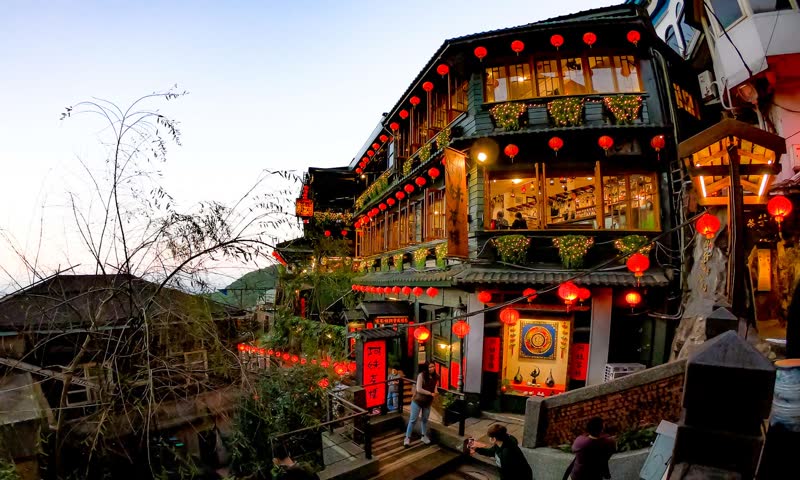
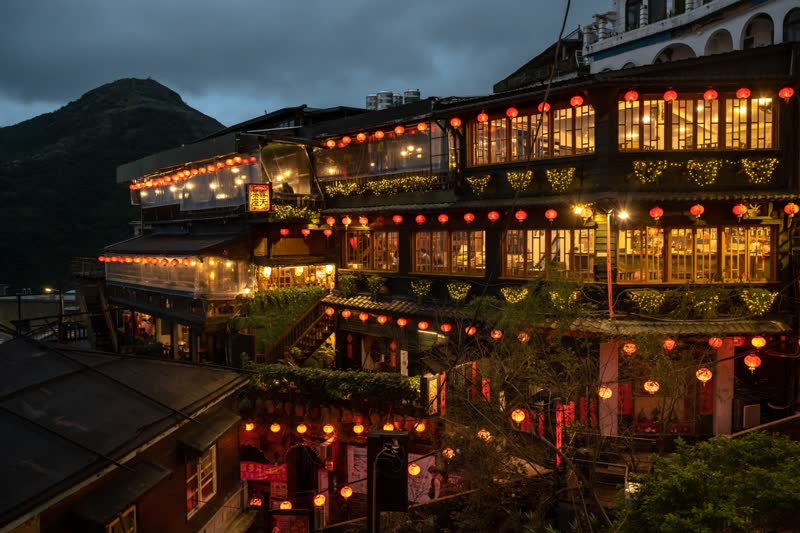
Jiufen is one of those places that hits differently in person. Built into a steep hillside overlooking the Pacific Ocean and the Northeast Coast, it's a former gold mining town that now feels like a living film set. The narrow stone staircases, red paper lanterns strung overhead, traditional wood-fronted shops selling taro balls and fish balls, and the panoramic ocean views combine into something genuinely atmospheric. This is why it's consistently one of Taiwan's most-photographed destinations — and why it's been compared to the bathhouse setting in Studio Ghibli's Spirited Away.
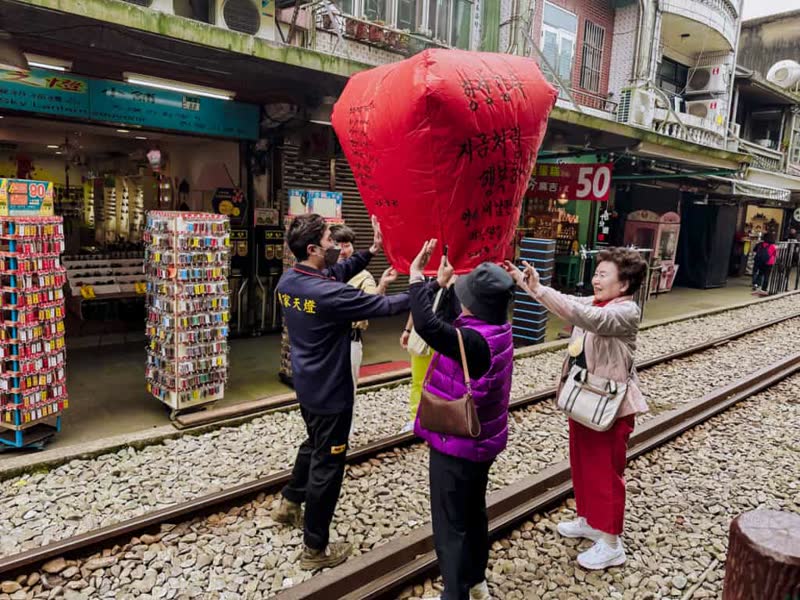
Shifen is a different beast. It's a small railroad town in the Pingxi District where the old street literally runs along active train tracks. The charm is real but more singular: the main draw is releasing a sky lantern from the tracks and watching it drift into the mountains. Outside that moment, the street is short, the shops are tourist-standard, and there isn't much depth. Several Reddit users describe Shifen as "one great photo and then you're done." That's not a criticism — it's just the scale.
The Jinguashi area, a 15-minute walk uphill from Jiufen, adds another layer: an abandoned gold mining complex, the Crown Prince Chalet ruins, and spectacular views across the coast. Most tourists skip it and stick to the Old Street, but experienced Taiwan travelers say it's Jiufen's best-kept secret — less crowded and more historically interesting than the main strip.
Winner takeaway
- Winner: Jiufen
- Why: Jiufen has layers — multiple neighborhoods, altitude changes, food stalls, tea houses, mountain views, and that golden hour lantern light. Shifen is a one-scene moment, beautiful but brief. If you're choosing on atmosphere alone, it's not close.
- Who this matters for: Anyone who wants more than a single Instagram moment and is willing to spend a half-day exploring.
🎐 The Signature Activity
Shifen's signature activity — releasing a sky lantern from the train tracks — is genuinely magical when it works. You write your wishes on the four panels (each color represents a different intention: red for luck, yellow for prosperity, blue for health, white for studies or career), light the fuel, and watch the lantern rise and drift toward the mountains. On a clear evening with no wind, it's one of the most memorable moments in Taiwan travel.
The execution is more chaotic than the photos suggest. Lantern operators occupy every inch of the tracks between trains, and the whole street becomes a crowded dance of lanterns, tourists, and train timing. The operators watch for approaching trains and shout warnings. It's more theme park than ancient ritual — but most visitors don't mind, and the photos are undeniably great. A single lantern costs NT$150–250 (~$5–8 USD); a four-panel writing lantern runs NT$350–500 (~$11–16 USD).
Jiufen's signature activity is more diffuse but arguably more satisfying: it's the experience of getting lost in the Old Street, finding a tea house with a mountain-and-ocean view, ordering taro balls and oolong tea, and watching the lanterns glow as the sun sets over the Pacific. The A-Mei Tea House is the famous one (there's a long wait and it's pricey — NT$200+ per person minimum spend), but several lesser-known tea houses offer the same views with shorter waits and similar atmosphere. Check our guide to Jiufen tea houses for specific picks.
Winner takeaway
- Winner: Tie
- Why: Shifen's lantern launch wins for pure bucket-list satisfaction — it's an activity you can't replicate anywhere else. Jiufen's tea house experience wins for depth and memorability. Which one you prefer depends on whether you want a single magical moment or a sustained atmospheric experience.
- Who this matters for: Matters most for first-time visitors deciding which memory they want to bring home from Taiwan.
🍜 Food & Dining
Jiufen has one of the best street food scenes in the greater Taipei area. The Old Street is lined with vendors selling: taro balls (芋圓) in hot or cold sweet soup — the local specialty, NT$50–80; fish ball soup NT$50–70; scallion pancakes NT$30–50; stinky tofu NT$50–70; pineapple cakes and local sweets NT$30–100; and plenty of tea snacks to pair with a tea house visit. The Queen's Taro Balls stall near the main alley entrance consistently draws lines — budget 20–30 minutes but it moves fast.
Sit-down restaurants along Jiufen's main alley offer seafood set meals, Taiwanese noodle soups, and braised pork rice (lu rou fan) for NT$80–200. The tea houses range from NT$180–300+ per person minimum order, typically including tea and 1–2 snacks. It's not cheap by Taiwanese standards, but still excellent value by global measures.
Shifen's food situation is more limited. The Old Street has snack vendors selling similar Taiwanese street food, but the range and quality are a step below Jiufen. The street is shorter, there are fewer vendors, and the focus is clearly on the lantern experience rather than dining. Budget NT$200–400 for snacks at Shifen; don't plan a proper meal here.
Winner takeaway
- Winner: Jiufen
- Why: Jiufen wins comprehensively on food. The taro ball shops alone are worth the trip. Shifen is fine for a snack but shouldn't anchor your eating plans. If food is important to your Taiwan day trip, spend more time in Jiufen.
- Who this matters for: Anyone planning meals around street food, especially on a Taiwan food tour itinerary.
💰 Cost Comparison
Both Jiufen and Shifen are inexpensive by international standards. Here's a realistic cost breakdown based on 2025/2026 NT$ prices:
| Expense | 🏮 Jiufen | 🎐 Shifen |
|---|---|---|
| Transit from Taipei | NT$101 (Bus 1062) or NT$49 + NT$205 taxi | NT$49 TRA + NT$15–25 Pingxi Line |
| Entry fees | Free (streets are open) | Free street; Shifen Waterfall NT$80 (adults) |
| Sky lantern | N/A | NT$150–500 depending on size |
| Tea house | NT$180–300+ per person minimum | N/A |
| Street food | NT$200–400 for a good wander | NT$100–200 snacks |
| Sit-down meal | NT$100–200/person | NT$80–150/person |
| Total per person (typical) | NT$500–1,200 ($16–40 USD) | NT$350–700 ($11–22 USD) |
The key variable in Jiufen: the tea house. If you visit A-Mei or another scenic tea house (which most visitors do), add NT$180–300+ per person. That's the "Jiufen experience" and it's worth it — but skip it if you're on a tight budget and just walk the alleys instead.
The key variable in Shifen: how many lanterns you release. One lantern at NT$150 is fine for a photo. For the full writing ritual (four-panel lantern with wishes), budget NT$400–500.
Note: NT$1 = approximately $0.031 USD as of 2025/2026. NT$30 ≈ $1 USD for a rough mental conversion.
Winner takeaway
- Winner: Shifen
- Why: Shifen is cheaper overall — lower food costs and no tea house minimum. Jiufen's tea house is where the budget climbs. Both destinations are genuinely affordable by international travel standards; skip the A-Mei Tea House if budget is tight and Jiufen is still excellent value.
- Who this matters for: Budget-conscious travelers or those doing multiple day trips and watching NT$ totals.
🚃 Getting There
Getting to Jiufen and Shifen from Taipei is straightforward but takes planning — they're on different transit routes and can't easily be reached back-to-back without a taxi or significant time investment.
To Jiufen from Taipei
Option 1 (easiest): Bus 1062 from Zhongxiao Fuxing MRT station (Exit 1, near SOGO). Runs approximately every 15–30 minutes. Takes about 1.5 hours, costs NT$101 (pay on board with cash or EasyCard). Drops you right at Jiufen Old Street bus stop.
Option 2: TRA train + taxi/bus — Train from Taipei Main Station to Ruifang (about 50 minutes, NT$49). From Ruifang: taxi to Jiufen ~NT$205 (about 15 minutes), or bus 788/825 (~20 min, NT$15). The taxi is faster and worth it in a group of 2–4.
Option 3: Uber — Several Reddit users recommend Ubers as flexible and affordable, especially useful for getting from Jiufen to Shifen between stops rather than relying on public transit.
To Shifen from Taipei
Take the TRA train from Taipei Main Station to Ruifang (~50 min, NT$49), then transfer to the Pingxi Branch Line toward Jingtong. Shifen is 3 stops from Ruifang (about 20–25 minutes, NT$15 per section). The Pingxi Line itself is scenic and charming — a narrow gauge train winding through a forested gorge.
Important: The Pingxi Branch Line runs infrequently (approximately every 30 minutes). Check the schedule and don't miss the last train back to Ruifang, or you'll need a taxi to get out.
Between Jiufen and Shifen
They're NOT close. Despite being in the same general "Northeast Taiwan day trip" category, Jiufen and Shifen are ~20–25 km apart with no direct transit. From Jiufen to Shifen you either: (1) taxi/Uber (~NT$300–400, ~20 min), or (2) bus back to Ruifang then Pingxi Line to Shifen (~45–60 min total). Taxis are the practical choice between the two.
Winner takeaway
- Winner: Jiufen
- Why: Bus 1062 makes Jiufen the easier reach — one direct bus from central Taipei, no transfers. Shifen's Pingxi Line is charming but requires a transfer and patience with infrequent trains. For first-time visitors not renting a car, Jiufen is logistically simpler.
- Who this matters for: Solo travelers, first-timers, or anyone without a car relying on public transit.
👥 Crowds & Timing
Both destinations get very crowded — this is the single most consistent theme in Reddit discussions about Jiufen and Shifen. But the nature of the crowds differs, and the strategies for dealing with them are different too.
Jiufen: Crowds are concentrated at the main Old Street (Jishan Street) and the famous A-Mei Tea House viewpoint. The alleys above and below the main strip, and the Jinguashi area uphill, can be significantly quieter even during busy periods. Reddit consensus: go on a weekday, arrive before 11am or after 5pm (the latter for the lantern atmosphere), and explore beyond the obvious main street.
Shifen: Shifen doesn't have Jiufen's escape routes. The Old Street is one linear strip, and tour buses dump large groups continuously throughout the day. There's no "quieter part of Shifen" to find — if it's busy, it's busy everywhere. Weekdays are better but not dramatically so, since tour groups run weekdays too.
Golden Rule: Neither destination is worth visiting on a Taiwan public holiday or weekend without very early arrival (before 10am). The main alleys become shoulder-to-shoulder impassable. Weekday visits between 9am–2pm offer the best balance of good light and manageable crowds.
Winner takeaway
- Winner: Jiufen
- Why: Jiufen has more escape routes when the main street fills up. You can lose yourself in side alleys, climb to Jinguashi, or settle into a quiet tea house away from the crowds. Shifen has nowhere to hide. That said, both get touristy — don't expect authentic village life at either.
- Who this matters for: Introverts, photographers who want shots without crowds, and anyone visiting on a weekend who needs a strategy.
🌤️ Best Time to Visit
Both Jiufen and Shifen are in the Northeast Taiwan coastal area, which is one of the rainiest regions in Taiwan. Taipei's rainfall is moderate but Northeast Taiwan gets significantly more precipitation — especially from October through March, when the northeast monsoon brings consistent drizzle and fog.
Counterintuitively, the fog and mist make Jiufen more atmospheric, not less. The hillside village draped in low clouds, with red lanterns glowing through the mist, looks genuinely cinematic. Reddit users report that rainy days at Jiufen can be beautiful — the challenge is the crowds packing into covered indoor areas, not the weather itself. Bring an umbrella and a rain jacket.
For Shifen, rain makes the waterfall more dramatic (more flow) but makes the sky lantern experience harder — wet conditions affect the lanterns' flight, and wind can be unpredictable. Most operators will still let you launch in light rain, but manage expectations.
Month-by-month guide
March–May (spring): Good. Cherry blossoms in nearby areas, warming temps (15–22°C), moderate crowds. Some rain.
June–August (summer): Hot and humid (28–33°C). Typhoon season risk July–September. Crowds are high due to domestic tourism. Weekday mornings only.
September–November (fall): Best season. Temperatures comfortable (20–27°C), less rain than winter, beautiful light. October–November is peak for atmosphere — misty mornings, golden afternoon light.
December–February (winter): Coolest months (10–18°C), frequent drizzle from northeast monsoon. Jiufen's lanterns look magical in fog. Fewer tourists, shorter waits.
Winner takeaway
- Winner: Depends
- Why: October–November is optimal for both destinations. For Jiufen, even rain can enhance the atmosphere. For Shifen, clear skies matter more for the lantern experience. Both destinations are year-round accessible — the northeast monsoon is part of the experience, not a reason to avoid it.
- Who this matters for: Travelers planning Taiwan itineraries around seasons, or worried about weather affecting the experience.
📷 Photography
Both destinations are extraordinarily photogenic, but in completely different ways. Jiufen rewards patience and exploration — the best shots take time to find. Shifen delivers its signature image immediately.
Jiufen's best shots: The narrow alley (Jishan Street) descending toward the sea, flanked by red lanterns — this is the classic. The A-Mei Tea House terrace at sunset. The clifftop panorama looking north toward Keelung and the ocean. The fog-draped hillside at dusk. Jinguashi ruins against the mountainscape. Morning mist over the tile rooftops.
Shifen's best shots: Sky lantern against clear blue sky or twilight — this is the defining image. The Pingxi Line train passing through the Old Street with lanterns in the air (timing required). The Shifen Waterfall from the viewing platform or gorge trail. The Old Street's colorful storefront detail shots.
Pro tip for Jiufen photos: The most-photographed angle (looking down the main alley toward the sea) is also the most crowded. Either arrive before 9am or after sunset for crowd-free shots. For the lantern shots at dusk, position yourself at the upper alley junction about 30 minutes before sunset for backlit lanterns with ocean behind.
Pro tip for Shifen photos: Launch your lantern in the late afternoon for better light. For train + lantern shots, check the schedule and position yourself early — train frequency is low, so you have windows to set up. Wide-angle lens for the full street scene; 50mm or portrait for the lantern close-ups.
Winner takeaway
- Winner: Jiufen
- Why: Jiufen has a deeper catalog of photogenic moments across different times of day. Shifen has one iconic image (the lantern launch) that's hard to beat for drama. If you're traveling for photography broadly, Jiufen gives more to work with; if you want one legendary shot, Shifen delivers it.
- Who this matters for: Photographers, Instagram creators, and anyone building a Taiwan photo essay.
🔀 Why Not Both?
Here's the truth most Reddit users eventually reach: Jiufen and Shifen are both doable in one day if you leave Taipei early and accept that it's a full-day commitment. Many travelers regret not combining both. The key is doing Shifen first (to beat the afternoon tour buses and ensure the waterfall doesn't close) and Jiufen second (to catch the lanterns at dusk).
Suggested combined itineraries
Full day (8–10 hours from Taipei):
8am: Leave Taipei → Train to Ruifang → Pingxi Line to Shifen (arrive 9:30am)
9:30–11am: Sky lantern launch + Shifen Waterfall
11am: Taxi from Shifen to Jiufen (~NT$300, 20 min)
11:30am–3pm: Jiufen Old Street, lunch, wander Jinguashi
3–5pm: Tea house with ocean view
5–6pm: Golden hour on the alleys, sunset
6pm: Bus 1062 back to Taipei (~1.5h)
Half-day only: Choose Jiufen. It's the richer destination, and you can do it properly in 4–5 hours with lunch included. Skip Shifen for a separate day trip or a future visit.
Also consider combining with nearby attractions: Houtong Cat Village (30 min from Ruifang on the Pingxi Line) makes a great add-on for cat lovers. Yehliu Geopark is frequently paired with Shifen on organized tours (different direction from Ruifang, best done by car/taxi). See our 3-day Taipei itinerary for how to sequence these into a broader Taiwan trip.
Winner takeaway
- Winner: Depends
- Why: If you have the time and energy, both in one day is achievable and rewarding. The Shifen-first order consistently works better. If you only have half a day, Jiufen every time — it's the more complete experience.
- Who this matters for: Anyone building a Taipei day trip itinerary who wants to maximize their time in Northeast Taiwan.
🎯 The Decision Framework
Choose Jiufen If…
- You want atmosphere over a single activity
- Food and street eats are important to you
- You're a photographer looking for multiple shots
- You want to linger in a tea house with a view
- You prefer simpler transit (one direct bus)
- You have only half a day for one destination
- You want to explore Jinguashi and the gold mine ruins
- It's your first time visiting Northeast Taiwan
- You're traveling with people who have limited mobility (note: lots of stairs)
Choose Shifen If…
- The sky lantern launch is on your bucket list
- You're adding it as a 2-hour stop alongside Jiufen
- You want to see Shifen Waterfall specifically
- You enjoy riding the scenic Pingxi Branch Line
- Budget is tight and you want to minimize costs
- You've already been to Jiufen on a previous trip
- You're visiting with kids who'd love the lantern experience
- You're combining with Pingxi or Houtong Cat Village
❓ Frequently Asked Questions
Is Jiufen or Shifen better for a day trip from Taipei?
Jiufen is the better day trip for most visitors. It offers a richer, more layered experience — the atmospheric Old Street, hillside tea houses with ocean views, winding lantern-lit alleys, and plenty of food stalls. Shifen is worth adding if you specifically want to release a sky lantern, but on its own it's smaller and more one-dimensional. If you have one day, prioritize Jiufen and treat Shifen as a bonus stop.
How far apart are Jiufen and Shifen?
They're not as close as people assume — about 20–25 km apart but the transit route is indirect. From Taipei, you take a TRA train to Ruifang (1 hour), then a bus or taxi to Jiufen (15–20 min, ~NT$205 by taxi). For Shifen, you take the Pingxi Branch Line from Ruifang (~30 min, NT$15 per stop). Combining both in one day by public transit takes 5–6 hours of actual travel time, which Reddit users consistently call exhausting.
How much does it cost to release a sky lantern in Shifen?
Sky lanterns in Shifen cost NT$150–250 (about $5–8 USD) for a single lantern, or NT$350–500 for a larger four-panel lantern where you can write wishes on each side. The price includes a marker for writing. You launch it from the train tracks at the main street when no trains are coming — operators watch for approaching trains.
Is Jiufen really like Spirited Away?
The A-Mei Tea House is often cited as the visual inspiration for Spirited Away's bathhouse, though Studio Ghibli has neither confirmed nor denied this. Jiufen's red lantern-lit alleys at dusk genuinely look magical and cinematic. That said, Reddit travelers warn it can feel more like a tourist trap than a Studio Ghibli film during peak hours — go in the evening or on a weekday for the atmospheric experience.
When is the best time to visit Jiufen?
Weekday mornings or early afternoons are best. Jiufen on weekends — especially holidays and Golden Week — gets overwhelmingly crowded. The alleys are narrow and the main street can become shoulder-to-shoulder impassable. Arriving before 11am gives you 2–3 hours before tour groups descend. The evening (after 4pm) when the red lanterns light up is beautiful but also the busiest time. Late October through November offers good weather and dramatic fog.
Can you do both Jiufen and Shifen in one day?
Yes, but it's a full day and you should start early. The most efficient route: train from Taipei to Ruifang → Pingxi Line to Shifen (arrive ~9am, spend 1.5–2h) → taxi from Shifen to Jiufen (~20 min, ~NT$300) → spend 3–4 hours in Jiufen → bus back to Taipei. Shifen first means you avoid the worst afternoon crowds. Several Reddit users report this order worked well; doing Jiufen first and Shifen second often means rushing.
Is the Shifen Waterfall worth visiting?
The Shifen Waterfall is Taiwan's widest waterfall — about 40 meters wide — and genuinely impressive. It's often called Taiwan's mini Niagara. The 15-minute walk from the old street is easy. However, Reddit users note it closes at 5pm (entry until 4:30pm) and the viewing area fills up with tour groups. If you're already in Shifen for the lanterns, add the waterfall. If you're coming only for the waterfall, manage expectations.
How do I get from Taipei to Jiufen by public transit?
Two options: (1) Bus 1062 from Zhongxiao Fuxing MRT station direct to Jiufen Old Street — takes about 1.5 hours, costs NT$101. (2) TRA train from Taipei Main Station to Ruifang (~50 min, NT$49), then taxi to Jiufen (~NT$205) or bus 788/825. The direct bus is easiest. For Shifen, take the TRA to Ruifang then the Pingxi Branch Line (NT$15–25 per section, 20–30 min total).
Ready to Plan Your Taiwan Day Trip?
Whether you choose Jiufen's atmospheric alleys or Shifen's sky lanterns — or both — tabiji.ai has the resources to plan it perfectly.
🎟️ Book Tours & Experiences
Hand-picked tours and activities for both destinations — book with free cancellation
Experiences via Viator — free cancellation on most tours