How we built this comparison
This page combines traveler discussion patterns, published price ranges, flight schedules, and seasonal data to help you decide between Kansai and Kanto.
- Reviewed 500+ Reddit threads from r/JapanTravel, r/travel, r/solotravel, and local city subreddits for authentic traveler sentiment and advice.
- Verified costs for flights, accommodation, and attractions against current booking platforms (Booking.com, Expedia, JR official sites) for 2024-2025 travel dates.
- Cross-referenced seasonal patterns, weather data, and major event calendars to provide optimal travel timing recommendations.
⚡ The TL;DR Verdict
For first-timers craving classic Japan, culture, and a slightly more relaxed pace, Kansai (Osaka, Kyoto, Nara) is your winner, budget-friendly at ~$80-120/day. If you thrive on cutting-edge trends, boundless energy, and global variety, Kanto (Tokyo, Hakone, Nikko) calls your name, typically at ~$100-160/day. Both offer incredible experiences, but their vibes are distinct.
- Choose Kansai: You're a history buff, a food lover on a budget, prefer a more traditional Japanese experience, and enjoy a slightly slower, friendlier pace. You want to see temples, castles, and try amazing street food without breaking the bank.
- Choose Kanto: You crave the hyper-modern, bustling city life, world-class shopping, diverse dining, and futuristic entertainment. You're ready for fast-paced Tokyo and its vibrant surrounding day trips.
- Choose Both: If you have 10-14 days or more, absolutely combine them! Start in one, take the Shinkansen (2.5-3 hours, ~¥14,000 / $95-100 one-way) to the other, and experience the full spectrum of Japan. A 7-day JR Pass can be cost-effective if you plan multiple long-distance trips.
Quick Comparison
| Category | Kansai | Kanto | Winner |
|---|---|---|---|
| Culture & History | Ancient capitals, iconic temples, and deep traditions. Kyoto, Nara, Himeji offer unparalleled historical immersion. | Modern imperial history, museums, and a contemporary take on tradition. Tokyo has some historical sites but is more about current culture. | Kansai |
| Food Scene | Osaka is the 'nation's kitchen' (kuidaore) known for street food, casual dining, and delicious regional specialties like takoyaki and okonomiyaki. | Tokyo offers an unparalleled diversity of dining, from Michelin-starred fine dining to trendy cafes, international cuisine, and every regional Japanese specialty imaginable. | Kanto |
| Nightlife | Osaka offers a gritty, lively, and very friendly nightlife, particularly in areas like Namba and Umeda, with a focus on izakayas and casual bars. | Tokyo boasts an incredibly diverse nightlife, from neon-lit clubs in Shibuya and Shinjuku to sophisticated cocktail bars in Ginza, themed izakayas, and underground music venues. | Kanto |
| Costs & Budget | Generally more budget-friendly across accommodation, food, and local transport, making it ideal for cost-conscious travelers. | Can be significantly more expensive, especially in Tokyo, for accommodation and higher-end dining, though budget options are plentiful. | Kansai |
| Getting Around | Excellent public transport, easy to navigate, with major cities (Osaka, Kyoto, Nara) closely connected by efficient train lines. | Massive, complex, but highly efficient network of subways and JR lines. Can be overwhelming initially but gets you everywhere. | Kansai |
| Day Trips & Nature | Offers a blend of historical sites (Nara, Himeji) and natural beauty (Arashiyama, Mount Yoshino). | Features iconic natural landscapes (Mount Fuji, Hakone) and historical retreats (Nikko), easily accessible from Tokyo. | Kanto |
| Shopping | Osaka's shopping is more focused on local brands, unique souvenirs, and vibrant markets like Kuromon Ichiba. | Tokyo is a global shopping mecca, offering everything from high-fashion luxury in Ginza to quirky Shibuya streetwear, electronics in Akihabara, and niche boutiques. | Kanto |
| Vibe & Friendliness | Known for its warm, outgoing, and humorous locals, especially in Osaka, with a more relaxed and approachable atmosphere. | More reserved and polite, bustling and efficient, but can feel more anonymous in its vastness. Still very welcoming. | Kansai |
| Accommodation | Offers a wide range from traditional ryokans in Kyoto to modern hotels in Osaka, often at slightly better prices. | Vast selection of hotels, hostels, and unique stays, but often higher prices, especially in central Tokyo. | Kansai |
| Family Friendliness | Home to Universal Studios Japan, Nara's deer park, and accessible historical sites with interactive elements. | Offers Disneyland/DisneySea, diverse museums, and parks, but can be overwhelming with crowds. | Kansai |
⛩️ Culture & History
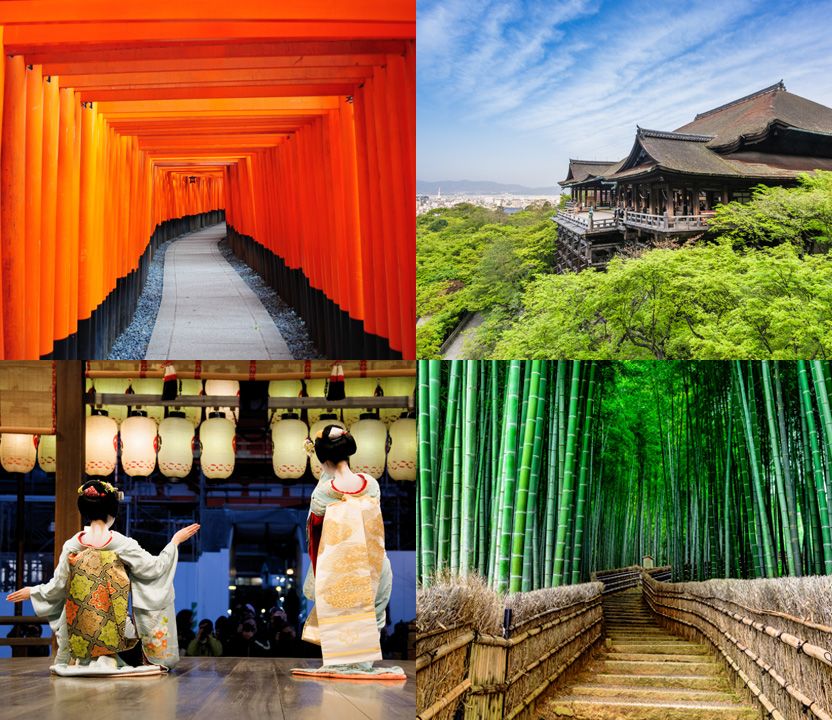
Kansai is the undisputed heavyweight for traditional Japanese culture and history. Kyoto alone boasts 17 UNESCO World Heritage Sites, from the dazzling Kinkaku-ji (Golden Pavilion) to the serene Fushimi Inari-taisha with its thousands of vermilion torii gates. Nara offers ancient temples and its famous deer park, while Himeji Castle is Japan's most spectacular feudal castle. You're constantly surrounded by centuries of heritage. Kanto, particularly Tokyo, offers the Imperial Palace, Meiji Jingu Shrine, and numerous excellent museums (Tokyo National Museum, Edo-Tokyo Museum), but it feels more like history preserved within a modern metropolis rather than the defining characteristic of the region. If you dream of geisha spotting in Gion or wandering through bamboo groves, Kansai delivers that classic, postcard-perfect Japan. "Kyoto just hit different, man. Every corner felt like a movie scene, especially early mornings at Kiyomizu-dera before the crowds." A traditional ryokan stay in Kyoto can run ¥20,000-50,000 ($135-340) per night, offering a truly immersive cultural experience.
Winner takeaway
- Winner: Kansai
- Why: Kansai's concentration of ancient capitals and UNESCO sites offers a richer, more tangible historical experience.
- Who this matters for: History buffs, culture seekers, first-time visitors wanting the 'classic Japan' experience.
🍜 Food Scene
While Osaka's Dotonbori is legendary for its vibrant street food and 'eat 'til you drop' philosophy, with takoyaki (octopus balls) carts and okonomiyaki (savory pancakes) shops on every corner for ¥500-1000 ($3.50-7), Tokyo simply has more breadth and depth. Tokyo holds more Michelin stars than any other city globally, from exquisite sushi at Sukiyabashi Jiro (reservations months in advance, ¥40,000+ / $270+) to trendy ramen bars in Shibuya or elegant kaiseki in Ginza. You can find anything from a ¥700 ($5) bowl of ramen to world-class fusion. Kansai excels in specific comfort foods and offers excellent value, but Tokyo's culinary landscape is a global powerhouse. "Honestly, Osaka's street food was amazing, but Tokyo just had *everything*. I ate a different type of cuisine every night for two weeks and barely scratched the surface." Tokyo's food scene caters to every budget and palate, making it a stronger overall winner for sheer variety and quality.
Winner takeaway
- Winner: Kanto
- Why: Tokyo's sheer diversity, global culinary influence, and concentration of Michelin-starred restaurants give it the edge.
- Who this matters for: Foodies, those seeking diverse dining experiences, budget-conscious travelers and luxury diners alike.
🍻 Nightlife
Osaka's nightlife is incredibly fun and often more approachable. Areas like Dotonbori and Namba light up with endless izakayas, karaoke boxes, and bars where locals are often eager to chat. You can grab a drink for ¥500-800 ($3.50-5.50) easily. It's a more down-to-earth, 'party with the locals' kind of vibe. However, Tokyo's nightlife is simply unparalleled in its scale and variety. Shinjuku's Golden Gai offers tiny, quirky bars, while Kabukicho pulses with neon and entertainment. Shibuya is famous for its massive clubs like Womb and Sound Museum Vision (entry ¥2000-4000 / $13-27). From sophisticated jazz clubs to themed robot restaurants (Robot Restaurant, ~¥8,500 / $58), Tokyo offers an experience for every taste. "Osaka's bars felt more welcoming, but Tokyo's nightlife just kept going and going. There was always something new to discover, even at 3 AM." The sheer breadth of options, from high-end to dive bar, makes Kanto the winner.
Winner takeaway
- Winner: Kanto
- Why: Tokyo's immense scale and incredible diversity of nightlife options cater to every preference, from high-energy clubs to intimate bars.
- Who this matters for: Party-goers, diverse nightlife explorers, those looking for cutting-edge entertainment.
💰 Costs & Budget
When it comes to stretching your yen, Kansai generally comes out on top. Accommodation in Osaka, for instance, often runs 15-20% cheaper than comparable options in Tokyo. A decent business hotel in Osaka might be ¥8,000-12,000 ($55-80) while in Tokyo, it's easily ¥10,000-18,000 ($68-120). Food, especially casual dining and street food, is famously affordable in Osaka, with filling meals available for ¥1,000-2,000 ($7-14). While Tokyo also has budget options (conbini meals, cheap ramen), the temptation for pricier, trendier experiences is much higher. Local transport costs are similar per ride (~¥200-300 / $1.30-2), but Tokyo's sprawling nature might mean more transfers. "I definitely noticed my money went further in Osaka. Hotel was cheaper, and I could eat amazing street food all day without thinking about it." For a daily budget, Kansai can be managed comfortably on ~$80-120/day, whereas Tokyo tends to push towards ~$100-160/day for a similar experience.
Winner takeaway
- Winner: Kansai
- Why: Kansai offers consistently lower prices for accommodation, food, and overall daily expenses.
- Who this matters for: Budget travelers, backpackers, anyone wanting to maximize their travel duration without overspending.
🚇 Getting Around
Both regions boast world-class public transport, but Kansai edges out Kanto for ease of navigation, especially for first-timers. The Kansai region's major cities—Osaka, Kyoto, Nara, Kobe, Himeji—are incredibly well-connected by private railways (like Hankyu, Keihan, Kintetsu) and JR lines, often taking 30-60 minutes between hubs. A regional pass like the Kansai Thru Pass (¥5,200 for 2 days / $35) or Kansai Area Pass (¥2,800 for 1 day / $19) simplifies travel without requiring a full JR Pass. Tokyo's network, while incredibly efficient, is vast and can be daunting with its multiple companies (JR, Tokyo Metro, Toei Subway) and numerous lines crisscrossing each other. Transfers can be complex, and distances within the city are greater. "Honestly, getting around Kyoto and Osaka felt way less stressful than figuring out the Tokyo subway. Everything was just a bit more compact." While Tokyo's system is a marvel of engineering, Kansai's is more intuitive for a multi-city regional exploration.
Winner takeaway
- Winner: Kansai
- Why: Kansai's transport network is slightly less overwhelming and more integrated for regional multi-city exploration.
- Who this matters for: First-time visitors, those who prefer simpler navigation, travelers exploring multiple cities within a region.
🏞️ Day Trips & Nature
While Kansai offers fantastic day trips like the deer park of Nara, the majestic Himeji Castle, and the scenic Arashiyama Bamboo Grove in Kyoto, Kanto takes the crown for its iconic and diverse natural escapes. From Tokyo, you can easily reach Hakone (~1.5 hours by Romancecar, ~¥2,400 / $16.50 one-way) for stunning views of Mount Fuji (weather permitting), relaxing on Lake Ashi, and traditional onsen experiences. Nikko (~2 hours by Tobu Line, ~¥1,600 / $11 one-way) offers incredible UNESCO World Heritage shrines nestled in nature. You can even do a day trip to see Mount Fuji up close from Kawaguchiko. Kansai's nature is beautiful, particularly the cherry blossoms of Mount Yoshino or the coastal views of Amanohashidate, but they require more dedicated travel. "Seeing Fuji-san from Hakone was a bucket list moment. You just can't beat that classic view, and it's so easy from Tokyo." Kanto's proximity to such globally recognized natural landmarks and diverse experiences like onsen towns makes it the winner.
Winner takeaway
- Winner: Kanto
- Why: Kanto offers more iconic, diverse, and easily accessible natural day trips, including the legendary Mount Fuji.
- Who this matters for: Nature lovers, photographers, those seeking classic Japanese scenic beauty and relaxation.
🛍️ Shopping
Osaka's shopping is fantastic for specific tastes: Dotonbori for quirky souvenirs, Namba for electronics (Nipponbashi 'Den-Den Town'), and Umeda for major department stores. Shinsaibashi-suji is a huge covered shopping arcade with a mix of Japanese brands and international chains. You'll find unique fashion and local crafts. However, Tokyo is in a league of its own. Ginza offers high-end luxury brands like Chanel and Louis Vuitton alongside department store giants like Mitsukoshi and Ginza Six. Shibuya is the epicenter of youth fashion and trendy streetwear, while Harajuku offers avant-garde and kawaii styles. Akihabara is the mecca for anime, manga, and electronics. From vintage clothes to cutting-edge technology, Tokyo has it all, often in district-specific concentrations that make exploration easy. "If you want to shop for literally anything, Tokyo is the place. I found stuff in Harajuku I couldn't even imagine existed back home." The sheer scale, variety, and trendsetting nature of Tokyo's shopping scene make it the clear winner.
Winner takeaway
- Winner: Kanto
- Why: Tokyo offers unparalleled diversity, scale, and trendsetting influence across all shopping categories, from luxury to niche.
- Who this matters for: Fashionistas, tech enthusiasts, souvenir hunters, anyone looking for extensive retail therapy.
😊 Vibe & Friendliness
This is where Kansai truly shines for many travelers. Especially in Osaka, locals are famously more outgoing, humorous, and direct. It's common for shopkeepers or restaurant staff to strike up a friendly conversation, and the atmosphere feels generally more relaxed and less formal than in Tokyo. Kyoto maintains a refined elegance, but even there, interactions often feel a bit warmer. Tokyo, while incredibly safe and polite, can feel more impersonal due to its sheer size and the fast-paced nature of city life. People are helpful, but less likely to initiate casual banter. "Osaka people are just genuinely funny and welcoming. I felt like I made more connections there, even just grabbing food." If you're a solo traveler or someone who appreciates genuine, casual interactions and a slightly less intense pace, Kansai's friendly vibe is incredibly appealing. A night out in an Osaka izakaya often leads to lively discussions with locals, something that might be rarer in Tokyo's more insular bar scene.
Winner takeaway
- Winner: Kansai
- Why: Kansai, particularly Osaka, is renowned for its warmer, more outgoing locals and generally more relaxed, approachable atmosphere.
- Who this matters for: Solo travelers, those who value local interactions, travelers seeking a relaxed and welcoming atmosphere.
🏨 Accommodation
While both regions offer excellent accommodation, Kansai typically provides better value and more unique traditional options at reasonable prices. In Kyoto, you can find beautiful ryokans or machiya (traditional townhouses) for ¥15,000-30,000 ($100-200) per night, offering an authentic cultural experience. Osaka has a plethora of modern business hotels and hostels, often 10-20% cheaper than comparable options in Tokyo. For example, a comfortable 3-star hotel in Osaka might be ¥9,000 ($60) while a similar one in Tokyo would easily be ¥12,000 ($80). Tokyo's accommodation market is huge, with everything from luxury five-star hotels (e.g., Park Hyatt, Mandarin Oriental) to trendy capsule hotels and budget hostels. However, the demand and location premium mean higher prices across the board. "I got a really nice, spacious hotel in Osaka for what I'd pay for a tiny shoebox in Shinjuku." While Tokyo has more options in sheer volume, Kansai offers better bang for your buck, especially if you're keen on experiencing traditional Japanese lodging without breaking the bank.
Winner takeaway
- Winner: Kansai
- Why: Kansai offers slightly better value for money and a higher concentration of authentic traditional Japanese lodging options.
- Who this matters for: Budget-conscious travelers, those seeking traditional Japanese accommodation like ryokans, travelers looking for more space for their money.
👨👩👧👦 Family Friendliness
For families, Kansai often provides a slightly less intense and more varied experience that appeals to different ages. Universal Studios Japan in Osaka, with its Super Nintendo World and Wizarding World of Harry Potter, is a huge draw for kids (tickets ~¥8,600 / $58 for adults, less for kids). Nara's friendly deer are a unique, interactive experience. Many of Kyoto's temples and gardens are spacious and offer room for kids to explore without feeling overly cramped. The general pace is a bit slower, which can be a relief for families. Kanto, of course, has Tokyo Disneyland and DisneySea (tickets ~¥7,900 / $54 for adults), which are world-class, but the crowds can be immense and overwhelming. Tokyo's museums are great, but the city's sheer scale and intensity might be tiring for younger children. "USJ was a blast with the kids, and Nara was such a unique experience they still talk about. Felt easier to navigate than Tokyo with strollers." Kansai's balance of major attractions, interactive experiences, and a slightly more relaxed atmosphere makes it a strong contender for families.
Winner takeaway
- Winner: Kansai
- Why: Kansai offers a great balance of world-class theme parks (USJ), unique animal interactions (Nara), and accessible cultural sites, often with a less overwhelming atmosphere for families.
- Who this matters for: Families with children of all ages, those seeking a balance of entertainment and cultural experiences.
❓ Frequently Asked Questions
Is a Japan Rail Pass worth it for Kansai vs Kanto?
A 7-day JR Pass (approx. ¥33,610 / $228) is generally only worth it if you're traveling between Tokyo and Kansai regions (e.g., Tokyo to Kyoto/Osaka return) AND planning additional long-distance JR trips. For just exploring within Kansai or Kanto separately, local passes (like Osaka Amazing Pass, Tokyo Subway Ticket) are more cost-effective. Calculate your specific train routes to be sure.
What's the best time to visit each region?
Both regions are beautiful in spring (March-April) for cherry blossoms and autumn (October-November) for vibrant foliage. Summer (July-August) can be hot and humid, while winter (December-February) is cold but less crowded. Spring and autumn are peak seasons, so book well in advance.
Which has better nightlife?
Tokyo wins for sheer diversity and scale, with options ranging from high-energy clubs in Shibuya to unique themed bars in Shinjuku's Golden Gai. Osaka's nightlife in Dotonbori/Namba is more casual, friendly, and lively, focusing on izakayas and street-level entertainment. It depends on your preference for wild variety vs. approachable fun.
Which is better for a first-time visitor?
For a 'classic Japan' experience focused on history, culture, and iconic sights, Kansai (Kyoto and Nara) is often recommended for first-timers. However, if you're drawn to modern city life, efficiency, and pop culture, Tokyo in Kanto is also an incredible first-time destination. It truly comes down to your personal travel style.
Can I do both regions in one trip? How long?
Absolutely! Most travelers combine them. You'll need at least 10-14 days to do both justice without feeling rushed. A common itinerary is 4-5 days in Tokyo, then 5-7 days split between Kyoto, Osaka, and Nara, traveling between them by Shinkansen (approx. 2.5-3 hours).
Are there direct international flights to Kansai/Kanto?
Yes, both regions have major international airports. Kanto is served by Narita (NRT) and Haneda (HND) airports near Tokyo, with HND being closer to the city. Kansai is served by Kansai International Airport (KIX) near Osaka, making direct entry to either region very convenient from most major global hubs.
Which region is cheaper?
Kansai is generally more budget-friendly across the board. Accommodation, casual dining, and even some attractions tend to be slightly cheaper than their equivalents in Tokyo. While you can travel cheaply in Tokyo, the opportunities for spending more are higher and harder to resist.
Is English widely spoken in both regions?
In major tourist areas, train stations, and international hotels in both regions, you'll find English speakers and English signage. However, venturing into local restaurants or smaller shops, especially in Kansai, might require some basic Japanese phrases or translation apps. Tokyo, as a global hub, generally has a slightly higher prevalence of English speakers.
Ready to plan your unforgettable Japan trip?
Get a free custom itinerary for Kansai, Kanto, or both — built from real traveler insights, tailored just for you.
🎟️ Book Tours & Experiences
Hand-picked tours and activities for both destinations — book with free cancellation
Experiences via Viator — free cancellation on most tours