How we built this comparison
This page combines traveler discussion patterns, published price ranges, flight schedules, and seasonal data to help you decide between Kruger and Serengeti.
- Reviewed 100+ Reddit threads from r/travel, r/solotravel, r/southafrica, and r/tanzania for firsthand experiences and tips.
- Verified costs and logistics against current booking platforms (e.g., SANParks, local tour operators, major airlines) and recent travel blogs.
- Cross-referenced seasonal patterns, weather data, and wildlife migration charts from reputable safari planning resources to ensure accuracy.
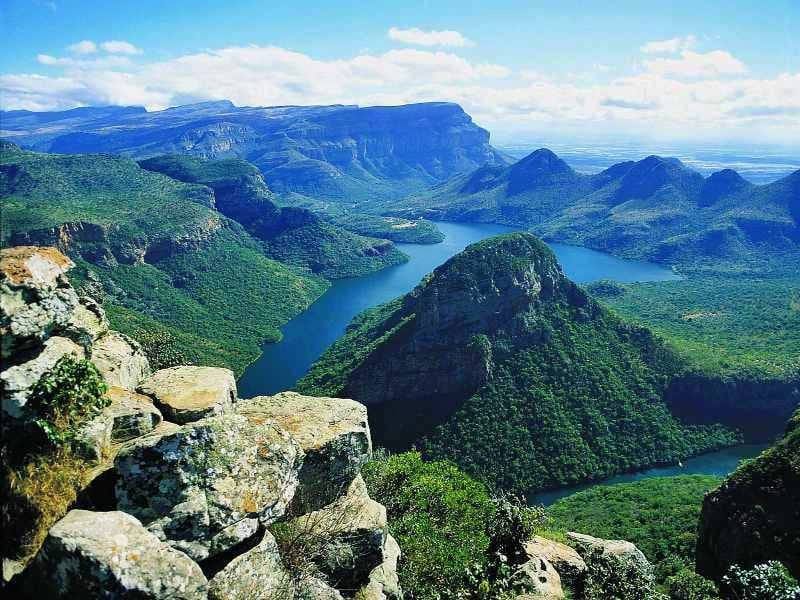
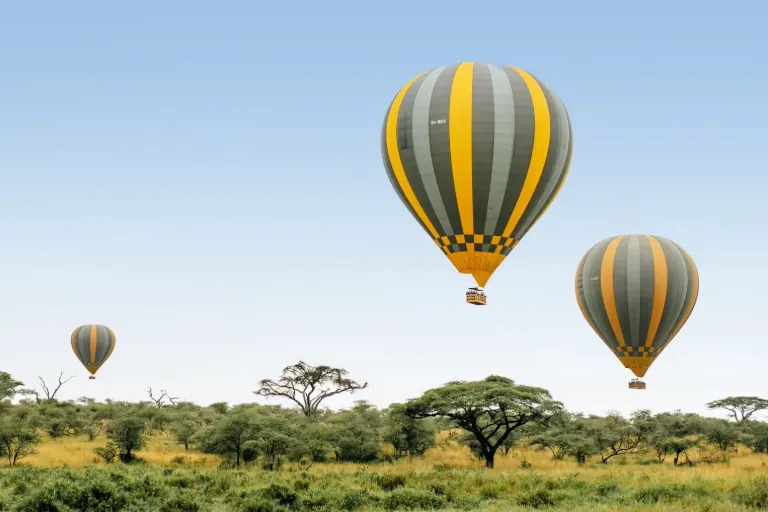
⚡ The TL;DR Verdict
If your budget is tighter and you love flexibility or self-driving, Kruger is your champion, offering incredible wildlife and value, often for $300-$600 USD/day. But for the iconic Great Migration, vast open plains, and a truly classic 'Out of Africa' vibe, Serengeti is unbeatable, though expect to spend $700-$1500 USD/day on average.
- Choose Kruger: Go for Kruger if you want a more budget-friendly safari (especially self-drive), easy access from a major international hub, diverse accommodation options from basic to ultra-luxury, and excellent year-round Big 5 viewing.
- Choose Serengeti: Choose Serengeti for the ultimate Great Migration experience, vast untouched landscapes, a highly curated safari experience, and arguably the highest concentration of predators and prey during peak seasons.
- Choose Both: Consider both if you have 3+ weeks, a generous budget, and want to experience the best of Southern and East African safaris, combining Kruger's dense bush with Serengeti's open plains. Fly JNB to DAR/JRO for an epic multi-country adventure.
Quick Comparison
| Category | Kruger | Serengeti | Winner |
|---|---|---|---|
| Costs & Value | Significantly more affordable, especially with self-drive options; excellent value for money. | Generally more expensive due to mandatory guided safaris and internal flights; premium experience. | Kruger |
| Getting There & Logistics | Easy access from Johannesburg (JNB) via direct flights or a reasonable drive. | Requires international flight to Kilimanjaro (JRO) or Dar es Salaam (DAR), followed by domestic flights/long drives to Arusha and then the park. | Kruger |
| Getting Around & Flexibility | Self-drive is a popular, cost-effective option, offering unmatched flexibility; guided tours also available. | Almost exclusively guided safaris in closed vehicles; very little flexibility in daily schedules once booked. | Kruger |
| Wildlife & Nature | High density of Big 5, diverse ecosystems (bushveld, riverine), excellent year-round viewing. | Home to the Great Migration, vast open plains, incredible predator action, particularly good for big cat sightings. | Serengeti |
| Accommodation | Wide range from affordable public rest camps to ultra-luxury private lodges with excellent service. | Primarily mid-range to luxury tented camps and lodges; fewer budget options and less self-catering. | Kruger |
| Safety & Health | Generally safe within the park; external areas of South Africa require vigilance. Malaria risk. | Very safe within safari areas; general travel in Tanzania is considered safer than much of South Africa. Malaria risk. | Serengeti |
| Seasons & Best Time to Visit | Dry season (May-September) is prime for wildlife viewing; good year-round due to dense wildlife. | Dry season (June-October) for migration river crossings; wet season (Jan-March) for calving and birdlife. | Tie |
| Family Friendliness | Excellent for families with options for self-drive, diverse camps, and flexible schedules. | Great for older children; long game drives and fixed schedules can be challenging for toddlers. | Kruger |
| Food & Dining | Mix of self-catering, casual restaurants in rest camps, and gourmet dining in private lodges. | Mostly all-inclusive dining at camps, often with a focus on international cuisine and some local dishes. | Kruger |
| Overall Safari Vibe | More accessible, 'bush-feel' with a mix of self-discovery and guided luxury. Feels more 'real' to some. | Iconic, grand, 'Out of Africa' feel with vast, wild landscapes and a curated, expert-led experience. | Serengeti |
💰 Costs & Value
Kruger takes the crown for affordability. A self-drive safari can run you as little as R1,500 - R3,000 (approx. $80 - $160 USD) per person per day for park fees, basic rest camp accommodation like Skukuza or Lower Sabie, car rental, and food. Mid-range guided safaris might be R6,000 - R10,000 ($320 - $530 USD) including transfers and lodge stays. Private reserves like Sabi Sands will push that to R15,000 - R30,000+ ($800 - $1600+ USD) per night, but still often cheaper than Serengeti's equivalent luxury. Serengeti, on the other hand, typically starts at $500 - $700 USD per person per day for budget camping safaris (often 3-day group tours) and easily climbs to $1,000 - $2,500+ USD per day for mid-range to luxury tented camps like Namiri Plains or Four Seasons Safari Lodge. Park fees alone are around $70 USD per person per day, plus vehicle fees. The main reason for the higher cost is the necessity of guided tours and often internal flights from Arusha, making DIY virtually impossible. As one Redditor put it, "Kruger self-drive felt like a steal for the wildlife we saw. Serengeti was mind-blowing, but my wallet definitely felt that one for months."
Winner takeaway
- Winner: Kruger
- Why: Kruger offers unparalleled value and flexibility for a world-class safari experience, catering to all budgets, particularly with self-drive.
- Who this matters for: Budget-conscious travelers, families, and those who prefer independent travel.
✈️ Getting There & Logistics
Getting to Kruger is a breeze compared to the Serengeti. You fly into O.R. Tambo International Airport (JNB) in Johannesburg, a major global hub. From JNB, you can either take a connecting flight (e.g., SA Airlink, CemAir) to one of Kruger's regional airports like Skukuza (SZK) or Kruger Mpumalanga International (MQP), which takes about an hour and costs R1,500 - R3,000 ($80 - $160 USD), or rent a car and drive 4-6 hours directly to the park gates. The roads are generally excellent. For the Serengeti, you'll likely fly into Kilimanjaro International Airport (JRO) via connections in Doha, Amsterdam, or Istanbul. From JRO, it's a 1-hour drive to Arusha, the safari capital. From Arusha, you'll take a small bush plane (e.g., Coastal Aviation, Regional Air) to one of the Serengeti's airstrips (e.g., Seronera, Kogatende), which costs $200 - $350 USD per person, each way, and takes 1-2 hours. Alternatively, you can endure a very long (6-8 hour) and bumpy drive from Arusha to the park, which many budget tours do. This adds significant travel time and cost to the overall trip. "Getting to Kruger felt like a weekend trip from Jo'burg; getting to Serengeti felt like a whole expedition," shared a traveler on r/travel.
Winner takeaway
- Winner: Kruger
- Why: Kruger boasts superior accessibility with direct flight options to major international airports and easy self-drive routes, reducing travel time and complexity.
- Who this matters for: Travelers with limited time, those sensitive to long travel days, and independent adventurers.
🚗 Getting Around & Flexibility
Kruger's greatest strength for many lies in its flexibility. You can rent a regular sedan (or SUV for peace of mind) and drive yourself through the main Kruger National Park, sticking to paved and well-maintained gravel roads. This allows you to set your own pace, spend as long as you like at a sighting, stop for coffee whenever, and follow your own instincts. Park gates open at sunrise and close at sunset, and you can easily navigate between rest camps. Game drives with guides are also widely available, especially in the private concessions like Timbavati or Sabi Sands, where off-roading is permitted. In the Serengeti, a private safari vehicle and driver-guide are almost mandatory. You'll be picked up at the airstrip, and your guide will handle all driving within the park. While this means you benefit from their immense knowledge and tracking skills, it also means your daily schedule is largely set by your tour operator. Off-roading is generally not allowed in the main national park, keeping vehicles on designated tracks. This structure, while providing an expert-led experience, offers very little individual flexibility. "I loved being able to just pull over in Kruger, grab my binoculars, and just sit for an hour. In Serengeti, it's all about the guide, which is great, but different," a solo traveler remarked.
Winner takeaway
- Winner: Kruger
- Why: Kruger's self-drive option offers unparalleled freedom and control over your safari experience, a rare luxury in major African parks.
- Who this matters for: Independent travelers, photographers, families with young children, and those who dislike rigid schedules.
🦁 Wildlife & Nature
Both parks are wildlife powerhouses, but the Serengeti edges out Kruger for the sheer scale of its natural spectacle. Kruger boasts an incredibly high density of the Big 5 (lion, leopard, elephant, rhino, buffalo) and offers fantastic year-round viewing, especially in the dry winter months when vegetation thins and animals congregate at water sources. Its diverse habitats mean you might spot anything from a pack of wild dogs to a rare pangolin. Areas like Sabi Sands are world-renowned for leopard sightings. However, the Serengeti's claim to fame is the Great Migration, where millions of wildebeest, zebras, and gazelles traverse the plains in an epic annual journey. Witnessing river crossings (Mara River, Grumeti River) is an unforgettable, albeit seasonal, experience. The vast open plains also make for dramatic predator-prey interactions and fantastic big cat sightings. While Kruger's individual sightings can be intense, the sheer volume and continuous movement of wildlife across the Serengeti's endless horizons are hard to beat. "Nothing, and I mean nothing, prepares you for the sight of a million wildebeest stretching to the horizon in the Serengeti. It's just... biblical," described a Redditor after their trip.
Winner takeaway
- Winner: Serengeti
- Why: The Serengeti's Great Migration offers a unique, colossal wildlife spectacle unmatched globally, complemented by vast landscapes and abundant predators.
- Who this matters for: Wildlife photographers, first-time safari-goers seeking iconic scenes, and those prioritizing large herds and predator action.
🏡 Accommodation
Kruger offers a far more diverse range of accommodation, catering to every budget and style. Within the main national park, you have SANParks' rest camps like Skukuza, Lower Sabie, and Satara. These offer self-catering bungalows, rondavels, and camping sites at very reasonable prices (R500 - R2,000 / $25 - $100 USD per night for a basic unit), often with shops, restaurants, and fuel stations. Then there are the private reserves bordering Kruger, such as Sabi Sands, Timbavati, and Thornybush, which host some of Africa's most luxurious and exclusive lodges (e.g., Singita, Lion Sands) where rates can easily exceed R20,000 - R50,000 ($1,000 - $2,500 USD) per person per night, including all meals, drinks, and game drives. This variety means you can tailor your stay precisely. The Serengeti, while offering incredible experiences, has a more limited range, primarily focusing on tented camps and permanent lodges. Options range from basic mobile camps ($300-$500 USD/night) to luxurious tented camps like Asilia Africa's Olakira Camp or Four Seasons Safari Lodge Serengeti ($1,000 - $2,500+ USD/night). While these camps are exceptional, they rarely offer the self-catering or budget-friendly options found in Kruger. "Kruger's rest camps felt like actual little towns, and being able to braai our own food was such a vibe. Serengeti camps are beautiful, but definitely a different feel," shared a family traveler.
Winner takeaway
- Winner: Kruger
- Why: Kruger's extensive range of accommodation, from budget-friendly self-catering to ultra-luxury private lodges, offers unmatched choice and flexibility.
- Who this matters for: Families, budget travelers, those seeking different levels of luxury, and campers.
🚨 Safety & Health
When considering overall travel safety, the Serengeti (and Tanzania in general) often feels like a marginally safer bet, particularly when comparing the broader travel context outside the parks. Within both Kruger and Serengeti National Parks, safety is paramount, with strict rules about interacting with wildlife and secure accommodations. For Kruger, while the park itself is very safe, travelers often need to navigate South Africa's general crime issues, particularly in major cities like Johannesburg, which requires extra vigilance before and after your safari. Self-driving adds a layer of responsibility in terms of road safety and security, though most routes to Kruger are well-traveled. Both areas are malaria zones, requiring prophylaxis. In Tanzania, while petty crime exists in cities like Arusha, the general perception of safety for tourists is often higher than in South Africa. The guided nature of Serengeti safaris means you are almost always with a local expert, minimizing personal risk. "After hearing so many stories about Jo'burg, arriving in Arusha felt surprisingly chill. On safari, both felt equally safe, but the overall vibe in Tanzania was less tense for us," noted a couple on r/solotravel.
Winner takeaway
- Winner: Serengeti
- Why: The guided nature of Serengeti safaris and generally lower crime rates in Tanzania (outside major cities) contribute to a slightly higher perceived level of overall safety for tourists.
- Who this matters for: Solo travelers, first-time international travelers to Africa, and those prioritizing a worry-free experience outside the park gates.
☀️ Seasons & Best Time to Visit
Both destinations offer incredible experiences year-round, but specific seasons highlight different aspects. Kruger's dry winter season (May to September) is arguably the best time for wildlife viewing. The vegetation is sparse, and animals congregate around dwindling water sources, making them easier to spot. The weather is cool and pleasant. However, Kruger's high animal density means excellent sightings can be had in the wetter summer months (October to April) as well, with lush scenery, newborn animals, and fantastic birdlife. The Serengeti's 'best time' is more intrinsically linked to the Great Migration. The dry season (June to October) is prime for witnessing the dramatic river crossings in the Western Corridor (June/July) and Northern Serengeti (August/September/October), a bucket-list experience. The short dry season (January-March) in the Southern Serengeti is fantastic for the wildebeest calving season, offering incredible predator action. The 'green season' (November-May) can also be rewarding for birdwatching and lush landscapes, though wildlife is more dispersed. "Kruger in winter was perfect, saw so much! But then Serengeti's migration in August was just next level. Really depends what you want to see," a seasoned safari-goer commented.
Winner takeaway
- Winner: Tie
- Why: Both destinations offer unique and spectacular experiences across different seasons, making a 'best time' highly dependent on individual preferences and specific wildlife goals.
- Who this matters for: Travelers with specific wildlife interests (e.g., migration, calving), birdwatchers, and those who prefer certain weather conditions.
👨👩👧👦 Family Friendliness
Kruger is exceptionally family-friendly, particularly for families with younger children. The self-drive option allows parents to control the pace, stopping for bathroom breaks, snacks, or nap times whenever needed. The SANParks rest camps often have family bungalows, playgrounds, and swimming pools, making them comfortable for kids. Many private lodges also cater specifically to families, offering kids' programs, shorter game drives, or specialized activities. The accessibility from Johannesburg means less arduous travel for little ones. The Serengeti, while offering an incredible experience for older children (typically 6+), can be more challenging for toddlers. The long, often bumpy game drives can be tiresome, and the fixed schedules of guided safaris offer less flexibility. Many luxury tented camps have minimum age restrictions (often 6 or 8 years old), and childcare facilities are not as common. The internal flights on small planes can also be daunting for some children. "Kruger was a godsend with our two young kids. We could stop for a snack, let them nap in the car, and weren't tied to a guide's schedule. Serengeti would have been tougher," recounted a parent on r/africatravel.
Winner takeaway
- Winner: Kruger
- Why: Kruger's flexibility with self-drive, diverse family-oriented accommodations, and easier accessibility make it ideal for families with children of all ages.
- Who this matters for: Families with young children, those who prefer to set their own pace, and multi-generational groups.
🍽️ Food & Dining
Kruger offers a more varied dining experience, largely thanks to the self-catering options. In the SANParks rest camps, you can rent bungalows with kitchens and braai (BBQ) facilities, allowing you to bring your own groceries or buy them at the camp's well-stocked shop. This is not only budget-friendly but also a fantastic way to experience local cuisine (like boerewors and biltong) with your own flair. The camps also have casual restaurants like Cattle Baron in Skukuza, offering a range of South African and international dishes. In the private lodges, expect gourmet, multi-course meals prepared by top chefs, often paired with fine South African wines, providing a luxurious culinary journey. The Serengeti experience is almost entirely all-inclusive within your camp. Meals are prepared by camp chefs and typically feature a mix of international cuisine (often a Western-style breakfast, buffet lunch, and a three-course dinner) with some local Tanzanian influences (e.g., ugali, nyama choma). While the food quality in most camps is excellent, it tends to be less varied across different camps compared to Kruger's mix of DIY, casual, and high-end dining. "Loved cooking our own braai in Kruger under the stars. Serengeti food was good, but it was nice to have options in SA," shared a traveler who did both.
Winner takeaway
- Winner: Kruger
- Why: Kruger provides a broader and more flexible dining experience, from self-catering and casual options to gourmet lodge dining, catering to diverse preferences and budgets.
- Who this matters for: Foodies, budget travelers, those who enjoy cooking their own meals, and travelers seeking culinary diversity.
✨ Overall Safari Vibe
Kruger offers a wonderfully authentic and accessible 'bush' experience. If you self-drive, there's a real sense of adventure and discovery as you navigate the park, spotting animals on your own terms. It feels a bit more rugged, a bit more 'do-it-yourself' at the public camps, creating a unique connection to the wilderness. The private reserves, conversely, offer an ultra-luxurious and intimate experience. The blend of accessibility and luxury is one of its hallmarks. However, the Serengeti captures that quintessential, iconic 'Out of Africa' safari vibe like few other places on Earth. The sheer scale of the open plains, the vastness of the wildlife, and the drama of the Great Migration create an almost spiritual, humbling experience. It’s a place of grand horizons and endless skies, where the feeling of wildness is palpable. The guided nature ensures you're always learning, always immersed in the story of the savanna. While Kruger offers incredible wildlife, the Serengeti delivers a truly epic, almost cinematic safari experience that many travelers dream of. "Kruger was amazing, but Serengeti just felt... bigger. Like you were stepping into a documentary. It's the Africa you see in movies," commented a traveler after experiencing both.
Winner takeaway
- Winner: Serengeti
- Why: The Serengeti embodies the quintessential, grand 'Out of Africa' safari dream, with its vast landscapes and unparalleled wildlife spectacle.
- Who this matters for: First-time safari-goers seeking the iconic African experience, those prioritizing grandeur and scale, and travelers wanting a fully immersive, curated adventure.
❓ Frequently Asked Questions
Which park is better for seeing the Big 5?
Both parks offer excellent chances to see the Big 5 (lion, leopard, elephant, rhino, buffalo). Kruger, especially its private reserves like Sabi Sands, is famous for consistently high leopard sightings. The Serengeti boasts incredible numbers of lions and elephants, but rhino sightings can be rarer due to poaching, though concentrated in specific areas like Ngorongoro Crater.
Do I need a 4x4 for self-driving in Kruger?
No, a regular sedan is perfectly fine for navigating the main paved and well-maintained gravel roads in Kruger National Park. A 4x4 or SUV can offer better ground clearance and comfort, especially on lesser-used gravel tracks, but isn't strictly necessary. Always check road conditions, especially during the rainy season.
Is it safe to go on safari alone?
Yes, both destinations are generally safe for solo travelers within the safari areas. In Kruger, many solo travelers enjoy the self-drive option or join guided tours. In the Serengeti, you'll always be with a guide, making it a very secure experience. The main concerns are general travel safety in cities before/after your safari, where vigilance is key.
How long should I spend in each park?
For Kruger, 3-5 days is a good minimum to cover a decent area and have multiple game drives. For the Serengeti, 4-6 days is recommended to fully appreciate its vastness and follow the migration, often combined with a visit to Ngorongoro Crater. Less than 3 days can feel rushed in either.
What's the best way to combine Kruger and Serengeti?
Combining both requires about 2-3 weeks and a healthy budget. The most efficient way is to fly from Johannesburg (JNB) to either Kilimanjaro (JRO) or Dar es Salaam (DAR) for your Serengeti leg. You'll typically do Kruger first, then fly north. Be sure to factor in visa requirements for both South Africa and Tanzania.
Are there ethical safari operators for both parks?
Absolutely. Look for operators who emphasize conservation, community involvement, and responsible tourism practices. For Kruger, SANParks adheres to strict conservation guidelines. In Tanzania, many local operators are committed to sustainability. Research reviews, check their affiliations (e.g., ATTA, TATO), and ask about their animal welfare and environmental policies.
What's the impact of malaria in these regions?
Both Kruger and Serengeti are located in malaria risk areas, especially during the rainy season. It's highly recommended to consult your doctor or a travel clinic well in advance of your trip about antimalarial prophylaxis. Additionally, take precautions like wearing long sleeves and trousers at dawn/dusk and using insect repellent with DEET.
Can I see the Great Migration in Kruger?
No, the Great Migration is unique to the Serengeti-Mara ecosystem in Tanzania and Kenya. Kruger has its own incredible wildlife spectacles, including large herds of buffalo and elephants, but not the millions-strong wildebeest and zebra migration found in East Africa.
Ready to plan your unforgettable safari?
Get a free custom itinerary for Kruger, Serengeti, or both — built from real traveler insights and expert advice.
🎟️ Book Tours & Experiences
Hand-picked tours and activities for both destinations — book with free cancellation
Experiences via Viator — free cancellation on most tours