📋 Our Methodology
This comparison is built from real sources, not AI guesswork:
- 50+ Reddit threads from r/travel, r/solotravel, r/lisboa, r/barcelona, r/expats synthesized
- Cost data from Numbeo (March 2026), cross-checked with recent Reddit trip reports
- Weather from Open-Meteo historical averages
- Transit costs from Carris/Metro Lisboa and TMB Barcelona official sources
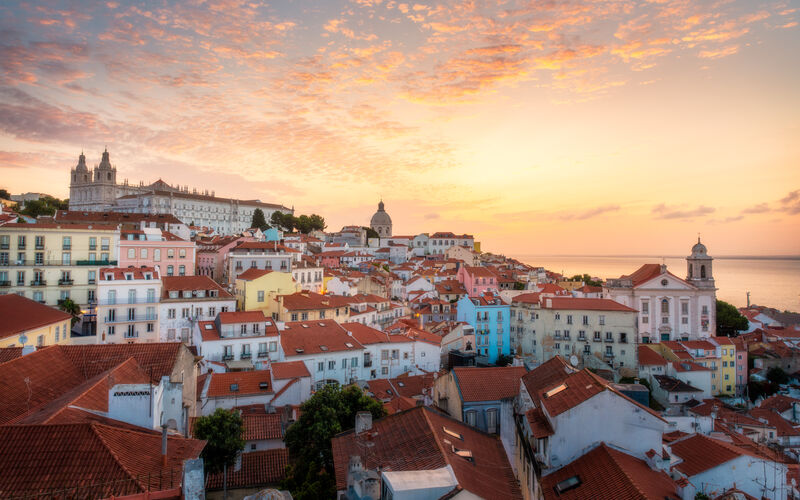
Lisbon — Alfama District
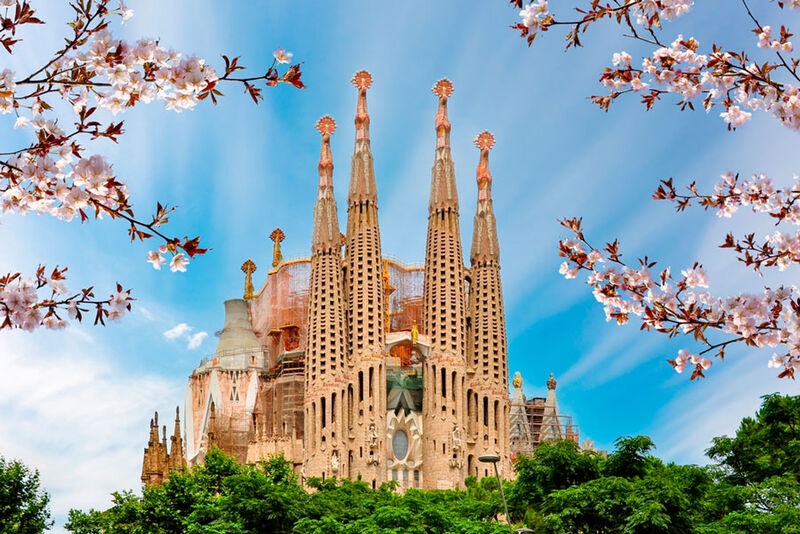
Barcelona — Sagrada Família
⚡ The TL;DR Verdict
Lisbon wins for budget travelers, solo adventurers, and anyone wanting a city that still feels authentic. Barcelona wins for architecture obsessives, beach lovers, and those who want Europe's most electrifying nightlife.
- Go to Lisbon if you want Alfama's hilltop charm, Sintra day trips, the world's best pastel de nata, and 30% cheaper everything across the board.
- Go to Barcelona if Gaudí's Sagrada Família is on your bucket list — there is literally nowhere else like it on Earth — plus beach access and legendary clubs.
- Go to both — they're only 2 hours apart by plane and one of Europe's best multi-city combinations, with Porto making it a perfect 10–12 day itinerary.
- Reddit is split about 60/40 in Lisbon's favor, mostly on price and safety — but Barcelona partisans are fierce about Gaudí and nightlife.
🟡 Choose Lisbon if...
You want a charming, affordable European capital with world-class day trips to Sintra and Cascais, authentic fado bars, and a safer, slower pace that rewards a week-long stay.
🔴 Choose Barcelona if...
You want Gaudí's unparalleled architecture, beach access in the city, Europe's best club scene, and a dense, cosmopolitan metropolis with endless things to do.
Quick Comparison
| Category | 🟡 Lisbon | 🔴 Barcelona | Winner |
|---|---|---|---|
| Daily Budget (mid-range) | €80–100/day | €120–150/day | Lisbon |
| Hostel Dorm (per night) | €20–30 | €30–45 | Lisbon |
| Architecture | Azulejos, Belém Tower, Jerónimos | Gaudí (Sagrada Família, Park Güell) | |
| Food Scene | Bacalhau, pastel de nata, seafood | Tapas, pintxos, Boqueria market | Tie |
| Beach Access | 30–40 min to Cascais beaches | Barceloneta beach in city | |
| Day Trips | Sintra, Cascais, Setúbal | Montserrat, Sitges, Penedès | Lisbon |
| Safety (tourist crime) | Low petty theft, safer overall | Moderate–high pickpocket risk | Lisbon |
| Nightlife | Bairro Alto, LX Factory, fado bars | Razzmatazz, Pacha, til 6am clubs | |
| English friendliness | High — most locals speak English | Moderate — Catalan first, Spanish second | Lisbon |
| Population / Scale | 550k (city), 2.9M metro | 1.6M (city), 5.5M metro | |
| Transit (metro pass) | €1.65/trip or day pass €6.85 | T-Casual 10 trips €11.35 (~€1.14/trip) | Tie |
| Instagram factor | Viewpoints, trams, azulejos tiles | Sagrada Família, Park Güell, Gothic Quarter | Tie |
🏙️ City Character & Vibe
Lisbon is a city of hills, trams, and tiles — intimate, slightly worn at the edges, and impossibly charming. With a population of just 550,000 in the city proper, it feels human-scaled in a way that few major European capitals do. The pace is slow, the locals are warm, and the miradouros (viewpoints) scattered across seven hills offer some of the most romantic city panoramas in Europe. There's a melancholy beauty to it — the concept of saudade (a longing nostalgia) runs deep in Portuguese culture, and you feel it in the fado music drifting from Alfama's bars at night.
Barcelona is a different animal entirely. It's big, confident, and relentlessly energetic. The city straddles a coastline between two mountains, packs 1.6 million people into a dense grid, and has the ambition to match. It's cosmopolitan in a way Lisbon isn't — more international tourism, higher prices, and a slightly more transactional feel. But the energy is addictive. Barcelona doesn't ask for your attention; it demands it.
"Lisbon definitely has a charm that Barcelona doesn't. I loved Barcelona but it definitely felt like a big city. Lisbon was a little (lot) more laid back but still with amazing things to do, see, and eat. Barcelona is fast paced and exciting, but somewhere I'd prefer visiting vs living. I would live in Lisbon in a heartbeat." — r/travel
"Lisbon is nice, but Barcelona hands down. One of my favorite cities in the world. Charming as hell and Gaudi was a visionary architectural genius that everyone needs to experience in real life." — r/travel
🍽️ Food & Dining
Lisbon's food scene punches well above its weight. The pastel de nata (custard tart) at Pastéis de Belém is €1.40 and worth every cent — the queue moves fast. Bacalhau (salt cod) appears in 365+ recipes across Portuguese cuisine; the bacalhau com natas (baked with cream) at a tasca (local tavern) runs €12–16. Grilled sardines in June (Santo António festival) cost €8–12 for a full plate. Petiscos (Portuguese tapas) — amêijoas à Bulhão Pato (clams in garlic), chouriço flambéed tableside, fresh cheese with honey — are the way to eat in Lisbon. A solid lunch menu (soup + main + wine) at a tasca runs €10–13.
Barcelona's food scene is more expensive but equally impressive. La Boqueria market on La Rambla is tourist-priced and worth skipping for actual meals; instead, head to Mercat de Santa Caterina in El Born for local shopping. Pa amb tomàquet (bread rubbed with tomato and olive oil) is the Catalan snack foundation. The tapas scene around Carrer del Parlament in Sant Antoni is outstanding — €4–7 per tapa. Barcelona has more Michelin stars than Lisbon; it's the better city for high-end dining, with restaurants like Disfrutar (world's #2, 2023) pushing molecular gastronomy.
"The little fado bars in Lisbon are amazing. Pastel de nata is incredible, and lots of fresh seafood. Lisbon does have a slight edge in that it's a bit cheaper than Barcelona." — r/solotravel
🏛️ Architecture & Culture
This category has a clear winner, and it's Barcelona — but Lisbon is no slouch. Lisbon's architectural soul comes from two sources: Manueline Gothic (the ornate maritime-influenced style on full display at the Jerónimos Monastery and Belém Tower) and azulejos, the hand-painted blue-and-white ceramic tiles that cover entire building facades. The National Tile Museum is genuinely world-class. The Alfama district, with its Moorish layout and São Jorge Castle, adds another layer. UNESCO protection covers large portions of central Lisbon.
But Barcelona's Eixample district contains what might be the most audacious single building project in architectural history: Antoni Gaudí's Sagrada Família. Construction began in 1882 and is finally nearing completion — the towers are expected to be finished by 2026, the centenary of Gaudí's death. Book tickets well in advance (€26–36 depending on extras). Add Casa Batlló (€35, worth every euro for the dragon roof alone), Park Güell (€10 for the monumental zone), and the organic forms of Casa Milà / La Pedrera (€25), and you have a one-architect architectural pilgrimage unlike anything else on Earth.
"Barcelona — Gaudí was a visionary architectural genius that everyone needs to experience in real life. It's one of my favorite and one of the funnest cities in the world." — r/travel
💰 Cost Comparison
Lisbon is one of Western Europe's last genuinely affordable capital cities. According to Numbeo (March 2026), consumer prices in Lisbon are approximately 28% lower than Barcelona. Here's what that means in practice:
Lisbon daily costs: Hostel dorm bed €20–30 | Budget hotel €70–90 | Mid-range lunch €10–15 | Dinner €15–25 | Beer at a bar €2–3 | Metro ticket €1.65 | Coffee €1.20
Barcelona daily costs: Hostel dorm bed €30–45 | Budget hotel €100–130 | Budget lunch €13–18 | Dinner €20–35 | Beer at a bar €4–6 | Metro trip ~€1.14 (T-Casual pass €11.35/10 trips) | Coffee €2–3
The gap widens with accommodation — Barcelona's hotel prices have surged 30%+ since 2022 due to overtourism policy debates and reduced Airbnb supply. A comfortable mid-range hotel in Lisbon that costs €100–120/night runs €160–200 in Barcelona for equivalent quality.
"Lisbon is smaller and cheaper than Barcelona. I could get lunch — and good lunch — for a few euro. Barcelona is fast-paced and exciting, but somewhere I'd prefer visiting vs living." — r/travel
🚇 Getting Around
Lisbon's transport is charming but slightly quirky. The metro has 4 lines and covers the main tourist areas reasonably well, with single tickets at €1.65 (add €0.50 for the reusable Viva Viagem card). But the city's famous trams are an experience in themselves — Tram 28, which climbs through Alfama and Mouraria, is €3 to ride and genuinely delightful (though packed with tourists by 10am). For hills, there are also the ascensores (funicular lifts). An Uber or Bolt in Lisbon costs €5–8 for most city-center trips. Walking is very doable across the Bairro Alto/Chiado/Alfama triangle, though the hills test your legs.
Barcelona's transit is more comprehensive. The TMB metro runs 8 lines with extensive coverage, and the T-Casual 10-trip pass costs €11.35 — works across metro, bus, and some tram lines. The city is also flat (except for Montjuïc), making it excellent for cycling. City bikes (Bicing) are €5/day for visitors. Barcelona's Aerobús from the airport costs €6.75, versus Lisbon's Aerobus at €4 (or €3.10 metro to Oriente station).
"Barcelona is a pretty bikeable city. I used RideMovi — they have electric assisted bikes and it was really nice. The metro is great too." — r/travel
🏘️ Where to Stay: Neighborhoods
Lisbon's best neighborhoods: Bairro Alto for nightlife and central location. Chiado for upscale dining and shopping, with great transport links. Alfama for atmosphere and the authentic Moorish maze experience — book early, it fills up. Mouraria (below Alfama) is increasingly hip with immigrant-influenced restaurants. LX Factory area / Alcântara for a cooler, creative-class scene. Avoid Intendente for budget accommodation — improving but still rough at night.
Barcelona's best neighborhoods: El Born / Sant Pere — best balance of walkability, charm, and access to Gothic Quarter + Barceloneta. Eixample (Esquerra) — residential, local-feeling, great restaurants. Gràcia — bohemian, village-within-a-city feel, excellent for longer stays. Barceloneta — beach access but loud and touristy. Avoid the Gothic Quarter's most tourist-dense blocks for accommodation — the value-for-money is poor and noise is extreme.
"I love the Bairro Alto district at night. You can take day trips to the beach and Sintra too if you get bored of Lisbon after the first few days." — r/solotravel
"Gràcia is really nice, has a few really awesome plazas (Virreina is my favorite), super walkable. You can also get to Park Güell pretty easy from there." — r/travel
🎉 Nightlife & Entertainment
Barcelona has one of Europe's top club scenes, full stop. The key characteristic: nothing starts until midnight, and clubs run until 6am on weekends. The major venues — Razzmatazz (5 rooms, different genres), Pacha Barcelona, Sala Apolo, and City Hall — book globally recognized DJs regularly. Entry runs €15–25 with drink included. The streets of El Born and Poble Sec offer excellent bar-hopping for those who prefer a lower-key night. Barceloneta beach hosts outdoor parties in summer.
Lisbon's nightlife is smaller but has genuine soul. Bairro Alto is bar-hopping central — you buy drinks at bars and spill onto the street, Jenga-style, until 2–3am. LX Factory on Sunday evenings is a highlight: an industrial complex transformed into a market-and-night-out hybrid. The fado bars of Alfama are something Barcelona simply cannot replicate — sitting in a tiny candlelit bar while a fadista performs live is one of Europe's great experiences. For clubs: Lux Frágil (on the river, Lisbon's main serious club), Musicbox, and Music Box Lisboa are the options.
"Barcelona's club scene is amazing but Lisbon's bar scene is much more unique. People in Portugal are super cool." — r/solotravel
🌤️ Best Time to Visit
Both cities peak in May–June and September–October for weather and crowd balance. Here's the breakdown:
Lisbon: Summer (July–Aug) is warm but manageable — 27–29°C, lower humidity than Barcelona. The Atlantic influence keeps it from getting oppressively hot. June is the best month: the Santo António festival sees sardine grills on every street corner in Alfama. Winter (Dec–Feb) is mild by European standards (12–16°C) and essentially tourist-free. Rain is mostly in Nov–Jan. March and April bring blooming jacaranda trees and near-perfect conditions.
Barcelona: Peak summer (July–Aug) is 30–35°C, very crowded, and expensive. Prices spike 40–60% in August. The shoulder seasons (May, Sep–Oct) are genuinely beautiful — warm enough for beach and outdoor dining, with manageable crowds. Semana Santa (Easter week) and the La Mercè festival (late September) are highlights. Winter is mild (12–15°C, rarely below 10°C) but Barcelona feels flat without the beach crowd energy.
🗺️ Day Trips
This is where Lisbon genuinely surprises people. Sintra (40 min by train, €2.35 each way from Rossio station) is one of Europe's most magical UNESCO towns — forested hills dotted with 19th-century Romantic palaces including the candy-colored Palácio da Pena. Budget a full day minimum. Cascais (40 min by train, €2.35) is a beach town with excellent restaurants, a harbor, and multiple sandy beaches. Setúbal gives you the Arrábida natural park with turquoise water. Óbidos is a perfectly preserved medieval walled town, 1 hour by bus.
Barcelona's day trips are solid but less varied. Montserrat (1 hour by train + rack railway, ~€18 total) is a dramatic rocky mountain monastery — genuinely impressive, but one visit covers it. Sitges (40 min by train, €4.20) is a charming beach town with good LGBTQ+ nightlife. Tarragona (1 hour, €7) has Roman ruins. The Penedès wine country (45 min, €5) for cava tastings. Costa Brava towns like Girona (1h30 by train) offer the most impressive scenery.
"Lisbon 100%. You don't just have Lisbon — within 20 minutes you have Sintra and Cascais, 2 other places worth an entire trip on their own. I've been to 45 countries and I've never seen a place with 3 AMAZING locations, all 3 totally different, all within 20 mins of each other." — r/travel
🛡️ Safety
Both cities are safe by global standards — neither has significant violent crime rates for tourists. The difference is in petty theft, and it's significant. Barcelona has had a well-documented pickpocket problem for years. La Rambla is notorious — Reddit threads document phone grabs, bag slashings, and team-based distraction scams with depressing regularity. The metro (especially L2 and L3) requires vigilance. The Gothic Quarter at night has scam issues. This is not a reason to skip Barcelona, but it requires active awareness: anti-theft bags, nothing in back pockets, phone kept in front pocket or bag.
Lisbon has petty theft too — Alfama's narrow streets and tram 28 are prime spots, and the Intendente neighborhood has drug-related activity at night. But the frequency and scale are lower. Reddit travelers consistently report feeling safer in Lisbon than Barcelona. The Portuguese police (PSP) have a tourist-assistance unit (PSP Turismo) in Lisbon that's actually helpful.
"Personally I'd vote for Lisbon. Barcelona's street crime has become a bit annoying. Portuguese are also friendlier to foreigners and more likely to speak English." — r/travel
🔀 The Decision Framework
After synthesizing dozens of Reddit threads and real traveler accounts, here's exactly who each city is right for:
🟡 Choose Lisbon if...
- Budget is a key consideration — Lisbon is 30% cheaper across the board
- You want one of Europe's best day trips: Sintra (UNESCO palaces, 40 min away)
- Authentic neighborhood vibes and slower pace matter more than tourist polish
- You want fado, petiscos, and pastel de nata in their natural habitat
- Safety and pickpocket risk are concerns
- You want great hostels and a strong solo-traveler social scene
- You're visiting in winter (best off-season city in Western Europe)
🔴 Choose Barcelona if...
- Architecture is your primary reason for travel (Gaudí is unmissable)
- Beach access from the city center is important
- You want Europe's best club and nightlife scene
- A larger, cosmopolitan city energy appeals to you
- You're a foodie chasing Michelin stars
- You want a city where you could spend 2 weeks without running out of things to do
- You prefer flat terrain for walking and cycling
❓ Frequently Asked Questions
Is Lisbon or Barcelona cheaper to visit?
Lisbon is significantly cheaper — expect to spend around €80–100/day on a mid-range budget, versus €120–150/day in Barcelona. Meals in Lisbon average €10–15 for a sit-down lunch, while Barcelona runs €15–20. Accommodation is also 25–35% cheaper in Lisbon, and the city rewards budget travelers more broadly.
Which city is safer for tourists, Lisbon or Barcelona?
Lisbon is consistently rated safer. Barcelona has a well-documented pickpocket problem — La Rambla and the metro are notorious. Lisbon has petty theft too (especially in Alfama), but at far lower rates. Reddit travelers consistently report feeling more secure in Lisbon. Both are safe by global standards; Barcelona just requires more active vigilance.
Which city has better food, Lisbon or Barcelona?
Both are world-class but in different directions. Lisbon owns the seafood game — bacalhau (salt cod in 365+ recipes), grilled sardines, and the pastel de nata at €1.40. Barcelona delivers Spain's most exciting tapas scene and has more Michelin-starred restaurants. Budget eaters: Lisbon wins. Foodies with deeper pockets: Barcelona edges it on diversity and fine dining.
How far is Sintra from Lisbon, and is it worth a day trip?
Sintra is 40 minutes by train from Rossio station for €2.35 each way. Absolutely worth a full day — the Palácio Nacional da Pena alone is a UNESCO World Heritage Site set on a forested mountain. Add the Moorish Castle and Quinta da Regaleira for a proper day trip. Reddit travelers unanimously call it a highlight of any Portugal visit.
What is the best time of year to visit Lisbon vs Barcelona?
Both cities peak in May–June and September–October. Barcelona's July–August hits 30–35°C with massive crowds and inflated prices. Lisbon's Atlantic coast keeps summers slightly cooler. Lisbon in winter (Dec–Feb) is particularly underrated — mild, nearly tourist-free, and significantly cheaper.
Is Barcelona worth visiting just for Gaudí architecture?
Yes, without question. The Sagrada Família alone is one of the most extraordinary buildings on earth. Add Casa Batlló (€35), Park Güell (€10 for the monumental zone), and Casa Milà. No other city has a single architect's mark so visually dominant. Even architecture skeptics leave speechless, per Reddit consensus.
Can I do both Lisbon and Barcelona in one trip?
Yes — they're 2 hours apart by flight (from €30–50 on TAP or Vueling). A 10–12 day trip could cover 4 days in Lisbon + Sintra, 2 nights in Porto, then 4 days in Barcelona. This is one of Europe's most popular multi-city itineraries and highly recommended if budget allows.
Which city has better nightlife, Lisbon or Barcelona?
Barcelona wins on club culture — Razzmatazz and Pacha run until 6am with world-class DJs. Lisbon wins on character and soul — fado bars in Alfama, Bairro Alto bar-hopping, and LX Factory on Sundays are genuinely unique experiences. What you prefer determines everything here.
Ready to plan your Southern European adventure?
Get a free custom itinerary for Lisbon, Barcelona, or both — built from real traveler insights, not generic templates.
🎟️ Book Tours & Experiences
Hand-picked tours and activities for both destinations — book with free cancellation
Experiences via Viator — free cancellation on most tours