📋 Our Methodology
This comparison is built from real sources, not AI guesswork:
- 10+ Reddit threads from r/travel, r/backpacking, r/Shoestring, r/digitalnomad, r/PortugalExpats synthesized
- Cost data from Numbeo (March 2026), cross-checked with recent Reddit trip reports
- Weather from Open-Meteo historical averages
- Transit costs from CP Rail (Portugal) and Andante/Carris official sources
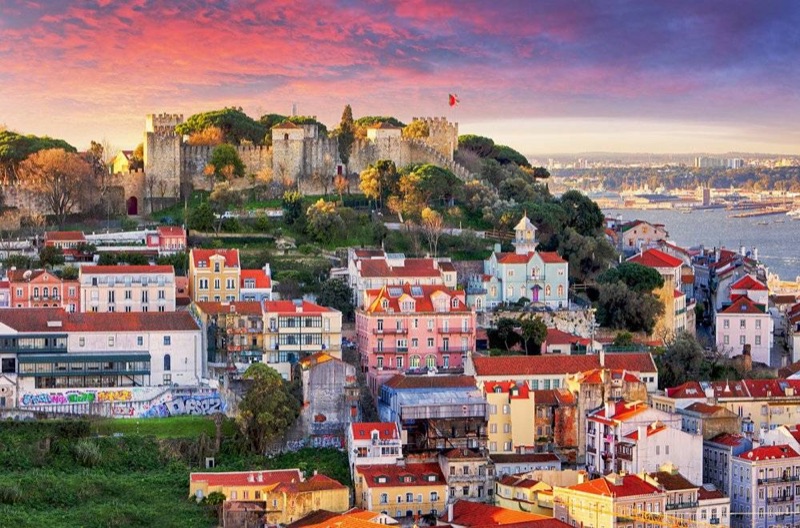
Lisbon — Alfama & São Jorge Castle
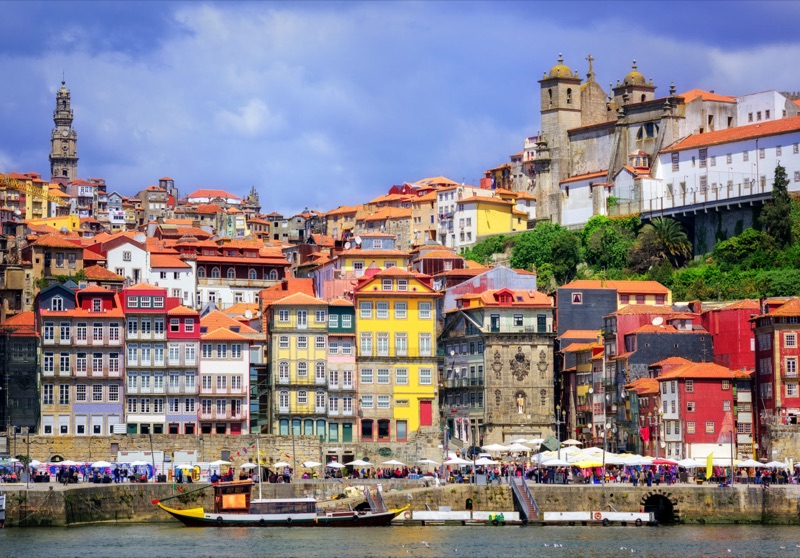
Porto — Ribeira & the Douro River
⚡ The TL;DR Verdict
Porto wins on beauty and authenticity. Lisbon wins on variety and depth. Budget: Lisbon €60–90/day, Porto €50–75/day. If forced to pick one: Porto for a short trip; Lisbon for a full week with day trips.
- Go to Porto if you have 3–4 days and want concentrated beauty, port wine culture, and an authentic atmosphere that feels less tourist-polished than Lisbon.
- Go to Lisbon if you have 5+ days and want maximum variety: Sintra day trips, Alfama fado, Jerónimos Monastery, world-class museums, and big-city energy.
- Go to both — the train takes under 3 hours and costs €25–35. Fly into one, train to the other, fly out.
- Reddit consensus: Porto slightly edges Lisbon on overall visitor satisfaction, but Lisbon has more to do over a longer trip.
🏰 Choose Lisbon if...
You want Sintra, fado, the Belém monuments, and a full week of diverse sightseeing in Portugal's capital.
🍷 Choose Porto if...
You want Porto's Ribeira, port wine lodge tours, the francesinha, and a smaller, more picturesque city that delivers in 3 days.
Quick Comparison
| Category | 🏰 Lisbon | 🍷 Porto | Winner |
|---|---|---|---|
| Daily Budget (mid-range) | €60–90 per person | €50–75 per person | Porto |
| City Aesthetics | Stunning — hilltop castle, Alfama, Belém | Extraordinary — UNESCO Ribeira, Dom Luís bridge | Porto |
| Day Trips | Sintra ✨, Cascais, Setúbal, Óbidos | Douro Valley 🍷, Braga, Guimarães, Aveiro | Lisbon |
| Food Scene | Broader, international, Pastéis de Belém | Francesinha, port wine, cheaper tascas | Tie |
| Port Wine | Ginjinha, wine bars | Home of port — Vila Nova de Gaia lodge tours | Porto |
| Monuments | Jerónimos, Belém Tower, Gulbenkian Museum | Livraria Lello, São Bento station, Serralves | Lisbon |
| Ideal Stay Length | 4–7 days | 3–4 days | Lisbon |
| Fado Music | Home of fado — Alfama casas de fado | Has fado, but secondary | Lisbon |
| Weather (year-round) | Excellent — sunniest capital in Europe | Good May–Oct; grey and rainy Nov–Mar | Lisbon |
| Authenticity / Less Touristy | Very touristy now (esp. Alfama) | More genuine feel, less crowded | Porto |
| Getting Around | Metro + iconic trams; hills manageable | Metro works; punishing hills on foot | Lisbon |
🏙️ City Character & Vibe
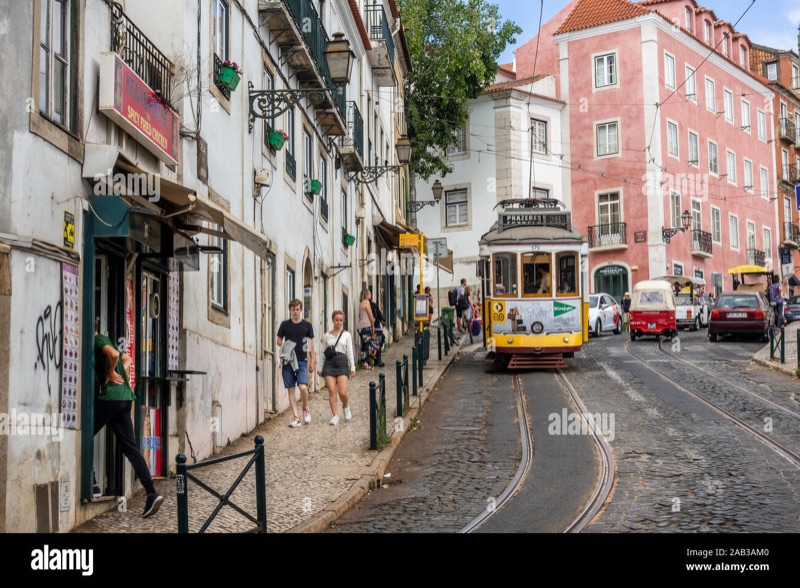
Lisbon is a city of spectacular contradiction: a European capital that somehow still feels undiscovered, draped across seven hills above the Tagus estuary, with a mild Atlantic climate and one of the most charming urban landscapes on the continent. The Alfama district — the oldest neighborhood, a maze of narrow cobblestone streets that survived the 1755 earthquake — is quintessential Lisbon: laundry hanging from windows, cats on doorsteps, fado drifting from open doors. The Tram 28 rattling through impossibly steep streets is one of Europe's iconic urban images. Lisbon is bigger (about 500,000 in the city, 3 million in greater Lisbon), more cosmopolitan, and has the energy of a city that knows it has arrived on the world stage.
Porto is a different beast entirely — smaller (around 230,000), more intense, and with a visual character that might be the most photogenic of any city in Europe. The Ribeira district along the Douro River, with its UNESCO-listed medieval townhouses cascading down to the waterfront, is genuinely stunning. The Dom Luís I bridge spanning the gorge is iconic. Across the river in Vila Nova de Gaia, dozens of port wine lodges climb the hillside with their name-branded rooftop logos. Porto feels less polished than Lisbon — the azulejo tile facades are sometimes peeling, the hills are punishing — but that rawness is exactly what travelers fall for.
"Porto is more genuine and less touristy in general. You can walk or bicycle everywhere in the city, nice bars and restaurants everywhere and less expensive than Lisbon. I was a bit disappointed by Lisbon, the city is very beautiful but I felt it was hard to find real genuine places — everything was focused around tourists." — r/backpacking
"I found Lisbon to be overrun by tourists. I took the train to Porto, which was easy. I loved Porto. It was really interesting and less overrun, frenetic, overwhelming." — r/Shoestring
🍽️ Food & Dining
Portuguese food is one of the great underrated cuisines, and both cities deliver it brilliantly. Bacalhau (salt cod, with supposedly 365 different recipes) is the national obsession — found everywhere in both cities, from cheap tascas to Michelin-starred restaurants. Pastéis de nata (custard tarts) are Portugal's most famous export; try them warm, dusted with cinnamon. In Lisbon, the Pastéis de Belém bakery (open since 1837, under the Jerónimos Monastery) is an institution — Lisbon's best pastéis de nata are served fresh from the oven here.
Porto's defining dish is the francesinha — a meaty behemoth of a sandwich soaked in spiced tomato-beer sauce that has achieved legendary status. Porto's francesinha scene is one of the best reasons to visit. The city also has excellent fresh seafood (grilled sardines in summer, ameijoas à bulhão pato clam stew), and the prato do dia (dish of the day) at local tascas runs €8–12 with wine included — some of the best food value in Western Europe. Lisbon's food scene is broader and more international, with the LX Factory market and Mercado de Campo de Ourique being standout food hall experiences.
"Since we're in /r/Shoestring, I recommend Porto — it's cheaper and you have plenty of options for day trips. Also I liked Porto's food more. Francesinha is awesome." — r/Shoestring
"I highly recommend going to a fado performance in Lisbon. I went to a little hole-in-the-wall restaurant and it was a beautiful experience. And eat all the pastéis de nata — they're delicious." — r/Shoestring
🍷 Port Wine & Drinks Culture
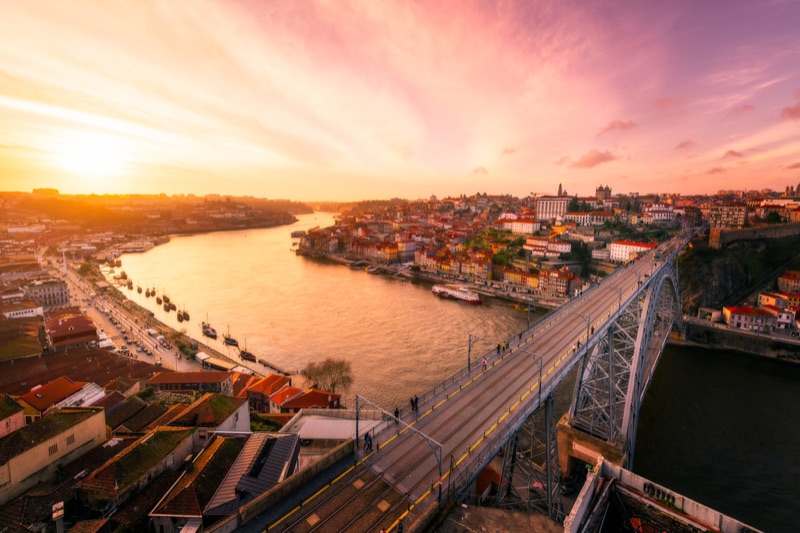
Port wine is made in the Douro Valley inland from Porto, then stored and aged in the port wine lodges (caves) of Vila Nova de Gaia, directly across the Douro from Porto's Ribeira district. This is non-negotiable Porto territory: Sandeman, Graham's, Taylor's, Ramos Pinto — the major port houses all have lodges here with tours and tastings. A standard lodge tour costs €15–25 including a tasting of 2–3 wines; Graham's Six Grapes and Taylor's Chip Dry white port are classics. Porto's wine bars in the Baixa and Bonfim neighborhoods serve excellent port and local Vinho Verde by the glass for €3–6.
Lisbon has its own drinking culture — mainly ginjinha (sour cherry liqueur, sold for €1.50 from hole-in-the-wall kiosks in Rossio square) and Vinho Verde white wines. The city has embraced natural wine enthusiastically, with a strong wine bar scene in Príncipe Real and Bairro Alto. But for the full port wine experience, Porto is the only option. If port wine is a priority, the entire Vila Nova de Gaia hillside — with its lodge tours, cable car views, and Douro-front terraces — is one of the great food and drink experiences in Europe.
"I did a tour up into the Douro Valley from Porto for port wines. If you are into that, do it! The city itself was fine but not as dazzling as Lisbon IMO. So much to do in Lisbon." — r/backpacking
💰 Cost Comparison
| Expense | 🏰 Lisbon | 🍷 Porto |
|---|---|---|
| Hostel dorm (per night) | €20–40 | €15–30 |
| Budget hotel (per night) | €80–140 | €65–110 |
| Prato do dia lunch (with wine) | €10–15 | €8–12 |
| Mid-range dinner | €18–35 | €14–25 |
| Espresso / bica | €0.80–1.20 | €0.70–1.00 |
| Beer (local, in bar) | €2.50–4 | €2–3.50 |
| Metro / tram single ride | €1.50–2 (Carris/Metro) | €1.75–2 (Metro Porto) |
| Sintra / Douro Valley day trip | €2.50 train (Sintra) | €50–80 (wine tour) |
| Port wine tasting (lodge tour) | Not applicable | €15–25 per person |
| Budget daily total | €60–90 | €50–75 |
Portugal is one of Western Europe's best-value destinations, and Porto is meaningfully cheaper than Lisbon — roughly 10–20% across accommodation, food, and drinks. The biggest gap is accommodation: Lisbon's tourism boom has pushed central hotel prices to levels comparable to Madrid or Rome. Budget travelers can still eat extremely well in both cities — the midday prato do dia at a local tasca (soup, main, dessert, wine, and coffee for €10–12) is one of Europe's great budget meals. Coffee is legendarily cheap in Portugal — an espresso is rarely more than €1 anywhere.
"Porto: cheaper accommodation, good food, great day trips, and Douro Valley wine touring. Lisbon: more expensive, more touristy, but genuinely so much to do. I'd say Porto if budget is any kind of factor." — r/Shoestring
🚋 Getting Around
Lisbon has one of Europe's most charming — and occasionally frustrating — public transit systems. The metro (4 lines, covering most major areas) is efficient and modern; a single ticket costs €1.50 and a rechargeable Viva Viagem card is essential (€0.50 deposit). The historic trams (especially Tram 28 through Alfama and Tram E15/18 to Belém) are iconic, but extremely crowded and slow — use them for experience, not transport. The city's seven hills make walking tiring; the elevadores (historic cable cars, including Elevador de Santa Justa) provide some relief. Taxis and Bolt/Uber are cheap by Western European standards (€6–12 for most city center trips).
Porto is smaller but ironically harder to navigate on foot due to its dramatic topography — steep granite hills and staircase streets make every walk more of a workout. The metro (6 lines, including the airport line) is modern and covers the main attractions; a single ticket costs €1.75. The Andante card (€0.60) is Porto's reloadable transit card covering metro, buses, and the Douro ferries. Walking along the Douro riverfront between Ribeira and the port wine lodges in Gaia is stunning and flat. The notorious hills of the historic center (Cedofeita, Vitória, Santo Ildefonso) require either good knees or frequent Ubers.
🌤️ Best Time to Visit
Lisbon's location in southwest Portugal gives it one of Europe's most reliable climates: 300 sunny days a year and almost no extremes. Even winter rarely drops below 10°C, making it a year-round destination. Peak crowds (July–August) are intense but manageable. The best months are May–June and September–October — warm, sunny, and with significantly thinner crowds than summer. June's Santo António festival (June 12–13) is Lisbon's biggest street party.
Porto is noticeably rainier and cooler than Lisbon due to its more northern Atlantic position. Winter can be genuinely grey and wet. Summer is warm but rarely as hot as Lisbon. The São João festival (June 23–24) is Porto's greatest event — the entire city takes to the streets with hammers and plastic mallets to bop each other on the head (seriously), drink sangria, and watch fireworks over the Douro. It's one of Portugal's most spectacular celebrations. Avoid Porto in winter unless you don't mind rain.
🏰 Monuments & Culture
Lisbon has the fuller set of major monuments. Jerónimos Monastery (€10) is one of the finest examples of Manueline architecture in the world — intricate stone carvings depicting the Age of Exploration, where Vasco da Gama is interred. The adjacent Tower of Belém (€6) is Portugal's most photographed monument. São Jorge Castle (€10) looms over the Alfama with sweeping city views. The MAAT (contemporary art) and Gulbenkian Museum (one of Europe's great private art collections, €10) round out the cultural offer. The Museu do Azulejo (tile museum, €5) is essential for understanding Portugal's visual culture.
Porto's monuments are fewer but equally iconic. Livraria Lello (€8 voucher, credited if you buy a book) is consistently ranked among the world's most beautiful bookshops — a neo-Gothic masterpiece with a stunning red staircase, allegedly inspiration for Hogwarts. The São Bento train station is free and features 20,000 azulejo tiles depicting Portuguese history — 15 minutes here is worth it just for the tiles. Igreja do Carmo and Igreja dos Clérigos (with its baroque bell tower) are standouts. The entire Ribeira district is UNESCO-listed. Porto also has strong contemporary art at Serralves Museum (€12), set in one of Portugal's best public parks.
"Architecture is 100% better in Porto. Lisbon has lots of carbon copy houses (apparently they did so when reconstructing after the earthquake). Porto's buildings are more unique and picturesque overall." — r/Shoestring
🏘️ Neighborhoods — Where to Stay
Lisbon
Alfama — the oldest neighborhood, clinging to the hillside below São Jorge Castle; romantic and atmospheric but very hilly and crowded. Best for short stays if ambiance is paramount. Bairro Alto / Chiado — the arts and nightlife hub; flat-ish, central, packed with restaurants and bars. One of Lisbon's best all-round locations. Príncipe Real — sophisticated and residential, excellent cafes and boutiques; popular with design-conscious travelers. Mouraria — the most authentically multicultural neighborhood, great food, gritty charm, less touristy. Belém — far west along the river; great for monument access but requires transit to get anywhere else.
Porto
Ribeira — UNESCO-listed riverfront, absolutely stunning to look at but very touristy and overpriced. Good for 1–2 nights if you want Instagram-perfect surroundings. Bonfim — the breakout neighborhood: locally loved, excellent restaurant and bar scene, a mix of expats and young Portuguese professionals; best overall value. Cedofeita / Massarelos — bohemian and artsy, independent shops, good nightlife, slightly less touristy than the waterfront. Baixa — convenient, central, good transport links; less character but practical.
"Porto is a smaller city with a well-defined old town core. I personally preferred Porto — just found it easier to get around, calmer, more picturesque. Really Porto's walkability in the historic core was so much better for me." — r/digitalnomad
🚆 Day Trips
Lisbon's day trip roster is one of the best in Europe. Sintra (40 min by Sintra Line train, €2.50 each way) is the clear headline: a UNESCO cultural landscape of fairy-tale palaces built into a forested mountain ridge, including the technicolor Pena Palace (€14), the mysterious Quinta da Regaleira (€10), and the Moorish Castle (€8). Come early — crowds are severe from 11am onwards. Cascais (40 min, €2.40 each way) offers a relaxed coastal town with good beaches and seafood restaurants. Setúbal and the Arrábida Natural Park (1h by bus) has some of the most spectacular sea cliffs and crystal-blue water in continental Europe. Óbidos (1h15) is a perfectly preserved medieval walled town filled with ginjinha shops.
Porto's day trip crown jewel is the Douro Valley (1.5–2h by scenic train from São Bento station, €12–15 each way, or €50–80 organized wine tour). The landscape — terraced vineyards cascading down granite hillsides to the deep green river — is among Europe's most beautiful. The scenic train ride alone is worth the ticket. Other options: Braga (1h, €3.75 by train) for the Bom Jesus sanctuary and good day trip city; Guimarães (1h10, €3.75) for the birthplace of Portugal, medieval castle, and remarkably preserved historic center; Aveiro (1h, €3.75) — the "Venice of Portugal" with moliceiro boats and art nouveau architecture.
"Porto is cheaper and you have plenty of options for day trips — Braga, Guimarães, Aveiro, Coimbra. The Douro Valley wine tour was an absolute highlight of our whole trip." — r/Shoestring
🔀 The Decision Framework
After synthesizing dozens of Reddit threads and real traveler accounts, here's who each city is built for:
🏰 Choose Lisbon if...
- You have 5+ days and want maximum variety
- Sintra is on your bucket list (it should be)
- You want big-city energy: nightlife, museums, international restaurant scene
- Fado music is a priority — Alfama is the spiritual home
- You're visiting in winter (Lisbon's mild climate vs Porto's grey and rainy)
- You want Manueline architecture: Jerónimos Monastery, Tower of Belém
- You want access to Cascais beaches and Setúbal's sea cliffs
- This is your first time in Portugal and you want the capital experience
🍷 Choose Porto if...
- You have 3–4 days and want concentrated beauty
- Port wine tourism matters to you (Vila Nova de Gaia lodges)
- Authentic, less-touristy atmosphere is a priority
- You want the francesinha experience and incredible tasca value
- Budget is tight — Porto is 15–20% cheaper across the board
- You want to do Douro Valley wine country (the scenery is extraordinary)
- Architecture and azulejo tile photography is a focus
- Visiting in June: São João festival (June 23–24) is unmissable
❓ Frequently Asked Questions
Is Lisbon or Porto better for first-time visitors to Portugal?
Both are excellent, but they deliver different experiences. Lisbon is the better first-timer city for most travelers — it's larger, has more to do, and day trips to Sintra (40 min) and Cascais (35 min) are spectacular. Reddit consensus leans Lisbon for 7+ day trips where you want variety. Porto wins for shorter trips (3–4 days): it's more compact, immediately charming, and the Ribeira district and Dom Luís bridge deliver iconic imagery within walking distance. If you can only pick one and have 5+ days, choose Lisbon and do a Sintra day trip. If you have 3 days, Porto delivers more concentrated beauty.
How far apart are Lisbon and Porto?
About 310 km, and the Alfa Pendular high-speed train covers it in approximately 2h45m to 3h15m, costing €25–45 depending on booking time. Intercidades trains are slower (3h30m+) but cheaper (~€20). Budget flights with Ryanair/TAP run €20–60. Most travelers visit both on a Portugal trip — fly into one, train to the other, fly out. The proximity makes them one of Europe's best two-city combinations.
Which is cheaper, Lisbon or Porto?
Porto is roughly 10–20% cheaper than Lisbon across most categories. Mid-range accommodation in Porto runs €70–110/night vs €90–140 in Lisbon. A budget lunch (prato do dia — dish of the day) costs €8–12 in Porto vs €10–15 in Lisbon's tourist zones. Port wine tastings in Vila Nova de Gaia are genuinely inexpensive — a tour + tasting at a major lodge runs €15–25. Reddit users consistently note Lisbon has become noticeably pricier in recent years as tourist numbers have surged, while Porto feels like better value.
Is Sintra worth a day trip from Lisbon?
Absolutely — Sintra is one of Portugal's must-sees and arguably one of Europe's most magical day trips. The 40-minute Sintra Line train from Rossio station costs €2.50 each way. Main highlights: Pena Palace (€14 entry, fairy-tale castle perched on a granite peak), Quinta da Regaleira (€10, mysterious mansion with initiation wells), and the Moorish Castle (€8, hilltop ruins with sweeping views). Come early (before 10am) to beat crowds — Sintra gets extremely busy from noon onwards. Comfortable walking shoes are essential; the hills are steep.
What is the francesinha sandwich and is it worth trying?
The francesinha is Porto's iconic contribution to world food — a thick sandwich of cured meats (linguiça, presunto, fresh sausage, steak) stacked between white bread, covered with melted cheese, then drowned in a rich spiced tomato-beer sauce, served with fries. It's massive, rich, and polarizing — Reddit users either call it life-changing or overwhelmingly heavy. Worth trying at least once. Top spots: Café Santiago (consistently ranked best), Bufete Fase, and O Buraco. Don't eat anything else that day.
What are the best neighborhoods to stay in Lisbon vs Porto?
Lisbon: Alfama is romantic and historic but hilly; Bairro Alto for nightlife and fado; Príncipe Real for boutiques and luxury; Mouraria for authentic local vibe; Belém for monument access. Best all-rounder for first-timers: Príncipe Real or Chiado (central, walkable, not too touristy). Porto: Ribeira (UNESCO-listed riverside) for picturesque charm but very touristy; Bonfim for the local-expat mix and best restaurant scene; Baixa for central convenience. Best all-rounder: Bonfim or Cedofeita for a balance of character and value.
How many days do you need in Lisbon vs Porto?
Lisbon: minimum 3 full days, ideally 4–5 to include a Sintra day trip and multiple neighborhoods. The city has virtually unlimited things to do — Alfama, Belém, Chiado, LX Factory, Príncipe Real, and Parque das Nações can each absorb a half day. Porto: 2–3 days is the sweet spot for most travelers. You can cover Ribeira, Vila Nova de Gaia (port wine caves), Livraria Lello, Igreja do Carmo, and the Dom Luís bridge area in 2 full days. 3 days if you want a Douro Valley day trip.
Is Lisbon or Porto better for fado music?
Lisbon is the undisputed home of fado — it originated here in the Alfama neighborhood and is deeply woven into the city's identity. Authentic fado venues (called casas de fado) serve dinner with live performances; expect to pay €35–60 per person including food. Top spots: Clube de Fado, Sr. Fado, and the smaller, less touristy joints on Rua do Capelão in Mouraria. Porto has its own fado tradition but it's considered less prestigious. If hearing authentic, emotionally powerful fado is on your bucket list, Lisbon is non-negotiable.
Ready to plan your Portugal adventure?
Get a free custom itinerary for Lisbon, Porto, or both — built from real traveler insights, not generic templates.
🎟️ Book Tours & Experiences
Hand-picked tours and activities for both destinations — book with free cancellation
Experiences via Viator — free cancellation on most tours