How we built this comparison
This page combines traveler discussion patterns, published price ranges, transit details, and seasonal data to make the Mae Hong Son vs Pai decision easier to resolve.
- Synthesized 50+ Reddit threads from r/ThailandTourism, r/solotravel, r/travel, and r/chiangmai
- Cost data from Numbeo, recent traveler reports, and on-the-ground prices (March 2026)
- Weather from Open-Meteo monthly averages for Mae Hong Son province
- Transit times verified against current minivan/bus schedules and traveler reports
⚡ The TL;DR Verdict
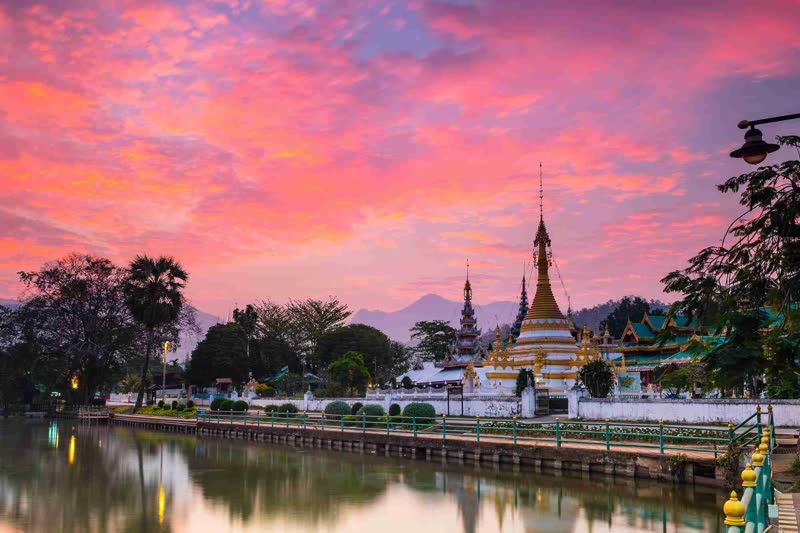
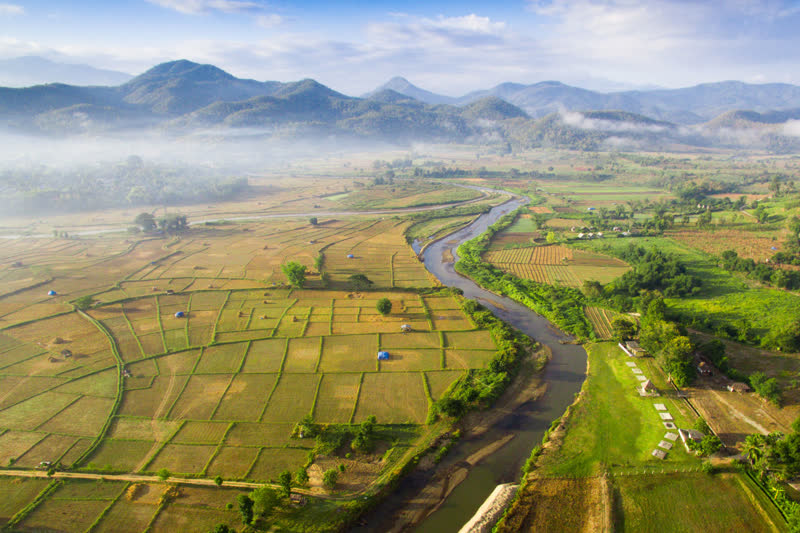
Mae Hong Son wins on authenticity. Pai wins on accessibility. Mae Hong Son is what Pai used to be — a quiet mountain town with genuine Burmese-influenced culture, stunning lakeside temples, and almost no tourist bubble. Pai is easier to reach, has more backpacker infrastructure, and delivers mountain scenery and a lively Walking Street. If you have time for only one: first-timers choose Pai for ease; returning travelers who've done Pai choose Mae Hong Son for something real.
- Authenticity edge: Mae Hong Son — dramatically fewer tourists, genuine local culture
- Access edge: Pai — 3.5 hrs from Chiang Mai vs 6–8 hrs to Mae Hong Son
- Temples edge: Mae Hong Son — the lakeside Wat Chong Kham/Klang complex is extraordinary
- Budget edge: Mae Hong Son — slightly cheaper accommodation and food
- Backpacker scene: Pai — Walking Street, hostels, bars, night life
- Nature: Both — stunning mountain scenery, different flavors
🏔️ Choose Mae Hong Son if…
You've already done Pai and want something quieter and more authentic. Or you're doing the full Mae Hong Son Loop. Or temples and culture outrank bar scenes.
🌿 Choose Pai if…
This is your first time in northern Thailand and you want easy access, a social scene, and the bamboo bridge Instagram shots. Or you have limited time from Chiang Mai.
Quick Comparison
| Category | 🏔️ Mae Hong Son | 🌿 Pai | Winner |
|---|---|---|---|
| Distance from Chiang Mai | ~270 km, 6–8 hrs by road | 135 km, 3–4 hrs by road | Pai |
| Tourist Crowds | Low — mostly domestic travelers | High — peak season packed | Mae Hong Son |
| Budget Accommodation | ฿250–500/night ($7–14) | ฿300–700/night ($8–20) | Mae Hong Son |
| Mid-range Hotel | ฿700–1,800/night ($20–50) | ฿800–2,500/night ($22–70) | Mae Hong Son |
| Temples & Culture | Outstanding — Burmese-influenced | Limited but scenic | Mae Hong Son |
| Nature & Scenery | Mountain valleys, waterfalls, mist | Canyon, bamboo bridge, hot springs | Tie |
| Food Scene | Small but authentic local spots | Walking Street, cafés, backpacker fare | Tie |
| Nightlife | Minimal — quiet evenings | Walking Street, bars, fire dancers | Pai |
| Backpacker Infrastructure | Basic — fewer hostels and tours | Strong — hostels, pub crawls, agencies | Pai |
| Authenticity | High — locals outnumber tourists | Low — tourist bubble predominates | Mae Hong Son |
| Flight Access | Yes — Bangkok Airways flies direct | None — road or minivan only | Mae Hong Son |
| Ideal Stay Length | 2–3 days | 2–3 days | Tie |
🌅 Atmosphere & Vibe
This is the biggest difference between the two towns — and the one that matters most to most travelers.
Mae Hong Son's Vibe
Mae Hong Son is the provincial capital of Thailand's most remote province — and it feels like it. With a population of around 8,000, it has the unhurried energy of a town that exists for its residents, not for tourists. The morning mist over Chong Kham Lake, monks in saffron robes crossing the bridge to the lakeside temples, markets full of Shan and Burmese food — this is authentic northern Thailand that hasn't been Instagram-ified. International tourists are few enough that you'll feel genuinely off the trail.
Pai's Vibe
Pai is a different beast. What was once a quiet hill tribe town has evolved — or depending on who you ask, devolved — into Southeast Asia's most famous backpacker mountain escape. The Walking Street runs every evening. Hostels run pub crawls. The tourist-to-local ratio in peak season (Nov–Feb) skews heavily toward foreign visitors. As one born-and-raised northern Thai put it on Reddit: "Walk the centre at peak season. Count how many Thai faces you see versus foreign ones." The bubble is real.
"Pai is not what you think it is anymore. A lot of what people call 'experiencing Pai' is actually experiencing a small entertainment zone that was built around what foreigners expect Thailand to look like." — r/ThailandTourism (local resident, 2026)
"Mae Hong Son is much more interesting than Pai. Much less tourists and much more authentic feeling." — r/ThailandTourism
⛩️ Temples & Culture
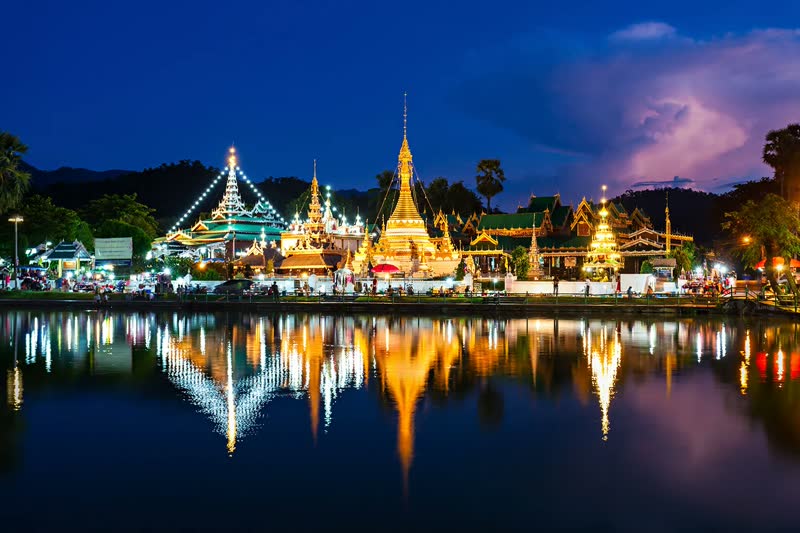
Mae Hong Son's cultural credentials are in a different league. The town's name translates roughly to "City of Three Mists" — and its culture reflects its geography: pressed against the Myanmar border, it has absorbed centuries of Burmese and Shan influence. The results are some of northern Thailand's most distinctive temples.
- Wat Chong Kham & Wat Chong Klang: Two ornate Burmese-style temples sitting side by side on Chong Kham Lake. At dawn, when mist rises off the water, the white stupas and their reflections are breathtaking. Entry free.
- Wat Phra That Doi Kong Mu: A hilltop temple complex on the western edge of town with two Shan-style chedis and panoramic views over the valley and into Myanmar. Climb the stairs at sunset — one of the best viewpoints in northern Thailand.
- Shan (Tai Yai) Culture: Mae Hong Son province is the heartland of the Shan people of Thailand. The Poi Sang Long festival (March) sees young Shan boys ordained as novice monks in elaborate traditional dress. If your timing allows, this is one of Thailand's most striking cultural events.
- Ban Rak Thai: A village of Yunnan Chinese immigrants, 45km north of Mae Hong Son. The residents fled China's communist revolution and retain their language, customs, and tea culture. The Oolong tea scene here rivals Chiang Rai's Doi Mae Salong.
Pai has temples too — notably Wat Mae Yen (requires a 1km uphill walk, rewards with valley views) and Wat Phra That Mae Yen (white Buddha visible from town) — but they're secondary to the outdoor activities. Pai is not a cultural destination in the way Mae Hong Son is.
"Ban Rak Thai is worth the trip alone. Tea, Chinese food, a village that feels like a different country. Mae Hong Son has real things to learn and experience." — r/ThailandTourism
🌿 Nature & Outdoors
Both towns sit in mountain valleys and offer genuinely spectacular scenery — but the flavors differ.
Pai's Outdoors
Pai's nature highlights are photogenic and accessible:
- Pai Canyon (Kong Lan): Narrow red-earth ridgelines above a forested gorge. Best at sunset. Free entry, 8km from town.
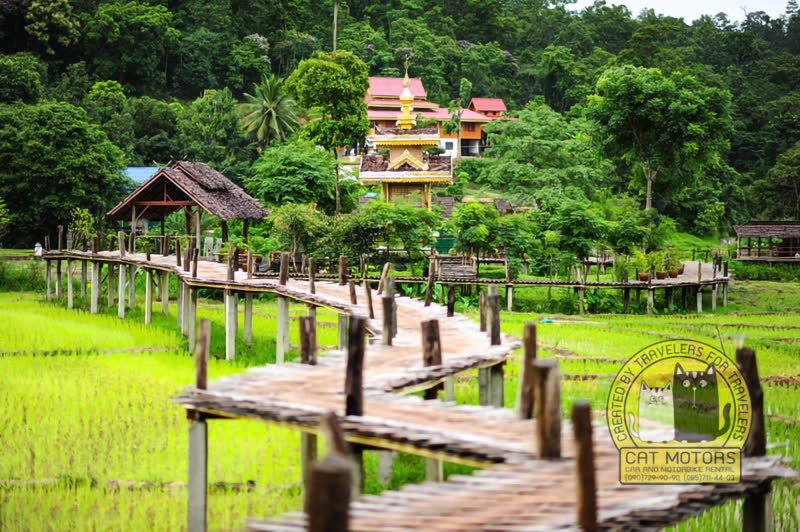
- Boon Ko Ku So Bamboo Bridge: The iconic bamboo walkway across rice fields — most photogenic Nov–Jan. About 3km from town.
- Tha Pai Hot Springs: Natural hot springs 8km southeast. Entry ฿300 ($8.50). A genuine relaxation spot, not just a tourist trap.
- Yun Lai Viewpoint: Dawn viewpoint above town — when the valley fills with mist, it's magic. Worth a 5:30am start.
- Mae Yen Waterfall: 8km one-way hike, multiple Reddit users call it Pai's best activity. Swimmable at the base.
Mae Hong Son's Outdoors
Mae Hong Son's nature is wilder and less developed — which cuts both ways:
- Pha Sua Waterfall: Multi-tiered waterfall in Namtok Pha Sua National Park, 25km north. Most powerful in wet season. Free entry to the park.
- Tham Pla Fish Cave: Sacred cave spring where giant carp swim in clear water — a surreal and peaceful spot. 17km from town.
- Doi Kong Mu: The hill above town isn't just a temple site — the surrounding forest has trails with views across the valley and into Myanmar.
- Trekking to Shan & Karen villages: Mae Hong Son is the gateway for multi-day hill tribe treks that are genuinely remote. Fewer tourist crowds than Chiang Mai-based treks.
- Pang Ung Lake (Pang Tong): Called the "Switzerland of Thailand," this pine-fringed reservoir is especially beautiful in morning mist. 40km from Mae Hong Son.
"I saw way more beautiful scenery hours past Pai through the loop before reaching Mae Hong Son — probably the best part of the loop. Maybe I did Pai wrong, but it felt flat and dusty while Mae Hong Son felt dramatic." — r/travel
💰 Cost Comparison
Both towns are cheap by any global standard. Here's a realistic breakdown:
Accommodation
| Type | 🏔️ Mae Hong Son | 🌿 Pai |
|---|---|---|
| Dorm bed | ฿200–350/night ($5.50–10) | ฿200–400/night ($5.50–11) |
| Budget guesthouse | ฿250–500/night ($7–14) | ฿300–700/night ($8–20) |
| Mid-range hotel | ฿700–1,800/night ($20–50) | ฿800–2,500/night ($22–70) |
| Boutique/resort | ฿1,500–3,500/night ($42–98) | ฿2,000–6,000/night ($55–165) |
Food & Daily Costs
Local restaurant meals in Mae Hong Son run ฿50–80/dish ($1.40–2.30). Shan-style food — rice with multiple vegetable curries — often costs ฿60–100 ($1.70–2.80) for a full meal. In Pai, the Walking Street charges similar prices but tourist cafés and smoothie spots add up if you're not eating at local spots. Both towns: scooter rental ฿150–200/day ($4.20–5.50).
Mae Hong Son has a Bangkok Airways flight from Bangkok (1h, ~฿2,500–5,000/$70–140 one-way) — which is expensive but saves the brutal overland journey. Pai has no flights.
"Mae Hong Son has less tourists and much more interesting. And cheaper. The guesthouses around the lake are a fraction of what equivalent places in Pai charge." — r/ThailandTourism
The real cost picture
- Accommodation: Mae Hong Son 15–25% cheaper across all tiers
- Food: Similar at local spots; Pai's tourist cafés are more expensive
- Getting there: Pai wins (shorter distance, no flight needed)
- Activities: Both have mostly free or low-cost outdoor attractions
🚌 Getting There
Access is the starkest practical difference between the two towns.
Getting to Pai
From Chiang Mai: minivan from Chiang Arcade Bus Terminal, 3–4 times daily, ฿150–200 ($4.20–5.50), ~3.5 hours. The road (Route 1095) has 762 documented curves — take Dramamine if you're prone to motion sickness. Public bus: ฿85 ($2.40), ~4 hours. Scooter: 3–4 hours for experienced riders — beautiful but demanding. Private taxi: ฿1,500–2,500 ($42–70).
Getting to Mae Hong Son
Mae Hong Son is genuinely remote. Options from Chiang Mai:
- Bangkok Airways flight: ~1 hour direct (seasonal — check schedule). ฿2,500–5,000 ($70–140) one-way. The airport is 2km from town.
- Via Pai (the Loop route): Chiang Mai → Pai (3.5 hrs) → Mae Hong Son (2.5–3 hrs). Total: 6+ hours in two legs. Most scenic option.
- Direct road from Chiang Mai: ~270km, 6–7 hours by bus/minivan. Departs Chiang Arcade Terminal. ฿200–300 ($5.50–8.40). The shorter route via Mae Sariang (~240km) avoids the Pai detour.
- Via Mae Sariang: A southern route through Mae Sariang, ~5.5 hours. Less dramatic scenery than via Pai, but a good option if you want to see the Mae Hong Son Loop in full over multiple days.
"Do the Mae Hong Son Loop on a motorcycle. I've done it many times. 600km, 4–5 days, some of the best road riding in Southeast Asia. Just be experienced enough for the switchbacks — they're real." — r/ThailandTourism (lived in Chiang Mai 12+ years)
🍜 Food & Dining
Neither town is a food destination on the level of Chiang Mai, but both have character.
Mae Hong Son's Food
The Shan (Tai Yai) food culture in Mae Hong Son is one of Thailand's most distinctive and underappreciated. Look for:
- Khao Tom (rice soup): Morning markets near Chong Kham Lake serve simple, delicious congee from 6am.
- Shan Noodles: Flat rice noodles in a mild tomato-based broth with pork — Mae Hong Son's signature dish. Available everywhere for ฿40–60 ($1.10–1.70).
- Nam Prik Num (green chili dip): The northern Thai classic with raw vegetables and sticky rice — ubiquitous at local markets.
- Ban Rak Thai tea: If you make the 45km trip to the Yunnan Chinese village, the Oolong tea served at hilltop teahouses overlooking the valley is extraordinary.
Pai's Food
Pai's food scene is driven by its tourist demographic — so there's a lot of Western comfort food, smoothie bowls, and "Thai" food adjusted for backpacker palates. The Walking Street (open daily, most lively 5–9pm) has the best selection: grilled meats, mango sticky rice, fresh juices. The coffee scene in Pai is genuinely excellent — café culture has taken root, and some roasters are producing quality beans. Local Thai food is available at ฿50–80/dish if you venture off the Walking Street.
"Pai's food is fine but you'll cycle through the same Walking Street options within 2 days. Mae Hong Son's Shan noodles for breakfast every morning — that's a food experience Pai doesn't have." — r/solotravel
🌸 Best Time to Visit
Both towns share similar seasonality — they're in the same mountain province — but Mae Hong Son's lower elevation and border position create some differences.
Cool Season: November–February ⭐ BEST
Prime time for both destinations. Pai at night drops to 10–15°C (November especially) — pack a layer. Mae Hong Son is slightly warmer at lower elevation. The morning mist at Mae Hong Son's lake is at its most dramatic in December–January. Bamboo bridge rice fields in Pai are green and photogenic. Crowding is highest in both towns December–January.
Hot & Smoky Season: March–May 🔥 CAUTION
Agricultural burning is the biggest hidden issue for northern Thailand travel. March–April brings smoke haze that can make outdoor activities actively unpleasant — and occasionally dangerous. Mae Hong Son is often worse than Pai during smoke season due to its enclosed valley geography trapping smoke. Check aqicn.org for real-time AQI before committing. Some years are mild; some years AQI exceeds 300 (hazardous).
Rainy Season: June–October 🌧️ UNDERRATED
Waterfalls are at full force, landscapes are lush green, and tourist crowds are thin. Mae Hong Son's Pha Sua Waterfall is spectacular July–September. Pai's Mae Yen Waterfall is best July–August. The mountain road to Pai can have occasional landslides in heavy rain — check conditions. Mae Hong Son's mountain roads are similarly weather-dependent.
"Visited in December and the lake mist in Mae Hong Son at 6am was incredible. Nothing like that in Pai. But pack layers — the mountains get cold." — r/ThailandTourism
🏍️ The Mae Hong Son Loop
You can't talk about either destination without talking about the Loop — one of Southeast Asia's great road trips.
The Mae Hong Son Loop is a roughly 600km circuit from Chiang Mai that passes through both Pai and Mae Hong Son. There are two routes:
- Clockwise (most popular): Chiang Mai → Pai (135km, Route 1095) → Mae Hong Son (111km, Route 1095) → Mae Sariang (164km, Route 108) → Chiang Mai (191km, Route 108). Total: ~600km. Recommended direction for scenic payoff building toward Mae Hong Son.
- Counter-clockwise: Chiang Mai → Mae Sariang → Mae Hong Son → Pai → Chiang Mai. Saves the best scenery for last if you prefer arriving in Pai as your finale.
By motorcycle: The classic experience. Route 1095 has 762 curves from Chiang Mai to Pai and equally dramatic mountain passes onward to Mae Hong Son. Plan 4–5 days minimum. Experienced riders only — the switchbacks are steep and guardrails are intermittent. Accident rate is real. Rent from a reputable shop in Chiang Mai (not the cheapest one).
By minibus/shared transport: Possible but slower. Each leg requires separate minivan bookings. Less flexibility to stop at roadside viewpoints. Works fine if you're not a rider — just plan travel days carefully.
By car: Comfortable and flexible. A rental car from Chiang Mai with GPS (the mountain roads aren't always well-signed) covers the Loop in 4 days without rush. Good option for groups.
"Doing the Mae Hong Son Loop on a motorcycle was one of the highlights of my Southeast Asia trip. We took 5 days. Pai was fine — Mae Hong Son blew us away. Nobody there. The temples at sunrise. The market. Do the whole loop." — r/ThailandTourism
"Do the loop!! Best decision of our Thailand trip. Every turn is a new view. Just plan for the motion sickness on the Pai section if you're in a van." — r/ThailandTourism
🔀 Why Not Both?
The obvious question — and the obvious answer for most travelers: do both. They're on the same road.
The Mae Hong Son Loop itinerary (5 days from Chiang Mai):
- Day 1: Chiang Mai → Pai (3.5 hrs). Afternoon: bamboo bridge, hot springs. Evening: Walking Street.
- Day 2: Pai full day. Sunrise at Yun Lai Viewpoint, Pai Canyon at sunset, Mae Yen Waterfall hike.
- Day 3: Pai → Mae Hong Son (2.5–3 hrs). Arrive afternoon. Evening: lakeside temple walk at Chong Kham Lake.
- Day 4: Mae Hong Son full day. Dawn at Wat Chong Kham, Doi Kong Mu hill temple, Pang Ung or Ban Rak Thai day trip.
- Day 5: Mae Hong Son → Mae Sariang → Chiang Mai (6–7 hrs). Stop at Ob Luang Gorge if time allows.
This gives you 2 nights each — tight but satisfying. Add a day in Pai or Mae Hong Son if your schedule allows. Compare also: Pai vs Chiang Mai for the full northern Thailand planning picture, and Chiang Mai vs Chiang Rai if you're routing through the region.
🎯 The Decision Framework
Not sure which to pick as your priority? Use this:
🏔️ Choose Mae Hong Son (or prioritize it) If…
- You've already done Pai and want something quieter and more real
- Temples and Burmese-influenced culture are your priority
- You want fewer tourists and a genuine local atmosphere
- You're doing the Mae Hong Son Loop — it's the payoff destination
- Authentic Shan food and morning market culture appeal
- You can fly Bangkok Airways direct (saves 6 hrs of mountain road)
- Hill tribe trekking in genuinely remote areas interests you
- Budget is tight — accommodation is cheaper across all tiers
🌿 Choose Pai (or prioritize it) If…
- This is your first time in northern Thailand and you want easy access from Chiang Mai
- The backpacker/hippie social scene sounds like your crowd
- Bamboo bridge, canyon, and Instagram-friendly scenery is the goal
- You want cafés, specialty coffee, and a lively Walking Street
- You have 2–3 days and can't commit to the full Loop
- Muay Thai training or yoga retreats are on your itinerary
- You want a scooter-friendly town where everything is close
- Motion sickness or limited driving experience rules out Mae Hong Son's longer roads
❓ Frequently Asked Questions
Is Mae Hong Son or Pai better for first-time visitors to northern Thailand?
It depends on what you're after. Pai is easier to reach (3.5 hrs from Chiang Mai by minivan), has more backpacker infrastructure, and a lively Walking Street. Mae Hong Son is harder to get to but rewards with an authentic Burmese-influenced culture, far fewer tourists, and a genuinely unique town atmosphere. First-timers who want easy and social: Pai. First-timers who want off-the-beaten-path authenticity: Mae Hong Son.
How far is Mae Hong Son from Pai?
Mae Hong Son is about 111 km from Pai via Route 1095, but the mountain road makes this a 2.5–3 hour drive. By minibus or shared songthaew it's around ฿150–250 ($4.20–7). Many travelers do the Mae Hong Son Loop — Chiang Mai → Pai → Mae Hong Son → back to Chiang Mai — a roughly 600km circuit that's one of Thailand's great motorcycle rides.
How many days do you need in Mae Hong Son?
Two to three days is enough to see Mae Hong Son's core — Wat Chong Kham and Wat Chong Klang lakeside temples, Doi Kong Mu hill temple, Pha Sua waterfall, and Ban Rak Thai tea village. Longer stays (4–5 days) are worth it if you want to explore remote Shan village trekking or make day trips to the Myanmar border areas.
Which is cheaper, Mae Hong Son or Pai?
Mae Hong Son is cheaper overall. Budget guesthouses run ฿250–500/night ($7–14) vs Pai's ฿300–700/night ($8–20). Food at local spots in Mae Hong Son is ฿40–70/dish ($1.10–2). The flip side: Mae Hong Son has fewer options at every price point. Pai has better-developed mid-range accommodation and a larger restaurant/café scene, so you'll find more variety if you're willing to pay slightly more.
What is the Mae Hong Son Loop and is it worth doing?
The Mae Hong Son Loop is a ~600km motorcycle or car circuit from Chiang Mai through Pai, Mae Hong Son, and back via a different mountain route. It includes dramatic mountain passes, hill tribe villages, waterfalls, and remote temples. Reddit unanimously calls it one of Thailand's best road trips — but it requires 4–5 days minimum and experienced riding skills. The roads involve serious switchbacks. Non-riders can do a version by minibus, though it's slower and less flexible.
Is Mae Hong Son safe to visit?
Yes — Mae Hong Son is considered safe for travelers. The main caution is proximity to the Myanmar border; while the town itself is peaceful, some rural areas near the border have historically had security issues. Stick to tourist areas and established trekking routes. The mountain roads require attention when driving, especially in wet season.
Can you visit both Mae Hong Son and Pai in one trip?
Absolutely — they're on the same route. The Mae Hong Son Loop naturally includes both: most travelers spend 2–3 nights in Pai, continue to Mae Hong Son for 2 nights, then loop back to Chiang Mai. You don't have to choose. If time is limited (5 days from Chiang Mai), the split is roughly 2 nights Pai + 2 nights Mae Hong Son + travel day.
Which has better temples, Mae Hong Son or Pai?
Mae Hong Son wins clearly on temples. Wat Chong Kham and Wat Chong Klang — sitting lakeside with Burmese pagoda architecture — are genuinely stunning, especially at dawn when mist clings to the water. Wat Phra That Doi Kong Mu on the hill above town has panoramic views. Pai has some temples (Wat Mae Yen requires a hike, Wat Phra That Mae Yen has valley views) but nothing approaching the quality or atmosphere of Mae Hong Son's lakeside complex.
Ready to Plan Your Trip?
Get a custom itinerary for Mae Hong Son, Pai, or both — built around your travel dates, budget, and interests.
🎟️ Book Tours & Experiences
Hand-picked tours and activities for both destinations — book with free cancellation
Experiences via Viator — free cancellation on most tours