📋 Our Methodology
This comparison is built from real sources, not AI guesswork:
- 12+ Reddit threads from r/travel, r/solotravel, r/ibiza, r/Spain, r/FATTravel, r/femaletravels synthesized
- Cost data from Numbeo (March 2026), cross-checked with recent Reddit trip reports
- Weather from Open-Meteo historical averages for Palma and Ibiza Town
- Ferry/flight data from Baleària and Vueling official sources
- Nightlife pricing from recent club-goer reports on r/ibiza
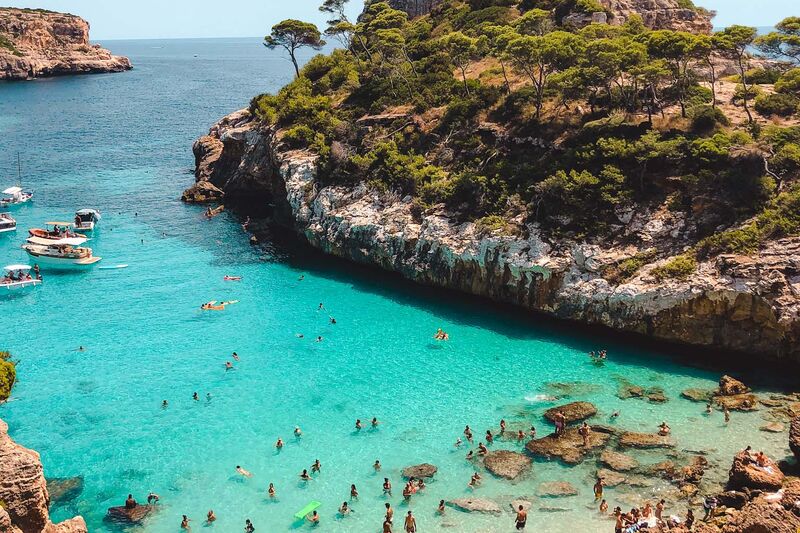
Mallorca — Cala de Moro, one of the island's hidden gems
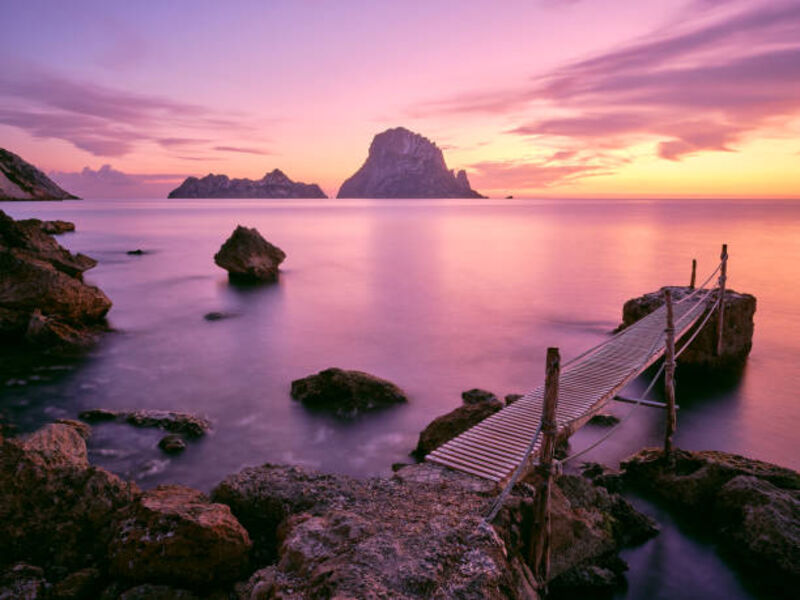
Ibiza — Es Vedrà at sunset, Cala d'Hort
⚡ The TL;DR Verdict
Mallorca wins for almost everyone except club-goers. It's bigger, cheaper (€80–120/day vs €100–160+), more varied, and better for families, couples, and culture. Ibiza wins if electronic music and world-class clubs are the point — and its quiet north is genuinely beautiful even for non-partiers.
- Go to Mallorca if you want variety: mountain hikes, cultural Palma, diverse beaches, better value, and an island you could explore for 10 days without running out of things to do.
- Go to Ibiza if world-class electronic music clubs (Ushuaïa, Pacha, Amnesia, DC10) are a primary draw, or if you specifically want the quiet northern villages + Cala Comte sunsets.
- Go to both — the ferry or 20-minute flight makes a Balearic island-hop straightforward. 7 days Mallorca + 3–4 days Ibiza is a superb combination.
- Reddit is unanimous: if you're not clubbing, Ibiza is expensive and limited. Mallorca delivers more for less.
🏖️ Choose Mallorca if...
You want variety — beaches, mountains, a great capital city, better value, and enough to fill 7–10 days without repeating yourself.
🎵 Choose Ibiza if...
The world's best club scene is calling. Or you want Es Vedrà sunsets, Cala Comte waters, and hippie markets in the north. Just budget accordingly.
Quick Comparison
| Category | 🏖️ Mallorca | 🎵 Ibiza | Winner |
|---|---|---|---|
| Daily Budget (mid-range) | €80–120 per person | €100–160+ per person | Mallorca |
| Island Size | 3,640 km² — Spain's largest Balearic | 572 km² — compact but concentrated | Mallorca |
| Nightlife | Palma bars/clubs, local scene | Global capital of electronic music | Ibiza |
| Beaches | Diverse — 262 beaches and coves | Stunning — Cala Comte, Benirràs, Salinas | Tie |
| Cultural Depth | Palma cathedral, Moorish history, villages | Dalt Vila (UNESCO), Phoenician roots | Mallorca |
| Nature & Hiking | Serra de Tramuntana (UNESCO), rural interior | Flat with some rural walks in the north | Mallorca |
| Food Scene | Palma's world-class restaurants, pa amb oli | High-end (pricey), good local spots in north | Mallorca |
| Family-Friendliness | Excellent — calm bays, resort towns, variety | Good in Santa Eulalia/north; south is party-heavy | Mallorca |
| Instagram / Sunsets | Beautiful mountain-meets-sea shots | Es Vedrà, Cala Comte — world-famous sunsets | Ibiza |
| Day Trips | Formentera ferry (2h), boat tours, inland villages | Formentera (30 min), boat parties | Mallorca |
| Crowds (peak season) | Heavy in resort areas; quieter inland | Extremely busy Jul–Aug; calmer Oct–Apr | Mallorca |
🏝️ Island Character & Vibe
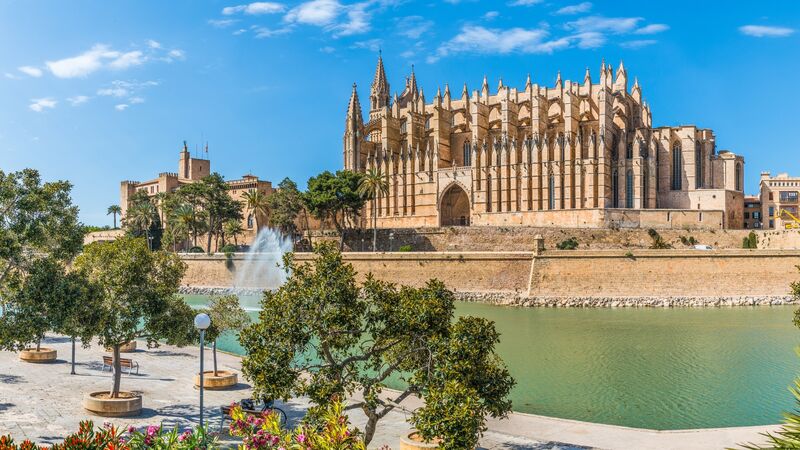
Mallorca is a study in contrasts: the Serra de Tramuntana mountains tumble dramatically into the sea in the northwest, while the south and east coast offer calm turquoise bays with powder-white sand. Palma de Mallorca — the capital — is a genuine city with a world-class Gothic cathedral (La Seu), a thriving restaurant scene, and enough nightlife to hold its own with any Spanish city. Beyond the two resort corridors (Magaluf in the southwest and Alcúdia in the north), Mallorca has a real, lived-in interior of olive groves, almond orchards, and medieval hilltop villages like Sineu and Pollença. It's an island with serious substance.
Ibiza is smaller, more concentrated, and defined — for better or worse — by its global reputation as the world's club capital. That reputation is real: July and August turn the island into one of Europe's loudest, most expensive, and most crowded party zones. But Ibiza has two faces. The south and west are all clubs, beach bars, and international party-goers. The north — Sant Joan, Santa Gertrudis, Benirràs — is quiet, rural, and genuinely lovely. Ibiza Town's Dalt Vila (UNESCO World Heritage walled old town) is impressive regardless of nightlife interest. Es Vedrà, the mysterious rocky island off the southwest coast, is one of the Mediterranean's most dramatic natural landmarks.
"If you want to rage face and hop on a booze cruise, go to Ibiza. If you're more into the 'relax on the beach' vibe, go to Majorca. Majorca is a more basic island but with cheaper options. Palma is actually a really nice city." — r/travel
"My honest opinion is skip Ibiza. I truly only think Ibiza makes sense if you are into the clubbing/party scene or using it as a quick stop on the way to Formentera." — r/FATTravel
🏖️ Beaches
Both islands have world-class beaches — this is the one category that's genuinely a tie, though they shine in different ways. Mallorca has over 260 beaches and coves. The most spectacular: Cala de Moro (narrow turquoise cove with dramatic limestone walls — arrive by 9am or walk 20 minutes from the parking area), Cala Formentor (pine-backed bay in the island's dramatic northeast), Platja de Muro (long, shallow, calm — ideal for families), Cala d'Or (coral reefs for snorkeling), and Cala Mondragó (protected natural park, crystal water). The sheer variety means you can spend 7 days hitting a different beach each day.
Ibiza's beaches are fewer but punching above their weight on aesthetics. Cala Comte (Cala Conta) is considered by many to be Spain's most beautiful beach — turquoise layered water in multiple shades of blue, with sunset views over rocky islets. Cala Bassa is a chic beach club bay popular with the party crowd. Benirràs in the north hosts legendary Sunday drum circles at sunset — a cultural moment as much as a beach visit. Ses Salines (southern tip, near Formentera ferry) has stunning shallow water. Formentera itself — a 30-minute ferry from Ibiza Town — has some of the Caribbean-quality beaches in the Mediterranean.
"Both Mallorca and Ibiza have amazing beaches, but the vibe is very different. Mallorca has more variety and you can find secluded coves without crowds if you're willing to hike a bit. Ibiza's best beaches are more famous but also more Instagram-saturated in summer." — r/femaletravels
🎵 Nightlife & Entertainment
Ibiza is the unquestioned global capital of electronic music. Full stop. Ushuaïa (open-air superclub, €60–100 entry, day/night shows from May to October), Pacha (iconic, multideck, near Ibiza Town, €40–80 entry), Amnesia (two rooms, legendary foam parties), Hi Ibiza (formerly Space, €50–100+), and DC10 (underground Monday-morning club culture staple) — these are institutions that electronic music fans plan pilgrimages around. Sets run till dawn and beyond. The world's best DJs are resident here from June to September. This is not hype.
Mallorca has a genuine nightlife scene anchored in Palma. The Passeig Marítim strip has dozens of clubs and bars ranging from mainstream to underground. Palma's old town has excellent cocktail bars and late-night venues. However, none of it approaches Ibiza's scale or international reputation. For the party crowd specifically, Mallorca is a distant second. Magaluf (Calvià area) is a British package-holiday drinking resort — not recommended for anyone over 21 with expectations beyond cheap shots and sunburn.
"Ibiza clubs are genuinely unlike anywhere else. If you love electronic music, go. If you don't, there's no reason to pay Ibiza prices when Mallorca gives you so much more for less money." — r/travel
🍽️ Food & Dining
Mallorca has quietly become one of Spain's most exciting food destinations. Palma de Mallorca has a restaurant scene that punches far above its population — Michelin-starred spots, excellent tapas bars, and the beloved pa amb oli (bread rubbed with tomato, olive oil, and Mallorcan cold cuts — €4–8 per portion) as the island's signature dish. The Mercat de l'Olivar in Palma is a beautiful covered market for fresh local produce, cheese, and seafood. Sobrassada (spreadable cured sausage seasoned with paprika), ensaïmada (spiral pastry), and fresh Mediterranean fish dominate local menus. Mid-range restaurant meals run €14–22 per main course.
Ibiza's food scene is strong but expensive. The north — especially Santa Gertrudis and Sant Joan — has excellent authentic restaurants patronized by the island's creative resident community. Ibiza Town has solid tapas and seafood options. But the resort and club areas are the usual tourist-trap territory, and even a standard restaurant meal in San Antonio or near the main clubs can cost €18–30 per main. For budget eating, seek out the local-market areas and avoid anywhere with a hostess outside.
"Ibiza is way more expensive than Mallorca for everything — food, drinks, accommodation. If you live the normal tourist life, Mallorca is a lot cheaper and the food in Palma is genuinely excellent." — r/ibiza
💰 Cost Comparison
| Expense | 🏖️ Mallorca | 🎵 Ibiza |
|---|---|---|
| Budget hostel/hotel (per night) | €50–90 | €70–130 |
| Mid-range hotel (per night) | €90–160 | €130–250+ |
| Restaurant main course | €12–20 | €15–28 |
| Pa amb oli / tapas snack | €4–8 | €6–12 |
| Beer at a bar | €3–5 | €5–10 (€15+ at clubs) |
| Cocktail (bar) | €8–12 | €12–18 (€20–25 at clubs) |
| Club entry (Ibiza major) | N/A | €50–100+ |
| Car hire (per day) | €30–60 | €40–80 |
| Budget daily total (mid-range) | €80–120 | €100–160+ |
Ibiza runs roughly 25–40% more expensive than Mallorca for standard tourist spending. The gap widens dramatically if you enter the club ecosystem — a single night out at Ushuaïa or Pacha (entry + 3 drinks) easily costs €120–180 per person. Mallorca is not a cheap island by global standards, but by Balearic standards it offers significantly better value, especially for accommodation (both islands spike in July–August but Ibiza spikes higher).
🚗 Getting Around
Both islands require a hire car to see their best bits. Mallorca's bus network (TIB) is surprisingly decent for resort-to-Palma connections, but reaching hidden coves like Cala de Moro, hiking the Serra de Tramuntana, or exploring the inland villages requires wheels. Car hire in Palma runs €30–60/day; parking at popular beaches has become managed (€6–12/day at major spots). The coastal roads are spectacular — the MA-10 mountain road through Banyalbufar and Estellencs is one of Europe's best drives.
Ibiza is small enough that a scooter (€30–50/day) is often the best transport option and more fun than a car. Taxis are expensive (€20–40 across the island) and in summer the main roads between San Antonio and Ibiza Town get genuinely gridlocked. Most clubs run shuttle buses from hotel strips. Getting to the northern beaches (Benirràs, Es Portitxol) without your own transport is difficult in peak season.
🌦️ Best Time to Visit
Both islands peak in July–August with sea temperatures hitting 26–28°C but prices 40–60% higher than shoulder season. The sweet spot for both: May (warm, uncrowded, great prices) and September (still swimming warm, cheaper, less chaotic). Mallorca's February almond blossom season is a unique visual spectacle — the island turns pink and white — worth visiting even in winter. Ibiza essentially shuts down November to April with most clubs, hotels, and restaurants closed; Mallorca stays more lively year-round.
🏘️ Where to Stay
Mallorca
Palma de Mallorca — the best base for most visitors. Walkable old town, excellent restaurants, all the facilities of a real city, and hire-car access to the entire island. Old town or waterfront areas are ideal; avoid the hotel-strip outskirts. Alcúdia / Port de Pollença — family-friendly northern resort towns with calm bays and good infrastructure. Deià or Sóller — the mountain villages for couples wanting an atmospheric, romantic stay; the road to Deià is dramatic but stunning. Cala d'Or area — quieter, southeastern resort area with direct beach access. Avoid Magaluf unless you're specifically seeking the British party resort experience — Reddit is unanimous on this.
Ibiza
Ibiza Town — the most atmospheric stay, especially in the Dalt Vila (old town) area. Central for ferries, beaches, and the northeast. Santa Eulalia — the most genuinely family-friendly resort town on the island; quieter, charming, good for non-clubbers. Sant Joan / northern villages — rustic, quiet, artistic; requires a car but rewards patience. San Antonio — the main western resort town; sunset strip is nice but it's heavily touristy and the main hub for British party tourism. Not recommended for non-party travelers.
"Stay in Palma if you can — it's a real city and a great base. Everything in Mallorca is accessible from there. If you stay in a resort strip you miss the best of the island." — r/travel
⛵ Day Trips
Both islands have Formentera as their premier day trip — but the logistics differ. From Ibiza Town, the fast ferry to Formentera takes just 30 minutes (€25–35 return) and deposits you at one of the Mediterranean's most beautiful islands: shallow turquoise water, dunes, and a hippie-island atmosphere without Ibiza's tourist overload. From Mallorca, the ferry to Formentera takes 2–2.5 hours (€40–60 return from Palma via Ibiza). Worth it for a multiday visit; less ideal as a day trip.
Mallorca's internal day trips are extensive. The vintage Sóller train (€25 return from Palma, runs since 1912) is one of Spain's most scenic railway journeys, through orange groves and mountain tunnels to a charming port town. Valldemossa (30 min drive) is a beautiful mountain village famous for the monastery where Chopin spent a winter. Cap de Formentor — the northeastern tip — is a dramatic lighthouse drive above sheer cliffs. Cuevas del Drach (Dragon Caves) near Porto Cristo have an underground lake with classical music performances — genuinely impressive.
👨👩👧 Families, Couples & Solo Travelers
Families: Mallorca is the clear winner. Calm, shallow bays (Platja de Muro, Cala Bona, Alcúdia) are ideal for young children. The island has full tourist infrastructure — water parks, family-friendly restaurants, easy resort hotels, and the internal variety keeps adults engaged too. Ibiza can work for families in the north and Santa Eulalia area, but the island's nightlife identity bleeds into even the supposedly quiet zones in peak season. Several Reddit parents note that Mallorca is specifically better for families with under-10s.
Couples: Both work beautifully in different ways. Romantic Mallorca: a rural finca in Deià, dinner in Palma's old town, hiking Serra de Tramuntana. Romantic Ibiza: watching sunset at Cala Comte, wandering Dalt Vila at night, the northern hippie-market atmosphere. For honeymoons or anniversary trips, Mallorca's mountain-village accommodation is something Ibiza doesn't really offer.
Solo travelers: Ibiza is arguably better for solo travelers who want to meet people fast — the club scene is intensely social and international. Mallorca is excellent for solo travelers who want to explore and do their own thing; Palma is welcoming and English-speaking, and the hiking scene has natural meeting points.
"Mallorca for families vs Ibiza question: Mallorca hands down for families with kids. Ibiza is party island first, family destination second, and even the 'quiet' parts get noisy in summer." — r/travel
🔀 The Decision Framework
After synthesizing dozens of Reddit threads and real traveler accounts, here's who each island is right for:
🏖️ Choose Mallorca if...
- You want a full week of variety — beaches, mountains, city, villages
- You're traveling with family or young children
- Budget matters — Mallorca is 25–40% cheaper than Ibiza
- You want to explore a real Spanish city (Palma is genuinely excellent)
- Hiking Serra de Tramuntana or exploring inland villages appeals to you
- You want 260+ beaches rather than 20
- The vintage Sóller train or Cap de Formentor drive sounds appealing
- Electronic music and nightclubs are not the reason you're going
🎵 Choose Ibiza if...
- World-class electronic music clubs (Ushuaïa, Pacha, DC10) are the point
- Cala Comte sunsets and Es Vedrà views are on your bucket list
- Formentera is a priority day trip — Ibiza Town makes it 30 minutes
- You want the hippie-market north — Sant Joan, Santa Gertrudis
- You're doing a Balearic island hop and want both experiences
- Meeting an international party crowd is part of the appeal
- You want Ibiza Town's Dalt Vila old town atmosphere
- You're visiting in October for closing parties (best value + epic music)
❓ Frequently Asked Questions
Is Mallorca or Ibiza better for first-time visitors?
Mallorca is the better first-timer choice for most travelers. It's significantly larger (3,640 km² vs Ibiza's 572 km²), offers more variety — stunning beaches, mountains, a great capital city in Palma, and cultural depth — and costs less. Ibiza is the right choice only if clubbing or electronic music is a primary motivation, or if you specifically want the quieter northern villages and iconic sunsets. Reddit consensus is clear: if you're not going to Ibiza for the clubs, Mallorca wins on almost every metric.
Which is cheaper, Mallorca or Ibiza?
Mallorca is significantly cheaper. A mid-range trip to Mallorca runs €80–120/day (accommodation €50–160/night, restaurants €12–25/main course). Ibiza runs €100–160/day for the same category of travel — and much more if you enter the club ecosystem. A single cocktail at Ushuaïa or Pacha costs €18–25. Club entry ranges from €50–100+. As one Reddit user on r/ibiza put it: 'Ibiza is way more expensive than Mallorca for everything.' For value-conscious travelers, Mallorca is the clear winner.
Which has better beaches, Mallorca or Ibiza?
It's a genuine tie — both have some of the best beaches in the Mediterranean. Mallorca's standouts: Cala Formentor (dramatic cliff backdrop), Platja de Muro (long, calm bay), Cala de Moro (stunning turquoise cove), and Cala Mondragó (protected natural park). Ibiza's standouts: Cala Comte (crystal-clear turquoise water with sunset views), Benirràs (Sunday drum circles), and the beaches of nearby Formentera (30-minute ferry away). Ibiza's beaches have the edge on Instagram aesthetics — especially Cala Comte at sunset — but Mallorca has more beaches and more variety across 260+ coves.
Is Ibiza worth visiting if you don't party?
Yes, but with caveats. Ibiza's north and east (Sant Joan, Santa Gertrudis, Benirràs) are genuinely beautiful and rural — hippie markets, authentic Spanish restaurants, quiet coves. Ibiza Town's Dalt Vila (UNESCO-listed walled old town) is impressive. And Cala Comte is one of the Mediterranean's most beautiful sunset beaches regardless of nightlife interest. However, Reddit users are consistent: if you're not going for the clubs, Mallorca offers more. 'My honest opinion is skip Ibiza. I truly only think Ibiza makes sense if you are into the clubbing/party scene' — r/FATTravel.
How many days do you need in Mallorca vs Ibiza?
Mallorca: 7–10 days to do it justice. The island is large enough that you need a hire car and time to explore different coasts — north (Formentor, Pollença), south (Cala Mondragó), west coast mountains (Valldemossa, Deià, Sóller), and Palma itself. 5 days is a realistic minimum. Ibiza: 4–6 days is the sweet spot. Non-clubbers can cover the key beaches and Ibiza Town in 3–4 days. Party-goers typically do 5–7 days to hit multiple clubs across the week. Both islands reward a hire car (or scooter in Ibiza).
Can you do a day trip from Mallorca to Ibiza?
Technically yes — there are ferry connections from Palma to Ibiza Town (around 2h30m–4h depending on the service, from €40–60 each way on Baleària or Trasmediterranea). However, a day trip barely gives you enough time to explore Ibiza Town. Most travelers choose one or the other for a week-long trip, or combine them into a Balearic island hop: Mallorca → Ibiza → Formentera is a popular itinerary. Budget flights between Palma and Ibiza also exist (20 minutes, from €30–80 with Vueling or Air Europa).
What is the best area to stay in Mallorca?
Palma de Mallorca is the best base for most travelers — great food scene, the cathedral, nightlife, and easy access to the rest of the island via car hire. Santa Ponsa and Alcúdia are good resort options for families wanting beach convenience. Deià and Valldemossa are magical village stays for couples wanting the mountain-meets-sea experience, though you'll need a car. Avoid Magaluf entirely unless you're specifically after its British-package-holiday scene — Reddit is unanimous on this one.
When is the best time to visit Mallorca vs Ibiza?
Both islands peak in June–August with warm seas (26–28°C water temperature) but heavy crowds and high prices. The best time for both is May or September–early October: warm enough for swimming (23–25°C water), fewer tourists, lower prices (accommodation drops 30–40%), and the landscape is gorgeous. Ibiza's club season runs May to October, peaking in July–August. Mallorca's February almond blossom season is a unique visual spectacle worth visiting even in winter. Ibiza essentially shuts down November to April — most clubs, hotels, and restaurants close. Mallorca stays livelier year-round.
Ready to plan your Balearic escape?
Get a free custom itinerary for Mallorca, Ibiza, or both — built from real traveler insights, not generic templates.
🎟️ Book Tours & Experiences
Hand-picked tours and activities for both destinations — book with free cancellation
Experiences via Viator — free cancellation on most tours