How we built this comparison
This page combines traveler discussion patterns, published price ranges, flight schedules, and seasonal data to help you decide between Nara and Osaka.
- Reviewed 50+ Reddit threads from r/travel, r/solotravel, r/JapanTravel, and r/Osaka
- Verified costs and logistics against current booking platforms (e.g., Booking.com, Japan Rail Pass site)
- Cross-referenced seasonal patterns and weather data from reliable meteorological sources
⚡ The TL;DR Verdict
For those seeking ancient history, peaceful nature, and iconic deer interactions, Nara is your tranquil escape, with daily budgets around ¥10,000-¥15,000 (~$65-$100). If you crave unparalleled food, buzzing nightlife, extensive shopping, and a perfect base for wider Kansai exploration, Osaka delivers the ultimate urban experience, typically costing ¥15,000-¥25,000 (~$100-$170) per day.
- Choose Nara: Choose Nara if your primary goal is a peaceful immersion in ancient Japanese culture, interacting with wild deer, visiting stunning temples like Todai-ji, and enjoying a slower pace of travel. It's ideal for history buffs, nature lovers, and those seeking a serene escape.
- Choose Osaka: Pick Osaka if you're a food enthusiast, a nightlife seeker, a shopping fiend, or prefer a dynamic city atmosphere with endless entertainment options. It's also a superior hub for day trips to nearby regions, offering a vibrant, modern Japanese experience.
- Choose Both: Absolutely do both if you have 5-7 days or more in the Kansai region. Nara is an easy and highly recommended day trip from Osaka (about 30-45 minutes by train), allowing you to experience the best of both worlds without needing to relocate.
Quick Comparison
| Category | Nara | Osaka | Winner |
|---|---|---|---|
| Food & Drink | Traditional Japanese sweets, mochi, local tea, and modest eateries catering to tourists. | Japan's 'kitchen' with endless street food, Michelin-starred dining, and diverse international options. | Osaka |
| Culture & History | Ancient capital with stunning temples, shrines, and a deep sense of historical significance. | Modern, vibrant city with a rich merchant history, but less ancient grandeur. | Nara |
| Nightlife & Entertainment | Very quiet evenings, focused on early dinners, no significant nightlife scene. | A bustling metropolis with diverse bars, clubs, karaoke, and vibrant evening activities. | Osaka |
| Costs & Budget | Generally slightly cheaper accommodation and food, especially if you stick to local eateries. | More expensive accommodation and transport, but a wider range of budget options for food and entertainment. | Tie |
| Getting Around | Most major attractions are easily walkable from Nara Station; minimal need for public transport. | Extensive, efficient subway and train network covering all major areas; essential for city exploration. | Nara |
| Accommodation | Limited options, mostly traditional ryokans, guesthouses, and a few mid-range hotels. | Vast selection from luxury hotels, business hotels, budget capsules, and hostels to traditional ryokans. | Osaka |
| Nature & Outdoors | Famous for Nara Park's deer, tranquil gardens, and scenic walks around temples and hills. | Mainly an urban landscape, with limited green spaces beyond city parks; requires travel for significant nature. | Nara |
| Shopping | Souvenirs, traditional crafts, and local specialties focused on unique Nara items. | A shopper's paradise with vast department stores, trendy boutiques, electronics, and unique local fashion. | Osaka |
| Day Trips | Limited options for day trips *from* Nara, as it's often a day trip itself. | An excellent central hub for exploring the entire Kansai region, including Nara, Kyoto, Kobe, and Himeji. | Osaka |
| Overall Vibe | Peaceful, spiritual, ancient, and deeply traditional. | Dynamic, energetic, modern, foodie, and outwardly friendly. | Osaka |
🍜 Food & Drink
Osaka is unequivocally the reigning champion when it comes to food and drink, earning its moniker as 'Japan's Kitchen.' From the bustling street food stalls of Dotonbori, where you can feast on takoyaki (octopus balls) for ¥600-¥800 (~$4-5) and okonomiyaki (savory pancake) for ¥1,000-¥1,500 (~$7-10), to high-end Michelin-starred restaurants, the culinary scene here is unparalleled. Don't miss Kuromon Ichiba Market for fresh seafood and local produce, or Shinsekai for classic kushikatsu (fried skewers) for about ¥150-¥300 (~$1-2) per stick. Nara, while charming, offers more traditional and modest dining experiences, often focused on local specialties like Kakinoha-zushi (persimmon leaf sushi) or delicious mochi from Nakatanidou. "Honestly, you go to Nara for the deer and temples, not the food. Osaka is where you really eat your way through Japan." The sheer variety, quality, and affordability of Osaka's food culture make it a clear winner for any foodie traveler.
Winner takeaway
- Winner: Osaka
- Why: Osaka's reputation as 'Japan's Kitchen' is well-deserved, offering an unmatched diversity and quality of culinary experiences from street food to fine dining.
- Who this matters for: Foodies, gourmands, budget travelers seeking delicious street eats, and those who prioritize culinary exploration.
⛩️ Culture & History
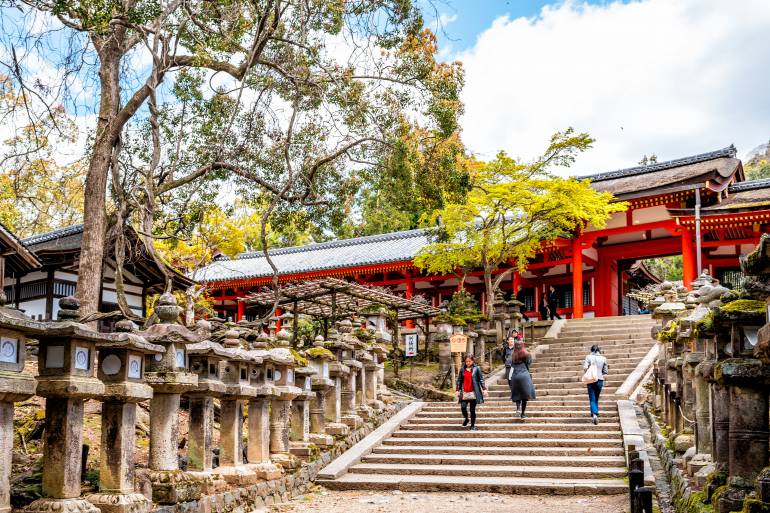
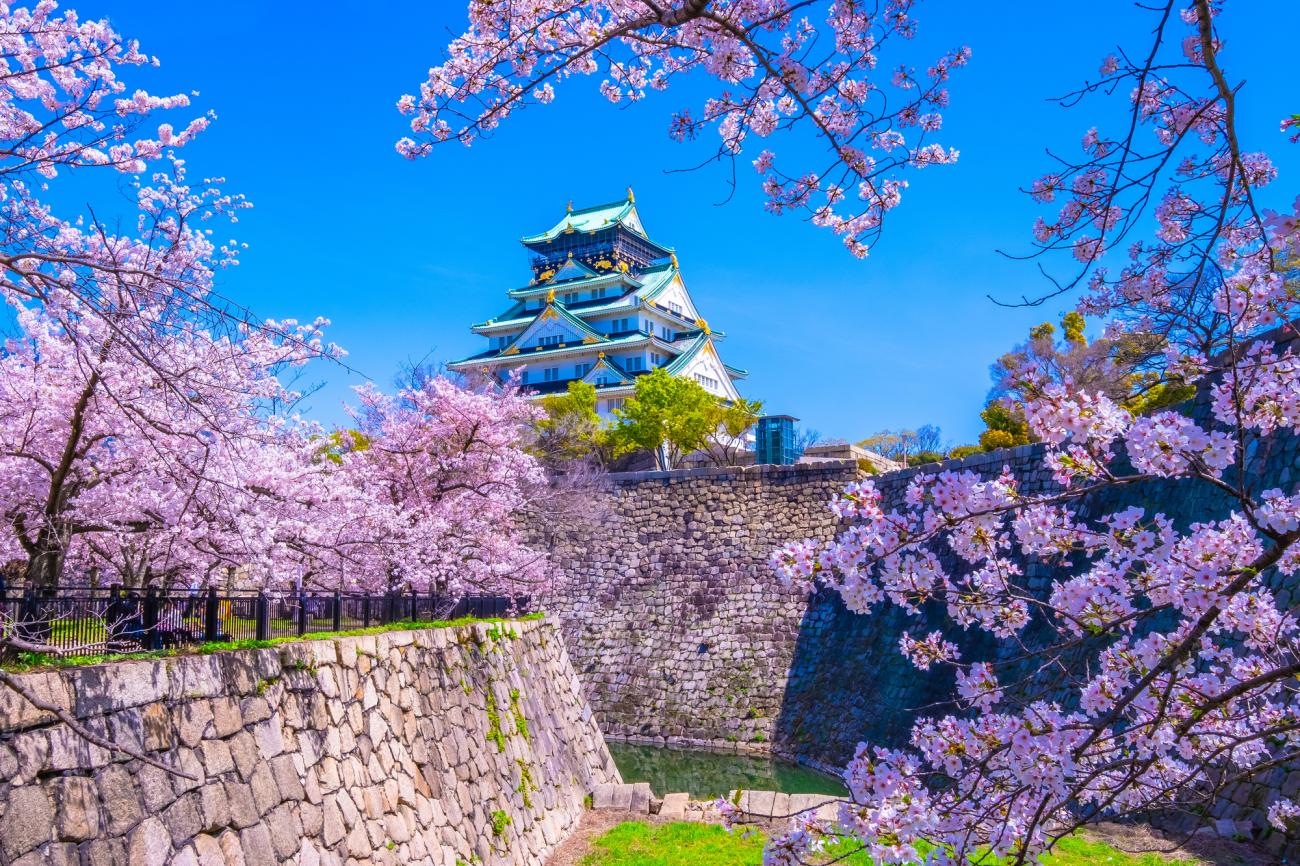
Nara stands as a monumental repository of Japan's ancient past, having been its first permanent capital. Here, you'll find UNESCO World Heritage sites like Todai-ji Temple, housing the Great Buddha (entry ¥600 / ~$4), and Kasuga Taisha Shrine with its thousands of lanterns. The entire Nara Park itself, with its free-roaming deer (senbei crackers for deer are ¥200 / ~$1.30 a pack), feels like a living historical document. The atmosphere is profoundly spiritual and contemplative. Osaka, while boasting a long and fascinating merchant history, particularly in areas like Shinsekai and the Osaka Castle (entry ¥600 / ~$4), doesn't possess the same concentrated ancient grandeur. Its culture is more about modern urban life, comedy, and its distinctive Kansai dialect. "Nara felt like stepping back a thousand years, the sheer scale of Todai-ji is mind-blowing. Osaka is cool but it's not the same kind of deep history." For an immersive journey into Japan's ancient foundations, Nara is simply incomparable.
Winner takeaway
- Winner: Nara
- Why: Nara's status as an ancient capital, its numerous UNESCO World Heritage sites, and its pervasive historical atmosphere make it a clear winner for cultural immersion.
- Who this matters for: History buffs, culture seekers, spiritual travelers, and those interested in ancient Japanese architecture.
🌃 Nightlife & Entertainment
When the sun sets, Osaka truly comes alive, making it the undisputed champion for nightlife and entertainment. The Dotonbori area, lit by neon signs like the famous Glico Man, is a spectacle in itself, brimming with izakayas, bars, and street performers. You can easily find a lively bar for drinks (cocktails ¥700-¥1,200 / ~$5-8) or a karaoke box (¥1,000-¥3,000 / ~$7-20 per hour per person depending on time) until the early hours. Areas like Namba and Umeda also offer a plethora of clubs, live music venues, and unique themed bars. Shinsekai, while older, also has a distinct evening charm. Nara, on the other hand, is extremely quiet after dark. Most shops and restaurants close relatively early, by 6 PM or 7 PM, and there's virtually no bar or club scene. "If you're looking for a party, stay in Osaka. Nara literally rolls up the sidewalks after dinner." For anyone wanting to experience Japan's dynamic urban evenings, Osaka is the only choice.
Winner takeaway
- Winner: Osaka
- Why: Osaka's vibrant Dotonbori, extensive bar and club scene, and countless entertainment options make it a nightlife powerhouse compared to Nara's quiet evenings.
- Who this matters for: Party-goers, young travelers, solo travelers looking to socialize, and anyone who enjoys lively evenings.
💰 Costs & Budget
This category is a surprisingly nuanced 'Tie' depending on how you travel. Nara can feel cheaper if you're comparing a simple guesthouse (¥4,000-¥7,000 / ~$27-47) and modest meals (¥800-¥1,200 / ~$5-8) to Osaka's average hotel prices (¥8,000-¥15,000 / ~$55-100+). However, Osaka offers a far greater range of budget-friendly food options, especially street food and cheap eats, which can keep your daily food budget lower if you're savvy. Transport within Nara is largely walkable, saving you money, whereas Osaka's extensive subway system adds up (daily pass ¥800 / ~$5.50). For attractions, both have affordable entry fees (often ¥500-¥1,000 / ~$3.50-7). "Nara is quieter, so less temptation to spend on random stuff. But in Osaka, I could eat like a king for cheap street food." Ultimately, a budget traveler can manage both for similar daily expenditures, but Osaka offers more ways to save on food while having more opportunities to splurge on experiences, balancing out the slightly higher baseline costs.
Winner takeaway
- Winner: Tie
- Why: While Nara has cheaper average accommodation, Osaka's vast array of budget food options and competitive pricing for certain activities balance out the overall travel costs.
- Who this matters for: Budget-conscious travelers and those looking for good value, regardless of whether they prefer urban or historical settings.
🚶 Getting Around
Nara truly shines for its walkability, making it incredibly easy and enjoyable to navigate. From both Kintetsu Nara Station and JR Nara Station, the main attractions like Nara Park, Todai-ji Temple, Kasuga Taisha Shrine, and Kofuku-ji Temple are all within a 15-30 minute stroll. You'll rarely need to use a bus, saving on transport costs and allowing for a more intimate exploration. This compact nature is a huge plus for many travelers. Osaka, conversely, is a sprawling metropolis that absolutely requires its world-class public transport system. The JR Loop Line and Osaka Metro lines are incredibly efficient but can be complex and add to daily expenses (a single ride often ¥180-¥370 / ~$1.20-2.50). "I loved just walking everywhere in Nara, felt so relaxing. Osaka's trains are great but you spend a lot of time underground." While Osaka's system is top-notch, Nara's simplicity and the joy of exploring on foot give it the edge for ease and enjoyment of 'getting around.'
Winner takeaway
- Winner: Nara
- Why: Nara's compact size allows for easy, enjoyable, and free exploration of its main attractions entirely on foot, eliminating the need for complex public transport.
- Who this matters for: Travelers who prefer walking, those who dislike navigating complex public transport, and families with strollers.
🛌 Accommodation
Osaka offers an overwhelming variety of accommodation options to suit every budget and style, making it the clear winner. You can find everything from luxurious 5-star hotels like the Conrad Osaka (¥40,000+ / ~$270+) to comfortable business hotels like APA Hotel (¥8,000-¥15,000 / ~$55-100), trendy hostels (¥3,000-¥5,000 / ~$20-35 for a dorm bed), and unique capsule hotels (¥3,000-¥6,000 / ~$20-40). Key areas like Namba, Umeda, and Tennoji provide excellent transport links and amenities. Nara, while charming, has a much more limited selection. You'll find a handful of traditional ryokans, some pleasant guesthouses (often ¥5,000-¥10,000 / ~$35-70), and a few standard hotels near the stations. "Finding a decent, affordable place in Osaka near the station was so easy. Nara felt like I had fewer choices and they booked up fast." If you're looking for choice, competitive pricing, and a range of experiences from minimalist to opulent, Osaka is the superior choice for staying overnight.
Winner takeaway
- Winner: Osaka
- Why: Osaka provides an extensive, diverse, and competitively priced range of accommodation options, from luxury to budget, across multiple convenient city hubs.
- Who this matters for: All types of travelers, from luxury seekers to budget backpackers, and those who value choice and flexibility.
🌳 Nature & Outdoors
Nara is a sanctuary of natural beauty, famously centered around Nara Park, where over a thousand wild sika deer roam freely, interacting with visitors. This expansive park isn't just a place for deer; it's dotted with ancient trees, serene ponds, and provides picturesque walks leading to temples and viewpoints like Mount Wakakusa, which offers stunning panoramic views (especially during the annual Yamayaki festival). Isuien Garden (¥650 / ~$4.50) and Yoshikien Garden are also exquisite examples of traditional Japanese landscaping. Osaka, by contrast, is a dense urban jungle. While it has some pleasant city parks like Osaka Castle Park and Tennoji Park, they are distinctly man-made and don't offer the same sense of wild, ancient nature. "Nara's deer park felt like being in a fairytale, and climbing Wakakusa-yama was such a refreshing break from cities." For genuine natural immersion and accessible outdoor activities, Nara is undoubtedly the superior destination.
Winner takeaway
- Winner: Nara
- Why: Nara's iconic deer park, serene gardens, and accessible natural landscapes like Mount Wakakusa offer a unique and pervasive connection to nature.
- Who this matters for: Nature lovers, families, photographers, and those seeking peaceful outdoor experiences away from urban bustle.
🛍️ Shopping
Osaka is a retail behemoth, offering an unparalleled shopping experience that caters to every possible taste and budget, making it the clear winner. From the high-end luxury brands at Hankyu Umeda Main Store and Grand Front Osaka to the trendy boutiques of Amerika-mura and Shinsaibashi-suji shopping street (one of Japan's longest covered shopping arcades), you'll find everything imaginable. Den Den Town in Nipponbashi is Osaka's answer to Akihabara, a haven for electronics, anime, and manga (prices vary widely, e.g., manga ¥600-¥1,000 / ~$4-7). Nara's shopping is more modest and traditional, focusing on local crafts, deer-themed souvenirs, and traditional sweets found around Nara Park and Higashimuki Shopping Street. "Osaka is where I blew my souvenir budget, especially in Dotonbori and Namba. Nara was more about quiet browsing for a few unique pieces." For serious shoppers, fashion enthusiasts, or anyone needing to stock up on electronics, Osaka is the ultimate destination.
Winner takeaway
- Winner: Osaka
- Why: Osaka's enormous shopping districts, diverse range of products from luxury to niche, and vibrant atmosphere provide an unmatched retail experience.
- Who this matters for: Shopaholics, fashion enthusiasts, tech geeks, souvenir hunters, and those looking for unique Japanese goods.
🗺️ Day Trips
Osaka's strategic location and exceptional transport links make it the undisputed king for day trips in the Kansai region. From Osaka (e.g., Shin-Osaka, Umeda, Namba stations), you can easily reach major destinations like Nara (30-45 mins, ~¥600-¥800 / ~$4-5), Kyoto (15-30 mins by Shinkansen or JR Special Rapid, ~¥580-¥1,500 / ~$4-10), Kobe (20-30 mins, ~¥400-¥700 / ~$3-5), and even Himeji Castle (1 hour, ~¥1,520 / ~$10) with minimal fuss. This allows travelers to base themselves in one city and explore extensively. Nara, while a fantastic destination itself, isn't a practical hub for day trips *out* of Nara. Its primary role in many itineraries is often *being* the day trip from Osaka or Kyoto. "Staying in Osaka and doing day trips to Kyoto and Nara was the smartest move. So easy to just hop on a train." For maximizing your exploration of Western Japan, Osaka is an unparalleled home base.
Winner takeaway
- Winner: Osaka
- Why: Osaka's central location and superior rail network provide unparalleled access to a wide array of popular day trip destinations across the Kansai region.
- Who this matters for: Travelers planning to explore multiple cities in Kansai, those who prefer to unpack once, and efficiency-focused sightseers.
✨ Overall Vibe
While Nara offers a profoundly peaceful and spiritual vibe, Osaka's overall energy and character make it a more universally appealing 'vibe' winner for many travelers. Osaka is known for its boisterous, friendly, and outgoing locals, its distinct Kansai dialect, and an infectious sense of fun. It's a city that embraces both tradition and modernity with a unique 'kuidaore' (eat 'til you drop) ethos. The atmosphere is vibrant, bustling, and always alive, offering a constant stream of sensory experiences from the neon lights of Dotonbori to the lively markets. Nara, conversely, is a tranquil escape, ideal for quiet contemplation and appreciating ancient wonders, but it can feel a bit sleepy after sunset. "Osaka just felt so alive, like the city itself was buzzing with personality. Nara was beautiful but a different kind of energy entirely." For a truly immersive, dynamic, and quintessentially Japanese urban experience with a unique character, Osaka's vibrant personality reigns supreme.
Winner takeaway
- Winner: Osaka
- Why: Osaka's infectious energy, outgoing locals, vibrant street scenes, and 'eat 'til you drop' culture create a uniquely dynamic and engaging urban atmosphere.
- Who this matters for: Travelers seeking excitement, unique local personality, social interaction, and a bustling urban environment.
❓ Frequently Asked Questions
Can I do Nara as a day trip from Osaka?
Absolutely, Nara is one of the easiest and most popular day trips from Osaka. Direct trains from both JR Namba and Kintetsu Namba/Osaka-Uehommachi stations take about 30-45 minutes and cost around ¥600-¥800 (~$4-5) one way. You can comfortably see the main sights like Nara Park, Todai-ji, and Kasuga Taisha in 4-6 hours.
How much time do I need for Nara?
For the main attractions around Nara Park (Todai-ji, Kasuga Taisha, Kofuku-ji, and deer interaction), a half-day to a full day is sufficient. If you want to explore more extensively, perhaps hike Mount Wakakusa or visit more distant temples, a full day or even an overnight stay would be more relaxing.
Is Osaka expensive for tourists?
Osaka is moderately priced compared to cities like Tokyo, offering great value for money, especially for food. While hotels can range from ¥8,000-¥20,000 (~$55-140) per night, excellent street food and local eateries keep dining costs down. Daily budgets can vary from ¥12,000-¥25,000 (~$80-170) depending on your style.
What's the best time to visit Nara and Osaka?
Spring (March-May) for cherry blossoms and autumn (October-November) for vibrant fall foliage offer the most pleasant weather and stunning scenery in both cities. Summers (June-August) are hot and humid, while winters (December-February) are cold but generally dry, with fewer crowds.
What's the best way to travel between Nara and Osaka?
The Kintetsu Nara Line is often preferred as it drops you off closer to Nara Park (Kintetsu Nara Station) than the JR Line (JR Nara Station). Both are efficient, with frequent departures. Consider which station in Osaka is more convenient for your accommodation when choosing.
Is it worth staying overnight in Nara?
Staying overnight in Nara allows for a more tranquil experience, especially enjoying the park and temples in the early morning or late evening after day-trippers have left. It's perfect for a slower pace, but if you prioritize nightlife or extensive dining, Osaka remains the better base.
Osaka vs Nara for families with kids?
Nara is fantastic for families due to the deer interaction, open park spaces, and easy walkability. Kids generally love feeding the deer. Osaka offers more diverse entertainment like Universal Studios Japan (approx. ¥8,600 / ~$58 for adults) and KidZania, but it's a busier, more urban environment. For a balance, do both!
Which city has better souvenir shopping?
Osaka offers a vastly superior range for souvenir shopping, from trendy fashion and electronics to unique local crafts and food items in areas like Shinsaibashi and Dotonbori. Nara's souvenirs are more focused on traditional crafts, local sweets, and, of course, deer-themed items, which are charming but limited in variety.
Ready to plan your Kansai trip?
Get a free custom itinerary for Nara, Osaka, or both — built from real traveler insights.
🎟️ Book Tours & Experiences
Hand-picked tours and activities for both destinations — book with free cancellation
Experiences via Viator — free cancellation on most tours