How We Compared These Destinations
This comparison draws on 12+ Reddit threads from r/travel, r/solotravel, r/digitalnomad, r/AskBalkans, and r/Europetravel, plus direct cost data from travelers who visited both cities. All prices are 2025–2026 reports.
- Reddit research: 12+ threads, 50+ comments synthesized
- Costs sourced from traveler reports and local sources (2025–2026)
- UNESCO heritage data from official listings
- Transit times from local bus operators and Google Maps
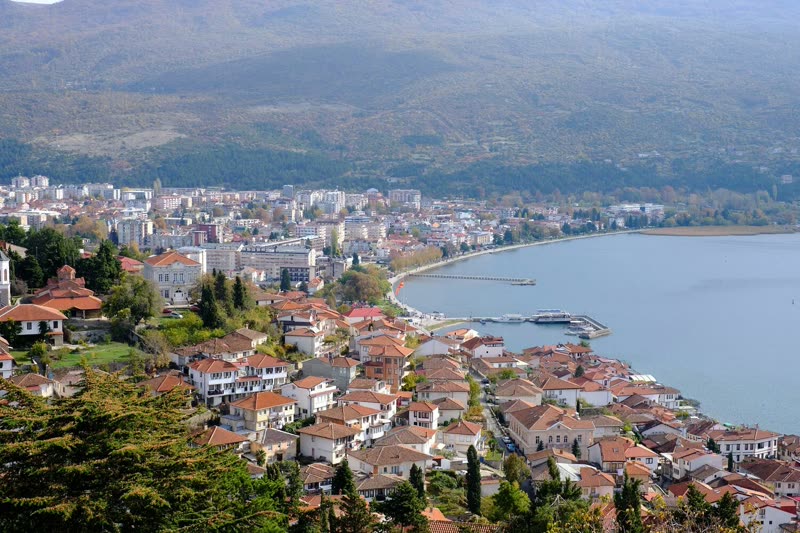
Lake Ohrid & Old Town, North Macedonia
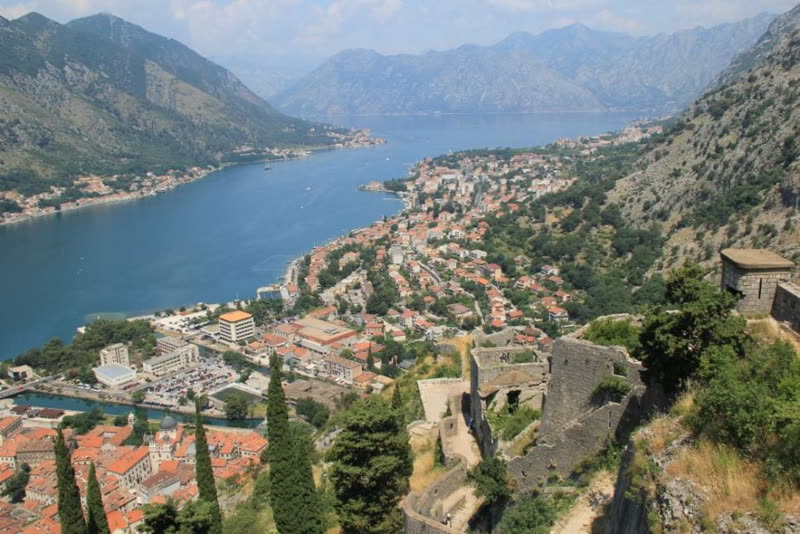
Bay of Kotor, Montenegro
⚡ The TL;DR Verdict
Ohrid wins on authenticity, price, and depth. If you want to feel like you discovered something real — a 2,000-year-old city on one of Europe's oldest lakes, where a lakeside dinner for two costs €15 and the sunset turns the water to gold — go to Ohrid. It's one of the most underrated destinations in Europe, full stop.
- 🏆 Budget travelers: Ohrid — dramatically cheaper in every category
- 🏆 Adriatic road-trippers (Dubrovnik → Montenegro): Kotor — fits the natural circuit
- 🏆 Authenticity seekers: Ohrid — less touristed, more local
- 🏆 Sea/coastal lovers: Kotor — gateway to the Adriatic
- 🏆 Digital nomads: Ohrid — better value, strong coworking scene
- 🏆 First Balkans trip: Kotor — easier logistics, euro-zone, more English
🏔️ Ohrid
Ancient, affordable, underrated. A lakeside city where Cyrillic was invented. One of Europe's best-kept secrets.
🏰 Kotor
Dramatic Venetian walled city in a fjord-like bay. A natural stop on the Dubrovnik-to-Albania circuit.
📊 Quick Comparison
| Category | 🏔️ Ohrid | 🏰 Kotor | Edge |
|---|---|---|---|
| Budget/night (hostel) | €10–18 | €20–40 | Ohrid |
| Dinner for two | €12–25 | €35–60 (old town) | Ohrid |
| Beer (local) | €1–1.50 | €3–5 | Ohrid |
| UNESCO Heritage | ✅ City + Lake ecosystem | ✅ Venetian fortifications | Tie |
| Swimming water | Freshwater lake, crystal clear | Bay (deep/rocky) — beaches nearby | Ohrid |
| Crowd level (summer) | Busy (Balkan vacationers) | Very busy (cruise ships) | Ohrid |
| English spoken | Limited in local areas | Widely spoken | Kotor |
| Currency | Macedonian denar (MKD) | Euro (€) | Kotor |
| History depth | 2,000+ years, 365 churches | Venetian medieval era | Ohrid |
| Day trip options | Struga, Ohrid Lake boat tours | Perast, Budva, Kotor Riviera | Tie |
| Authenticity | High — still very local | Moderate — well-touristed | Ohrid |
| Fortress hike | Tsar Samuel's Fortress (free) | St. John's Fortress (€8, or free via hike) | Ohrid |
🌊 Atmosphere & Vibe
Ohrid is what you imagine when you dream of a "hidden gem" — a small lakeside city of 42,000 people where the Byzantine churches outnumber the tourist traps, the old men still play chess in the square, and the lake stretches so clear and blue you forget it's not the Adriatic. It's the kind of place that makes you extend your stay.
Kotor occupies a completely different emotional register. Enclosed by 4.5 km of Venetian walls at the meeting point of steep karst mountains and the Bay of Kotor — one of Europe's most dramatic natural harbors — it's genuinely spectacular to look at. The old town's winding marble lanes, medieval squares, and cat-filled alleys are atmospheric in the best way. But in summer, it's crowded. Very crowded.
💰 Cost Comparison
This is the most dramatic difference between these two destinations. North Macedonia is one of Europe's cheapest countries; Montenegro, with its euro economy and proximity to Croatia's tourist trail, is significantly more expensive.
| Expense | 🏔️ Ohrid | 🏰 Kotor |
|---|---|---|
| Hostel dorm | €10–18/night | €20–40/night |
| Private guesthouse | €25–50/night | €50–120/night |
| Budget meal (local) | €3–6 | €8–14 |
| Restaurant dinner x2 | €15–25 | €35–65 (old town) |
| Local beer | €1–1.50 | €3–5 |
| Coffee | €0.80–1.20 | €1.50–2.50 |
| Fortress entry | Free (Tsar Samuel's) | €8 (or hike free) |
| Daily total (mid-range) | €25–45/day | €60–100/day |
Currency note: Kotor uses euros, which makes budgeting straightforward. Ohrid uses the Macedonian denar (1 EUR ≈ 61 MKD). ATMs are widely available in both cities. In Ohrid, cash is king — smaller local spots, beaches, and markets rarely take cards.
⛩️ Heritage & History
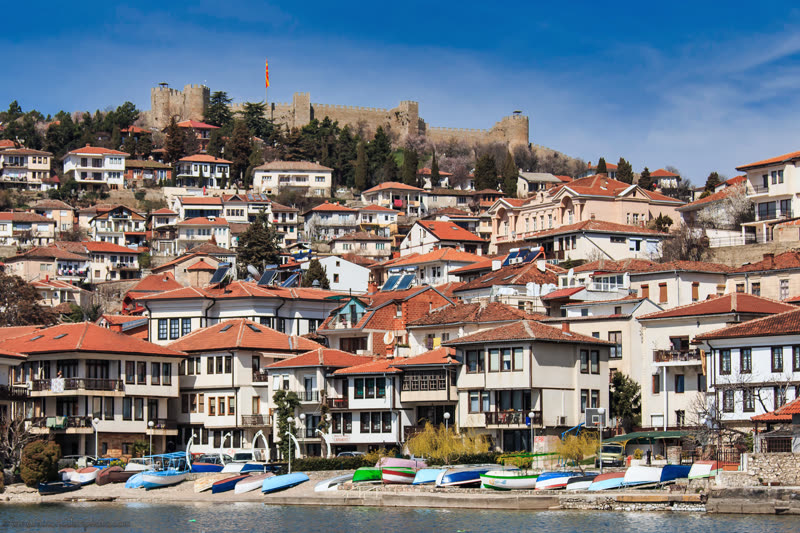
Both cities hold UNESCO World Heritage status — but the reasons are dramatically different, and Ohrid's heritage is, frankly, more mind-bending once you understand it.
Ohrid: Where Civilization Was Written Down
Ohrid is one of Europe's oldest continuously inhabited cities, with settlements dating back over 2,000 years. It was the home of Saints Cyril and Methodius's disciples — including St. Clement of Ohrid — who created the Glagolitic alphabet here in the 9th century, which evolved into Cyrillic. Every time you type a Russian, Serbian, Bulgarian, or Macedonian text, you're using a writing system that was essentially invented in Ohrid.
The city has 365 churches (one for every day of the year, according to local lore), an ancient Roman theatre, Tsar Samuel's Fortress with panoramic lake views, and the Church of St. John at Kaneo — possibly the most photographed spot in North Macedonia — perched dramatically on a cliff above the lake.
Kotor: Venice's Most Beautiful Outpost
Kotor's old town was built and fortified by the Republic of Venice over three centuries of rule. The city walls — 4.5 km of them, rising up the cliff face behind the city to St. John's Fortress — are among the best-preserved Venetian fortifications in existence. Inside, the Cathedral of Saint Tryphon (1166 AD), the Byzantine Clock Tower, and a maze of Romanesque stone buildings create an architectural time capsule. The hike up to the fortress takes 45–60 minutes and rewards you with views over the Bay of Kotor that genuinely make your jaw drop.
🍽️ Food & Dining
Ohrid's food scene is rooted in the lake — the local Ohrid trout (pastrmka) is a must, along with grilled carp, fresh cheese, and the omnipresent Balkan staples of ćevapi, burek, and grilled meats. Lakefront restaurants serve full meals for €6–12 per person, and the quality is genuinely good. The city also has excellent fresh produce markets and bakeries for budget eating.
Kotor has a more varied restaurant scene shaped by Venetian, Montenegrin, and coastal Adriatic traditions: fresh seafood, black risotto, prosciutto from Njeguši, and excellent local wines. The quality in the old town can be high — but so can the prices. Tourist trap restaurants right on the main squares charge €15–25 per main. Head to the streets further from the main gate for better value.
One thing Kotor does better: the Njeguši prosciutto and smoked cheese from the village 15 km up the mountain is world-class. Grab it from local producers or the old town market rather than restaurant menus.
🏖️ Swimming & Beaches
This is one of the most important practical comparisons for summer travelers — and the answer is more nuanced than it looks.
Ohrid: Lake Swimming Heaven
Lake Ohrid is an extraordinary body of water — one of Europe's oldest (3–5 million years old), deepest (296 m), and clearest. The water visibility extends to 22 meters in places. There are public beaches and rocky platforms right in town (Gradska Plaža), plus quieter spots along the lake shore within walking distance. The lake warms to comfortable swimming temperatures by June and stays warm through September. It's calm, jellyfish-free, and genuinely beautiful.
Kotor: Bay vs. Coast
Kotor Bay itself isn't great for swimming — it's deep, the waterfront is rocky, and it's busy with boat traffic. But Budva, Montenegro's main resort town, is just 30 minutes away by car and has excellent Adriatic beaches (Mogren Beach, Slovenska Beach). The Kotor Riviera between Kotor and Budva also has some pretty coves. If sea swimming is what you're after, base in Kotor and day-trip to the coast.
👥 Crowds & Tourism
Both destinations attract summer crowds, but the type and intensity are very different.
Ohrid peaks in July and August with Balkan domestic tourists — Macedonians, Albanians, Kosovars, Serbians. The vibe is festive but local. The old town and beaches get busy, but not overwhelmed. You'll share the lakefront promenade with families on holiday, not Instagram influencers on press trips. Shoulder season (May–June, September–October) is genuinely excellent — good weather, empty streets, very few tourists.
Kotor faces a different problem: cruise ships. Between May and October, multiple large cruise ships dock daily in the Bay of Kotor, offloading thousands of day-trippers directly into the old town by 9–10am. The old town, while genuinely beautiful, is small — and 5,000 people in the same 1.5 km² gets claustrophobic fast. Locals and experienced travelers consistently advise arriving before 9am or after 6pm to see the old town at its best.
🚌 Getting Around
Both cities are small and walkable — the old towns of both Ohrid and Kotor can be covered on foot in an afternoon. The challenge is getting between them and reaching day-trip destinations.
Ohrid
Ohrid has a small airport with seasonal connections from several European cities. By bus, it connects to Skopje (2.5h, €8–10), Tirana (4h, €15), and Pristina (3h). Within North Macedonia, buses are reliable but infrequent — check schedules the day before. Taxis in Ohrid are very cheap (€2–4 for most in-city trips). Renting a bicycle or scooter to explore the lake shore is popular.
Kotor
Kotor connects easily to Dubrovnik (2h by bus, €15–25), Budva (30 min, €3–5), Tivat Airport (20 min, €15 by taxi), and Podgorica (90 min). The bus station is just outside the old town gate. Car rental is popular for the Montenegro coast — driving the serpentine road above the Bay of Kotor with the views it offers is an experience in itself.
🌤️ Best Time to Visit
Both destinations have Mediterranean-influenced climates — warm, dry summers and mild winters — with some key differences.
Ohrid: Best visited May–June or September–October. Summer (July–August) is hot (28–34°C), busy, and more expensive. The lake is at its warmest (22–24°C) in August. Spring is beautiful — the lake is mirror-still and the old town is quiet. One Reddit digital nomad who stayed a month in September called it "one of our best DN destinations in five years." Winter is quiet (many businesses close), but the old town and lake scenery are hauntingly beautiful.
Kotor: The sweet spot is April–May and September–October — warm enough to hike the fortress and swim near Budva, but before or after the cruise ship peak. July–August is hot (30–35°C) and extremely crowded. The fortress hike in summer is grueling in the afternoon heat — always go before 10am. November through March is off-season: quiet, cheap, and genuinely pleasant for exploring the old town without the crush.
🗺️ Day Trips
From Ohrid
Lake boat tour — A must. Rent a small boat or join a tour to visit the Church of St. Naum at the southern end of the lake (Albanian border), swim in the Blue Eye spring, and visit the cave church St. Archangel Michael. Half-day or full-day options, €15–30 per person.
Struga (30 min) — Small town where Lake Ohrid flows into the Black Drin river. Charming, even cheaper than Ohrid.
Skopje (2.5h) — North Macedonia's baroque-meets-kitsch capital for a day of museums and bazaar wandering.
Albania — The Albanian side of Lake Ohrid is easily accessible. Lake Ohrid itself is half in North Macedonia, half in Albania.
From Kotor
Perast (15 min) — Tiny Venetian village with two island churches in the bay. Our Lady of the Rocks (an artificial island) is one of Montenegro's most photographed sites.
Budva (30 min) — Montenegro's main beach resort town with a nice old town and several good beaches.
Sveti Stefan (45 min) — A converted island village now a luxury resort, but beautiful to photograph from the road.
Lovćen National Park & Cetinje — The old royal capital of Montenegro, reached via the famous 25-hairpin mountain road above Kotor. Stunning drive.
🔀 Why Not Both?
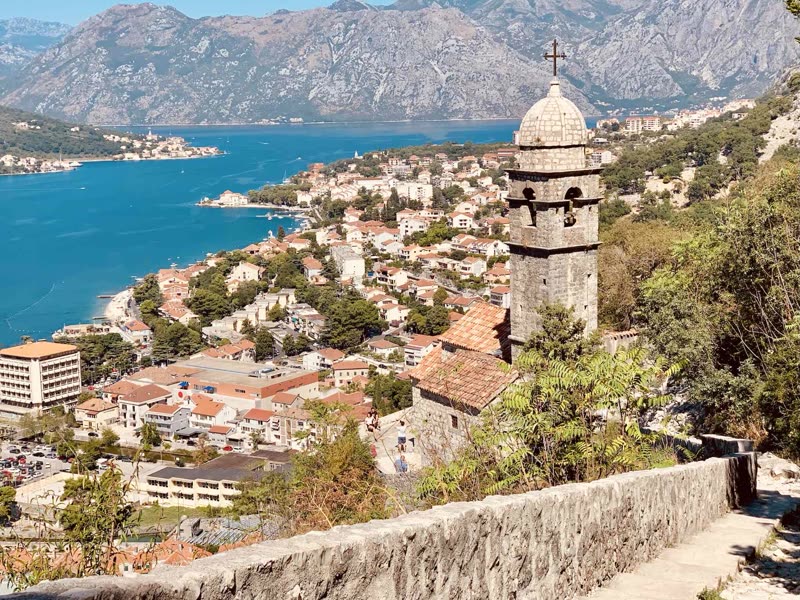
Here's the thing Reddit users doing the Balkans loop consistently say: Ohrid and Kotor complement each other perfectly, and doing both is the standard move on a Western Balkans itinerary.
The journey between them is long (7–10 hours by bus or car, including border crossings), but most experienced Balkans travelers turn this into an asset by stopping in Albania en route — specifically Shkodër, Tirana, or Berat. The full loop from Dubrovnik down to Kotor, through Albania, to Ohrid, and back up through Serbia is one of Europe's best-value road trips.
Suggested combined itineraries
10 days Balkans loop: Dubrovnik (2 days) → Kotor (2–3 days) → Shkodër/Tirana, Albania (2 days) → Ohrid (2–3 days) → Skopje (1 day) → fly out
2-week circuit: Split → Dubrovnik → Kotor → Budva → Tirana → Berat → Ohrid → Skopje → Pristina → Belgrade → fly out
Short Balkans focus: Fly into Ohrid, 3 days lake time, bus to Tirana, bus to Shkodër, overnight bus or drive to Kotor, 2–3 days, fly out via Tivat or Podgorica
Also worth reading: our Kotor vs Mostar comparison, Dubrovnik vs Split, and Tbilisi vs Yerevan for more Balkans and Caucasus planning.
🎯 The Decision Framework
Choose Ohrid If…
- Budget travel is a priority
- You want an authentic, under-touristed destination
- Lake swimming appeals more than sea beaches
- You're interested in ancient history and Byzantine heritage
- You're a digital nomad or slow traveler
- You prefer local restaurants over tourist menus
- You're already routing through North Macedonia or Albania
- You want to feel like you discovered something real
- Shoulder season or off-season travel works for you
Choose Kotor If…
- You're doing the Dubrovnik–Montenegro circuit
- Venetian architecture and dramatic fjord scenery matters
- You want easier logistics (euros, English, EU connectivity)
- Sea beaches are non-negotiable (Budva day trip)
- A dramatic fortress hike is on your list
- You're visiting in spring or fall shoulder season
- The Adriatic coastal vibe appeals more than inland lakes
- Day trips to Perast and Montenegro's national parks interest you
- It's your first Balkans trip and easier navigation helps
❓ Frequently Asked Questions
Is Ohrid or Kotor better for first-time Balkans travelers?
Kotor is typically the easier first stop — Montenegro uses euros, English is widely spoken, and it's a well-established tourist circuit (Dubrovnik → Kotor is one of Europe's most popular road trips). Ohrid in North Macedonia requires a bit more planning, uses the Macedonian denar, and has fewer English speakers — but rewards you with a dramatically more authentic experience and prices 30–50% lower than Kotor.
How far apart are Ohrid and Kotor?
Roughly 340 km by road, but it's a long journey — expect 7–10 hours depending on route and border crossings. Most travelers route through Albania (Shkodër or Tirana) to break the trip. A summer night bus used to run directly; check current schedules as these change seasonally. A direct drive takes 8–10 hours including borders, often with a delay at the Montenegro–Albania crossing.
Which is cheaper, Ohrid or Kotor?
Ohrid is significantly cheaper. Budget accommodation runs €10–18/night in Ohrid vs €20–40 in Kotor. A lakeside dinner for two in Ohrid costs €15–25; the same in Kotor's old town easily hits €40–60. Beer is about €1.50 in Ohrid, €3–5 in Kotor. As a digital nomad destination, Ohrid offers exceptional value — one Reddit user reported a full month including coworking for under €700.
Which has better swimming — Ohrid or Kotor?
Different types of swimming. Lake Ohrid has calm, crystal-clear freshwater perfect for long swims, with public beaches right in town. Kotor Bay itself isn't great for swimming (deep, rocky), but the Montenegrin coast at Budva (30 min away) has excellent Adriatic beaches. If lake swimming is your thing, Ohrid wins easily. If you want sea beaches, base in Kotor and day-trip to Budva.
Is Ohrid worth visiting outside of summer?
Yes — and arguably better. Spring (April–May) and early fall (September–October) offer mild weather, the lake at its clearest, and a fraction of the summer crowds. One Reddit digital nomad report from September called Ohrid "one of our best DN destinations in five years of nomading." Winter is quiet, some businesses close, but the old town and lake views are magical in the off-season.
Can you do Ohrid and Kotor in the same trip?
Absolutely — they're commonly combined in a Western Balkans road trip or backpacking loop. A typical route: Dubrovnik → Kotor → Shkodër (Albania) → Tirana → Berat → Ohrid → Skopje. Expect 10–14 days for this circuit. The journey between Ohrid and Kotor is long (7–10 hours), so build in a buffer day or stop in Albania en route.
Which is better for history and heritage — Ohrid or Kotor?
Both are UNESCO World Heritage Sites, but for different reasons. Ohrid is one of Europe's oldest continuously inhabited cities (over 2,000 years), home to the invention of the Cyrillic alphabet, with 365 churches and an ancient theater. Kotor's Venetian-era fortified city with intact walls is among the best preserved in Europe. History buffs will be satisfied by either — the question is whether you prefer ancient Macedonian-Byzantine or Venetian medieval heritage.
Is Kotor too touristy in summer?
Yes, significantly so. Kotor is a cruise ship stop — between June and August, the old town fills with thousands of day-trippers from massive ships by 10am. Locals and experienced travelers consistently recommend exploring the old town before 9am or after 6pm. Ohrid also gets busy in July–August (popular with Balkan vacationers), but never at cruise-ship scale. If you hate tourist crowds, visit Kotor in shoulder season (April–May or September–October).
Ready to plan your Balkans trip?
Get a custom Balkans itinerary — Ohrid, Kotor, or the full loop — built from real traveler routes, not generic templates.
🎟️ Book Tours & Experiences
Hand-picked tours and activities for both destinations — book with free cancellation
Experiences via Viator — free cancellation on most tours