How we built this comparison
This page combines traveler discussion patterns, published price ranges, flight schedules, and seasonal data to help you decide between Okavango and Serengeti.
- Reviewed 100+ Reddit threads from r/travel, r/solotravel, r/africa, r/Botswana, r/Tanzania, and r/wildlife for authentic traveler experiences and advice.
- Verified costs and logistics against current booking platforms for major safari operators and flight providers (e.g., Wilderness Safaris, &Beyond, Skyscanner, Expert Africa).
- Cross-referenced seasonal patterns, weather data, and migration calendars from reputable wildlife conservation and tourism organizations.
- Incorporated insights from experienced safari guides and travel advisors specializing in East and Southern Africa.
⚡ The TL;DR Verdict
For those craving unparalleled exclusivity, intimate wildlife encounters, and the unique mokoro experience, the Okavango Delta is your winner, typically budgeting $800-1500+ USD per person per day. If you dream of epic migrations, incredible predator action, and a more accessible, diverse safari with options from $400-1000 USD per person per day, the Serengeti is your calling.
- Choose Okavango: Pick the Okavango Delta if you prioritize a highly exclusive, luxurious, and unique water-based safari experience, with fewer crowds and extraordinary birdlife, especially if your budget is on the higher end.
- Choose Serengeti: Opt for the Serengeti if witnessing the Great Migration is your top priority, you desire a classic 'Big Five' safari with vast plains and high predator density, and appreciate a range of accommodation options.
- Choose Both: If you have 14+ days and a generous budget (allowing for international flights between countries), combining both offers the ultimate contrast between wetland wilderness and classic savannah, a truly comprehensive African experience.
Quick Comparison
| Category | Okavango | Serengeti | Winner |
|---|---|---|---|
| Wildlife Diversity & Density | Exceptional wetland specialists, dense predator populations, incredible birdlife, but Big Five viewing can be harder due to thick vegetation. | Unmatched large mammal concentrations, iconic Great Migration, high predator sightings, easy Big Five viewing on open plains. | Serengeti |
| Overall Costs & Budget | Generally more expensive due to low-impact, high-cost tourism model, internal flights, and exclusive concessions. | Wider range of budget options, from mobile camping to luxury lodges, though high-end can match Okavango prices. | Serengeti |
| Accommodation Style & Luxury | Focus on intimate, exclusive, and often opulent tented camps within private concessions; highly personalized service. | Diverse range from basic mobile camps to permanent tented lodges and hotel-style luxury resorts; more options, but less universal exclusivity. | Okavango |
| Logistics & Accessibility | Mainly fly-in safaris from Maun, requiring light aircraft transfers, which are efficient but add cost and luggage restrictions. | Combination of driving from Arusha/Karatu and internal flights; more flexibility with road transfers, but can involve longer travel times. | Tie |
| Best Time to Visit & Weather | Dry season (May-Oct) for best wildlife and water levels; green season (Nov-Apr) offers stunning birdlife and baby animals. | Dry season (June-Oct) for Migration river crossings; green season (Dec-March) for calving and lush landscapes. | Tie |
| Crowds & Exclusivity | Highly exclusive due to private concessions and low-volume tourism; rarely encounter other vehicles outside your camp's drives. | Can feel crowded in peak season and popular areas (e.g., Seronera); private concessions offer more exclusivity but at a higher cost. | Okavango |
| Safari Activities & Immersion | Unique mokoro (dugout canoe) safaris, motorboat safaris, walking safaris, night drives, and traditional game drives. | Classic game drives, hot air balloon safaris, guided walking safaris (limited zones), cultural visits to Maasai villages. | Okavango |
| Family Friendliness | Better for older children (12+) due to exclusivity, quiet atmosphere, and potential for longer drives/boat trips. Some camps have age restrictions. | More options for younger children with family-friendly lodges, dedicated activities, and broader appeal due to migration spectacle. | Serengeti |
| Conservation Ethos & Impact | Strong commitment to low-impact, high-value tourism; significant funding directed to conservation through concession fees. | Large national park with established conservation efforts; faces challenges with human-wildlife conflict and high tourism volume in some areas. | Okavango |
| Landscape & Scenery | Unique wetland wilderness with shimmering floodplains, lagoons, islands, and riverine forests; constantly changing water levels. | Iconic endless savannah plains, rolling hills, granite kopjes, acacia woodlands, and the dramatic Serengeti River. | Tie |
🦁 Wildlife Diversity & Density
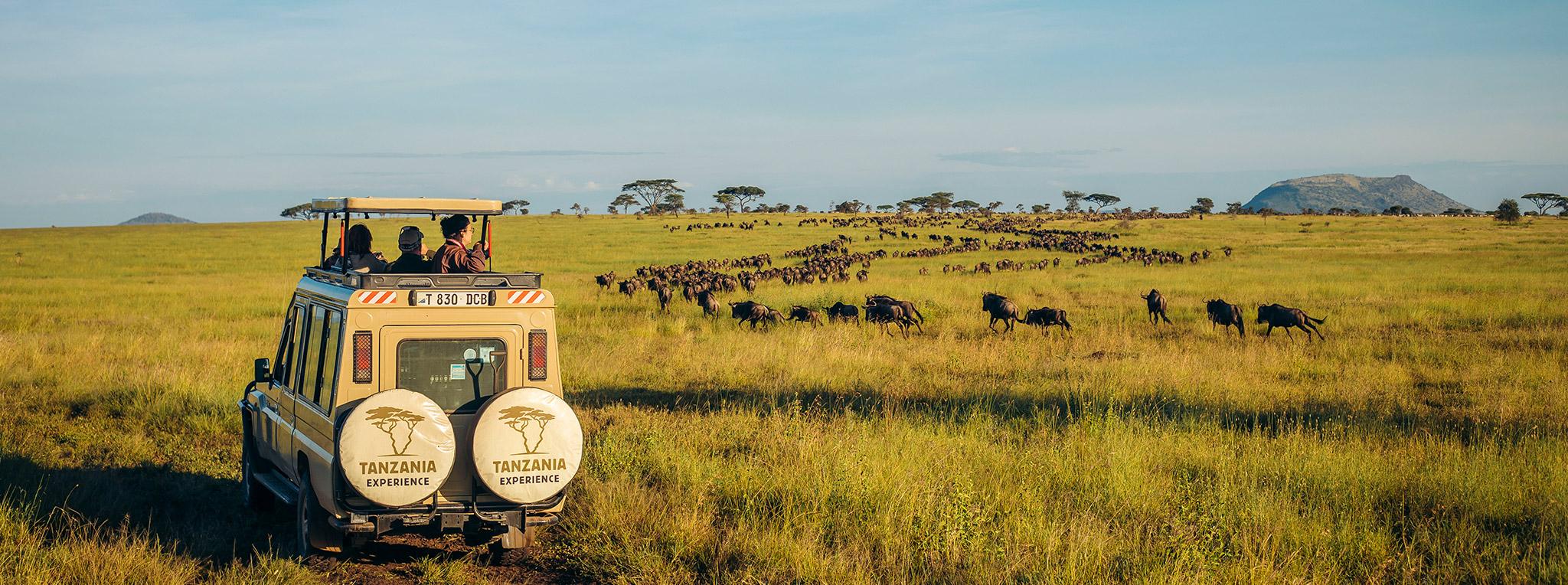
While both offer incredible wildlife, the Serengeti truly shines for sheer volume and the iconic Great Migration. In the Serengeti, you'll witness hundreds of thousands of wildebeest and zebra, especially in areas like Ndutu (calving season) or the Mara River (crossing season). Predator sightings are frequent, with lions, leopards, and cheetahs often spotted during a single game drive near Seronera. You'll easily tick off the Big Five, though rhino sightings (especially black rhinos) are still challenging but possible in the Moru Kopjes or Ngorongoro. The Okavango, while dense, features more specialized animals like red lechwe, sitatunga, and painted wolves (African wild dogs) that thrive in its watery environment. Visibility can be tougher in the thick reeds. 'Honestly, I saw so many lions in the Serengeti I actually got a bit blasé about it, but spotting a cheetah on the hunt was mind-blowing – totally different scale of action than our Okavango mokoro trip, which was more about the smaller details and elephants at water's edge,' one traveler noted. For the sheer 'wow factor' of massive herds and open-plain predator action, the Serengeti is hard to beat.
Winner takeaway
- Winner: Serengeti
- Why: The Serengeti offers unparalleled numbers of large mammals, the iconic Great Migration, and more consistent Big Five sightings on its open plains.
- Who this matters for: First-time safari-goers, those focused on the Great Migration, and 'Big Five' enthusiasts.
💸 Overall Costs & Budget
Botswana's 'high value, low volume' tourism policy makes the Okavango Delta inherently pricier. Expect daily costs for a mid-range safari to be around $800-1200 USD (approx. BWP 10,800 - 16,200) per person, easily climbing to $1500-2500+ USD (approx. BWP 20,250 - 33,750) for luxury camps like those in the Moremi Game Reserve or private concessions like those operated by Wilderness Safaris or &Beyond. This includes internal charter flights, which are a necessity and add significantly to the cost. The Serengeti, on the other hand, offers a broader spectrum. You can find excellent budget mobile safaris starting around $400-600 USD (approx. TZS 1,000,000 - 1,500,000) per person per day, mid-range tented camps like Ang'ata Camps or Kati Kati Camp at $700-1000 USD (approx. TZS 1,750,000 - 2,500,000), and ultra-luxury options like Singita Grumeti or Four Seasons Serengeti easily surpassing $1500+ USD (approx. TZS 3,750,000) per day. 'Botswana broke my bank, but was worth every penny for the exclusivity. Tanzania was more manageable for a 10-day trip, even with a few splurges on balloon safaris,' a Reddit user shared. The price flexibility in the Serengeti makes it more accessible for diverse budgets.
Winner takeaway
- Winner: Serengeti
- Why: The Serengeti offers a significantly wider range of accommodation and safari styles, making it accessible to a broader budget spectrum.
- Who this matters for: Budget-conscious travelers, those looking for value, and those wanting longer safari experiences without breaking the bank.
🛌 Accommodation Style & Luxury
The Okavango Delta excels in delivering an intimate, high-end, and exclusive luxury experience. Camps here, like Mombo Camp (often cited as one of Africa's best) or Chief's Camp, are typically small, with 6-12 rooms, ensuring personalized service and minimal guest interaction. Most are 'fly-in' camps located in private concessions or the Moremi Game Reserve, offering activities like walking safaris and night drives not allowed in national parks. Think opulent canvas tents with en-suite bathrooms, private viewing decks, and gourmet dining. While the Serengeti has incredible luxury options like the Four Seasons Safari Lodge or the various Singita lodges which rival anything in Botswana, it also has a greater number of larger, more accessible lodges and basic mobile camps. This means the overall 'feel' of luxury in the Okavango is more consistently exclusive across its offerings. 'Our camp in the Okavango (Machaba Camp) felt like a five-star hotel in the middle of nowhere – every detail was perfect, and we barely saw another vehicle outside our own,' reported a satisfied traveler. The focus in Botswana is on understated elegance and immersion, a truly premium offering.
Winner takeaway
- Winner: Okavango
- Why: The Okavango Delta's entire tourism model is built around small, exclusive, and luxurious tented camps offering unparalleled intimacy and service.
- Who this matters for: Luxury travelers, honeymooners, and those seeking an exclusive, private safari experience.
✈️ Logistics & Accessibility
Both destinations have their logistical quirks. For the Okavango, you'll typically fly into Maun (MUB) from Johannesburg (JNB) or Gaborone (GBE). From Maun, it's mandatory light aircraft transfers to specific bush airstrips, often included in your safari package. These flights are usually 20-45 minutes and are incredibly scenic, but strict luggage limits (15-20kg in soft bags) apply. This makes getting between camps very quick and seamless. The Serengeti usually starts with an international flight into Kilimanjaro (JRO) or Dar es Salaam (DAR), followed by a domestic flight to Arusha (ARK) or a charter directly into the Serengeti (e.g., Seronera Airstrip). Many safaris involve driving from Arusha through Ngorongoro to the Serengeti, taking a full day but offering scenic views and stops. 'The small plane transfers in Botswana were a bit nerve-wracking but so efficient – we were on game drives within an hour of landing. Tanzania felt more like a road trip, which was cool, but those distances are no joke,' observed a traveler. While Botswana offers seamless air travel within the delta, Tanzania provides more options (road vs. air) but also longer potential travel days by road. Neither is 'easy' in a conventional sense, but both are well-oiled safari machines.
Winner takeaway
- Winner: Tie
- Why: Both destinations have efficient but distinct logistical challenges and advantages, catering to different travel styles and preferences.
- Who this matters for: Travelers prioritizing speed and seamless transfers (Okavango) vs. those who enjoy scenic road journeys (Serengeti).
☀️ Best Time to Visit & Weather
Both destinations offer distinct 'best' times depending on what you want to see. The Okavango's dry season (May to October) is prime for wildlife viewing as animals congregate around shrinking water sources and vegetation thins. This is also when the Delta is at its fullest due to floodwaters from Angola, perfect for mokoro rides. Temperatures are pleasant, around 20-30°C (68-86°F). The green season (November to April) brings lush landscapes, incredible birdlife, and many baby animals, with afternoon thunderstorms, but can be hot and humid. For the Serengeti, the dry season (June to October) is crucial for witnessing the dramatic Mara River crossings of the Great Migration. Wildlife is concentrated, and game viewing is excellent. However, the green season (December to March) in the southern Serengeti (Ndutu) is spectacular for the wildebeest calving season, offering intense predator action and stunning photographic opportunities. 'We went to the Okavango in August and it was perfect – cool mornings, warm days, and the water was high. The Serengeti in February for calving was epic, but definitely hotter and rainier at times, though the storms were amazing for photos,' a traveler mentioned. Ultimately, the 'best' time is subjective and depends entirely on your priority, as both offer incredible experiences in different seasons.
Winner takeaway
- Winner: Tie
- Why: Both destinations have distinct 'peak' seasons tailored to different wildlife events and weather preferences, making a direct 'winner' difficult.
- Who this matters for: Travelers with specific wildlife goals (e.g., Migration vs. water activities) or those with flexible travel dates.
🤫 Crowds & Exclusivity
This is where the Okavango Delta truly stands out. Botswana's high-value, low-volume tourism model and the prevalence of private concessions mean you often feel like you have the entire wilderness to yourself. Camps have exclusive traversing rights over vast areas, limiting vehicle numbers and ensuring a highly intimate safari experience. You might go an entire game drive without seeing another safari vehicle, which is a significant draw for many. The Serengeti, being a massive and incredibly popular national park, can feel more crowded, especially during peak migration seasons around the Mara River or in central Seronera. While the park is huge, certain wildlife hot spots can attract multiple vehicles. 'The Okavango was blissfully private – just us and our guide. In the Serengeti, sometimes it felt like a queue for a good lion sighting, especially in July, though our guide was great at finding quieter spots,' a seasoned traveler shared. If avoiding crowds and experiencing truly unspoiled wilderness is paramount, the Okavango delivers this exclusivity consistently across its price points, whereas in the Serengeti, you need to pay significantly more for private concessions (like Singita Grumeti Reserve) to achieve a similar level of privacy.
Winner takeaway
- Winner: Okavango
- Why: The Okavango Delta's tourism model and private concessions ensure a consistently exclusive and uncrowded safari experience.
- Who this matters for: Travelers seeking ultimate privacy, minimal crowds, and an intimate connection with nature.
🛶 Safari Activities & Immersion
The Okavango Delta offers a more diverse and immersive range of safari activities beyond the traditional game drive. The iconic mokoro (dugout canoe) safari, gliding silently through the waterways propelled by a poler, provides an unparalleled perspective on the delta's aquatic life and smaller creatures – a truly unique experience. Motorboat safaris allow you to explore larger channels and get closer to hippos and crocodiles. Crucially, many camps in private concessions also offer walking safaris and night drives, allowing you to see nocturnal animals and experience the bush on foot, which is restricted in most national parks. 'The mokoro trip in the Okavango was genuinely spiritual – so peaceful, seeing elephants swim and kingfishers darting. It was a completely different vibe than the adrenaline-filled game drives in the Serengeti, which were also amazing, but less 'involved',' a traveler reflected. The Serengeti focuses primarily on vehicle-based game drives, which are incredible for covering vast distances and tracking big game. Hot air balloon safaris are a spectacular addition in the Serengeti (around $600 USD per person) and are highly recommended for a sunrise view. While walking safaris are available, they are typically less central to the experience and confined to specific areas. For a multi-faceted approach to experiencing the wilderness, the Okavango takes the lead.
Winner takeaway
- Winner: Okavango
- Why: The Okavango Delta provides a broader, more unique range of safari activities, particularly water-based options, walking safaris, and night drives.
- Who this matters for: Adventure seekers, those looking for diverse ways to experience wildlife, and travelers seeking unique cultural/nature interactions.
👨👩👧👦 Family Friendliness
While both destinations can be enjoyed by families, the Serengeti generally offers more tailored options for those traveling with children. Many lodges and camps in the Serengeti, such as the Four Seasons Safari Lodge or various &Beyond properties, have specific 'kids' clubs' or dedicated activities for younger guests, including junior ranger programs, nature walks around the lodge, and child-friendly meal options. The sheer spectacle of the Great Migration and the abundance of animals on open plains tend to keep younger kids more engaged during game drives. The Okavango Delta, with its emphasis on quiet immersion, exclusive camps, and often strict age limits (typically 12+ for mokoro, walking, and sometimes even game drives), can be less suitable for very young children. 'We took our 8-year-old to the Serengeti and he absolutely loved it, especially seeing the 'Lion King' animals everywhere! Our guide was fantastic at keeping him entertained. I don't think he would've had the same patience for the quieter Okavango experience,' shared a parent on r/travel. While some Okavango camps are becoming more family-friendly (e.g., Kwara Camp), the Serengeti's wider array of choices and inherent appeal to younger audiences makes it the winner here.
Winner takeaway
- Winner: Serengeti
- Why: The Serengeti offers more dedicated family-friendly lodges, activities, and a greater appeal for younger children with its vast open plains and abundance of animals.
- Who this matters for: Families with young children, or those seeking lodges with specific child-focused amenities and programs.
🌳 Conservation Ethos & Impact
Botswana's conservation strategy for the Okavango Delta is world-renowned and a core part of its tourism identity. The 'high value, low volume' approach means fewer visitors but higher revenue, which is directly channeled into conservation and community development. Many camps operate on long-term concessions, investing heavily in anti-poaching, research, and local employment. The Okavango Delta achieved UNESCO World Heritage status, further solidifying its protected status. The Serengeti, as a national park, also has robust conservation programs managed by TANAPA (Tanzania National Parks Authority) and various NGOs working on the ground. However, its sheer popularity and higher visitor numbers in certain areas can lead to increased environmental impact, and there are ongoing challenges with human-wildlife conflict around the park's borders and the Ngorongoro Conservation Area. 'It felt good knowing that my money in Botswana was really going directly back into protecting that incredible ecosystem and supporting the local communities, it's a very transparent model,' a conscious traveler noted. While both contribute significantly to conservation, Botswana's entire tourism framework is more intrinsically linked to and structured around conservation funding and low environmental impact, making it slightly more appealing for the environmentally conscious traveler.
Winner takeaway
- Winner: Okavango
- Why: Botswana's national tourism policy is explicitly built on low-impact, high-value conservation, with a strong focus on sustainable practices and direct community benefits.
- Who this matters for: Eco-conscious travelers, those interested in sustainable tourism, and travelers who prioritize funding direct conservation efforts.
🏞️ Landscape & Scenery
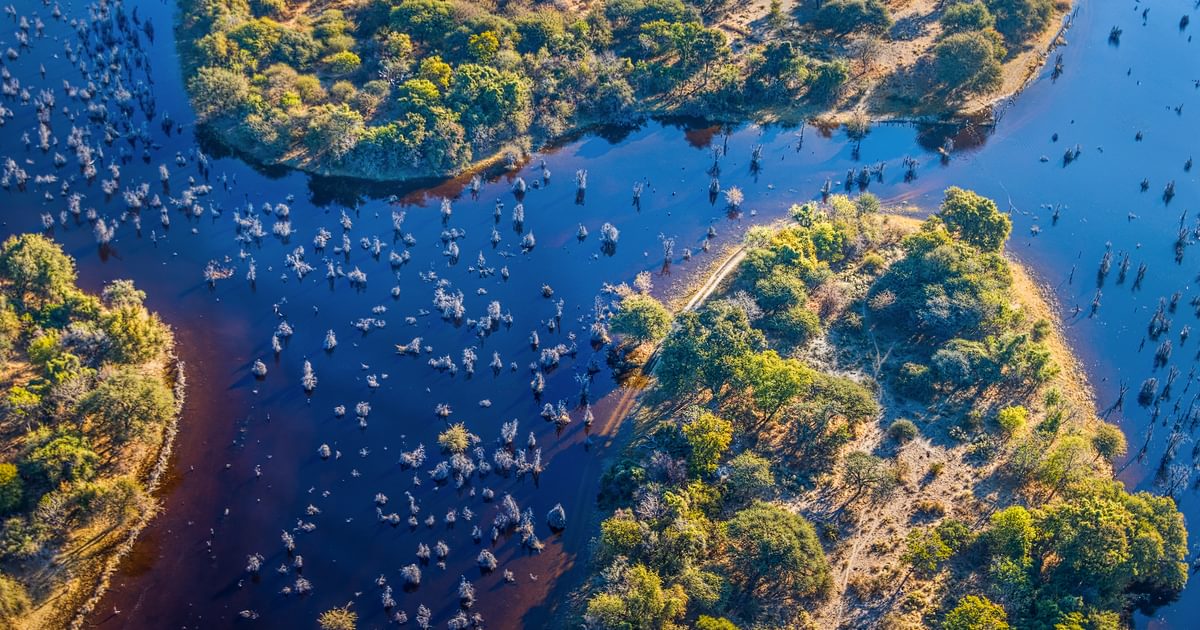
Comparing the landscapes of the Okavango Delta and the Serengeti is like comparing two masterpieces of nature – both breathtaking, but utterly different. The Okavango is a verdant, dynamic inland delta, a mosaic of crystal-clear waterways, lily-covered lagoons, papyrus-fringed channels, and palm-studded islands. The scenery is ever-changing with the seasonal floods, offering lush greens, reflections, and a sense of intimate wilderness. It's a place of subtle beauty, where every bend in the channel reveals a new vista. The Serengeti, on the other hand, is defined by its iconic, vast, and seemingly endless golden plains, dotted with acacia trees and dramatic granite kopjes (rock outcrops) that serve as perfect predator lookout points. Its scale is epic, evoking classic safari imagery. The southern plains are open and grassy, while the northern areas feature more woodlands and the dramatic Mara River. 'The Okavango was stunning, like a real-life painting with all the reflections, but the sheer scale of the Serengeti, seeing the plains stretch to the horizon, gave me goosebumps. Both are incredible but for different reasons,' a traveler recalled. Neither can truly be declared 'better'; they simply offer different, equally magnificent types of natural beauty. The choice depends entirely on whether you prefer the intricate beauty of wetlands or the sweeping grandeur of savannah.
Winner takeaway
- Winner: Tie
- Why: Both destinations offer distinct and equally magnificent natural landscapes, appealing to different aesthetic preferences.
- Who this matters for: Travelers prioritizing specific visual aesthetics (wetlands vs. open savannah), or those seeking contrasting scenery.
❓ Frequently Asked Questions
How long should I plan for an Okavango Delta safari?
We recommend a minimum of 3-4 nights to truly immerse yourself in the Okavango Delta experience. This allows for at least two full days of activities, including game drives, mokoro trips, and potentially walking safaris, ensuring you get a comprehensive feel for the delta's diverse ecosystems and wildlife.
What's the best way to see the Great Migration in the Serengeti?
To witness the Great Migration, you need to align your visit with the wildebeest's movements. For calving season, visit the southern Serengeti (Ndutu area) from December to March. For dramatic river crossings, aim for the Western Corridor in May-July or the northern Serengeti (Mara River) from July-October. Mobile camps that follow the migration are ideal.
Is it safe to travel to Botswana or Tanzania for a safari?
Generally, both Botswana and Tanzania are considered safe for safari travelers, especially within the confines of safari camps and national parks. Standard precautions against petty crime in cities and proper health measures (like malaria prophylaxis) are advised. Safari operators are highly experienced in ensuring guest safety in the wilderness.
What kind of clothing should I pack for an African safari?
Pack light, neutral-colored clothing (khakis, greens, browns) to blend in and avoid attracting insects. Long sleeves and pants are good for sun protection and evenings. Bring layers, as temperatures can vary significantly between early mornings, midday, and nights. A wide-brimmed hat, sunglasses, and comfortable walking shoes are essential.
Do I need a visa for Botswana or Tanzania?
Visa requirements vary by nationality. Many nationalities (e.g., US, UK, EU, Canada) can obtain a visa on arrival for Tanzania. For Botswana, many nationalities do not require a visa for stays up to 90 days. Always check the latest visa regulations with the respective embassy or consulate well in advance of your travel dates.
What are the health precautions for these destinations?
Consult your doctor well before your trip for recommended vaccinations (e.g., Yellow Fever if coming from an endemic country, Hepatitis A/B, Typhoid, Tetanus). Malaria prophylaxis is highly recommended for both regions, as they are malaria areas. Pack insect repellent and a personal first-aid kit.
Can I combine a safari with a beach holiday in either country?
Yes! Tanzania is perfectly suited for a safari and beach combination, with Zanzibar being a popular post-safari retreat just a short flight from Arusha. Botswana does not have a coastline, but you could easily combine an Okavango safari with a few days in Cape Town, South Africa, or even Victoria Falls for a different experience.
Are solo safaris possible in the Okavango or Serengeti?
Absolutely! Both destinations are popular for solo travelers. Many safari camps accommodate solo guests, though some may charge a single supplement during peak season. Small group safaris are also an excellent option for solo travelers to reduce costs and enjoy companionship. Safety is generally high with reputable operators.
Ready to plan your unforgettable African adventure?
Get a free custom itinerary for Okavango, Serengeti, or both — built from real traveler insights.
🎟️ Book Tours & Experiences
Hand-picked tours and activities for both destinations — book with free cancellation
Experiences via Viator — free cancellation on most tours