How we built this comparison
This page combines real traveler discussions, published price ranges, transit data, and seasonal weather patterns to help you choose between Okinawa and Jeju Island.
- Reviewed Reddit threads across r/JapanTravel, r/koreatravel, r/travel, r/digitalnomad, and r/FATTravel covering Okinawa vs Jeju debates.
- Verified cost ranges with Numbeo data and recent traveler reports from 2024–2026.
- Swimming season and weather data sourced from Japan Meteorological Agency and Korea Meteorological Administration.
- Transit and car rental costs verified via local booking sites as of early 2026.
⚡ The TL;DR Verdict
Okinawa wins if you're coming for beaches, diving, and subtropical sunshine. Jeju wins if you want volcanic landscapes, world-class hiking, and a more culturally rich island experience. They're both excellent — but they're solving different problems.
- Choose Okinawa: Beach lovers, divers, snorkelers, and anyone who wants turquoise water and a relaxed subtropical vibe with great food options.
- Choose Jeju: Hikers, nature lovers, and travelers who want UNESCO World Heritage sites, dramatic lava tube caves, and Korea's most distinctive regional cuisine.
- Key numbers: Okinawa swimming season: April–October (6+ months). Jeju comfortable swimming: July–September (2–3 months). Both require a rental car to experience properly.
Choose Okinawa
Beach seekers, divers, snorkelers, and travelers wanting Japan's most tropical, relaxed island experience with stunning coral reef waters.
Choose Jeju
Hikers wanting to summit South Korea's highest peak, nature photographers, and travelers wanting volcanic geology, lava tubes, and Korea's best black pork BBQ.
Quick Comparison
| Category | 🌺 Okinawa | 🌋 Jeju | Winner |
|---|---|---|---|
| Daily Budget (mid-range) | ¥8,000–18,000/day ($55–120) | ₩80,000–180,000/day ($60–135) | Tie |
| Beaches | World-class coral reefs, turquoise water, Kerama Islands, Miyako | Mostly rocky volcanic coastline; Hyeopjae and Hamdeok are decent | Okinawa |
| Hiking & Nature | Yanbaru forest, Cape Hedo; not a hiking-first destination | Hallasan (1,950m), Olle Trails (437km), Manjanggul lava cave | Jeju |
| Cultural Attractions | Shuri Castle, Ryukyuan Kingdom history, Okinawa World | Haenyeo diving culture, Seongsan Ilchulbong crater, Jeju Stone Park | Okinawa |
| Food Scene | Okinawa soba, champuru, taco rice, awamori spirits | Black pork BBQ, abalone, seafood, Jeju tangerines | Tie |
| Getting Around | Car essential; monorail covers only Naha | Car strongly recommended; hourly buses possible | Jeju |
| Accessibility | 2.5h from Tokyo, 1.5h from Fukuoka | 1h from Seoul, direct flights from many Asian cities | Jeju |
| Swimming Season | April–October (6+ months) | July–September (2–3 months) | Okinawa |
| English | Limited; tourist areas manageable | Limited; tourist areas manageable | Tie |
| Nightlife | Naha's Kokusai Street, American Village, Okinawa City | Jeju City limited; quieter island vibe | Okinawa |
| Diving & Snorkeling | World-class — Kerama Islands, Miyako blue, manta rays | Decent snorkeling; diving limited compared to Okinawa | Okinawa |
🏖️ Beaches & Water Quality
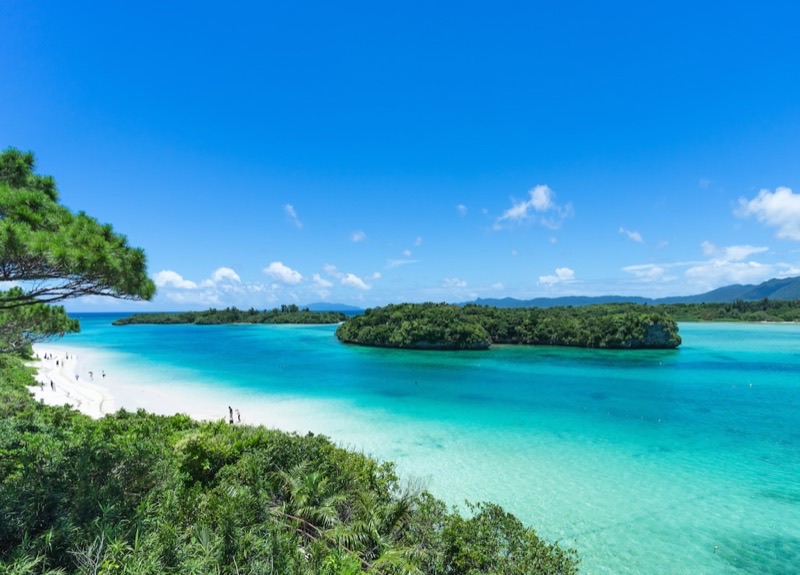
This is where Okinawa runs away with the comparison. The water surrounding Okinawa's islands — especially the Kerama Islands (Zamami, Tokashiki), Miyako-jima, and Ishigaki — is legitimately world-class tropical water. We're talking visibility of 20–30 meters, coral reefs starting just offshore, and a turquoise blue that looks like someone Photoshopped it. Snorkeling from the beach is genuinely excellent without a boat.
Okinawa: tropical coral reef paradise
The main island of Okinawa has good beaches at Emerald Beach near the Churaumi Aquarium, Manza Beach, and Nishihama on Cape Zanpa. But the real stars are the outer islands. Zamami Island (45 min by ferry from Naha) consistently ranks among Japan's best beaches, with crystal clear water and whale watching from January to April. Miyako-jima's Yonaha Maehama is regarded by many travelers as the single best beach in Japan.
Jeju: beautiful coast, but a different experience
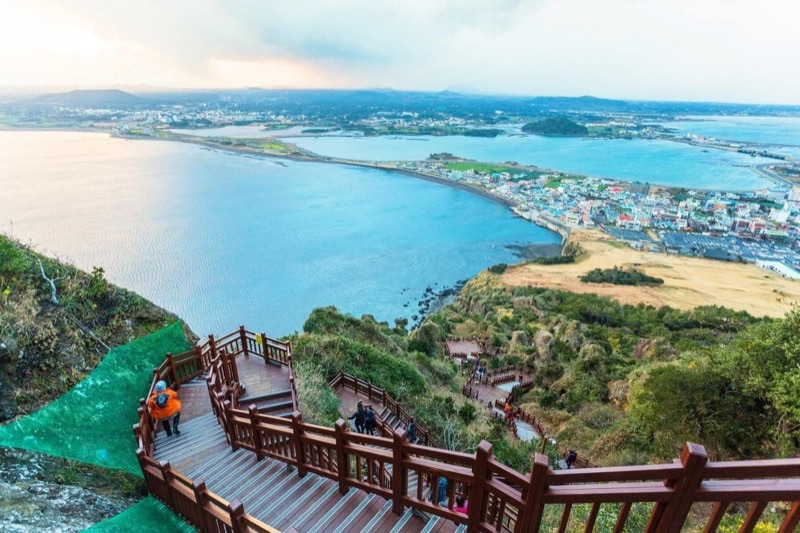
Jeju's coastline is dramatic — black volcanic rock meeting the ocean is genuinely stunning in its own right. But sandy swimming beaches are fewer and the water temperature runs significantly cooler than Okinawa (Jeju peaks at around 25°C in August vs Okinawa's 28–29°C). The best sandy beaches are Hyeopjae (white sand, relatively clear water) and Hamdeok (popular with Korean families). Neither approach Okinawa's water clarity or warmth.
Related: Okinawa Beach Bars | Japan vs Taiwan
Winner takeaway
- Winner: Okinawa
- Why: Okinawa's coral reef water is genuinely tropical in quality — comparable to Thailand or the Philippines for clarity and warmth. Jeju's beaches are pleasant but can't match the water quality or the extended swimming season.
- Who this matters for: Any traveler whose primary island goal is beach time, swimming, snorkeling, or diving should choose Okinawa without hesitation. Jeju's coast is better for scenery and photography than swimming.
🌋 Nature & Hiking
This is Jeju's strongest suit, and it wins decisively here. The island was born from volcanic activity and the geology shows everywhere — from Hallasan's summit crater lake to the 8km-long Manjanggul lava tube (one of the world's largest accessible lava tubes). Jeju's natural credentials are serious: it holds UNESCO Triple Crown status (World Heritage Site, Global Geopark, and Biosphere Reserve) — the first place in Asia to achieve all three.
Jeju: Hallasan and the Olle Trails
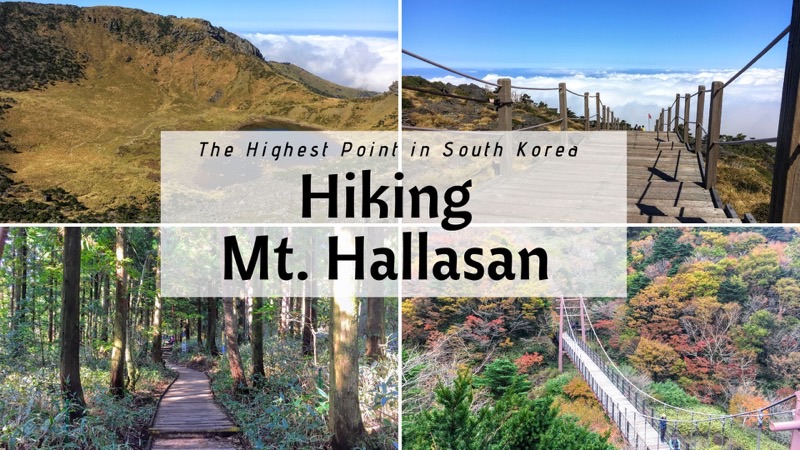
Mount Hallasan is South Korea's highest peak at 1,950m. The Eorimok Trail (6.8km round trip) and Seongpanak Trail (13.4km round trip to summit) are both excellent. The summit crater, Baengnoktam Lake, is stunning — an otherworldly alpine scene that feels nothing like a tropical island. The Olle Trails are a network of 26 coastal routes covering 437km of the island's perimeter — a few days of trail sections can be genuinely magical. Seongsan Ilchulbong (Sunrise Peak) is a 182m tuff cone that's one of Korea's most photographed natural sites.
Okinawa: subtropical forest and sea caves
Okinawa isn't known for hiking, but it's not without nature. The Yanbaru forest in the north is one of Japan's last remaining subtropical rainforests and UNESCO-listed since 2021. Cape Hedo at the island's northern tip is dramatically scenic. Gyokusendo Cave (south of Naha) has 890 meters of accessible caverns. The real nature story in Okinawa is underwater — the coral reefs around the outer islands are among Asia's best diving destinations.
Related: South Korea vs Japan | Japan vs Taiwan
Winner takeaway
- Winner: Jeju
- Why: Hallasan alone makes Jeju a world-class hiking destination. Add the Olle Trails, Manjanggul lava cave, Seongsan Ilchulbong, and UNESCO triple-crown status — Jeju punches far above its size for nature tourism.
- Who this matters for: Hikers and nature photographers should prioritize Jeju. If you're planning an itinerary around trails and volcanic landscapes, Okinawa simply can't compete at the same level.
🍜 Food & Dining
Both islands have genuinely distinct food cultures — not just regional variants of Japanese or Korean cuisine, but their own traditions shaped by geography, history, and local ingredients. This is a close category and honestly comes down to preference.
Okinawa: the fusion cuisine no one else has
Okinawan food is unlike anything else in Japan. Okinawa soba uses thick pork-based noodles in a rich broth topped with braised pork ribs (sofichi) — nothing like the buckwheat soba you know. Champuru is the island's signature stir-fry, most famously goya champuru (with bitter melon, tofu, and pork). Taco rice is a bizarre and delicious legacy of the American military presence — seasoned taco meat on white rice. Awamori is the local rice spirit, aged in ceramic pots, with complex flavors very different from mainland sake or shochu. Okinawa's snack culture is excellent — purple sweet potato (beni imo) tarts and Orion beer everywhere.
Jeju: black pork BBQ and haenyeo seafood
Jeju's food identity is built around two things: Jeju black pork (heukdwaeji) and haenyeo-caught seafood. The black pig produces pork with a distinctive richer flavor and more marbling — Jeju samgyeopsal is noticeably better than mainland versions, and locals are genuinely proud of this. The haenyeo (female free divers, often elderly women) still harvest abalone, sea urchin, conch, and octopus from Jeju's waters — you'll see them at markets and traditional restaurants. Jeju tangerines (hallabong, cheonhyehyang) are excellent and unique to the island.
Related: Best Okinawa Soba | Jeju Black Pork BBQ Guide
Winner takeaway
- Winner: Tie
- Why: Both have extraordinary, totally unique food traditions you can't get anywhere else. Okinawa wins on variety and fusion originality; Jeju wins on the singular experience of fresh haenyeo seafood and black pork BBQ.
- Who this matters for: Food-focused travelers will love both equally but for different reasons. Seafood and BBQ lovers lean Jeju; travelers wanting something completely unlike anything else in East Asia lean Okinawa.
💰 Cost Comparison
Both islands are slightly more expensive than their respective mainlands — island logistics (ferries, car rentals, higher food costs) push prices up. Overall they're surprisingly comparable, with Jeju holding a marginal advantage.
| Expense | 🌺 Okinawa | 🌋 Jeju |
|---|---|---|
| Budget hotel/guesthouse | ¥4,000–7,000/night ($27–47) | ₩40,000–70,000/night ($30–52) |
| Mid-range hotel | ¥9,000–18,000/night ($60–120) | ₩90,000–180,000/night ($67–135) |
| Sit-down meal | ¥800–1,500 ($5–10) | ₩8,000–15,000 ($6–11) |
| Car rental (per day) | ¥5,000–8,000 ($33–53) | ₩50,000–80,000 ($37–60) |
| Ferry to outer islands | ¥3,000–5,000 ($20–33) | ₩15,000–30,000 ($11–22) |
| Diving day trip | ¥10,000–18,000 ($67–120) | ₩50,000–100,000 ($37–75) |
| Mid-range daily total | ¥12,000–20,000 ($80–133) | ₩100,000–200,000 ($75–150) |
The biggest cost variable: getting to the island. Jeju flights from Seoul start at ₩30,000 ($22) one-way on budget carriers; Okinawa from Tokyo starts at ¥3,000 ($20) on Peach or Jetstar Japan but averages higher. Car rental is mandatory for both; budget ¥5,000–8,000/day in Okinawa or ₩50,000–80,000/day in Jeju.
Winner takeaway
- Winner: Jeju
- Why: Jeju holds a modest cost advantage — particularly for diving (roughly 30–40% cheaper than Okinawa), ferry trips to outer areas, and domestic flights from Seoul which start very low on budget carriers.
- Who this matters for: Budget travelers will find slightly more value in Jeju, particularly if flying from Seoul. The difference isn't dramatic — both islands are priced similarly to their mainland counterparts.
🚗 Getting Around
Here's the honest truth about both islands: you need a car. Anyone who visits without renting a vehicle is dramatically limiting what they can see and do. The good news is car rental is straightforward on both; you'll need an International Driving Permit.
Okinawa: car or scooter is essential
Okinawa's Yui Rail monorail covers only Naha city — useful for the airport, Shuri Castle, and Kokusai Street, but essentially useless for exploring the island. Outside Naha, the distances are real: Churaumi Aquarium is 2 hours north of Naha by bus, but much less by car. Cape Hedo (northernmost tip) is 2+ hours. Without a car, you're effectively trapped in Naha. Buses exist but run infrequently (often every 60–90 minutes) and don't reach many beaches. Scooter rental is a popular option for solo travelers (from ¥2,500/day).
Jeju: buses work but a car is better
Jeju has a better bus network than Okinawa, with inter-city buses running roughly every 30–60 minutes on major routes. It's technically possible to do Jeju by bus — experienced budget travelers have done it — but you'll spend significant time waiting and can't reach many of the best spots. Several major Olle Trail access points are awkward by public transport. A rental car transforms the island from a 3-out-of-5 experience to a 5-out-of-5. Car rental starts at ₩50,000/day.
Winner takeaway
- Winner: Jeju
- Why: Jeju's bus network is more comprehensive and the island is smaller, making car-free travel more feasible (if frustrating). Okinawa without a car means you're stuck in Naha, which misses most of what makes the island special.
- Who this matters for: Travelers who can't or won't drive should lean Jeju — the bus network covers major sights well enough. In Okinawa, no car means a dramatically truncated experience.
⛩️ Culture & History
Both islands have fascinating and distinct cultures that set them apart from their respective mainlands — but Okinawa's cultural depth is genuinely surprising and often underrated by travelers who expect just beaches.
Okinawa: the Ryukyuan Kingdom
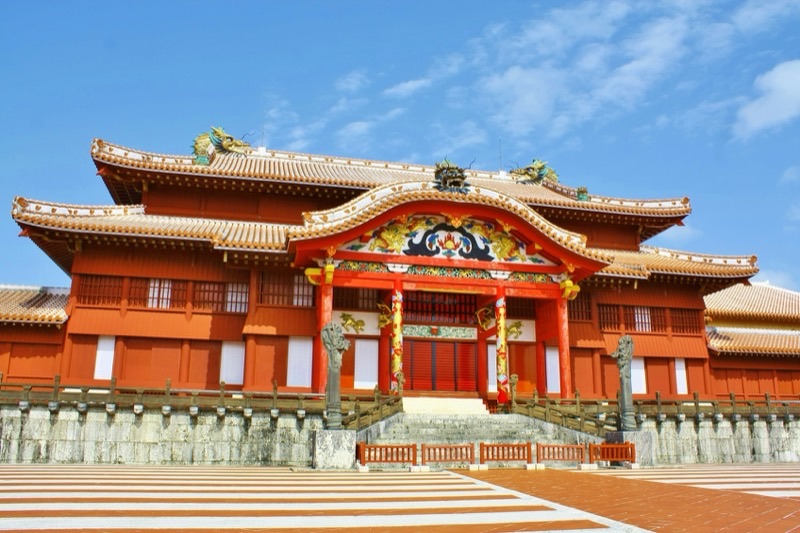
For nearly 500 years, Okinawa was the center of the independent Ryukyu Kingdom — a maritime trading civilization with deep ties to China, Japan, Korea, and Southeast Asia. Shuri Castle in Naha is the stunning centerpiece of this history: a UNESCO World Heritage Site rebuilt after WWII destruction, it features a vivid red and gold architectural style unlike anything else in Japan. Okinawa World showcases traditional crafts, habu snake encounters, and a massive cave system. The island's Battle of Okinawa WWII history is profound and moving — the Peace Memorial Museum and Cornerstone of Peace in the south are genuinely important memorial sites.
Jeju: haenyeo, mythology, and stone culture
Jeju's culture is defined by three things: wind, women, and stone (dol-hareubang, the iconic volcanic stone grandfather statues that appear everywhere). The haenyeo — female free divers who harvest seafood without oxygen tanks, some in their 70s and 80s — are a UNESCO Intangible Cultural Heritage. Watching haenyeo dive at Jeju's harbors is a genuine and moving cultural experience. Seongsan Ilchulbong's ritual sunrise is atmospheric. Jeju's mythology around the volcano goddess Seolmundae-halmang adds a layer of story to the landscape.
Winner takeaway
- Winner: Okinawa
- Why: The Ryukyuan Kingdom history and Shuri Castle give Okinawa a cultural depth that surprises most first-time visitors. The WWII memorial sites add an important historical dimension. Jeju's haenyeo culture is genuinely compelling but Okinawa's cultural offering is broader and deeper.
- Who this matters for: History and culture travelers should prioritize Okinawa. The Ryukyuan Kingdom story is one of Asia's most interesting — and most overlooked — historical narratives.
🌸 Best Time to Visit
Timing matters significantly for both islands, but for different reasons — and Okinawa's longer comfortable season is a real advantage for year-round travel planning.
Okinawa: subtropical with a long season
Okinawa's subtropical climate means warm-to-hot temperatures year-round (average 17–29°C). The best times to visit are April–June (before the rainy season peaks, water warms up, fewer crowds) and October–November (typhoon season winding down, water still warm, autumn light). The rainy season runs June–July; typhoon season is July–October but actual typhoon hits are infrequent. Winter (January–February) is mild by Japanese standards (16–18°C) — cool for swimming but pleasant for sightseeing. Swimming season effectively runs April–October.
Jeju: four seasons on a volcanic island
Jeju has proper four seasons, unlike Okinawa. Spring (April–June) is stunning — cherry blossoms, azaleas, and yellow canola flowers carpet the island. Summer (July–August) is hot, humid, packed with Korean domestic tourists, and the only comfortable swimming season. Autumn (September–October) is arguably the best time: clear skies, fewer crowds, golden foliage on Hallasan. Winter (November–March) is cold and windy — Hallasan gets snow, which makes for dramatic scenery but cold conditions. Hallasan summit is sometimes closed due to ice.
Winner takeaway
- Winner: Okinawa
- Why: Okinawa's swimming season lasts 6+ months versus Jeju's 2–3 months. For beach travelers especially, this makes Okinawa far more flexible for year-round planning. Jeju's spring wildflower season and autumn foliage are beautiful but the island has a genuine off-season that Okinawa largely avoids.
- Who this matters for: Travelers visiting outside July–September should strongly consider Okinawa over Jeju for any beach activity. Jeju's best non-swimming seasons (spring, autumn) are excellent for hiking and scenery tourism.
🎉 Nightlife & Entertainment
Neither island is a party destination, but Okinawa has significantly more going on after dark — a direct consequence of the large American military presence and Naha's status as a proper city.
Okinawa: Kokusai Street and American Village
Naha's Kokusai Street (International Street) is a lively 1.6km strip with bars, restaurants, live music venues, and souvenir shops that stays active until midnight on weekends. The American Village in Chatan (near the US military bases) has a distinctly unique vibe — outdoor mall, beach, bars, and restaurants serving both Japanese and American food. Okinawa City (north of Naha) has a rougher-edged nightlife district influenced by the military town character. Live okinawan music (sanshin folk music) can be found at izakayas throughout Naha.
Jeju: quieter but authentic
Jeju City has the island's main nightlife, concentrated around the Shin Jeju area and near the airport. It's pleasant but quiet compared to Seoul or Busan — and that's by design. Most travelers to Jeju are there for nature and food, not nightlife. Accommodation tends to be guesthouses and pensions outside the city, where evenings are spent eating well and going to bed early for hiking the next day. The one exception: pension-style accommodation with roof terraces for stargazing, which can be magical on clear nights.
Winner takeaway
- Winner: Okinawa
- Why: Naha's Kokusai Street and the American Village give Okinawa a meaningful nightlife and entertainment scene. Jeju is quiet after dark — which isn't a criticism (most visitors want that), but means Okinawa wins this category by default.
- Who this matters for: Travelers who want evening bar-hopping or live music after a day on the beach will be more satisfied in Okinawa. Jeju visitors typically embrace the early-to-bed, early-to-Hallasan lifestyle.
🧭 Decision Framework
Stop overthinking it. Here's the honest breakdown of who should go where:
🌺 Choose Okinawa if…
- 🌺 🌺Beaches and coral reef water are your primary goal
- 🌺You want to snorkel or dive in world-class conditions
- 🌺You're visiting outside July–September (Jeju's swimming season)
- 🌺You're interested in the unique Ryukyuan Kingdom history
- 🌺You want some nightlife or city energy after beach days
- 🌺You're already doing a Japan trip and want a side trip
🌋 Choose Jeju if…
- 🌋Hiking is your priority — especially a significant summit
- 🌋You want UNESCO World Heritage volcanic landscapes
- 🌋Black pork BBQ and haenyeo seafood sound amazing to you
- 🌋You want spring wildflowers or autumn foliage scenery
- 🌋You're already doing a Korea trip and want to add an island
- 🌋You prefer a quiet, nature-focused island retreat over beach parties
The most important question: which country are you already visiting? If you're doing Japan, add Okinawa. If you're doing Korea, add Jeju. Doing both in one trip requires routing via Tokyo or Seoul and significantly complicates logistics without proportionate reward. Both islands reward at least 4–5 nights to do them properly — 3 nights feels rushed.
Winner takeaway
- Winner: Depends
- Why: The right answer genuinely depends on what you want. Beaches and diving → Okinawa, unambiguously. Hiking and volcanic geology → Jeju, unambiguously. For everything else, follow which country's trip you're already building.
- Who this matters for: Every traveler asking this question. The framework above should give you a clear answer based on your priorities — if it doesn't, you'll enjoy both equally and should make the decision based on logistics.
❓ Frequently Asked Questions
Is Okinawa or Jeju better for beaches?
Okinawa wins beaches decisively. The water around Kerama Islands, Miyako-jima, and even the main island is a stunning turquoise-blue with coral reefs and visibility of 20–30 meters — comparable to tropical Southeast Asia. Jeju's coastline is largely volcanic black rock and pebble beaches; the few sandy beaches exist (Hyeopjae, Hamdeok) but the water is cooler and less clear. If beaches are your primary reason, choose Okinawa without hesitation.
Is Okinawa or Jeju cheaper?
Jeju is marginally cheaper. A mid-range day in Jeju runs ₩80,000–180,000 ($60–135 USD); Okinawa runs ¥8,000–18,000 ($55–120 USD). The biggest savings in Jeju are on diving (30–40% cheaper), ferry trips, and domestic flights from Seoul which start very low on budget carriers. Car rental — essential for both — costs similarly. Overall costs are comparable, with Jeju holding a slight edge.
Do you need a car in Okinawa and Jeju?
Yes, strongly recommended for both. Okinawa's main island has a monorail covering only Naha city; everything outside requires a car or scooter. Jeju has buses running roughly every hour on most routes — doable without a car but significantly limits what you can see. Reddit consensus: "rent a car for both or you'll miss the best parts." International driving licenses are required; budget ₩50,000–80,000/day for Jeju or ¥5,000–8,000/day for Okinawa.
When is the best time to visit Okinawa vs Jeju?
Okinawa: best April–June and October–November. Swimming season runs April to October. Avoid June–July rainy season and typhoon season (July–October). Jeju: best April–June and September–October. Summer is crowded and humid; winter is cold and windy. The biggest difference: Okinawa's water is swimmable 6+ months; Jeju's comfortable swimming window is just 2–3 months (July–September).
How do you get to Okinawa vs Jeju?
Okinawa: 2h30m from Tokyo, 1h40m from Osaka, 1h30m from Fukuoka. Budget carriers (Peach, Jetstar Japan) run flights from ¥3,000–8,000 one-way from Tokyo. Jeju: 1h from Seoul, 50 minutes from Busan, direct flights from many Asian cities. Flights from Seoul start at ₩30,000–60,000 ($22–45) one-way on budget carriers. Jeju is significantly more accessible, especially from Northeast Asia.
What is the food like in Okinawa vs Jeju?
Both islands have genuinely unique food traditions. Okinawa has Okinawa soba (pork-based broth, thick noodles), champuru stir-fry, taco rice (US military-influenced), and awamori spirits. Jeju is famous for black pork BBQ (heukdwaeji samgyeopsal — richer and fattier than mainland pork), fresh abalone and haenyeo-caught seafood, and hallabong tangerines. Both are worth visiting for food alone — they offer things you genuinely can't get anywhere else.
Can you visit Okinawa and Jeju in the same trip?
It's possible but logistically awkward — there's no direct flight between Okinawa and Jeju. You'd need to fly via Tokyo, Osaka, or Seoul. Most travelers doing both build a larger Japan + Korea trip: 1 week Japan (Tokyo/Kyoto + Okinawa) and 1 week Korea (Seoul + Jeju). Budget 5–7 days for each island to do it properly.
Is Okinawa or Jeju better for hiking?
Jeju wins on hiking, decisively. Mount Hallasan (1,950m) is South Korea's highest peak — the summit crater lake is spectacular. Jeju also has the Olle Trails, a 437km network of coastal walking routes. Okinawa has some hiking in Yanbaru forest and Cape Hedo, but it's not a hiking-first destination. For hikers, Jeju is the obvious choice.
Ready to plan your island trip?
Get a free custom itinerary for Okinawa, Jeju, or a combination Japan + Korea trip — built from real traveler insights, not generic templates.
🎟️ Book Tours & Experiences
Hand-picked tours and activities for both destinations — book with free cancellation
Experiences via Viator — free cancellation on most tours