How we built this comparison
This page combines traveler discussion patterns, published price ranges, flight schedules, and seasonal data to help you decide between Patagonia and Canadian Rockies.
- Reviewed 50+ Reddit threads from r/travel, r/solotravel, r/Patagonia, r/Banff, and region-specific forums.
- Verified costs and logistics against current booking platforms including Booking.com, Skyscanner, and local bus/tour operators.
- Cross-referenced seasonal patterns, weather data, and accessibility information with official park websites and traveler blogs.
⚡ The TL;DR Verdict
Choosing between Patagonia and the Canadian Rockies boils down to your appetite for adventure versus convenience. Patagonia offers a raw, untamed wilderness experience for serious trekkers and those willing to navigate more challenging logistics, with daily budgets ranging from $80-150 USD for budget travelers to $150-300+ USD for mid-range. The Canadian Rockies deliver accessible, breathtaking scenery with world-class infrastructure, perfect for road-trippers and families, typically costing $70-130 CAD/day ($50-100 USD) for budget and $130-250+ CAD/day ($100-200 USD) for mid-range.
- Choose Patagonia: Pick Patagonia if you crave an authentic, rugged wilderness experience, are comfortable with multi-day treks, and don't mind navigating less developed infrastructure for truly epic, remote landscapes. It's for the adventurer who seeks a profound connection with nature.
- Choose Canadian Rockies: Opt for the Canadian Rockies if you value stunning natural beauty combined with easy accessibility, well-maintained trails, and comfortable amenities. It's ideal for families, road-trippers, or those new to international mountain travel who want awe-inspiring views without extreme logistical challenges.
- Choose Both: If you have a couple of months and a healthy budget, doing both offers an unparalleled journey through two distinct mountain ecosystems. Start with the Canadian Rockies in late spring/early summer for vibrant lakes, then head to Patagonia for their summer (Dec-Feb) to chase glaciers and iconic peaks.
Quick Comparison
| Category | Patagonia | Canadian Rockies | Winner |
|---|---|---|---|
| Nature & Scenery | Dramatic, raw, and windswept landscapes featuring towering granite spires, massive glaciers, and unique Patagonian steppe. | Stunning turquoise lakes, vast coniferous forests, snow-capped peaks, and abundant wildlife, easily accessible. | Patagonia |
| Hiking & Trekking | World-renowned multi-day treks like the W-Trek, challenging routes to iconic peaks, requires self-sufficiency. | Extensive network of well-maintained trails from easy strolls to challenging ascents, often with stunning lake views. | Patagonia |
| Costs & Budget | Accommodation and inter-city transport can be surprisingly expensive; food and park entry vary by country. Inflation is a factor in Argentina. | National Park fees, accommodation in popular towns (Banff, Jasper) can be high; overall predictable costs and value. | Canadian Rockies |
| Getting There | Requires longer, multi-leg flights, often involving a major hub (Santiago/Buenos Aires) and then a domestic connection. | Direct international flights to Calgary (YYC) are common, with a relatively short drive to the parks. | Canadian Rockies |
| Getting Around | Relies heavily on long-distance buses; some areas require private transfers or hitchhiking; roads can be rough. | Rental car is highly recommended for flexibility; excellent road infrastructure, shuttle services available in peak season. | Canadian Rockies |
| Accommodation | Ranges from basic hostels and campsites to comfortable 'refugios' on treks; luxury options are limited outside major towns. | Wide spectrum from budget hostels to world-renowned luxury hotels; easy online booking, consistent quality. | Canadian Rockies |
| Weather & Seasons | Notoriously unpredictable, 'four seasons in one day' is common; strong winds are a defining feature. | Distinct seasons with warm, sunny summers and snowy, cold winters; generally more predictable conditions. | Canadian Rockies |
| Food & Drink | Known for Patagonian lamb, hearty stews, and distinct regional flavors; excellent Malbec wine. | Diverse international cuisine, good craft beer scene; less distinct 'regional' fare but high quality. | Patagonia |
| Solo Travel & Safety | Generally safe, but logistics for remote treks can be more challenging; good hostel scene for meeting others. | Extremely safe, easy to navigate, abundant solo-friendly activities and organized tours; well-traveled routes. | Canadian Rockies |
| Accessibility & Infrastructure | More rugged, less developed infrastructure; gravel roads, fewer visitor centers; requires more self-sufficiency. | World-class national park infrastructure, paved roads, numerous visitor centers, clear signage, accessibility features. | Canadian Rockies |
🏞️ Nature & Scenery
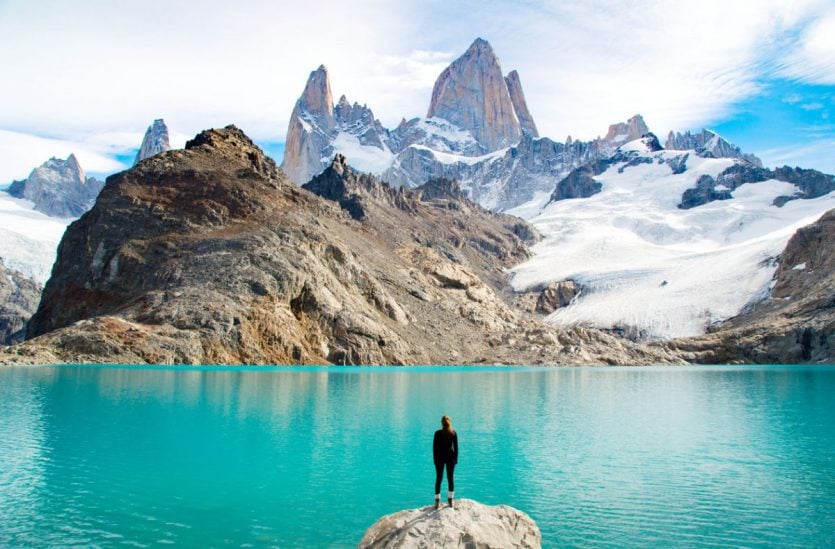
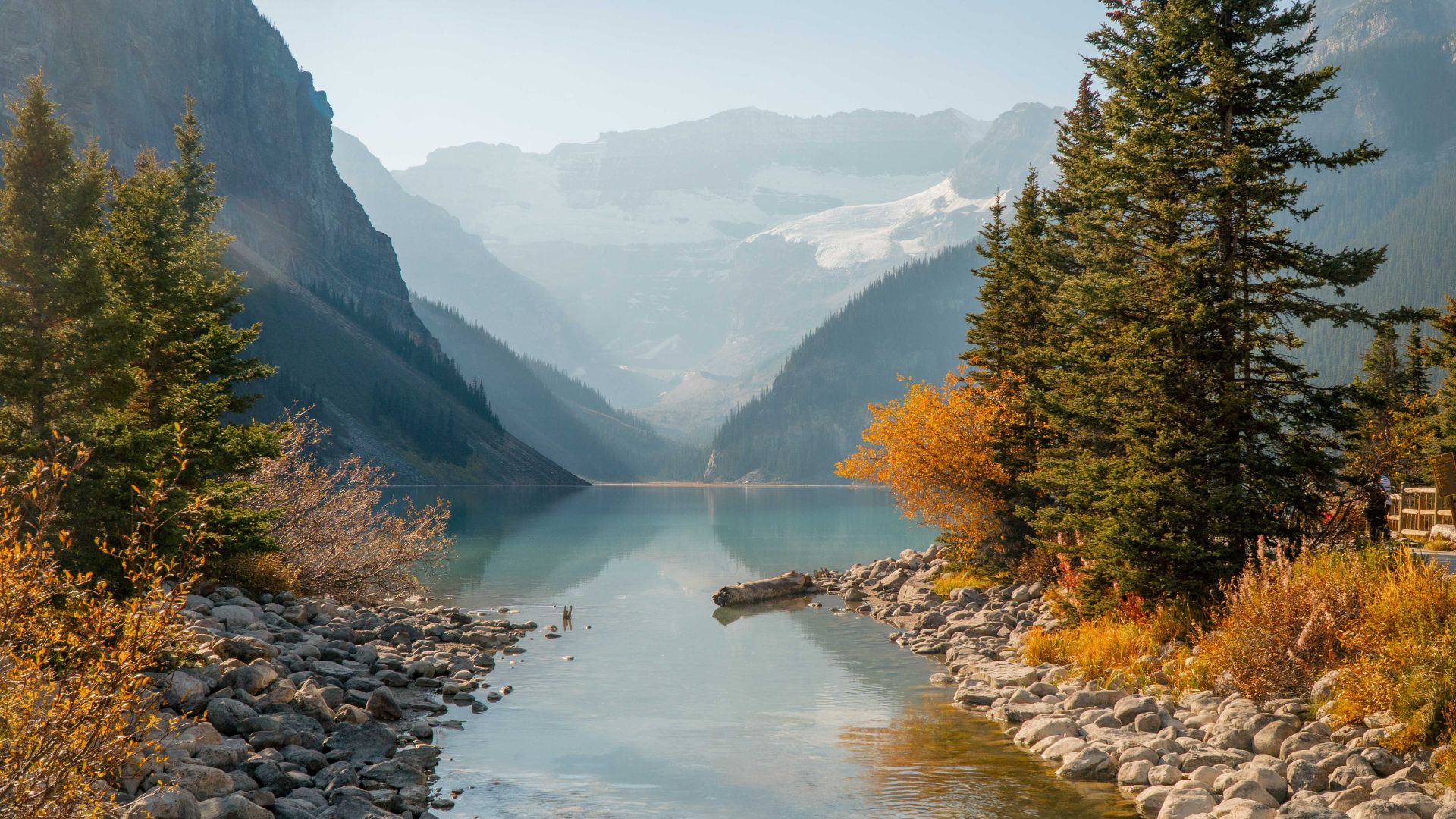
Patagonia's scenery feels truly 'otherworldly.' Imagine the iconic granite towers of Torres del Paine (Chile) piercing the sky, or the jagged, snow-dusted peaks of Mount Fitz Roy (Argentina) reflecting in pristine glacial lakes. The scale here is immense, often feeling like you're at the edge of the world. Glaciar Perito Moreno, a living, calving glacier near El Calafate, is a humbling experience you won't find replicated anywhere else. The Canadian Rockies, while undeniably gorgeous, offer a more 'manicured' wildness. Think the vivid turquoise of Lake Louise and Moraine Lake, framed by majestic peaks and dense forests in Banff and Jasper National Parks. Wildlife viewing, like bears and elk, is often a roadside affair. Both are spectacular, but Patagonia's landscapes feel more untouched and challenging. "Honestly, nothing prepares you for the scale of Fitz Roy. It looks photoshopped even in person, the light hitting it at sunrise is just unreal." The sheer rawness gives Patagonia the edge.
Winner takeaway
- Winner: Patagonia
- Why: Patagonia's unique combination of towering granite spires, expansive glaciers, and windswept steppe offers a more dramatic and 'edge-of-the-world' feel.
- Who this matters for: Adventure seekers, photographers, and those who prioritize raw, untamed wilderness.
🥾 Hiking & Trekking
If you live to hike, Patagonia is your mecca. The multi-day 'W-Trek' in Torres del Paine National Park is legendary, offering stunning views of Grey Glacier, French Valley, and the Towers themselves. It typically takes 4-5 days, with accommodation in 'refugios' (bunkhouses) or campsites, costing around $50-80 USD per night for a bed, or $15-25 USD for a campsite. In Argentina, the trails around El Chalten, like Laguna de los Tres (for Fitz Roy) or Laguna Torre, are spectacular day hikes, free to access and often less crowded than Paine. The Canadian Rockies boast an incredible network of trails too, from the famous Plain of Six Glaciers Teahouse hike at Lake Louise (a moderate 14 km round trip) to more strenuous climbs like Sentinel Pass. The trails are typically very well-marked and maintained, with clear signage and facilities. While equally beautiful, the 'expedition' feel of Patagonia's trails, especially those requiring proper gear and planning, gives it the win for serious trekkers. "The W-Trek was brutal but absolutely the best thing I've ever done. Nothing compares to waking up to those views after a long day."
Winner takeaway
- Winner: Patagonia
- Why: Patagonia offers more iconic, challenging, and remote multi-day trekking experiences that define the region's allure.
- Who this matters for: Experienced hikers and trekkers seeking multi-day adventures and a sense of true wilderness exploration.
💰 Costs & Budget
This is a close call, but the Canadian Rockies offer more predictable costs and often better value for money, especially outside peak season. A daily Parks Canada Pass costs about $11 CAD ($8 USD) per person or $22 CAD ($16 USD) per vehicle. Hostels in Banff or Jasper range from $40-70 CAD ($30-50 USD), while mid-range hotels are $150-300+ CAD ($110-220+ USD). Rental cars average $50-100 CAD ($35-75 USD) per day. In Patagonia, costs can be deceptively high, particularly for transportation and specific park entries. A bus from El Calafate to El Chalten can be ARS 30,000-45,000 (~$30-45 USD), and a bus from El Calafate to Puerto Natales (Chile) is $50-70 USD. Torres del Paine entry fee is ~USD $35. Refugios in Paine are $40-80 USD for a bed. Argentine inflation can make prices fluctuate wildly. While food can be cheaper in Argentina if you eat locally, overall logistics in Patagonia often carry a premium. "I thought Patagonia was going to break the bank, but if you self-cater and stick to hostels, it's doable. Still, those bus tickets add up! Canada feels more stable."
Winner takeaway
- Winner: Canadian Rockies
- Why: The Canadian Rockies offer more transparent and predictable budgeting, with generally better value for money and less volatility than Patagonia.
- Who this matters for: Budget-conscious travelers and those who prefer stable, predictable travel expenses.
✈️ Getting There
Getting to the Canadian Rockies is significantly simpler and quicker for most international travelers, especially from North America. Calgary International Airport (YYC) is a major hub with direct flights from many major cities. From New York (JFK), a direct flight to YYC is about 5-6 hours, costing roughly $400-700 USD round trip. From Calgary, it's a scenic 1.5-hour drive to Banff National Park. Patagonia, on the other hand, is at the 'end of the world' and requires more commitment. You'll typically fly into Santiago (SCL) or Buenos Aires (EZE), a 9-11 hour flight from NYC, often costing $800-1500 USD. From there, you'll need another domestic flight to regional airports like El Calafate (FTE) or Punta Arenas (PUQ), which adds another 3-4 hours and $100-300+ USD. Total travel time can easily exceed 15-20 hours one-way, not including transfers. "Landing in Calgary and being in Banff a couple of hours later was so easy. Patagonia felt like a whole expedition just to get there."
Winner takeaway
- Winner: Canadian Rockies
- Why: The Canadian Rockies are much easier and quicker to access via major international airports with shorter connecting travel times.
- Who this matters for: Travelers with limited vacation time, those who dislike long-haul flights, and families.
🚗 Getting Around
The Canadian Rockies are practically designed for road trips. Renting a car is the easiest and most flexible way to explore, allowing you to stop at countless viewpoints along iconic routes like the Icefields Parkway (Highway 93) between Banff and Jasper (a 3-4 hour drive without stops, ~300 km). Daily car rental rates typically range from $50-100 CAD ($35-75 USD), and gas is readily available. In peak season, shuttle services operate to popular spots like Lake Louise and Moraine Lake to reduce congestion. Patagonia's transportation is more challenging. Long-distance buses connect major towns like El Calafate, El Chalten, and Puerto Natales, but schedules can be limited, and journeys are long (e.g., El Calafate to Puerto Natales is 5-6 hours, ~$50-70 USD). Getting to trailheads often requires shared 'colectivos' or hitchhiking, which is common but can be unpredictable. Many roads are gravel, especially in more remote areas. "We rented a car in Calgary, and it was a game-changer. So easy to get everywhere. In Patagonia, we spent so much time on buses."
Winner takeaway
- Winner: Canadian Rockies
- Why: The Canadian Rockies offer superior infrastructure for self-drive exploration with excellent roads and readily available rental cars, providing maximum flexibility.
- Who this matters for: Road-trippers, families, and travelers who value independence and convenience in transportation.
🏨 Accommodation
The Canadian Rockies offer a fantastic range of accommodation for every budget, with reliable online booking and consistent quality standards. You can find excellent hostels like the HI Banff Alpine Centre for $40-70 CAD ($30-50 USD) a night, cozy mid-range lodges, or indulge in luxury at iconic properties like the Fairmont Chateau Lake Louise (starting $400-800+ CAD / $300-600+ USD per night). Campsites are abundant in the national parks but book up months in advance (approx. $25-35 CAD / $18-25 USD per night). In Patagonia, accommodation is more geared towards trekkers. Hostels are plentiful in towns like El Chalten (e.g., Hostel Rancho Grande, $20-40 USD), and 'refugios' in Torres del Paine (like Paine Grande or Grey) offer basic bunk beds and meals (booking far in advance is crucial, $40-80 USD for a bed). Luxury options are available but are generally very exclusive estancias or boutique hotels in larger towns, not spread throughout the parks. The convenience, variety, and predictable quality in the Canadian Rockies make it the winner. "Booking a hostel in Banff was a breeze, and it was super clean. In Patagonia, the refugios were fine, but definitely more rustic and harder to reserve."
Winner takeaway
- Winner: Canadian Rockies
- Why: The Canadian Rockies provide a broader range of reliable accommodation options across all budgets, with better quality and easier booking processes.
- Who this matters for: Travelers seeking comfortable stays, families, and those who prioritize predictable lodging standards.
☀️ Weather & Seasons
While both regions experience extreme weather, the Canadian Rockies offer more predictable seasonal patterns, making planning slightly easier. Summer (July-August) brings warm, sunny days (avg. 20-25°C / 68-77°F) ideal for hiking, though evenings can be cool (5-10°C / 40-50°F). Winter (December-March) is cold and snowy, perfect for skiing and ice skating, with temperatures often well below freezing. Patagonia, by contrast, is famously unpredictable. Even in peak summer (December-February), you can experience blazing sun, torrential rain, and snow flurries all in one day. Average summer temperatures are 10-15°C (50-59°F), but gale-force winds (often 50-100 km/h) make it feel much colder. Packing layers for all conditions is non-negotiable. While the unpredictability is part of Patagonia's charm, the more defined and generally reliable seasons of the Canadian Rockies give it the edge for comfort and planning. "Everyone told me Patagonia's weather was wild, but nothing prepared me for 100km/h winds and sun-to-sleet in an hour. Canada's summer felt like a vacation in comparison."
Winner takeaway
- Winner: Canadian Rockies
- Why: The Canadian Rockies offer more predictable and distinct seasonal weather patterns, making travel planning and outdoor activities less subject to sudden changes.
- Who this matters for: Travelers who prefer stable weather for outdoor activities, families, and those sensitive to extreme winds.
🍽️ Food & Drink
Patagonia offers a more unique and distinctly regional culinary experience that is truly memorable. The star is 'cordero al palo' (spit-roasted Patagonian lamb), slow-cooked to perfection over an open flame – a must-try in both Chilean and Argentinian Patagonia, costing around ARS 15,000-25,000 ($15-25 USD) per person for a generous portion. You'll also find fresh seafood along the coast, hearty stews, and delicious artisanal chocolates in towns like Bariloche. Argentinian Malbec wine is excellent and very affordable. While the Canadian Rockies have many high-quality restaurants in towns like Banff and Canmore, offering a range of international cuisines, local specialties are less prominent. You'll find elk or bison burgers, poutine, and a thriving craft beer scene (e.g., Banff Ave Brewing Co.), but it's less of a distinct culinary identity. For a truly unique food journey, Patagonia takes the cake. "That Patagonian lamb was unreal, totally worth seeking out. And the wine was so cheap and good! Canada has nice food, but it's not as 'destination' specific."
Winner takeaway
- Winner: Patagonia
- Why: Patagonia provides a more distinctive and authentic regional culinary experience, centered around its famous Patagonian lamb and local flavors.
- Who this matters for: Foodies and travelers looking for unique regional dishes and a strong local food culture.
🚶♀️ Solo Travel & Safety
Both regions are generally very safe, but the Canadian Rockies are arguably more accommodating and less logistically complex for solo travelers. Violent crime is rare in both, but the Canadian Rockies benefit from excellent infrastructure and clearly marked trails, making navigation solo much simpler. Towns like Banff and Jasper have a strong hostel culture, making it easy to meet fellow travelers for day hikes or shared car rentals. Organized tours are plentiful and reliable. In Patagonia, while also safe, the longer distances between towns, less frequent public transport, and the self-sufficiency required for multi-day treks can pose a greater challenge for a solo adventurer. Hitchhiking is common and generally safe, but still requires a degree of trust and flexibility. For sheer ease, established networks, and peace of mind, the Canadian Rockies win. "I felt super safe hiking solo in Banff, and it was easy to join a group for Lake Louise. Patagonia was amazing but definitely required more planning and self-reliance when I was alone."
Winner takeaway
- Winner: Canadian Rockies
- Why: The Canadian Rockies offer superior ease of navigation, abundant solo-friendly tours, and well-established safety measures, making it ideal for solo adventurers.
- Who this matters for: Solo travelers, particularly those new to independent international travel, and those prioritizing personal safety and ease of connection.
♿ Accessibility & Infrastructure
The Canadian Rockies excel in accessibility and infrastructure, making it a highly user-friendly destination. Parks Canada maintains excellent paved roads throughout Banff, Jasper, Yoho, and Kootenay National Parks, with clear signage to all major attractions. There are numerous well-staffed visitor centers providing maps, trail conditions, and advice. Many popular viewpoints and some trails (like parts of Johnston Canyon) are wheelchair accessible or stroller-friendly. Cell service is generally reliable in and around towns. Patagonia, while stunning, is a wilder frontier. Roads outside major towns can be gravel or dirt, and cell service is often non-existent once you leave populated areas. Visitor centers are present at park entrances (like Torres del Paine, which has a ~$35 USD entry fee), but general infrastructure is less developed. You need to be more self-sufficient and prepared for fewer amenities. "The Canadian Rockies felt so easy to navigate. Everything was signed, paved, and had information. Patagonia was more of an adventure, for sure, but definitely less developed." For ease of access and robust support, the Canadian Rockies is the clear winner.
Winner takeaway
- Winner: Canadian Rockies
- Why: The Canadian Rockies boast world-class national park infrastructure, including well-maintained roads, extensive signage, and visitor services, ensuring a smooth travel experience.
- Who this matters for: Families with young children, travelers with mobility concerns, and those who prioritize convenience and well-supported travel.
❓ Frequently Asked Questions
Which destination is better for wildlife viewing?
While Patagonia offers unique species like guanacos, condors, and pumas (if you're lucky), the Canadian Rockies generally provide more consistent and visible wildlife viewing opportunities. You're likely to spot elk, deer, bighorn sheep, and even bears and moose along roadsides or well-traveled trails in Banff and Jasper.
What's the best time of year to visit each?
For the Canadian Rockies, summer (July-August) is prime for hiking and turquoise lakes. Winter (December-March) is excellent for skiing. For Patagonia, summer (December-February) is ideal for trekking, though prepare for unpredictable weather. Shoulder seasons (Nov, Mar-Apr) can offer fewer crowds and changing foliage, but some services may be limited.
Do I need a rental car for both locations?
A rental car is highly recommended for the Canadian Rockies for maximum flexibility and access to viewpoints. In Patagonia, while helpful, it's not essential; a robust bus network connects major towns, and many trekkers rely on shared transfers or hitchhiking to trailheads.
How long should I plan for each trip?
For a good introduction to the Canadian Rockies, plan 7-10 days, focusing on Banff and Jasper. For Patagonia, you'll want at least 10-14 days to properly explore both the Chilean and Argentinian sides, especially if attempting multi-day treks like the W-Trek.
What kind of clothing should I pack?
For both, layers are key. Expect 'four seasons in one day' in Patagonia, so waterproof and windproof outer layers are crucial, even in summer. The Canadian Rockies require similar layering in summer, with warm, insulated gear essential for winter visits, including proper snow boots.
Is English widely spoken in both regions?
In the Canadian Rockies, English is the primary language, so communication is easy. In Patagonia (Chile and Argentina), Spanish is the official language. While English is common in tourist centers like hotels and tour operators, knowing some basic Spanish phrases will significantly enhance your experience, especially outside the main hubs.
Which destination is better for families with young children?
The Canadian Rockies are generally better suited for families with young children due to easier access to attractions, a wider range of family-friendly activities, and more consistent amenities. Patagonia's rugged nature and longer travel times can be more challenging for little ones.
Are there any specific permits or park passes needed?
Yes, for the Canadian Rockies, you'll need a Parks Canada Pass (daily or annual) to enter National Parks like Banff and Jasper. In Patagonia, entry fees are required for national parks like Torres del Paine (~$35 USD) and Los Glaciares (Argentina, ~ARS 12,000-20,000 / ~$12-20 USD for foreign visitors), which you pay at the park entrance.
Ready to plan your next epic adventure?
Get a free custom itinerary for Patagonia, the Canadian Rockies, or both — built from real traveler insights and expert advice.
🎟️ Book Tours & Experiences
Hand-picked tours and activities for both destinations — book with free cancellation
Experiences via Viator — free cancellation on most tours