How we built this comparison
This page is built from 40+ Reddit threads across r/travel, r/solotravel, r/Rajasthan, r/india_tourism, and r/TravelInIndia — synthesizing real traveler opinions, not AI filler. Costs are in INR with USD equivalents based on 2025–2026 traveler reports. We also drew on Open-Meteo climate data and standard backpacker route research.
⚡ The TL;DR Verdict
Jodhpur for the sightseeing and the Blue City magic. Pushkar for the vibe, the spiritual atmosphere, and the Camel Fair. These two places solve different problems. Jodhpur has India's most dramatic fort, a photogenic old city, and enough to fill 3 days. Pushkar is a tiny, spiritually-charged lake town you can walk in 90 minutes — but its atmosphere is unlike anywhere else in Rajasthan. Most Rajasthan itineraries include both: 1–2 nights in Pushkar, 2–3 nights in Jodhpur.
Choose Jodhpur if: You have limited time, you prioritize sightseeing and iconic photos, or you're new to India.
Choose Pushkar if: You want to slow down, you're drawn to the hippie-spiritual crossroads energy, or you're timing it for the legendary Camel Fair.
Quick Comparison
| Category | 🏵️ Pushkar | 🔵 Jodhpur | Winner |
|---|---|---|---|
| Daily budget (mid-range) | ₹1,500–3,000 (~$18–35) | ₹2,500–5,000 (~$30–60) | Pushkar |
| Days needed | 1–2 days | 2–3 days | Tie |
| Sightseeing depth | Brahma Temple, lake, market | Mehrangarh, Jaswant Thada, old city | Jodhpur |
| Hostel scene | Excellent (backpacker hub) | Good (fewer party hostels) | Pushkar |
| Photography | Ghats, sunsets, camel fair | Blue City, fort, rooftop views | Jodhpur |
| Food scene | Veg-only town (alcohol-free) | Full Rajasthani cuisine + alcohol | Jodhpur |
| Spiritual atmosphere | Brahma Temple, sacred lake | Chamunda Mata Temple | Pushkar |
| Camel fair / festival | World-famous Camel Fair (Nov) | RIFF Music Festival (Oct) | Pushkar |
| Connectivity | No train station (nearest: Ajmer) | Direct trains to Jaipur, Jaisalmer | Jodhpur |
| Solo travel ease | Very easy (compact, walkable) | Easy (good infrastructure) | Tie |
| City size | Small town (~20,000 residents) | Major city (~1.5 million) | Tie |
🌀 The Vibe: Sacred Hippie Town vs Blue City
Pushkar and Jodhpur feel like two completely different planets, even though they're 200km apart in the same desert state. Understanding the vibe difference helps you pick — and most travelers want both.
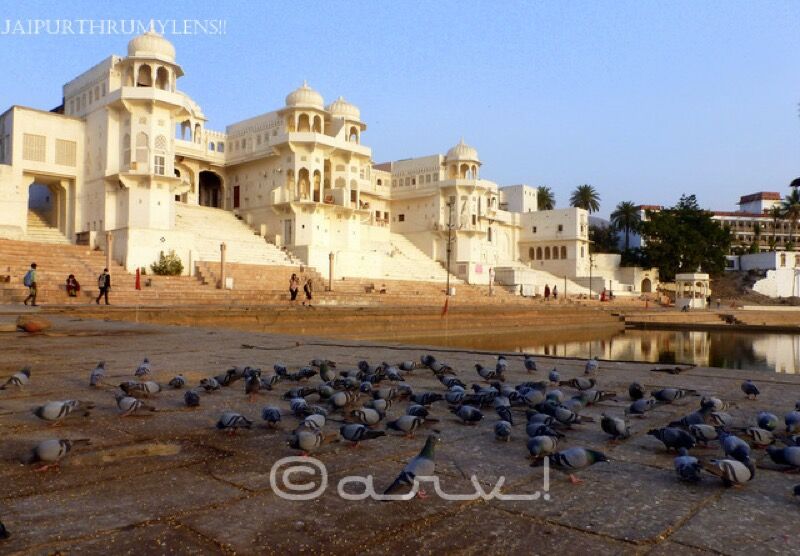
Pushkar is small, walkable, and spiritually charged. The sacred Pushkar Lake is ringed by 52 ghats and hundreds of temples. The town has been pulling in Indian pilgrims for centuries, and since the 1970s, international backpackers have added a Western hippie layer — rooftop cafes blasting Bob Marley, tie-dye clothing stalls, camel treks at sunset. It's one of the few places in India where those two worlds coexist naturally. The town is entirely vegetarian (by religious law) and alcohol-free. You walk everywhere in 20 minutes.
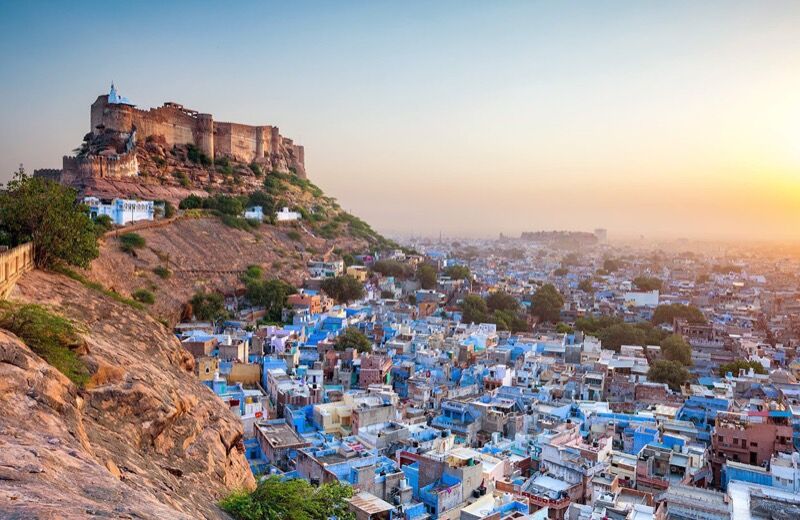
Jodhpur is a real city — the second-largest in Rajasthan, with 1.5 million people, chaotic markets, and the dominant presence of Mehrangarh Fort looming over everything from a 122-meter clifftop. The old city (Sardar Bazaar area) is the chaotic, photogenic heart. The "blue city" nickname comes from the indigo-painted houses that cascade down the hillside below the fort. It's noisier, busier, and more intense than Pushkar — but the reward is one of the most visually dramatic cityscapes in India.
"My favorite place was the fort in the blue city of Jodhpur. The touts are everywhere in Rajasthan, you have to be prepared to say NO a lot — but I loved it."
— r/TravelNoPics, backpacking Rajasthan thread
"Against all the comments here, Pushkar is a chill place, away from the hustle of other cities. People have come here and never returned, especially foreigners. For sightseeing, one day is enough. If you're coming for tranquility, soulful sunsets and a pinch of culture with good food in budget, then a lifetime is not enough."
— r/india_tourism, Jodhpur or Pushkar thread
⛩️ Temples, Sights & Cultural Attractions
This category is Jodhpur's stronghold — it has more sights, bigger sights, and better-organized sights. But Pushkar's spiritual weight punches above its size.
Pushkar's must-sees:
- Pushkar Lake & Ghats — 52 sacred ghats surrounding the lake. Morning puja (prayer ceremonies) at sunrise are otherworldly. The Brahma Ghat and Varaha Ghat are most atmospheric. Beware the "Pushkar Passport" scam (locals handing flowers for donations).
- Brahma Temple — One of very few temples in the world dedicated to the Hindu creator god Brahma. Entry is free; remove footwear and leave camera outside. Get there early to avoid crowds.
- Savitri Temple — Hilltop temple above town, 20-minute climb or ropeway (₹100 return). Best sunset views in Pushkar.
- Pushkar Market (Main Bazaar) — Compact but excellent for silver jewelry, tie-dye fabric, and Rajasthani crafts at lower prices than Jaipur.
Jodhpur's must-sees:
- Mehrangarh Fort — Entry ₹600 (foreigners) + ₹100 audio guide. Budget 3–4 hours. The museum inside is excellent, the views from the battlements are defining Jodhpur photos, and the fort itself is beautifully maintained. One of India's best-run major forts.
- Jaswant Thada — Marble cenotaph memorial (₹50 entry) near the fort. Far less visited than Mehrangarh but hauntingly beautiful — intricate white marble that glows in afternoon light.
- Clock Tower & Sardar Bazaar — The old city market, great for spices, textiles, and street food. Chaotic and authentic.
- Umaid Bhawan Palace — Part hotel (Taj Hotels), part museum. Museum entry ₹100. The grounds are a photo stop even if you're not staying.
- Blue City Walk — Best done with a guide or following a rooftop cafe trail. The densest blue-painted area is between Mehrangarh and the Sardar Bazaar.
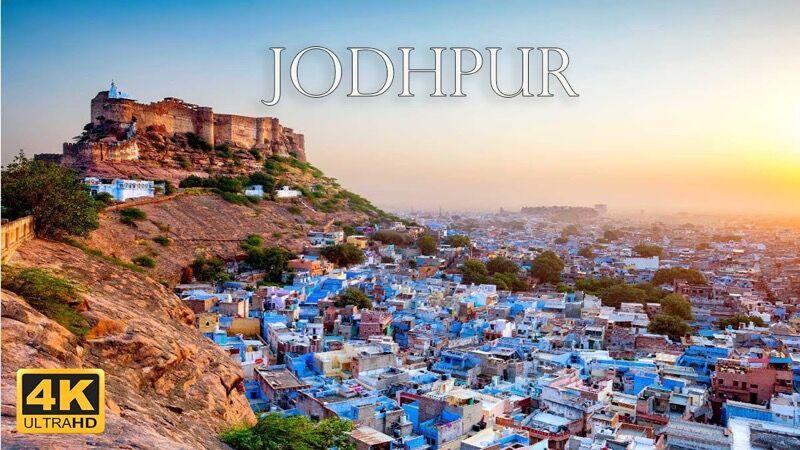
"Mehrangarh Fort in Jodhpur is the best fort I've seen in India — and I've been to Amber, Red Fort, and Gwalior. The museum is excellent, the views are insane. Spend half a day."
— r/india, anniversary trip planning thread
💰 Cost Comparison
Pushkar is one of the cheaper places in Rajasthan. Jodhpur is also affordable but slightly higher across all categories. Neither will strain a backpacker budget.
| Expense | Pushkar | Jodhpur |
|---|---|---|
| Dorm bed (hostel) | ₹300–600 (~$4–7) | ₹500–900 (~$6–11) |
| Budget guesthouse (private) | ₹700–1,500 (~$8–18) | ₹1,000–2,500 (~$12–30) |
| Mid-range hotel | ₹2,000–4,500 (~$24–54) | ₹2,500–6,000 (~$30–72) |
| Thali lunch | ₹100–200 (~$1.20–2.40) | ₹150–300 (~$1.80–3.60) |
| Restaurant dinner | ₹200–500 (~$2.40–6) | ₹300–700 (~$3.60–8.50) |
| Auto rickshaw across town | ₹50–100 | ₹80–150 |
| Mehrangarh Fort entry | N/A | ₹600 foreigners (~$7.20) |
| Camel ride (30 min) | ₹300–600 | ₹400–800 |
Budget traveler daily spend: Pushkar ₹1,200–2,000 ($14–24) | Jodhpur ₹1,800–3,000 ($22–36)
Mid-range daily spend: Pushkar ₹2,500–4,000 | Jodhpur ₹3,500–6,000
Note: Pushkar is alcohol-free by law — you'll save on drinks, but also won't be having any. For party-minded travelers, Jodhpur's rooftop bars are a real plus.
"Pushkar is incredibly cheap — ₹150 for a full thali, rooftop cafes with lake views for ₹200–300 all-in. Budget ₹1,500/day and you'll live comfortably."
— r/SoloTravel_India, first solo trip report
🍜 Food & Dining
The biggest practical difference between these two cities: Pushkar is entirely vegetarian and alcohol-free by religious law. If you're a meat-eater or a drinker, this matters.
Pushkar food scene: All vegetarian, all the time. That sounds limiting but isn't — the veg cooking is excellent. Dal baati churma (the Rajasthani staple — baked wheat dumplings with lentil curry and sweetened ghee) is everywhere. Rooftop cafes are the main dining experience: get a table overlooking the lake, order a masala chai and a thali, and stay for two hours. Many cafes serve Israeli, Italian, and traveler-friendly fusion food alongside Indian — the backpacker trail has shaped the menu. Mango lassi, fresh juices, and local sweets are highlights.
Jodhpur food scene: Full Rajasthani spread plus alcohol. Mirchi bada (deep-fried stuffed chili) at the Clock Tower market is the essential street food — order it and eat it standing. Makhaniya lassi (thick saffron-flavored lassi) is the other non-negotiable. Dal baati churma is also here; the local version tends toward more ghee. Rooftop restaurants near Mehrangarh — like Indique or Stepwell Cafe — serve both Indian and international food with fort views. Alcohol is available, including local Rajasthani spirits.
"Jodhpur only for food I rated it high in my top 5 Rajasthan cities. The mirchi bada at the Clock Tower and the makhaniya lassi are unmissable."
— r/india_tourism, 28-day Rajasthan travel report
🏨 Where to Stay
Pushkar: Small town = concentrated accommodation. The main backpacker drag runs parallel to the market, and most guesthouses are within 10 minutes' walk of the lake. Highlights:
- Lake-view guesthouses — Several mid-range places (₹1,500–4,000) sit directly on the lake. The views justify the premium.
- Backpacker hostels — Pushkar has a strong hostel scene relative to its size: Moustache Hostel and Zostel are popular, with social common areas and rooftop spaces. Dorms from ₹300–500.
- Heritage havelis — For mid-range splurge: Pushkar Bagh (₹4,000–8,000) and Inn Seventh Heaven (₹3,500–7,000) offer heritage rooms near the old town.
Jodhpur: More options across all tiers:
- Old City / Blue City area — Most recommended on Reddit. Walking distance to Mehrangarh, immersed in the blue-painted streets. Gopal Hotel and Cosy Guest House are reliable budget picks (₹700–1,500).
- Heritage havelis — Pal Haveli (₹4,000–7,000) and Raas Jodhpur (₹12,000+) are the standouts. Raas is one of India's most architecturally impressive luxury hotels.
- Mandore area — Quieter, away from the main tourist center. Good for those wanting space from the old city chaos.
"Stay in Pushkar since it has better hostels and crowd, and do a day trip to Ajmer from there. The hostel scene is significantly better than Jodhpur's."
— r/SoloTravel_India, Jodhpur trip planning thread
🚌 Getting Around & Logistics
Getting to Pushkar: Pushkar has no train station. The nearest railhead is Ajmer (11km away, 30–40 mins by shared auto/taxi). From Ajmer, you can reach Pushkar by shared auto (₹30–50), private auto (₹150–200), or taxi (₹300). Direct buses from Jaipur to Pushkar take 3–4 hours (₹150–250). Delhi to Pushkar is roughly 8–10 hours by bus or train+auto.
Getting to Jodhpur: Much better-connected. Jodhpur Junction is a major train station with direct trains to Jaipur (4–5 hours), Jaisalmer (5–6 hours), Delhi (10–12 hours), and Mumbai (14–16 hours). Buses also run to all major Rajasthan cities. Jodhpur airport has domestic flights to Delhi, Mumbai, and Jaipur.
Within Pushkar: The entire town center is walkable. You don't need any transport within Pushkar itself — everything relevant is within 15–20 minutes on foot. Autorickshaws are available for the outskirts.
Within Jodhpur: Autorickshaws are the standard mode (₹50–150 for most trips in the old city). The old city is walkable but hilly. Mehrangarh is a steep uphill walk from the market — most people take a rickshaw up and walk down through the Blue City.
"Getting to Pushkar from Jaipur is easy — 3 hour bus. From there a 30 min auto to Ajmer. Pushkar itself you walk everywhere in 20 minutes. Jodhpur is much better connected by train if you're continuing to Jaisalmer."
— r/travel, India trip planning thread
🌡️ Best Time to Visit
Both cities share a similar Rajasthan climate: excellent October–March, brutal April–June, manageable monsoon July–September. The specific festival timing sets them apart.
Pushkar:
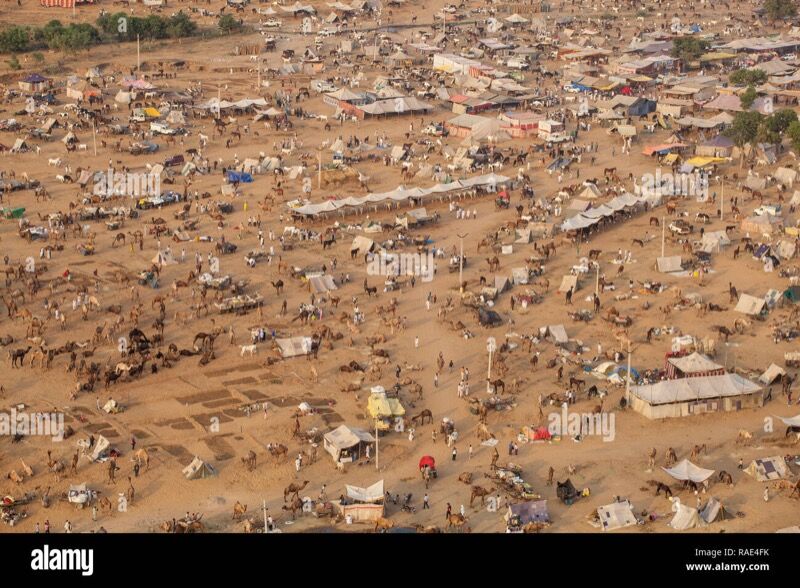
- October–November: Best time. The Pushkar Camel Fair (Kartik Purnima, usually November) is one of India's most spectacular events — 50,000+ camels, folk performers, horse trading, hot air balloons. Book accommodation 3–6 months ahead. The town fills completely.
- December–February: Cool and pleasant (15–25°C). Fewer crowds than festival season. Best for relaxed exploration.
- March–April: Still comfortable. Holi in Pushkar (March) is celebrated enthusiastically.
- May–June: 40–45°C. Avoid unless heat is your thing.
Jodhpur:
- October: The Rajasthan International Folk Festival (RIFF) — world-class musicians perform at Mehrangarh Fort over 5 days. Spectacular but requires advance planning.
- November–February: Peak season. 15–25°C, ideal weather for fort exploration and Blue City walks.
- March–April: Comfortable, less crowded than winter peak.
- May–June: 40–45°C. The fort in summer is genuinely challenging.
🎒 Day Trips & Nearby Highlights
From Pushkar:
- Ajmer Sharif Dargah (11km, 30 min) — One of the most important Islamic shrines in India, pilgrimage site for the Sufi saint Moinuddin Chishti. Powerful spiritual atmosphere, open to all. Combine with the Pushkar visit easily.
- Kishangarh Marble Dumpyard (30km, 45 min) — Surreal landscape of discarded marble blocks, popular for photography. Worth the half-day trip.
- Bundi (160km, 4 hours) — For those who want an off-the-beaten-track Rajasthan town with a crumbling palace and painted havelis. Great step-well architecture. Usually a stop en route to Udaipur rather than a pure day trip.
From Jodhpur:
- Osian (65km, 1.5 hours) — Ancient temple complex and sand dunes. One of the best camel safari spots in Rajasthan without the Jaisalmer crowds. Day trip or overnight desert camp.
- Kumbhalgarh Fort (85km, 2 hours) — UNESCO site, second-longest wall in the world after the Great Wall of China. Combine with Ranakpur Jain Temples nearby. Full-day trip.
- Mandore Gardens (9km, 20 min) — Free entry, former Jodhpur capital, ancient cenotaphs, and a pleasant park. Good half-day escape from the city.
"Don't skip the Kishangarh Marble Dumpyard from Pushkar — one-of-a-kind landscape. And Mandore from Jodhpur is free and totally underrated."
— r/SoloTravel_India, Jodhpur trip planning thread
🔀 Why Not Both?
The most common Reddit recommendation is simple: do both. They're 200km apart — a 4–5 hour bus ride or 3.5 hour shared jeep — and they solve completely different needs. Combining them in a single Rajasthan circuit is the standard approach.
The classic Rajasthan circuit: Jaipur (2–3 nights) → Pushkar (1–2 nights) → Jodhpur (2–3 nights) → Jaisalmer (2 nights). Total: 8–12 days covering the best of western Rajasthan. Pushkar sits neatly between Jaipur and Jodhpur on both geography and transport routes.
Short version (5–6 days): Jaipur (1 night) → Pushkar (1 night) → Jodhpur (2 nights) → Jaisalmer (1 night). Rushed but doable. Cut Pushkar to a day trip from Jaipur if pressed for time.
See our Jaipur vs Udaipur comparison and Goa vs Kerala comparison for more India destination planning. Check our Rishikesh vs Dharamsala comparison if you're also considering north India.
"Udaipur → Jodhpur → Pushkar → Jaipur — this was my first solo trip and Rajasthan really has my heart. Don't skip any of them, just give each the right amount of days."
— r/SoloTravel_India, first solo trip in Rajasthan
❓ Frequently Asked Questions
Is Pushkar or Jodhpur better for a first visit to Rajasthan?
Jodhpur is the stronger choice for first-time visitors. Mehrangarh Fort is one of India's most impressive forts, the Blue City views are iconic, and the city has better infrastructure, more accommodation options, and easier onward connections to Jaisalmer or Udaipur. Pushkar is a great add-on — most Reddit travelers recommend 1–2 days in Pushkar en route to or from Jodhpur, not as a primary destination unless you're specifically seeking the spiritual/backpacker vibe.
How many days do you need in Pushkar vs Jodhpur?
Pushkar: 1–2 days is the strong Reddit consensus. Walk the ghats, visit the Brahma Temple, explore the market, and catch a sunset — you're done. Staying longer is pleasant for the relaxed vibe, but sights-wise it's compact. Jodhpur: 2–3 days minimum to cover Mehrangarh Fort, Jaswant Thada, the Clock Tower bazaar, Umaid Bhawan exterior, and a Blue City walking tour. Add half a day for Mandore Gardens if you have time.
Is Pushkar safe for solo female travelers?
Pushkar is generally considered one of the more comfortable places in Rajasthan for solo female travelers. The large backpacker community creates safety in numbers, and the town is compact enough to navigate on foot. Common issues are persistent touts at the ghats (the 'Pushkar Passport' flower offering scam is well-documented on Reddit) and overpriced holy men demanding donations. Jodhpur is also safe but more chaotic — the old city markets require more confidence navigating. Both are safer than Delhi or Jaipur for solo women, per r/solotravel consensus.
What is the Pushkar Passport scam?
The 'Pushkar Passport' is Rajasthan's most notorious tourist scam. Locals at the ghats offer you flower petals or thread for a 'free blessing,' then demand large donations (sometimes ₹1,000–5,000) and guilt-trip you into paying. It's widely documented on r/india and r/travel. The fix: decline all offerings at the ghats, avoid anyone who approaches you with flowers or threads, and if you want to take part in genuine puja, arrange it through your guesthouse. Many travelers love the ghat experience anyway — just go in eyes open.
Can you visit Pushkar and Jodhpur on the same trip?
Absolutely — and most Rajasthan itineraries include both. The distance is about 200km (approximately 4–5 hours by bus or train). The typical route: Jaipur → Pushkar (1–2 nights) → Jodhpur (2–3 nights) → Jaisalmer (2 nights) → back. Pushkar works well as a mid-point stop between Jaipur and Jodhpur. Overnight buses run between them, and shared jeeps or cabs are easy to arrange.
What is the best time to visit Pushkar?
October–March is the sweet spot, when temperatures range from 15–28°C (59–82°F). The Pushkar Camel Fair (Kartik Purnima, usually November) is spectacular but requires booking accommodation 3–6 months in advance as the town fills completely. April–June is brutally hot (40°C+) and best avoided. July–September monsoon brings humidity but fewer tourists and lush surroundings. Winter evenings can get cold — pack a layer for December–January nights.
What is the best time to visit Jodhpur?
October–February is the best time for Jodhpur, with pleasant temperatures of 15–25°C (59–77°F). March–April remains comfortable. The Rajasthan International Folk Festival (RIFF) at Mehrangarh Fort in October is a highlight — world-class musicians perform inside the fort. Avoid May–June when temperatures hit 42–45°C. Monsoon (July–September) brings some greenery and dramatic sky for photography but also occasional flooding in the old city.
Is Jodhpur the 'Blue City' — and why are the houses blue?
Yes — Jodhpur's old city is famously painted in shades of indigo blue. The tradition started as a color code for Brahmin homes, which were painted blue to signify caste status. Over time, other castes adopted the color because it also repels insects (indigo acts as a natural deterrent). Today the blue extends across hundreds of homes in the old city below Mehrangarh Fort, creating one of the most photogenic urban landscapes in India. It's best viewed from the fort battlements or sunrise/sunset rooftop cafes.
Ready to Plan Your Rajasthan Trip?
Browse our AI-curated Rajasthan itineraries — from classic 7-day circuits to deep dives into Pushkar's spiritual side or Jodhpur's Blue City neighborhoods.
More Rajasthan Comparisons Build Your Itinerary🎟️ Book Tours & Experiences
Hand-picked tours and activities for both destinations — book with free cancellation
Experiences via Viator — free cancellation on most tours