How we built this comparison
This page combines traveler discussion patterns, published price ranges, flight schedules, and seasonal data to help you decide between Raja Ampat and Great Barrier Reef.
- Reviewed 50+ Reddit threads from r/travel, r/solotravel, r/diving, r/Australia, r/Indonesia.
- Verified costs and logistics against current booking platforms (e.g., Skyscanner, Agoda, Booking.com, local tour operators).
- Cross-referenced seasonal patterns and weather data from meteorological sources for accuracy.
⚡ The TL;DR Verdict
Choose Raja Ampat if you want costs & budget, diving & marine life, beaches & scenery. Choose Great Barrier Reef if you want getting there & logistics, accommodation, food & drink. Split your trip if you want both experiences without forcing one destination to do the other's job.
- Choose Raja Ampat: costs & budget, diving & marine life, beaches & scenery.
- Choose Great Barrier Reef: getting there & logistics, accommodation, food & drink.
- Choose Both: Consider doing both if you have 3-4+ weeks and a healthy budget. Start with the GBR for its ease and variety, then embark on the Raja Ampat expedition for its unparalleled marine life, offering a complete picture of the Indo-Pacific's underwater wonders.
- Split your trip: Split your trip if you want Raja Ampat for its strongest wins but still want Great Barrier Reef for the categories where it clearly does better.
Best-for snapshot
Fast answers first: who each destination tends to serve best, pulled from the page’s own comparison table and verdict.
Best for food
Great Barrier ReefDiverse culinary scene, especially in Cairns/Port Douglas. Fresh seafood, modern Australian cuisine, international options. Plenty of bars and cafes.
Best for nightlife
TieNot a clean call from the comparison table, so treat this as situational.
Best for budget
Raja AmpatLower daily operational costs, but high upfront travel. Homestays and liveaboards offer value. Expect ~IDR 1,500,000-4,500,000 (~$100-300 USD) per day.
Best for first-timers
Great Barrier ReefGenerally simpler: international flight to major Australian cities (Sydney, Brisbane), then domestic to Cairns (CNS) or Port Douglas. Direct flights to Cairns from some international hubs.
Best for couples
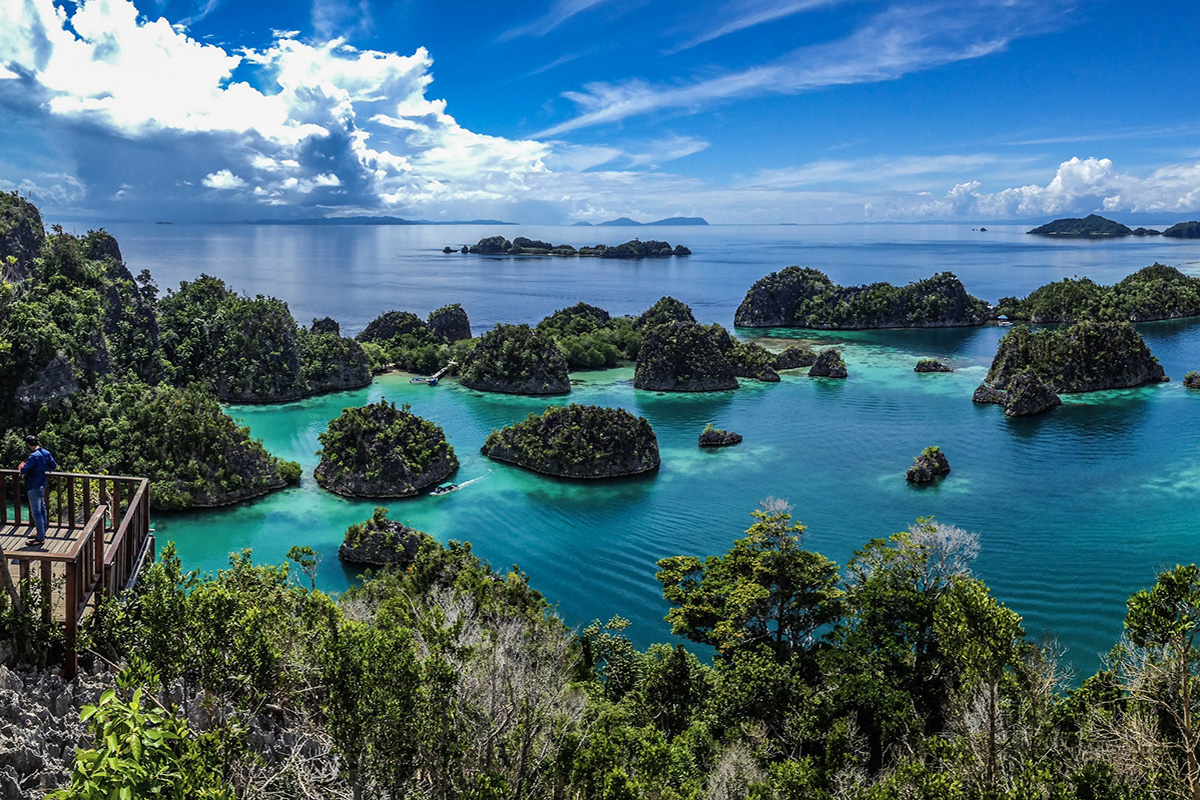
Raja AmpatSecluded, pristine white sand beaches, often deserted. Dramatic karst landscapes, lush jungle, and iconic limestone formations (e.g., Piaynemo, Wayag).
Best for solo travelers
Great Barrier ReefDiverse culinary scene, especially in Cairns/Port Douglas. Fresh seafood, modern Australian cuisine, international options. Plenty of bars and cafes.
Best for families
Raja AmpatLower daily operational costs, but high upfront travel. Homestays and liveaboards offer value. Expect ~IDR 1,500,000-4,500,000 (~$100-300 USD) per day.
Quick scorecards
Lightweight scoring for scanability - a decision aid, not fake precision.
Raja Ampat
Great Barrier Reef
Quick Comparison
| Category | Raja Ampat | Great Barrier Reef | Winner |
|---|---|---|---|
| Costs & Budget | Lower daily operational costs, but high upfront travel. Homestays and liveaboards offer value. Expect ~IDR 1,500,000-4,500,000 (~$100-300 USD) per day. | Higher overall costs, especially for tours and accommodation. Flights can be cheaper. Expect ~AUD 225-750 (~$150-500 USD) per day. | Raja Ampat |
| Getting There & Logistics | Multi-leg journey: international flight to Jakarta/Makassar, domestic to Sorong (SOQ), then a ferry/boat transfer. Complex but rewarding. | Generally simpler: international flight to major Australian cities (Sydney, Brisbane), then domestic to Cairns (CNS) or Port Douglas. Direct flights to Cairns from some international hubs. | |
| Diving & Marine Life | World's most biodiverse marine region. Pristine corals, immense fish schools, macro wonders, manta rays, sharks. Unforgettable, untouched. | Largest reef system. Iconic coral formations (e.g., Heart Reef), diverse species, turtles, whales (seasonal). Still stunning, but with visible signs of climate impact. | Raja Ampat |
| Accommodation | Mainly homestays (basic, authentic), a few eco-resorts, and liveaboards. Focus on immersion, not luxury. Limited options. | Wide range: hostels, mid-range hotels, luxury resorts (e.g., Port Douglas), and liveaboards. Caters to all budgets and comfort levels. | |
| Food & Drink | Simple, local Indonesian fare (rice, fish, vegetables, sometimes chicken). Often included in homestay/liveaboard packages. Limited variety. | Diverse culinary scene, especially in Cairns/Port Douglas. Fresh seafood, modern Australian cuisine, international options. Plenty of bars and cafes. | |
| Beaches & Scenery | Secluded, pristine white sand beaches, often deserted. Dramatic karst landscapes, lush jungle, and iconic limestone formations (e.g., Piaynemo, Wayag). | Beautiful mainland beaches (e.g., Four Mile Beach, Palm Cove), tropical islands (Fitzroy Island, Green Island). Stunning coastal drives and rainforest backdrops. | Raja Ampat |
| Getting Around | Primarily by boat (private transfers, homestay boats). Limited land transport. Requires pre-arrangement and patience. | Excellent infrastructure: rental cars, buses, shuttles, taxis. Easy to explore mainland and take organized boat tours to the reef. | |
| Weather & Seasons | Equatorial climate, generally warm and humid year-round. 'Dryer' season (Oct-April) best for calmer seas, but rain can occur anytime. Wet season (May-Sept) can bring rougher seas. | Tropical climate with distinct wet (Nov-April, 'stinger season') and dry seasons (May-Oct). Dry season offers cooler, sunny weather and calm seas. Cyclone risk in wet season. | |
| Safety & Health | Generally safe from crime, but remote. Limited medical facilities. Evacuation can be challenging. Malaria risk in some areas. | Very safe from crime. Excellent medical facilities in Cairns. Stinger season requires precautions (wetsuits). Sun protection is crucial. | |
| Family Friendliness & Accessibility | Challenging for young children due to long travel, basic facilities, and limited non-diving activities. More suited for adventurous teens/adults. | Highly family-friendly with diverse activities, range of accommodations, and excellent accessibility. Caters well to all ages and mobility levels. |
💰 Costs & Budget
While the flights to get to Raja Ampat are expensive and time-consuming, once you're there, daily operational costs, especially if you opt for homestays or budget liveaboards, are significantly lower. A typical homestay in places like Arborek or Yenbuba, including three meals and basic accommodation, can run IDR 500,000-800,000 (~$35-55 USD) per night. Dive packages often bundle accommodation, food, and diving for IDR 1,500,000-3,000,000 (~$100-200 USD) per day. In contrast, the Great Barrier Reef, particularly around Cairns or Port Douglas, has higher base costs. A decent hotel starts at AUD 150-250 (~$100-170 USD) per night, and a full-day outer reef tour can be AUD 250-450 (~$170-300 USD), often excluding additional dives or gear. Food and drinks are also pricier. 'Raja Ampat homestays are basic but the value for the diving you get is insane. Just budget for the flights!' – u/budgetdiver87. This makes Raja Ampat the winner for in-destination value, despite the initial hurdle.
Winner takeaway
- Winner: Raja Ampat
- Why: Raja Ampat offers superior value for diving and local experiences once you are on the ground, making daily costs significantly lower.
- Who this matters for: Budget-conscious travelers and those planning longer stays.
✈️ Getting There & Logistics
Getting to Raja Ampat is an expedition in itself. Most travelers fly internationally to Jakarta (CGK) or Makassar (UPG), then take a domestic flight (typically with Batik Air, Garuda Indonesia, or Lion Air) to Sorong (SOQ), West Papua. This domestic leg alone can be 4-6 hours and cost IDR 2,000,000-4,000,000 (~$130-270 USD) one-way. From Sorong, it's a 2-hour public ferry (IDR 120,000, ~$8 USD) or private speedboat to Waisai, followed by another boat transfer to your specific island/resort. Total travel time from a major international hub can easily exceed 24-36 hours. The Great Barrier Reef is far more accessible. Cairns (CNS) is the main gateway, with direct flights from major Australian cities (Sydney, Melbourne, Brisbane cost AUD 150-300, ~$100-200 USD) and even some international routes (e.g., from Singapore, Tokyo). Once in Cairns, it's a short taxi to your hotel or a scenic drive to Port Douglas. 'Flying into Cairns and being on a dive boat within hours is just so much easier than the Raja Ampat marathon.' – u/aussieexplorer. The GBR wins for sheer convenience and reduced travel stress.
Winner takeaway
- Winner: Great Barrier Reef
- Why: The Great Barrier Reef's gateway city, Cairns, is significantly easier and faster to reach with fewer transfers.
- Who this matters for: Families, time-constrained travelers, and those who prefer smooth logistics.
🐠 Diving & Marine Life
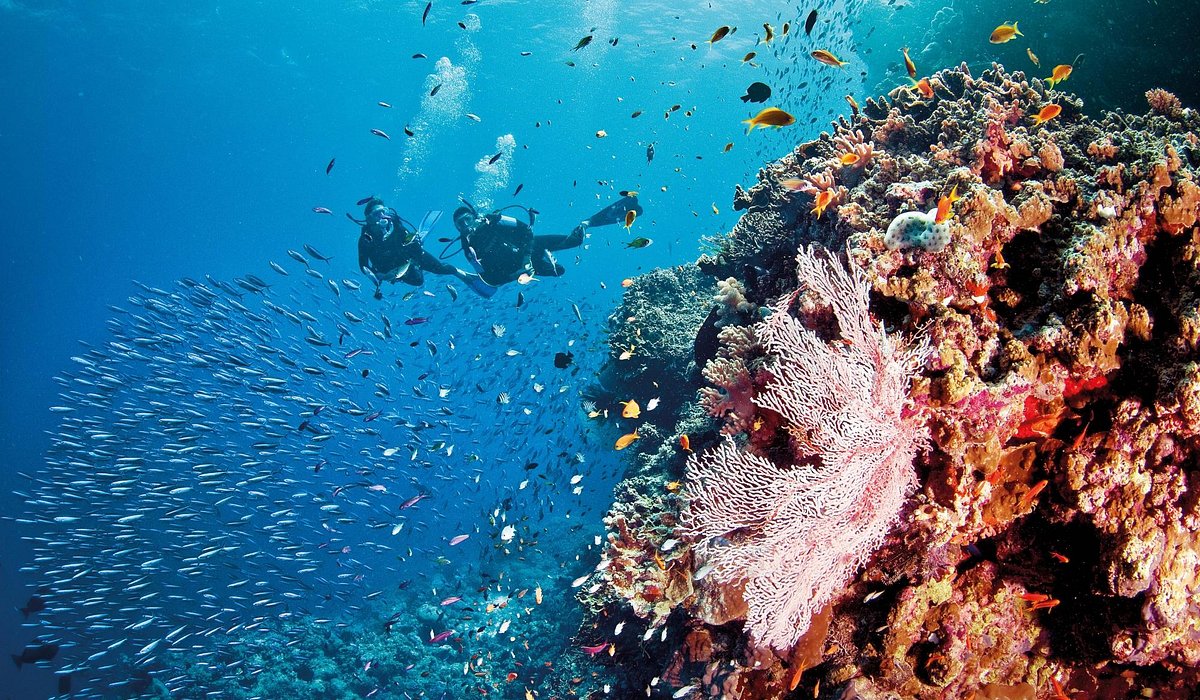
Raja Ampat is widely considered the epicenter of marine biodiversity, boasting over 75% of the world's coral species and 1,500+ fish species. Dive sites like Cape Kri (holds a world record for most fish species sighted on a single dive), Misool, and Dampier Strait consistently deliver mind-blowing encounters: colossal schools of barracuda, jacks, and fusiliers, numerous manta rays, wobbegong sharks, pygmy seahorses, and pristine hard and soft corals. The sheer density and health of the ecosystem are unmatched. Visibility is generally excellent, currents can be strong, requiring some experience. The Great Barrier Reef is still a marvel, the largest living structure on Earth, and offers incredible experiences at sites like Norman Reef, Saxon Reef, and Agincourt Reef. You'll see green sea turtles, reef sharks, giant clams, and during migration season, dwarf minke whales (e.g., from Port Douglas). However, repeated bleaching events have taken a toll on some areas, and while efforts are underway for recovery, it's not as untouched as Raja Ampat. 'Raja Ampat diving ruined me for anywhere else. The sheer amount of life is just ridiculous, every dive is a documentary.' – u/pro_diver_girl. For the ultimate, pristine underwater spectacle, Raja Ampat is the undisputed champion.
Winner takeaway
- Winner: Raja Ampat
- Why: Raja Ampat offers unparalleled marine biodiversity, pristine coral health, and an abundance of marine life unmatched globally.
- Who this matters for: Experienced divers, underwater photographers, and marine conservation enthusiasts.
🏨 Accommodation
Accommodation in Raja Ampat is predominantly simple, locally-run homestays, particularly on islands like Kri, Gam, and Arborek. These often consist of basic wooden bungalows overwater or on the beach, with shared bathrooms and limited electricity/internet. Prices range from IDR 300,000-700,000 (~$20-50 USD) per night, usually including full board. There are a handful of more upscale eco-resorts (e.g., Misool Eco Resort, Papua Paradise Eco Resort) starting from $300-800+ USD per night, and numerous liveaboard options (ranging from budget to luxury, $200-1000+ USD per night). The Great Barrier Reef, centered around Cairns and Port Douglas, offers a vast spectrum. You can find backpacker hostels for AUD 30-50 (~$20-35 USD), comfortable mid-range hotels for AUD 150-300 (~$100-200 USD), and luxurious 5-star resorts like the Pullman Reef Hotel Casino in Cairns or the Sheraton Grand Mirage Resort in Port Douglas for AUD 400-800+ (~$270-540+ USD). Liveaboards are also available, but land-based options are far more diverse and plentiful. 'Cairns has everything from a cheap hostel to a fancy resort, which is great when you're traveling with mixed budgets.' – u/familytraveler_au. The variety and comfort levels available in the GBR region cater to a much broader audience.
Winner takeaway
- Winner: Great Barrier Reef
- Why: The Great Barrier Reef region offers a significantly wider range of accommodation types, prices, and comfort levels.
- Who this matters for: Travelers seeking diverse options, luxury, or specific budget constraints beyond basic homestays.
🍽️ Food & Drink
In Raja Ampat, the food experience is authentic but simple. Homestays and liveaboards typically provide three meals a day, usually consisting of rice, fresh-caught fish (often grilled or fried), stir-fried vegetables (kangkung, greens), and sometimes a simple chicken dish or instant noodles. Variety is limited, and access to snacks or specific dietary requirements can be challenging. Expect to pay IDR 50,000-150,000 (~$3-10 USD) for a simple meal if not included. Alcohol is scarce and expensive, often limited to Bintang beer. The Great Barrier Reef area, particularly Cairns and Port Douglas, is a foodie's paradise by comparison. You'll find everything from casual cafes and pubs to upscale restaurants. Fresh local seafood is a highlight, with restaurants like Prawn Star in Cairns offering fresh catches starting around AUD 25-40 (~$17-27 USD). Modern Australian cuisine, Asian fusion, and international options are abundant. Coffee culture is strong, and there are plenty of bars and breweries (e.g., Hemingway's Brewery in Cairns) for evening entertainment. 'After a week of rice and fish in Raja Ampat, I was craving a good burger and a craft beer. Cairns delivered!' – u/foodietravels. The sheer variety and quality of dining options make the GBR the clear winner.
Winner takeaway
- Winner: Great Barrier Reef
- Why: The Great Barrier Reef region offers a vast and diverse culinary landscape, catering to all tastes and preferences, far beyond basic local fare.
- Who this matters for: Foodies, those with dietary restrictions, and travelers seeking variety and nightlife.
🏖️ Beaches & Scenery
Raja Ampat's above-water scenery is as breathtaking as its underwater world. Imagine towering, emerald-clad limestone karsts rising dramatically from turquoise waters, framing hidden coves and absolutely pristine, often deserted, white-sand beaches. Iconic viewpoints like Piaynemo and Wayag offer panoramic vistas of a labyrinthine archipelago that feels truly prehistoric and untouched. The lush tropical jungle comes right down to the water's edge. You can spend days island hopping, discovering your own private beach. The Great Barrier Reef also boasts beautiful beaches, particularly along the coast like Four Mile Beach in Port Douglas or Palm Cove, known for its relaxed atmosphere and coconut palms. Offshore islands like Fitzroy Island and Green Island offer lovely sandy shores, calm waters, and rainforest walks. The Daintree Rainforest, meeting the reef, provides a stunning backdrop. However, the sheer density of dramatic, unique landscapes and the feeling of untouched wilderness in Raja Ampat are unparalleled. 'Nothing beats sitting on a deserted beach in Raja Ampat, watching the sunset with no one else around. It's pure magic.' – u/solotraveler_id. Raja Ampat's dramatic, isolated beauty gives it the edge.
Winner takeaway
- Winner: Raja Ampat
- Why: Raja Ampat's dramatic karst formations, untouched jungle, and truly secluded, pristine beaches offer a more unique and wild scenic beauty.
- Who this matters for: Adventure seekers, photographers, and those craving solitude and untouched natural beauty.
🚤 Getting Around
Getting around Raja Ampat is almost exclusively by boat. Once you've taken the ferry to Waisai, onward travel to your specific island homestay or resort requires a pre-arranged transfer, typically a longboat or speedboat. These transfers can be expensive (IDR 500,000-1,500,000+ ~$35-100+ USD, depending on distance and boat type) and depend on tides and weather. Island hopping for snorkeling or diving is usually part of organized tours or included in liveaboard packages. There's virtually no public land transport, and walking is limited to local villages. In stark contrast, the Great Barrier Reef region offers fantastic infrastructure. In Cairns and Port Douglas, you can easily rent a car (starting from AUD 40-70 ~$27-47 USD per day) to explore the coastline, the Daintree Rainforest, or the Atherton Tablelands. Shuttle services (e.g., Exemplar Coaches & Limousines between Cairns and Port Douglas for AUD 50-60 ~$35-40 USD one-way) and local buses are efficient. Numerous tour operators offer organized day trips and multi-day liveaboard excursions to the reef. 'Renting a car in Cairns and driving up the coast to Port Douglas was so easy and beautiful. No worries about getting stranded.' – u/roadtripper_au. The ease, flexibility, and variety of transport options make the GBR the winner.
Winner takeaway
- Winner: Great Barrier Reef
- Why: The Great Barrier Reef offers superior, more diverse, and more convenient transportation options for both land and sea exploration.
- Who this matters for: Independent travelers, families, and those who prefer self-guided exploration.
☀️ Weather & Seasons
Raja Ampat, being on the equator, experiences a warm and humid tropical climate year-round with temperatures averaging 27-30°C (80-86°F). There isn't a truly 'dry' season, but October to April is generally considered the best time for diving due to calmer seas and less rain, making surface intervals and boat transfers more comfortable. The 'wet' season from May to September can bring more rainfall and choppier conditions, but diving is still possible. The Great Barrier Reef has a more defined tropical climate. The dry season (May to October) is ideal, with comfortable temperatures (20-28°C / 68-82°F), low humidity, abundant sunshine, and calm seas, perfect for reef excursions. This is also whale-watching season. The wet season (November to April) is hotter, more humid, and brings heavy rainfall, with a risk of tropical cyclones. This period is also 'stinger season,' requiring full-body wetsuits for swimming/snorkeling. 'We went to Cairns in July, and the weather was absolutely perfect every single day for diving. No rain, no humidity.' – u/gbrfanatics. The Great Barrier Reef's dry season offers a more reliably pleasant and predictable travel experience, outweighing Raja Ampat's year-round warmth which can still have unpredictable rain.
Winner takeaway
- Winner: Great Barrier Reef
- Why: The Great Barrier Reef's dry season provides more consistently favorable weather with calm seas and sunny skies, ideal for reef activities.
- Who this matters for: Travelers sensitive to weather, those seeking guaranteed sunshine, and families.
🩹 Safety & Health
Raja Ampat is generally very safe from crime against tourists, given its remote nature and focus on eco-tourism. The main safety concerns are health-related and logistical. Medical facilities are extremely basic; serious injuries or illnesses require evacuation to Sorong or even Jakarta, which can be costly and time-consuming (travel insurance with comprehensive medical evacuation is non-negotiable). Malaria is present in some areas, so prophylaxis is recommended. Dive safety is paramount, and choosing reputable dive operators is crucial due to the remote locations. The Great Barrier Reef region in Australia is exceptionally safe with low crime rates. Cairns has a modern hospital and excellent medical facilities. The primary health considerations are environmental: strong sun (wear plenty of sunscreen, hats, rashguards), and during 'stinger season' (Nov-May), jellyfish stingers that necessitate wearing full-body wetsuits. Marine life, while beautiful, should be respected, and guides provide clear safety briefings. 'Honestly, knowing there's a good hospital in Cairns if anything goes wrong gives me so much peace of mind, especially diving.' – u/cairnstripper. The robust infrastructure and high standard of medical care in Australia make the Great Barrier Reef the safer choice for most travelers, particularly those with health concerns.
Winner takeaway
- Winner: Great Barrier Reef
- Why: The Great Barrier Reef region offers superior medical facilities, robust safety infrastructure, and lower health risks compared to remote Raja Ampat.
- Who this matters for: Families, older travelers, those with health concerns, and anyone prioritizing peace of mind.
👨👩👧👦 Family Friendliness & Accessibility
Raja Ampat, while magical, presents significant challenges for families with young children or those with mobility issues. The multi-leg journey, basic homestay accommodations (often without air conditioning or private bathrooms), and reliance on boat transfers for all activities can be arduous. Non-diving activities are limited to snorkeling, kayaking, and village visits. It's an adventure best suited for older, more resilient children or adventurous teenagers. The Great Barrier Reef, conversely, excels in family-friendliness and accessibility. Cairns and Port Douglas offer a plethora of family-oriented resorts, hotels with kids' clubs, and restaurants with children's menus. Beyond reef tours, there are attractions like the Cairns Aquarium (AUD 49 adult, AUD 29 child), Hartley's Crocodile Adventures (AUD 47 adult, AUD 23 child), Skyrail Rainforest Cableway (AUD 60 adult, AUD 30 child return), and safe swimming lagoons. Many reef operators cater specifically to families, with glass-bottom boat tours, semi-submersibles, and shallow snorkel areas. 'We took our 8-year-old to Cairns, and there was so much to do for him besides snorkeling. The lagoon was a lifesaver!' – u/momofthree_au. The ease of access, variety of activities, and robust infrastructure make the Great Barrier Reef significantly more family-friendly and accessible for a wider range of travelers.
Winner takeaway
- Winner: Great Barrier Reef
- Why: The Great Barrier Reef offers superior accessibility, a wider range of family-friendly activities, and better infrastructure for all ages and abilities.
- Who this matters for: Families with young children, multi-generational groups, and travelers with mobility considerations.
❓ Frequently Asked Questions
Which destination is better for non-divers?
For non-divers, the Great Barrier Reef is generally superior. While both offer snorkeling, the GBR region provides a broader range of activities like rainforest tours (Daintree), cultural experiences, wildlife parks, and urban amenities in Cairns and Port Douglas. Raja Ampat's allure is almost entirely marine-focused, with limited options for those not interested in water activities.
Is Raja Ampat truly untouched, or are there signs of tourism?
Raja Ampat is remarkably untouched compared to many other dive destinations. The remoteness and protection efforts have largely preserved its pristine condition. However, some popular dive sites do see multiple boats, and the infrastructure, while basic, is growing. The region still offers a strong sense of raw wilderness, far from mass tourism.
What's the best way to experience Raja Ampat: homestay or liveaboard?
Choosing between a homestay and a liveaboard depends on your budget and desired experience. Homestays offer a more authentic, local cultural immersion and are cheaper (around $50-100 USD/day). Liveaboards provide access to more remote dive sites, greater comfort, and more dives per day, but are significantly more expensive (starting from $200-300+ USD/day). For first-timers or serious divers, a liveaboard is often recommended for comprehensive coverage.
Are there any dangerous animals in the Great Barrier Reef?
The Great Barrier Reef is home to various marine life, some of which can be dangerous, but incidents are rare with proper precautions. The main concerns are box jellyfish and Irukandji jellyfish during 'stinger season' (Nov-May), requiring full-body wetsuits. Other potential dangers include stonefish, cone shells, and sharks, but encounters are infrequent, and reputable tour operators provide thorough safety briefings and equipment.
How much does a typical dive trip to the GBR cost?
A full-day outer reef diving tour from Cairns or Port Douglas typically costs AUD 250-450 (~$170-300 USD), often including 2-3 dives, gear rental, and lunch. Multi-day liveaboard trips range from AUD 500-1500+ (~$340-1000+ USD) depending on duration, vessel luxury, and number of dives. Keep in mind additional costs for accommodation, food, and flights.
What's the internet and connectivity like in Raja Ampat?
Internet and phone connectivity in Raja Ampat are extremely limited and unreliable, especially outside of Waisai. Many homestays have no Wi-Fi, and mobile data (if available) is slow and spotty. Liveaboards may offer satellite Wi-Fi at a premium. It's best to go expecting to be largely disconnected – part of its charm for many.
Can I visit the Daintree Rainforest and the Great Barrier Reef on the same trip?
Absolutely! The Daintree Rainforest, a UNESCO World Heritage site, is located just north of Port Douglas and is easily accessible from both Cairns and Port Douglas. Many travelers combine reef excursions with rainforest tours, making for a comprehensive and diverse tropical North Queensland experience. You can even take a scenic drive up the Captain Cook Highway.
Is the Great Barrier Reef dying? Is it still worth visiting?
While parts of the Great Barrier Reef have experienced significant coral bleaching events due to climate change, it is absolutely still worth visiting. Many areas remain vibrant and beautiful, and conservation efforts are ongoing. Tour operators are committed to showcasing healthy sections, and visitor fees contribute to the reef's protection and research. It remains a magnificent and vital ecosystem.
Ready to plan your Indo-Pacific trip?
Get a free custom itinerary for Raja Ampat, Great Barrier Reef, or both — built from real traveler insights.
🎟️ Book Tours & Experiences
Hand-picked tours and activities for both destinations — book with free cancellation
Experiences via Viator — free cancellation on most tours