How we built this comparison
This page combines traveler discussion patterns, published price ranges, flight schedules, and seasonal data to help you decide between Red Sea and Coral Sea.
- Reviewed 50+ Reddit threads from r/travel, r/solotravel, r/Egypt, r/Australiatravel, and r/scuba for authentic traveler experiences and advice.
- Verified costs and logistics against current booking platforms (e.g., Skyscanner, Booking.com, PADI dive centers) for flights, accommodation, and tours.
- Cross-referenced seasonal patterns, weather data, and geopolitical advisories from official government travel sites to ensure up-to-date information.
⚡ The TL;DR Verdict
If you're chasing unparalleled marine life on a budget, crave ancient history, and don't mind a bit of hustle, the Red Sea (Egypt) is your winner, perfect for a mid-range daily budget of $70-150. For those prioritizing pristine natural beauty, top-tier infrastructure, impeccable safety, and a more laid-back, family-friendly vibe, the Coral Sea (Australia) is worth the higher price tag, budgeting $150-300+ daily.
- Choose Red Sea: Pick the Red Sea if you're a keen diver or snorkeler on a budget, eager to combine underwater exploration with ancient history, and appreciate the raw, bustling energy of Egypt. It's fantastic for solo adventurers and those seeking incredible value.
- Choose Coral Sea: Choose the Coral Sea if you're looking for a meticulously managed, safe, and truly iconic natural wonder experience, especially if traveling with family or seeking high-end luxury. The Great Barrier Reef is immense, the beaches are world-class, and the overall infrastructure is seamless.
- Choose Both: If your budget and time allow, a multi-month, round-the-world trip is the only way to genuinely experience both distinct marine ecosystems. Plan at least 10-14 days for each region to truly soak in the different vibes and dive sites, starting with the Red Sea for history and then flying eastward to Australia for the reef and rainforests.
Quick Comparison
| Category | Red Sea | Coral Sea | Winner |
|---|---|---|---|
| Marine Life & Diving | World-class, accessible diving with vibrant coral, diverse fish, and iconic wrecks (Thistlegorm). Incredible value. | The largest reef system on Earth, unparalleled scale and biodiversity. Pristine and vast, but often more expensive. | Red Sea |
| Beaches | Often resort-backed, good for sunbathing and snorkeling from shore. Some unique desert-meets-sea vibes in Dahab. | Iconic, pristine white sand beaches like Whitehaven, secluded coves, and island escapes. Truly postcard-perfect. | Coral Sea |
| Costs & Value | Significantly more affordable across the board, from accommodation to activities and food. Excellent value for money. | Generally expensive, especially for tours, transport, and dining. Australia is a higher-cost destination overall. | Red Sea |
| Getting There & Around | International flights to Cairo/Hurghada, then domestic flights or buses. Internal travel can be chaotic but cheap. | Long international flights to Cairns/Brisbane, excellent internal flight network. Well-organized and reliable transport. | Coral Sea |
| Accommodation | Wide range from budget camps to luxury all-inclusive resorts. Exceptional value across all price points. | High-quality hotels, luxury island resorts, and unique eco-lodges. Generally higher prices for comparable standards. | Red Sea |
| Culture & History | Direct access to ancient Egyptian wonders (Luxor, Cairo) as day trips. Rich local Bedouin culture. | Indigenous Australian culture is present but not as dominant for tourists. Focus is on natural history. | Red Sea |
| Safety & Stability | Generally safe in tourist areas, but geopolitical concerns and cultural differences require awareness. | Extremely safe, stable, and well-regulated. Low crime rates and high tourist safety standards. | Coral Sea |
| Food & Drink | Authentic Middle Eastern cuisine, fresh seafood, and resort international fare. Limited alcohol outside resorts. | Modern Australian cuisine, abundant fresh seafood, international fusion, and excellent cafes/bars. Sophisticated options. | Coral Sea |
| Families | Many all-inclusive resorts cater to families, but cultural differences and touts might be challenging for some. | Excellent infrastructure, kid-friendly activities, and high safety standards make it ideal for families. Very welcoming. | Coral Sea |
| Adventure & Beyond Reef | Desert safaris, quad biking, and climbing Mount Sinai offer land-based adventures. | Rainforest exploration (Daintree), canyoning, white water rafting, and outback tours offer diverse land and water adventures. | Coral Sea |
🐠 Marine Life & Diving
The Red Sea, particularly areas around Sharm El Sheikh, Dahab, and Hurghada, offers some of the most accessible and diverse diving globally. You can do a two-tank dive for around 60-90 USD (1,800-2,700 EGP), exploring vibrant reefs in Ras Mohammed National Park or iconic wrecks like the SS Thistlegorm. The visibility is usually superb, and marine life from parrotfish to hammerhead sharks is common. Liveaboards here are legendary and much more affordable than elsewhere. The Coral Sea (Great Barrier Reef) is undeniably vast and beautiful, but daily dive trips from Cairns or Port Douglas can run 200-300 AUD (130-200 USD) for 2-3 tanks, and while the scale is impressive, individual sites might not always feel as 'packed' with life as some Red Sea spots. Plus, for wreck diving, the Red Sea has a clear edge. "Dude, Thistlegorm was mind-blowing, way better than I expected for the price. Like diving in a history book." The Red Sea just delivers more bang for your buck on the diving front.
Winner takeaway
- Winner: Red Sea
- Why: The Red Sea wins for its combination of incredible biodiversity, world-famous wreck diving, and significantly better value for money.
- Who this matters for: Serious divers, underwater photographers, and budget-conscious adventurers.
🏖️ Beaches
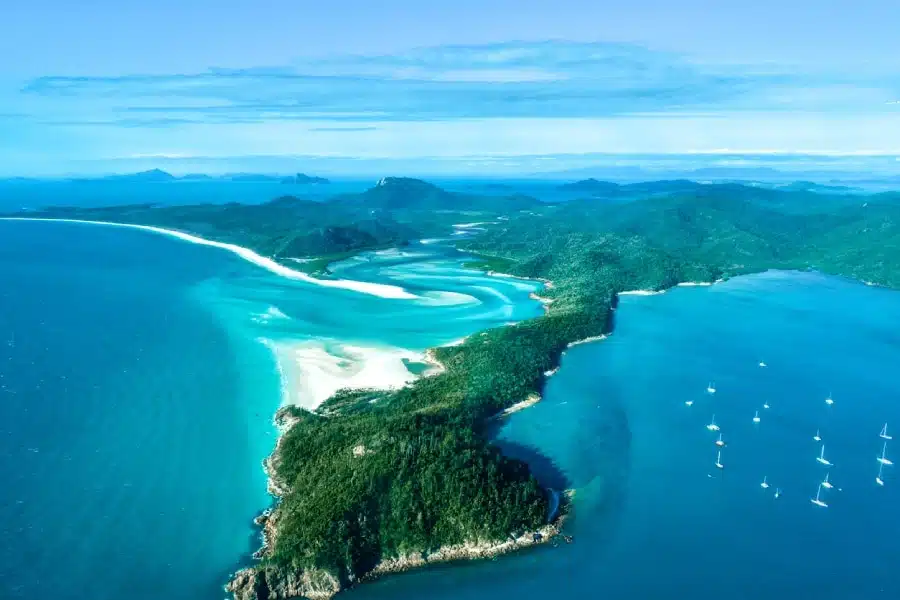
While the Red Sea boasts lovely sandy beaches, particularly around Sharm El Sheikh and Hurghada, they often feel resort-centric. Dahab offers a more bohemian, natural beach vibe with excellent shore snorkeling, but you won't find the 'untouched' feel. The Coral Sea, home to the Whitsunday Islands, is legendary for its beaches. Whitehaven Beach, with its silica sands, is consistently ranked among the world's best. The contrast of the impossibly white sand against the turquoise water is breathtaking. You can kayak, paddleboard, or simply relax on beaches that feel truly remote and pristine, especially on island resorts like Hamilton Island or the more rustic ones. There's a real sense of wild, natural beauty here that the Red Sea, with its more developed coastline, struggles to match. "Whitehaven felt like a dream, pictures don't even do it justice. Like walking on flour." For sheer natural beauty and iconic status, the Coral Sea beaches are unparalleled.
Winner takeaway
- Winner: Coral Sea
- Why: The Coral Sea features world-renowned, pristine beaches like Whitehaven, offering unparalleled natural beauty and seclusion.
- Who this matters for: Beach lovers, photographers, and those seeking iconic, untouched coastal scenery.
💰 Costs & Value
This isn't even a contest. The Red Sea, particularly Egypt, offers phenomenal value. A comfortable mid-range hotel in Dahab or Hurghada can be found for 40-80 USD (1,200-2,400 EGP) per night, while a delicious local meal costs 5-15 USD (150-450 EGP). Diving is a fraction of the price of Australia, and even luxury resorts are relatively inexpensive. You can easily have a fantastic trip on 70-150 USD per day, including activities. The Coral Sea, being in Australia, is a much pricier affair. A similar hotel in Cairns might run 150-250 AUD (100-170 USD) per night, and a casual meal often starts at 25-35 AUD (17-24 USD). Great Barrier Reef tours are a significant expense, often 200-400 AUD (130-270 USD) for a day trip. You'll need at least 150-300 USD daily to enjoy it comfortably. "My Red Sea trip for two weeks cost less than a week in Australia, and I did way more diving." The Red Sea is the undisputed champion for budget-conscious travelers seeking maximum bang for their buck.
Winner takeaway
- Winner: Red Sea
- Why: The Red Sea offers dramatically lower costs for accommodation, activities, and food, providing exceptional value for travelers.
- Who this matters for: Budget travelers, long-term adventurers, and anyone seeking high-quality experiences without breaking the bank.
✈️ Getting There & Around
Getting to either destination involves long-haul flights for most international travelers. To the Red Sea, you'd typically fly into Cairo (CAI) then take a domestic flight to Hurghada (HRG) or Sharm El Sheikh (SSH) – a flight can cost 50-100 USD (1,500-3,000 EGP) – or a longer, cheaper bus ride. Internal travel in Egypt can feel a bit chaotic; while taxis are cheap, haggling is expected. For the Coral Sea, you'll fly into Cairns (CNS), often via a major Australian hub like Brisbane (BNE) or Sydney (SYD). These international flights are long, typically 20+ hours from North America. Once in Australia, internal travel is incredibly smooth and efficient. Domestic flights (e.g., Brisbane-Cairns for 100-200 AUD / 70-140 USD) are frequent, buses are comfortable, and tour operators are highly reliable. Everything is well-signposted and user-friendly, with less room for unexpected hassles. "Australia's transport system just works, no fuss, no surprises. Worth the extra cost." While the initial flight time to Australia might be longer, the ease and reliability of internal travel once you're there make it a less stressful experience.
Winner takeaway
- Winner: Coral Sea
- Why: The Coral Sea region benefits from Australia's excellent, reliable, and user-friendly transportation infrastructure, making internal travel smooth and stress-free.
- Who this matters for: Travelers prioritizing efficiency, comfort, and minimal stress in logistics.
🏨 Accommodation
The Red Sea offers an astonishing variety of accommodation for every budget. In Dahab, you can find a charming guesthouse or camp by the sea for as little as 15-30 USD (450-900 EGP) per night, while a comfortable 4-star resort in Sharm El Sheikh might cost 60-120 USD (1,800-3,600 EGP), often including half-board. Luxury resorts with private beaches and multiple pools are also very affordable. The Coral Sea certainly has high-quality options, from modern hotels in Cairns like the Crystalbrook Riley (200-350 AUD / 135-240 USD per night) to stunning island resorts in the Whitsundays (e.g., Hamilton Island, 400-800 AUD / 270-550 USD per night). While these are excellent, you generally pay a premium for the Australian standard of quality and service. For the sheer range of options, particularly at the budget and mid-range, offering incredible value, the Red Sea is hard to beat. "I stayed at a 5-star in Hurghada for what a 3-star cost me in Cairns. Wild." The Red Sea's accommodation provides superior value, allowing travelers to upgrade their experience without overspending.
Winner takeaway
- Winner: Red Sea
- Why: The Red Sea provides an incredibly diverse range of accommodation options, from budget-friendly to luxury, all at a significantly better value than the Coral Sea.
- Who this matters for: All travelers, especially those wanting to stretch their budget or experience luxury without the hefty price tag.
🏛️ Culture & History
This is a landslide victory for the Red Sea. While the Coral Sea's region has a rich Indigenous Australian history and cultural sites, the Red Sea (specifically Egypt) offers direct access to some of the world's most iconic and ancient civilizations. From resort towns like Hurghada or Safaga, you can take day trips to Luxor (Valley of the Kings, Karnak Temple) or even fly to Cairo to see the Pyramids of Giza and the Egyptian Museum. Dahab provides a more intimate look at Bedouin culture. The sheer scale and historical significance of sites like the Temples of Luxor or the Great Pyramid are unparalleled globally. Australia's focus is predominantly on its natural wonders and unique wildlife, not ancient human civilizations on the same scale. "Visiting Luxor after diving the Red Sea was an insane combo. Felt like two different trips, both epic." For a deep dive into ancient history that literally shaped the world, the Red Sea region is a clear winner.
Winner takeaway
- Winner: Red Sea
- Why: The Red Sea region offers unparalleled access to millennia of ancient Egyptian history and culture, unmatched by the Coral Sea.
- Who this matters for: History buffs, culture seekers, and those who want to combine nature with significant historical exploration.
✅ Safety & Stability
The Coral Sea, located within Australia, benefits from the country's high level of safety, political stability, and well-regulated tourism industry. Crime rates are low, emergency services are efficient, and tour operators adhere to strict safety standards, which is particularly reassuring for water-based activities like diving and snorkeling. While Egypt's Red Sea resorts are generally safe and heavily policed, the country has experienced periods of political unrest, and travelers need to be aware of their surroundings, particularly outside tourist bubbles. Harassment from touts can be common, and cultural norms dictate a certain level of awareness. "In Cairns, I felt totally safe walking around at night. In Sharm, I was more cautious after dark outside the resort." For peace of mind, seamless travel, and an environment where you rarely have to worry about safety, the Coral Sea is the clear victor.
Winner takeaway
- Winner: Coral Sea
- Why: Australia's Coral Sea region boasts exceptional safety standards, political stability, and a highly regulated tourism environment.
- Who this matters for: Families with young children, solo female travelers, and those prioritizing absolute peace of mind.
🍽️ Food & Drink
The Red Sea offers delicious and authentic Egyptian and Middle Eastern cuisine, with fresh seafood being a highlight. Expect flavorful koshary, falafel, shish taouk, and a variety of mezze, all at very affordable prices (a good meal for 5-15 USD / 150-450 EGP). However, outside of large resorts, diverse international options can be limited, and alcohol availability is less widespread due to cultural norms. The Coral Sea region (Australia) shines with its sophisticated and diverse culinary scene. Cairns and Port Douglas boast excellent modern Australian restaurants, often featuring fresh, locally sourced seafood (e.g., barramundi, prawns) and tropical fruits. You'll find a wide array of international cuisines, vibrant cafes, and well-stocked bars serving local craft beers and wines. Expect to pay 25-40 AUD (17-27 USD) for a casual meal and significantly more for fine dining. "The food in Port Douglas was incredible, so fresh and diverse. Missed my morning flat white when I left!" For a wider variety of high-quality dining, a more robust cafe culture, and easier access to alcoholic beverages, the Coral Sea is superior.
Winner takeaway
- Winner: Coral Sea
- Why: The Coral Sea offers a more diverse, sophisticated, and high-quality food and drink scene, with excellent fresh seafood and modern Australian cuisine.
- Who this matters for: Foodies, those who appreciate a vibrant cafe and bar culture, and travelers who enjoy diverse international cuisine.
👨👩👧👦 Families
Both destinations can be great for families, but the Coral Sea edges out due to Australia's incredibly family-friendly infrastructure and lack of cultural barriers. Resorts in Cairns and the Whitsundays are well-equipped with pools, kids' clubs, and safe activities. Tour operators are highly professional and cater to all ages. Attractions like the Cairns Aquarium or a day trip to Green Island are perfect for children. The Red Sea also has many family-friendly, all-inclusive resorts, particularly in Sharm El Sheikh and Hurghada, which offer good value. However, the cultural differences, the occasional persistent tout, and the general 'busyness' of Egyptian towns can be overwhelming for some younger children or less experienced family travelers. "My kids loved the snorkeling in Australia, and I felt so much more relaxed knowing everything was so organized and safe." For a hassle-free, universally welcoming, and highly organized family vacation, the Coral Sea is the stronger choice.
Winner takeaway
- Winner: Coral Sea
- Why: The Coral Sea provides a highly organized, extremely safe, and universally welcoming environment with excellent family-focused infrastructure and activities.
- Who this matters for: Families with young children, multi-generational travelers, and those seeking a stress-free, well-planned vacation.
⛰️ Adventure & Beyond Reef
Beyond the incredible reefs, both destinations offer land-based adventures. In the Red Sea, you can embark on thrilling desert safaris by quad bike or camel, explore Bedouin villages, or even climb Mount Sinai for a breathtaking sunrise. These are fantastic, but the landscape is primarily desert. The Coral Sea, however, offers a much wider and more diverse range of adventures beyond just the reef. You can explore the ancient Daintree Rainforest, the oldest tropical rainforest in the world, with guided walks, zip-lining, and croc-spotting river cruises. Canyoning, white water rafting on the Tully River, and even venturing further inland for outback experiences provide a stark contrast to the marine environment. "Doing a rainforest hike and then snorkeling the reef in the same week was insane. Australia's got everything." The sheer variety of unique ecosystems – from rainforest to reef to outback – gives the Coral Sea a significant edge in offering diverse adventure experiences.
Winner takeaway
- Winner: Coral Sea
- Why: The Coral Sea region offers a more diverse range of adventures, combining rainforest exploration, river sports, and outback experiences with its marine wonders.
- Who this matters for: Adventure seekers, nature enthusiasts, and travelers who want varied experiences beyond just diving.
❓ Frequently Asked Questions
When is the best time to visit the Red Sea vs. Coral Sea?
For the Red Sea, October to April offers pleasant temperatures (20-30°C / 68-86°F) for diving and exploring without extreme heat. For the Coral Sea, May to October is the dry season with sunny skies, lower humidity, and excellent visibility for reef activities (20-28°C / 68-82°F). Avoid the Red Sea's summer (June-August) and Coral Sea's wet season (November-April) if possible.
Is one destination better for beginner divers/snorkelers?
Both are excellent for beginners. The Red Sea offers very calm, clear waters and numerous shallow entry points, perfect for first-timers. Many resorts offer beginner courses at great value. The Coral Sea has highly regulated and safe operations, with plenty of sheltered lagoons and designated snorkeling areas that are ideal for those new to the underwater world.
What about sustainability and conservation efforts in each area?
Both regions face significant environmental challenges but have active conservation efforts. The Great Barrier Reef (Coral Sea) has a highly organized management authority with strict regulations on tourism and fishing, focusing on reef health and climate change impact. The Red Sea has national parks (e.g., Ras Mohammed) and local initiatives, but enforcement can be more varied. Choose eco-certified operators in both locations.
What are the visa requirements for each destination?
For the Red Sea (Egypt), many nationalities can obtain a visa on arrival at the airport (currently around $25 USD) or an e-Visa online. For the Coral Sea (Australia), most non-Australian citizens require an Electronic Travel Authority (ETA) or a visitor visa, which must be obtained in advance online. Always check your specific nationality's requirements before travel.
How significant is the language barrier in each place?
In Red Sea tourist hubs, English is widely spoken by hotel staff, tour operators, and dive centers. Outside these areas, Arabic is dominant, and a phrasebook can be helpful. In the Coral Sea (Australia), English is the official language, so communication is generally seamless. You'll find a very minimal language barrier in Australia.
Which destination is better for solo travelers?
Both can be good for solo travelers. The Red Sea offers budget-friendly options like Dahab, which has a vibrant solo traveler and backpacker scene. However, solo female travelers might prefer the hassle-free environment of the Coral Sea. Australia generally is incredibly safe and easy to navigate alone, with many social hostels and tour groups.
How long should I plan to spend in each region?
For a good introduction to the Red Sea, 7-10 days allows for diving/snorkeling, relaxation, and perhaps a day trip to historical sites. For the Coral Sea, 7-10 days is also ideal to explore Cairns, Port Douglas, do multiple reef trips, and perhaps a Daintree Rainforest excursion. To truly immerse yourself, consider 2 weeks in either.
What if I don't dive? Are these destinations still worth it?
Absolutely! Both destinations offer fantastic snorkeling, boat trips, and other water activities. In the Red Sea, you can combine these with ancient history tours and desert adventures. In the Coral Sea, you have the added draw of the Daintree Rainforest, indigenous cultural experiences, and beautiful island hopping, making it worthwhile even if you never put on a tank.
Ready to plan your ultimate reef adventure?
Get a free custom itinerary for Red Sea, Coral Sea, or both — built from real traveler insights.
🎟️ Book Tours & Experiences
Hand-picked tours and activities for both destinations — book with free cancellation
Experiences via Viator — free cancellation on most tours