📋 Our Methodology
This comparison is built from real sources, not AI guesswork:
- 20+ Reddit threads from r/VietNam, r/solotravel, r/Vietnam_Tourism, r/backpacking, r/HaGiang_Loop synthesized
- Cost data from recent Reddit trip reports (March 2026), cross-checked with traveler estimates
- Weather data from historical averages for northern Vietnam highlands
- Transit info from Vietnamese bus operators and traveler experience reports
⚡ The TL;DR Verdict
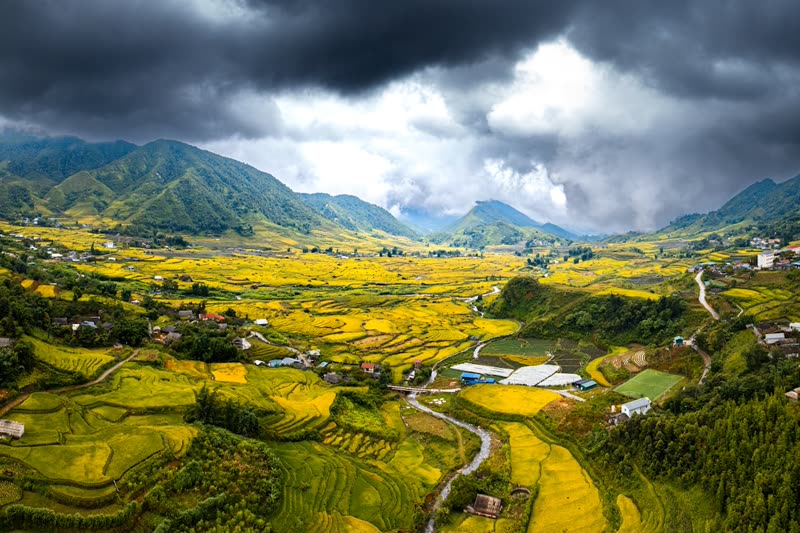
Ha Giang wins for adventure travelers and anyone seeking the most authentic, jaw-dropping experience in Vietnam. Sapa wins for those who want flexibility, easier logistics, and trekking without motorcycles. Budget: Ha Giang guided loop $169-199 USD for 3D2N all-in; Sapa $24-36/day for guided trekking plus accommodation.
- Go to Ha Giang if you want the most dramatic mountain scenery in Southeast Asia, authentic ethnic minority villages, and a multi-day adventure that Reddit travelers consistently call the best experience in Vietnam -- possibly all of Asia.
- Go to Sapa if you have limited time (2-3 days works fine), prefer trekking on foot over motorcycles, or want more accommodation and food options in a town setting.
- If you can do both, do both -- they offer fundamentally different experiences and won't feel repetitive. Most travelers who do Ha Giang say it makes Sapa's "tourist-adapted" vibe feel more noticeable in retrospect.
🏔️ Choose Sapa
Easier logistics, great trekking, Fansipan cable car, flexibility for short trips. Better for non-riders and first-time northern Vietnam visitors who want a structured mountain experience.
🏍️ Choose Ha Giang
The most dramatic mountain road in Asia, untouched villages, buckwheat flowers in October, and the kind of "life-changing" experience Reddit travelers rave about. Requires 3-4 days minimum commitment.
Quick Comparison
| Category | 🏔️ Sapa | 🏍️ Ha Giang | Winner |
|---|---|---|---|
| Daily Budget (guided) | ~600k-900k VND/day + accommodation ($24-60) | $169-199 USD all-in for 3D2N loop | Tie |
| Scenery Drama | Stunning terraced valleys, Fansipan peak | Jaw-dropping cliff passes, karst plateau | Ha Giang |
| Cultural Authenticity | Good but tourist-adapted near town | Raw and genuine -- far less tourism | Ha Giang |
| Accessibility | Train + bus from Hanoi, well-developed | 5-6h bus only, limited infrastructure | Sapa |
| Time Required | 2-3 days minimum (flexible) | 3-4 days minimum (rigid loop) | Sapa |
| Motorcycle Required | No -- trekking on foot | Yes (or pillion with easy rider) | Sapa |
| Accommodation Options | Extensive -- from dorms to luxury | Basic guesthouses, homestays | Sapa |
| Crowd Levels | High near town, lighter on longer treks | Low -- still genuinely off-the-beaten-path | Ha Giang |
| Best Season | Sep-Nov (golden rice), Mar-May (flowers) | Sep-Oct (buckwheat flowers), Mar-May | Tie |
| Solo Traveler Ease | Easy -- guided tours everywhere | Easy with group tours, harder independently | Sapa |
| Reddit Consensus | Good but increasingly touristy | "Best experience in all of Asia" | Ha Giang |
| Physical Demand | Moderate (trekking 10-20km/day) | Moderate-high (full day riding mountain roads) | Tie |
🏔️ Scenery & Landscapes
Both Sapa and Ha Giang claim some of the most stunning mountain scenery in Southeast Asia -- but they look completely different and evoke different emotions.
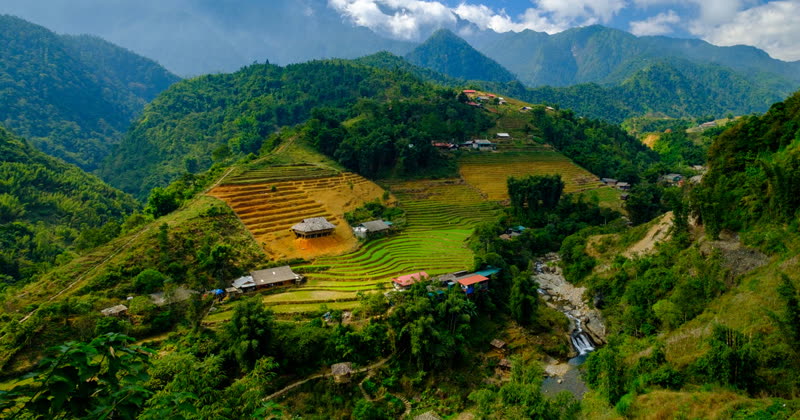
Sapa's scenery: The defining visual is terraced rice fields cascading down dramatic valley slopes. The Muong Hoa Valley (accessible from Sapa town) is the centerpiece -- kilometers of hand-carved agricultural terraces rising thousands of meters above the valley floor. Fansipan (3,143m), the highest peak in Vietnam and the entire Indochinese peninsula, looms above the town. A cable car now makes the summit accessible for day-trippers (no climbing required). The scenery is genuinely breathtaking, especially in September-October when the terraces turn golden for harvest.
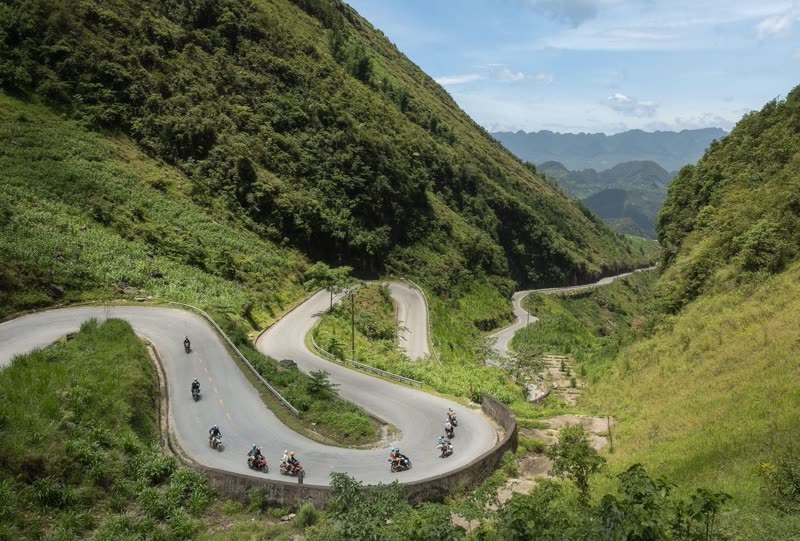
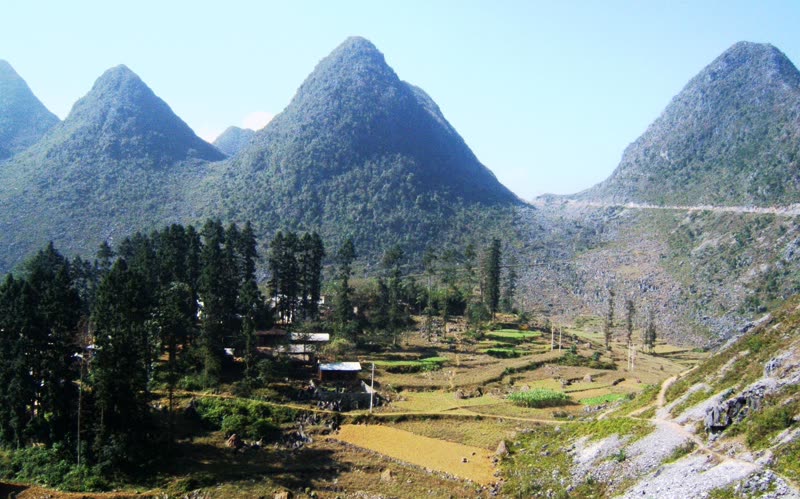
Ha Giang's scenery: Categorically different. The Dong Van Karst Plateau Geopark (UNESCO-recognized) is one of the world's great geological formations -- ancient seabed limestone formations jutting from the earth creating a moonscape of jagged peaks and sheer cliff valleys. The Ma Pi Leng Pass on the Ha Giang Loop is widely cited as the most dramatic mountain road in Vietnam: a narrow track carved into a cliff face with a 1,500m drop to the Nho Que River below. Then there's the buckwheat -- in September-October, pink buckwheat flowers bloom across the plateau, creating the kind of otherworldly photographs that make Instagram accounts explode.
"The Ma Pi Leng Pass is legitimately one of the most spectacular things I've ever seen. Photos don't do it justice -- you're riding on a cliff edge with nothing below you for hundreds of meters. Sapa is beautiful but Ha Giang is a completely different level of 'holy sh*t.'" — r/solotravel
"Sapa has authentic backcountry experiences that are unique and amazing but Ha Giang is literally a trip with several layers and levels. The karst plateau is unlike anything else in Vietnam." — r/VietNam
🚵 Activities & Adventure
Sapa activities:
- Trekking -- the core activity. Multi-day treks to Cat Cat Village, Lao Chai, Ta Van, and Y Linh Ho. Guided treks with homestays run 600,000-900,000 VND/day ($24-36) including a local guide. Solo trekking is possible but easy to get lost without trails marked.
- Fansipan summit -- cable car to the highest point in Vietnam and the Indochinese peninsula. Gondola from Sapa town: ~750,000 VND ($30) round trip. The cable car itself is an engineering spectacle (world's longest non-stop single-track cable car). Summit hike from cable car station adds ~20 minutes.
- Homestays with Hmong families -- 2-3 day treks staying with ethnic minority families in villages 15-30km from town. The authentic experience Sapa is known for beyond its touristy town center.
- Silver Waterfall and O Quy Ho Pass -- a scenic 30km route from Sapa toward Lai Chau, passing the dramatic Thac Bac waterfall and the highest mountain pass in northern Vietnam (2,048m). Motorbike day trip.
Ha Giang Loop activities:
- The Loop itself -- 4 canonical stops: Ha Giang city → Quan Ba (Heaven's Gate) → Yen Minh → Dong Van → Meo Vac → return. Total ~350km over 3-4 days. The scenery changes dramatically each day from lush green valleys to moonscape limestone to sheer cliff canyons.
- Ma Pi Leng Pass -- the most dramatic road segment. A 20km carved cliff road above the Nho Que River. Most riders stop every 500m for photos. Non-riders can walk sections on foot paths.
- Dong Van Ancient Town -- one of Vietnam's most preserved old quarter towns, a ramshackle collection of stone houses in the plateau's main market town. Feels like time has stopped.
- Lung Cu Flag Tower -- Vietnam's northernmost point, a flagpole on a hilltop overlooking the Chinese border. Compelling for geography nerds.
- Buckwheat flower season (Sep-Oct) -- thousands of hectares of pink buckwheat flowers across the plateau. Timed to this season, the loop is transcendent.
"Ha Giang loop is possibly my #1 backpacking experience of all time. The ride, the scenery, the people, the partying, shit hitting the fan -- it had it all." — r/solotravel
🪡 Cultural Authenticity
This is where the debate gets real. Both destinations are home to ethnic minority communities -- but the level of commercialization differs dramatically.
Sapa's cultural scene: The town hosts Hmong, Red Dao, Tay, and Giay communities. In the town center, you'll encounter women in traditional dress selling handicrafts to tourists -- this has become so normalized it feels transactional. The Cat Cat Village closest to town (2km) is heavily photographed and tourism-adapted. However, on longer multi-day treks to villages 15-30km from Sapa -- Lao Chai, Ta Van, Ban Ho -- you encounter genuine agricultural life relatively untouched by tourism. The authenticity gradient in Sapa is steep: town = touristy, remote villages = genuinely authentic.
Ha Giang's cultural scene: The ethnic mix is equally rich -- H'mong, Tay, Dao, Lo Lo, and Pu Peo communities live in the plateau villages. Critically, because Ha Giang only opened to foreign tourists without permits in 2012, the level of tourism infrastructure remains dramatically lower. Village encounters on the loop feel spontaneous and unscripted -- local families waving from doorways, children running alongside bikes, markets organized entirely for local trade rather than tourist consumption. Dong Van market on Sunday is an authentic highland market unchanged by tourism.
"Ha Giang feels more authentic, while Sapa is more touristy. My research led me to believe that Sapa, while absolutely beautiful, was a little more 'tourist oriented' -- Ha Giang provided a much more immersive, off-the-beaten-path experience." — r/Vietnam_Tourism
"Sapa has become quite commercialized near the town, but if you venture further out with a good local guide, you can still find really authentic experiences. Ha Giang is just on a different level of authenticity overall." — r/VietNam
💰 Cost Comparison
The cost comparison between Sapa and Ha Giang depends heavily on how you travel each destination.
Ha Giang Loop costs:
- Guided group tour (3D2N, dorm): ~$169 USD all-inclusive (accommodation, meals, guide, motorbike)
- Guided group tour (3D2N, private room): ~$199 USD all-inclusive
- Self-guided motorbike rental: 150,000-250,000 VND/day ($6-10) + accommodation 100,000-200,000 VND/night + food 80,000-150,000 VND/day
- Self-guided total: ~$20-30/day (budget), more like $40-50 with comfortable accommodation
- Bus Hanoi → Ha Giang: 200,000-350,000 VND ($8-14) each way, 5-6 hours
Sapa costs:
- Guided day trek with local guide: 300,000-600,000 VND/person ($12-24)
- 3-day guided trek with homestay (all meals, guide, accommodation): ~600,000-900,000 VND/day ($24-36)
- Budget guesthouse in Sapa town: 250,000-500,000 VND/night ($10-20)
- Mid-range hotel: 600,000-1,500,000 VND/night ($24-63)
- Fansipan cable car: ~750,000 VND ($30) round trip
- Train Hanoi → Lao Cai: 300,000-650,000 VND overnight ($12-26); + bus to Sapa: 50,000-80,000 VND
- Meals in Sapa: 60,000-150,000 VND ($2.50-6) for local restaurants; tourist restaurants 150,000-400,000 VND
"The 'Ha Giang Loop' was 3D2N and was $199 (I think it's $169 if you want to sleep in dorms instead of private rooms) per person -- this included accommodation, meals, motorbike, and guide. Worth every cent." — r/VietNam
✈️ Getting There from Hanoi
Both destinations are accessed from Hanoi -- but the logistics differ significantly.
Hanoi → Sapa:
- Overnight train (most popular): Hanoi → Lao Cai by train (8-9 hours overnight, 300,000-650,000 VND depending on berth class), then 30-45 minute bus from Lao Cai to Sapa (50,000-80,000 VND). Most travelers take the 9-10pm train, arrive Lao Cai by 5-6am, arrive Sapa by 7-7:30am. This saves a night's accommodation.
- Bus: Multiple daily departures from Hanoi's My Dinh or Gia Lam bus station. Journey: 5-6 hours, 200,000-350,000 VND. More flexible departure times but less scenic and less comfortable for overnight.
- Open-bus tickets: Available from most Hanoi travel agents for 200,000-300,000 VND including hotel pickup.
Hanoi → Ha Giang:
- Limousine van/sleeper bus: Only option (no train). Multiple departures daily from Giap Bat or My Dinh bus station. Journey: 5-6 hours, 200,000-350,000 VND. Night buses depart ~10pm, arrive ~4-5am (then wait for sunrise before starting the loop).
- No train option -- Ha Giang city is not on the rail network. This is a meaningful inconvenience for travelers who prefer train travel.
- Most organized Ha Giang Loop tours include Hanoi pickup in a van or bus to Ha Giang city as part of the package.
"Getting to Ha Giang is slightly more annoying than Sapa but worth every hour. The overnight sleeper gets you there rested and you can start the loop same morning." — r/backpacking
☀️ Best Time to Visit
Northern Vietnam's highland seasons strongly influence when to visit each destination -- and peak photography season is similar for both.
Sapa seasons:
- September-November (best overall): September-October is harvest season -- the terraces turn brilliant gold and amber as rice ripens. Clear skies, comfortable temperatures (15-22°C/59-72°F). Crowds peak in October.
- March-May (excellent): Spring brings fresh green terraces, flowering peach and plum trees, and excellent trekking conditions. Cherry blossoms near town in February-March.
- December-February (cold): Temperatures drop to 5-10°C, fog is common, occasional frost on higher elevations. The views can be spectacular on clear days but significantly reduced visibility is common. Not ideal for trekking.
- June-August (rainy): Green terraces before harvest, but afternoon thunderstorms are common and trails become muddy. The heat in valleys is offset by cool temps above 1,500m.
Ha Giang seasons:
- September-October (absolute peak): Buckwheat flowers bloom across the plateau in pink waves -- the iconic Ha Giang photography season. Combine with end of rice harvest for dramatic mixed colors. Expect more visitors in October specifically.
- March-May (excellent): Blooming peach and plum trees in the valleys, clear weather, fewer tourists. This is many experienced travelers' preferred time -- the colors are different from autumn but equally stunning.
- November-January (avoid if possible): Cold, foggy, poor visibility on passes. The plateau at 1,500m elevation gets genuinely cold (5°C at night). Some passes can be dangerous in frost/ice conditions.
- June-August (green season): Lush but rainy. Mountain passes can have afternoon fog. Road safety is the key concern in heavy rain on cliff-edge roads.
"Ha Giang in December is great from a scenery perspective, but it was cold so we wore quite a few layers. Sapa is notoriously cold and foggy in December-January so we prioritized Ha Giang." — r/travel
🏨 Where to Stay
Sapa accommodation: Sapa town has a comprehensive range of accommodation from backpacker hostels to international resort hotels. The development over the last decade has been dramatic -- there are now 4-5 star hotels with mountain views, spa facilities, and rooftop restaurants. Key zones:
- Sapa town center: Most restaurants, tour operators, and budget options. Hostel dorms from 150,000-250,000 VND/night ($6-10). Mid-range 600,000-1,500,000 VND ($24-63).
- Resort strip (Fansipan Legend, Topas Ecolodge area): Luxury options at 2,000,000-5,000,000+ VND/night ($80-200+). Panoramic mountain views, genuine luxury.
- Homestays in trek villages: Staying with Hmong or Dao families in villages outside town. Rustic but deeply authentic. ~150,000-300,000 VND/night including dinner and breakfast.
Ha Giang accommodation: Significantly more basic. Ha Giang city has budget guesthouses (200,000-400,000 VND/night), but the loop itself offers homestay-style guesthouses in each major town:
- Quan Ba, Yen Minh, Dong Van, Meo Vac: Each stop has guesthouses and homestays for 100,000-250,000 VND/night ($4-10). Basic but adequate -- clean beds, shared bathrooms, often meals included.
- Organized loop tours handle accommodation at each stop (included in tour price).
- No luxury options exist on the loop itself -- this is genuinely remote Vietnam.
"Sapa is better if you prefer comfort and nicer hotels. Ha Giang loop is better if you prefer riding motorcycles and a more rugged adventure experience." — r/Vietnam_Tourism
🍜 Food & Dining
Sapa food scene: Sapa town has evolved into a solid food destination by northern Vietnam highland standards. You'll find Vietnamese staples (pho, bun cha, banh mi) alongside local ethnic minority dishes and Western comfort food catering to the tourist market. Specialty dishes worth seeking:
- Thang co -- traditional Hmong horse meat stew, served with corn alcohol. Authentic local dish found at highland markets.
- Smoked buffalo -- a highland specialty. Cured and smoked over fire, served with rice and vegetables.
- Grilled corn on the cob -- everywhere in Sapa town, 10,000-20,000 VND ($0.40-0.80). Perfect highland snack.
- Restaurant meals: 60,000-150,000 VND ($2.50-6) at local spots; tourist restaurants 150,000-400,000 VND.
Ha Giang food scene: Simpler and more authentic. Loop guesthouses typically serve fixed-menu Vietnamese meals (rice, vegetables, pork or chicken, soup) for 50,000-80,000 VND/meal. In Dong Van town, local restaurants serve corn and sticky rice dishes typical of the H'mong plateau. The corn alcohol (ruou ngo) brewed locally is famous throughout Vietnam. Food is fuel rather than destination dining -- but the authenticity of eating what local families eat is its own reward.
- Corn rice and sticky rice -- plateau staples. Corn is the main crop at altitude where rice struggles.
- Thang co (also found in Ha Giang markets) -- the horse stew spans both destinations' ethnic communities.
- Buckwheat cake (banh tam mach) -- only in Ha Giang during buckwheat season. Dense, nutty, slightly purple. Unique to the region.
"The food in both Sapa and Ha Giang is pretty similar in style -- highland Vietnamese staples. Ha Giang's homestay meals are simpler but somehow more satisfying when you're tired from a day on the bikes." — r/backpacking
🛡️ Safety & Difficulty Level
Safety and physical difficulty are legitimate factors in choosing between these destinations -- especially for Ha Giang's cliff-edge roads.
Sapa safety: Trekking in Sapa carries standard hiking risks -- uneven trails, altitude (1,500-3,000m), changing weather, and the possibility of getting lost without a guide. The terrain is demanding but manageable for reasonably fit travelers. No motorcycle risk. The biggest safety concern is the cold and fog in winter months which can disorient trekkers. Hire a local guide for all multi-day treks -- routes aren't well-marked and local knowledge is essential.
Ha Giang safety: The loop involves mountain roads with significant elevation changes, cliff-edge sections with no guardrails, and occasional loose gravel or rain-slicked surfaces. Accidents on the loop do happen -- Reddit threads document both minor falls and more serious incidents. Key risk mitigation:
- Pillion (riding behind a local easy rider) eliminates motorcycle control risk entirely
- Avoid riding in heavy rain or fog -- cliff passes become genuinely dangerous
- Most organized tours now require helmets and include basic safety briefings
- The roads have improved significantly since 2015 -- concrete surfaces on most major sections now
- Travel insurance covering motorcycle riding is strongly recommended (many standard policies exclude it)
"Has anyone done the ha giang loop with limited motorcycle experience? I'd recommend going as a pillion with an easy rider if you're not confident -- the Ma Pi Leng Pass is not the place to learn." — r/solotravel
"The roads are much better than they used to be -- most of the loop is paved concrete now. But respect the cliff sections and don't ride in fog. The loop is safe if you're sensible about conditions." — r/VietNam
🎯 The Decision Framework
After synthesizing 20+ Reddit threads and real traveler reports, here's who each destination is right for:
🏔️ Choose Sapa if...
- You have 2-3 days and want flexibility -- Sapa doesn't require a rigid multi-day loop commitment
- You prefer trekking on foot over motorcycles -- Sapa's activity is hiking, not riding
- Accommodation comfort matters -- Sapa has everything from hostels to luxury resorts
- You want to summit Fansipan (Vietnam's highest peak) via cable car -- only available in Sapa
- You're a first-time visitor to northern Vietnam who wants a structured, guided mountain experience
- You're visiting with someone who has mobility limitations or travel anxiety -- Sapa's infrastructure handles it better
- You want more food and restaurant options in a proper town setting
🏍️ Choose Ha Giang if...
- You want the most dramatic mountain scenery in Southeast Asia -- the Ma Pi Leng Pass and karst plateau are without equal
- Authentic cultural encounters matter more than comfort -- Ha Giang's villages haven't been tourism-adapted
- You can commit 3-4 days minimum -- the loop can't be done properly in less time
- You're comfortable on a motorcycle (or willing to go pillion with a local guide)
- You want to visit in September-October and see the buckwheat flowers -- a bucket-list experience
- You've already been to Sapa and want northern Vietnam's next level
- Adventure and challenge are what makes a trip memorable for you
Also consider: Many travelers combine both into a northern Vietnam itinerary of 10-14 days. Ha Giang and Sapa are accessed from opposite directions from Hanoi (Ha Giang northeast, Sapa northwest) -- see Vietnam vs Thailand for broader destination context, or explore our Vietnam popular picks for both destinations.
❓ Frequently Asked Questions
Is Sapa or Ha Giang better for first-time visitors to northern Vietnam?
For most first-timers, Sapa is the easier entry point. It has better infrastructure, more accommodation options, and trekking that doesn't require motorcycle experience. Ha Giang is transformative but demands more commitment -- 3-4 days minimum, riding through remote mountain roads, and comfort with limited facilities. Reddit consensus: if you're short on time or nervous about motorcycles, Sapa is the smart default. If you can commit to Ha Giang, most travelers say it's the best experience in Vietnam.
Which is cheaper: Sapa or Ha Giang?
Ha Giang is slightly cheaper for the actual experience. A 3D2N guided Ha Giang Loop costs around $169-199 USD (dorm/private) including accommodation, meals, and motorbike. In Sapa, a 3-day guided trek with homestays runs 600,000-900,000 VND/day ($24-36) plus accommodation. Independent travelers can do Ha Giang on $20-30/day total. Sapa's hotel prices have risen significantly due to tourism development, with decent guesthouses now running 500,000-1,000,000 VND/night ($20-40).
Do I need motorcycle experience for the Ha Giang Loop?
You can do the Ha Giang Loop without riding yourself -- guided tours with an 'easy rider' (local who drives while you ride pillion) are widely available for the same cost as self-guided. This option is popular with non-riders and those uncomfortable with the mountain roads. For absolute beginners with no off-road experience, pillion is strongly recommended -- the roads include steep cliff-edge passes with no guardrails.
How much time do I need for Ha Giang vs Sapa?
Ha Giang requires a minimum of 3 days (3D2N loop), with 4 days being the sweet spot to avoid rushing. Most Reddit travelers recommend 4D3N minimum. Sapa is more flexible -- 2 days works for a quick overview, 3-4 days for proper trekking and village exploration. Factor in travel time from Hanoi: Ha Giang is a 5-6 hour bus journey (no train), Sapa is a 5-6 hour overnight train or 5-hour bus.
What is the best time of year to visit Sapa and Ha Giang?
Both destinations share similar best seasons: March-May (spring, blooming, green terraces) and September-November (harvest season -- golden rice terraces in Sapa, buckwheat flowers in Ha Giang). September-October in Ha Giang specifically is considered the pinnacle: buckwheat flowers bloom pink across the plateau. Sapa's rice terraces peak golden in September-October. Avoid December-January for Ha Giang (cold, foggy, poor visibility on passes).
Is Sapa too touristy compared to Ha Giang?
This is the central Reddit debate. Sapa town itself has become heavily developed -- the main market area is crowded with tour groups, and some village treks feel stage-managed. However, get 10+ km outside town with a good local guide and you're in genuinely authentic Hmong and Red Dao villages. Ha Giang is significantly less touristed -- Reddit travelers consistently describe it as 'raw,' 'untouched,' and 'the real Vietnam.' Ha Giang rewards adventurous travelers more, while Sapa's tourism density can feel suffocating in peak season.
Can I do both Sapa and Ha Giang on the same trip?
Yes, and many travelers do -- but it requires at least 10-12 days in northern Vietnam. The typical route from Hanoi: Sapa (3-4 days) → return to Hanoi → Ha Giang (4-5 days including travel). There's no direct transport between Sapa and Ha Giang; you must return through Hanoi. Reddit consensus: if you can only do one, Ha Giang edges ahead. If you have the time, both offer entirely different experiences and don't feel repetitive.
Which has better food: Sapa or Ha Giang?
Sapa has more restaurant options with a wider range of cuisine -- Vietnamese, Western, and ethnic minority dishes in a town setting. Ha Giang's food is simpler but deeply authentic: thang co (horse meat stew), buckwheat cake, corn liquor, and basic home-cooked Vietnamese meals at guesthouses and homestays. For culinary variety, Sapa wins. For the experience of eating what locals actually eat in one of Vietnam's most remote regions, Ha Giang is uniquely compelling.
Ready to Plan Your Northern Vietnam Adventure?
tabiji builds personalized Vietnam itineraries that combine Sapa and Ha Giang with realistic pacing, the right seasonal timing, and recommendations from actual travelers -- not generic AI filler.
🎟️ Book Tours & Experiences
Hand-picked tours and activities for both destinations — book with free cancellation
Experiences via Viator — free cancellation on most tours