📋 Our Methodology
This comparison is based on analysis of Reddit threads from r/ItalyTravel, r/travel, r/Europetravel, and r/solotravel — synthesizing real traveler experiences, not AI-generated filler. Cost data from Numbeo and traveler reports (2025–2026). Weather data from Open-Meteo historical averages.
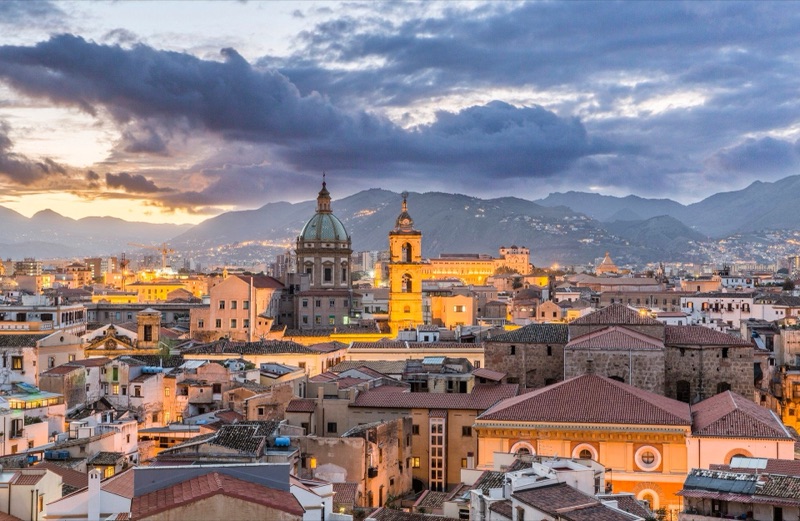
Sicily — Palermo's Historic Center
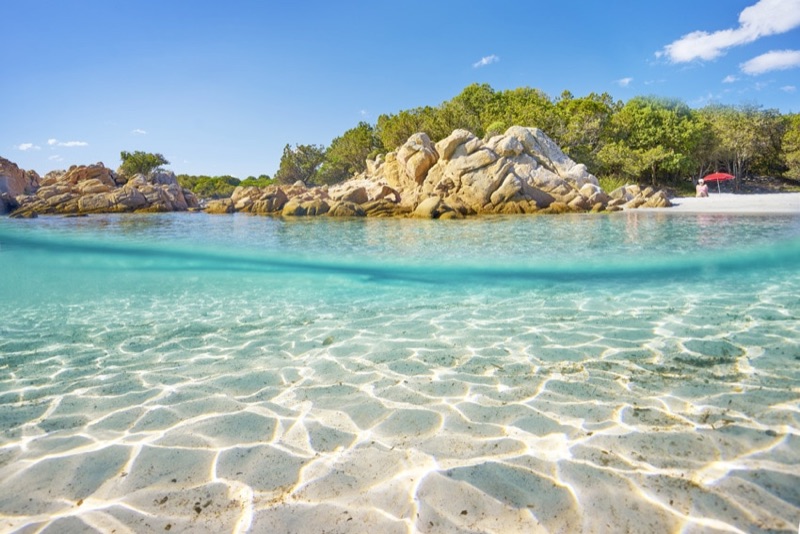
Sardinia — Costa Smeralda
⚡ The TL;DR Verdict
Sicily wins for food, culture, history, and budget. Sardinia wins for beaches. Simple as that. Budget: Sicily €60–90/day, Sardinia €90–130/day.
- Go to Sicily if you want the full Italian immersion — 3,000 years of history, world-class street food, Mount Etna, Greek temples, and authentic Sicilian towns that haven't been polished for tourists.
- Go to Sardinia if beaches are your obsession — the Emerald Coast and Gulf of Orosei deliver the clearest, most turquoise water in Europe, rivaling anything in the Caribbean.
- Sicily is ~30–50% cheaper than Sardinia, especially in August when Sardinia's north coast becomes a luxury playground with prices to match.
- Both islands require a rental car — public transport is too slow and infrequent to reach the best spots on either island.
🏛️ Choose Sicily if...
You want 3,000 years of history, world-class street food, Mount Etna, and genuine Italian culture at budget-friendly prices.
🏖️ Choose Sardinia if...
Beaches are your priority — the Emerald Coast and Gulf of Orosei deliver the most turquoise, Caribbean-clear water in the Mediterranean.
Quick Comparison
| Category | 🏛️ Sicily | 🏖️ Sardinia | Winner |
|---|---|---|---|
| Daily Budget (mid-range) | €60–90 per person | €90–130 per person | Sicily |
| Beach Quality | Good — San Vito lo Capo, Scala dei Turchi | Outstanding — Costa Smeralda, Gulf of Orosei | Sardinia |
| Historical Sites | World-class — Greek temples, Roman mosaics, Arab-Norman churches | Interesting — Nuragic bronze-age towers (nuraghi) | Sicily |
| Food & Cuisine | Outstanding — one of Italy's most celebrated cuisines | Good — unique but more niche specialties | Sicily |
| City Life | Palermo, Catania, Syracuse, Taormina | Cagliari, Alghero (limited) | Sicily |
| Crowds (peak Aug) | Busy but manageable | Extremely crowded at coast | Sicily |
| Getting There | Easy — flights to Palermo or Catania | Easy — flights to Olbia, Cagliari, or Alghero | Tie |
| Nature & Outdoor | Mount Etna, Madonie, Aeolian Islands | Supramonte, Gennargentu, dramatic coastline | Tie |
| Authenticity | Very high — genuine Sicilian life | High interior, touristy coast | Sicily |
| Best For | Culture lovers, foodies, history buffs | Beach seekers, water sports, luxury resorts | Depends |
🏖️ Beaches
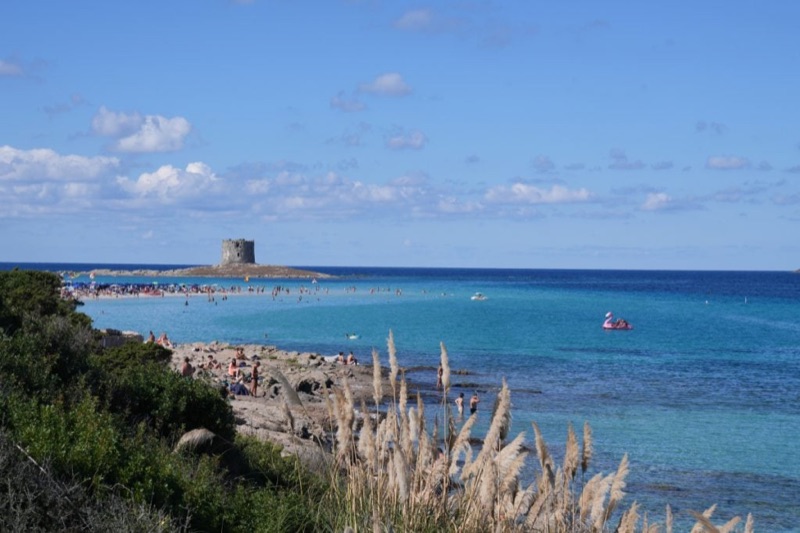
This is the big one, and Sardinia wins decisively. The northeast coast — marketed as the Costa Smeralda (Emerald Coast) — delivers turquoise water so clear it looks digitally enhanced. The Gulf of Orosei on the east coast is even more dramatic: limestone cliffs plunging into cobalt water, with coves only reachable by boat or serious hiking. Beaches like Cala Goloritzé, Cala Luna, and Cala Mariolu consistently rank among the top 10 in Europe.
Sicily isn't a beach destination in the same league, but it has some genuinely outstanding spots. San Vito lo Capo in the northwest has brilliant white sand and calm water. Scala dei Turchi near Agrigento — brilliant white limestone terraces descending into the sea — is completely unique. The Egadi Islands (a ferry from Trapani) offer Caribbean-clear water, and the Aeolian Islands north of Sicily have their own rugged volcanic appeal.
"When it comes to beaches, the north-eastern coast of Sardinia is called the Emerald Coast for a reason. It's probably the closest a European can get to a Caribbean beach with fine white sand and turquoise water." r/ItalyTravel
"If you wanna enjoy beach and sea, you like to swim and your ideal vacation is just chilling and switching beaches, Sardinia is the clear choice. The beaches I saw in Sicily were way less impressive." r/Europetravel
🍝 Food & Dining
Sicilian food is one of Italy's greatest underappreciated cuisines, and it will overwhelm you in the best possible way. Arab, Greek, Norman, and Spanish influences converged here over 3,000 years to create something utterly unique. Street food in Palermo's Ballarò and Vucciria markets is an experience in itself: arancini (fried rice balls), panelle (chickpea fritters), sfincione (thick Sicilian pizza), pane con la milza (spleen sandwiches). Pasta alla Norma (eggplant, tomato, ricotta salata) is a revelation. Granita with brioche for breakfast will ruin every other morning meal forever. And seafood — swordfish in Messina, tuna in Trapani, fresh everything along the coast — is exceptional.
Sardinian food is genuinely excellent but more niche. The island's culinary highlights include: pane carasau (ultra-thin, crispy flatbread), porceddu (spit-roasted suckling pig), seadas (fried pastry with cheese and honey), malloreddus pasta with sausage, and bottarga (sun-dried mullet roe shaved over pasta). These are deeply Sardinian flavors you won't find elsewhere in Italy — but they require some seeking out. In tourist areas along the coast, restaurants often serve generic Italian fare at inflated prices.
"I just left Sardinia for Sicily and personally I think Sicily is so much better. The food in Sicily is incredible — I ate the best arancino I've ever had in Catania. Sardinia felt more expensive and the food less interesting." r/ItalyTravel
"Sicily has much more to offer in my opinion. The food culture is incredible — street food in Palermo alone could keep you busy for days." r/ItalyTravel
🏛️ Culture & History
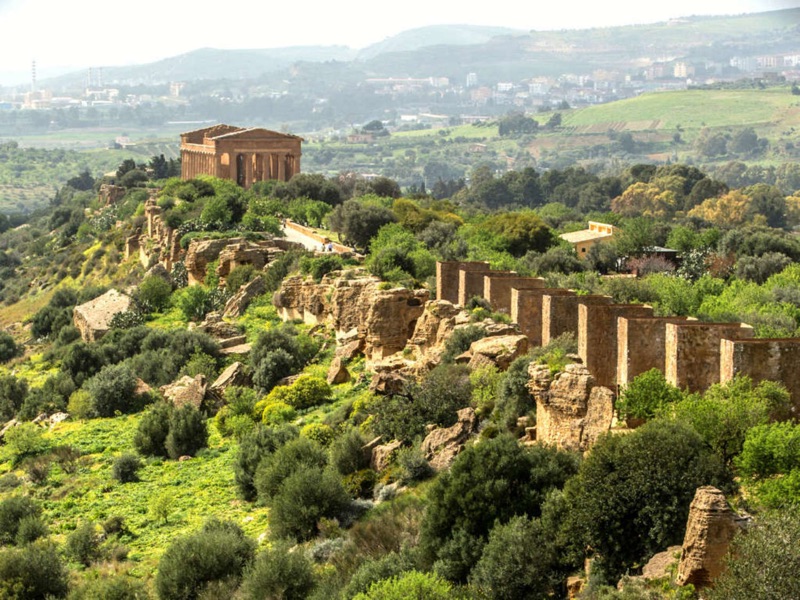
Sicily is one of the great crossroads of Mediterranean civilization, and the evidence is everywhere. The Valley of the Temples at Agrigento contains the best-preserved Greek temples outside of Greece — more impressive than anything at the Parthenon. The Roman Villa del Casale near Piazza Armerina has the most extensive ancient mosaic floors in the world. Palermo's Arab-Norman architecture (a UNESCO World Heritage Site) blends Arabic geometric patterns, Norman arches, and Byzantine mosaics in a way that exists nowhere else. Mount Etna — Europe's largest active volcano — dominates the eastern skyline. Syracuse was one of the most powerful cities in the ancient world, and its archaeological park is stunning.
Sardinia's history is older and stranger. The Nuragic civilization (1800–500 BC) left 7,000+ mysterious stone towers (nuraghi) scattered across the island — the largest concentration of prehistoric structures in Europe. The most impressive, Su Nuraxi di Barumini, is a UNESCO World Heritage Site. Sardinia also has Phoenician ruins at Tharros, Roman remains at Nora, and the ancient town of Alghero — fortified by Catalans in the 14th century, where Catalan is still spoken. The cultural history is real, but it's less dramatically visible than Sicily's.
"Sicily is way more populated than Sardinia and there are many cities to explore — Palermo, Catania, Syracuse, Agrigento. The history is layered in a way you can feel everywhere." r/ItalyTravel
💰 Cost Comparison
Sicily is substantially cheaper than Sardinia — roughly 30–50% less expensive across accommodation, restaurants, and activities. This gap widens dramatically in August, when Sardinia's north coast transforms into one of the most expensive resort areas in Europe.
Sicily daily budgets:
- Budget: €40–55/day (hostel, street food, public transport)
- Mid-range: €60–90/day (2-star hotel, sit-down meals, car rental included)
- Comfortable: €100–160/day (3-star hotel or agriturismo, wine with dinner)
Sardinia daily budgets:
- Budget: €60–80/day (low-season only; harder to find cheap accommodation)
- Mid-range: €90–130/day (2-star hotel away from Costa Smeralda)
- Comfortable: €150–250/day (Costa Smeralda or Orosei area peak season)
Specific price benchmarks: A decent pizza in Palermo: €6–9. Same in Porto Cervo (Sardinia): €15–20. A night at a mid-range hotel: ~€70 in Catania vs ~€120 in Olbia. A beach club sunbed in Sardinia in August: €30–50/day — not optional if you want a spot at the best beaches. Sicily has fewer beach clubs and more free public beaches.
"Sardinia is on my wish list, but private studios/apartments are so expensive. Sicilia is amazing — I totally loved it and would go back in a heartbeat. The value for money is unbeatable." r/Europetravel
🚗 Getting Around
Rent a car on both islands — there's no getting around it. Public buses exist on both Sicily and Sardinia, but schedules are infrequent, connections are slow, and the best beaches and villages are unreachable without your own wheels.
Sicily: Trains connect Palermo, Catania, Messina, and Syracuse reasonably well (though slowly). The Catania–Syracuse route takes about 1.5 hours. But for Mount Etna, Agrigento, Erice, Selinunte, or any coastal drives, you need a car. Rental from Catania or Palermo airport: €25–50/day for a small car. Driving in Palermo is chaotic — park outside the center and walk. Petrol ~€1.80–2.00/L.
Sardinia: Even more car-dependent than Sicily. The east coast (Gulf of Orosei), interior Barbagia region, and most of the best beaches require driving on winding mountain roads. Cagliari, Alghero, and Olbia have decent urban transport, but outside cities you're on your own. Olbia is the hub for Costa Smeralda access. Rental from Cagliari or Olbia: €30–60/day. Some beaches require paying for a parking spot (€5–15/day).
"Both of the islands are huge, and there is a lot to see, so it would be great if you can rent a car there. You will have plenty of options — the driving is part of the experience, especially along the coast of Sardinia." r/Europetravel
🌞 Best Time to Visit
The sweet spots for both islands are May–June and September–October. You get warm to hot weather (24–30°C), swimmable seas, much lower prices, and manageable crowds. July and August bring brutal heat (35–40°C+ in Sicily's interior) and Sardinia's coast gets overrun — popular beaches can feel like airport departure lounges in peak August.
Sicily by season:
- Spring (Mar–May): Wildflowers, mild weather (18–24°C), almond blossom festivals. Excellent for sightseeing. Sea still chilly for swimming.
- Early summer (Jun): Hot, clear, perfect. Best beach and culture balance.
- Peak summer (Jul–Aug): Very hot (35–38°C), beaches busy. Still manageable compared to Sardinia. Palermo's streets stay lively at night.
- Autumn (Sep–Oct): Still warm for swimming, harvest season, fewer tourists. Best overall.
- Winter (Nov–Feb): Mild (12–16°C), many sights open, some coastal towns quiet. Good for archaeological sites without crowds.
Sardinia by season:
- May–Jun: Perfect — beaches gorgeous, prices 30–40% below peak, almost no crowds.
- Jul–Aug: Costa Smeralda transforms into Europe's most exclusive resort. Prices triple. Extremely crowded. Book months ahead.
- Sep–Oct: Arguably the best time — warm sea, empty beaches, post-season prices.
- Winter: Most coastal facilities close. Interior is beautiful but you need to seek it out.
🏨 Where to Stay
Best bases in Sicily:
- Palermo — Best for food, culture, and day trips. Most lively city. Budget hotel: €40–70/night. Mid-range: €80–130.
- Catania — More laid-back, great food scene, excellent base for Mount Etna. Budget: €35–60/night.
- Syracuse (Siracusa) — Beautiful Greek island city of Ortygia. Romantic, manageable. Mid-range: €70–120/night.
- Taormina — Clifftop views, celebrity favorite, pricey. Budget: €80–120. Mid-range: €130–200+.
- Agriturismos — Farm stays in the interior, often €60–90/night with breakfast. Underrated.
Best bases in Sardinia:
- Alghero — Most charming town, medieval walls, great beaches nearby, Catalan character. Mid-range: €80–130/night.
- Cagliari — Capital, good base for south coast. More affordable: €60–100/night.
- Olbia / Costa Smeralda — Luxury resort territory. Budget hotels: €120+/night peak. Luxury: €400–1000+/night in August.
- Orosei / Cala Gonone — Best base for Gulf of Orosei. Mid-range: €90–160/night peak.
"Take a look at Orosei area, San Teodoro, Villasimius, Alghero, Costa Smeralda in Sardinia. The beaches are stunning. For Sicily, I wouldn't spend too much time in Catania — explore Palermo, Erice, Cefalu, and Syracuse." r/ItalyTravel
🗺️ Day Trips
Sicily day trips from Palermo:
- Cefalù (1h east) — Norman cathedral, medieval streets, beach town. One of Sicily's most picturesque.
- Erice (1h west) — Hilltop medieval town with sweeping views over Trapani. Cobblestone streets, pastry shops.
- Segesta & Selinunte (1–1.5h) — Incredibly well-preserved Greek temples in isolated rural settings.
- Egadi Islands (ferry from Trapani, 30–45min) — Crystal-clear water, tuna fishing heritage, day beach trips.
Sicily day trips from Catania:
- Mount Etna (45min) — Cable car to 2500m, guided crater walks in summer. Europe's largest active volcano.
- Taormina (45min) — Greek-Roman theater, clifftop views over the sea.
- Agrigento Valley of Temples (2h) — Can be done in a day; the most impressive classical ruins in Italy.
Sardinia day trips from Alghero:
- Neptune's Grotto (boat or cliff stairs) — Spectacular sea cave with stalactites.
- Stintino / La Pelosa (45min) — One of Sardinia's most photographed white-sand beaches.
- Castelsardo (1h) — Medieval hilltop village overlooking the sea. Basket-weaving capital of Sardinia.
🔀 Why Not Both?
Sicily and Sardinia are awkward to combine. Unlike, say, Rome and Florence which sit on the same railway line, these two islands are separated by sea and require a flight or long ferry via the mainland. The most practical routing is: fly into one island, explore for 7–10 days, fly to Rome or another mainland hub, then fly to the second island. Add a night in Rome, Naples, or Bologna between them if you want a palate cleanser.
A few travelers do both in one trip with ~3 weeks total. The sequence that makes most geographic sense: fly into Palermo (Sicily) → explore Sicily 8–10 days → fly Catania to Cagliari (direct flights exist) or Palermo to Olbia → explore Sardinia 7–10 days → fly home from Olbia or Cagliari.
A better combined Italy trip for most people: Sicily + Puglia (the heel of Italy's boot — Alberobello trulli, Lecce baroque, Salento beaches, all reachable by ferry from Messina or low-cost flight). Or Sardinia + Corsica (just a short ferry apart, with very similar beach vibes).
❓ Frequently Asked Questions
Is Sicily or Sardinia better for first-time visitors to Italy?
Sicily is the better first-timer island. It packs in 3,000 years of history — Greek temples at Agrigento, Roman mosaics at Casale, Arab-Norman architecture in Palermo, and the ever-present Mount Etna. You'll never run out of things to do. Sardinia is the move if beaches are your primary obsession; it offers some of the best in the entire Mediterranean, but the interior and historical sites are less compelling for newcomers. Reddit consensus: Sicily for culture and food, Sardinia for a pure beach holiday.
Which is cheaper, Sicily or Sardinia?
Sicily is significantly cheaper. Budget travelers can get by on €50–60/day in Sicily; mid-range runs €70–90/day. Sardinia runs 30–50% more expensive, especially in the north — Costa Smeralda is one of the priciest resort areas in Europe. Mid-range in Sardinia: €90–130/day. August prices on both islands spike dramatically; off-season (May–June or September–October) is the sweet spot.
Does Sicily or Sardinia have better beaches?
Sardinia wins beaches — full stop. The Emerald Coast (Costa Smeralda) and the Orosei Gulf deliver turquoise, Caribbean-clear water that rivals anything in the Mediterranean. Sicily has lovely beaches — especially San Vito lo Capo, Scala dei Turchi, and the Egadi Islands — but they don't match the clarity and powder-white sand of Sardinia's best. If beaches are your top priority, Sardinia is the answer.
Do you need a rental car in Sicily and Sardinia?
Yes, for both islands. Public transport exists but is slow and infrequent outside the main cities. A rental car unlocks the best of each island: remote beaches in Sardinia (Cala Goloritzé, Cala Luna), and hill towns, temples, and coastline in Sicily (Agrigento, Erice, Selinunte). Budget €30–60/day for a small car. Renting in Palermo or Catania (Sicily) and Cagliari or Olbia (Sardinia) gives the most options.
What is the best time to visit Sicily and Sardinia?
May–June and September–October are ideal for both islands — warm enough to swim, crowds are manageable, and prices are 30–50% lower than peak August. July and August are brutally hot (35–40°C in Sicily's interior) and extremely crowded, especially on Sardinia's north coast where Costa Smeralda fills up completely. Winter is quiet with mild weather but many beach facilities close.
Can you do both Sicily and Sardinia in one trip?
Technically yes, but it's logistically awkward — there's no direct ferry between them. You'd need to fly via Rome or mainland Italy, which adds time and cost. Most travelers who do both give each island 7–10 days. A better combined Italy trip might be: Sicily + Puglia (similar cultural vibe, connected by ferry) or Sardinia + Corsica (similar beach vibe, close together). With 3+ weeks, doing both is absolutely worth it.
Which Italian island has better food, Sicily or Sardinia?
Sicily wins food by a wide margin. Sicilian cuisine is one of Italy's most distinctive — arancini, pasta alla Norma, granita, cannoli, fresh seafood, street food in Palermo's markets. The Arab, Norman, and Greek influences created something unique. Sardinian food is excellent but more niche: pane carasau flatbread, suckling pig (porceddu), bottarga, and malloreddus pasta. Great if you specifically seek it out, but not as immediately overwhelming as Sicily's food scene.
How do I get to Sicily and Sardinia?
Sicily: fly into Palermo (PMO) or Catania (CTA) from most European cities. Ryanair, easyJet, and Wizz Air run budget routes. Alternatively, take a ferry from Naples or Reggio Calabria (2–3 hours to Messina). Sardinia: fly into Cagliari (CAG), Olbia (OLB — best for Costa Smeralda), or Alghero (AHO). Ferries run from Genoa, Civitavecchia (Rome), and Barcelona but take 8–20+ hours. Flying is much faster.
Ready to plan your Italian island adventure?
Get a free custom itinerary for Sicily, Sardinia, or both — built from real traveler insights, not generic templates.
🎟️ Book Tours & Experiences
Hand-picked tours and activities for both destinations — book with free cancellation
Experiences via Viator — free cancellation on most tours